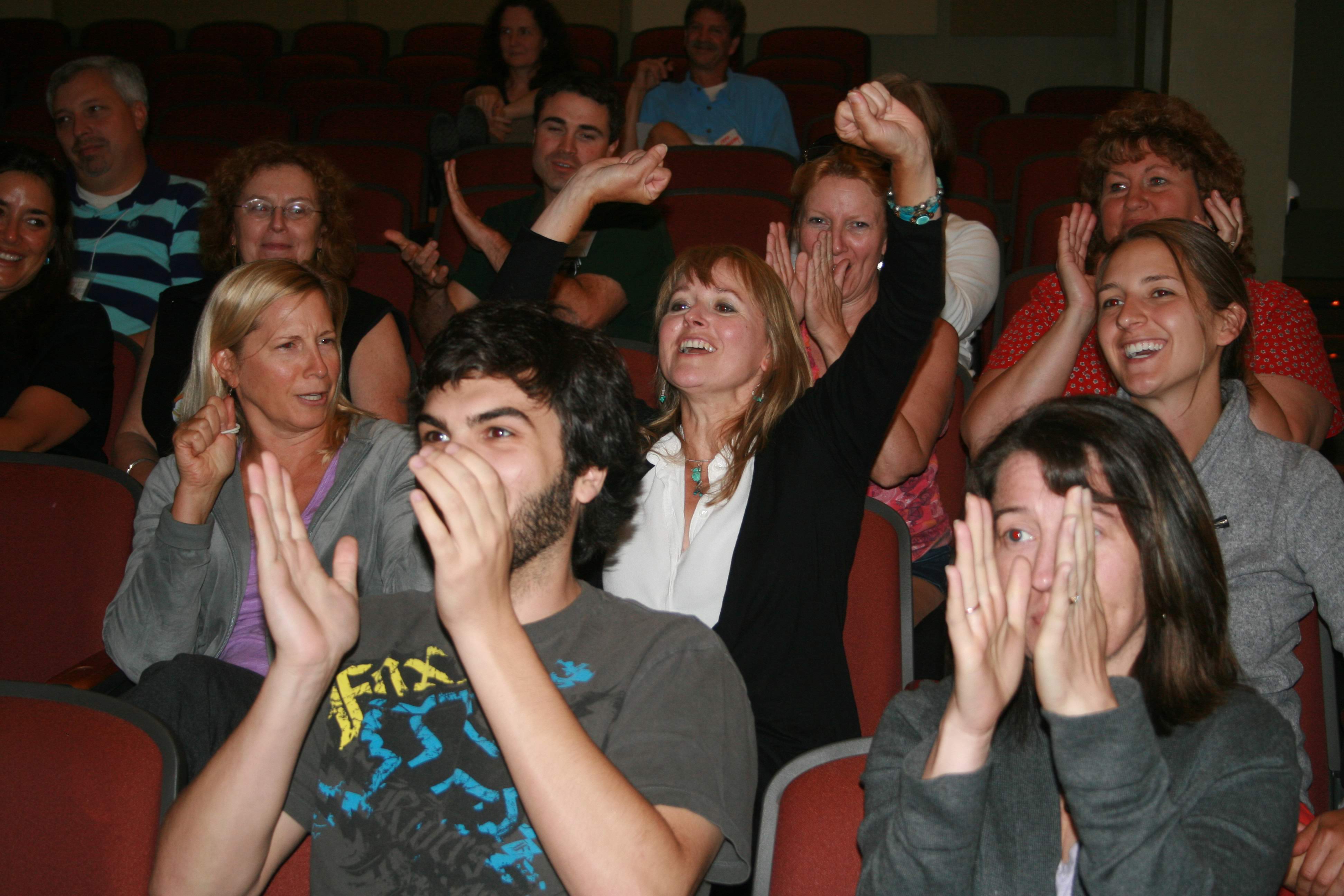
As some of you may know, my youngest son has worked as a tour guide in Washington, DC since his gap year way back in 2008. He has continued to guide throughout the years while he worked in other capacities both in DC and elsewhere. Something about DC always pulled him back though.
During Covid the company that he had primarily worked for shut down their DC operations and Nick was able to step up and offer planning services in addition to the guiding he had already been doing. SPN Tours was born. The company was named after my vivacious mother Sophie Prodromos Nestor.
If your school currently takes an annual class trip to DC, or you’re considering it, be sure to check out spntours.com. Because SPN Tours is guide owned and operated, the cost is usually lower than larger tour companies. This also means that your trip planner will also be one of the guides on your trip. The company is based in Portland, and we all know the importance of shopping local and fueling the economy here in Maine.
Perhaps you’re taking your students to DC for a music or art opportunity. What a great opportunity to incorporate the other opportunities that DC has to offer – arts, history, government, so many avenues to pursue.
Get in touch with Nick if you have questions or would like to start the conversation! nick@spntours.com.
Maine Arts Assessment Institute, summer 2011, phase 2, Maine College of Art + Design
Over the past few months I’ve been working on a talk that I am giving called The ARTS at the Center at the New England League of Middle Schools conference in Springfield, MA. I have 60 minutes to speak about arts education to a room full of about 400 middle school educators. Perhaps half will be arts educators. To prepare I’ve looked at current and past research, I’ve scanned files, I’ve read papers and documents, I’ve found photos, and I’ve spoken to several educators. Every time something seems important to be sure and include I’ve made a note. The content kept growing and when i started to practice I realized that I had about two and a half times more content then I need. I’ve been cutting during the last week. It is filled with stories and I disliked cutting stories but I had no choice. We all have stories, especially educators.
Maine Arts Assessment Initiative, summer 2012, phase 2, Maine College of Art + Design
As I pulled out of the driveway to leave for the conference today my husband assured me that it would go well. As I headed down the road I thought about how important it is, especially as teachers, to challenge ourselves, step out of our comfort zones and really stretch. For one thing it reminds us of how our students feel. For some students, teachers ask them to do hard stuff every day. Stretching ourselves is important and helping our students stretch is equally important. Most adults can put supports in place as we’re stretching. For kids that’s not always the case. It’s important that we are mindful of supporting our students as they grow and learn.
Rob Westerberg and Catherine Ring, Maine Arts Assessment Initiative, winter retreat, Zillman Art Museum
Lately I’ve thought about many of the professional development and learning opportunities I’ve been part of planning and attending. The photos that I’ve looked through have brought back many memorable moments. I especially love the photos I’ve included in this blog post and the sweet memories that accompany them.
Mpamila Village, Malawi, 2016, 10 day Arts Integration workshop
Karen Montanaro, Nick Kleiner perform The Soccer mime, Farnsworth Art Museum, statewide arts education conference, 2008
If you are one of the blog followers you’ve read about HundrED in the past. HundrED is an organization based in Helsinki, Finland who specializes in K-12 education innovation. Each year they put a call out for innovative ideas to be submitted for review. Some are selected and become part of the HundrED collection that serve as resources for educators around the world.
DEDICATION
“We at HundrED are dedicated to helping every child flourish by giving them access to quality education. We believe that with education innovations we can transform school systems and equip students with the skills to thrive as global citizens.”
MISSION
“The world is full of hardworking educators who are driving innovative, impactful, and scalable approaches in education. Our mission at HundrED is to give them the recognition and visibility they deserve.”
IMPACT
“At Hundred we believe that through identifying, amplifying, and facilitating the implementation of education innovations we can transform education systems and equip students with the skills to thrive as global citizens.”
In fact Hundred has identified 694 Innovations which have impacted 4.77 billion students. To land on the 694 innovations a team of reviewers have read through 24732 innovations. I’ve been fortunate to be part of the review process as a member of Hundred’s Academy. Each July for the past four years I’ve been invited to review the new innovation applications. It is an amazing opportunity. Below are just three that I find interesting.
Global Schools Program – The mission of Global Schools is to create a world where every primary and secondary student is equipped with the knowledge, skills, and values to tackle the problems of the 21st century.
Play Africa – Disrupting the idea of a “museum,” Play Africa developed a flexible museum model to bring transformative learning experiences promoting creativity, innovation and connection to a divided society
Story Arts – Story Arts inspire creativity, critical thinking, communication, and empathy.
The HundrED Innovators represent countries from around the world. Along with the collections of innovations they have several different research reports and resources that are easily accessible on their website. All of the resources are available to the global community at no cost. I invite you to check them out.
The leaves had just started to turn their brilliant colors as I followed the windy road west to Rangeley from my home in the mid-coast. It was a warmish and beautiful day. I haven’t traveled to western Maine in a few years and surprisingly during my 13 years working for the state (Maine Department of Education, 7 years and Maine Arts Commission, 6 years), I didn’t visit the Rangeley Lakes School. (I say surprisingly because during those 13 years I visited about 450 schools.)
Sonja Johnson and Maryam Emami
I’ve know Rangeley art teacher Sonja Johnson and English teacher Timothy Straub for many years. More recently, I met Maryam Emami, graphic arts and history teacher and the 2023 Franklin County Teacher of the Year. I was excited to visit the Rangeley Lakes School and to learn more about Maryam and Sonja’s collaborative project. I shared my recently published book, Catching Fireflies, that I’ve co-authored with poet Jean Feldeisen. I learned about the community project that Sonja and Maryam have had underway for almost 10 years called Words of Wisdom. Students have made beautiful black and white photographs and collected stories from almost 100 community members. We discussed ideas on how they can move forward to complete this comprehensive historical and artistic project this school year. The lessons learned in creating Catching Fireflies have been many and I was happy to share them.
Along with the collaborative project I had a chance to learn about some of the recent engaging curriculum work Maryam had underway with students. You’ll find descriptions below of two units plus Words of Wisdom. It was fun for me to talk with students as they worked in the classroom space and the hall gallery they were creating with the completed work.
Graphics Arts
Retail Design: Part 1. The Logo-Create a fictitious company. Begin by naming it. Once the name has been selected everything else falls into place. Think of who your audience is and the company’s personality. The logo design will be most effective when the spirit of the store is clearly thought through. Keep in mind that you will be using the logo for a broad range of applications. The typographic symbol is usually, but not always, the expression of a unified design for advertising and manufacture. It must be original and simple in form, have a very high degree of memorability, and be easily recognized and noticeable. A symbol either brings letters together to make a new form, or illustrates the product or does both. A symbol is something completely different and of higher importance than a monogram (a sign of identity usually formed by the combined initials of a name). A faulty symbol is far worse than none at all, and a bad symbol can be disastrous to a product.
Humanities II
Historical Exhibit: Students curate artifacts which can include music, visual art, videos, digital media, information about important individuals from the time/culture, and cultural/historical items in their exhibit. Artifacts should be cataloged and given museum tags. And, students should be able to act as a docent to visitors to the classroom exhibit. When designing your exhibit, consider incorporating a mix of artifacts, documents, interactive displays, and multimedia presentations to engage visitors and provide a comprehensive view of your Empire’s history and cultural heritage. The Empires are the Inca, Songhai, Ayuttyha, and the Ottomans.
Words of Wisdom
Sonja and Maryam plan to publish a book with the information below that students have collected from almost 10 years of community members. The information supports the beautiful black and white photos students took and developed. These are older community members, at this point some of them have passed away. One student is the child of a student from 10 years ago when the project first got underway.
what is your full name including nickname
how old or young are you
where do you live in rangeley
what is your connection to rangeley how did you get here how long have you lived here
what was/is your occupation
what do you enjoy doing now
describe your family background
what are some of your interests/hobbies
Last piece: please share with us any additional details about your life or anything else you would like to share with future generations.
There is nothing more wonderful than learning about teachers collaborating in an impactful way. The information is of course, authentic and somewhat raw. I spent a few minutes reading through the answers, looking into the eyes of the portraits. I couldn’t help but wish this project could be carried out in every school in the state. This is a gift to the students who participated in so many ways. They’ve had a chance to learn about the individuals (in some cases relatives), to learn the history through the lives of community members, and to reflect on who they are as young people because of the people who live in their own community. Very, very powerful work! I look forward to holding the book in my hands in the future.
I’ll let you know when the project is complete. Good luck to Maryam and Sonja and to the students as they move to complete this gift to the community!
If you’d like to purchase my book Catching Fireflies it is available at THIS LINK.
I struggle today with the news from the community of Lewiston. Maine is a state with a large geographic area and a small population. In arts education many of us are connected through our teaching. This is especially true if we attend professional learning opportunities and/or provide opportunities for our students to gather beyond our individual school districts. Consequently when a situation occurs it is likely that many are impacted. I’m certain that this is true with the situation in Lewiston. My heart is heavy for those who have been directly touched and all of you who are indirectly impacted. I am saddened for the victims and their families and friends. I have hope and send love for support for all those struggling.
The resources below are gathered from different sources that offer support for children and adults.
The National Child Traumatic Stress Network offers trauma-informed care and other resources to assist those struggling with the complex emotions associated with traumatic events
Common Sense Media includes developmental language to help educators and parents address themes of violence in our world in an age appropriate way
Mental Health America Resources for educators and parents to support children of different age levels manage feelings of anxiety and helplessness following a tragedy
They’ve done it again! Today the Union of Maine Visual Arts (UMVA) journal was published and it is jam packed with amazing articles; something for everyone! The fall issue, Materiality has a variety of thought provoking articles written by artists, writers, and educators.
Maine Arts Journal Fall 2023 cover (Rosamond Purcell’s studio, Somerville, MA, with a detail of Wall, mixed-media installation, photo: Veronique Plesch, May 2018).
Introduction by Veronique Plesch
For this issue we invited our contributors to reflect upon the many ways in which their work engages with the notion of materiality, considering the different stages of the creative process, starting with their choice of medium and how tools and materials interact, all the way to the tangible objects they produce. The topic proved inspiring: the responses address the centrality of the choice and handling of the medium. We read about materials’ possibilities and limitations, about how one might attempt to control them or instead submit to them (some materials seem to remain indomitable while others readily—willingly?—cooperate in allowing the artist to reach their goals). Contributors discuss the importance of tools to obtain certain desired effects, while they also marvel at the resulting unexpected and welcome surprises. The process’s dynamic nature is made clear by how often notions such as fluidity, transformation, transmutation, and metamorphosis are mentioned, suggesting that materials have an agency of their own. As we read through the issue, it becomes clear that materials are more than a driving force in the creative process: they are true partners, at once inspiring and motivating, starting point and goal.
This issue includes a piece written for the education column, Insight/Incite by Maryam Emami. Maryam is the 2023 Franklin County Teacher of the Year, has been teaching graphics and social studies at Rangeley Lakes Regional School since 1995. The article includes a variety of images that Maryam’s students have created.
If you’d like to learn more, become a member of UMVA, and support this fabulous organization you may do so at THIS LINK. UMVA hopes that you will subscribe to AND support the journal by becoming a member of the Union of Maine Visual Artists by clicking here. You can subscribe for free by clickinghere.
If you’re interested in writing for the journal please contact me Argy Nestor at meartsed@gmail.com or go to THIS LINK.
Explore archived journals (from the past 10 years) at THIS LINK.
All teachers want to be prepared and to broaden their horizons so they can be better prepared personally and when interacting with their own students. Below is a list of books that were brought to my attention by the Maine County and State Teacher of the Year Association. These are Rainbow Reads 2023 booklist.
PICTURE BOOKS
Calvin, RJ and Vanessa Ford & Kayla Harren (illustrator). In this joyful and impactful picture book, a transgender boy prepares for the first day of school and introduces himself to his family and friends for the first time.
If You’re A Kid Like Gavin: A True Story of a Young Trans Activist, Gavin Grimm, Kyle Lukoff, & J Yang (illustrator) A celebratory and empowering story from young trans activist Gavin Grimm, two-time Stonewall Award-winning and Newbery Honor-winning author Kyle Lukoff, and illustrator J Yang follows the true story of how a young boy stood up for himself—and made history along the way. A Publishers Weekly and Kirkus Best Book of the Year!
Love, Violet, Charlotte Sullivan Wild & Charlene Chua (illustrator) Perfect for Valentine’s Day, a touching picture book about friendship and the courage it takes to shareyour feelings.
Mama, Mommy, and Me in the Middle, Nina LaCour & Kayla Juanita (illustrator) A little girl stays home with Mama when Mommy goes off on a work trip in this tender, inviting story that will resonate with every child who has missed a parent.
True You: A Gender Journey, Gwen Agna & Shelley Rotner (illustrator) There are different ways to show and be who you are in this affirming photographic picture book that offers a celebratory and informative look at kids and their wide-ranging gender identities.
MIDDLE GRADE
A High Five for Glenn Burke, Phil Bildner A heartfelt and relatable novel from Phil Bildner, weaving the real history of Los Angeles Dodger and Oakland Athletic Glenn Burke–the first professional baseball player to come out as gay–into the story of a middle-school kid learning to be himself.
Ana on the Edge, AJ Sass Perfect for fans of George and Ivy Aberdeen’s Letter to the World: a heartfelt coming of age story about a nonbinary character navigating a binary world.
The Insiders, Mark Oshiro A Publishers Weekly Best Book of the Year An ALA Rainbow Book List Top 10 Title for Young Readers Three kids who don’t belong. A room that shouldn’t exist. A year that will change everything. Perfect for fans of Rebecca Stead and Meg Medina, this debut middle grade novel from award-winning author Mark Oshiro is a hopeful and heartfelt coming-of-age story for anyone who’s ever felt like they didn’t fit in.
The Real Riley Mayes, Rachel Elliot A Stonewall Book Award Honor * A Sid Fleishman Humor Award HonorFunny and full of heart, this debut graphic novel is a story about friendship, identity, and embracing all the parts of yourself that make you special.
Sir Callie and the Champions of Helston, Esme Symes-Smith In a magical medieval world filled with dragons, shape-shifters, and witches, a twelve-year-old nonbinary hopeful knight battles for the heart of their kingdom. A thrilling middle-grade series opener that explores identity and gender amid sword fights and magic, and proves anyone can be a hero.
YOUNG ADULT
The Family Outing: A Memoir, Jessi Hempel A striking and remarkable literary memoir about one family’s transformation, with almost all of them embracing their queer identities.
The House in the Cerulean Sea, TJ Klune “The House in the Cerulean Sea is a heart-swelling wave of sweetness and hope. Mild-mannered government caseworker Linus Baker is sent on a secret assignment to an island orphanage he’s never even heard of. The astonishing inhabitants he gets to know there will change his life and make him reassess everything he thought he knew. This book will leave you believing in the good in everyone — even those society has given up on — and contemplating how huge changes have to start somewhere.” — Haley Stocking, Phinney Books, Seattle, WA
Imogen, Obviously, Becky Abertalli With humor and insight, #1 New York Times bestseller Becky Albertalli explores the nuances of sexuality, identity, and friendship in this timely new novel.
Loveless, Alice Oseman This is the funny, honest, messy, completely relatable story of Georgia, who doesn’t understand why she can’t crush and kiss and make out like her friends do. She’s surrounded by the narrative that dating + sex = love. It’s not until she gets to college that she discovers the A range of the LGBTQIA+ spectrum — coming to understand herself as asexual/aromantic. Disrupting the narrative that she’s been told since birth isn’t easy — there are many mistakes along the way to inviting people into a newly found articulation of an always-known part of your identity. But Georgia’s determined to get her life right, with the help of (and despite the major drama of) her friends.
The Magic Fish, Trung Le Nguyen In this gorgeous debut graphic novel, fairy tales are the only way one boy can communicate with his Vietnamese immigrant parents. But how will he find the words to tell them that he’s gay? A powerful read about family, identity and the enduring magic of stories.
I live in a community where some individuals have requested that the school board have certain books removed from our classrooms and library book shelves. The conversation went on for months with both sides taking time to express their opinions. Some advocacy is based on fact and research while others are based on personal beliefs/choices and emotions. These conversations are similar to others going on across our state and the country. We all have opinions and lately I’ve been wondering how individuals can express their options in a way that provides a ‘point of view’, not in a way that comes across as “I am right and if you don’t agree with me, you are wrong”. Most importantly, I wonder how opinions can be expressed without negatively impacting the education of young people? After all, we know they’re watching and listening.
Every year before the July 4th parade in Whitefield, a small town located not a 30 minute drive from Augusta, an artist gathers with other artists and friends to shed light on a ‘challenging topic’ to include in the parade. Artist Natasha Mayers has been doing this for years. Some of you are familiar with the marvelous film that was made to document Natasha’s life story called Natasha Mayers: An Unstill Life. The film chronicles her life as an artist and activist. You can access the trailer and rent the entire film at THIS LINK.
Some of the many participants presenting ‘banned books’ at the Whitefield parade
For this years parade the group focused on books that have been banned and created giant books that are included on a list. They passed out more than 100 children’s books wrapped in caution tape, with bookmarks listing banned books. I’m sure many of you are familiar with some or all of these books, I’ve listed them below.
Its one thing to be aware of banned books but it’s another to express your opinion or to take action. I’ve given some thought about my beliefs and I’m reading, listening and watching. One of my summer goals is to read more of the books on banned book lists. When I participate in a conversation it will be based on my reading and my understanding through my own lens. I attended my town’s candidates forum this spring where the candidates were asked their opinions on banning books from our schools, specifically the book Queer Gender by Maia Kobabe. The two individuals who strongly opposed hadn’t read the book, one had looked at the pictures. I’ve noticed that many people who are opposed to certain books also have strong feelings about the curriculum being taught in our schools. In addition, their rhetoric includes wanting the power to make curriculum decisions. As a teacher I am totally committed to working with parents to educate the child. But I am opposed to parents making decisions for other families. Should parents be making decisions for their own children or all children? Some advocates are attempting to undermine the wisdom of teachers and educational experts who are trained to make curriculum decisions and choices about teaching and learning. I realize that not all educators are ‘experts’ and I’m not suggesting that educators make all the decisions. Policy’s and procedures are in place with curriculum committees that include teachers, administrators, and school board members to guide and make decisions on curriculum.
Handing out books to children
I’m not offering answers, only questions. My baseline question that has always guided me: what is in the best interest of all students? Some folks are saying ‘best interest’ has become murky. Well, no one said that education wasn’t messy business. It feels like we’re at a critical moment so I ask you: will you be part of the problem or part of the solution? How can arts educators use artistry to help at this moment in the history of education?
Banned books for teens and adults
FICTION, FANTASY, ETC.
The Bluest Eyes, Tony Morrison
The Absolutely True Diary of a Part-Time Indian, Sherman Alexie
The Call of the Wild, Jack London
The Hate U Give, Angie Thomas
The Handmaid’s Tale, Margaret Atwood
The Curious Incident of the Dog in the Night-time, Mark Haddon
The DaVinci Code, Dan Brown
Black Boy, Richard Wright
Brave New World, Aldous Huxley
The Alchemist, Paulo Coelho
Running with Scissors, Augusten Burroughs
Looking for Alaska, John Green
The Outsiders, S.E. Hinton
Mrs. Dalloway, Virginia Woolf
The Bell Jar, Sylvia Plath
NONFICTION
A People’s History of the United States, Howard Zinn
Beyond Magenta: Transgender Teens Speak Out, Susan Kuklin
The 1619 Project: A New Origin Story, Nikole Hannah-Jones
The Autobiography of Malcolm X & Alex Haley
Silent Spring, Rachel Carson
You Can’t Read This: Why Books Get Banned, Pamela Jain Dell
COMICS & GRAPHIC NOVELS
Maus, Art Spiegelman
Persepolis, Marjane Satrapi
March (series), John Lewis & Andrew Aydin
Fun Home: A Family Tragicomic, Alison Bechdel
Queer: A Graphic History, Meg-John Barker
Yummy: The Last Days of a Southside Shorty, Gregory Neri & Randi DuBurke
Blankest, Craig Thompson
This One Summer, Mariko Tamaki
Banned booksfor children
PICTURE BOOKS
Donovan’s Big Day, Leslea Newman
It’s a Book, Lane Smith
The Day in June, Gayle Pitman & Kristyna Litten
The Snowy Day, Ezra Jack Keats
In Our Mother’s House, Patricia Polacco
Flabby Cat and Sleepy Dog, Jeanne Willis
Little Red Riding Hood, Trina Schart Hyman
Nappy Hair, Carolina Herron
Goodnight Moon, Margaret Wise Brown
Brown Bear, Brown Bear, What Do You See?, Bill Martin
Nasreen’s Secret School: A True Story From Afghanistan, Jeanette Winter
The Paper Bag Princess, Robert Munsch
The Dumb Bunnies, Dav Pilkey
Strega Nona, Tomie DePaola
The Stupids (series), Harry Allard & James Marshall
CHAPTER BOOKS
The Watsons go to Birmingham, 1963, Christopher Paul Curtis
Julie of the Wolves, Jean Craighead Goerge
The Giver, Lois Lowry
Melissa, Alex Gino
A Wrinkle in Time, Madeleine L’Engle
Go Ask Alice, Anonymous
Charlotte’s Web, E.B. White
The View From Saturday, E.L. Konigsburg
An Indigenous People’s History of the United States, Roxanne Dunbar-Ortiz
I think the video embedded below was a Coca-Cola commercial for this year’s Super Bowl; yup, back in February 2023. I don’t know exactly how it was created but Artificial Intelligence, AI was part of it. This came out about the same time that I started to see more information and reading about AI. Some people closest to my circle were concerned, and still are, about the negative impact AI might have on education, learning (or the lack of), creativity, and originality. I find it difficult to take a stand, for or against. For me there is too much grey area on the topic. Take this commercial, for example. I’m guessing that we can all agree that it is well done on all levels, creative and inspiring. It includes many known art works. An entire lesson could be formed around or built on the idea. An integrated lesson for music and visual art and actually many subject areas.
One comment from someone in the advertising community said: “that’s the proper way to use ai stuff. not to make the entire content, but to work alongside traditional methods”. I do agree!
I dug a little to learn about it and this is what I found: The new campaign from Coca-Cola features a combination of film, 3D, and Stable Diffusion, which is deep learning, text-to-image AI model. Traditional production methods coupled with artificial intelligence will bring the next level of creativity to the advertising industry.
I suggest that as educators responsible for the arts, use this as an example of how we can utilize AI for the expansion of the creative process. What do you think?
I’m happy to see that there are so many teaching resources available on Juneteenth. I realize that with many schools across the country that the most meaningful teaching on the important topic needs to take place during other times in the school year or perhaps in communities. Educators know that ‘teachable moments’ happen anytime and in many places.
Finally our country, in 2021, made June 19th a federal holiday known as Juneteenth, Juneteenth Independence Day, Emancipation Day, Jubilee Day or Freedom Day. It commemorates the day in 1865 when over 250,000 enslaved Black people in Texas were informed that the Civil War was won months earlier and they were finally free.
Below are some of the plethora of teaching resources available. I took them from two resources, both have put them together from a variety of sources. Of course, I suggest that you take a close look at them to be sure they fit your needs as a teacher and the students you serve.
Juneteenth: How and Why It Should Be Taught in K-12 Schools Sonya Douglass, a professor of education leadership at Teachers College, Columbia University, spoke to Education Week on how and why educators teach about Juneteenth and the broader value for all students in expanding how Black history is taught.
Teaching Juneteenth (Learning for Justice) The history of Juneteenth acknowledges hard history while also empowering students to be advocates for change.
Juneteenth: Black History for White People Black History for White People’s podcast series dedicates an episode to the history of Juneteenth, sharing some stories from the past, and tying the throughline to why and how people celebrate Juneteenth.
Celebrating Juneteenth (for young students) National Geographic for Kids presents an overview of the history of Juneteenth
VIDEOS
Juneteenth BrainPOP presents a short video on the history of Juneteenth, along with classroom activities and discussion questions for elementary students.
Juneteenth Explained Video-creation software company Vyond created this short, animated video for younger audiences that concisely presents the history of Juneteeth.
Why Juneteenth is Important for America The Root released this video about the importance of Juneteenth in 2018. It includes information on the violent backlashBlack Americans faced from white Americans opposing their freedom.
Meet the Grandmother of Juneteenth Opal Lee fought for decades to have Juneteenth recognized as a national holiday. Watch her interview on Good Morning America in 2021, after attending the ceremony where President Biden made June 19 a federal holiday.
History of Juneteenth and Why it’s Now a National Holiday (grades 6-12) In this this lesson from PBS, students will explore and discuss the history and context around the Juneteenth holiday in the United States. Topics explored include the history of racial injustice in the U.S., the Civil War and the limitations of the Emancipation Proclamation. Additionally, students are encouraged to explore the modern significance of Juneteenth and its long-term impact.
Teaching Hard Hard History: American Slavery No discussion or lesson on Juneteenth is complete without an understanding of slavery in the United States. Learning for Justice offers a framework and the ability to build a learning plan around the history of slavery in the United States.
Celebrate Juneteenth! The National Council of Teachers of English’s Read, Write, Think website offers a classroom activity designed around having students compare Juneteenth and the 4th of July using Venn diagramming.
RECOMMENDED BOOKS
Books for Students About Juneteenth Honor the day that Black Americans gained their freedom with these Read Across America recommended titles to help students learn more about the history and traditions of Juneteenth.
The National Museum of African American History and CultureThe Historical Legacy of Juneteenthis an article with photographs from the Smithsonian that provides context for Juneteenth. It covers the Emancipation Proclamation, the Thirteenth Amendment and Reconstruction.
PBS Learning MediaJuneteenth: All About the Holidays is a short video that offers an introduction for younger students. ThisPDFoffers grades 3-5 vocabulary words and photographs.
Juneteenth.com ThisWorld Wide Celebration websiteoffers historical information and archives of Juneteenth celebrations in the news and connects those celebrating the holiday.
The Morningside Center “Juneteenth. Why is it Important to America?” is an article that includes a lesson plan with a short video and discussion questions about the holiday.
Read Write Think.This classroom activityasks students to make a Venn diagram comparing Juneteenth and July 4. Several resources are linked here, including theEmancipation Proclamation housed at the National Archives and Records Administration’s site.
The New York TimesSo You Want to Learn About Juneteenth?is an article that puts the celebration in the context of the 2020 protests sparked by the murder of George Floyd at the hands of police.
Learning for JusticeTeaching Juneteenth. This article from Learning for Justice, formerly Teaching Tolerance, uses the holiday to empower students to advocate for societal change.
The History ChannelWhat is Juneteenth? This overview of the holiday offers facts and a short video with links to many other related topics.
TED-Ed What is Juneteenth, and Why is it Important?Karlos K. Hill and Soraya Field Fiorio tells the story of a young slave in Texas who learns the slavery has ended and her enslaver is keeping it a secret.
Teach for AmericaCelebrate Juneteenth offers articles, lesson plans, and ideas for books and movies to celebrate Juneteenth.
Argy Nestor
Arts Educator, Blogger, Artist, Connector meartsed@gmail.com
https://sites.google.com/view/anestor/
Argy’s Blog
The purpose of this blog is to share stories about people and places; and to celebrate the amazing work (and play) that students, educators, and organizations are doing in and for arts education. In addition, the blog has a plethora of resources and innovative ideas. This forum gives blog readers the opportunity to learn from each other. It is essential that we listen, learn, and collaborate in order to build on teaching practices for the benefit of every learner in Maine and beyond.