Artist Ashley Bryan is a Maine treasure and visiting him in his Maine home and studio is an enormous treat! Music teacher Kate Smith and I had the opportunity in 2018 just before the school year got underway. Ashley was such an inspiration and continues to be, at age 97. Ashley is a writer and illustrator of dozens of children’s books. This Maine Arts Commission video provides you insight on Ashley. You can read the blog post I wrote after our visit in 2018.
I usually include on this blog a summer reading list so I was excited to receive this email recently from Edutopia with a list that was compiled by Marissa King, Chief of Staff, Teaching and Leading Initiative of Oklahoma. Some of these resources are in response to the past year that we all know has been a challenge. Perhaps you’ll put some of these on your summer reading list.
THE TEACHING PROFESSION
If you’re looking for a hopeful peek into the ways that immense public and administrative trust can lead to excellent schools, reach for In Teachers We Trust: The Finnish Way to World-Class Schools (2021). The book combines the perspectives of Finnish education expert Pasi Sahlberg and Timothy Walker, an American educator who moved to Finland with his family to live and teach.
Many of Sahlberg and Walker’s suggestions for building trust and making improvements are policy related, but the authors also offer insights into smaller, more practical ways. Pragmatic suggestions range from systems for transparent decision-making, to prioritizing schedule changes that give teachers shared work time, to purposeful mentorships for those new to the profession.
TAKING CARE OF OURSELVES
If the pandemic-induced changes of this school year left you battered, breathless, or teetering toward burnout, add Wintering: The Power of Rest and Retreat in Difficult Times (2020) to your bookshelf. Katherine May writes about personal winters—those periods in our lives when we feel cut off, out of sorts, or unable to productively contribute to our communities. May gently guides readers to look at personal winters as a time to care for ourselves, “actively embrace sadness,” and find new practices for recovery.
Although May is a former writing teacher, she doesn’t address schools or educators directly. In fact, she acknowledges that slowing down can seem especially hard in the packed daily schedules of traditional school days. Using personal stories, May turns the traditionally gloomy topic into a hopeful handbook for self-care and recovery.
TACKLING TOUGH CLASSROOM ISSUES
If you need an inspirational reminder that educators are invaluable first responders, reach for Lisa Delpit’s latest edited collection of short essays. Each chapter of Teaching When the World Is on Fire (2019) tackles a moment of crisis or pain in which educators have had to make thoughtful choices to influence the students in their school.
This book makes the profession feel less lonely as each chapter dives into how successful educators are addressing topics ranging from hate speech to climate change to Confederate statues.
If you want to zoom out to the policy level this summer, read A Search for Common Ground: Conversations About the Toughest Questions in K–12 Education (2021). The book is a long-running series of letters between the two authors, Frederick Hess and Pedro Noguera. While the two often find themselves on opposite sides of the political spectrum, they offer a rare, compelling example of dialogue. They skillfully frame controversial issues, seek out areas of agreement, respectfully discuss disagreements, and intertwine the exchanges with bits of personal updates about managing life and children during the Covid-19 pandemic.
The chapters are labeled by issue, making it easy to cut straight to a particular topic.
THE PROMISE OF TECHNOLOGY AND THE INTERNET
If you’re ready to take a clear-eyed look at the impact of technology in your school this year, check out Justin Reich’s Failure to Disrupt: Why Technology Alone Can’t Transform Education (2020). Reich, a professor at MIT, offers a careful analysis of what schools can reasonably expect from technology, why it won’t fix inequalities, and how we should think about the technology we’re bringing into schools.
Reich’s skepticism about big, transformational claims will feel familiar to veteran educators who have taught through multiple iterations of internet-based instructional programs. Reich offers clear lists of questions to ask when new technology comes to your school, such as “What’s actually new here?”
If you’re more interested in the way that increased time on the internet shaped students (or politics) this year, pick up a copy of Mind Over Media: Propaganda Education for a Digital Age (2020). Author Renee Hobbs is on a mission to help schools tackle modern propaganda education head-on.
Mind Over Media details how propaganda influences everyday life from social media to advertising to education (and it’s not just the internet). Hobbs offers accessible explanations of the ways that propaganda wriggles into our daily consumption, why it’s especially profitable in the digital age, and how it can be used for good or evil.
For educators, Hobbs includes clear propaganda learning activities with guiding questions that range from finding fake Instagram accounts to analyzing the subtle influence of public opinion polls. Student resources (labeled as “learning activities”) aren’t course specific, which makes it easy to adapt them across the curriculum.
LEADING FOR EQUITY
If you’re ready to dive into the messy, complicated world of district decision-making, set aside some time to read Erica Turner’s Suddenly Diverse: How School Districts Manage Race and Inequality (2020). Through interviews with mostly white district officials, Turner examines how two Wisconsin school districts with different political and economic contexts responded to similar demographic changes.
Both districts relied on “color-blind managerialism” with policies like data monitoring and marketing—practices that Turner cautions against for their potential harm. At every turn, she reminds the reader why it’s important to learn from our mistakes, examine the messes we’ve made, and figure out “How do we live the reality well?”
Are you an organization that empowers youth through music in after-school and out-of-school settings? Then this opportunity is for you!
The Lewis Prize for Music is now accepting 2022 Accelerator Awards applications. Accelerator Awards are open to Creative Youth Development (CYD) music organizations seeking to influence youth-serving systems so all young people have access to learning, creating, and performing experiences that reflect their culture and identity.
Applications are open from May 18-July 16, 2021 at 5pm PST.
Connect with UsWe will be hosting informational sessions to help cover any questions you may have about this process.
May 27 at 9:30am PT/12:30pm ET, join us for an interactive informational webinar about the application process. Sign up for Webinar #1 Here.
June 10 at 1:30pm PT/4:30pm ET featuring a conversation about key language and intentions in the Application. Sign Up for Webinar #2 Here.
June 24 at 1:30pm PT/4:30pm ET featuring 2021 Accelerator Awardee DeLashea Strawder of the Mosaic Youth Theatre of Detroit describing the experience of going through the entire Lewis Prize application process. Sign Up for Webinar #3 Here.
Teacher2Teacher gathered resources for teachers on Black History. Below are some of those resources on relevant topics for today’s teachers. These were originally provided during Black History month but educators understand that this topic should not be limited to one part of the year only. I recommend that you have some time before clicking on the links below. You’ll be sure find plenty of ideas that will lead you to more ideas.
EDUTOPIA
Arts Education and African American history, a collection of resources from the Kennedy Center ArtsEdge. ArtsEdge has reorganized their digital resources and I’m sure you’ll find their data base filled with resources you can use on the topic and beyond.
Resources from Smithsonian Education Black History feature various collections, from “The Blues and Langston Hughes” to “Harlem Renaissance: A Reading List.” It’s a great place to let your students explore primary sources, and there is something for students of all ages.
PBS includes an article about the documentary film titled More Than a Month about why Black History Month should not only be one month – the coldest and shortest month of the year. The young filmmakers cross country story focuses on the four components: education, history, identity, and commercialism.
Scholastic provides useful resources for arts educators on African American Heritage. Arts and culture resources including the History of Jazz with Wynton Marsalis.
In this ASCD article Historical Black Excellence Provides a Blueprint for Reimagining Education you’ll find Gholdy Muhammad’s review of the reality of the inequities in the education system for black and brown children. Gholdy has been studying the history of African American education and literacy development in the U.S. from the 19th century forward. The article provides a deep look at the facts from the past that frame the what and why of today’s curriculum.
UnboundEd provides a anti-racist tool kit – a set of resources to help school communities disrupt inequity by inspiring reflections, conversations, and actions on issues of race, racism, and bias. There are several resources within the .pdf toolkit that are downloadable.
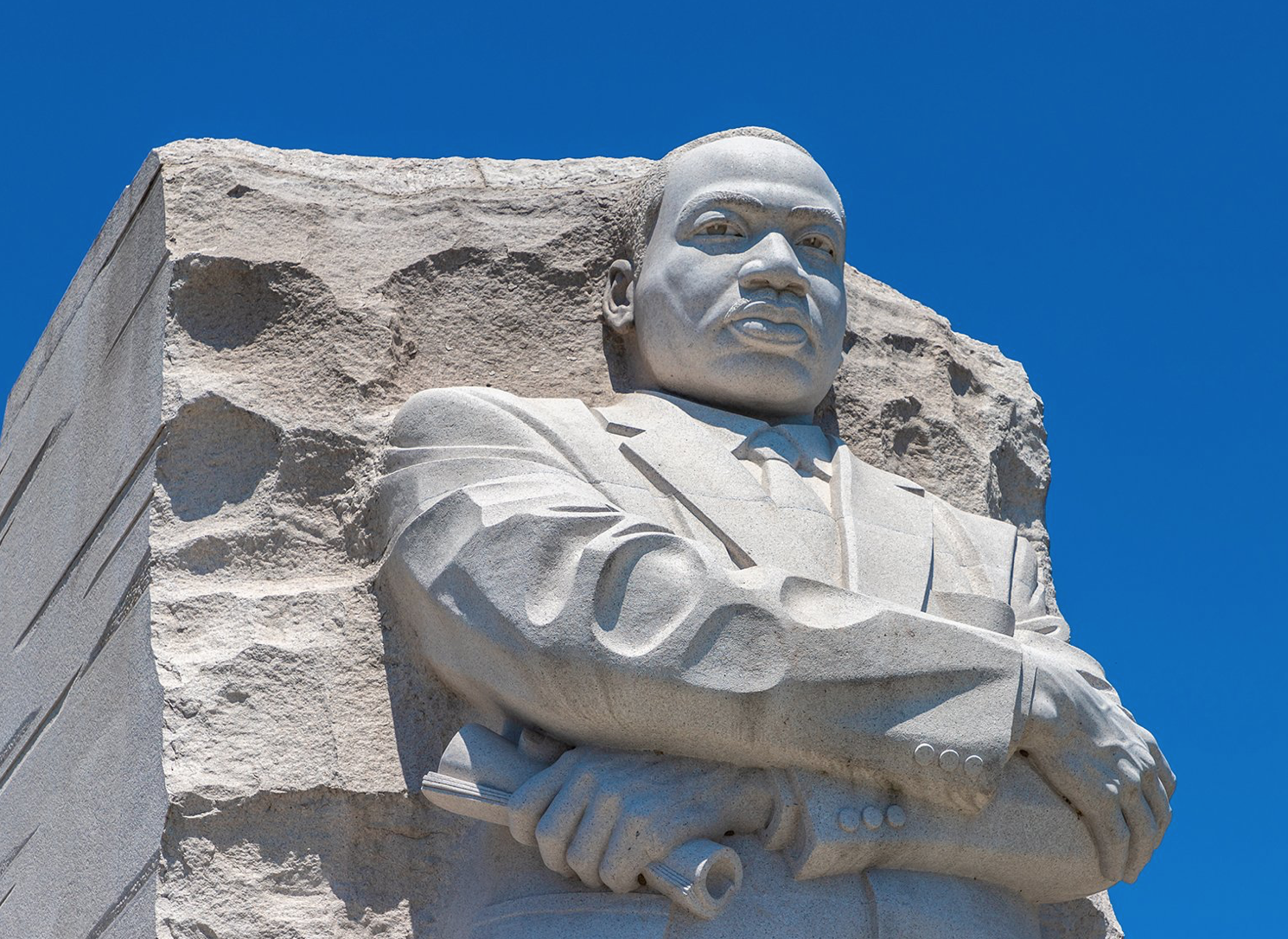
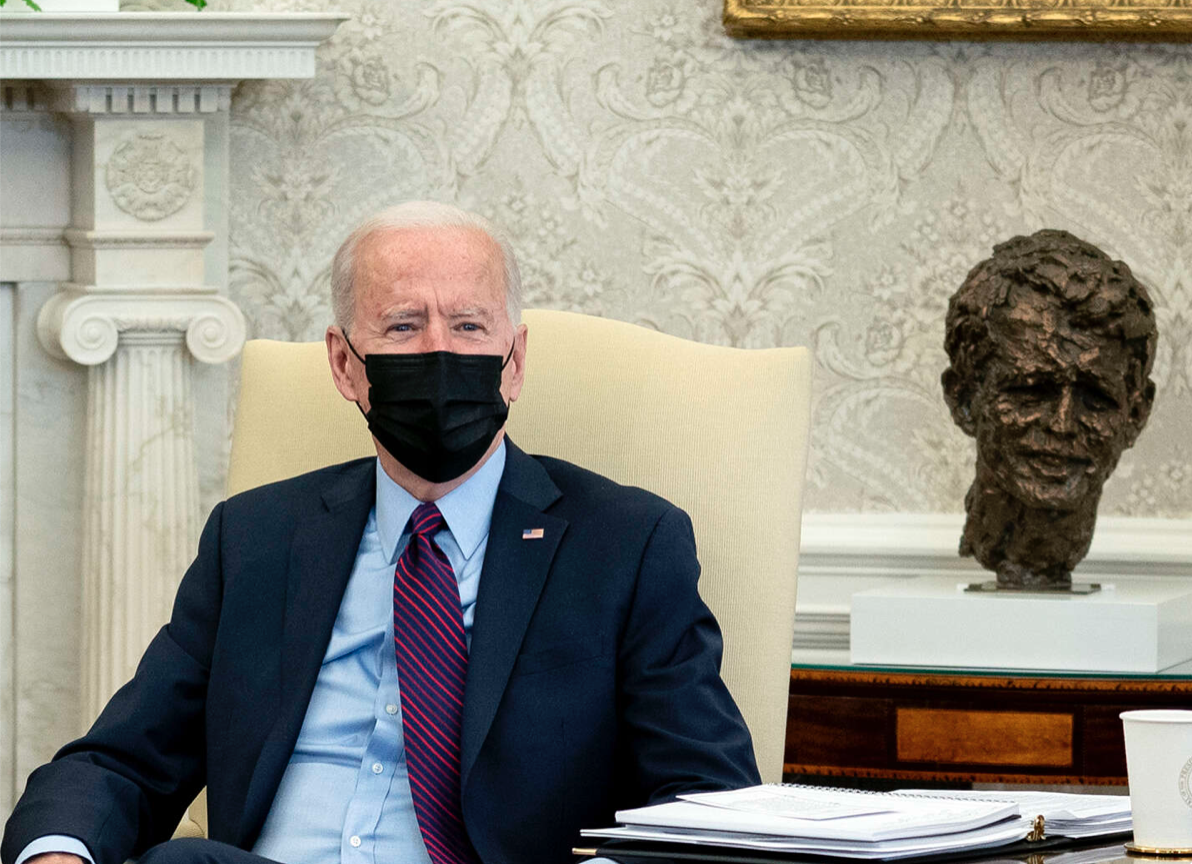
This is an interesting article from the New York Times written by Larry Buchanan and Matt Stevens and published on May 5. They review the history of the choices of US Presidents for art work in the Oval Office. Paintings and sculptures, the choices and placement. Not only do the authors provide this information but it is done interactively. A great use of technology to help you imagine what relatively few people have the opportunity to see in person. In 1995 I have the chance to visit with President Clinton in the Oval Office and my time there was relatively short. The moments there were exciting and considering what art work was in place was not part of my thinking. I hope you find this article interesting and will consider sharing with colleagues and most importantly your students. Most ages would enjoy seeing the interactive part on a big screen. CLICK HERE for access.
President Biden in the Oval Office of the White House with sculpture of Robert F. Kennedy Photo: Stefani Reynolds for the New York Times
Maine-Wabanaki REACH is a cross cultural organization working in support of decolonization and Wabanaki self-determination. REACH focuses on truth, healing, and change. Our work with Wabanaki people is flexible, responding to activities in the communities themselves. It includes wellness and history learning, healing circles, support for growing food and medicines, and emergency financial support. This work takes place in Wabanaki communities, Maine communities, and in the Maine State Correction System. Our work with non-Native people around Maine and beyond includes learning about the history and ongoing relationships of Native and non-Native people, understanding colonization, and the work of decolonization.
This program is an interactive experience in which we engage in a story of particular events in the history of 400-years of colonization of Wabanaki people by Europeans in this territory now called the State of Maine. This highly engaging experience requires our full participation in order to genuinely increase our understanding of colonization and what it means for current descendants and future generations; to reflect on what story we are writing for our grandchildren.
The two-hour interactive workshop will be offered on three different occasions. To maximize the impact of the experience, a cap of 50 participants per workshop will be applied. This means space is limited. We will be accepting registrations on a first come-first served basis. A certification of completion will be provided to attendees that can be used toward Maine educator endorsements.
Monday, May 24, 2021 from 7:00pm-9:00pm
Monday, June 7, 2021 from 7:00pm-9:00pm
This workshop is sponsored by the Maine DOE’s Diversity, Equity and Inclusion Team.
The Music and Mental Health website was created by Gridley Abercrombie, a student at Casco Bay High School in Portland. The Casco Bay curriculum is organized around Learning Expeditions which are long-term, in-depth studies of a single topic that explore vital guiding questions. They incorporate standards and involve fieldwork, service and research, culminating in a project, product or performance. Expeditions require strong habits of work and quality thinking that come through the daily rituals of reading, writing, research, problem solving, and discussion. Individual and group projects are designed to unify and ignite student learning by calling for concrete products or actions that address authentic problems, typically with a component of social or environmental justice.
Casco Bay High School principal Derek Pierce said that the expeditions encourage students to take on a project that is an intersection of their personal passion and a need in the world. They are an example of educators allowing students to pursue their interests to do something that will make a difference. He said that Gridley’s expedition is a great example of that.
When Gridley started the project he knew from his past musical experiences and learning over the years that the arts were good for the overall well being of individuals and for parts of the brain. His research helped him go deeper in his understanding of the science in the brain chemistry and the impact on the neurotransmitters. Music effects the mental health on the brain and body.
Along with learning the science Gridley learned how to create a website and he effectively uses it to include information that is useful for young people, parents and educators. Gridley researched the following topics in relationship to music and mental health: The Problem, Music’s Effect, Musical Opportunities, Who to Contact if You Need Help and Resources.
Some of the statistics that Gridley includes in the website are helpful to have a better understanding. For example, in 2017, “An estimated 3.2 million adolescents aged 12 to 17 in the United States had at least one major depressive episode. This number represented 13.3% of the U.S. population aged 12 to 17.” The potential of music and its impact on mental health is enormous.
Especially during the last year we know that we have students who are facing challenges that didn’t exist earlier. I suggest that you check out the website Music and Mental Health and share with your own school community. Thank you Gridley for your research and sharing it with the world through the creation of the website.
The Maine State Museum is a wealth of information for teachers of all content and grade levels. One topic that they have excellent resources on is Malaga Island. The story of the island and the people who lived there have been of interest to me for some time.
If you’re not familiar with Malaga it is a 41 acre island located near Phippsburg at the mouth of the New Meadows River in Casco Bay. It was the site of an interracial community from the Civil War until 1911, when the residents were forced to leave their homes.
By July 1, 1912, the community on Maine’s Malaga Island ceased to exist. The State of Maine had evicted the mixed-race community of fisherman and laborers in order to clear the small coastal island of “It’s Shiftless Population of Half-Breed Blacks and Whites”, as one 1911 newspaper article described it. The mixed-race community was controversial in the state; many people saw the island as an ugly mark on the pristine beauty of Maine’s coast. After years of well-publicized legal battles, the state succeeded in removing the community of around forty people, committing eight to the Maine School for the Feeble Minded. By the end of 1912, all visible traces of the community disappeared – houses were moved and the cemetery was exhumed.
Not long ago the museum had a comprehensive exhibit on the community and they’ve been able to include many of the resources online (links below) so we can continue to learn from them.
The museum has also archived 5 lessons which include background info, teaching resources, and photographs from the island settlement. Lessons are located at THIS LINK.
If you have any questions about the museum’s resources please contact Joanna Torow, Chief Educator at the museum at Joanna.Torow@maine.gov.
In addition to the above resources Kate McBrien, Maine State Archivist, presented at the Southwest Harbor Public Library and that recorded presentation is below. At some point there was a shift in the attitude towards Malaga Island. In 2010 Governor John Baldacci visited the island and apologized for the wrong that had been done on the island and to its residents. One of the descendants accepted the apology and communicated how grateful the state of Maine acknowledges the history. You can hear the recording from the ceremony and other stories documented at THIS LINK.
If you were able to attend the virtual plenary sessions on February 17 in recognition of Arts Education Advocacy Day you are aware of the outstanding opportunity the 2 hour session provided. If you were not there, you’re in luck. All of the sessions were recorded and embedded below. The day was organized by the Maine Alliance for Arts Education (MAAE) in collaboration with the leaders of the ABC – Arts Are Basic Coalition.
The first one below actually took place during the last part of Arts Education Advocacy Day, the ABC Student Advocacy Initiatives. We know at the heart of providing quality arts education programs and access to it are students! I salute all the Maine students who care deeply for the arts and are afforded an excellent curriculum. And, to all the arts educators striving to provide access to these programs, thank you!
ABC Student Advocacy Initiative
Governor Janet T. Mills Arts Ed Advocacy Message
Remarks from Maine Arts Commission Arts Education Director Martha Piscuskas
Conversation with Maine Art Education Association President Lynda Leonas and Argy Nestor
Visual Art Advocacy Video Maine Minds
Conversation with Maine Educational Theatre Association leader Kailey Smith and Beth Lambert
Maine Department of Education – Kellie Bailey, Social/Emotional Learning and Trauma-Informed Practices Specialist, Commissioner Pender Makin, and Jason Anderson, Visual and Performing Arts Specialist
Conversation with Maine Dance Educator representative Thornton Academy Dance Educator Emma Campbell and MaryEllen Schaper
Conversation with Maine Music Educators Association President Sandra Barry and Kaitlin Young
Music Advocacy Video
Thank you to Susan Potters, Executive Director of MAAEand Melissa Birkhold MAAE Advocacy Coordinator for the plenary session for Maine Arts Ed Advocacy Day and making these individual videos available. The videos are also available on the MAAE website at THIS LINK.
I’m sure you’re all aware that we have a new Secretary of Education at the federal level. Miguel Cardona was a teacher and principal and is the parent of high school students with a lens grounded in his life experiences. Communication updates from the U.S. Department of Education have been re-established, below is a letter from the Secretary. At THIS LINK the U.S. Department of Education makes available a variety of newsletters and journals that you may find valuable. You can sign up to have them automatically sent to your email address.
To our Nation’s Educators and Education Stakeholders:
Thank you for giving your all for students during this unprecedented year.
As the Commissioner of Education in Connecticut, I experienced firsthand the disruptions schools and communities faced as the pandemic unfolded. As a former teacher and principal, I understand how challenging it has been to work under these conditions. As a parent of a daughter and son in high school, I know how critical it is to stay engaged with students, and to help them stay engaged in learning. And, as your Secretary of Education, I pledge to do everything I can to listen, to learn and to act in the best interests of our nation’s students.
Our top priority in the coming months must be to work together to safely reopen all schools for in-person learning, beginning with children in grades K-8. The data, and daily experience, show our children need us to find a way to take this step. My career experiences have taught me that education is primarily a state and local endeavor, and I know students, educators, administrators, staff, and families have performed heroically under these difficult circumstances to take steps toward reopening and to support students wherever they are learning. From a federal perspective, our role is to provide support, guidance, and directions on how to do it safely.
I also know that leadership and support from the federal government is needed in the immediate and long-term – so you have the funds, facts and guidance to make the best decisions for your students and communities. As part of this effort, the Department has released our COVID-19 Handbook Volume 1: Strategies for Safely Reopening Elementary and Secondary Schools, to help you implement the Centers for Disease Control and Prevention’s K-12 operational strategy. We’re working on the second volume, which will provide schools with practical implementation plans to address the extraordinary disruption created by COVID-19 for students, educators, and parents — especially for historically underserved students and communities that have been hit hardest by the pandemic.
Together, we can ensure our efforts are always grounded in science and proven practices, so we do what is most effective for students and families. As we open classrooms, the health and safety of our students and educators must remain the highest priority. The research is conclusive: when they can do so safely, students are better off learning in school, in person, rather than remotely. The need is most acute in our underserved communities and among students of color, who have suffered disproportionately during this time.
In Connecticut, we offered clear, expert-driven guidance and communicated with teachers and staff, administrators, parents, and students. We connected medical experts with schools, and supported flexibility for districts to revise and revisit plans based on local health data. Our approach to tackling this issue nationwide must be the same.
In addition to helping you create conditions in which students can safely return to the classroom, we’ll work to close the large funding gap between majority-white and non-white districts, improve teacher diversity, ensure teachers receive the support and respect they need and deserve, expand access to high-quality preschool, and support high-quality career and technical education.
These ambitious goals and needed changes can only be accomplished if we remove silos in education, share our breakthroughs and successes, and cultivate schools and colleges as places of innovation. States have always been leaders of innovation, and the pandemic has spurred schools, institutions, and individuals to find new ways to meet students’ needs. We will capture and elevate those stories through a best-practices clearinghouse. And, I will always keep students at the forefront of all we do. (Here’s a video about the path ahead.)
I have full confidence in our shared ability, and in the power of our partnership. I want you to know that you have a strong advocate in Washington who is committed to communication, accountability, transparency, inclusivity, and results. Together, we will emerge from this crisis stronger than ever. We will empower our students as never before and equip them for the bright futures they deserve.
Once again, thanks for all you do. I’m eager to work with you to help all students achieve their dreams.
Argy Nestor
Arts Educator, Blogger, Artist, Connector meartsed@gmail.com
https://sites.google.com/view/anestor/
Argy’s Blog
The purpose of this blog is to share stories about people and places; and to celebrate the amazing work (and play) that students, educators, and organizations are doing in and for arts education. In addition, the blog has a plethora of resources and innovative ideas. This forum gives blog readers the opportunity to learn from each other. It is essential that we listen, learn, and collaborate in order to build on teaching practices for the benefit of every learner in Maine and beyond.






 me arts ed