Edutopia tackles the challenges of social emotional learning by providing several videos on a variety of topics that are beneficial to educators, parents, and organizations who provide learning opportunities for learners. In this video series, they explore how educators can guide all students, regardless of their developmental starting points, to become productive and engaged learners. Below are just a few – you can find many more on the section of the Edutopia website called How Learning Happens.
Arts Integration – Celebrating Cultural Identify Through the Arts When afterschool program Ballet Folklorico teaches kids traditional Mexican dance, they build not only social and emotional skills, but also community.
School Climate – The Power of Relationships in Schools Research shows that students who feel safe and supported by adults at school are better able to learn.
Social and Emotional Learning – Cultivating Trust with One-on-One Time For many struggling students, consistently spending informal time with a trusted educator supports emotional well-being and academic growth.
Social and Emotional Learning – Getting Ready to Learn with Mindfulness Research shows that taking some time each day to practice mindfulness as a class helps students prepare themselves for learning.
If you’re not familiar with the Global Oneness Project now is a good time to learn more. Cleary Vaughan-Lee is an amazing person and serves as the Executive Director of the Global Oneness Project. Recently they provided a webinar entitled Learning and Teaching about Indigenous Cultures, Languages, and Territories. The webinar was hosted by Christine McRae from Native Land Digital. This is a timely resource since today is Indigenous People Day in Maine. The webinar was attended by close to 900 people and fortunately the webinar was archived so you can access it and also use the many resources that have been gathered to help support your work as educators.
The recording is available to view on the Global Oneness Project website and the resources are in this Google Doc. I’m looking forward to viewing the recording and taking a close look at the resources that are filled with quotes, websites, books, articles, films, curricula, and podcasts, all of which provide ways to learn from Indigenous voices around the world.
Christine shared ways to engage with the mapping tool Native Land and communicated that there are complexities when mapping Indigenous territories. She said, “When we think of maps in the modern context, they often represent colonial boundaries or colonial understandings of the world. It’s a balance to communicate Indigenous relationships to land, which are so much deeper than shapes.”
In addition, at the last minute, Margaret Noodin, Obijwe poet and linguist, joined the webinar and read one of her poems that was included in the slides. It is called “Babejianjisemigad/Gradual Transformation,” which she read in Anishinaabemowin and in English. She said, “I think one of the things I got from my dad and his mother was the ability to listen to the world singing around me and the desire to sing back to it.”
Thanks to Cleary Vaughan-Lee and the Global Oneness Project for their dedication and thoughtfulness about education. Most of the blog post was from a recent email from Cleary.
Below is a blog post contributed by Kate Smith, Central School, South Berwick Music Teacher. Kate is the 2014 York County Teacher of the Year and is a leader in the Maine Arts Leadership Initiative. Kate has made an amazing list of some of her favorite children’s books with information and suggestions on how to use them in your classroom. THANK YOU Kate for providing not only books but your passion for teaching! The post starts out with this message from Kate…
Kate Smith with What If…
Hello colleagues! If I have learned anything these past six months, it is this: keep your friends close and your ARTS colleagues closer! I have learned so much from interacting with all of you through MALI events, Tuneful Talk webinars, DOE-hosted events, virtual book clubs, Facebook groups and, on the rare occasion, socially distanced gatherings. You inspire me, encourage me, support me, make me laugh, understand the frustration, and your authenticity and vulnerability in these unsettling times remind me I am not alone. THANK YOU. To attempt to pay it forward, I have offered to write a blog post for Argy (I owe her big time), and hopefully there will be something here that will benefit you in some way. Better, I hope you will comment with your own resources and we can make this an even more valuable blog post.
Favorite books Kate is using in her teaching…
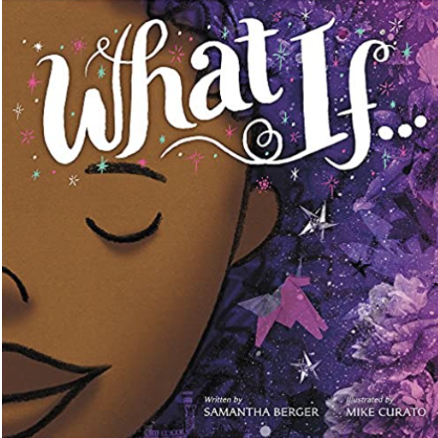
WHAT IF by Samantha Berger and Illustrated by Mike Curato. This book came recommended to me by Kaitlin Young, a music teacher at SeDoMoCha and the 2018 Maine Teacher of the Year. It’s called “What If” and it is written by Samantha Berger and illustrated by Mike Curato. This would be a great book for art, music, dance or theater teachers and their students. I used this book to explain what we can and can’t do in the music room this year. Little, Brown and Company do allow us to videotape ourselves reading the book but with restrictions which you can find on their website.
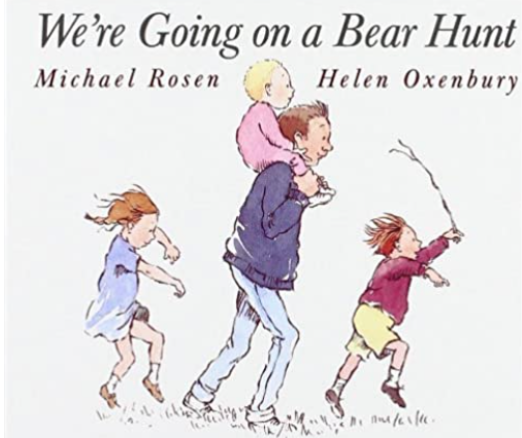
I’m Going on A Bear Hunt by Michael Rosen and Helen Oxenbury. This is an oldie (1997) but goodie. It works just fine as a chant. Adding hand motions and body percussion can make this a crowd pleaser, add instruments and they’ll be begging for more. First we acted out the book as a chant and added motions for each obstacle. Then we talked about how to make appropriate sound for each challenge using a drum. Each child had their own drum. We rubbed, scraped, tapped and banged our way to the bear cave and back!
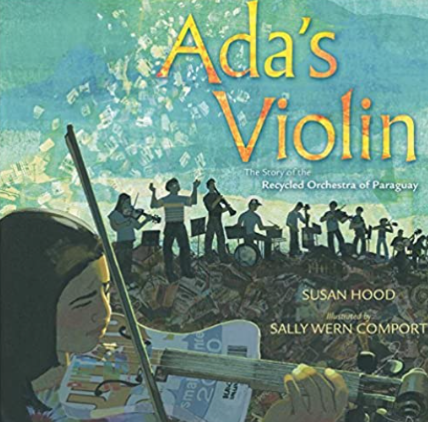
Ada’s Violin: The Story of the Recycled Orchestra of Paraguay by Susan Hood and Sally Wern Comport. Are you having your students make their own instruments? This book can be inspiring and eye opening. A true story, a quick google search and you’ll find some videos of the actual orchestra to share as well.
Mole Music by David McPhail. Another oldie but goodie. This one is great for discussing hopes and dreams with your students, music’s impact on our feelings and emotions (sometimes when we don’t even know it!), and that learning a new instrument takes time and a lot of practice. I once invited a violin player to play while I read. It was awesome. Especially the screechy part at the beginning. 😉
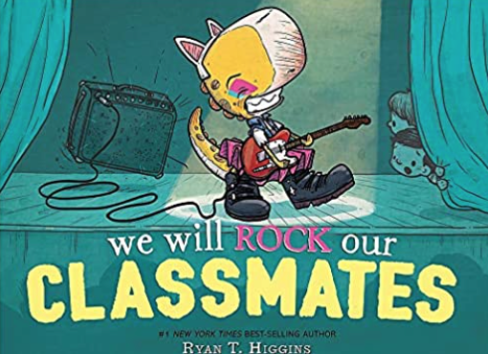
We Will Rock Our Classmates by Ryan T. Higgins, a Maine author with a fantastic sense of humor (if you haven’t read Mother Bruce, you must drive to the nearest bookstore right now.) This book addresses nerves when it comes to performing, in this case, the school talent show.
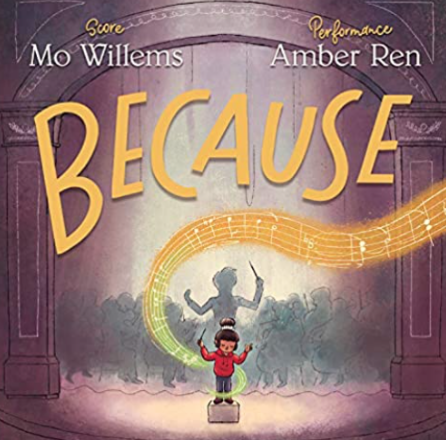
Because by Mo Willems and Amber Ren, published in 2019. This beautiful book speaks of persistence, hard work, inspiration, legacy, community and discovery. How did this book come to be? I will let Mo and Amber tell you at THIS LINK. And here is THE LINK to Hilary Purrington’s symphony, The Cold, featured in this book!
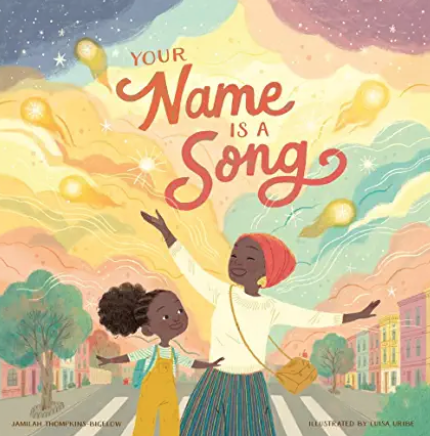
Your Name is a Song by Jamilah Thompkins-Bigelow is a wonderful book that celebrates the beauty, history and magic of names. Saying them correctly is important and it matters. CLICK HERE for a video of a read aloud and THIS LINK will help to pronounce the names in the book from the author!
I will be reading this book to the students soon, have you used it in your classroom? Some teachers have their students draw their name in an artistic way to show what their name means to them. How powerful!
Please consider sharing one of your ideas or work that you have underway with the Maine Arts Education Blog readers! Email me your ideas at meartsed@gmail.com.
StoryCorps was established in 2003 and has a mission to record, preserve, and share the stories of Americans from all backgrounds and beliefs. Their website has several great tips and resources on how to get started in telling your story in the best possible way. I like knowing that StoryCorps was modeled after the efforts of the WPA – Works Progress Administration of the 1930s. I know artists benefited from the work of the WPA during the Depression and the impact still carries over today.
In March 2020 StoryCorps Connect was established in response to COVID-19 pandemic. It enables people who are interested to record an interview with someone using video conference technology. The audio and a still photo from each interview goes into the archive at the American Folklife Center of the Library of Congress. Your interview becomes part of American history, and hundreds of years from now, future generations will listen in. “We think of StoryCorps as an ever-growing archive of the wisdom of humanity.” You can make a recording at THIS LINK. StoryCorps is an independently funded nonprofit organization.
In addition StoryCorps connect has created a Downloadable Toolkit for Teachers and Educators. The toolkit is filled with multimedia resources and lessons to support young people as they learn to interview, record, and listen to the stories of family members and loved ones. There are so many possibilities for ways to use this with your learners – no matter what age or subject you may teach.
The video below provides the 5 easy steps to record your story.
I’ve been thinking, listening, reading, having conversations and researching on how to address racial justice in my teaching and learning. I think the world works in magical ways when ‘stuff’ happens that I’m not looking for. And sometimes ‘different stuff’ intersects which, in this case, has led to this blog post.
First I want to say that my favorite podcast at the moment is Cult of Pedagogy started by a middle school Language Arts teacher Jennifer Gonzalez. Jennifer has brought together an experienced group of educators who help make the Cult of Pedagogy. If you’re looking for a podcast that will push on your thinking and curious where you might find ideas that are sometimes raw and grounded in reality combined with thoughtful educational research, then I suggest that you check out Cult of Pedagogy. Many of the episodes are Jennifer’s interviews with teachers, learning experts, parents, and other people who make things happen in education. There are a handful on the social justice topic. If you’d rather read than listen, each new episode comes out also in an email, on Sunday’s. You can learn about all that she has to offer and sign up for her weekly emails on the START HERE PAGE. An example of the podcast resources that Jennifer provides is episode #147 Why White Students Need Multicultural and Social Justice Education from June 7th an interview with Sheldon Eakins who founded the Leading Equity Center, an online resource for educators.
I was first introduced to poetry by my 7th grade language arts teacher Mrs. Leeds. Each week on Friday we would learn about a poem, write it down in our poetry notebook, and over the next week memorize it and each student in my class would stand and recite it. I can dig into my memory today and recite Stopping by Woods on a Snowy Evening by Robert Frost and In Flanders Fields by John McCrae and probably a few others. Every so often I rediscover my poetry notebook and think about how nervous I was standing up in my front my class. I don’t recall actually learning how to recite poetry. We’ve come a long way in this area; now we have poetry slams, hip hop, jazz poetry, beat poetry, spoken word, and Poetry Out Loud (POL). POL is a partnership of the National Endowment for the Arts, Poetry Foundation, and the state and jurisdictional arts agencies. The Maine Arts Commission administers the recitation program.
I’ve been curious for some time about how ‘poetry’ has, for the most part, been taught in English or language arts class. Why poetry is considered an art form yet in schools we don’t include it when we reference visual and performing arts. In our standards documents it’s not clearly defined as part of the arts. When I try putting poetry in context I explain it like this: in schools poetry is behind the English teaching door and in the real world it is part of the performance arena.
I wanted to better understand this separation so I did a little sleuthing on the internet and, of course, I start with the Greeks. From the Ancient Greek word ποιεω (pronounced poieo) which means ‘I create’. Definition: an art form in which human language is used for its aesthetic qualities in addition to, or instead of, its notional and semantic content. In most poetry, it is the connotations and the “baggage” that words carry (the weight of words) that are most important. Poetry.org.
And further on about ‘spoken word’. Spoken word is poetry, and more recently spoken word poetic performance art that is word-based. It is an oral art that focuses on the aesthetics of word play such as intonation and voice inflection. It is a “catchall” term that includes any kind of poetry recited aloud… Unlike written poetry, it has less to do with physical, on the page aesthetics and more to do with phonaesthetics, or the aesthetics of sound. Wikipedia
A focus on words, sounds, presentations and performances using poetry has become more prevalent in our society since about the 1980’s but certainly it is embedded and has been for years in many cultures and their traditions. The connection between poetry as a performance and music is closely aligned.
In fact, in Ancient Greece, the spoken word was the most trusted repository for the best of their thought, and inducements would be offered to men (such as the rhapsodes) who set themselves the task of developing minds capable of retaining and voices capable of communicating the treasures of their culture.
I think poetry’s biggest potential is to light kids up and engage them in learning about themselves and the world. If only Mrs. Leeds had someone guide her in the pedagogy of teaching poetry. A good reason to promote integrated curriculum.
Here’s where the intersection of learning takes place for me. On my phone last week a video from America’s Got Talent popped up. A powerful performance by Spoken Word Artist Brandon Leake began to help me formulate curriculum for racial justice. You can LEARN more about Brandon and the organization he established Called to Move. I suggest using Brandon’s performance with your students.
Join experienced Dance Educator, Elly Lovin, for a mini-camp experience from your home or backyard this summer. Designed for children ages 4-10, but open to the whole family! Each week our dance explorations will center around a different theme, while utilizing elements of movement to give dancers an understanding of how to use space, force, flow, levels, tempos, locomotion, focus, etc. to create their own movements. Themes: 6/30 Colors; 7/7 Night At the Museum; 7/14 Enchanted Garden; 7/21 Sky & Space; 7/28 Unicorns & Dragons; 8/4 Super Powered Dance.
Classes meet on Zoom on Tuesdays, June 30-August 4 Six Weeks 12:30-1PM Eastern (11:30 Central/10:30 Mountain/9:30 Pacific)
Cost (per household): $55 (Venmo to @Elly-Lovin) Sign up with a friend and both parties receive $10 off their registration!)
Dance @ Home Kits Available! $25 Shipped w/ Camp registration
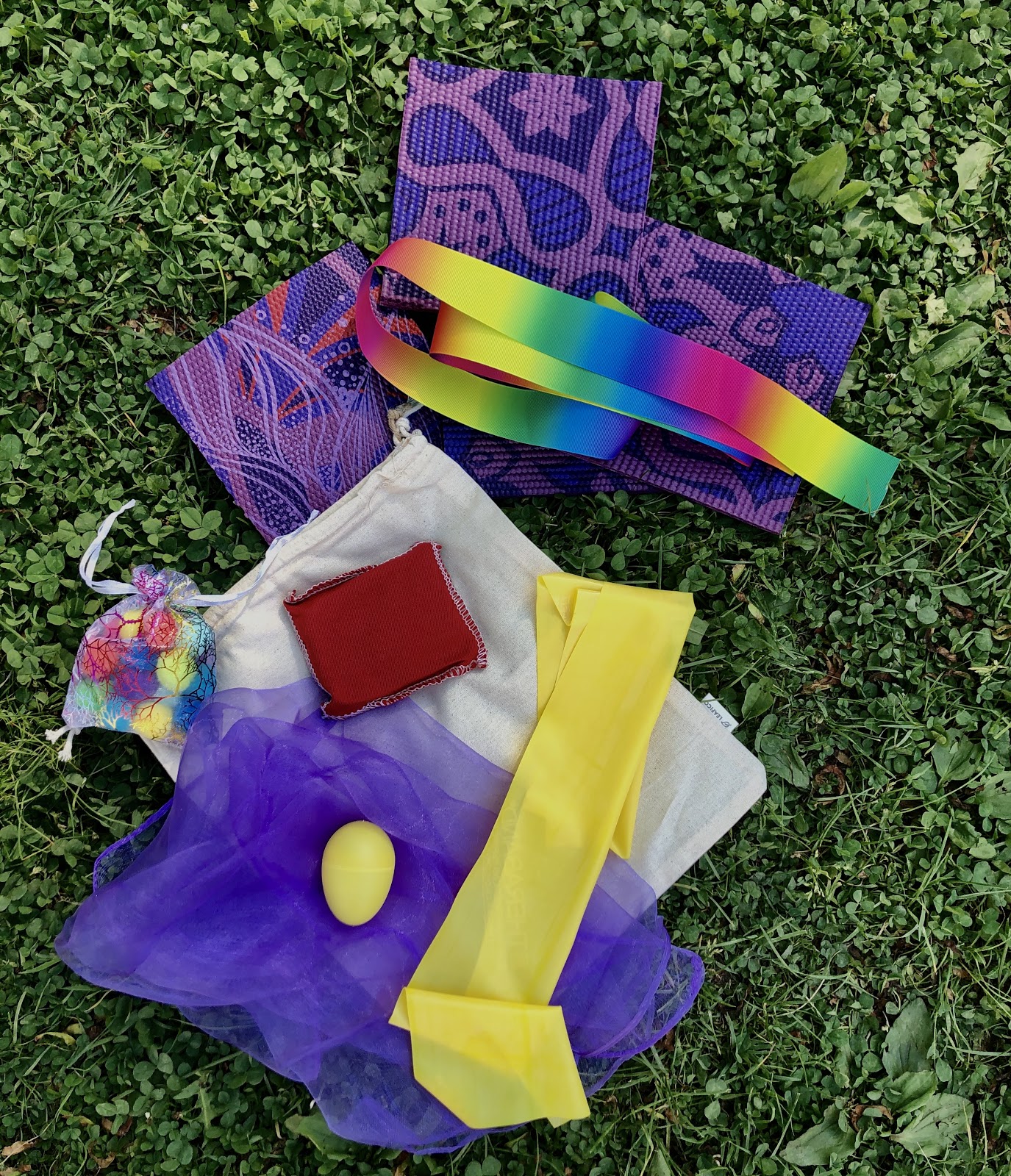
A selection of my favorite props curated to provide hours of movement fun at home or on the go. Eco-friendly drawstring bag contains mini-mat spot markers, egg shaker, bean bag, dance ribbons, chiffon scarf, pom-poms, stretchy band, and a go-to list of ideas about how to move and use each prop.
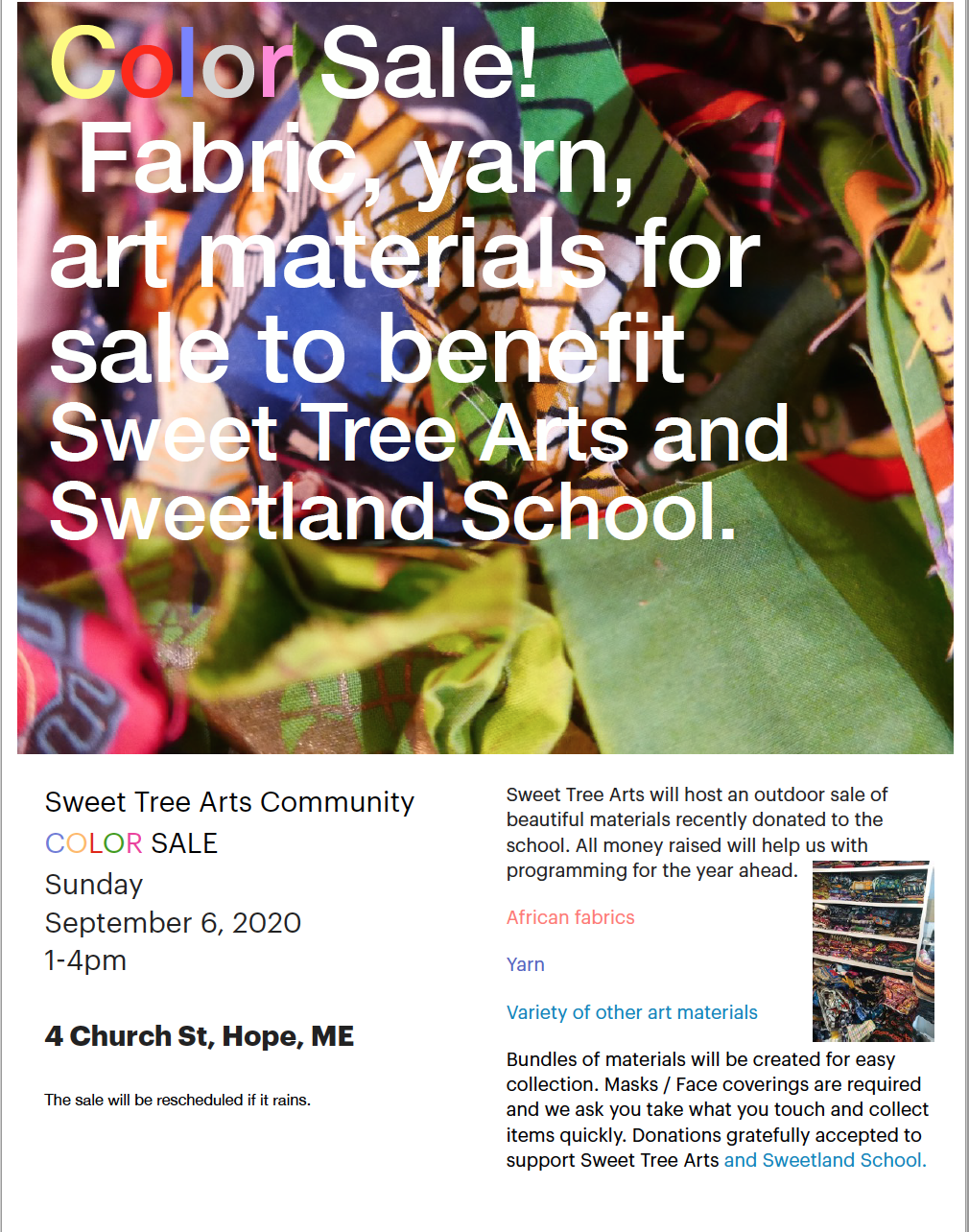
Creative kits offered by Sweet Tree Arts. Online order your favorite summer activities – a variety of kits are available with freedom, choice and creative thinking in mind. As many of you know many camp programs are not running during this summer because of COVID> This is a great opportunity to encourage your students to continue making art by starting with a kit that has everything needed to create. If you have more questions please contact Lindsay Pinchbeck at lspinchbeck@sweettreearts.org
My musical career started in 4th grade when I picked up the flute in the beginning band at Metcalf Middle School in Exeter-West Greenwich, RI. My middle school music teacher, Joe Smith, was an inspiration to me and all my classmates. He was quirky, fun, and taught us interesting and different music. It was truly an amazing middle school music experience. I would definitely say that he inspired me to be the kind of teacher I am today.
I went to Boston University for my Bachelors degree in Flute Performance and to Boston Conservatory after that for my Masters degree in Flute Performance and Music Education. I then moved up to Maine and finished my certification requirements through USM while playing in the Southern Maine Community Orchestra and continuing to seek out performance opportunities in the area.
My first teaching job was at Marion T. Morse Elementary School in Lisbon Falls teaching K-5 General Music and beginning band. I was hired at Gorham Middle School (GMS) in 2003 when the school was built and I was tasked with developing a brand new middle school music program that had not previously existed. Currently I teach General Music to all 6th & 7th grade students, Chorus for middle school and Steel Band to middle and high school students. My amazing colleague, Rose Skillling, also teaches GMS General Music as well as the Band and Jazz Band program.
I have always been a huge proponent of educational technology and the positive impact it can have on music education particularly in schedules where we see students so infrequently. dHaving Apple devices, a large portion of my curriculum has been based in Garage Band for many years. So when our technology director announced that the entire 6th grade would be moving to Chromebooks a few years ago I had a panic attack thinking I was going to completely lose the amazing possibilities I had opened up for the students. I did some research and I found a couple of apps that would work on the Chromebooks in a similar way and thankfully administration was super supportive and on board with purchasing Soundtrap and WeVideo for every student in the 6th grade. Unbeknownst to me, this was about to open up a whole new avenue of connections across the world for me and the students.
At the time, Soundtrap, a small company based in Sweden, was still only a few years old and not that well known. But there happened to be a Maine educator who had connected with them and taken a position as an educational consultant. I quickly connected with her, and we teamed up to present Soundtrap at the student MLTI conference the same year I introduced the software to my curriculum. From there, the opportunities for sharing student work, lessons, ideas, connecting with music educators, blog posts, and articles just kept coming. Soundtrap has since been acquired by Spotify and is being widely used by educators and musicians. In January of 2020, through Soundtrap, I connected with the Society for Online Music Education and was invited to direct a Virtual Choir project for the International Music Education Summit to be premiered in mid-March. There were a couple of other Virtual Choir projects out there that I knew about but this was to be a new vision, one that included collaboration amongst participants, making Soundtrap the ideal software to use. We had a handful of teachers signed up for the pilot project. Things were going calmly and smoothly, and then COVID-19 hit us.
With the swift move to on-line learning, every music educator in the world immediately started to seek out virtual ensembles for students to participate in. Our project was quickly populated with hundreds of teachers and students and my director position got a lot more complicated! I asked two Maine colleagues, Rachel Scala-Bolduc and Patrick Volker, to help create vocal practice tracks to support the diverse group of new participants. Another music educator who teaches full-time at a virtual school suggested I try a Zoom rehearsal for participants to help them learn the parts. She hosted a how-to-run-a-virtual-rehearsal webinar that I participated in which ended up being an invaluable resource. The edit of the recordings took many, many hours of organizing, communicating, editing, and figuring out how to make the best quality audio. At one point I was playing the tracks for my husband and he suggested just dipping the volume at a certain point and it made a huge difference! During another moment of frustration, I listened to one of Eric Whitacre’s Virtual Choirs to get some inspiration and realized that reverb was a key component to blending the voices that I had yet to try. I am so thankful for this learning opportunity because it gave me a head start for what was to come with the extension of distance learning to the end of the year.
As soon as our school announced the closure in March, I set up Zoom virtual rehearsals with the Chorus classes right away. We continued rehearsing just the same as we had in school. The only difference being, I couldn’t hear them as a group and they couldn’t hear each other. We experimented together, recorded during Zooms, recorded after Zooms, talked about other apps that might accommodate multiple singers, but we just kept on our path of our end-of-year performance goals and figured out everything together along the way. The students continued learning music we had started in school and also learned new music purely through our virtual rehearsals. In the end, they have recorded six pieces of music during our time home due to COVID-19, all of which I am turning into virtual choir videos to serve as our “spring performance”. While this is certainly not an ideal scenario for ensembles to rehearse, it is temporary and it can be successful!
Unfortunately, because the steel pans are housed at school, and the steel band program is extracurricular, that is now in a bit of a holding pattern until we know the future of getting back into the school this Fall. I have been researching apps that could provide some type of virtual pan experience to get the students by in the meantime and I have been in communication with our facilities department about potentially holding outdoor parking lot rehearsals for steel band next year.
General Music Class was another whole challenge when we moved to distance learning! At GMS, students have 7-9 week rotations of Allied Arts. Both the 6th & 7th Grade Music Classes were about halfway through the rotation when we moved to online classes so we had established relationships and structures ahead of time. However, the student rotation change to a new Allied Arts class was scheduled for right after April break. This meant students and teachers connecting with and getting to know each other for the first time in a new content area, virtually. As an Allied Arts team we worked together to help our current classes connect with the next teacher through Google Classroom. In Music Class, we introduced a Tabata composition project that combined physical activity and Music to help make the Music to PE transition smoother. The last rotation has been a challenge. It has been difficult to connect with kids with the asynchronous model that our district adopted due to many class meetings happening simultaneously. I have learned a lot about what I need to change in order to effectively teach new music concepts to individuals in an online format as opposed to a full group in person where we utilize a lot of repetition and group collaboration to help support learning. Although there are plenty of other variables in a new grouping of students, there was a marked difference in the performance of the General Music students who started before distance learning and those who started purely in the online format. This summer, my colleague and I plan to meet to talk about some of these challenges and make plans for how we can better teach General Music class should we remain in distance learning this Fall.
There have been a lot of worries circulating amongst Music teachers with research studies outlining the risks of the high transmission rate of COVID-19 through singing and instrument playing in conjunction with news of music educators being laid off in districts around the country. The best thing we can do right now is to show our communities and administrators that, despite temporary limitations, music can and should still continue in our schools regardless of whether we are in the building or learning remotely. Think of solutions that will work and suggest them to colleagues and administrators before something is suggested for you! That also requires creativity, experimenting and out of the box thinking from all music educators. During the last few months, I had an overall participation rate of about 80% in my chorus students with a couple of overwhelmed students asking to drop and a couple of students asking to join because their schedule was suddenly free to do so. I had students completing Music Class work first thing in the morning saying they liked to do “the fun stuff” first. I had parents emailing about how much fun they had helping their child compose music or how amazing it was to hear the final virtual choir recording after hearing their child singing their part alone at home. The more success stories we share, the more everyone will continue to see the value in continued music and arts education whether we are teaching in the comfort of our classrooms or through the virtual world.
Here are the various end-products I’ve worked on with the GMS Virtual Chorus:
“I See Colors” – May 2020
Audio recorded in Soundtrap, edited in Garage Band, video collected in Flipgrid, edited in iMovie, collage and effects in WeVideo:
“Home” – April 2020
Audio recorded in Soundtrap, edited in Garage Band, slideshow videos of staff messages collected in Flipgrid, compiled in iMovie:
“Between the Bells” – March 2020
Audio recorded in Soundtrap, edited in Garage Band, stock images from pexels.com, lyrics added in Adobe After Effects:
“The Tiger” – May 2020
Audio recorded in Soundtrap, edited in Garage Band, video recorded in a Zoom session, compiled and lyrics & effects added in WeVideo:
“The Never Ending Story” – June 2020
Audio recorded in Soundtrap, edited in Garage Band, pictures from the Gorham MIddle School Facebook page, compiled in iMovie:
I didn’t learn about Juneteenth until I was an adult. I wonder why it was never part of my formal K-12 education. Teaching Tolerance websitehas included a blog post today that was written by Monica J. Bell and actually first published June 18, 2015. It provides history and clear information which I encourage you to read as a teacher, parent, adult seeking clarity so you can be better informed living in America or beyond.
So, what is Juneteenth? The name combines the words June and nineteenth, the day in 1865 when enslaved Texans in Galveston were informed that slavery was over. Learn more in today’s post called Happy Juneteenth! from Teaching Tolerance.
I believe that we have a role as educators to teach about race, social justice, equity and similar topics. This education should take place in the home and in every classroom. It can take on a variety of formats from teaching kindness and understanding to teaching culture and history to looking at, listening to, and creating artwork that provides a format for conversation. At every age we need to have open conversations to help bring an understanding of the value of every person’s life.
I have started to compile a list of resources to help support educators. I will continue to add to this blog post as my research leads me to more resources. I invite you to return to this blogpost in the future. And, if you have resources please share them with me at meartsed@gmail.com so I can include them or you can post them in the comment section below.
At the end of this post there is a link to a facebook page that belongs to the British cellist Sheku Kanneh-Mason. He and his 6 siblings performed “a tribute to the families and communities who are affected by racism and racist violence.” Their message is one that arts educators understand: “music is a form of expression and a testament to hope and love.”
BOOKS
Young Children
Patricia Polacco books
Pink and Say
Chicken Sunday
Holes in the Sky
Ashley Bryan books
Beautiful Blackbird
Freedom Over Me
Infinite Hope
Let’s Talk About Race by Julius Lester
Through My Eyes by Ruby Bridges
Books by Ezra Jack Keats
Books by Leo and Diane Dillon
Books by Jerry and Andrea Davis Pinkney
Middle Grades
A Good Kind of Trouble by Lisa Moore Ramée
Ghost Boys by Jewell Parker Rhodes
New Kid by Jerry Craft
Lizzie Bright and the Buckminster Boy by Gary D. Schmidt
Young Adult
Dear Martin by Nic Stone
All American Boys by Jason Reynolds and Brendan Kiely
The Theresa Vaughn Project, Leonard Schneider website, “Unification.. ie helping people to get along better. This might be possible if we can get to a better place / page culturally and musically.”
First Aid Arts – Providing training and support to individuals and organizations who want to offer effective arts-based care to survivors of natural disasters, human trafficking, forced migration, domestic violence, homelessness and other types of trauma.
Argy Nestor
Arts Educator, Blogger, Artist, Connector meartsed@gmail.com
https://sites.google.com/view/anestor/
Argy’s Blog
The purpose of this blog is to share stories about people and places; and to celebrate the amazing work (and play) that students, educators, and organizations are doing in and for arts education. In addition, the blog has a plethora of resources and innovative ideas. This forum gives blog readers the opportunity to learn from each other. It is essential that we listen, learn, and collaborate in order to build on teaching practices for the benefit of every learner in Maine and beyond.







 me arts ed