Archive for the ‘Standards’ Category

h1

MAAI Planning Phase 3

April 15, 2013

Give me your thoughts
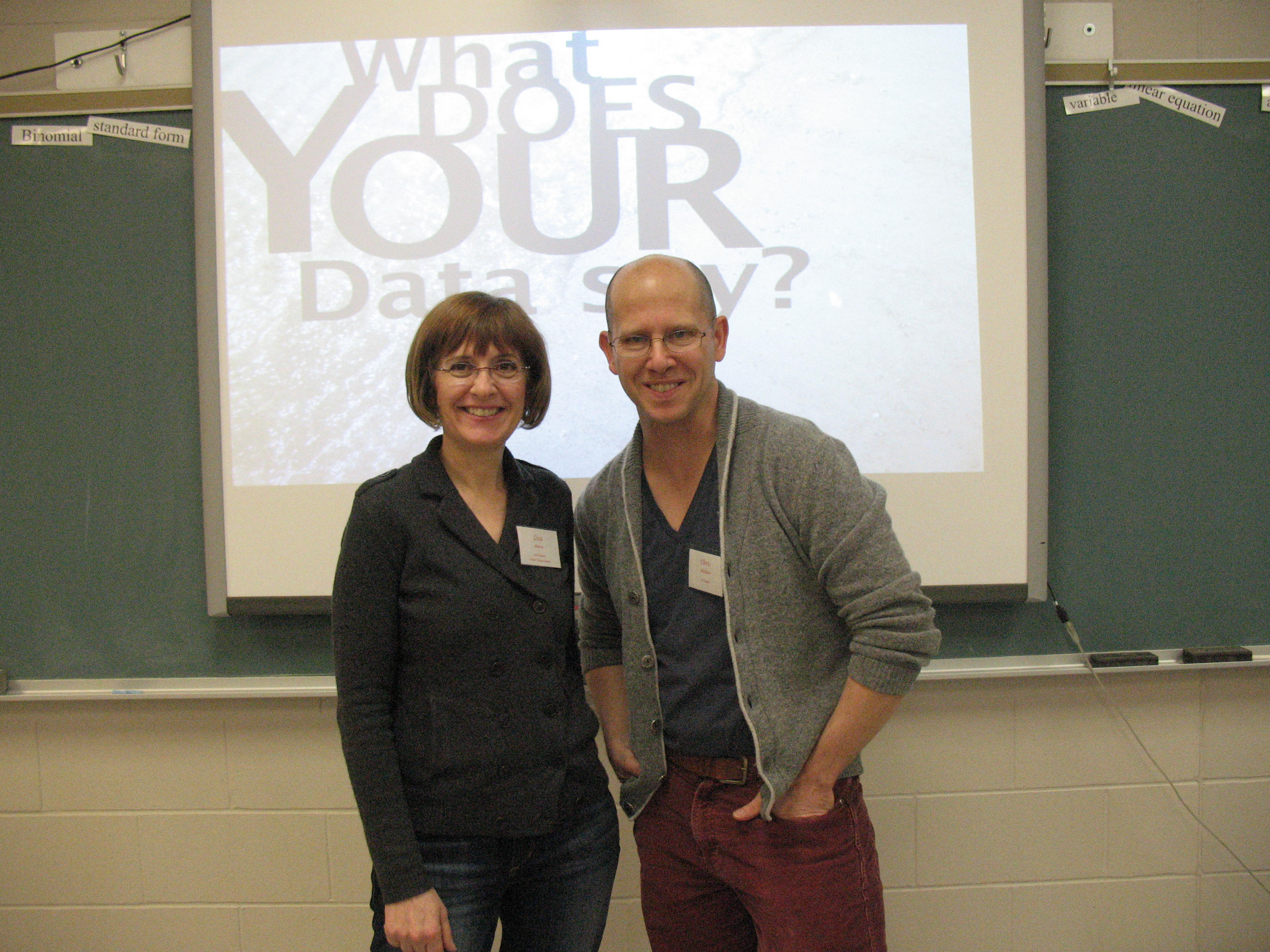
IMG_3052

Lisa Marin and Chris Milliken presenting “data” from Chris’ graduate research that he collaborated with Lisa on finding.

The Maine Arts Assessment Initiative (MAAI) has been underway for almost two years. During that time hundreds of Maine arts educators have responded to the invitation to join the journey and participate professional development opportunities throughout Maine. These opportunities have been numerous and provided through various modes and locations.

Opportunities include(d):

  • Webinars were available during phase 1 and are still available through archives located at http://www.maine.gov/education/lres/vpa/assessment.html#webinars. The archives have meeting plans so you can use them at teacher meetings or individually.
  • The state conference on arts assessment was held at USM during October 2011 where over 200 teachers attended.
  • Regional workshops were provided by arts teacher leaders during phase 1 and 2 all over the state.
  • Mega-regional workshops were held during phase 2 at UMF, USM, Easton Schools, and Ellsworth High School with 240 registered for the 4 events.

Underway:

  • Videos are being created in 4 classrooms that will provide a picture of a standards based arts classroom/school. They will be made available at their completion in June.
  • The Depository work is ongoing and located at http://mainelearning.net/resources/. Next week arts educators will be coming together to look at “quality in arts education” to help continue with this work. The Depository will be filled with samples of arts education lessons, units, assessment tools, and other resources.
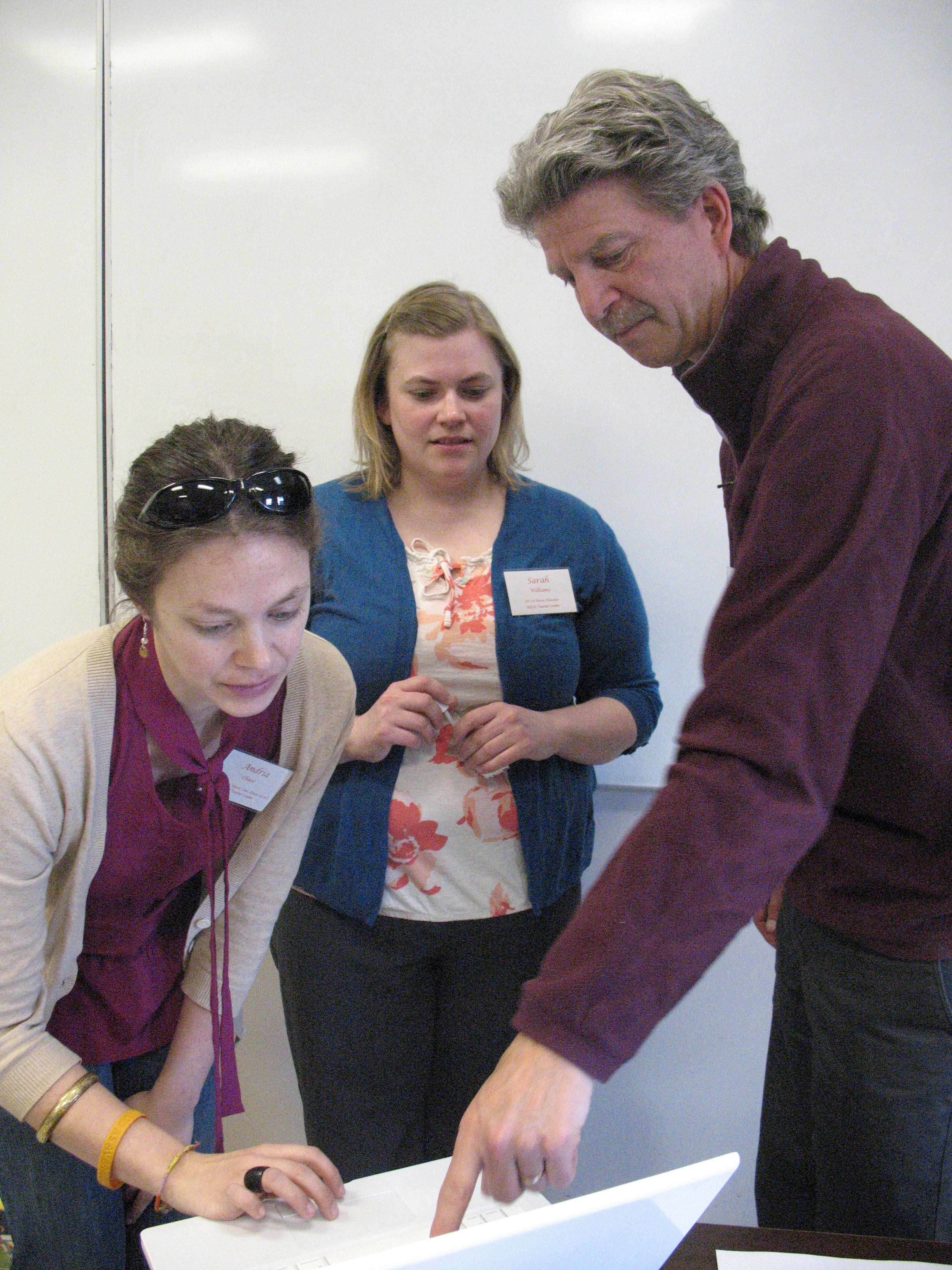
Teacher Leaders Andria Chase and Sarah Williams take a closer look at workshop info with Leadership team member Jeff Beaudry

Teacher Leaders Andria Chase and Sarah Williams take a closer look at workshop info with Leadership team member Jeff Beaudry

The teacher leaders, your colleagues – 38 of them, have stepped up and taken on responsibilities of expanding their thinking and providing leadership by creating the workshops. They have contributed in so many positive ways and provided feedback to help determine the steps of the MAAI.

The MAAI is truly a grassroots effort with arts educators leading the way. As we come to the close of phase 2 it is time to look ahead and determine the components of phase 3. If you attended a workshop or another gathering we have your specific feedback from the event that has helped inform the work. At this time if you have ideas or feedback that you’d like to share on what you’d like to see included in Maine Arts Assessment Initiative PLEASE email me at argy.nestor@maine.gov and share your thoughts and ideas. The leadership team is meeting on Thursday, April 18 so please don’t delay with your comments!
h1

NCAS Are Coming!

April 13, 2013

Help! Help! The standards are coming!!!

This blog post was written by York High School music educator Rob Westerberg. Rob collaborated to create the Maine Arts Assessment Initiative (MAAI) and served on the phase 1 leadership team for the MAAI. Periodically Rob and I discuss the state of Arts Education in Maine and after a recent conversation on the topic this blog post appeared in my inbox. I hope it provides “food for thought” as I have tagged this post and that you are motivated to post a comment with your thoughts. 

The National Core Arts Standards are on their way, and I think the news is being met with every reaction known to the universe… please take this short quiz and lets see where YOU stand on the issue!

The thought of unpacking the new standards in my program makes me: 

a.  feel guilty because I don’t have time to utilize standards right now as it is.

b.  all excited – I can’t wait to see what they came up with! And I think I need to get out more!!!

c.  want to chew on aluminum foil just to take my mind off of making yet ANOTHER revision to my curriculum.

d.  wish I lived in Sweden.

The main reason I am apprehensive about incorporating standards is:

a.  I already work a 60 hour week (for 40 hours of pay) and doing even one more thing is  not going to be possible.

b.  I don’t have time, between my assigned duties of assessing Common Core English Language Arts prompts and playground duty.

c.  My in-laws are coming to visit and the dog just threw up on the sofa.

d.  I don’t know how and/or know what “incorporating standards” really even means.

My favorite ice cream is:

a.  Rocky Road

b.  Mint Chocolate Chip

c.  Chubby Hubby

d.  Is this really a blog post on the national standards?

Listen, here’s how I see the impending arrival of the standards revision going down –

What it DOESN’T mean:

* increased work or expectations

* mandated curriculum – relinquished local control

* a redefinition of arts education

* a list of things my students “must” meet

* taking what we already do and merely dressing it up nicer

* feet-to-the-fire, “meet these or else” expectations

What it DOES mean:

* an honest reflection of essential skills and expectations for our students

* an invaluable guideline for sequential skill development

* language that aligns us with the other 7 core subject areas

* a tool that fosters our growth as arts educators in the 21st century

* a document that embeds the expertise of thousands of colleagues throughout the country

* a foundation provided for evaluating what we do and why we do it

Through the National Standards revision, we have unprecedented opportunity to:

* utilize a powerful advocacy tool, articulating how and why what we do is academic and essential instruction

* show how staffing and student face-time must be increased in our schools to meet academic expectations

* provide a common starting point for educators within and ACROSS school districts to have meaningful, collaborative discussions around curriculum

* provide a common starting point for educators within and ACROSS school districts to have meaningful, collaborative discussions around instruction

* provide a common starting point for educators within and ACROSS school districts to have meaningful, collaborative discussions around assessment

* direct our K-12 conversations so that every school district in Maine has a continuous program of studies that is sequential both in concept and in practice

* expand our knowledge, discover new connections, and continually reevaluate – assisting us in our own process of being lifelong learners

Far be it from me to tell anyone the sky isn’t falling if they’d simply prefer to believe otherwise, but the reason we do what we do in our classrooms day in and day out is to provide the very best we possibly can for our students. The National Core Arts Standards have every promise of being a powerful tool and vehicle that will assist us in doing so. No, your students will not have to meet every standard. Yes, there are standards that you will want to embrace and incorporate. No, no one is going to tell you what to do. Yes, this document will help you articulate what it is you already do in your classroom. No, you are not expected to dissect it on your own. Yes, there will be bountiful opportunities right here in Maine to learn more about it and how to utilize it.

Keep checking in on this blog, and don’t be surprised if this document becomes one of the cooler things you’ve come across in your career, a genuinely helpful resource in your arsenal as a great teacher in this great state. And, no doubt about it, it will have the potential to be transformative if you choose to go down that road too! Please excuse me now, I have to go clean up a mess on my sofa……

Thanks Rob for providing your latest thoughts on the National Core Arts Standards – when you get finished with your sofa, I have some cleaning at my house to do so please stop by…

h1

Another Arts Teacher’s Story: Mari-Jo Hedman

April 9, 2013

This is the 26th in a series of blog posts telling arts teacher’s stories. The first 19 were told last year by the phase I Maine Arts Assessment Initiative teacher leaders. The  series continues with the stories from the phase II teacher leaders. These posts contain a set of questions to provide the opportunity for you to read educators stories and to learn from others.

IMG_0096Mari-Jo Hedman has been teaching music since the fall of 1982 after graduating from the University of Southern Maine with a B.S Degree in K-12 Music Education. Mari-Jo is currently teaching K-12 music in the Fort Fairfield School District, MSAD #20.  She has taught in this district for a total of 17 years. She has also taught in Mars Hill, Caribou, and Union #122, which was at the time comprised of Stockholm, New Sweden, Westmanland, and “the other Woodland”.  In MSAD #20, she is responsible for about 300 students K-12 and teaches everything from classroom K-5, beginning 5th grade instrumental and band, 5th grade chorus, 6-8 chorus and 9-12 chorus. Mari-Jo also teaches a piano/percussion class at the high school.

What do you like best about being a music/art/drama/dance educator?

I love the fact that I work with grades K-12 because I can really see the growth from the first day of kindergarten right up until the day they graduate from high school, providing they continue with the vocal music program throughout their middle/high careers. I also love seeing kids come in that are struggling with many other classes in school, but they thrive in the music classroom.  That makes my day!

What do you believe are three keys to ANY successful visual and performing arts education?

  1. There needs to be a well-rounded curriculum that allows for as many musical experiences as possible. For most students, except for the music they hear on the radio or TV, their only musical experiences will take place as part of what I offer in the music classroom, and extend to the musicians that I bring into the school, or the local field trips that we go on.
  2. You need to LOVE what you do so that you can get your students to pick up on that excitement and want to keep coming back for more. You need to get the students turned on to music as soon as you have them in your classroom for the very first time.
  3. You really need keep up with what your students are listening to and try to incorporate some of their musical choices into the curriculum. It helps me to stay excited about what I am doing when I see a student come to me and they can’t wait to show me their newest favorite song that they just can’t live without. They especially love it when I like it enough to buy it and add it to one of my playlists.

How have you found assessment to be helpful to you in your classroom?

I am the only “special” in our system that truly does assessments and gives grades like the “regular” classroom teachers. I find that it gives me an opportunity to get to know each and every student’s needs and accomplishments and be able to communicate that to the parents. I think that this has benefited me in regard to justifying that music is essential, especially in these days of budget and job cuts. I also feel that students have a better understanding of what and how they are doing. It also helps students know on what they need to continue working.

What have been the benefits in becoming involved in the arts assessment initiative?

MAAI has been such a breath of fresh air for me in regard to assessment. Being with so many creative and hard working minds, sharing and receiving great ideas as to how assessment is done, what works and what doesn’t, has been true incentive for me. It has really made me look at what I am doing in my own classroom. I have so many new ideas and have tried some new things in not only elementary classrooms, but up through the middle/high levels as well. I have made strides in the right directions, but still have a long way to go.

What are you most proud of in your career?

I am most proud of students who have continued on in some aspect of music after they leave the halls of Fort Fairfield Middle High School. It is so humbling to realize that you have had enough of an impact on a student that they want to pursue a music career or maybe sing/play in some local music groups. The other thing that I am most proud of is the student that struggles and just keeps at it and at it until he/she finally gets it! I love to see the pride in children’s faces when they overcome that musical “hurdle”.

What gets in the way of being a better teacher or doing a better job as a teacher?

The massive amounts of paper work or details that are constantly added to our plate. It would be great to be able to just focus on teaching!

What have you accomplished through hard work and determination that might otherwise appear at first glance to be due to “luck” or circumstances?

I have been fortunate to get some grant money that helped to enhance the elementary program by offering new opportunities that otherwise our school district would not have been able to afford. I have a wide variety of percussion equipment for 5th percussion ensembles, ukuleles which I also teach at grade 5 along with enough piano keyboards to use in a group of 30 students if I ever had that many. I still do recorders in grade 3. It doesn’t magically happen. This also requires a solid underlying curriculum in grades K-2 in order to prepare students for being successful in developing the skills and knowledge needed in order to perform on these instruments.

Look into your crystal ball: what advice would you give to teachers?

As an arts teacher, you always have to have a clear vision of what you want your students to accomplish.  Be creative and think outside of the box when building your curriculum and the musical experiences that you want to offer your students. Be diligent and don’t take “no” for an answer. If you want/need something badly enough, fight the fight to get it and don’t give up.  You will be majorly reward in the end.

If you were given a $500,000.00 to do with whatever you please, what would it be?

I would use this as a start up fund for a new performance facility. Currently there is not a place at the elementary school where all grades that I teach, K-5, can be at the same time while including friends and families. This means I have to hold concerts in the high school gymnasium OR split the concerts over a two-night span of K-2 then 3-5. This performance also takes place in the gymnasium. Right now we split the concert into two nights. There is only room for one performing group and the audience. The other groups must wait in their classrooms until it is their turn to perform and we do not have a set-up that allows them to watch ongoing performances. A performance venue such as an auditorium would be a dream!

Imagine you are 94 years old. You’re looking back. Do you have any regrets?

I wish that once I had started teaching in Fort Fairfield I had stayed in that one location. Moving around and coming back to Fort Fairfield 3 times during my teaching career put me at a disadvantage and more importantly, the students were at a big disadvantage. We used to have large performing groups, competitive show choirs and jazz choirs, as well as an active music boosters organization that allowed us to travel as a group every 2-4 years. We went to Boston and Halifax, Nova Scotia for competitions in which we did well. By not staying put in one school system it allowed other teachers to come in that were not competent in the same areas. It truly hurt our extra-curricular groups to the point that we have none of the things listed previously. Consequently it has also hurt our regular concert choir and concert band; we are a fraction of the size that we had in the past. Our school enrollment is so small that I know we will never have the opportunity to get that quality of program to return. Very sad!


h1

Another Arts Teacher’s Story: Susan Beaulier

March 5, 2013

This is the 21st in a series of blog posts telling arts teacher’s stories. The first 19 were told last year by the phase I Maine Arts Assessment Initiative teacher leaders. The  series continues with the stories from the phase II teacher leaders. These posts contain a set of questions to provide the opportunity for you to read educators stories and to learn from others.

sue beaulier2Susan Beaulier is in her 23rd year of teaching and is presently teaching PreK-12 Visual Arts Teacher in MSAD #32 in Ashland. Additionally, she has been the Coordinator of G/T Education for that same amount of time. In addition to Visual Arts classes, Sue offers a Digital Photography elective, and an Independent Study Seminar for High School students. Ashland Schools are a small school district in Aroostook County. Our district serves 6 communities. She is responsible for providing services for the 338 students in the district. Susan is a phase 2 Teacher Leader with the Maine Arts Assessment Initiative!

What do you like best about being an art educator? 

I like the fact that the students (for the most part) want to be in my classroom.  I think that the arts provide a platform for teachers to be more than lecturers. I like the honest interactions that occur within the realm of an art classroom.  The kids are comfortable sharing their thoughts, and usually appreciate my input as well. I like walking into my room in the morning and finding it already full of kids who feel comfortable there and who are actively engaged without being reminded to get started. I like that kids who don’t have art class sometimes drop in during a study hall and ask if they can draw or paint or sculpt. I like that kids choose to stay after school to work on art projects or just be where they are comfortable. I like the energy of the art room and I like providing a place where kids feel happy and successful. I like working across all age levels.  My job is never boring.

What do you believe are three keys to ANY successful visual and performing arts education?

  1. Creating an environment where kids know that there’s no such thing as getting a “100” in art.  I think it’s important to let kids know that it is through mistakes that they learn. Taking risks is more valued in art class than “getting it right” They need to know that they always have the chance for improvement and growth…no grade is final.  Giving students the time and permission to plan, experiment, play, reflect and re-do is really important.
  2. Creating a place where learners feel productive and successful, and where they feel supported by their peers and instructor.  Allowing for flexibility in pace, practice, and product is also valuable.  Making learning fun doesn’t hurt either.
  3. Highlighting for the students, the problem-solving skills that they are learning and exhibiting, and how these skills can be applied to other areas of their lives. Sometimes they don’t recognize these qualities until we point them out. This connection adds validity to what they’re doing everywhere

 How have you found assessment to be helpful to you in your classroom?

 Refining my approach to assessment has influenced my instructional practices .I used to think that adherence to a set of pre-established criteria might lead to “cookie-cutter” art products. Now, I am working to include the students as much as possible in developing assessment tools for their work. Creating the rubric  together  is now part of our introduction to the process. Assessment has proven to be a very valuable conversation starter in our classroom.  When students are involved in the assessment process, they begin to “talk the talk” of art and art education. I think that kids inherently know what a “successful” project looks like, but sometimes they lack the descriptors to communicate that. When they have the criteria and vocabulary to express them selves, they are empowered to create, analyze, improve their own work, and justify their artistic choices. When students know what is expected of them, and they have the chance to define levels of achievement in language that means something to them, their work improves. Assessment opens up dialogue about art. 

What have been the benefits in becoming involved in the arts assessment initiative?

 My involvement with the Arts Assessment Initiative has provided many benefits. It has invited me to step out from my isolated domain, and share my thoughts with other colleagues in the art education field. It has allowed me to gain feedback about things that I do well, as well as those areas that need revision and improvement. I have met an entirely new group of people who share the same passions, worries, tasks, as I, and it feels good to be part of a group. My involvement has reinforced me in what I am doing, but has also offered suggestions for improvement. I have made new friendships and bonds over a short period of time. I feel like we are a family.

What are you most proud of in your career?

I am at the point in my career where I am teaching the children of my former students. Additionally, I am teaching the grandchildren of some of my former classmates. I am heartened by the positive response I have received from all involved. It delights me when high school students or even parents tell me that they still remember and/or have an art project that they made in one of my classes. That makes me feel like I made an impression on their lives. One of my former students recently joined our staff as an Ed. Tech. She is also a dance instructor in our town. She told me that the opportunity I gave her in high school to participate in dance class changed her life. I recently received  e-mail from a student who I had during one of my first years of teaching. She was very kind in her remembrances of art class. She made me feel proud that I had an impact on her life. The accomplishments of my kids make me proud.

What gets in the way of being a better teacher or doing a better job as a teacher? 

TIME gets in the way of being a better teacher or doing a better job as a teacher.  I do relish time away from the responsibilities of school, but those responsibilities never really go away. I always feel like I’m behind the eight ball! We live in a fast-paced world. There are many demands upon every person today, and achieving a balance is difficult. I think that, despite our efforts, there is never enough time to accomplish what we want.

What have you accomplished through hard work and determination that might otherwise appear at first glance to be due to “luck” or circumstances?

I’m not sure that I’ve made much of an impact  on many of my colleagues through my hard work and determination. My fellow teachers often comment on how “creative” I am, and that I “do things so easily.” I have even had teachers tell me that I am “wasting my creativity” here at school. I truly think that they are speaking from a naive view of what creativity truly is. I feel that they think I am accomplished at my job because I possess artistic skills, and can demonstrate those to the students. They often comment that I “make things look so easy…”  Though they recognize my artistic abilities, many of my colleagues fail to see me as an equal in terms of being an educator. I think that they still see the arts as a “special”  (A term I detest!). They don’t recognize that my artistic skills are really just an extension of who I am as an educator. What they fail to see is that I face all of the same difficulties with educating kids as they do. Visual Arts is a language.  So, when I am introducing the tenets of the visual arts, I am essentially teaching students a new language. That does not just happen because I can draw well. The skills that are developed and fostered in the art room may not be practiced anywhere else in the curriculum. I don’t think that regular ed. teachers know this or appreciate its impact on all other learning. Much of what I teach is really taught “through” art, not” because” of it. The critical/creative problem solving skills, life skills (working collaboratively, taking risks, working through a process, observation, reflection, revision, perseverance, etc.) aren’t really the by-products of an arts education. They are at the core of arts education. I often think that my students understand the benefits of a quality education in the arts better than my adult colleagues do.

Look into your crystal ball: what advice would you give to teachers? 

Don’t let technology replace human interaction…kids crave it.  If all else fails, Play Power Ball!

If you were given a $500,000.00 to do with whatever you please, what would it be?

I would add it to my Maine State Retirement Account because Teacher Retirement is abysmal.

Imagine you are 94 years old. You’re looking back. Do you have any regrets?

Of Course!  I should have sung louder, danced more, and afforded myself more time for my own art.

Thank you Susan for telling your story!


h1

Arts and the Common Core

February 17, 2013

ELA and Math

Here is a webinar that you might want to attend being held on Tuesday, February 19, 2 PM called Art and Common Core. This title is referring to the ELA and Math Common Core State Standards.

As educators work to help students meet the demands of the common-core standards, many arts education advocates are making the case that the arts can be a valuable partner. In this webinar, join two experts who will discuss the potential for arts integration with the common core and offer practical examples. 

Presenters:
Susan M. Riley, expert in arts integration, curriculum innovation and resource development specialist, Anne Arundel County public schools, Md.

Lynne Munson, president and executive director, Common Core

Moderator:
Erik Robelen, assistant editor, Education Week

You do need to register beforehand and can do so by clicking here: https://vts.inxpo.com/scripts/Server.nxp

h1

Common Core and the ARTS

February 6, 2013

College Board Releases Common Core Study

I have received emails in the recent months from visual and performing arts teachers who have said they have been asked to do work with the Common Core State Standards (CCCSS) for English/language Arts and math.

Most of you know that the National Core Arts Standards Conceptual Framework was released on January 14, 2013. The College Board has been part of the National Coalition for Core Arts Standards and has provided several research components that supports the work.

Late last week, Amy Charleroy of the College Board announced that the Common Core alignment study is complete.  The work, entitled A Review of Connections between The Common Core State Standards and The Next Generation Arts Standards  may be downloaded at http://nccas.wikispaces.com/Common+Core+Alignment.

Dr. Nancy Rubino, of the College Board, discusses Common Core connections in the Conceptual Framework roll out presentation, also housed on the National Coalition for Core Arts Standards wikispace. The presentation and PowerPoint may be found at:  http://nccas.wikispaces.com/Conceptual+Framework+Presentation+to+Field.

These studies can provide answers to your questions and valuable information that can help with the curriculum work you are doing at the local level.

h1

Arts and Literacy

January 22, 2013

How well do you play with others?

DanseThe second live webinar installment of the Arts component of the Cross Discipline Literacy Network (CDLN) is this Thursday from 3pm to 4pm.

“How to play with others” is an investigation in to using strategies and frameworks so that each content area is enhanced and strengthened in the learning environment.

There are many changes and adaptions afoot in the arts world and understanding the developments available to us will help to create relationships with our non-arts education colleagues that embrace and support the unique gifts that the arts bring us.

This is an invitation to join Jen Nash, Lisa Gilman, Suzanne Goulet and specials guests, Catherine Ring and Argy Nestor in these discussions.

Please consider sharing some of your successful integrations with us!

To join the meeting:
1.    Go online to http://stateofmaine.adobeconnect.com/pk202112912/

2.    Select ‘Enter as a Guest’ and type your name in the corresponding field.

3.    To listen and speak during the meeting, you will need to be connected by telephone:

·         The meeting can call you at a phone number you provide at log-in, or

·         You can dial directly into the meeting: 1-877-455-0244, Passcode 8332185782.  (Use this second option when joining the meeting from sites where your phone can only be reached through a switchboard.)

Thank you to webinar facilitator Suzanne Goulet for the blog post and for the Danse logo!

h1

Live Stream: National Core Arts Standards

January 18, 2013

Technical difficulties

If you tried to join the live stream today on the National Core Arts Standards you may not have had any luck with the connection or getting in to the stream. I am not sure who said: “Technology is great when it works.” Periodically, that statement rings VERY true. I am guessing that my colleagues in New York who were trying to make the opportunity feasible for everyone across the country were very frustrated. Fortunately everyone will have the opportunity to access the event since the archive will be posted starting this Sunday!

I am taking this opportunity to provide some information that you might be wondering about.

As I learn more I will provide an update here on the meartsed blog. If you have questions please go to the National Coalition for Core Arts Standards website at http://nccas.wikispaces.com/ or contact me at argy.nestor@maine.gov.

Screen shot 2013-01-18 at 9.04.02 PM

h1

National Coalition for Core Arts Standards Release!!!

January 15, 2013

Guiding Framework Released

Screen shot 2013-01-14 at 2.33.54 PMThe National Coalition for Core Arts Standards (NCCAS) has released a narrative framework document that details the rationale, goals, and strategy of the new National Standards for Arts Education that are currently being written by five arts discipline teams in dance, media arts, music, theatre, and visual arts. The National Core Arts Standards: A Conceptual Framework for Arts Learning will be formally released as part of a streaming video presentation during the January 18-20 meeting of the coalition’s leadership and writing teams at the New York City headquarters of The College Board.

The broadcast presentation is scheduled for Friday January 18th, at 4:00 PM EST, via the NCCAS wiki at http://nccas.wikispaces.com. Questions and comments will be fielded through a companion live blog. Arts Education specialists, teachers, administrators teaching artists, parents, and community members are encouraged to attend. Viewers should plan on signing into the stream fifteen minutes prior to start time for live attendance; archival video and blog comments will be posted on the site twenty-four hours after the event closes.

NCCAS, a coalition of nine national arts and education organizations, is committed to developing a next generation of voluntary, researched-based arts education standards that will build on the foundation created by the 1994 standards (and the 2005 Standards for Learning and Teaching Dance in the Arts), support the 21st-century needs of students and teachers, help ensure that all students are college and career ready, and affirm the place of arts education in a balanced core curriculum.

The framework document guides readers through the historical context for arts education and standards, the foundational research and philosophical basis for the work, and explores what it means to be artistically literate, based on the artistic processes of creating, performing/presenting/producing, responding, and connecting. The narrative also articulates the fundamental creative arts practices by which students learn in individual arts disciplines and transfer their knowledge, skills and habits to other contexts and settings.

During the video presentation, NCCAS framing committee members will walk the audience through the narrative document and its companion matrix—a template that provides a unified view of the standards for the five arts disciplines, while allowing the distinguishing characteristics of each discipline to be preserved. Leadership and the discipline chairs will also explain an updated timeline for the work and share plans for a draft review process that is set to begin this summer.

To learn more about the next generation of voluntary national arts standards, or to review video archives of previous presentations, please visit the National Coalition for Core Arts Standards website at http://nccas.wikispaces.com.

To download the Conceptual Framework please go to http://nccas.wikispaces.com/Conceptual+Framework and download the .pdf.

h1

Happy New Year!

January 1, 2013

Reflecting

I have taken some time today to reflect on 2012 and realize how fortunate I am to work with incredible arts educators in Maine and throughout the United States. Educators who are dedicated, passionate, and fully committed to providing an outstanding arts education for every student!

The year has been filled with many successes, some challenges, and sad losses! I wish I had time to go back through all the blog posts that I wrote in 2012 to help me remember all of the successes, challenges, and losses but instead I will provide the highlights.

Successes

The biggest success is the Maine Arts Assessment Initiative (MAAI). The second phase of MAAI officially kicked off in the spring with the identification of 20 teacher leaders. These arts educators joined the 18 teacher leaders from phase one. They participated in a 4-day institute in August at the Maine College of Art (MECA) in Portland where they expanded their knowledge in the areas of assessment, leadership, technology, and creativity. They have created workshops that are being delivered throughout this school year at the regional and mega-regional level. (Registration for the mega-regional workshops is now open – FREE and contact hours are available.) The topics of the sessions are as varied as the individual teacher leaders. I am so grateful for their commitment to the work that is making a difference for arts teachers and in arts classrooms across Maine each day. The impact on students learning is amazing!

And, uniquely the Mega-regional workshops are being co-sponsored with the Maine Learning Technology Initiative (MLTI). At these workshops their will be at least one session that is integrated with an MLTI integrator to provide a first time opportunity for educators!

The MAAI would not be possible without the commitment of the leadership team who have consistently shepherded the work. A GREAT BIG THANK YOU to Catherine Ring, Rob Westerberg, Jeff Beaudry, Bronwyn Sale, Pam Kinsey, and Matt Doiron. Their willingness to lead has made a difference! Close to 1000 arts educators have taken advantage of the professional development opportunities during the last year and a half.

The MAAI is aligned with the Maine Department of Education’s Strategic Plan: Education Evolving: Maine’s Plan for Putting Learners First.

In July Catherine and I flew to Denver for a national conference on arts assessment held at the Rocky Mountain College of Art + Design. I was proud to let others know of the grassroots efforts that Maine arts educators are involved with.

Art educator Chris Milliken, on sabbatical from Wells schools, has been following and doing research on the MAAI during this past year. He will join art teacher Lisa Marin and present a session on their findings at the Mega-regional workshop at Ellsworth High School on March 29, 2013.

Literacy is a statewide focus with the Literacy for ME being launched this fall and arts education has stepped up to become an integral part of the cross content literacy connections. Arts educators Jen Nash, Suzanne Goulet, and Lisa Gilman have been facilitating literacy webinars. Suzanne is also co-facilitating face to face sessions.

We have had 4 wonderful art exhibits at the Maine Department of Education during this past year from Maranacook Community Schools, Bangor Elementary and Middle Schools, Lake Region High School, and Messalonskee High School. Along with the exhibits we had receptions at the Blaine House with music and dance performances from each school/district. Participating and collaborating are First Lady Ann LePage, the Maine State Board of Education, and the Commissioner of Education, Steve Bowen.

First Lady Ann LePage partnered with the Barbara Bush Foundation to create a new baby journal to present to parents at hospitals across Maine when their babies are born. We did a call for K-8 artwork and 867 young artists submitted work. Thirty two pieces were selected to be published in the book which will be completed in June 2014.

The Maine arts education list-serv has grown to 1200 and the meartsed blog is growing as a source of information, not only for arts educators but for all educators. If you are not on the list-serv but would like to be, please email me at argy.nestor@maine.gov. On December 5, 2013 the blog set a record high day of 976 visitors. And a record high week happened during that same time of 2508 visitors. Thank you for taking the time to visit and informing others about what is available on the Maine arts education blog.

Challenges

  • Common Core standards for ELA and Math were released this year and teachers are being asked to incorporate them into their curricula.
  • We are waiting patiently for the next iteration of the national arts standards to be released in March March 2013.
  • Arts education in Maine is underserved. As the economy continues to be a challenge so is providing adequate arts education programs and teachers.
  • Determining how to provide quality arts education to be ready for the “proficiency based graduation requirement” slated for the graduating class of 2018.
  • What will determine “teacher effectiveness” for arts educators (the non-tested content)?

Sadness

In March music teacher Beth Polletto died in a car accident driving to school. Beth taught at Gray New Gloucester and Georgetown Central School. In May art teacher Jackie McTigue died in a car accident on her way to school. Jackie taught at Glenburn Elementary School. Both teachers were amazing arts educators and have left a huge hole. My friend and colleague 2nd grade teacher and Maine’s 2010 Teacher of the Year Kevin Grover died on Thanksgiving day after returning from a run. He is greatly missed by family, friends, and colleagues.

Looking forward

photoBeing forever optimistic, I know that 2013 will be filled with many more successes and that the challenges will be small mountains for us to climb. I invite you to collaborate with your colleagues to face the challenges and enjoy the successes. I hope you will continue to use the meartsed blog for resources and to access information. Many of you have heard me say “none of us is as smart as all of us”. Please continue to share information that I can pass on to others through the blog. I appreciate it!

I am confident that 2013 will be filled with opportunities for arts education to move forward. For example part of phase 2 of the MAAI is videotaping arts classrooms to respond to your request “what does a standards based arts education classroom look like?” So, Debi Lynne Baker (newly retired art teacher) will be visiting arts classrooms in the next few months and creating 4 short videos with examples. This is just one example of resources being developed for arts teachers.

I enjoy the challenges that my work at the Maine Department of Education provides for me. I especially love the opportunity to interact with you, the readers of the meartsed blog. So please take a moment when possible and drop me an email at argy.nestor@maine.gov or make a comment at the bottom of a blog post. You can subscribe to the blog by clicking on “Sign me up!” located on the right side of the front page of the blog.

I hope your year is filled with love and laughter and that you continue to provide outstanding opportunities for your students in arts education! Best Wishes for a wonderful 2013 and THANKS so much for all the good that you do in education!

Only one photo and one quote included in today’s post. Hopefully the photo will put a smile on your face and the quote will provide you with some “food for thought” as we dive into 2013!

The purpose of arts education is not to produce more artists, though that is a byproduct. The real purpose of arts education is to create complete human beings capable of leading successful and productive lives in a free society. – Dana Gioia, Chairman of the National Endowment for the Arts