Archive for the ‘Standards’ Category

h1

Day 3: Maine Arts Assessment Initiative Institute

August 8, 2012

Leadership and Creativity

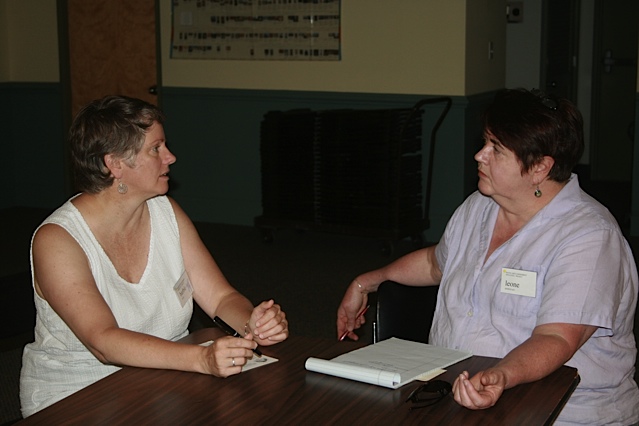
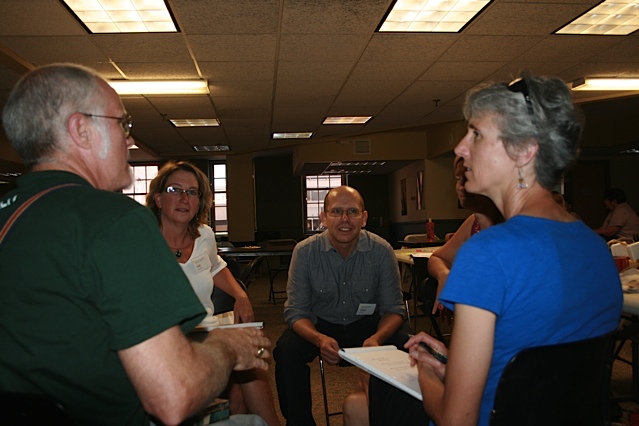
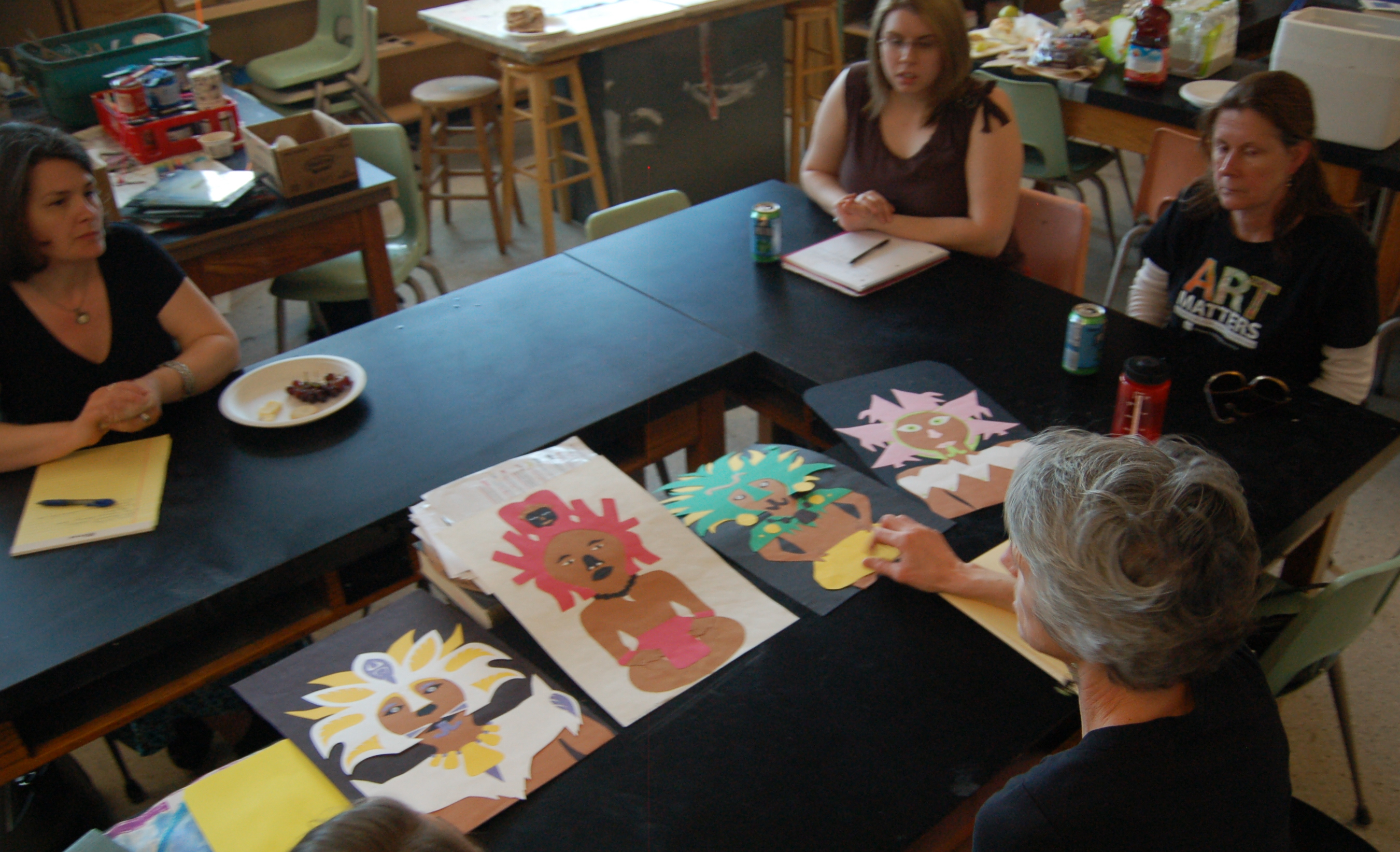
On day 3 of the MAAI institute teacher leaders participated in two Leadership sessions and a session on Creativity. Brunswick High School Art teacher Jennie Driscoll facilitated the first leadership session through hands-on experiences that led to identifying the characteristics of leaders. Some of those identified were risk taker, communicator, confident, humility, trust, and compassion.

MAAI leadership team member and Executive Director of the New England Institute for Teacher Education Catherine Ring facilitated the second leadership session where participants took a close look at their role as leaders; in their schools, districts, communities and beyond. They looked at the research and explored questions including How do we work with adults to encourage change?

Leadership team member and Bates College instructor Bronwyn Sale facilitated the Creativity session.  Included in the Maine Learning Results: Parameters for Essential Instruction the Visual and Performing Arts include Standard C. Creative-Problem Solving. As arts educators this standard represents creativity, the creative process, creative thinking, and creative problem solving. All of these were examined in this session and should be taught intentionally in the arts classroom.

Teacher leaders continued working on their individual action plans putting together what they were learning during the institute. The plans include their ideas for their regional workshops that they will facilitate throughout the school year. The day ended with a celebration of the good work the teacher leaders are doing at a reception with MECA’s President Don Tuski in the college’s gallery ICA.

h1

Day 1: Maine Arts Assessment Initiative Institute

August 1, 2012

Underway!

The days are packed very full, starting at 8:30 and finishing at 6:00. Plenty of good Maine College of Art food, chocolate, granola bars, and trail mix are keeping folks energized. The teacher leaders have had conversations about assessment practices, have been introduced to technology tools, and time to apply what they are learning. Each teacher leader is designing a workshop that they will present in their region of the state during the next school year.  They spent some time today engaged with their computers and other times interacting and communicating with their colleagues.

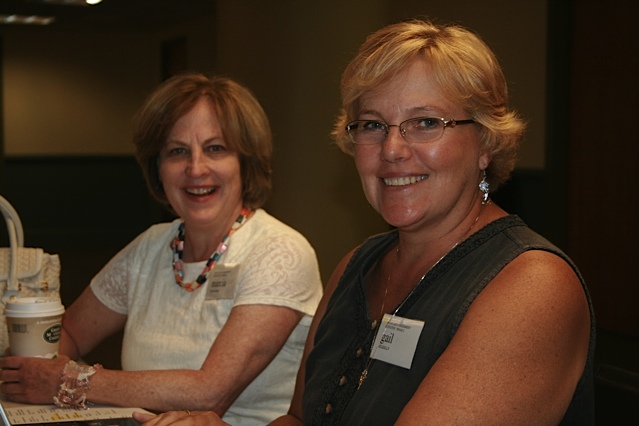
Marcia McCaffrey, my colleague from NH DOE, facilitated a session on the Next Generation Core Arts Standards. Gail Kilkelly from Burlington Schools in VT facilitated a session on Common Core and how it connects to the arts.

You can follow the activities as they unfold by going to Twitter and typing in mearts#12.

Marcia and Gail

h1

Another Arts Teachers’ Story: Rebecca Wright

July 11, 2012

Featuring one teacher’s journey as an educator

This is the 16th in a series of blog posts telling arts teachers’ stories. This series contains a set of questions to provide the opportunity for you to read educators stories and to learn from others.
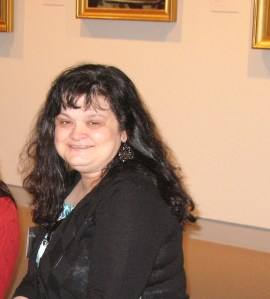
Rebecca Wright just completed her 27th year in public education with the last 26 in Ellsworth, RSU 24. She is unique not because she teaches grades 9-12 at Ellsworth High School (EHS) but that she teaches Theatre, Vocal Music, and Dance and each year her student load varies due to her content expertise. On a trimester system at EHS next year she will teach 7 sections of public speaking, a new requirement for Freshmen. Her primary classes are in Introductory Theatre, Dance, and Vocal Music and Advanced sections in all those areas as well. Rebecca also teaches two different sections of Stagecraft; Costumes and Sets, and Concert Choir. The team Rebecca works with is awaiting final approval for instituting a Visual/Performing Arts Academy. Rebecca is a teacher leader with the first phase of the Maine Arts Assessment Initiative.

What do you like best about being an arts educator?

It is ever changing and it is what students can be passionate about. They come to my class and say “I’ve waited all day for this!” I love how it changes or improves their lives forever and they will come back years later to describe how the visual/performing arts classes have helped them, supported their goals, or become a lifelong pursuit.

Tell me what you think are three keys to ANY successful arts ed program?

  1. Community and Administrative Support
  2. Dedication and a thick skin:)
  3. Students first!

What specific way(s) do your assessment practices tie into the success of your program?

Formative, formative, formative. Students are constantly assessed and encouraged daily without being aware of it. Formative assessment is vital to their individual improvement. My emphasis is on individual progress not on comparison to anyone else in class. Everyone can and will improve and graded assessments are based on their self-assessment, peer assessment and my assessment.

What have been the benefits in becoming involved in the arts assessment initiative?

The arts assessment initiative has been one of the best professional experiences of my career. The week spent last summer with people of like philosophy and mind was exhilarating and inspiring. The wealth of knowledge and ideas was a treasure trove to draw from and Ann Marie from MLTI changed my outlook on technology forever!

What are you most proud of in your career?

I have been blessed to have had many highlights in my career. Seven state championship show choir titles, two national titles at Disney, many successful festivals and sold out performances. I am most proud however, of the many students who have chosen to pursue careers and lives in the arts. It has been so rewarding to see them go on spreading the love of music, theatre and dance around the country. Many are teaching and directing at schools around the state, some are dancing in New York City, some are on television and in the movies spanning the nation from Washington, D.C. to Los Angeles. Some participate in community theatre and church choirs. They keep me in the loop of their lives and I could not be more proud.

What gets in the way of being a better teacher or doing a better job as a teacher?

The things that most interfere with being a better teacher are the increasing demands placed upon the teaching profession in general, red tape and paperwork, and also the constant repetition of having to educate administration about the unique and different needs of the Visual/Performing Arts Dept. I have had many supportive administrators but it has taken determination on the part of myself and my colleagues to gain that support and understanding of our programs.

Apple or PC?

Apple because we have “one to one” for our students.

What have you accomplished through hard work and determination that might otherwise appear at first glance to be due to “luck” or circumstances?

I constantly hear from colleagues across the state “It must be nice!”, “You have all kinds of money to work with.”, “Ellsworth has all kinds of advantages”. What I remind them is that it took 26 years to build what we have and we started with nothing more than an aging cafetorium stage and a handful of kids. There have been years full of “blood, sweat and tears” poured into our program not just on my part but on the part of all those students, parents, and volunteers during all those years. Circumstances were often against us but a passion for the importance of performing arts for students carried us through.

Look into your crystal ball: what advice would you give to teachers?

The visual/performing arts are more important than ever to students and our culture.
Don’t give up and don’t expect everyone to be as excited as you are. Always remember who it makes the difference for-students. Be willing to compromise and be flexible and be willing to look at your situation from all sides. It is hard to argue with a program that is always focussed on what is truly best for students.

If you were given a $500,000.00 to do with whatever you please, what would it be?

After paying for my twins education, one is going to SVA in Manhattan for Animation and one is going to USM as Musical Theatre major (go figure:), I would probably finally start the “Wright School for the Performing Arts”. We have joked about it for years, buying The Grand Auditorium in Ellsworth and renovating it to be used as a year round performing arts school and performance center.

Thanks Rebecca for telling your story!

h1

K-12 Celebration of the Arts Festival – Lake Region

June 9, 2012

Days of exhibits and performances

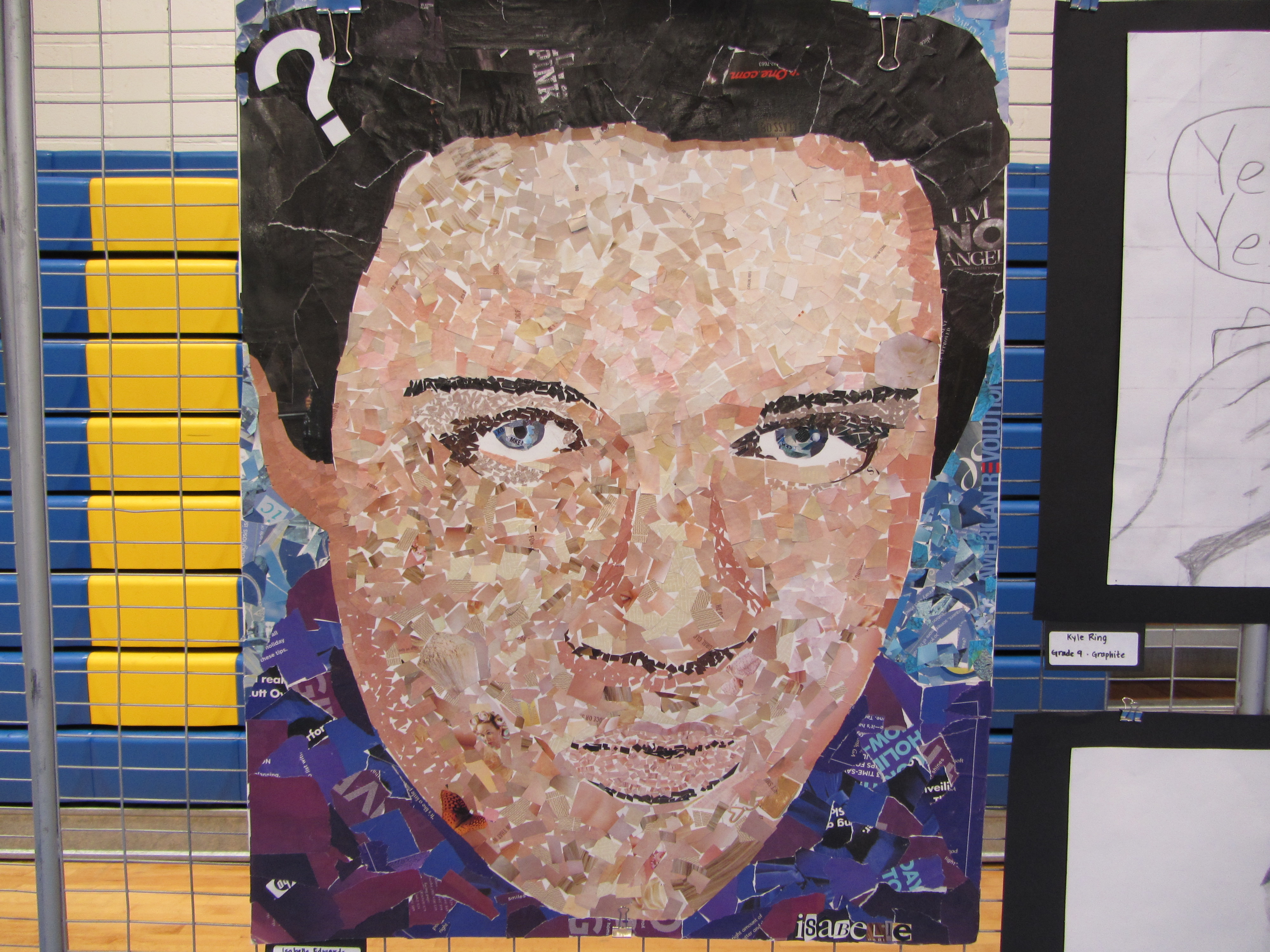
The arts educators of Lake Region School District, MSAD #61 (Bridgton, Casco, Naples, Sebago) go all out each year to provide the opportunity for students to exhibit art work, perform musical and dance selections. A real showcase of student accomplishments of the standards. I had the chance to visit for a small part and I am glad I did!

District Fine Arts Coordinator Jenni Null shared some of her photos of the event that was held on May 30 and 31st. The two day Festival, held at Lake Region High School includes

  • precorder players
  • a Dance Showcase (LRHS)
  • LRHS Pops Concert
  • LRMS Gr. 6 Band
  • tours of the exhibit for all Gr. 3 students during the day led by LRHS art docents
  • demonstrating artists: potter, spinner, quilt maker, rug hooker, painter, and
  • a spectacular array of art from students in K-12!

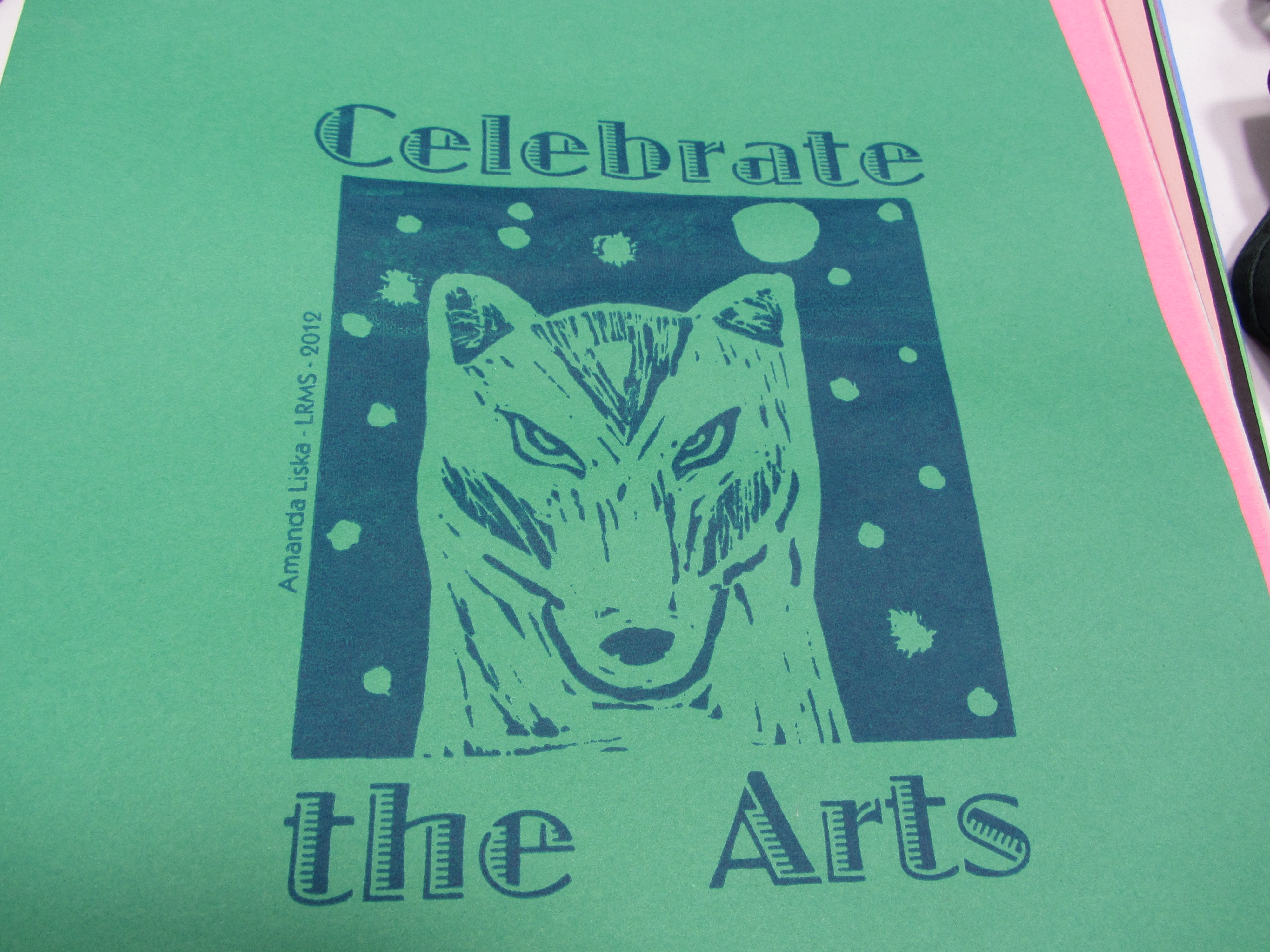
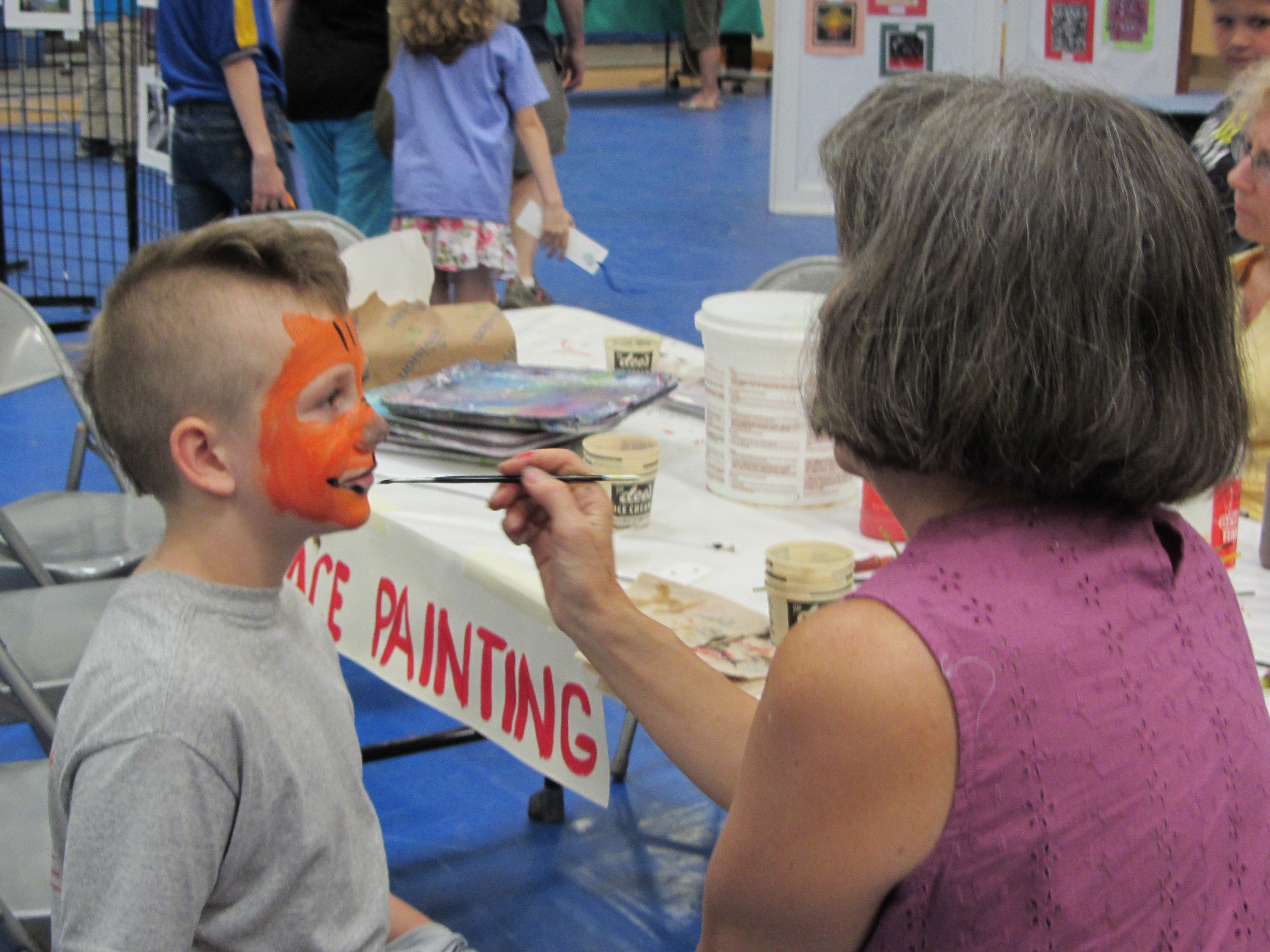
There were opportunities for students to engage in hands on activities: hat making, t-shirt screening (the 2012 Arts Festival Logo), face painting, & card/book mark making with stamps. One highlight of the event was the life like recreations of Grant Wood’s American Gothic & Edvard Munch’s The Scream. In both works, the faces were cut out, so people could stand behind the works and literally become a part of the paintings. The event was a huge success, judging by the number of students who were still talking about it the next day and still donning their face paintings and silk screened shirts.

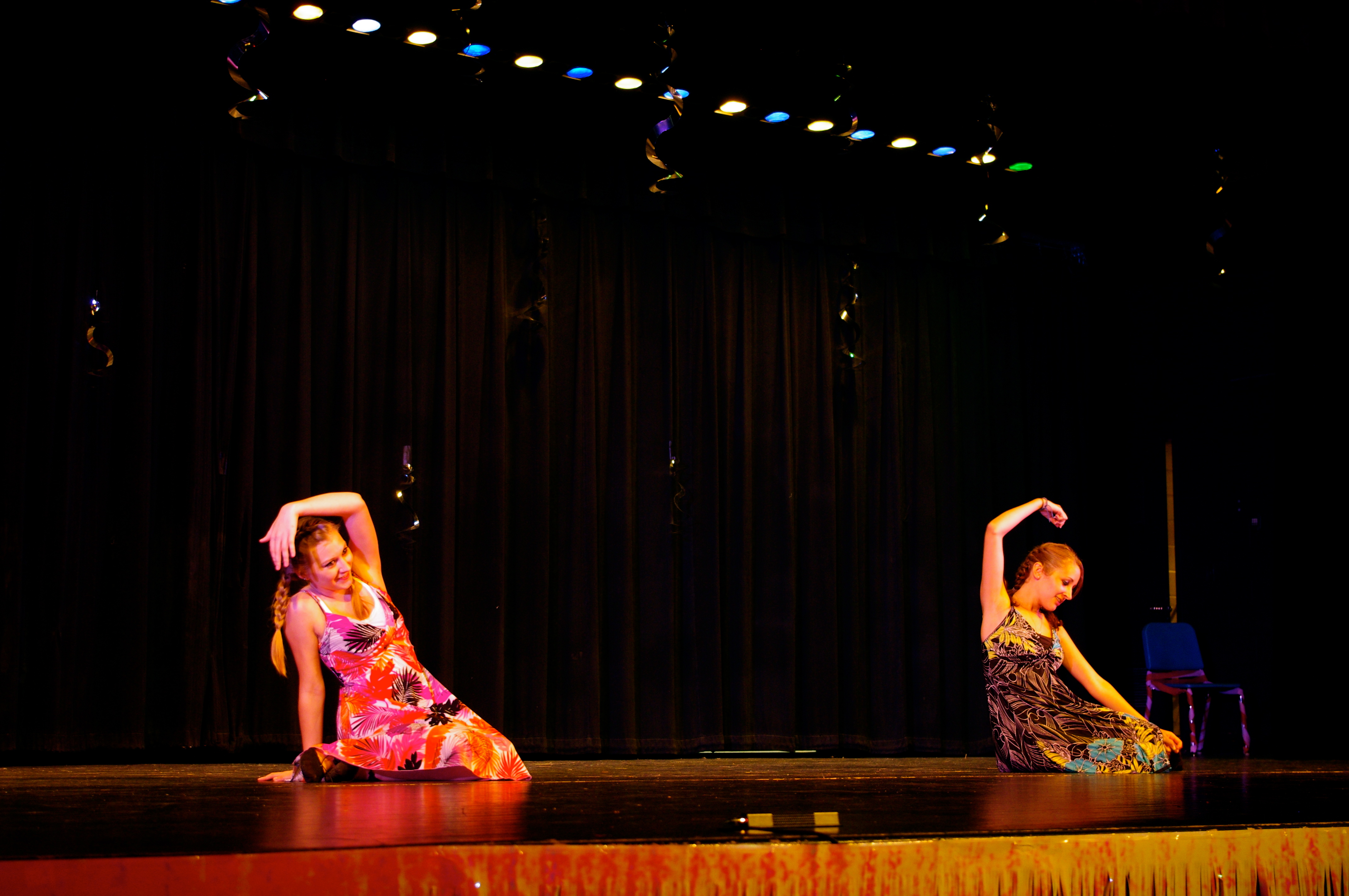
Dance teacher Carmel Collins invited me to the two day event and I attended on the night of the student dance performance. Below is Carmel’s description including a photo of the event.

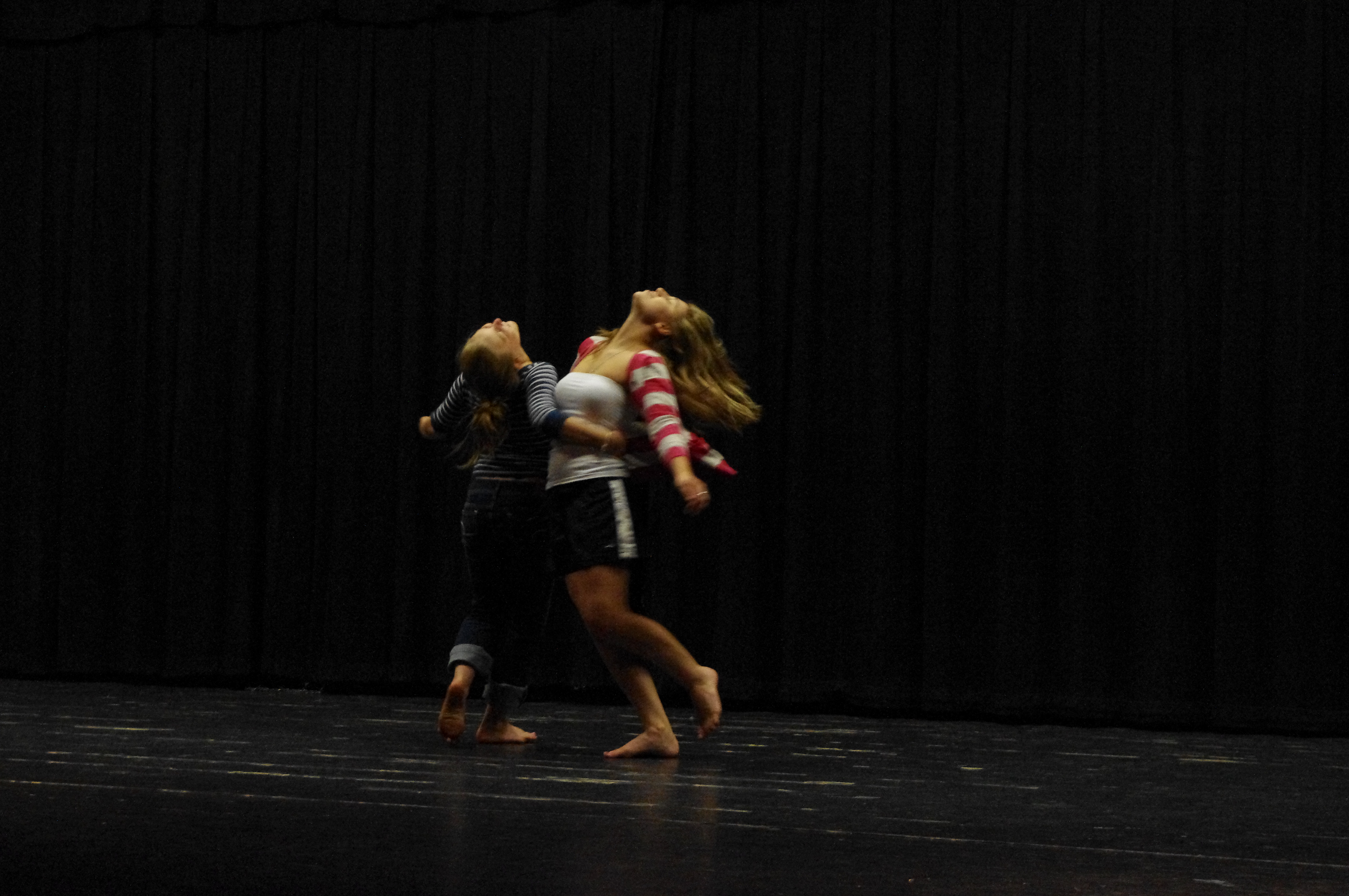
The opening number, “Party Rock Anthem,” echoed the spirit of the festivals words, “Celebration of the Arts.” Students ranging from grades 6 through 12 entertained their audience with dance styles ranging from hip-hop to theatrical to modern dance. Each performance bringing with it a new story, a new energy, a new thought and may be a question or two.

Interspersed between the performances, slam poets engaged the audience with their artistic, rhythmic verses of pain, love, anguish and joy, in true slam style fashion. Their words ringing circles of questions and retrospection. Slam poetry has grown rapidly over the recent years since its introduction from language arts teacher, Lucinda Stein.

Her vision and energy has enthused and inspired students to write deeply, honestly and passionately about life, love and loss. This new addition to the show highlights how important and integral the literary arts are to the field of the arts as a creative and expressive art form.

A show of course would not be complete without the lights and sound from our talented and creative Mr. Eugene Long and his assistant for the evening, student Ethan Strain. From a solitary spotlight to subtle hues of greens and blues, to the dazzling oranges and yellows, the lights and music brought the show to life and to the audience.

The evening concluded with student Kelsey Wilcox wishing everyone to leave with the message of the finale, “ A Good Feeling” by Flo Rida. In costumes that sparkled and dazzled under the lights echoing the word “Showtime!” students and teacher, Carmel Collins gave the last performance of the evening to a very appreciative and receptive audience.

The Dance Showcase initially began as a solitary event during the school day for grades 9-12. However, over the past nine years since its conception the Dance Showcase has grown to become an evening event, has expanded to include grades 6-12, and has become an integral part of the districts K-12 Arts Festival. The new dance/multipurpose studio will be completed in the fall of 2012 offering students the continued opportunity to explore and experience the challenging, creative, and expressive art form of dance.

The dance program has brought joyful, challenging, new and familiar experiences to our students, as one of our newest and youngest additions to the program commented,
“Iʼve had fun with the dance showcase. Itʼs given me a chance to expand my skills in dancing, as well as allowing me to step outside my comfort zone and do things I never thought I could. The most amazing thing, though, is the friends Iʼve made through the showcase. Iʼm normally a shy person, so getting to know the other dancers was awesome.”    Talya Bartlett, freshman

h1

Competency Based, Student Centered, Standards Based Education

April 29, 2012

Clarification

Standards have been around for a long time but during the last (about a) year the conversation has become more serious about what that means. As I’ve said before, the ground is shifting beneath us, and the transition of education to meeting the needs of all students is more focused.

The term standards-based, competency based, and student centered are terms that we are hearing more and more. The terms are not just for high school students but include elementary, middle, AND high schools. So, what is the different now from 1997 when the state originally adopted the standards document, Maine Learning Results? I see three differences:

  1. The Maine legislature has put in place LD 1422 which states that the graduating class will leave high school having successfully shown that they have achieved the standards. It will no longer be determined by completing each year, K-12, of schooling. Not based on seat time, but showing proficiency of meeting the standards.
  2. The Maine Department of Education recently released the strategic plan called Education Evolving: Maine’s Plan for Putting Learners First which “sets out objectives and action steps for building an education system in Maine that meets the needs of all learners, from early childhood into adulthood, and prepares them for college, careers, and civic life.”
  3. Educators who have been around a long time participating in many conversations are more than ready to take action. The Maine Coalition for Customized Learning which started as a handful of school districts working with the Reinventing Schools Coalition work is now up to 20 Maine school districts. They are working collaboratively to share and create resources to continue to move in the standards based direction. The first cohort started in July 2009.

Not to long ago I read in the news two articles that provide information on what is happening across the country with education in this standards based/proficiency based/ competency based environment. I hope you will have the time to read about our neighboring state, New Hampshire, to learn about their work in an article called N.H. Schools Embrace Competency-Based Learning written by Catherine Gewertz and published online February 7, 2012 (Education Week). And, the second article called ‘Competency’ Approach Challenges Colo. District written by Christine A. Samuels and published online March 26, 2012 (Education Week) provides a look at Adams 50 who has been working on a standards based system for several years.

h1

Waynflete Music Teacher, Jarika Olberg

April 25, 2012

Talk about the importance and value of music literacy

Jarika Olberg is a young music teacher at Waynflete School in Portland. Fortunately for us, her first concert in December 2011 was videotaped and shared on YouTube. Below is the video embedded of the first 5 minutes of the first concert. In this video you will see how Jarika starts out each of her music classes with grades 4 and 5. She also provides an example of how she includes music literacy in her instruction. It is AMAZING!

h1

ARTS Articles, Articles, Articles

April 21, 2012

The news is peppered lately with articles about the Arts

This post provides you with links to articles that I found interesting and think you will as well! Some of the articles below are on the newly released, April 2012, report: Arts Education in Public Elementary and Secondary Schools: 1999-2000 and 2009-10 from a congressionally mandated study on arts education in public K–12 schools. You might wonder why I would include all of the articles on the same topic?! It provides you with the perspectives of different writers. Of course, I urge you to go to the report itself which is linked above.

Article written by Erik Robelen, April 2, 2012, Education Week. Thank you to colleague Paula Hutton for sharing it.

March 30, 2012, Art Works, National Endowment for the Arts

ASCD Capital Connection, April 10, 2012.

Written by Erik Robelen April 3, 2012, for Curriculum Matters blog, published in Education Week, April 16, 2012. Thank you to my Washington state colleague AnnRené Joseph for sharing this link.

Written by Roberta Smith, April 11, 2012, Art & Design from the New York Times. Thank you to colleague World Language Specialist Don Reutershan for sharing it.

Article by staff and wire services reports, February 15, 2012 from eSchool News Thank you visual art teacher Lisa Marin for sharing it.

Written by Erik W. Robelen, Education Week, April 16, 2012.

Written by Andrew Miller, Edutopia, March 5, 2012. 

Featured Company from the Directory of Teacher PD Sourcebook.

This isn’t exactly an article however, it is from National Art Education Association from Linkedin. The question was asked by an art teacher from New York and many teachers answered the question. It provides many ideas and resources that you might find useful. Thank you to Leah Olson, art teacher from Hampden Academy, for sharing this link.

The Portland Press Herald, by Mark Schwartz, April 11, 2012. Thank you to Maine Arts Assessment Leadership Team member, Bates College teacher, Bronwyn Sale for providing this link.

Written by Leslie Postal for the Orlando Sentinel, April 7, 2012. Thank you to colleague Mike Muir for sending me this information.

Written by Sarah Clune, American Graduate Education Health, March 22, 2012, PBS News Hour.

h1

Assessment Regional Workshop: Shannon Campbell

March 30, 2012

Waterville High School, March 22, 2012

Thank you to Suzanne Goulet, Waterville High School art teacher, who provided this post from her experience at the assessment initiative regional workshop. Photos by Suzanne also.

Mud season.

Time to let the liquid stores of winter settle, shift, drain in anticipation of the bloom.
It is a time of patience and planning.

Gathering to learn more about the statewide Arts Assessment Initiative, visual arts educators from Peru to Deer Isle met recently in Waterville, taking advantage of this time of preparation.

The Arts Initiative is facilitated by regional leaders that have participated in emerging their own training and explorations in assessment. Then, coordinating and facilitating interactions between other educators, Shannon Campbell, our regional leader, did the excellent job of sharing and preparing this groundwork for growth among “area” colleagues.

Discussions of “what works”, “real” and “ideal” were all supported with experiences, struggles, groans, laughs, thank yous………….and planning of when we gather again.

Something is blooming here.

Participants – Shannon Campbell (Deer Isle), Katrina Billings (Winslow), Suzanne Goulet (Waterville), Gloria Hewett (Mount View), Lisa Ingraham (Madison) and Karen Thayer (Dirigo)

h1

Media Arts Writing Team

March 17, 2012

National Coalition for Core Arts Standards (NCCAS)

FOR IMMEDIATE RELEASE                                                   

Contact: Cory Wilkerson, 800-587-6814                             

NCCAS adds media arts writing team to Next Generation Arts Standards Project

The National Coalition for Core Arts Standards has agreed to support the writing of national, voluntary media arts standards as part of the Next Generation Arts Standards Project. Recognizing the growing interest and diversity of media arts as a new mode of expression within public education, NCCAS has formed a team of media arts writers and leadership to lead the work. NCCAS is committed to creating re-envisioned voluntary, web-based arts standards that will build on the 1994 National Arts Standards (and the 2005 Standards for Learning and Teaching Dance in the Arts), that have helped guide curriculum designers, pre-professional training programs, funders, and federal and state policy makers in their PreK-12 decision making. NCCAS leadership is relying on the media arts writing team to create a set of standards that will be equal in rigor, breadth, and depth as those of those of dance, music, theatre and visual arts, while simultaneously recognizing that media arts will be embedded within each of the traditional forms as a pathway for knowing and understanding. Currently, media arts standards are included in the state standards of Minnesota, South Carolina, and in the district standards of New York City and Los Angeles. The writing team will use the research report, A Review of Selected State Arts Standards, to help guide them in their work. The report, one of five created in support of the project by NCCAS member the College Board, is available as a PDF at  http://nccas.wikispaces.com/State+and+Media+Arts+Standards.

“Our goal is to write media arts standards that will fully describe expectations for student learning in an art form that has the ability to serve as the nexus between the arts and other subjects in the curriculum,” said Pamela Paulson, senior director of policy at the Perpich Center for Arts Education in Minnesota and one of two new NCCAS leadership members chosen to represent the area of media arts in the coalition of eight arts and education organizations. Richard Burrows, retired director of Los Angeles Unified School District’s nationally recognized arts education effort, and now an independent strategist, will serve as the other media arts leadership member.  He commented, “Media Arts plays a pivotal role in putting a strong, versatile and creative culture at the heart of contemporary learning in today’s education for young minds, and is beautifully positioned to make artistic meaning in bold new ways on behalf of the arts.”

Randy Nelson, the head of the education department of cutting-edge film maker DreamWorks Animation, and John Hughes, president and founder of Rhythm & Hues Studios (a leading producer of computer-generated animation and visual effects) praised the inclusion of media arts as its own subject area within arts education. “This is a visionary and forward thinking path for arts education,” said Nelson. “Artists who get technology, technologists who get art, managers who are creative and creatives who can manage are our future. Fail to include the full spectrum of skills, fail to treat media arts education as anything but a full partner, and get ready to find an explanation even a child can understand about why the rainbow is missing half its colors, and one for business people about why we are losing jobs to more colorful competitors.”

Said Hughes: “Media arts is relevant to today’s students because it reflects our contemporary, global culture. It provides vehicles for all students to find success and enjoyment in learning and promotes critical thinking processes while engaging, real world activities that make the content more meaningful.”

The Media Arts Writing Team Members are:

  • Dain Olsen, Chair, ArtLAB High School, Los Angeles Unified School District
  • Jay Davis, Ambassador School of Global Leadership, Los Angeles Unified School District
  • Steven Goodman, Educational Video Center, New York City
  • Scot Hockman, South Carolina Department of Education, Columbia, South Carolina
  • Jeremy Holien, Perpich Center for Arts Education, Golden Valley, Minnesota
  • Anne Kornfeld, Newcomers High School, Long Island, New York
  • Colleen Macklin, Parsons New School for Design, Brooklyn, New York
  • Bradley Moss, Maple Mountain High School, Springville, Utah
  • Michele Nelson, Los Angeles Unified School District
  • Betsy Newman, South Carolina ETV, Columbia, South Carolina
  • Martin Rayala, Ph.D, Kutztown University of Pennsylvania
  • James Reinhard, North Allegheny Schools, Wexford, Pennsylvania
  • Evan Tobias, Arizona State University, Tempe, Arizona

NCCAS Leadership and the team chairs met most recently in Reston, Virginia, in the offices of the College Board to finalize work on a learning framework that will guide all five writing teams and to refine the project’s timeline. Writing teams are currently in the first stages of creating drafts. In the coming months, NCCAS will issue a new call for reviewers who will take the first pass over the new standards. For more information about NCCAS and the Next Generation Arts Standards Project, go to http://nccas.wikispaces.com.

h1

Looking Back and Ahead

February 28, 2012

Teacher Leaders and Leadership Team meet

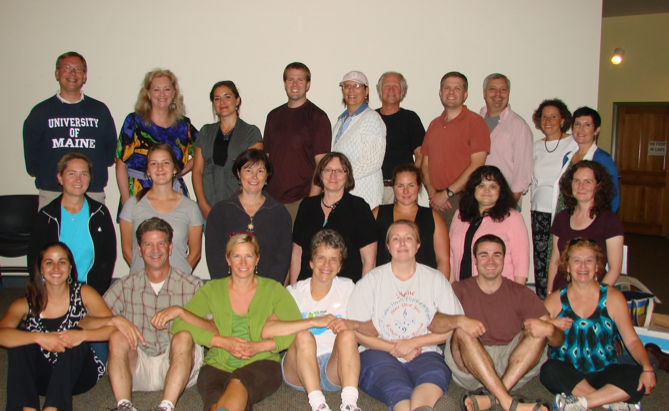
Maine Arts Assessment Institute - August 2011

Today is another big day for the Maine Arts Assessment Initiative (MAAI). The Initiative’s Teacher Leaders (TL) and the Leadership Team (LT) are meeting in Bangor at the UMaine Museum of Art. We are fortunate to be working with Education Coordinator, Eva Wagner. And are very grateful to Jill Spencer who is facilitating our work today. Jill is an active blogger, she writes about exemplary and innovative teaming practices at Teaming Rocks! Collaborate in Powerful Ways and is a contributor to the Bright Futures blog. You can check her out at http://jillspencer.net.

Today is a chance for us to reflect on the first nine months of the initiative. We will evaluate and look closely at the components of the process, the work, and the accomplishments of the initiative. And we will collectively look at the proposals for phase II of the initiative, brainstorm ideas, and determine the next steps. So, it is a chance to look back and to look ahead!

So what has been accomplished during the first phase of the MAAI? And have we accomplished what we set out to do? The overall goal is to create an environment in Maine where assessment in arts education is an integral part of the work all arts educators do to deepen student learning in the arts.

  • Music educator, Rob Westerberg and Visual Art educator Catherine Ring provided leadership in creating the plan for the MAAI.
  • In addition to Catherine and Rob, a leadership team was formed that brought together a remarkable group of Maine educational leaders including University of Southern Maine (USM) professor Jeff Beaudry, Bates College professor Bronwyn Sale, Wiscasset High School art teacher Shalimar Poulin, Maine Alliance for Arts Education (then) Executive Director Carol Trimble. Added since is Eastport music teacher Pamela Kinsey.
  • In May of 2011, 18 Teacher Leaders in arts education were selected to help lead the initiative. A wiki was established where the TL started to communicate about leadership, assessment, and technology. Since that time the wiki has been visited by the TL and LT (about 25 people) 1308 times.
  • Those three topics were the overarching segments during a 4-day professional development institute that the TL attended in August at Maine College of Art (MECA).
  • The statewide arts education conference Arts Teachers Lead the Way, Back to the Future: Arts Assessment for Learning was held at USM on October 7, 2011 with 225 educators attending. The TL were the workshop facilitators and shared their knowledge as classroom teachers. Conference feedback was very positive!
  • A video summarizing the conference is being created by a Massebesic High School freshman and will be released shortly.
  • A timeline documents what is happening in arts education in Maine.
  • An MAAI wiki provides information for those wishing to learn more.
  • The Department of Education arts assessment web page provides information on the MAAI.
  • Five webinars faciliated monthly by Rob and Catherine. They were attended by between 30 and 52 participations each month. Each of the webinars has been archived and a meeting plan designed to accompany the archives. These are available for teachers and/or administrators to access and be used at the local level. They are available by clicking here.
  • The TL are presenting workshops in different regions throughout the state during the 2011-12 school year. The schedule is available so educators can attend workshops in their regions.
  • There have been 12 workshops with at least 12 more that will take place before the end of the school year. A total of 130 educators have participated so far plus the 225 that attended their workshops at the statewide conference.
  • Arts assessment graduate courses are being taught by The New England Institute for Teacher Education.
  • A repository is being created for arts education resources that will be available for all educators.
  • Professional organizations who have collaborated with the MAAI on a variety of levels. They include: MLTI, ACTEM, MECA, District 3 Music Educators, MAAE, MAEA, MMEA, USM, and The New England Institute for Teacher Education.

At the meeting in Bangor today we will focus on going deeper into the work and also going wider. We want to provide more opportunities to involve more arts educators to expand on the thinking about assessment, teaching and learning in arts education. If you have feedback on phase I of the MAAI please email me so the TL can take your comments into consideration as we plan phase II. If you’d like to get involved and take on a leadership role please be sure and contact me.

We have sooooooo much to be proud of and are soooooooooo grateful for the contributions and involvement of sooooooooo many in this initiative. If you haven’t joined this journey with us, please do!