Archive for the ‘Standards’ Category

h1

Misconceptions about ELA and Math Common Core

October 20, 2011

Common Core State Standards

While I am providing clarification on the National Coalition for Core Arts Standards and the Common Core click here for an article from the Harvard Education letter written by Robert Rothman that provides information about misconceptions. September/October 2011.

h1

Emails, Phone Calls, Questions about National Standards

October 18, 2011

Clarification

This blog post is to provide clarification around the national standards work for arts education. I have received questions, emails, and phone calls from arts educators and others wondering about where their local work fits with the “Common Core State Standards” (CCSS) and what is happening with the national work in arts education. Hopefully this post will answer questions and provide you with information to help guide your work at the local level.

The National Coalition for Core Arts Standards (NCCAS) coalition is a newly formed partnership of organizations and states who will lead the revision of the 1994 National Standards for Arts Education. The NCCAS plans to complete its work and release new, national voluntary arts education standards by December, 2012. The standards will describe what students should know and be able to do as a result of a quality curricular arts education program. NCCAS is committed to developing a next generation of voluntary arts education standards that will build on the foundation created by the 1994 document, support the 21st-century needs of students and teachers, help ensure that all students are college and career ready, and affirm the place of arts education in a balanced core curriculum.

NCCAS will make the creation of the new arts standards an inclusive process, with input from a broad range of arts educators and decision-makers. The revised standards will be grounded in arts education best practice drawn from the United States and abroad, as well as a comprehensive review of developmental research.

The organizations who are partners in the NCCAS:

At the present time Maine arts educators are responsible for the Maine’s 2007 Learning Results: Parameters for Essential Instruction which are a comprehensive response to the educational needs of Maine students. This is described in the legislated document Regulation 132.

You may have read the post earlier this week called National Coalition for Core Arts Standards Seeking Candidates. The NCCAS coalition is seeking teams of 10 content experts for each of the discipline areas of dance, music, theatre and visual arts to help develop the next generation of voluntary arts standards. Each discipline writing team will include a balance of members across specific areas of expertise, geography, diversity and experience. Individuals interested in serving on a writing committee can apply at http://tinyurl.com/67lxbtd. The application process will close October 27, 2011.

What can you do to keep abreast of the progress of standards work for arts education?

  • Read the blog on a regular basis for updates – I will provide updates as the work progresses.
  • Check the NCCAS wiki page at http:nccas.wikispaces.com – as changes occur there will be news releases documented there.
  • Be proactive at the local level providing information on the arts education standards work as it unfolds.
  • Stay abreast of Maine’s arts assessment initiative so you can communicate with your administration, colleagues, and parents.

We are at an exciting time in education with many shifts that will benefit all students being successful! If you have questions, concerns, or suggestions please post them in the comment section or email me at argy.nestor@maine.gov.

h1

National Coalition for Core Arts Standards Seeking Candidates

October 15, 2011

Writing Team Application

The National Coalition for Core Arts Standards (NCCAS) is seeking teams of 10 content experts in the areas of dance, media/digital arts, music, theatre and visual arts to help us develop the next generation of voluntary Arts Standards.

NCCAS is committed to developing next generation standards that will build on the foundation created by the 1994 document (and the 2005 dance standards), support the 21st-century needs of students and teachers, help ensure that all students are college and career ready, and affirm the place of arts education in a balanced core curriculum.

Each discipline writing team will include a balance of members across specific areas of expertise, geography, diversity and experience.

The application is a two step process as follows:

  • complete the application online at:  http://tinyurl.com/67lxbtd
  • email a résumé to NCCAS Project Director Mr. Phil Shepherd at jazzjam@aol.com – if you have an online résumé simply supply the link in the last question of this application form.

This is a great opportunity for you and for Maine to participate in the development of the next generation of standards work. If you are planning to apply please send me an email and let me know. If you have any questions please don’t hesitate to email me at argy.nestor@maine.gov.

h1

Commissioner’s Updates

August 18, 2011

Doing Assessment Right

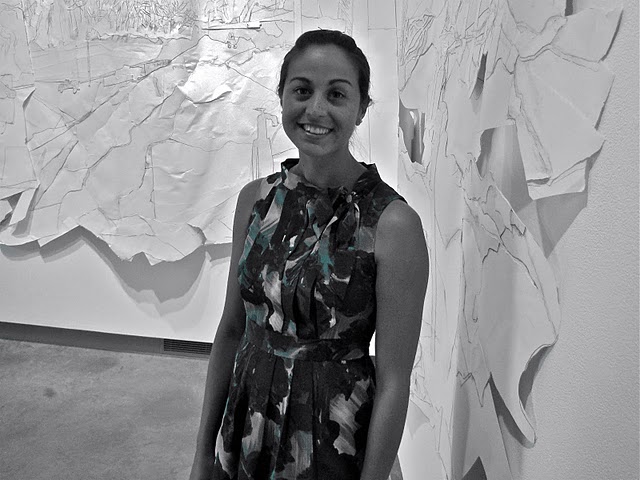
Jennifer Nash at the Teacher Leader reception at MECA

Music educator from Aetna-Dixmont School in RSU 1, and assessment initiative teacher leader Jen Nash, wrote a wonderful piece for the Commissioner’s Update column which comes out once a week. It tells the story of the Assessment Institute held August 2-5 at the Maine College of Art in Portland through a teacher’s perspective. The column is re-printed below. If you are interested in signing up to receive the Commissioner’s update please go to http://eepurl.com/cTM8w

How can teachers equip the students of Maine to be better citizens, engaged learners and effective contributors to society? Inviting them to be integral players in the learning process is the key.

For four days in early August, 18 arts educators from across Maine collaborated during the first Arts Assessment Institute held at the Maine College of Art in Portland.

The institute focused on leadership, assessment and technology. The sentiments participants echoed throughout the week included excitement, enthusiasm and encouragement.

Assessment done right empowers students by involving them in all parts of the process, creating a student-centered model, University of Southern Maine professor Jeff Beaudry said during a presentation.

The student-centered model gives students the reins in their learning. Educaors are still providing the transportation, but learners must decide the next move. The “glass process,” Beaudry said, allows students to see all of the expectations. They will understand rubrics, learning results, and what is expected of them in order to achieve the individualized expections.

A music teacher, during one session, said it is her goal to have students become self-learners and motivators.

“I want students to be able to observe a concept on their instrument, apply it, and then be able to take it home to do it independently,” she said. “Once they take it home, they are able to monitor their progress through understanding benchmarks. Eventually, they build an inventory of tools to teach themselves.”

Participants delved into what it takes to be a great leader by comparing teaching skills with students, and leadership skills with adults. The session broadened the understanding of what it is to be a leader and the idea that educators are naturally heads of the classroom. How can this thinking help the participants to step up to the plate while sharing ideas and visiting others around the state?

Technology was a common topic of discussion throughout the week. Educators around the state are at different levels of understanding technology and its uses in the classroom.

Some have feelings of frustration and anxiety when approaching this subject. If not carefully monitored, some said, technology can be abused in classrooms.  Uses without legitimate ties to the curriculum or to assessment can defeat the purpose of having technological tools.

Ann Marie Quirion Hutton, a representative from the Maine Learning Technology Initiative, was there to lend a hand and share MLTI programs that can be incorporated into the arts. Without patience and proper training, those who are digital immigrants will not connect to the generation of digital natives. Teachers and students must meet somewhere in the middle.

Tools from the world of technology are also changing how assessment looks in the classroom. Programs that provide “live” grading, surveys via the Internet and online student portfolios are helping to involve learners. Students have more ways to take ownership of their work, and teachers are learning the most up-to-date and effective ways of assessing their students’ progress.

Throughout the week, the arts educators worked hand in hand across disciplines to prepare presentations for the Statewide Visual and Performing Arts Education Conference to be held Oct. 7, 2011. The presentations will cover the assessment institute’s three primary topics: assessment, leadership and technology.

The Maine Arts Assessment Institute helped to advance the Arts Assessment Initiative, which is constantly expanding and connecting visual and performing arts classrooms across the state. It is educating effective leaders to spread the word. Most of all, it is focused on the advancement of student learning.

Isn’t that what education is all about?

This article with photographs is posted at http://mainedoenews.net/2011/08/11/doing-arts-assessment-right/

h1

Revision of the National Arts Standards

August 11, 2011

Update on the national standards work

The National Coalition for Core Arts Standards (NCCAS) is seeking a project director to coordinate and facilitate the writing and delivery of new Pre-K-14 arts standards for dance, media arts, music, theatre, and visual arts.  

The current National Standards for Arts Education have been adopted or adapted by forty-nine state departments of education, and have become the benchmark document by which K-12 arts learning is measured in dance, music, theatre, and visual arts. Curriculum designers, teacher training programs, funders, and federal and state policy makers have relied on the 1994 national arts standards to help guide their decision-making.

NCCAS will begin revision of the current standards this fall, and will release the next generation standards in December, 2012. Interested applicants should go to NCCAS Project Director to review and download the application guidelines. The Deadline for applying is August 26, 2011.

SEADAE President Deb Hansen notes;

“Development of National Core Arts Standards is a critical and very timely, state-led effort to strengthen learning in the arts.  The current National Standards in the Arts, ground-breaking in 1994, continue to guide effective learning today.  Yet much has changed in what and how students learn.  The design of intentional learning goals will inform future state and local work, including curriculum re-design, instructional planning and delivery, student assessment, teacher accountability, and program evaluation.  SEADAE looks to the collaborative expertise of its states’ educators and its national content and cultural partners to strive for equity, access, and excellence in arts education for all students across the nation.”
NCCAS is committed to developing a next generation of voluntary arts education standards that will build on the foundation created by the 1994 document, support the 21st-century needs of students and teachers, help ensure that all students are college and career ready, and affirm the place of arts education in a balanced core curriculum.

Membership in the coalition was formalized and a strategy framework developed following a February meeting at the New York City headquarters of the College Board. NCCAS governing organizations are:

American Alliance for Theatre and Education (AATE)

Arts Education Partnership (AEP)

Educational Theatre Association (EdTA)

The College Board

MENC: The National Association for Music Education (MENC)

National Art Education Association (NAEA)

National Dance Education Organization (NDEO)

State Education Directors of Arts Education

The College Board gathering of the coalition was the culmination of a  state-led organizing process that began in May, 2010, at a meeting convened by SEADAE in Washington, D.C. and attended by the above groups, eighteen state departments of education, and eight other national arts and education organizations. In the past year, state directors of arts education and the NCCAS partners have held a series of web-based meetings designed to help refine the needs, expectations, and timeline in the arts standards rewrite process.

NCCAS will make the creation of the new arts standards an inclusive process, with input from a broad range of arts educators and decision-makers. The revised standards will be grounded in arts education best practice drawn from the United States and abroad, as well as a comprehensive review of developmental research.

In creating the next generation of core arts standards, the primary goal of NCCAS is to help classroom educators better implement and assess standards-based arts instruction in their schools. Toward that goal, the revised arts standards will address 21st-century skills, guide the preparation of next-generation of arts educators, and embrace new technology, pedagogy, and changing modes of learning.
NCCAS’s current timeline includes the creation of discipline writing teams in November, 2011, which will be followed by a six-month period of writing, review, and revision draft work.

h1

Summer Arts Education Institute: Day 1

August 2, 2011

Leadership, Assessment, Technology

Today was the first day of the Summer Arts Education Insitute at Maine College of Art (MECA). Eighteen teacher leaders participated in a jam pack day that felt like several days instead of only one.

Below is today’s agenda that will give you an idea of what we’ve been involved in all day. Our beginning sessions on utilizing technology, foundations of assessment, and

7:30-9:00

Arrival, Breakfast & check in activities

9:00 to 9:30 (Room 264)

Welcome, Conference Overview & History, Essential Questions

9:30 to 10:30 (264)

“Where are we?”

10:30 to 10:45- Break

10:45 to 11:30 (Student Ctr)

Introduce individual Action Plans, discuss roles and responsibilities for 2011-2012 school year

11:30 to 12:30 (Café)

Lunch

12:30 to 12:45 (264)

Grad Cred Students Mtg

12:45 to 1:30 (264)

ASSESSMENT POD #1

Types & Language

1:30 to 2:00 (264)

Wiki

2:00 to 2:15 – Break

2:15 to 3:00 (264)

TECHNOLOGY POD #1

3:00 to 3:45

(Vis Art 264, Music S.C.)

TECHNOLOGY POD #2

3:45 to 4:00 (264)

Daily de-brief

4:00 Planning team mtg

4:00 to 6:00

Supper on your own

6:00-8:00 (264) Optional – OER group panel sharing

I will post some pictures tomorrow of the participants hard at work!

h1

Touch Wood

July 25, 2011

OOOH AAAH!

Not to long ago I shared a YouTube on Touch Wood that shows the equisitely conducted wood structure/instrument created in the forest. In case you missed it the link to that is http://www.youtube.com/watch?v=C_CDLBTJD4M. I wondered how it was created and thought about my visit to Japan and the people who are masters at taking the time for precision, design, and thoughtfulness at most everything they do.

Recently a colleague from Vermont sent me a YouTube that shows the making of the first video. It is a wonderful example of STEAM (Science, Technology, Engineering, Arts, Math) and demonstrates the integration of the arts, technology, craftsmanship, physics, and engineering.

h1

National Coalition for Core Arts Standards

June 14, 2011

New coalition will lead the revision of the National Standards for Arts Education

A newly formed partnership of organizations and states will lead the revision the 1994 National Standards for Arts Education.

The National Coalition for Core Arts Standards (NCCAS) plans to complete its work and release new, national voluntary arts education standards in fall, 2012. The standards will describe what students should know and be able to do as a result of a quality curricular arts education program.
The current National Standards for Arts Education have been adopted or adapted by forty-nine state departments of education, and have become the benchmark document by which K-12 arts learning is measured in dance, music, theatre, and visual arts. Curriculum designers, teacher training programs, funders, and federal and state policy makers have relied on the 1994 national arts standards to help guide their decision- making.

NCCAS is committed to developing a next generation of voluntary arts education standards that will build on the foundation created by the 1994 document, support the 21st-century needs of students and teachers, help ensure that all students are college and career ready, and affirm the place of arts education in a balanced core curriculum.

Membership in the coalition was formalized and a strategy framework developed following a February meeting at the New York City headquarters of the College Board. NCCAS governing organizations are:

  • American Alliance for Theatre and Education (AATE)
  • Arts Education Partnership (AEP) Educational Theatre Association (EdTA) The College Board
  • MENC: The National Association for Music Education (MENC)
  • National Art Education Association (NAEA) National Dance Education Organization (NDEO)
  • State Education Agency for Directors of Arts Education (SEADAE)

The College Board gathering of the coalition was the culmination of a state-led organizing process that began in May, 2010, at a meeting convened by SEADAE in Washington, D.C. and attended by the above groups, eighteen state departments of education, and eight other national arts and education organizations. In the past year, state directors of arts education and the NCCAS partners have held a series of web-based meetings designed to help refine the needs, expectations, and timeline in the arts standards rewrite process.

A recent SEADAE survey of arts education directors in forty-three state departments of education indicated that nineteen of the states planning revision of their arts standards in the next two years are willing to postpone that process until the new national arts education standards are complete so as to inform their efforts.

NCCAS will make the creation of the new arts standards an inclusive process, with input from a broad range of arts educators and decision-makers. The revised standards will be grounded in arts education best practice drawn from the United States and abroad, as well as a comprehensive review of developmental research.

The College Board is currently gathering and organizing childhood and higher education data—including international standards research, a child development and the arts literature review, a 21st-century skills gap analysis, and a review of college-level arts standards—with the expectation that this process will be completed by mid summer.

In creating the next generation of core arts standards, the primary goal of NCCAS is to help classroom educators better implement and assess standards-based arts instruction in their schools. Toward that goal, the revised arts standards will address 21st-century skills, guide the preparation of next-generation of arts educators, and embrace new technology, pedagogy, and changing modes of learning.

To take full advantage of today’s digital information tools, the new arts standards will exist in an online “evergreen” format, allowing for periodic, scheduled reviews and updates, and wiki-environments where student work, lesson plans, and new research can be posted to support standards-based teaching and learning.

An NCCAS committee has begun work on a report that will summarize the current status of arts education in America; the status of arts education standards in the states; the context of arts education in a well-rounded education; and an analysis of the needs for the
next generation of arts standards. The report will be made public in late summer or early fall.
NCCAS’s current timeline includes the creation of discipline writing teams in November, 2011, which will be followed by a six-month period of writing, review, and revision draft work.

Jonathan Katz, CEO of the National Assembly of State Arts Agencies (NASAA), expressed strong enthusiasm for NCCAS’s arts standards revision plan: “Designing standards takes broad and deep knowledge of subject matter, an informed understanding of the kind of guidance educators need, and creative imagining of which competencies will best prepare students for the future challenges they will face. All students learn using some combination of the arts, numeracy and literacy. The resource for learning that this group, representing teachers of the arts and arts education policy makers, is in a position to provide is tremendously important.”

Virginia M. Barry, New Hampshire Commissioner of Education, also stated her support for revision of the art standards. “I’m very encouraged that NCCAS has taken the first steps towards re-imagining the arts standards for our students and teachers,” she said. “When you have rich and clearly defined standards, you create expectations and can begin the process of articulating measurable learning in arts education. The arts are truly special—dance, music, visual art, and theatre give students a voice they might not otherwise have and integrate new technology in ways that truly engages and energizes learners. New Hampshire believes that all students should have access to a well-balanced curriculum that supports whole-person development—arts are critical to a sense of competence, through discipline, dedication, diligence and commitment.”