Archive for the ‘Standards’ Category

h1

MALI Summer Conference – Success!

June 29, 2016

Opportunity!

IMG_2303

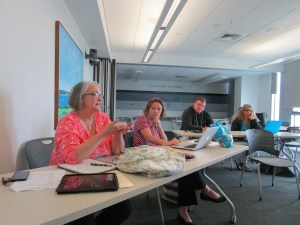
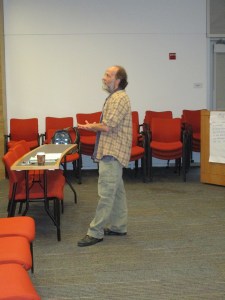
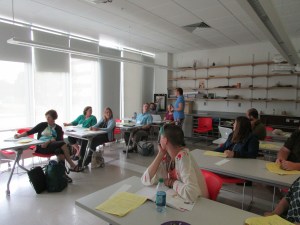
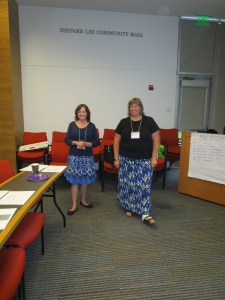
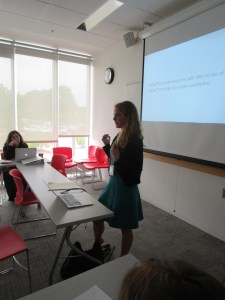
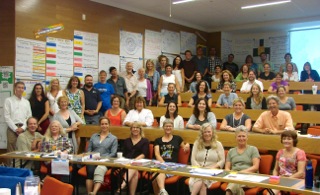
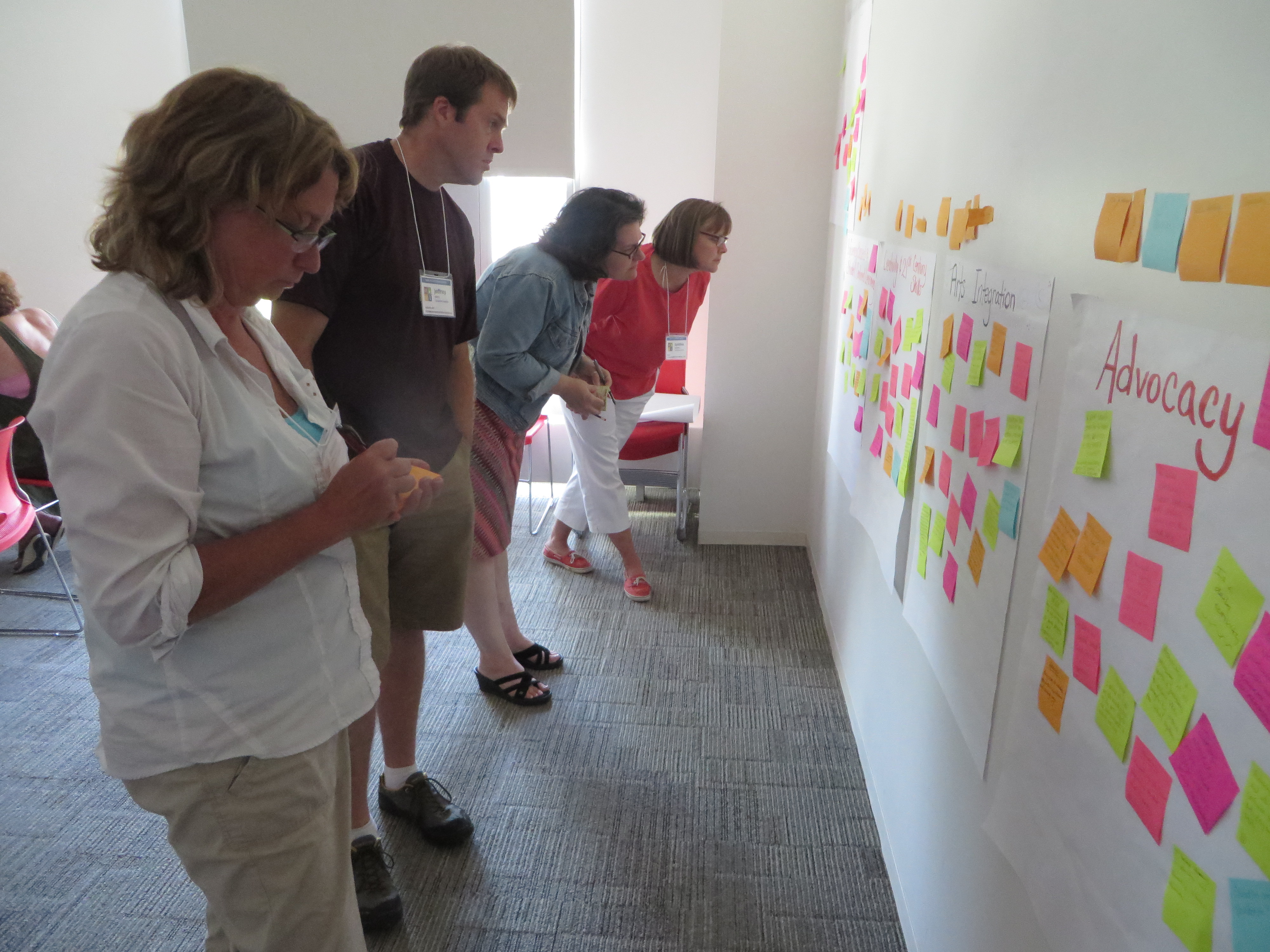
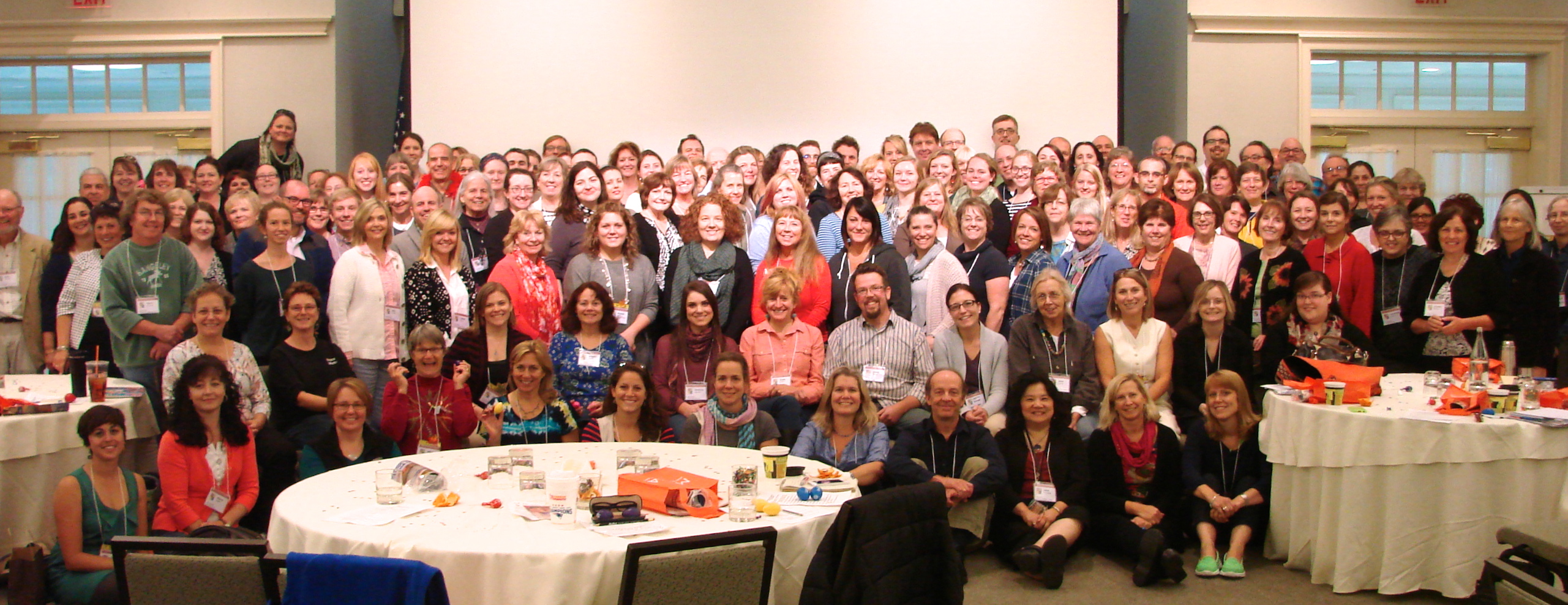
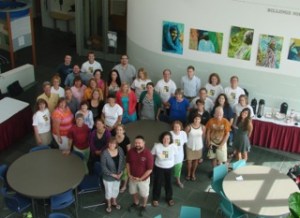
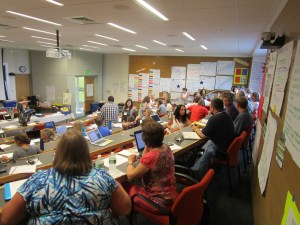
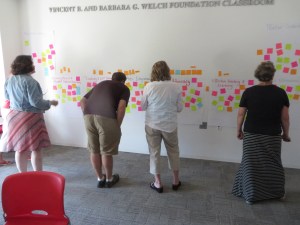
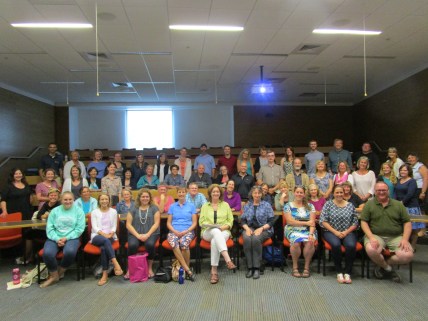
Yesterday at Wishcamper, USM in Portland, 68 arts educators convened for the Maine Arts Commission Maine Arts Leadership Initiative (MALI) Summer Conference. The day was filled with listening, speaking, demonstrating, networking, and learning, learning, learning. The feedback provided by participants shows an appreciation for the opportunity and all 14 workshops scored very high!

IMG_2291One educator said: “It is so nice to be able to talk with other arts educators about their views”. Yes, these were all arts educators conversing with other arts educators – the same tribe, our peeps, educators who share a basic understanding about what we contribute in the world. Another participate was grateful to know that “Others are going through the same frustrations as I am”. 

The Maine Arts Assessment website is filled with a variety of resources. One person said: “The MALI website is FULL of resources to help me with all I do in my music classroom and also with communication with colleagues and administrators”.

In the Creativity workshop participants learned about one of the resources in the MALI Resource Bank. It is a good one to use with your colleagues (arts and non-arts). One participant in the session’s feedback was: “Great conversations about creativity. This is something I normally don’t get to do.”

IMG_2293One of my favorite feedback comments of the day is not about assessment or standards or arts skills but about a broader critical piece of what we do: “I learned about helping children to become fearless about making a mistake – mistakes are okay.”

WHO ATTENDED?

  • PK-12 Arts educators
  • Higher ed instructors
  • Maine and NH arts educators
  • Dance, Music, and Visual Arts educators
  • Teaching Artists
  • Science, Media Arts, and Technology teachers
  • Pre-service teachers, new to teaching teachers, and  veteran teachers

WHAT ELSE DID THEY LEARN?

  • Students can create an ensemble at all levels that are student led.
  • Allowing students to take ownership in their concerts.
  • Starting students transposing is not impossible.
  • That engaging students in ownership of curriculum and content design can help teach competencies and keep them engaged in other curriculum goals.
  • More evidence for choice and student advocacy – yahoo!
  • Practical applications of the Studio Habits…tying them to the Guiding Principles.
  • Crating crosswalks between MLR, NCAS and HOM is a great advocacy tool.
  • To focus on speaking about the arts using academic language

IMG_2290WHAT QUESTIONS DID PARTICIPANTS HAVE AT THE END OF EACH WORKSHOP?

  • Why does it seem like great initiatives already being used by art educators are consistently overlooked by admin even when the information is shared by teachers?
  • How does this work when students use these techniques on their own artwork?
  • How do I ensure that every student has access to technology and able to access the assignments this way?
  • Can we eliminate grade levels in proficiency based education?
  • Why can’t administrators answer questions about applying competency grading to ensembles?
  • How can using Google Classroom be used in advocacy for the arts efforts?
  • What more creative ways are there to meet with classes?- I have 750+ students in my 3rd-5th school with block scheduling for math and reading – very little flexible time.

GREAT BIG THANKS TO THE WORKSHOP PRESENTERS – MALI TEACHER LEADERS, LEADERSHIP TEAM MEMBERS plus 1!

  • IMG_2284Theresa Cerceo
  • Jake Sturtevant
  • Jan Gill
  • Danette Kerrigan
  • Sue Beaulier
  • Jen Etter
  • Rob Westerberg
  • Iva Damon
  • Elise Bothel
  • Patti Gordan
  • Holly Leighton
  • Nancy Kinkade
  • Mandi Mitchell
  • Samantha Armstrong
  • John Morris

HEARTFELT APPRECIATION TO THE MALI LEADERSHIP TEAM FOR HELP IN PLANNING

  • Catherine Ring
  • Rob Westerberg
  • Kate Smith
  • Theresa Cerceo
  • John Morris
  • Barb Vinal
  • Pamela Kinsey
  • Beth Lambert
  • Jeff Beaudry

IMG_2287If you couldn’t join us yesterday some of the workshop leaders provided their resources and they are posted online on the Maine Arts Assessment site. You can access them by CLICKING HERE.

MALI has another opportunity for Teaching Artists coming up in August – watch for the blog post that will provide details and registration information. During the 2016-17 school year there will be multiple professional development opportunities as well.

If you have any questions about MALI or any other Maine Arts Commission program please contact me at argy.nestor@maine.gov.

h1

Phase VI MALI Leaders Announced

June 8, 2016

Teacher Leaders with a twist

screen-shot-2012-05-14-at-9-26-16-pmAlmost exactly one year ago the teacher leaders were announced for Phase V of the Maine Arts Leadership Initiative.  I am excited to share with you that the Phase VI Teacher leaders have been selected for the initiative. In addition, Teaching Artists Leaders have been selected.

In August they will attend a 3-day professional development institute at the University of Southern Maine expanding their knowledge in teaching and learning in the arts and have opportunities to network. During the 2016-17 school year the Teacher Leaders will present workshops at the Regional and Mega-regional levels across the state. Teaching Artists Leaders will create resources and workshops to share throughout Maine as well. Watch for the blog posts with more information on the opportunities provided by Phase VI of MALI!

Photo on 3-30-16 at 4.07 PMCONGRATULATIONS and here’s to the following PK-12 arts educators and teaching artists for stepping forward and taking on this important work across Maine! Continuing with the initiative for Phase VI are many of the teacher leaders from Phases 1 through 5! Thank you for your continued support, interest, and for taking on the role of leader!

TEACHING ARTISTS LEADERS

  • KAREN BROOKS – Visual Artist
  • TIM CHRISTENSEN – Visual Artist
  • JERI PITCHER – Theatre
  • BRIGID RANKOWSKI – Mixed Media, Movement/Flow Arts, Film

MUSIC EDUCATORS

  • CYNTHIA STREZNEWSKI – Woolwich Central School, grades K-8
  • DANIELLE SULLIVAN – Sherwood Heights Elem School, grades PK-6

THEATRE EDUCATORS

  • JASON BANNISTER – Troy Howard Middle School, grades 7-8
  • PAM CHERNESKY – Houlton Middle/High School, grades 6-12
  • RICK OSANN – Bonny Eagle High School, grades 9-12
  • JEAN PHILLIPS – Wiscasset High School, grades 9-12

VISUAL ART EDUCATORS

  • JACLYN BOUSQUET – Traip Academy, grades 9-12
  • PAM CHERNESKY – Houlton Middle/High School, grades 9-12

The Maine Arts Assessment Resource website is located at http://www.maineartsassessment.com/.

The MALI Resource Bank is located at http://www.maineartsedresources.org/.

Phase V Summer Institute

Phase V Summer Institute

h1

Summer Arts Conference

May 23, 2016

MALI provides PD on June 28

Summer Conference – June 28th, 9:00 – 3:30

University of Southern Maine – Portland

MALI_V3_Color_100ppi


The Maine Arts Leadership Initiative is offering a one-day summer conference with a variety of outstanding workshops. We’ve listened to the field requesting more professional development opportunities! This is a great way to kick off your summer that will provide you with ideas and materials on developing standards and assessment tools as well as other relevant hot topics. Join your colleagues from across the state and around New England in a collaborative learning environment.

CONFERENCE INFORMATION AND MATERIALS:

https://docs.google.com/document/d/1AQ7v3kosh7ReRijqyQtPvYlukURtxzjRXW_1X5NfxqM/edit#


REGISTRATION LINK:

http://goo.gl/forms/8EpYejbZeFLZxjm73

OTHER CONFERENCE INFORMATION:

http://www.maineartsassessment.com/#!mali-summer-conference-2016/qxjo8

CONFERENCE DETAILS:

  • The conference is being held at USM in Portland, Wishcamper Center
  • $50 registration – teams of 3 or more, $40 per person – check or paypal – no POs
  • Lunch is on your own – coffee/tea and snacks will be provided
  • 6 contact hours or .6 CEUs provided
  • Select from 14 workshops – (descriptions below)
  • Wishcamper Center, 34 Bedford Street, Portland (link to directions here)
  • Free parking is located in the garage attached to the Abromson Center located right next to Wishcamper on this map

  • Overnight lodging in the vicinity of USM* In addition, 10 minute drive away:

    • Fireside Inn 81 Riverside St, Portland

    • Portland Travelodge 1200 Brighton Ave, Portland

    • Super 8 208 Larrabee Rd, Westbrook

            *Please note: These are not endorsements, simply suggestions.

WORKSHOP OFFERINGS
IMG_1942Theresa Cerceo

Studio Habits of Mind, Planting Seeds toward Growth and Proficiency in the Arts K-12 Visual Art

This workshop will offer give a brief overview of the work done by Lois Hetland as outlined in her book, Studio Thinking.  It will offer various strategies one can implement in the arts classroom in order to track and guide students through proficiency toward MLR standards for the Arts  and Guiding Principles.


Jake Sturtevant and Jan Gill

Student’s Choice: Engaging Students in Task Design Make the Concert Theirs

K-12 Music

Jan and Jake are mother and son, both music teachers; Jan in RSU 73 (elementary) and Jake (high school) in MSAD 6. Examples of strategies that allow students to choose, arrange, and perform songs. From a 3rd grade class choosing a name for their band and songs to perform on guitar, bass, keys, drums and vocals to a high school band of 60 students transcribing and arranging Uptown Funk, this session will include strategies for how to negotiate and empower student choice to promote positive interdependence, in a variety of ensembles and general music settings.


Danette Kerrigan

National Board Certification

K-12 All Educators

This session will focus on the benefits, process and incentives available to educators in the state of Maine interested in National Board certification. National Board Certification is the most respected professional certification available in education and provides numerous benefits to teachers, students and schools. It was designed to develop, retain and recognize accomplished teachers and to generate ongoing improvement in schools nationwide. Standards for each content area and developmental level are created by teachers, for teachers.
IMG_1878

Susan Beaulier

Critical Thinking in the Art Room; It’s the Thought that Counts

K-12 Art

Expand your existing art lessons by incorporating critical thinking strategies that drive your students to think more deeply about their own art and that of others. We’ll discuss how to pose questions, frame class critiques, lead thoughtful discussions about the  aesthetic qualities of visual art,  incorporate writing into the studio art lesson, and provide avenues for student reflection on their art making process.


Jen Etter & Rob Westerberg

Developing Your Music Standards and Assessment Strategies

K-12 Music

This extended workshop will allow participants either on their own or in teams to look at desired curricular outcomes for their program, develop standards and indicators that are customized to their specific courses and school, and set up assessment strategies to bring authentic proficiency to life.


Iva Damon

Google Classroom

PK-12 All Educators

Who has time to orchestrate all of the current technologies of Google Drive, digital portfolios, videos, digital imagery, and getting 21 Century skills into the classroom? YOU do with Google Classroom. Make your life easier and find the Holy Grail to simple, easy to use technology that can be utilized in all classrooms.


Summer 2015 2nd groupElise Bothel

Death to the Cookie Cutter Project

K-5 Visual Art

Do you cringe when you walk by visual art displays featuring identical pieces of art done by a classroom of diverse students? Would you like to offer more choice, but are worried that the academic content will be lost in the chaos? Are you looking for a balance of creativity and content in your visual arts classroom? This workshop is designed to offer insight and solutions about how to foster creativity while still providing a rigorous and educational art curriculum. Along with group discussion, participants will have the opportunity to work on improving their own lessons through the use of backwards design, student interest, and choice.


Patti Gordan

Hatching a Songbird: Teaching and Assessing Singing Skills at the Primary Level K-4 Music

When the wee folk walk through our door how do we make sure we’re helping them develop singing skills, not just singing songs with them? This workshop will help you plan methodical, proficiency based lessons and assessments, including formative self assessments, that are easily delivered during our limited general music class time. Help your smallest singers reach their highest singing potential and develop a love of singing!


Holly Leighton & Nancy Kinkade

Next Steps Rubrics Makes Learning More Progressive

PK-12 Art and Music

How do you motivate students to move beyond a score of 3 or 4? How do we get students to look at learning as sequential as opposed to”end result” learning?  What tool can I use to make assessment more accessible to teacher and students with greater impact? Educators will leave with strategies to put students on a continuum of learning that is teacher and student friendly.


IMG_0019Rob Westerberg

Advocacy

PK-12 All Educators

This session will present strategies for continued implementation of PBL in your own classroom, and highlight the powerful corollary advocacy points that go along with each. If our advocacy efforts have been so useful for the past 20 years, why are we still so much in need of more? Come find out how our most recent PBL work has the potential to finally push arts education to the forefront of our school’s academic agenda while providing the richest, most relevant curriculum possible for our students.


Mandi Mitchell

Strategies to Deepen Student Engagement and Learning in the Arts Classroom, 7-12 VIsual Art

Are you struggling to demonstrate techniques, assess student learning, and still find time within your class to teach criticism and aesthetics? Get the most out of your class, every time that you meet.  Learn how to develop a successful, fully implemented classroom model that offers more “bang for your buck.” You will deepen student learning and motivation, increase student engagement and interest, and encourage self-regulation and reflection while integrating three simple daily steps that structure your classroom without limiting creativity. Adaptable for all levels and all arts disciplines!


Samantha Armstrong

What are the Benefits of Student Self-reflection? (What do I still need to do? What have I learned?)

K-6 Visual Art

In this workshop we will explore the benefits of student self reflection as a means of achieving greater understanding and academic success. We will look at evidence that shows the impact self assessment has on student success and a sampling of self assessment and reflection tools and methods. You will also have an opportunity to discuss and brainstorm how you see these concepts working in your classroom.


Jen Etter & Rob Westerberg

Further Developing Your Music Standards

K-12 Music

Continue to develop your work from the Second Session or join us for the first time to dive into your own work!
 

IMG_1897John Morris

Creativity: A Group Inquiry

PK-12 All Educators

This discussion group model will help participants make connections with creativity research, while promoting inquiry and dialogue about the nature of creativity, as well as the role of creativity in K-12 teaching, learning and assessment.

If you have questions about the conference please email Argy Nestor, Maine Arts Commission Director of Arts Education at argy.nestor@maine.gov.

h1

National Core Arts Standards Opportunity

May 12, 2016

NCCAS seeking adjudicators to score high school student work
Screen Shot 2016-04-27 at 11.09.54 AM

Contact: Cory Wilkerson
Tel: 800-587-6814
Email: projectmanager@seadae.org

The National Coalition for Core Arts Standards (NCCAS) is issuing an invitation for arts educators interested in serving as adjudicators of the high school student work collected from diverse school settings across the nation as part of the 2015-16 Model Cornerstone Assessment (MCA) Pilot Project. The MCA high school pilot, partially funded by a grant from the National Endowment for the Arts, is the second phase of the project that began last year with a benchmarking of elementary and middle school student work in the arts disciplines of dance, media arts, music, theatre, and visual arts. As was done in the project’s first phase, adjudicators will score the collected high school student work, with the goal of creating a resource bank of standards-based student work aligned to the 2014 National Core Arts Standards.

Model Cornerstone Assessments tasks at the benchmark grades of 2, 5, 8 and the three high school levels (proficient, accomplished, advanced) were released simultaneously with the Core Arts Standards. They were created by the five arts discipline NCCAS writing teams to serve as examples of the type of evidence needed to show student achievement reflected in targeted performance standards. The benchmark teams will conduct independent reviews of the student work virtually before gathering for a three-day meeting in Reston, Virginia, August 6-9 to determine final benchmark scoring. Five educators from each arts discipline will be selected to serve as benchmarking team members through a rigorous application and interview process that will open April 26th and continue until midnight, May 23, 2016. All travel, room, and board costs for the team members will be covered by NCCAS.  Interested individuals may apply at https://www.surveymonkey.com/r/HSBenchmarkers.

To access more details about the project please go to the National Coalition for Core Arts Standards wiki at http://nccas.wikispaces.com. The National Core Arts Standards can be found at www.nationalartsstandards.org

h1

Update on National Core Arts Standards Theatre Standards

May 8, 2016

James Palmarini, Dir. of Educational Policy for the Educational Theatre Association
Screen Shot 2016-04-27 at 11.09.54 AMThursday May 12, 2016 – Noon to 1:15 CENTRAL
WEBINAR INFORMATION

We first covered this topic back in January 2015. This webinar workshop will begin with an update on the nationwide state adoption/adaptation status of the theatre and other arts standards informed by the 2014 National Core Arts Standards. The presenter will then do short review of the purpose, structure, and web-based environment of the Core Standards, before moving into a detailed presentation on the National Coalition for Core Arts Standards’ (NCCAS) Model Cornerstone Assessment Pilot Project, a two-year initiative designed to identify standards-based student learning outcomes in the arts. The session will conclude with an overview of the relationship of the arts standards to the new federal education law, the Every Student Succeed Act. The session will also include periodic and concluding Q&A opportunities.

By attending this workshop, participants will be able to….

1. Find out where their state stands regarding the alignment of theatre and other arts standards to the National Core Standards.
2. Understand the structure and purpose of the new core standards and their applicability to in-school and after school theatre education programs taught by certified educators and/or teaching artists
3. Gain literacy around the web-based environment of the standards
4. Learn how the Model Cornerstone Assessments Pilot Project is helping to refine the NCCAS assessment model for measuring student learning that will help improvement achievement and validate the pedagogy of classroom educators and teaching artists.
5. Become literate in the basic opportunities for arts education that are embedded in the “well-rounded” education language of the federal Every Student Succeeds Act.

REGISTRATION

Click: TYA/USA MEMBERS – FREE
Click: NON TYA/USA MEMBERS – $20.00

For nonmembers: after payment, you will be redirected to the webinar registration page. If you are not redirected, CONTACT US, and we will send you the registration link.

For all: We will confirm your membership status and approve your registration, or contact you with any questions. Upon approval, you will receive instructions on how to log-on to the webinar.

Unsure of your membership status? Please CONTACT US. To join or renew, visit our MEMBERSHIP page.

CLICK HERE for further information on our Professional Development Webinars and to suggest topics and guests for future events.

GUEST
Screen Shot 2016-04-27 at 11.28.24 AMJames Palmarini is the Director of Educational Policy for the Educational Theatre Association (EdTA), and was the founding editor of Teaching Theatre, the association’s journal for theatre educators. James serves on the Arts Education Partnership (AEP) Advisory Board; the Washington D.C.-based Arts Education Working Group; the National Coalition for Core Arts Standards (NCCAS) Leadership committee, and the board for the Ohio Alliance for Arts Education.
In 1994 he was an editor for the theatre section of the National Standards for Arts Education. He served as a lead facilitator for the theatre writing team for the 2014 National Core Theatre Standards. During the past four years, James has presented and co-presented several workshops and webinars on the new arts standards, including at an AEP Forum, the Kennedy Center, Americans for the Arts, Southeastern Theatre Conference, and the National Guild for Community Arts. In 2013, he served on two committees for AEP’s 2020 Action Agenda. Currently, he is leading the theatre team of fifteen high school educators who are part of the NCCAS Model Cornerstone Assessment Pilot Project focusing on secondary assessment. He tweets regularly at @edtadvocacy and blogs occasionally at http://schooltheatre.org/advocacy.

Screen Shot 2016-04-27 at 11.27.30 AM

h1

NEI Course Opportunity

February 12, 2016

EDPO 540: Refining Assessment in the Music Classroom
You may be grappling with the following questions:

  • How do I reach every student in my music classes?
  • How is it possible to assess every student in my ensemble?
  • What kind of assessments should I be using?
  • What does a proficiency-based music class look like?
  • How do I convert from grades to a rubric?

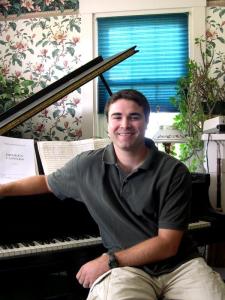
You can get answers to these and other questions in an ONLINE course by the New England Institute for Teacher Education and taught by Maine music educator, Jake Sturtevant.  You can take this course for 3 graduate credits or 4.5 Continuing Education Units.

Jacob-at-piano-007emRefining Assessment in the Music Classroom, K-12, March 4 through June 10, 2016

“You may already know Jake Sturtevant, music educator at Bonny Eagle High School.  Jake is an excellent educator, and is a teacher leader for the Maine Arts Leadership Initiative.  The New England Institute has hired Jake because of his excellent knowledge, leadership and expertise.  Jake has now taught graduate level courses to music educators in elementary, middle and high school and to pre-service teachers.  He has helped so many educators navigate the often confusing and tedious process of moving toward proficiency based learning in the music class. And, because every school district handles it differently, he tailors the course to meet your individual needs.”  Catherine Ring, Ex. Director, NEI

Please join Jake and other colleagues in this ONLINE course.  CLICK HERE to register.

h1

NCAS

January 22, 2016

High school Model Cornerstone Assessment Pilot Project launches

Screen Shot 2015-09-29 at 2.51.29 PMJanuary 20, 2016

Contact: Cory Wilkerson
Tel: 800-587-6814
Email: projectmanager@seadae.org
FOR IMMEDIATE RELEASE

The National Coalition for Core Arts Standards (NCCAS) has completed the selection of schools and teachers for the High School Model Cornerstone Assessment Pilot Project. The project is partially funded by a grant from the National Endowment for the Arts.  Model Cornerstone Assessments (MCAs), a component of the 2014 National Core Arts Standards, were created at the benchmark grades of 2, 5, 8 and the three high school levels (proficient, accomplished, advanced) to demonstrate the type of standards-based evidence needed to show student achievement. In 2015, NCCAS completed the field testing of the elementary and middle school MCAs, and will be posting benchmarked examples of student work gathered as part of that project on the standards website.

For the high school project, NCCAS received applications from more than 120 schools and teachers to participate in the project focusing on MCAs in dance, media arts, music, theatre and visual arts. Between 10 to 15 pilot sites were chosen for each discipline. The professional arts service organizations and members of the NCCAS Media Arts leadership committee made the choices based on a careful review of applicants, with the goal of creating a diverse cross section of urban, suburban, and rural schools from across the nation.

Participating educators began professional development training in the Core Arts Standards and the MCAs this month, in order to prepare them to pilot the tasks in their classrooms February through May.  Student work will be collected and benchmarked during the summer for archiving on the standards website.

Individuals and organizations interested in the project can follow the work or obtain more details as it unfolds, including a list of the states participating by geographic region, on the National Coalition for Core Arts Standards wiki at  http://nccas.wikispaces.com.

h1

This We Believe!

October 20, 2015

MALI makes it clear

This summer while attending the Teach to Lead Summit in Washington D.C. the team representing the Maine Arts Leadership Initiative decided to take action on the MALI Teacher Leaders idea of creating Belief Statements. The topics were selected based on the past 4 years of MALI and ones that MALI Teacher Leaders are engaged with, individually and/or collectively: Arts Integration, Advocacy, Assessment Literacy, Creativity and 21st Century Skills, Educator Effectiveness, Effective Teaching and Learning, Proficiency Based Learning and Student Centered Learning, and Teacher Leadership.

IMG_1901At the Summer Institute that MALI had August 3-5 participants worked in groups to draft the statements of which everyone provided feedback on during the institute culmination activity. As a follow-up to the institute they were updated with the suggestions and went back to the teams who collaborated on the writing of them. One last look by the Leadership Team and what you can read below is the result of the several months process. The collaborative effort is another example of the grass-roots work of MALI.

These statements were created to help guide MALI as we continue to move forward with our work. Will these This We Believe statements change? Perhaps, as is most things with MALI, changes are made to move the initiative forward to meet the needs of Arts education in Maine which should positively impact every Maine student.

These statements now live on the Maine Arts Assessment website at http://www.maineartsassessment.com/#!this-we-believe-statements/cmni and were unveiled recently at the Biennial Statewide Arts Education conference on Friday, October 9.

  • ARTS INTEGRATION… allows for cross-curricular collaboration within the creative process. Interconnected learning provides students an opportunity to demonstrate understanding and knowledge using multiple avenues.

  • ADVOCACY… educates communities that arts education is essential. Arts advocacy should involve the presentation of solid, factual information that challenges misconceptions about the role of the arts in our society. Arts advocacy should also highlight the various benefits of the arts through the creation and viewing process; involving the larger community in purposeful and meaningful ways.

  • ASSESSMENT LITERACY… is an ongoing dialogue between stakeholders that informs instruction, supports learning, clarifies understanding and validates what we do as educators.

  • CREATIVITY AND 21ST CENTURY SKILLS… quality arts education is critical to fostering Creativity and developing 21st Century Skills. The arts provide authentic, real life opportunities that nurture:

    * Collaboration

    * Communication

    * Critical Thinking

    * Creative Problem Solving

    Creativity is the ability to connect ideas, information and issues, through exploration, and in novel ways in order to develop personal and relevant solutions.

  • EDUCATOR EFFECTIVENESS… effective teachers are passionate, and love what they do. They are problem solvers, able to reach all learners. They are informed about current pedagogy. They are flexible and can adapt their perspective. They are positive, with a focus on developing student growth.

  • EFFECTIVE TEACHING AND LEARNING… effective teaching leads to effective learning when students are actively engaged, the learning is individualized and relevant, and feedback leads to informed teaching practice and improved student progress.

  • PROFICIENCY BASED LEARNING AND STUDENT CENTERED LEARNING… students are encouraged and empowered to become independent learners, ultimately taking charge of their own education. Experiences within the learning environment are active, collaborative, and engaging; supporting students to explore their artistic processes in meaningful and purposeful ways.

  • TEACHER LEADERSHIP… is collaboration, the ability to foster change, challenging and supportive of others, advocating for the needs of all, and inspiring others to become leaders. Teacher Leadership is an intentional, collaborative strategy which supports and inspires: a) students and their learning through effective teaching practices and  b) the teaching profession through shared expertise, resources, and high quality and ongoing professional development.

Please note: On August 3, 2015, MAAI, the Maine Arts Assessment Initiative, announced its new name, MALI, the Maine Arts Leadership Initiative. MALI is a program of the Maine Arts Commission. You can read about it at https://meartsed.wordpress.com/2015/08/09/maai-goes-to-mali/. Please email Argy Nestor if you have any questions at argy.nestor@maine.gov.

h1

NEW Resource Bank Unveiled

October 18, 2015

Awesome resources for you!

MALI_V1_Color_100ppiNEWS FLASH

Last week at the Statewide Biennial conference at the Point Lookout Conference Center one of the exciting announcements that took place was the unveiling of the MALI (Maine Arts Leadership Initiative) Resource Bank. This is the second year in a row that funds have been provided by the Maine Arts Commission to create resources that are useful to all arts educators.

The resources are located at http://www.maineartsedresources.org/

WHAT YOU’LL FIND on the RESOURCE BANK

  • During the 2013-14 school year the MALI Resource Team created a template that was used for the team to create resources. You can download it from the site and use them yourself.
  • A searchable data base that includes resources for the following categories: Dance, Media Arts, Music, Theater Arts, Visual Art, Creativity, and Student Voices.
  • The Maine Learning Results Standards document
  • Pictures and links to the contributors so you can communicate with them if you’d like to
  • A bit of the history

All of us at MALI are very excited about the Resource Bank and hope that you find it useful. We encourage you to take some time on the webpage to search topics. Certainly they can be used ‘as is’, or you can adapt or adopt them, as is.

Screen Shot 2015-10-12 at 12.07.50 AM

A great big thank you to Catherine Ring and Barbara Vinal for working closely with the Teacher Leaders who were part of the Resource Bank team and to create the searchable website!

Thank you to the Maine Department of Education for the funding to create the website!

Please note: On August 3, 2015, MAAI, the Maine Arts Assessment Initiative, announced its new name, MALI, the Maine Arts Leadership Initiative. MALI is a program of the Maine Arts Commission. You can read about it at https://meartsed.wordpress.com/2015/08/09/maai-goes-to-mali/. Please email Argy Nestor if you have any questions at argy.nestor@maine.gov.

h1

Successful Biennial

October 13, 2015

Great day for Arts Education!

DSC02537

Biennial Statewide Arts Education Conference participants

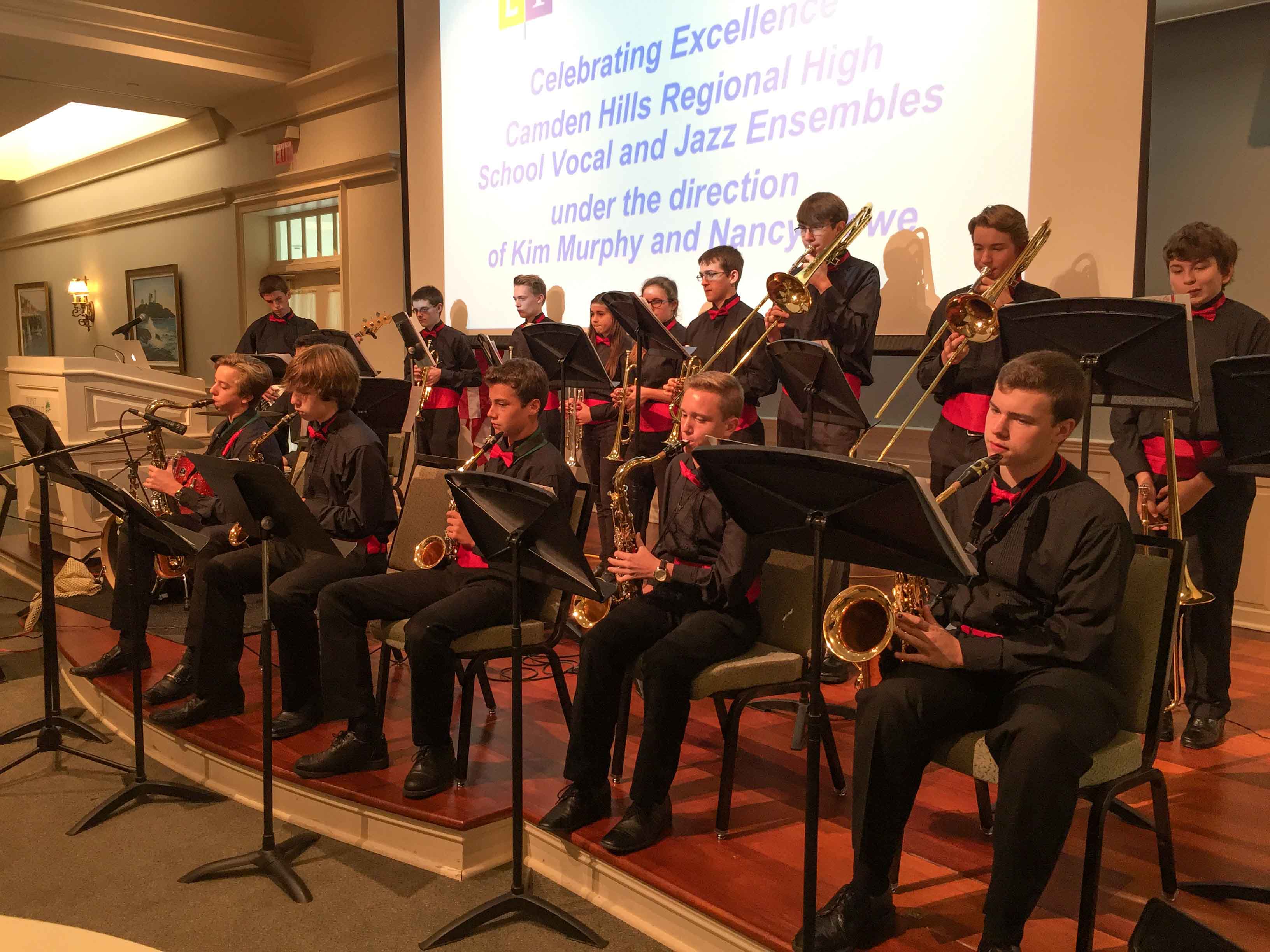
Point Lookout Conference Center in Northport on Friday, October 9 was abuzz with Arts Educators for the Biennial Statewide Arts Education conference, The Measure of Success. The day was filled with student performances, celebrations, presentations, networking and intense workshops, conversations, questions, and wonderings. From the opening music performance by Camden Hills Regional High School Jazz Band under the direction of Nancy Rowe to the closing session with a theatre performance of the Adamms Family under the direction of Kim Murphy the day was educational, energizing, and filled with surprises!

IMG_0334

Camden Hills Regional High School Jazz Band under the direction of Nancy Rowe

Over the next few days on the blog there will be highlights from the conference in words and images to give you a bit of what went on during the all-day event.

If you were able to join us – thanks so much – I hope that you found it worthwhile and that you met other folks to share ideas, your work, and that you learned something from them as well. If you couldn’t make it, please know that the blog posts will provide tidbits but in other similar events its just not the same as being there. I will do my best to describe what went on. If questions arise for you from what you read and see, please don’t hesitate to contact me at argy.nestor@maine.gov.

IMG_0347We initially started plans for this conference back in January and as you can imagine it takes many people to put all the details in place including those listed below. My apology if I leave someone or place out. I am sure that you will let me know.

  • The Maine Arts Leadership Initiative Leadership Team for the hours they spent emailing, zooming to plan and implement the conference
  • The amazing presenters including Theresa Cerceo and Janie Snider, Jennie Driscoll, Jen Etter, John Morris, Jen Nash, MaryEllen Schaper, Jeff Beaudry, Lindsay Pinchbeck, Catherine Ring, Dan Ryder and Kate Smith, and Rob Westerberg.
  • The Maine Arts Commission staff especially Director Julie Richard, Priscilla Kelley and Chris Norris in the front office, and Linda Nelson
  • Maine Department of Education especially Beth Lambert, the new Visual and Performing Arts Specialist and the financial support from the MDOE
  • MALI partners: New England Institute for Teacher Education, Maine Art Education Association, Maine Music Educators Association, USM, UMaine Performing Arts, Maine Department of Education
  • Camden Hills Regional High School Jazz Band, Nancy Rowe and Camden Hills Regional High School theatre students, Kim Murphy
  • Kate Smith, Jen Etter, and Cynthia Keating for Celebrating Excellence!
  • Lindsay Pinchbeck, Amy Gertner, and Jessica Day for Bumpity Bump Bump
  • Theresa Cerceo sharing SLAM
  • Farnsworth Art Museum, Kate Smith, Allie Rimkunas, Pamela Kinsey, Camden Hills Regional High School, Hampden Academy and others for providing door prizes
  • Barb Vinal and Catherine Ring, completing the new website
  • Peripole, supplying every participant with their own set of egg shakers in great colors!
  • Celebration Team!
  • Point Lookout Conference Center staff, especially Gerry Hill
  • Susan MacPherson at Great Gatherings for the registration
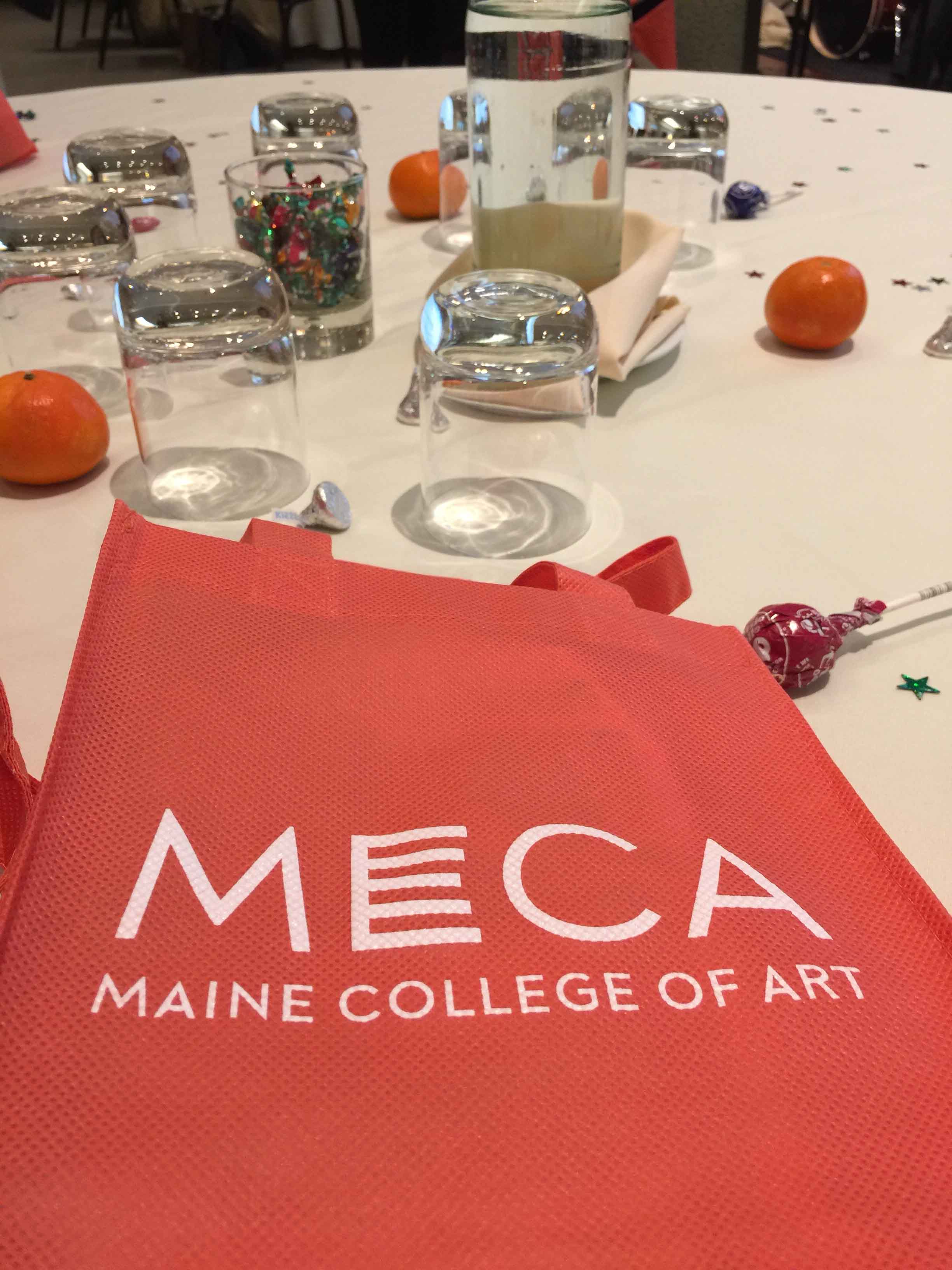
  • Maine College of Art for providing the bags, Liam Sullivan
IMG_0485

A taste of the Adamms Family – getting ready for opening night, under the direction of Kim Murphy

Please note: On August 3, 2015, MAAI, the Maine Arts Assessment Initiative, announced its new name, MALI, the Maine Arts Leadership Initiative. MALI is a program of the Maine Arts Commission. You can read about it at https://meartsed.wordpress.com/2015/08/09/maai-goes-to-mali/. Please email Argy Nestor if you have any questions at argy.nestor@maine.gov.