Archive for the ‘Technology’ Category

h1

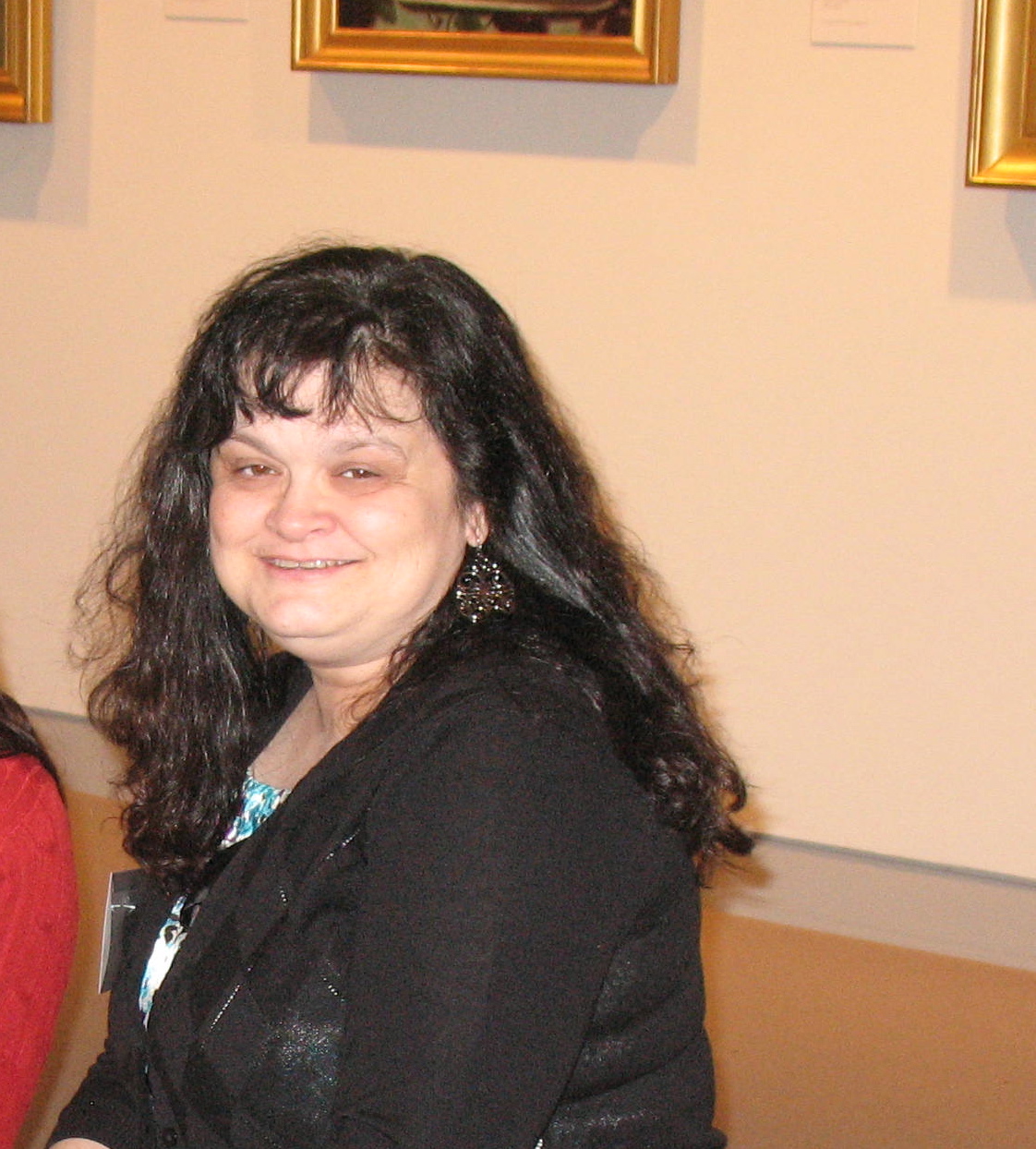
Another Arts Teachers’ Story: Shalimar Poulin

July 17, 2012

Featuring one teacher’s journey as an educator

This is the 18th in a series of blog posts telling arts teachers’ stories. This series contains a set of questions to provide the opportunity for you to read educators stories and to learn from others.
Shalimar Poulin teaches at Wiscasset High School (RSU 12), grades 9-12. She has been teaching for 18 years. Prior to Wiscasset High School for the last year she taught at Gardiner Area High School for 8 years, 3 years at Hyde Schol in Bath, and 6 years in suburban Philadelphia. At WHS she teaches Draw/Paint, Printmaking, Art Revolutions (Art History- inspired Art-making class), Digital Art, Ceramics, Sculpture. Shalimar has served on the leadership team for the Maine Arts Assessment Initiative.

What do you like best about being an art teacher?

It comes naturally to me, always has. Harvesting the belief that all people can practice creativity, can learn the skills of making quality art, and one does not have to be talented to enjoy art-making. This belief is something that works best when discovered first hand; however, learning vicariously through one’s child can change limiting perceptions of art making.

Tell me what you think are three keys to ANY successful arts ed program?

  1. Community attitude towards art (including administration, teachers, staff, students, parents and community at large). One does not necessarily need to be 100% gung ho art, but must have a curiosity, positive learning attitude, and a willingness to accept changes in art education.
  2. Art teacher dedication, commitment, quest for doing one’s best.
  3. The establishment and maintenance of a flexible learning environment where teacher and students learn together, where guidelines are clear and open to interpretation and the door is open for extended-learning and community visitation.

What specific way(s) do your assessment practices tie into the success of your program?

I can’t be sure that it is successful. Right now, it is a lot of work. I hope at some point to better manage the long out-of-class hours I spend on creating quality assessments, modifying quality assessments, providing quality evaluation and feedback to students, and the one I am least successful at- timely feedback. The assessment tools I use are: (1) project rubrics (that ask students to self reflect on their work, modify project goals to suit their interest, and clear teacher and peer feedback for improvement), (2) bi-weekly exit slips- a substitute for quizzing, including: comments about learning and activities, class participation and effort, teacher and self ratings, art language exercises, hopes for upcoming weeks, feedback for teacher (3) start-up questions- discussion questions posed to students to answer individually, in pairs, or groups depending on the pre-start up activity. Usually there is an out-of-class expectation of sorts- read a google doc, visit a blog, do an activity to reinforce learning such as a 10 minute or less class start-up questions. (4) artfolio development and presentation checklist and rubrics (photographing, writing and revising student artist writings and storing, filing and posting of electronic files to student g-site artfolios),  (5) critique preparation, discussion, and reflection 

Next year I am going paper-less with all non-art activities. I am using an on-line classroom called Canvas (supported by our tech integrator). I am looking forward to this practice and I believe it will improve student’s tendency to resist “paper-work” and “academic” activities in art class. I also am certain it will stream-line evaluation such that the required time will be reduced.

What have been the benefits in becoming involved in the arts assessment initiative?

Collaboration- sharing stories, problem-solving together, shop talk. Working with leaders in Maine State Arts Education- kind, thoughtful, energetic, movers and shakers.

What are you most proud of in your career?

The life skills I share with students by example and through the making of art: work ethic, problem solving, commitment to completion, risk taking, development of creative self, allowing a project to take time (not everything we do need be instant gratification). Turning kids on to something they believed they had no aptitude for- the skills of art making.

What gets in the way of being a better teacher or doing a better job as a teacher?

A growing epidemic of the failings of the education system being blamed on those of us in the trenches- teachers. The lack of parent involvement in the lives of their children. The failure of educational consultants and school administration to interview and honor their greatest resource- teachers. The troubled economy and instability of arts place in the future of education. Students who make it their main mission to defy authority (who fail to see we have their backs and want the best for them).

Apple or PC?

Apple

What have you accomplished through hard work and determination that might otherwise appear at first glance to be due to “luck” or circumstances?

Nothing. It seems all that I have perceptively succeeded in has come from hard work, determination, working with others, and intentional moving and shaking. I will say, I have been lucky to be invited to work in some interesting schools and I have had the privilege of working with some amazingly outstanding students. These blessings were not a function of my efforts, they are providence.

Look into your crystal ball: what advice would you give to teachers?

Please don’t consider art an exception to the rule. When our peers in the core disciplines are asked to make changes, meet new standards, jump through hoops, JOIN THEM- be an example of change. Validate what we do as being part of current educational trends. Expect our administrators to include us in all requirements.

If you were given a $500,000.00 to do with whatever you please, what would it be?

I would ask for more money because 500 is a spit in the bucket. Then, I would build and open a state of the art after-school arts center for children ages 4-18. I would include disabled adults as well. This center would be the equivalent of a magnet school for the visual and performing arts- only less formal. It would offer students enrichment, a place to be after school, and the opportunity to create life-time habits in creativity. It would have all the ideal facilities I have ever dreamed of and never had. I would link it to a community center (YMCA maybe) that also offers exercise programming. I would close it in the summer so that I could continue to devote time to personal art-making. Besides there are so many great summer programs already established for young people. I would have a massage once a week, schedule my loved ones for a once a week massage and hire a personal chef and a sherpa. I would establish a college fund for my nieces and nephews. I would by a place on the water.

Websites that Shalimar recommends:
https://sites.google.com/a/svrsu-whs.org/whs-artland-ms-poulin/home

https://sites.google.com/site/arteducatorshalimarpoulin/

http://artjunction.org/blog/?tag=arted-20

http://arted20.ning.com/

http://www.teachingarttoday.com/Teaching_Art_Today/Home.html

http://greenwoodstudiogroup.com/shalpoulinabouttheartist.html

http://www.facebook.com/pages/Shalimar-Corneille-Noire

http://www.artsonia.com/

Thank you Shalimar for sharing your story.
h1

Another Arts Teachers’ Story: Rebecca Wright

July 11, 2012

Featuring one teacher’s journey as an educator

This is the 16th in a series of blog posts telling arts teachers’ stories. This series contains a set of questions to provide the opportunity for you to read educators stories and to learn from others.

Rebecca Wright just completed her 27th year in public education with the last 26 in Ellsworth, RSU 24. She is unique not because she teaches grades 9-12 at Ellsworth High School (EHS) but that she teaches Theatre, Vocal Music, and Dance and each year her student load varies due to her content expertise. On a trimester system at EHS next year she will teach 7 sections of public speaking, a new requirement for Freshmen. Her primary classes are in Introductory Theatre, Dance, and Vocal Music and Advanced sections in all those areas as well. Rebecca also teaches two different sections of Stagecraft; Costumes and Sets, and Concert Choir. The team Rebecca works with is awaiting final approval for instituting a Visual/Performing Arts Academy. Rebecca is a teacher leader with the first phase of the Maine Arts Assessment Initiative.

What do you like best about being an arts educator?

It is ever changing and it is what students can be passionate about. They come to my class and say “I’ve waited all day for this!” I love how it changes or improves their lives forever and they will come back years later to describe how the visual/performing arts classes have helped them, supported their goals, or become a lifelong pursuit.

Tell me what you think are three keys to ANY successful arts ed program?

  1. Community and Administrative Support
  2. Dedication and a thick skin:)
  3. Students first!

What specific way(s) do your assessment practices tie into the success of your program?

Formative, formative, formative. Students are constantly assessed and encouraged daily without being aware of it. Formative assessment is vital to their individual improvement. My emphasis is on individual progress not on comparison to anyone else in class. Everyone can and will improve and graded assessments are based on their self-assessment, peer assessment and my assessment.

What have been the benefits in becoming involved in the arts assessment initiative?

The arts assessment initiative has been one of the best professional experiences of my career. The week spent last summer with people of like philosophy and mind was exhilarating and inspiring. The wealth of knowledge and ideas was a treasure trove to draw from and Ann Marie from MLTI changed my outlook on technology forever!

What are you most proud of in your career?

I have been blessed to have had many highlights in my career. Seven state championship show choir titles, two national titles at Disney, many successful festivals and sold out performances. I am most proud however, of the many students who have chosen to pursue careers and lives in the arts. It has been so rewarding to see them go on spreading the love of music, theatre and dance around the country. Many are teaching and directing at schools around the state, some are dancing in New York City, some are on television and in the movies spanning the nation from Washington, D.C. to Los Angeles. Some participate in community theatre and church choirs. They keep me in the loop of their lives and I could not be more proud.

What gets in the way of being a better teacher or doing a better job as a teacher?

The things that most interfere with being a better teacher are the increasing demands placed upon the teaching profession in general, red tape and paperwork, and also the constant repetition of having to educate administration about the unique and different needs of the Visual/Performing Arts Dept. I have had many supportive administrators but it has taken determination on the part of myself and my colleagues to gain that support and understanding of our programs.

Apple or PC?

Apple because we have “one to one” for our students.

What have you accomplished through hard work and determination that might otherwise appear at first glance to be due to “luck” or circumstances?

I constantly hear from colleagues across the state “It must be nice!”, “You have all kinds of money to work with.”, “Ellsworth has all kinds of advantages”. What I remind them is that it took 26 years to build what we have and we started with nothing more than an aging cafetorium stage and a handful of kids. There have been years full of “blood, sweat and tears” poured into our program not just on my part but on the part of all those students, parents, and volunteers during all those years. Circumstances were often against us but a passion for the importance of performing arts for students carried us through.

Look into your crystal ball: what advice would you give to teachers?

The visual/performing arts are more important than ever to students and our culture.
Don’t give up and don’t expect everyone to be as excited as you are. Always remember who it makes the difference for-students. Be willing to compromise and be flexible and be willing to look at your situation from all sides. It is hard to argue with a program that is always focussed on what is truly best for students.

If you were given a $500,000.00 to do with whatever you please, what would it be?

After paying for my twins education, one is going to SVA in Manhattan for Animation and one is going to USM as Musical Theatre major (go figure:), I would probably finally start the “Wright School for the Performing Arts”. We have joked about it for years, buying The Grand Auditorium in Ellsworth and renovating it to be used as a year round performing arts school and performance center.

Thanks Rebecca for telling your story!

h1

Celebration of Arts Education

June 15, 2012

A great day for the arts

First Lady Anne LePage Welcoming families to the Blaine House

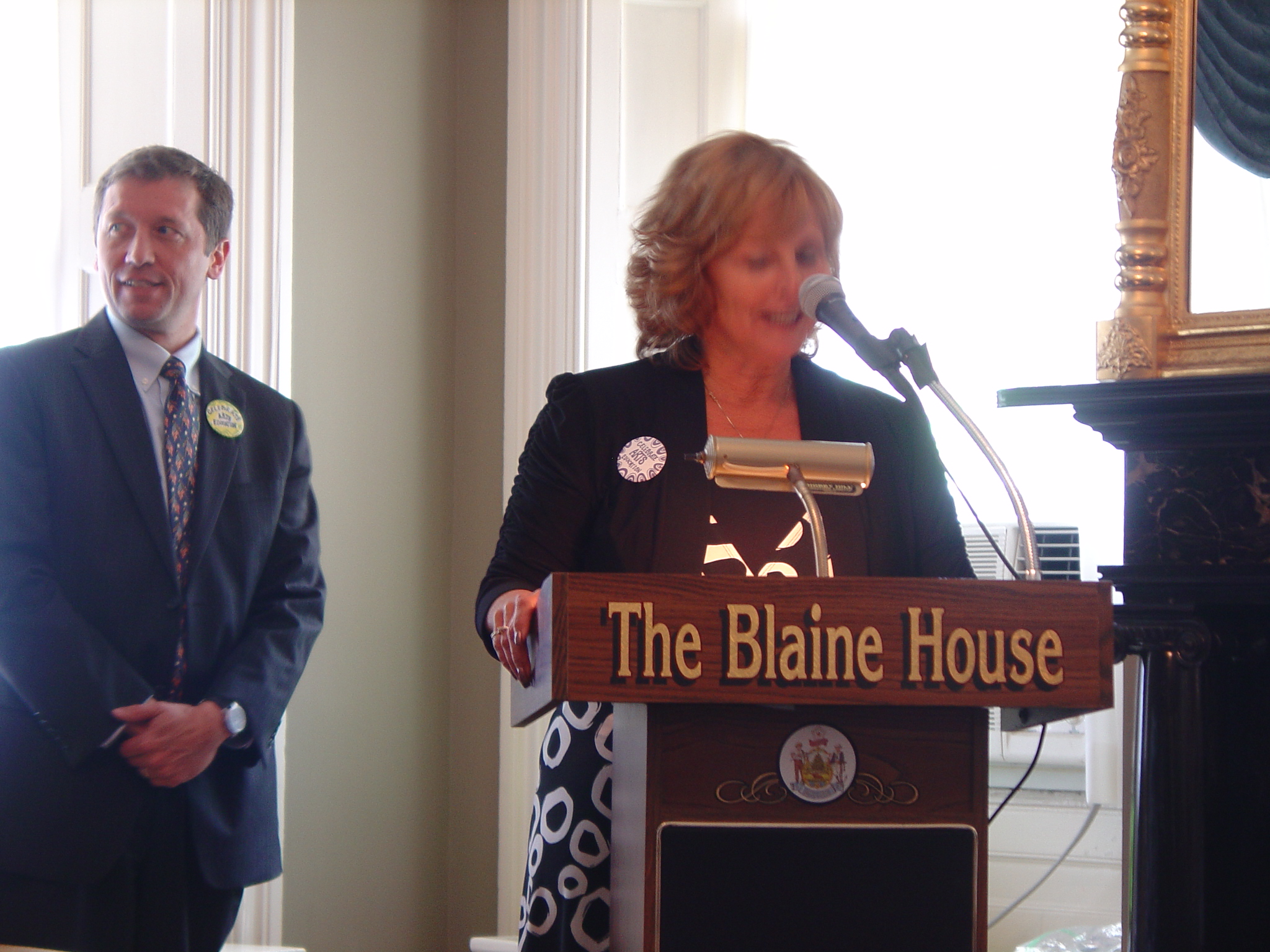
At the Celebration of Arts Education the First Lady welcomed K-6 arts students from Bangor elementary and middle schools to the Blaine House and thanked the students for sharing their work at the Department of Education. Mr. James Banks, chair of the state board, congratulated the students for their accomplishments in the arts. Stephen Bowen, Commissioner of Education, introduced three kindergarten students who performed a song they had written with the guidance of their music teacher, Anne Chamberlain-Small. Students has worked on the song all year using garage band and it is on the Department’s YouTube channel.

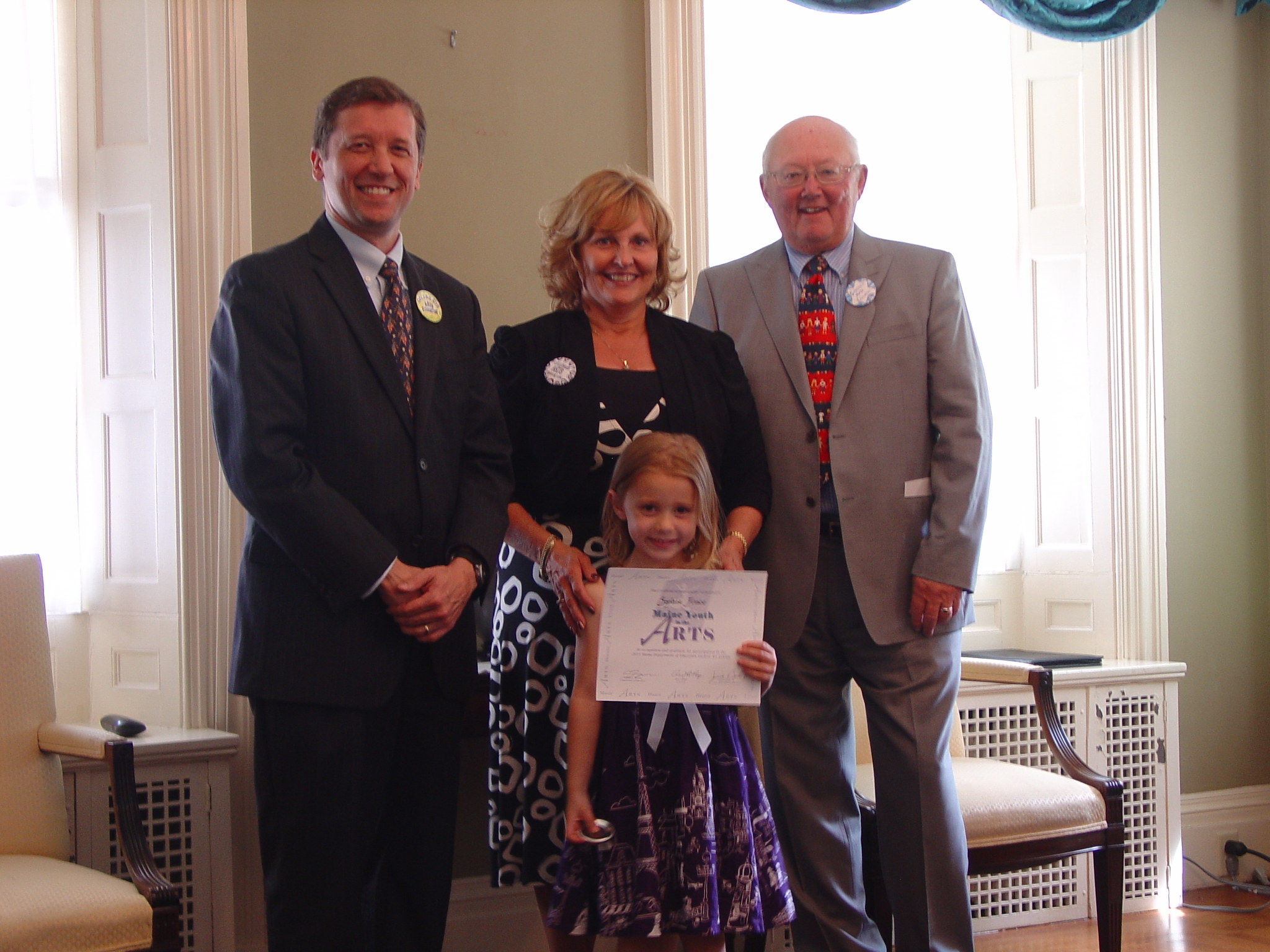
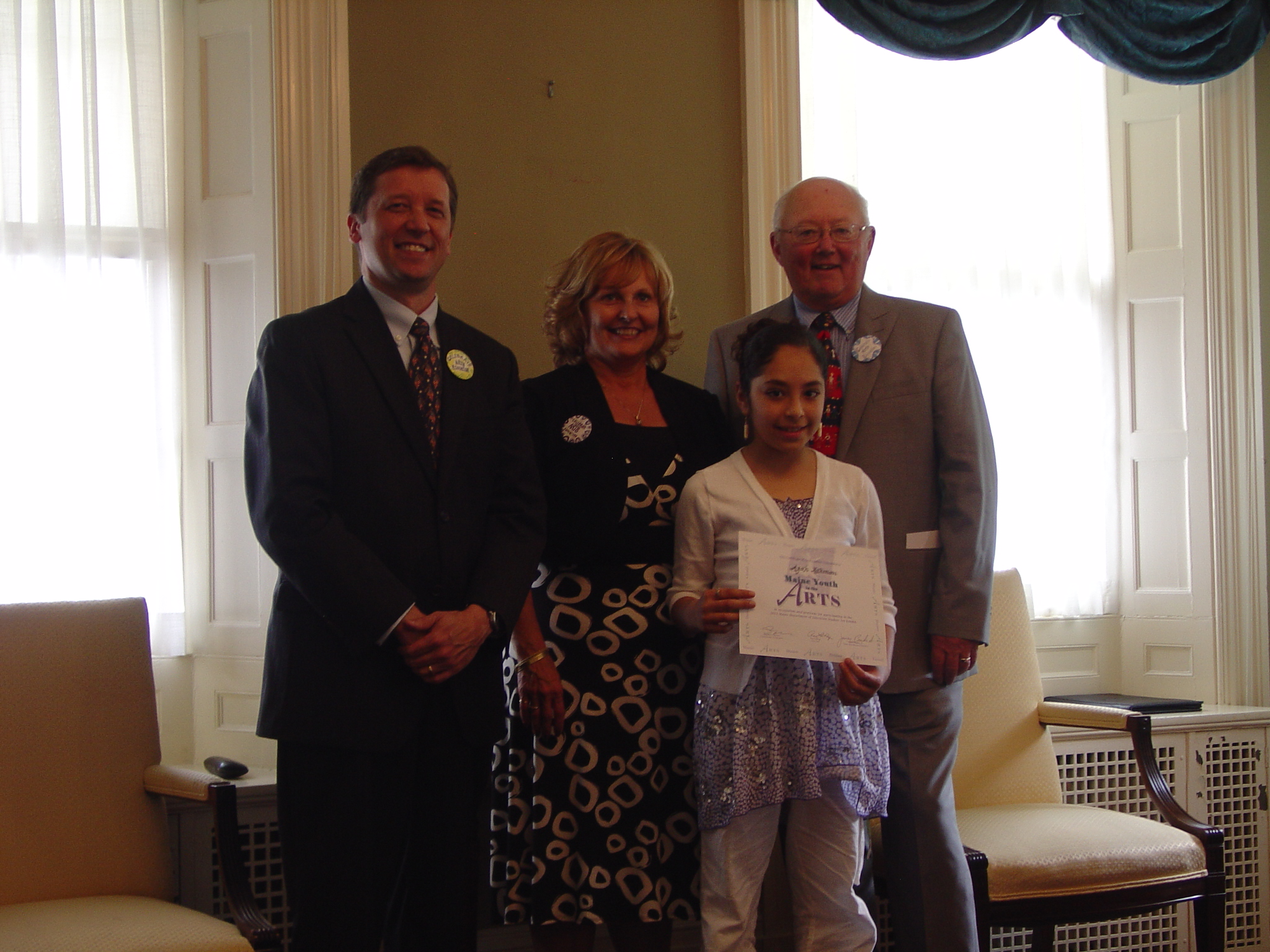
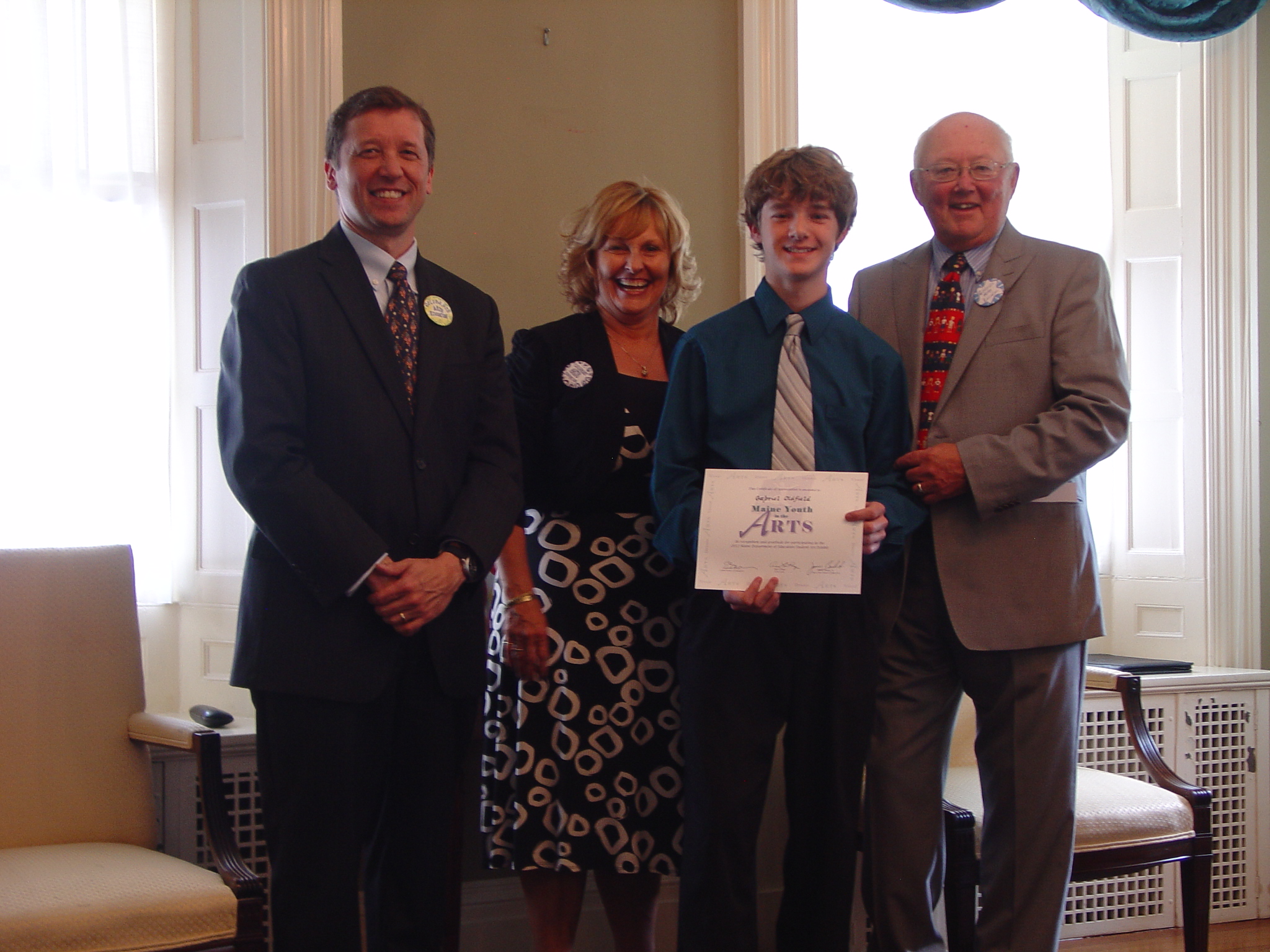
At the completion of the singing the students received certificates and “I am a musician” button. Artists were announced and each of them were presented a “I am an artist” button and a certificate.

After enjoying cookies and punch in the dining room the families were welcomed at the Department of Education to view the artwork on display. The musicians sang their song a second time. Many families made a day of it visiting other places of interest in Augusta.

Student artwork are posted on the Bangor art exhibit page found on the right side of the front page of the blog. The exhibit remains unil the end of June. Earlier this month a post was made on the specifics of the art exhibit.

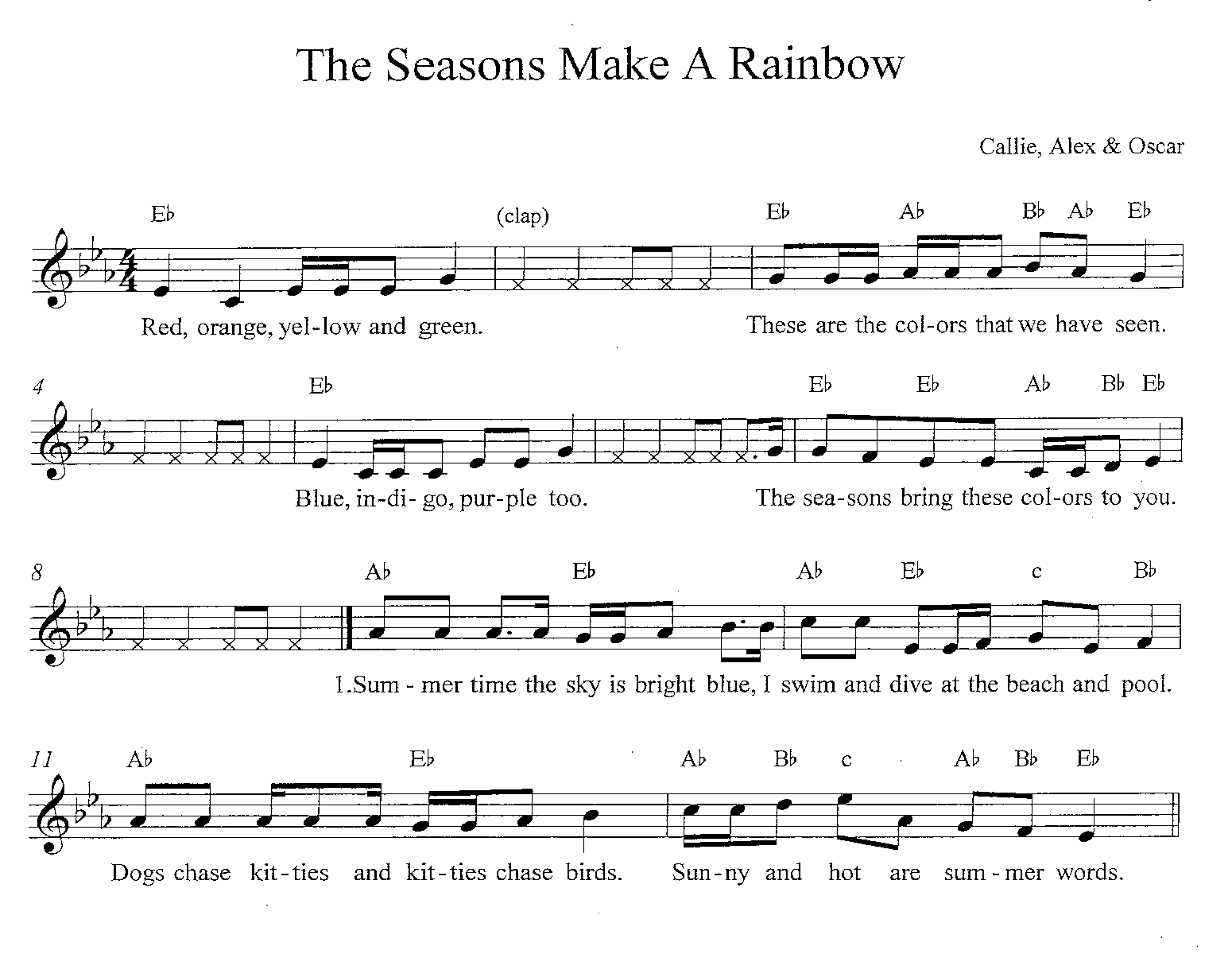
Season Make a Rainbow Score

h1

Henry Reacts to Music

April 28, 2012

Video shows man in nursing home responses to music

Artist educator Karen Montanaro shared this YouTube video with me. Henry is provided with an ipod and immediately reacts Henry has while listening to music. Philosopher, Immanuel Kant once called music “the quickening art”. In this video Henry responds physically, emotionally, and verbally to the music as it appears to awaken him.

h1

Creating on an iPad

March 11, 2012

Boothbay High School iPad story

Not too long ago, while at a meeting in Washington county, I had a conversation with Tara Maker from Apple who works with Maine’s Learning Technology Initiative (MLTI). Tara was demonstrating the iPad and mentioning some of the tools on the devise. She showed a student example of a drawing from Boothbay High School. She explained that the student had created her own stylus to be able to create what she wanted in the drawing. Afterwards Tara and I chatted and she emailed me the drawing.

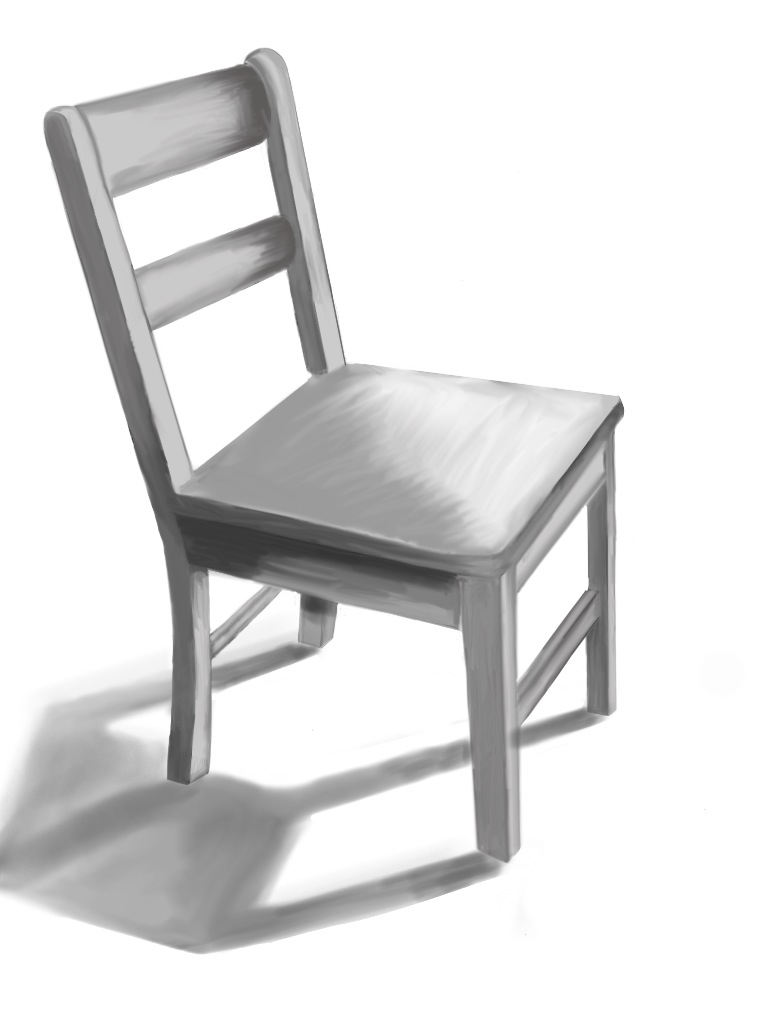
Emilie's drawing, Tara shared that inspired me to contact Emilie

As a follow-up I emailed the student, named Emilie, who kindly answered some questions and sent me drawings. I also emailed Emilie’s art teacher, Manon Lewis to learn more.

Periodically I find myself wondering how my teaching would be different if I were in the classroom today. There are so many wonderful tools and, students thinking is changing rapidly in their world of technology. I understand that this is challenging but also a wonderful gift! (I have to admit I am a bit jealous.) How do you change knowing students are in a very different place and still provide them with the opportunities to learn and grow using the traditional methods?

Below is what I learned through emailing with Manon and Emilie…

Manon:

I introduced Emile to the app “Art Studio” (for her ipad) in Intermediate/Advanced Art class. All of our juniors, seniors (and soon sophomores) have ipads…. (I had been playing around with the drawing program myself, showed her, and she seemed really interested!) Since I give observational drawing homework assignments, I encouraged Emilie to use this program to do her homework. (She loves technology.) We experimented together (first with our fingers–which work quite well) and then with a stylus she created from a very, very fine steel wool (which doesn’t scratch the surface of the the ipad) inserted in a straw or pen casing. The “Art Studio” app is fabulous–so much fun and very versatile–The artist can change colors, textures, value–You can also draw over photos that are imported/or taken directly with the ipad itself…text can also be added…drawn over…lots of rich layering is possible!  Emile really fine tuned (example: use of shadow and light to depict form..) her drawing–asking for input from me as she went along, just as she would on a drawing done directly on a paper surface with graphite…

Emilie:

How did you get started using the ipad to create/draw/make art?
I am on the tech team at school. We got our iPads early to help find uses in classes and help other students when they all got handed out. The chair was a drawing homework that I asked if I could do it on the iPad.

What app are you using on the ipad? Tell me a little about it.
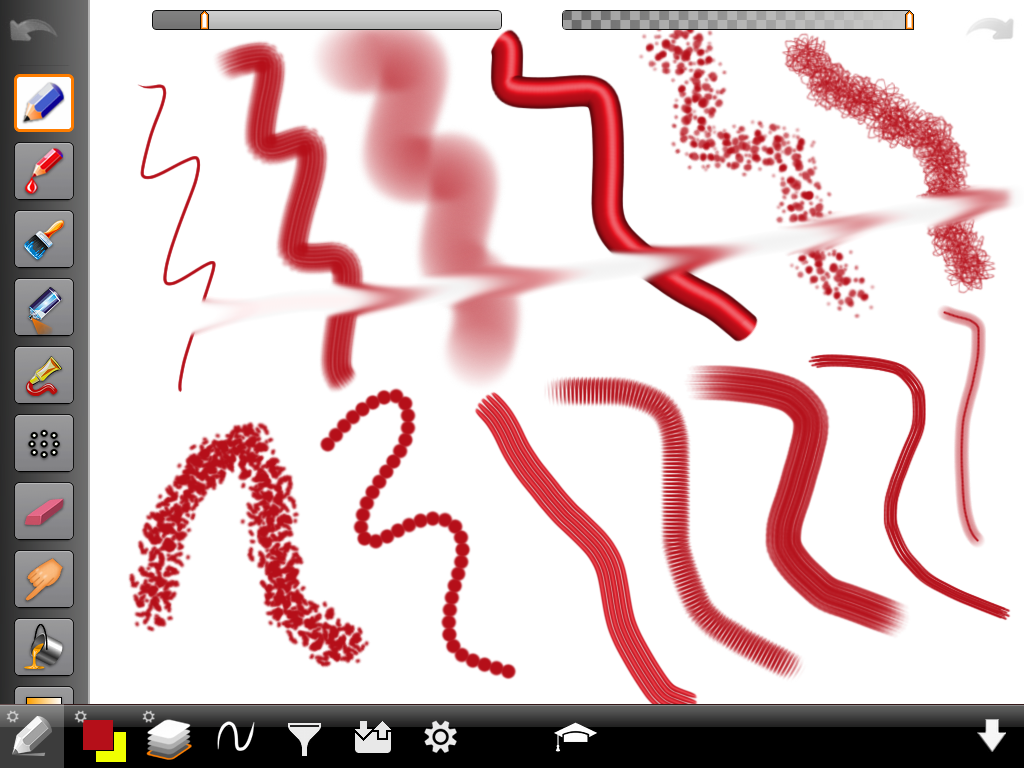
I use art studio. It’s a pretty nice app. It cost about 1.99 you can draw with a pencil, paint, spray paint and my favorite is smudging. You can zoom in and out to do details. You can also change the brush size.

Do you see the ipad as another medium to make art or completely separate?
I think the iPad could become a new medium.

What did you learn in your art courses with Mrs. Lewis that influence what you are creating now on the ipad?
She teaches us about different styles and artists. Most of my drawings are based off artists she has shown me. The first types of drawing I did on the iPad was her drawing homework. Just drawing simple items from different views.

I understand you made your own stylus, can you tell me about how that came about?
My teacher, Mr. Wolotsky showed me a video on YouTube. It had a stylus but it was bulky and looked ugly. So I changed it during engineering class. It works better, looks cooler, and is more durable then the other.

Are you using the ipad only at this point to make art or other tools as well? is what else do you use your ipad for besides drawing? What other learning is taking place with your ipad?
In school I use my iPad for everything. Taking notes, looking up grades, keeping assignments, writing essays and teachers share papers instead of printing them off and handing them out. The iPad is used in every class in some way. Out of school I like to draw, take photographs with it and use the maps app to find we’re I’m going.

You mentioned your engineering class with Mr. Wolotsky. Please tell me about this course.                  I have an engineering class with Mrs. Higgins and an independent study with Mr. Wolotsky. In engineering we learn about all the different kinds of engineers and build stuff. We’ve made solar powered iPod – iPad chargers, an under water robot and are going to make wind turbin blades next. I also have an independent study with Mr. Wolotsky who is the tech teacher. Him and Mr. Calson are in charge of the iPad program. During that period I edit video, help with the green screen, and help with iPads. When creating something for engineering class you have to be creative about how to do this. It takes skill and time to do just like any painting would. And the final piece usually is a piece of art.

Do you have plans for after high school?
I am a junior and plan on going to college for engineering.

What advice would you give to someone starting out with the ipad as an artist tool?
Just play around with all the features. I’ve been using the same app for months and I just found a useful tool last night that I never noticed before. It takes a little while it get used to, but worth it when you get the hang of it.

I look forward to seeing what Emilie (and others) creates on her iPads and with other medium!

Thank you to Tara, Manon, and especially to Emilie for contributing to the meartsed blog!

If you have questions, please post them in the comments section and perhaps Emilie will answer them!

h1

Today’s MLTI Webinar: Multimedia

March 8, 2012

Multimedia in the MLTI Classroom facilitated by Ann Marie Quirion Hutton

March 8, 2012
3:15pm and 7:15pm

Multimedia is rapidly becoming a communication tool for todays students. We have movies and videos everywhere we look. A large part of communication is not just consumption but also authoring. Join us for this hands on webinar. Using tools on your MLTI device we will create our own animations.

Have you ever drawn a picture on your laptop ? Have you ever wanted to make it into an animation? Bring your MLTI device, roll up your sleeves and get ready to create.

Please note: For this webinar, you will need to have your MLTI Device as this will be a “hand-on” webinar! Enjoy!

Join us on Thursday, March 8th at 3:15pm or 7:15pm.  To register, visit http://maine121.org/webcasts and select the webinar/time you wish to participate in – you will be re-directed to online registration.

**We have a new registration system, so please ensure you enter your email address correctly!  Once you register you will receive a confirmation email that contains a login link that will be used the day of the webinar.

h1

Calling All Arts Teacher Leaders!

March 6, 2012

Professional Development Opportunity

Are you interested in leading Maine Arts Education Assessment Initiative: Phase II?

Regional VPA Assessment Leader Search

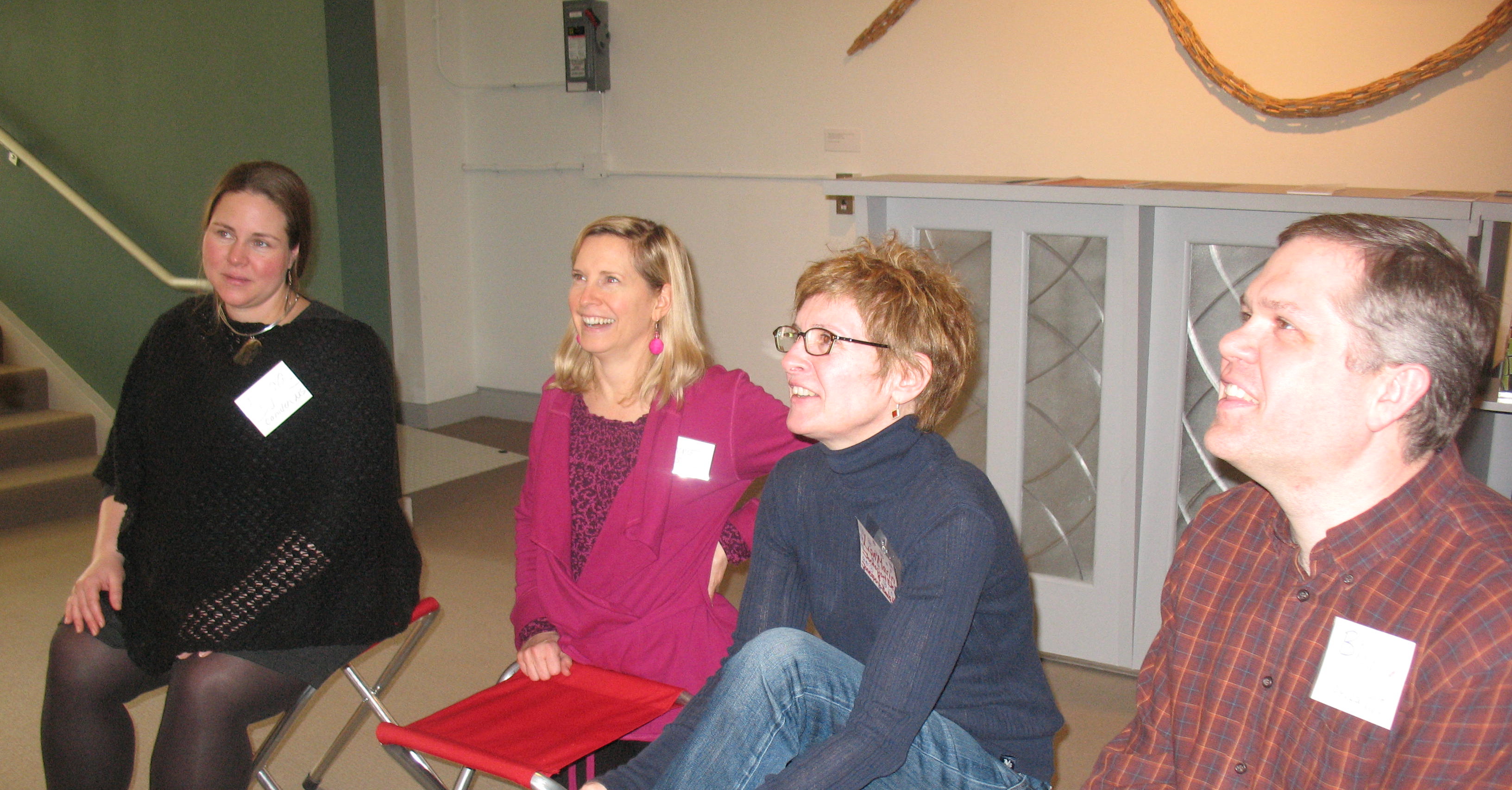
Music Teacher Allysa Anderson, Art Teachers Jennie Driscoll and Lisa Marin, Music Teacher Bill Buzza

Join us for a GREAT opportunity! I invite YOU to be part of Maine’s exciting arts education initiative. The initiative is looking for teachers interested in leading and in taking a close look at assessment in the arts. If you are selected, we will provide training and ask that you take what you’ve learned and share it with other educators in your region and in Maine.

OVERALL PROJECT DESCRIPTION: Create an environment in Maine where assessment in arts education is an integral part of the work all arts educators do to improve student achievement in the arts.

TIMELINE – Phase I

  • Summer 2010: Argy Nestor, Rob Westerberg, Catherine Ring attended the New England Arts Assessment Institute and formulated initiative plan
  • Summer 2011: Professional Development – Regional VPA Assessment Leaders
  • October 2011: Regional VPA Assessment Leaders facilitate workshop sessions at statewide conference on arts education assessment
  • Winter/Spring 2012: Regional VPA Assessment Leaders facilitate professional development opportunities on assessment by regions
  • 2011-12 School Year: Arts education assessment webinars for Maine educators
  • February 2012: Reflect on the work and determine next steps

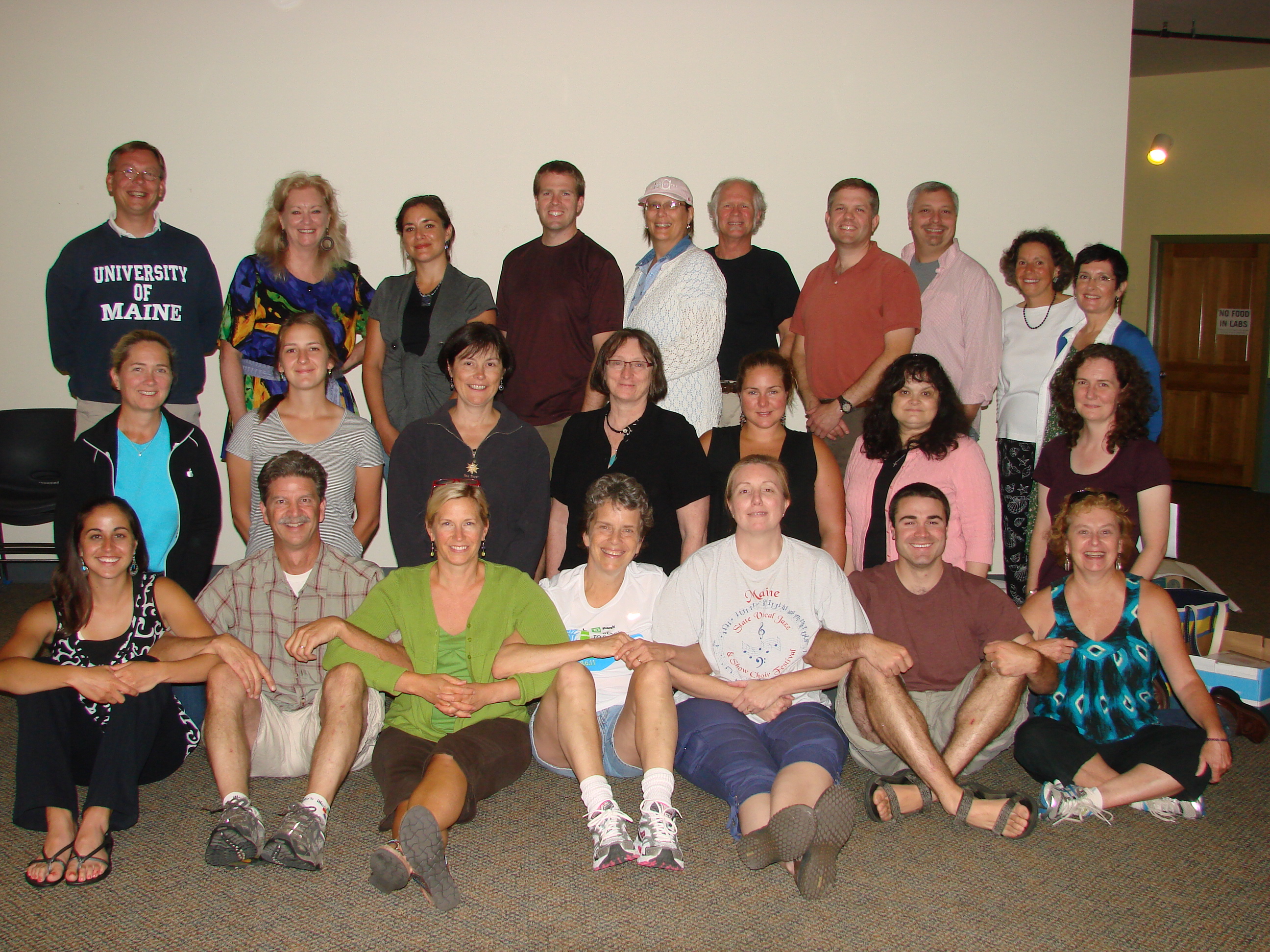
Phase I Maine Arts Assessment Leaders

Phase II

  • March 2012: Call for Phase II Teacher Leaders
  • Summer 2012: 4 day Professional Development – Regional VPA Assessment Leaders
  • Summer 2012: Phase I Teacher Leaders continue assessment work by going deeper and developing resources of best practices in the arts to put in online repository
  • School year 2012/13: Teacher Leaders facilitate professional development opportunities on assessment by regions and in Maine

DEADLINE FOR APPLYING IS APRIL 6th

To read more details and for the application please go to http://www.maine.gov/education/lres/vpa/news.html

Phase I Teacher Leaders who have done a fabulous job starting Maine off with the assessment initiative:

  • DANCE EDUCATOR                                                                              MaryEllen Schaper                                                                                                                        MUSIC EDUCATORS
    • ALLYSA ANDERSON – Camden Rockport Middle School, grades 5-8
    • WILLIAM BUZZA – Leavitt Area High School, grades 9-12
    • JEN NASH – Etna-Dixmont, grades PK-8
    • MATTHEW DOIRON, Sanford High School, Sanford, grades 9-12
    • DEB LARGE, Hall-Dale High School, grades 6-12
    • JAKE STURTEVANT, Bonny Eagle High School, grades 9-12
    • ALICE SULLIVAN, Woodland/Princeton, grades K-12
    • SHARI TARLETON, Brunswick Junior High School, grades 6-8

    VISUAL ARTS EDUCATORS

    • SHANNON CAMPBELL, Vinalhaven School, grades K-12
    • LAURA DEVIN, Woolwich Central School, grades K-8
    • JENNIE DRISCOLL, Brunswick High School, grades 9-12
    • AUDREY GRUMBLING, Mildred L. Day School, grades K-8
    • CHARLIE JOHNSON, Mount Desert Island High School, grades 9-12
    • LISA MARIN, Jonesport-Beals High School, grades 9-12
    • LEAH OLSON, Hampden Academy, grades 9-12
    • JEFFREY ORTH, Richmond Middle/High School, grades 6-12
    • SHALIMAR POULIN, Gardiner High School, grades 9-12

    THEATRE EDUCATOR

    • REBECCA WRIGHT, Ellsworth High School, grades 9-12
h1

Science and Engineering Visualization Challenge

February 27, 2012

February 3, 2012 Science

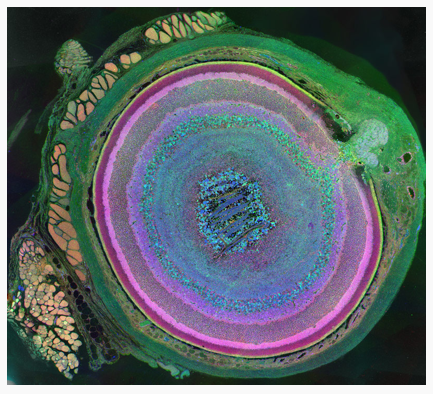
In a special issue, Colin Norman, News Editor of Science, reports on the entries for the 2011 International Science and Engineering Visualization Challenge.

Metabolomic Eye, Bryan W. Jones (Photography - 1st Place)

The challenge has taken place for the past 9 years and is sponsored by the National Science Foundation and The purpose is to “promote cutting-edge efforts to visualize scientific data, principles, and ideas—skills that are critical for communication among scientists and between scientists and the general public, especially students.”

Imagine, creating images for communication? Sound familiar? This is taken from

Chapter 132 Maine Learning Results: Parameters for Essential Instruction- Visual Arts B3 Making Meaning, Pre-K-2: Students create art works that communicate ideas and feelings and demonstrate skill in the use of meida, tools, and techniques.

This year there were 212 entries from 33 countries. The finalists were selected and posted and visitors were asked to select their favorite. The “People’s Choice” was selected by the 3200 votes that came in. The winners are posted on an online slide show at http://scim.ag/y41Bht or at www.nsf.gov/news/scivis. You can read the entire article at http://www.sciencemag.org/content/335/6068/525.full.

The National Science Foundation encourages entries and the competition opens May 31, 2012. You can find information on their website (2nd link above).

Thank you to my colleague, Peter Bernard, at the Maine Department of Education, for sharing the link to this information.

h1

Painting Via Skype

February 22, 2012

People sit for artist Sandro Kopp

Not to long ago I was asked to meet via skype with a group of teachers on a workshop day to discuss how I use skype in the work I do at the Department with teachers throughout Maine.

I have found that skype saves me time which of course translates to money. I use it at least once a week for official meetings but more times than not for conversations. For example, if I am checking on information or have questions or want to bounce ideas off of colleagues for feedback I often use skype or ichat. Skype has replaced what the phone used to do for me. If I need to check with someone on a topic I open up skype or ichat and see if the person I need to chat with is online.

So when a colleague sent a link with a story on CNN about an artist who uses skype to paint portraits I was intrigued. The artist, Sandro Kopp, lives in the north of Scotland and finding people who are available to sit for him to paint is sometimes difficult. He claims that he has always struggled to work from a photograph and prefers the real thing so skype is ideal for him. One man interviewed in the clip said that he liked that in some of the paintings the pixelation is evident. The funnest portrait was the one of his mother who has her head set on in the painting.

I googled Sandro and was intrigued by his self portrait that he created from 28 portraits. He did a portrait everyday and combined it to create a large piece of artwork. You can see the image at http://www.sandro-kopp.com/thenewme.html.

And you can listen and watch the CNN clip at http://www.cnn.com/video/?hpt=hp_t3#/video/showbiz/2012/02/10/shanon-cook-sandro-kopp-portraits.cnn