Archive for the ‘VPA’ Category

h1

In Today’s News

January 19, 2019

Art in Education Triangle – Maine, Malawi, Helsinki

Article written by Dagney C. Ernest, for Village Soup, January 16, 2019. “We teach because the future belongs to learners.” CLICK HERE to read Dagney’s article about Lindsay Pinchbeck and Argy Nestor’s trip to Helsinki and the connection between Maine, Malawi, and Helsinki.

h1

New International Resource

January 19, 2019

ARTS EDxchange

Americans for the Arts is home to the International Arts Education Research and Resource Exchange – or ARTS EDxchange – a digital platform fostering engagement and collaboration between arts educators and practitioners from around the world. Open to Americans for the Arts members and non-members alike, ARTS EDxchange is the first international arts education listserv, allowing subscribers the opportunity to share their work with a global audience and access resources on the cutting edge of arts and cultural education. Learn more.

This is the first-of-its-kind international arts education listserv, allowing subscribers the opportunity to share their work with a global audience and access resources on the cutting edge of arts and cultural education.

You can sign up for ARTS EDxchange here and please share with others!

h1

In Today’s News

January 15, 2019

Sarah Orne Jewett House

Once again the Sarah Orne Jewett House is collaborating with schools in the Berwick area. This time two high schools; Berwick Academy and Marshwood High School. Read about what’s happening at THIS LINK

h1

Arts Accessibility

January 14, 2019

What does it mean?

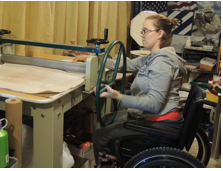
This post is reprinted with permission from Shawna Barnes’ blog located at THIS LINKShawna is a Teaching Artist Leader with the Maine Arts Leadership Initiative (MALi). She is a ceramic sculptor and mixed media artist who loves sharing her passion with others. Shawna is a strong advocate for the arts being accessible to all. She is an Army veteran who served in Operation Iraqi Freedom (OIF 7) from 2009-2010. Shawna lives with several disabilities including myasthenia gravis, cervical dystonia, seizures, hypermobility joint syndrome, peripheral neuropathy, and PTSD. 

Shawna created a survey on arts accessibility which you are invited to complete; access it at THIS LINK

One of the things I talk about a lot is the phrase “arts accessibility” and the fact that I am an advocate for it. In discussions with colleagues and friends, I realized that it isn’t really a clear term. This point was driven home even further when I included the question “What does arts accessibility mean to you” in a survey I shared asking for feedback regarding educators’ struggles with arts accessibility in the classroom/studio. So I figured I’d take some time and provide an overview on all the different possible definitions of arts accessibility and what it means to me.

Arts Accessibility – Definition #1

For me, it started when I was exploring different opportunities for artist residencies, workshops,  and seminars. As someone with mobility impairments, I always had to ask if the facility was accessible. No…….handicap accessible, not accessible from the highway. One of the things I discovered was that most of the facilities are not friendly or easy to navigate for those of us who have any type of mobility impairment/disability. This was a discovery made long before I became a teaching artist leader with the Maine Arts Leadership Initiative; it was then, however, that arts accessibility became my pet project. I was disappointed and downright bummed out about missing out on some amazing learning opportunities because the studio spaces were on the second floor of an old barn with no elevator access… or down several flights of outside stairs down the side of a cliff…or lacking any sort of climate control (air conditioning or heat source). And those barriers were from just a few of the locations I looked at locally. The facilities themselves are spectacular and amazing; drawing high caliber artists and professionals from around the world… This is just one example of what arts accessibility could look like – the most literal definition of the phrase – physical accessibility to a facility.

My disabilities are acquired; I was not born with them.  As a result, I am acutely aware on all the amazing things I am missing out on as a result. That FOMO (fear of missing out) is real ladies and gentleman, and the sting is one that is ever present. I quietly made it my mission to let the administrators of these facilities know that I was deeply saddened to be missing out because the facilities were not accessible. Some enlightening and hopeful conversations have been had as a result of this dialogue.

Arts Accessibility – Definition #2

Another quite literal definition of the term is actually having access to the arts. This includes students having access to art classes at their school, having nearby museums or art studios to attend, local theaters and dance halls, et al. There was a big focus on STEM curriculum, and as a result the creative arts saw a lot of cuts in Prek-12 curriculum. Recently however, administrators, educators, and clinicians are acknowledging the importance art has in youth development. This re-discovery has transitioned STEM curriculum to STEAM with the A standing for the arts. There are still many students who do not have the opportunity to take an art class – either one offered as part of their daily curriculum OR after school activities. This access barrier extends well beyond academic and includes all people who have interest in learning more about a topic in art.

Arts Accessibility – Definition #3

A third definition of “arts accessibility” is one of economic hardship. Learners of all ages who live in impoverished communities lack the financial means to be able to explore the creative arts. In areas where art and band are still offered as part of the middle/high school curriculum it’s less of an issue; at least they have the exposure to a creative outlet. However for others where these classes are not available, lacking the financial ability to enroll in after school classes at studios or arts organizations is a barrier. Economic barriers prevent access… which leads me to my next definition…

Arts Accessibility – Definition #4

Accessibility to the arts could have nothing to do with infrastructure and everything to do with the abilities of the staff. For adults and children with a wide range of developmental disabilities, the physical access definition is less important than having access to teachers who are able to meet them where they’re at. What I mean by that, is that for many in this demographic, teaching/leading them through an art class takes considerable patience and an understanding of how their brain functions. When families find artists/educators who ARE qualified and adept at working with these populations, the financial barrier is then factored in. Finding and hiring experienced artists can be expensive.  Investing in custom equipment and tools to allow the student the highest level of engagement in activities can be cost prohibitive.

Arts Accessibility – Definition #5

My fifth and final definition for arts accessibility, is one of the psychological variety. It has everything to do with the possible/potential student. The commonly accepted definition/understanding of creativity is that it’s something artists have. If the student feels and truly believes that they just don’t have the skill to create anything worthwhile and thus are defeated before they even try, that is a barrier to access. If it’s one thing I LOVE doing…it’s breaking down this particular barrier to arts access. It is a barrier that anyone can break down and help the student over if the teacher has the right tools in their toolbox.

And there ya have it. Those are MY five definitions of what  arts accessibility barriers could look like. There’s likely more that I haven’t thought of or come across yet. In future posts, I will break down each definition and explain how I personally work towards overcoming the barrier to access. It’s just as much about breaking down the stigma that only artists can appreciate art and reap benefits from a creative outlet as it is about providing opportunities for people to explore activities they’d never considered.

What does “arts accessibility” mean to you? How do you overcome the barriers?

You can follow Shawna at the following: 

www.shawnabarnes.com
www.facebook.com/shawn.n.m.barnes
www.instagram.com/shawna.n.m.barnes

h1

‘Tis the Season

December 16, 2018

Of concerts and art gatherings

Congratulations to all of the visual and performing arts educators who are putting in extra time during the holiday season. Performances, exhibits, tree lightings, community programs, empty bowl suppers – are happening all over the state. Without the arts these programs would be totally different! ‘Tis the season to shine! Students and educators are at their best and I know that it is the extra hours and attention to details that make what you do special for students and their families. We know that these programs are not just to entertain but they are meaningful combinations that provide learning opportunities for everyone involved. Thank you all!

Camden Hills Regional High School Holiday Concert

The Off Beats perform at Christmas by the Sea

Sweetback Sisters perform at The Strand

h1

NPR Podcast Challenge

December 13, 2018

Grades 5 through 12

National Public Radio is offering an opportunity for teachers and students in grades five through 12 across the country to turn your classrooms into production studios, your assignments into scripts and your ideas into sound.

Here’s how it’s going to work: You’ll produce a podcast, three to 12 minutes long. You don’t need a lot of fancy equipment or a studio — you should be able to do this with just a smartphone and a computer, with easily available software. And you don’t need to be an expert in radio production: We’ll offer lots of help for students and teachers along the way.

Start planning now — we’ll open the contest up to entries on Jan. 1, 2019, and close them on March 31, 2019, at 11:59 p.m. ET. Then, our panel of judges will pick two winners: one from grades five through eight and one from grades nine through 12.

CLICK HERE to LEARN MORE!

h1

Good Read

December 9, 2018

The Arts at the Center

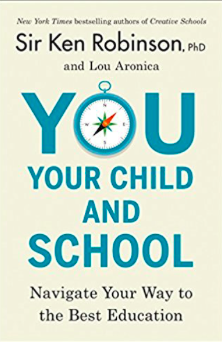
Recently on Facebook Maine Arts Leadership Initiative Teacher Leader Janie Snider from Hancock Grammar School shared a link to Mind/Shift with an excerpt from Sir Ken Robinson and Lou Aronica’s book You, Your Child, and School: Navigate Your Way to the Best Education. The book was published on March 13, 2018 by Viking, an imprint of Penguin Publishing Group, a division of Penguin Random House LLC.

The piece talks about schools that are changing and successfully meeting the best interests of their students, families, and communities. Teachers and school leaders are using innovative ideas to envision the school plan.

Sir Ken Robinson

Orchard Gardens Elementary School in Roxbury, MA was one of these schools. In 2010 students were doing poorly by all measures and there was a revolving door of teachers and principals. They spent more than $250,000 a year on security guards. Principal number six arrived and decided to spend that same money on arts education. Together staff and administration established systems to support students as individuals, established a school culture and did all that we know is impactful in the arts. Teaching artists, investment in instruments, displayed artwork in the halls and classrooms, and offered creative workshops for teachers and parents.

Orchard Gardens is one example that Robinson and Aronica outline in the book. The essence of the book is really about how schools can transform. It’s not about the learners in the school, most likely the problem is the system. Change the school and many of the problems will disappear. It is possible and is happening.

You can read the entire article by CLICKING HERE.

h1

Maine Excellence in Arts Education Celebration

December 7, 2018

Maine Arts Commission to honor Excellence in Arts Education

The Maine Arts Commission will honor nine schools – nine visual art educators – 36 students for their artwork – 158 students for their music – two music educators at the Maine State House with a special reception with First Lady Ann LePage in the Hall of Flags, December 11, 2:00 p.m.

Marshwood Middle School is recognizing their students in the arts with this sign outside their school!

Starting December 1, 2018 through April 2019, the Arts Commission is featuring an art exhibit of 45 pieces that will include for the first time ever, student work combined with their respective art teacher’s work. The student art exhibit is being showcased throughout the State House Capitol building, the Burton M. Cross building, and the offices of the Maine Arts Commission. Additionally, each student artist and their families are invited to the Hall of Flags for a special reception on December 11, starting at 2 p.m. The reception includes student performances and a certificate ceremony with First Lady Ann LePage.

Acrylic painting by grade 8 student Lydia Phipps, Marshwood Middle School

“The Maine Arts Commission believes it is essential for every student to have access to a quality and comprehensive visual and performing arts education,” said Julie Richard, Executive Director of the Maine Arts Commission. “The arts let’s students develop the critical thinking, collaborative, and creative skills necessary to succeed in the ever changing diverse and global economies of today’s world. “

The following schools, teachers and 4 students from each school will be honored and featured in the student exhibit:

  • Gorham Middle School, Teacher: Amy Cousins
  • Hancock Grammar School, Teacher: Jane Snider
  • Jonesport Elementary and Jonesport Beals High School, Teacher: Lisa Marin
  • Marshwood Middle School, Eliot, Teacher: Melanie Crowe
  • Maranacook Middle School, Readfield, Teacher: Hope Lord
  • Oxford Hills High School, South Paris, Teacher: Cindi Kugell
  • Brewer High School, Teacher: Lori Spruce
  • Richmond Middle School and High School, Teacher: Jeff Orth
  • Waterville High School, Teacher: Suzanne Goulet
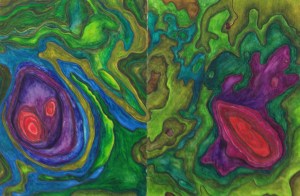
“Great Third Hill” created by Marshwood Middle School art teacher Melanie Crowe

Two choruses will be recognized and performing at the celebration. Seventy five students will be traveling from Sedomocha School in Dover-Foxcroft with their music teacher Kaitlin Young. Traveling from Marshwood Middle School in Eliot will be seventy five students with their music teacher Kris Bisson. Their programs will highlight their amazing students and a collaborative project that Kris’ students participated with teaching artist Brian Evans-Jones.

All of the teachers involved are teacher leaders in the Maine Arts Leadership Initiative, a program of the Maine Arts Commission.

The reception is open to the public on Tuesday, December 11, 2:00 p.m.

For more information about the Maine Excellence in Arts Education please contact Argy Nestor, Director of Arts Education at 207-287-2713, argy.nestor@maine.gov.

For more information about the Maine Arts Commission’s programs and services, please visit www.MaineArts.com; follow the agency on FacebookTwitter and Instagram, or contact the offices at 207-287-2724.


h1

Honor a Teacher

December 6, 2018

John F. Kennedy Center – Stephen Sondheim Awards

Stephen Sondheim

The John F. Kennedy Center for the Performing Arts is accepting nominations for the 2019 Kennedy Center/Stephen Sondheim Inspirational Teacher Awards. This series of annual $10,000 grants recognizes inspiring teachers across the United States. The awards were created in honor of Stephen Sondheim’s 80th birthday and were initiated and funded through the support of Freddie and Myrna Gershon. Broadway legend Stephen Sondheim frequently attributes his success to the teachers in his life. The Kennedy Center/Stephen Sondheim Inspirational Teacher Awards are presented each year on Sondheim’s birthday – March 22 – to a handful of teachers, kindergarten through college, who are nominated via the Kennedy Center website. Deadline: Monday, December 31, 2018

By spotlighting the extraordinary impact teachers have on the lives of their students, the awards celebrate the teaching profession, the important role of teachers in society, and seek to inspire others to pursue this noble profession. Along with the $10,000 Award, the selected teachers are showcased on the Kennedy Center website.

Nominees must be legal residents of the United States who currently teach or have taught in a K-12 school, college, or university in the United States. Teachers of all grade levels and subject areas are eligible. For posthumous awards, the $10,000 shall be donated in the name of the nominated teacher, to an eligible non-profit educational organization. Such organization must be affiliated with a K-12 school, school system, college or university in the United States.  To nominate a teacher, you must be at least 18 years of age and must have been the Nominee’s student. Nominations can be a written, audio, or video story. All required materials must be submitted online or postmarked by Monday, December 31, 2018. For more information, official rules, and nomination information, visit the website

This is a wonderful opportunity to give back to those who inspired you. If you have any questions, do not hesitate to reach out Kaitlyn Burke, at kburke@kennedy-center.org.

h1

Critical Friend Days

November 26, 2018

Maine Arts Leadership Initiative

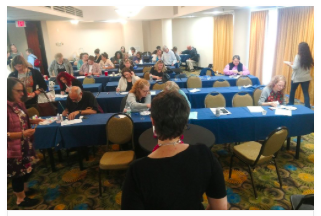
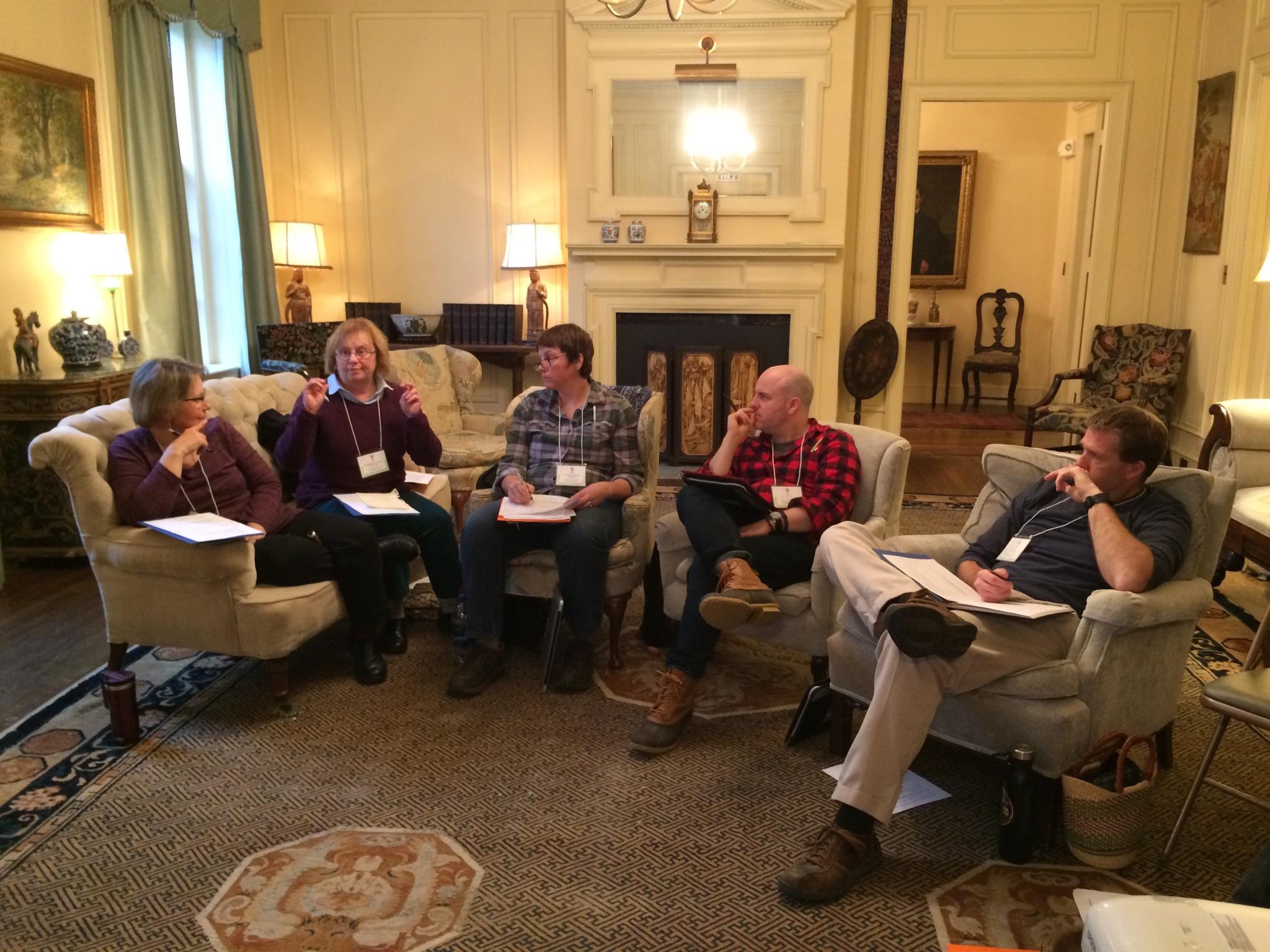
What happens when you bring together arts teachers, teaching artists, and arts leaders who are committed to arts education? An opportunity for all to learn at a very high level. On October 13 and November 13 – both rainy days and one a little snowy – educators traveled from all parts of the state for the Maine Arts Leadership Initiative (MALI) Critical Friend Days.

CRITICAL FRIEND DAY

Critical Friend Day provides an opportunity for MALI educators to share their “Logic Model” work that has been underway since the summer institute and for some before that time. Each educator has taken on a challenge that they wish to work on and devise a plan to solve the challenge. They share their projects to date and get feedback from “critical friends”.

Some of the topics:

  • Collaboration & Emotional Intelligence
  • Poetry and Improv Play Together!
  • Empty Bowls- Nourished Hearts!
  • Increasing Art Instruction at the Elementary Level
  • Authentic Pre-Assessment
  • Dance, Sculpture, Our Ocean
  • Self-Care in Education
  • Quality Elementary Music for ME
  • Math and Music : The Leonardo Effect
  • Theater Today, Building the Foundation
  • Valley K-12 Art Curriculum

In addition to sharing their Logic Models other educators are invited to take on the role of “critical friend” that we define this way: “critical” – expressing or involving an analysis of the merits and faults of a work of literature, music, or art. “Friend” – a person who gives assistance. Both are done in a direct and gentle helpful way. Feedback from the day includes: We want the teacher leaders to create the best work possible so please be honest in your feedback. Thanks so much for your participation!

FEEDBACK

MALI education leaders and invited critical friends often say that the day is their favorite one of the year. A few comments from the participants are included below.

  • I thought it was a wonderful opportunity to hear and see what educators are doing across the state.
  • I LOVE hearing about what people are doing.
  • For Theater Today I certainly struggled with what I wanted to present and what I wanted for feedback. I found just putting it all out there and having a supporting critical friend room was wonderful and filled with growth. For Poetry and Improv this work keeps showing its beautiful placement.
  • It was good to see how committed these presenters are to their work as teaching artists. I was also impressed by how articulately they talked about their work and how it serves their students.

The day ended with an opportunity to do theater improv lead by MALI Teaching Artist Leader Nicole Cardano. The group created a “Dragon” which you can see in the video below.