Archive for the ‘YAHOO’ Category

h1

MAEA Awards

May 13, 2018

Presenting

Congratulations to the following who were recently recognized by the Maine Art Education Association!

  • Maine Art Educator of the Year – Holly Houston, Yarmouth High School
  • Middle Level Art Educator of the Year – Amy Cousins, Gorham Middle School
  • Art Education Supervisor of the Year – Beth Lambert, Maine DOE
  • Distinguished Art Educator Award – Maura McHugh, Mt. Ararat Middle School
  • Outstanding Service Through the Profession, Bobbi Tardif, SeDoMoCha Middle School
  • Outstanding Service to the Profession – Cory Buckham, Brunswick Middle School
  • Outstanding Service to the Community – Kate Cargile, Lewiston Middle School
  • National Board Professional Certified Teacher – Vanessa White-Capelluti, Wells High School
h1

Call for MALI Teacher Leaders

May 9, 2018

Phase 8 leadership role

VPA Teacher Leader Search

Maine Arts Leadership Initiative (MALI) – Phase 8

The Maine Arts Commission invites you to consider applying for the role of Teacher Leader with the Maine Arts Leadership Initiative (MALI). Now in phase 8, MALI offers the opportunity to learn and network with arts educators and teaching artists from across the state. MALI is looking for PK-12 teachers interested in leading and in taking a close look at effective teaching and learning in the arts. Join us for a GREAT opportunity!

DEADLINE: Tuesday, 29 May 2018

APPLICATION

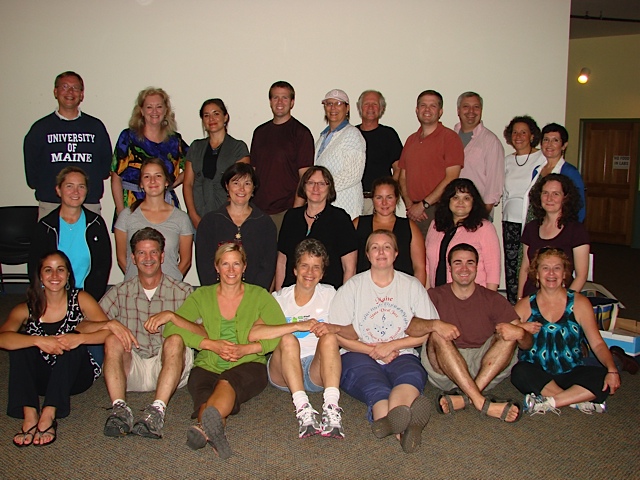
MALI Teacher Leader Winter Retreat, March 2018

MALI provides professional development and asks that you take what you’ve learned and share it with other educators in your region of Maine and beyond. Teacher Leaders are required to attend the three-day summer institute, July 31, August 1 and 2, 2018 at University of Southern Maine, Portland.

If interested, please submit a completed application by Tuesday, May 29. APPLICATION 

Selected teacher leader responsibilities for the 2018-19 school year include:

  • Full participation in the 3-day summer institute, July 31, August 1 and 2, 2018
  • Communicate in a timely fashion by email and in a MALI phase 8 google site
  • Be prepared for summer institute by completing pre-readings and responding to prompts with the MALI community
  • Critical Friends Day – follow-up to the summer institute, fall 2018
  • Participate in 2 meetings electronically with teacher leaders during 2018-19 school year
  • Contribute your teacher leader story for the Maine Arts Education blog
  • Attend a retreat to reflect on the phase 8 MALI work and plan next steps, winter 2019

Maine Arts Leadership Initiative Background Information

Overall Description

MALI Mission: Committed to the development of Teacher Leaders to ensure deep understanding and meaningful implementation of high quality teaching, learning and assessment in the Arts for all students.

Since 2011 the initiative has been building capacity by training arts educators on the “what” and “how” of teaching and learning in the arts so they can provide the leadership in Maine through professional development opportunities. MALI DETAILS.

MAAI Summer Retreat, phase 1, MECA

MALI’s OVERALL OBJECTIVES

  • Create and implement a statewide plan for teacher leadership in arts education. This includes professional development opportunities, locally, regionally and statewide, which will expand on the knowledge and skills of teachers to better prepare them to teach in a student-centered and proficiency-based learning environment.
  • Develop and implement standards-based high quality teaching and learning statewide for Visual and Performing Arts
  • Continue to build on expanding the team of arts educators and teaching artists representing all regions of Maine
  • Provide workshops and other professional development opportunities for educators

HISTORY – Phases I through VIII – Summer 2011 to present

  • Ninety three PK-12 teacher leaders and eight teaching artists leaders attended summer institutes on assessment, leadership, technology, creativity, proficiency-based standards-based and student-centered teaching and learning
  • Teacher leaders presented workshops at three statewide arts education conferences: USM Portland, UMaine Orono, and Point Lookout Conference Center with over 700 educators attending
  • Teacher leaders facilitated about 125 regional workshops and 16 mega-regional sites across Maine
  • Another Arts Educators Story series (94) on the Maine Arts Ed blog
  • Arts assessment graduate courses provided by The New England Institute for Teacher Education
  • Nine arts education assessment webinars for Maine educators facilitated by Rob Westerberg and Catherine Ring. Archive
  • Video stories of seven teacher leaders that demonstrate a standards-based arts education classroom, Maine ARTSEducation YouTube channel
  • Teacher Leader Resource Team development of items for resource bank
  • Maine Arts Assessment Resources website contains a plethora of information

APPLICATION

APPLICATION REQUIREMENTS

  • Current resume
  • Letter of support
  • Paragraph of interest

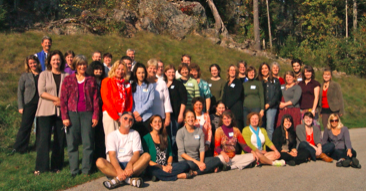
MALI Critical Friend Day, Point Lookout, October 2013

In the near future we will put a call out for Teaching Artist Leaders! If you have questions please contact Argy Nestor, Maine Arts Commission, Director of Arts Education at argy.nestor@maine.gov.


h1

MALI Teacher Leader Story: Hope Lord

May 8, 2018

Visual Art Educator

This is one of several blog posts in 2018 that include stories of the Maine Arts Leadership Initiative (MALI) Phase 7 Teacher Leaders and Teaching Artist Leaders. This series includes a set of questions so you can learn a little bit about each leader. CLICK HERE  for more information on MALI. CLICK HERE  for more information on the 93 Teacher Leaders and 8 Teaching Artist Leaders. CLICK HERE  for Arts education resources. CLICK HERE  for the MALI Resource Bank. Search in the “search archives” box on the bottom right side of this post for past teacher leader stories. Thank you Hope for sharing your story!

Hope Lord has been the Art & Design teacher for 300 grades 6 through 8 students at Maranacook Community School for the last 7 years. She also teaches and inspires 16 gifted and talented art students and is the co-advisor for the school’s yearbook. Prior to that Hope taught in RSU #38 for 19 years, 12 as a special education teacher.

What do you like best about being an art educator?

It’s wonderful when I see my students make connections between art & other content areas. I love watching my students take risks in their art and grow as artists. I enjoy being surrounded by young artists and presenting them with opportunities to explore, develop, challenge, and create art. The best part of being an art educator is witnessing a student’s success, as they become and see themselves as artists.

What do you believe are three keys to ANY successful visual and performing arts education?

Three keys to a successful visual arts education program are creativity, perseverance, and collaboration.

  1. First of all, creativity is important because an arts educator is always looking for creative inspiration for new lessons and challenging their students to innovate and take creative risks in their artwork. Art educators also have to be creative in obtaining the resources they need for their art classrooms and for adapting materials and lessons to challenge and meet the needs of all their students.
  2. Perseverance is also key to successful arts education. The process of creating art requires the artist to experiment, revise, and rework their art numerous times. Students need to learn perseverance because students often experience failed attempts in communicating their message or executing their design. By encouraging students and supporting them through the revision process, students learn to persevere and develop a life-long skill. Perseverance not only helps students become artists, it also helps them work through any difficult task they face in school and future careers.
  3. The final key to a successful arts program is collaboration. Seeking and receiving feedback and collaboration is crucial in planning, developing, and creating artwork. When students collaborate they gain insight and new perspectives that they wouldn’t if working in isolation. Collaboration also challenges and inspires an art educator. Collaborating with other educators and community members enriches an art program, providing greater resources and connections that working alone cannot. Collaboration teaches vital 21st century skills that prepare students for life.

How have you found assessment to be helpful to you in your classroom?      

Quality assessment helps me understand how a student is learning and the degree to which they comprehend a concept. It also helps me plan my instruction based on concepts students need more instruction or may have misunderstandings and need clarification. Assessment also provides students feedback on their learning and how they can improve their work. 

What have been the benefits in becoming involved in the Maine Arts Leadership initiative?

MALI has provided me the support, encouragement, and skills I needed to become an arts leader in my school, district, and state. I have the confidence to take creative risks in my teaching. My teaching has improved because of those risks and the collaboration with teachers throughout my district. My professional growth has enabled me to become an arts education leader and mentor to new teachers in my district. Additionally, I have the confidence to share my teaching experiences with other art teachers and receiving constructive feedback. MALI has been a great inspiration. 

What are you most proud of in your career?

I am most proud of the work I’ve done with some of my most challenging students. I love seeing these students grow creatively and find success in art, when they have not been successful in other content areas. As I watch their art confidence grow, I also see their self-esteem improve, and it warms my heart. I know the extra investment and encouragement these students need, is well worth the effort. Every student needs to feel they are good at something. I am proud that I have been able to assist students in finding success in art and also building their self-esteem.

What gets in the way of being a better teacher or doing a better job as a teacher?
The day to day politics of education interfere with being a great teacher. The increasing demands of our time and ever changing policies, hinders educators. The lack of support & funding for the arts from administrators, school boards, community, and legislators, all interfere with being a great teacher.

What have you accomplished through hard work and determination that might otherwise appear at first glance to be due to “luck” or circumstances?

I have spent the last seven years developing an arts curriculum that is engaging and fosters creativity, collaboration, critical thinking, and communication, while connecting the arts to other content areas. It is hard work and requires continuous revisions and alterations, as I teach each group of students. When a well planned and integrated art unit is executed, it seems effortless. However, it requires numerous hours of planning, research, collaboration, and support.

Look into your crystal ball: what advice would you give to teachers?

I would tell them to trust their instincts and take risks. Share your ideas with colleagues and get feedback and support to act on those ideas. Reach out to your community and colleagues throughout the state for resources and support to bring your ideas to fruition.

If you were given a $500,000.00 to do with whatever you please, what would it be?
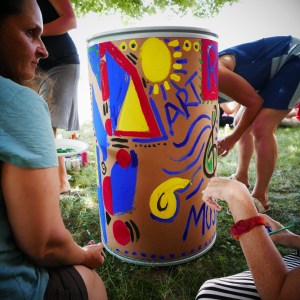
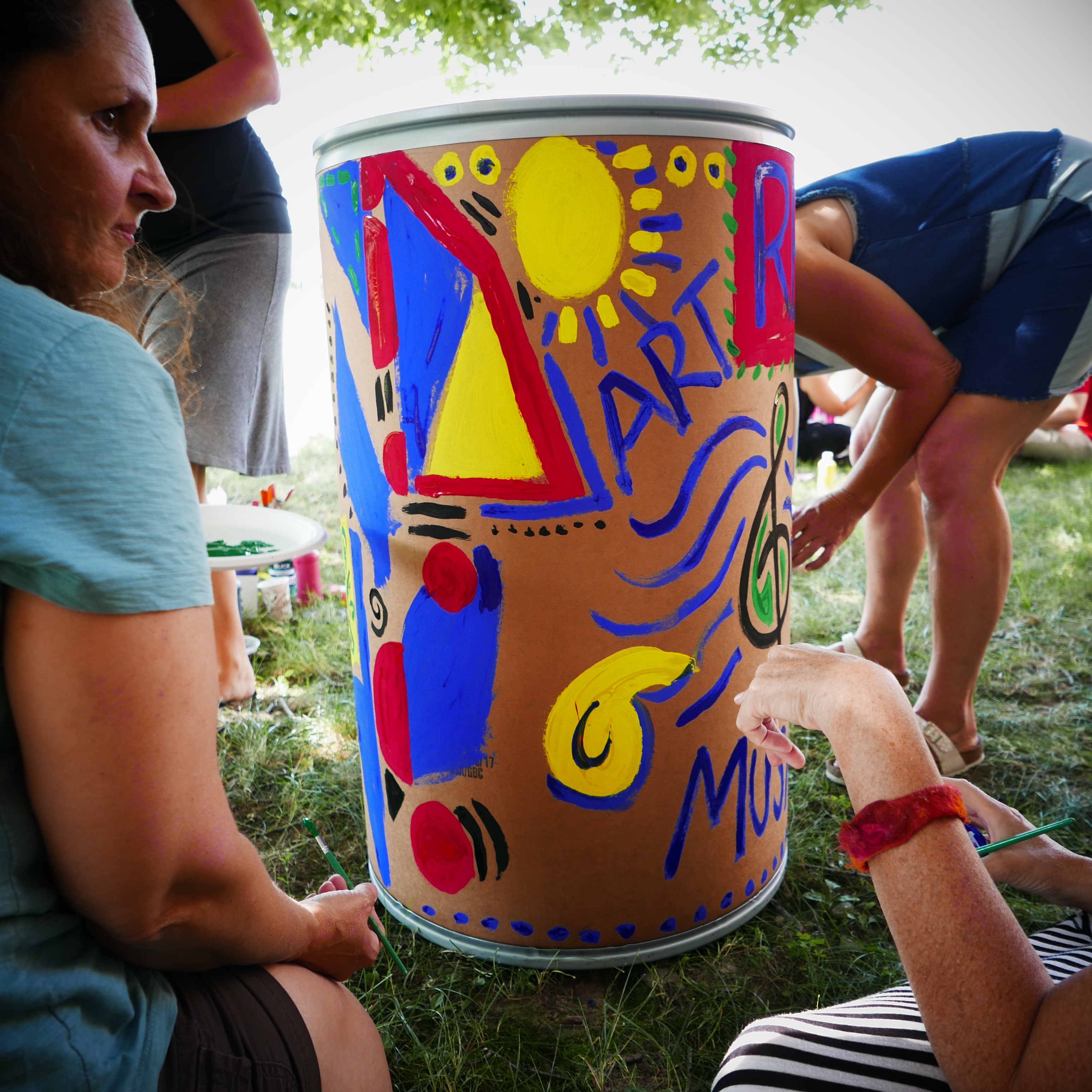
Making drums at the MALI Summer Institute, August 2018

I would take some of the money to build a new art and design studio and gallery at my school. I would also establish a grant that would be available to art teachers to help fund art materials and equipment, field trips, and artists in residence programs throughout Maine.

Imagine you are 94 years old. You’re looking back. Do you have any regrets?

My only regret would be that I didn’t start my teaching career as an Art Educator. Even though I enjoyed the challenges and successes of a Special Education teacher, I wish I would have taught Visual Arts from the beginning. I would still have had the opportunities of teaching students with special needs, but through the arts lens. Teaching art and mentoring young artists has been very rewarding and my only regret is I didn’t start sooner.

h1

In Appreciation

May 7, 2018

Happy Week, Teachers!

If I could drive all over the state this week and provide every teacher with an apple, I would! I’d say THANK YOU and let you know how much I appreciate the work (and play) that you do each day providing an excellent arts education to every learner!

I hope that your week includes at least one celebration that’s all about you! Perhaps you have a full week planned to celebrate yourself and your colleagues. Pat yourself on the back and yelp so loud that I can hear you – from your school to the Maine Arts Commission!

If you’re interested in letting others know about how grateful you are for someone who supports the work that you do or perhaps someone who has inspired you in the past, you can record your story.  All week long Teacher2Teacher is collecting stories of gratitude.

Click here to record your own message thanking a teacher whose influence, guidance or support made a lasting impression on you and your practice.

You can listen to examples of messages recorded by other educators by scrolling to the bottom of the page. I recorded a message thanking all of the visual and performing arts teachers in Maine and a special shout out to the Teacher Leaders and the Teaching Artists Leaders from the Maine Arts Leadership Initiative.

Have a great week and be sure and do something nice for yourself and your colleagues!

h1

Arts Ed Partnership

May 4, 2018

Share your work

Interested in sharing your work with arts in education leaders and stakeholders?
The Arts Education Partnership is accepting concurrent session proposals for the 2018 AEP Annual Convening: “The Arts Leading the Way to Student Success,” taking place Sept. 12-13 in Indianapolis.

This annual event will explore arts-centered solutions aimed at ensuring America’s youth have access to a high-quality education in and through the arts by addressing the priority areas outlined in AEP’s 2020 Action Agenda for Advancing the Arts in Education. (Proposals must address one of the four priority areas.)

AEP invites partner organizations and leaders in the field to share their exemplary work supporting the role and contribution of the arts in preparing all students for success in school, work and life.

For more details about concurrent sessions at the 2018 AEP Annual Convening and to submit a proposal, please click here. AEP will accept concurrent session proposals until 5 p.m. PST Friday, June 1.

h1

MALI Teacher Leader Story: Laura Manchester

May 1, 2018

Visual Art Educator

This is one of several blog posts in 2018 that include stories of the Maine Arts Leadership Initiative (MALI) Phase 7 Teacher Leaders and Teaching Artist Leaders. This series includes a set of questions so you can learn a little bit about each leader. CLICK HERE  for more information on MALI. CLICK HERE  for more information on the 93 Teacher Leaders and 8 Teaching Artist Leaders.  CLICK HERE  for Arts education resources. CLICK HERE  for the MALI Resource Bank. Search in the “search archives” box on the bottom right side of this post for past teacher leader stories.  Thank you Laura for sharing your story!

Laura Manchester teaches visual art at Montello Elementary School in Lewiston. She has been teaching the entire school population of just over 750 children, 32 classes a week for 7 years. Laura also teaches the after school art club, 4 days a week for an hour. Each session runs for 6 weeks which includes a rotation of 15 students from grades 1-2 and 15 students from grades 3-6.

What do you like best about being an art educator?

The best part of my job is when teachers bring their classes back to me in a week and tell me that their students made connections between what they’ve learned in my room and what they’ve been learning in their general classrooms. Seeing that art is influential and valid throughout a student’s day is integral to keeping art alive and relevant. It’s very rewarding when the kids can make their own connections, independently.

What do you believe are three keys to ANY successful visual and performing arts education?

  1. Relevance. Keeping what students learn relevant to their world keeps them engaged and excited. It’s natural to want to know WHY you are learning something or how it connects to you.
  2. Consistency in routine. When students know where things are and what to expect, they can focus their energy on learning new things. This doesn’t have to be boring. By having clear, positive expectations you allow students to “own” their experiences and be more adventurous when learning new ideas and processes in the art room.
  3. Get excited. If you’re excited about what you’re teaching, the students will be as well.

How have you found assessment to be helpful to you in your classroom?

Assessment helps me to check what students know and need to learn. By using a variety of summative and formative assessments throughout the year, I can see how close students are to meeting specific overarching curriculum goals and where they need practice or support. I use a lot of student self-assessments to help kids make connections between lessons and curriculum goals.

What have been the benefits in becoming involved in the Maine Arts Leadership initiative?

As the only visual arts teacher in such a large school, it has been difficult to get connected with other arts teachers. By joining MALI, I’ve opened so many more opportunities to collaborate and celebrate my craft. MALI inspired me to try new things in the classroom, refreshed my approach to assessment and overall given me the chance to approach this school year with my best foot forward.

What are you most proud of in your career?

I am most proud of the connections I have made with the school’s community during my time here in my current teaching position. Attendance in after school events is quite low at our school- with only 4 parents participating in our parent-teacher organization and typically less than 50 attendees at any given event. Several years ago I joined our parent-teacher organization and have consistently made calls and had conferences with parents to engage them in what their child is doing in my classroom. I think it is because of this, and because of the genuine interest and excitement that art can bring to people that our annual art show is the best attended event of the year. As I mentioned earlier, many events are not well attended after school. The art show has consistently brought in over 500 attendees for the last 6 years. Those numbers alone are something to brag about- let alone the enthusiasm that parents have when they see the incredible work their children have done. While my work here is exhausting, the connections and results of those connections with families are priceless.

What gets in the way of being a better teacher or doing a better job as a teacher?

Laura works with Jen Nash at the MALI summer institute, August 2017

The number one challenge for me is that our school simply does not have enough arts staff to appropriately accommodate its high volume of students. My schedule is packed at 32 classes a week, some of those classes having students from multiple classrooms crammed in for a single 40 minute block. With this tight schedule, I have limited planning time at school- which is never used for planning but usually a time to catch up on grading, hanging artwork, providing additional time for students to finish their work, etc. This schedule is so exhausting that it truly inhibits what I can do outside of school to continue my own education or continue as an artist. I rarely have time to plan additional fun activities and because of limited staffing elsewhere in the building, I am very limited in the amount of professional development time I can take.

What have you accomplished through hard work and determination that might otherwise appear at first glance to be due to “luck” or circumstances?

In my classroom students are absolutely a joy. I run a tight ship with a lot of student responsibility with materials and procedures. Although many might say it is because I teach a fun subject that students are so responsible and receptive, I believe that it is just as much (if not more) due to the idea that I set high expectations for students and reinforce positive behaviors. Allowing students to “own” the room by providing access to material shelves and student-led responsibilities as well as facilitating student choice is imperative to giving kids a chance at finding a sense of self in a classroom that they only get to visit for 40 minutes, once a week.

Look into your crystal ball: what advice would you give to teachers?

Take the time to reflect on what is truly important about your role in your students’ lives. Messes can be cleaned up, rough days come to an end and eventually all that’s left is the impact of the experiences you gave and allowed to happen while you were there teaching. If nothing else, be able to say that you were kind and allowed something special to happen while you were together.

If you were given $500,000.00 to do with whatever you please, what would it be?

If I was given $500,000.00, I would pay off my student loans and then buy a few groceries. Haha! Just kidding… I would invest in an unused building- probably one with some cool history to it- and design the interior to accommodate a bunch of arts-based classrooms and studios. There would be a gallery and performance space on the main floor. I would run the building to have classes throughout the year for students of all ages to explore and experience different art forms. Classes would be facilitated by local artists, musicians who would teach their craft to the public in exchange for having a free space to showcase their personal works. There would be some sort of annual fundraiser that would help sustain funds to keep the project running and progressing. Oh, the possibilities!!

Imagine you are 94 years old. You’re looking back. Do you have any regrets?

Most definitely: If I live to be 94 years old, I’ll regret not having dessert every day. That’s a lot of wasted ice cream and cake.

h1

So Proud of Allan!

April 26, 2018

Poetry Out Loud

National POL, 2018

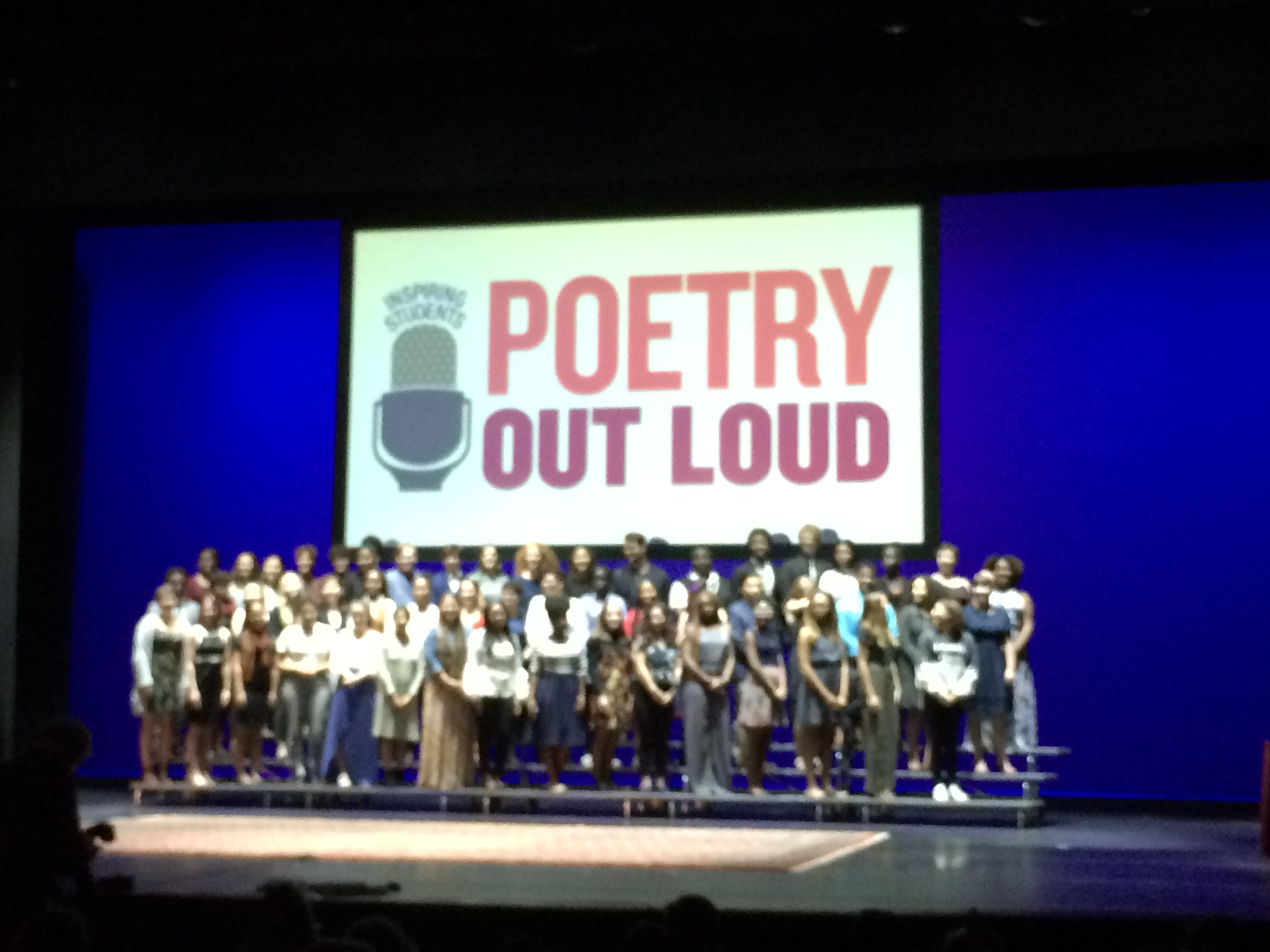
Today started early by boarding a plane in Washington, D.C. to return to Maine after attending the National Poetry Out Loud National Finals held at the Lisner Auditorium at George Washington University. The Poetry Out Loud program is a partnership of the Poetry Foundation and the National Endowment for the Arts. It is administered in each state by the state arts agencies. In our case, the Maine Arts Commission. Over 9,500 students participated this year from 39 high schools across the state.


Allan reciting at the state, March 20, Waterville Opera House

Representing Maine this year at the national event was Allan Monga from Deering High School. Students were divided by region during the semi-finals – 3 events – on Tuesday with the northeast region taking place in the morning. Allan did a fabulous job representing Maine – we can all be very proud! The student named national champ for 2018, Janae Claxton, attends the First Baptist Church High School in Charleston, South Carolina.

As I drove home thinking about the last three days, I kept wondering how satisfied each student must feel after several months of preparing for their recitations. Every young person there really leaned in, some surprising themselves, and achieving at a high level. They were an impressive group!

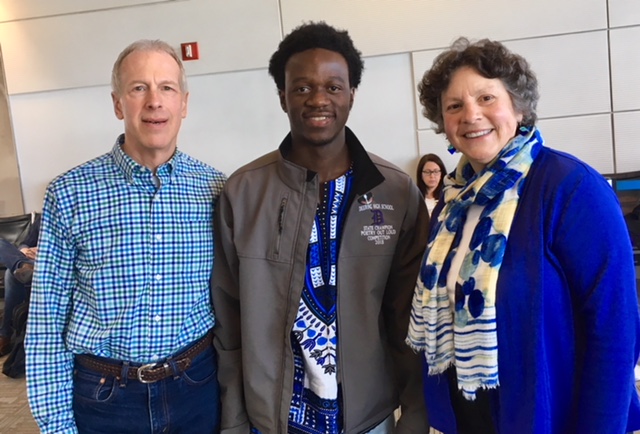
Maine POL coordinator Don Reutershan, Maine POL Champ Allan Monga, and MAC Arts Education Director Argy Nestor

Find Allan’s interview with All Things Considered from Tuesday, April 24 at https://www.npr.org/player/embed/605260963/605401512” 

h1

Maine Educator Magazine

April 25, 2018

Kaitlin Young

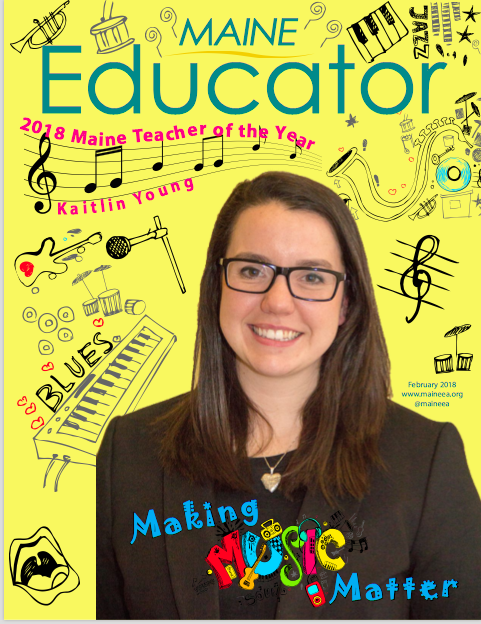
The 2018 Maine State Teacher of the Year Kaitlin Young was highlighted in an article for the Maine Educator Magazine. Kaitlin teaches music at SeDoMoCha School in Dover-Foxcroft. In addition to the article, Kaitlin is also on the cover of the February edition. Kaitlin is a Teacher Leader with the Maine Arts Leadership Initiative (MALI) and her full MALI story will appear later on this blog later on this spring.

Quotes from the article which you can access HERE.

“Arts education is essential for all students. The arts help you to participate in a larger community and we are fortunate to be able to provide these culturally enriching activities within our school.”

“We are in Dover- Foxcroft—Being Teacher of the Year isn’t about me, but perhaps my ability to be an ambassador for others. I feel honored to be part of this community and to tell others about it gives me great pride,” said Young.”

“It’s totally normal for me to one be silly and to crawl on the oor,” said Kaitlin Young with a smile. Young is the 2018 Maine Teacher of the Year and teaches music at SeDeMoCha Elementary and Middle School.”


h1

MALI Teaching Artist Leader Story: Nicole Cardano

April 24, 2018

Teaching Artist – Theatre

This is one of several blog posts in 2018 that include stories of the Maine Arts Leadership Initiative (MALI) Phase 7 Teacher Leaders and Teaching Artist Leaders. This series includes a set of questions so you can learn a little bit about each leader. CLICK HERE  for more information on MALI. CLICK HERE  for more information on the 93 Teacher Leaders and 8 Teaching Artist Leaders.  CLICK HERE  for Arts education resources. CLICK HERE  for the MALI Resource Bank. Search in the “search archives” box on the bottom right side of this post for past teacher leader stories.  Thank you Nicole for sharing your story!

Nicole Cardano has been teaching Drama and Improvisational Theater in the schools for eight years.  She teaches students in grades K-12 and adults. The majority of Nicole’s work has been with 5-8th graders. She has seen the most growth with this age group. Through Nicole’s studies and practice of improvisational theater she have connected to the foundational philosophies of Listening, Support, Eye Contact and Respect. The games that she teaches and her directorial mindset work from these foundations. Nicole believes in the process being more valuable than the product. Learning and developing these skills fosters a stronger community, a place of open listening and supportive fun.

What do you like best about being a teaching artist?

The thing I like best about being a teaching artist is expanding the awareness and experiences of connection through the practice of theater. As a teaching artist you are visiting many different environments and working with a large variety of people. My learning experience is constantly expanding. I have the opportunity of teaching theater as a tool for people to enhance social communication as well as deepen content connection.

What do you believe are three keys to ANY successful visual and performing arts education?

Providing a variety of opportunities for the students to connect. Recognizing that our strengths and challenges are different for each person. Being patient with yourself and the process. Every experience is new.

Have you found assessment to be helpful in your classes, workshops and residencies, and if so, how?

At this stage I find assessment to be most helpful in further communicating the validity of the practice. Articulating the progress that you saw within a class or with a particular student heightens the understanding of the importance of your work. I welcome recommendations on learning more formats of assessments that others have had success with.

What have been the benefits in becoming involved in the Maine Arts Leadership initiative?

Joining this supportive, creative and inspiring community has been an honor. The knowledge that we share with each other is endless due to so many different areas of expertise and experiences. I enjoy each and every conversation, and always wish I had more time with each person. I want to take everyone’s class!

What are you most proud of as an artist and/or a teaching artist?

I enjoy observing unexpected moments of pride. Such as experiencing success and true engagement from students that the teachers may not have thought would gravitate towards this work. Theater is a tool to learn with. That concept has been difficult to translate. I find that there can be a misconception that I am trying to work with the “theater kids”.  The theater kids are wonderful but that is not what fuels me to find opportunities for bringing the practice of theater into the school day. People want to play, students want to play, and at the right time teachers want to play too. We learn a great deal from each other in the act of play. In one of my first years as a Teaching Artist I went out of my way to recruit students that were not identified as being a part of any particular extracurricular interest, students that would easily have been predicted to become ‘At Risk’. Out of this selection there was one student that I quickly recognized needed to play extravagant characters. The feedback I received from a professional who had known that student for nine years was that they did not know that they could do this. Demonstrating longevity with supporting these students is something that I aspire to.

What gets in the way of doing a better job as a teaching artist?

Nicole at the Maine Arts Leadership Summer Institute

Having a set program where I am able to work with the students over their schooling years would be ideal. My work is designed to give the students Freedom through the practice and environment of Respect. This philosophy goes a long way for students that may often struggle in school, or struggle with believing in their own education.

School did not come easy to me. Teachers liked my personality, but many times did not know where to place me as a student. I had test anxiety, was a slow reader and easily lost my interest in a standard classroom setting. I could connect with people. Theater has been a life skill. This has been a way for me to study people and culture. Improvisation has allowed me to directly connect. I often think and process information with the tools of theater and improv. Relaxing a student, and providing play with the foundational rules of improv allows for a safe place to learn and interact.

What have you accomplished through hard work and determination that might otherwise appear at first glance to be due to “luck” or circumstances?

Expanding the work. Reaching new schools, classrooms and age groups. The majority of my work is truly for all ages. I have learned to zone in on the philosophies and foundations of practice that speak to all, while also finding exercises that more directly fit certain ages and environments.

What advice would you give to someone who is thinking about becoming a teaching artist or is just starting out?

Start with one project and observe/assess that. What did you most enjoy? What was challenging? What would you do differently? Where would you like to see this work continue? Then find a home for a second project based on this information, and repeat.

Be aware of what your needs are. I recognized that as an individual artist that I needed more recognition for my work and a business format. I have since launched a non-profit entitled “Theater Today”. I continue to work at this. The mission for my non-profit is:  “Theater Today facilitates, educates, and leads the mindset of drama, improvisational theater and play as a developmental tool.  We are social education and emotional growth through the medium of play, practiced in any format and with any organization.”

If you were given a $500,000.00 to do with whatever you please, what would it be?

MALI Summer Institute – Teaching Artist actor, theater maker Dana Legawiec, Nicole, Wiscasset High School Theater teacher Jean Phillips

The truth is I would distinctly support my non-profit. Creating programming that was not as limited by funding, time constraints of finding funding, and provided more consistent support. I would be intentional on what would create longevity for Theater Today, and the goals that we aspire to reach. Allowing plans to be big, while continuing to be clearly thought out. Creating the opportunity for the practice of theater to become a normal part of learning. Give talks on the importance of play. How human connection through play can promote a more positive human existence for all.

Imagine you are 94 years old. You’re looking back. Do you have any regrets?

Wow, how fast time has gone by. I am now 94. I am proud of the differences I have been able to make.  That theater is recognized, appreciated and utilized as a tool for learning and improving communication. I am filled with joy that I have been able to travel the world and meet so many amazing people. I laugh at the moments of confusion I had as a younger person. Embrace today and now. Life is outstanding! Enjoy it, and consciously share your love of it!

h1

In Today’s News

April 21, 2018

Allan Monga going to D.C. for POL

Allan Monga, a Deering High School student from Zambia, will be representing Maine next week at the National Poetry Out Loud competition. READ the entire article from the Portland Press Herald (April 20) written by Ray Routhier.

Bangor Daily News article (April 21) written by Judy Harrison. READ the article.