Archive for the ‘YAHOO’ Category

h1

In Today’s News

April 20, 2018

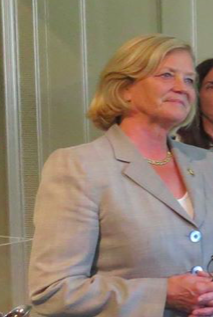
Congresswoman Chellie Pingree

Some great news for Maine arts!– Maine’s Congresswoman Chellie Pingree is named Co-Chair of the The Congressional Arts Caucus. Maine now has two of its congressional delegation representing the arts: U.S. Senator Susan Collins in the Senate, and Chellie Pingreein the House.
h1

MALI Mega Oxford Hills

April 13, 2018

Fabulous learning opportunity

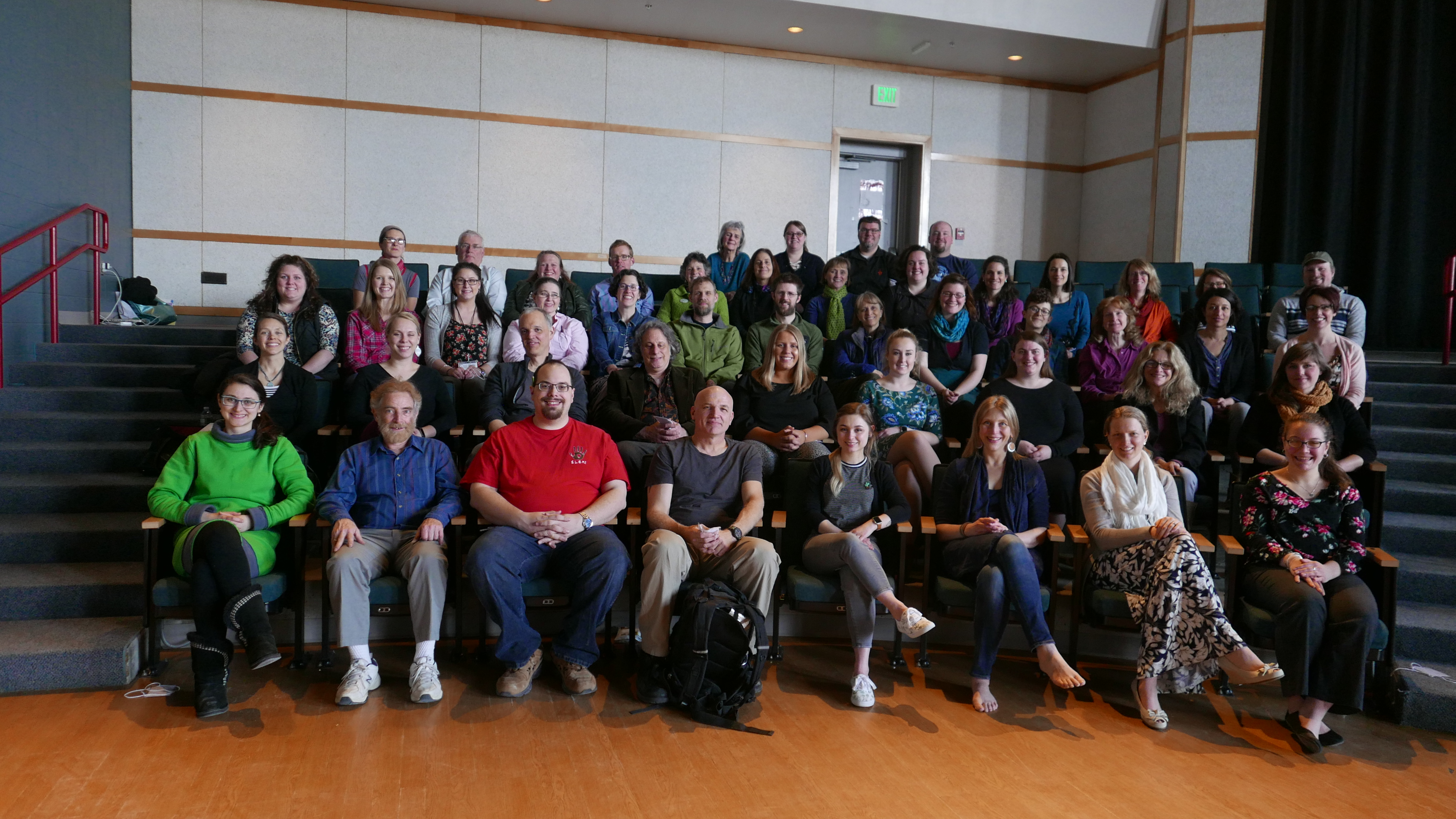
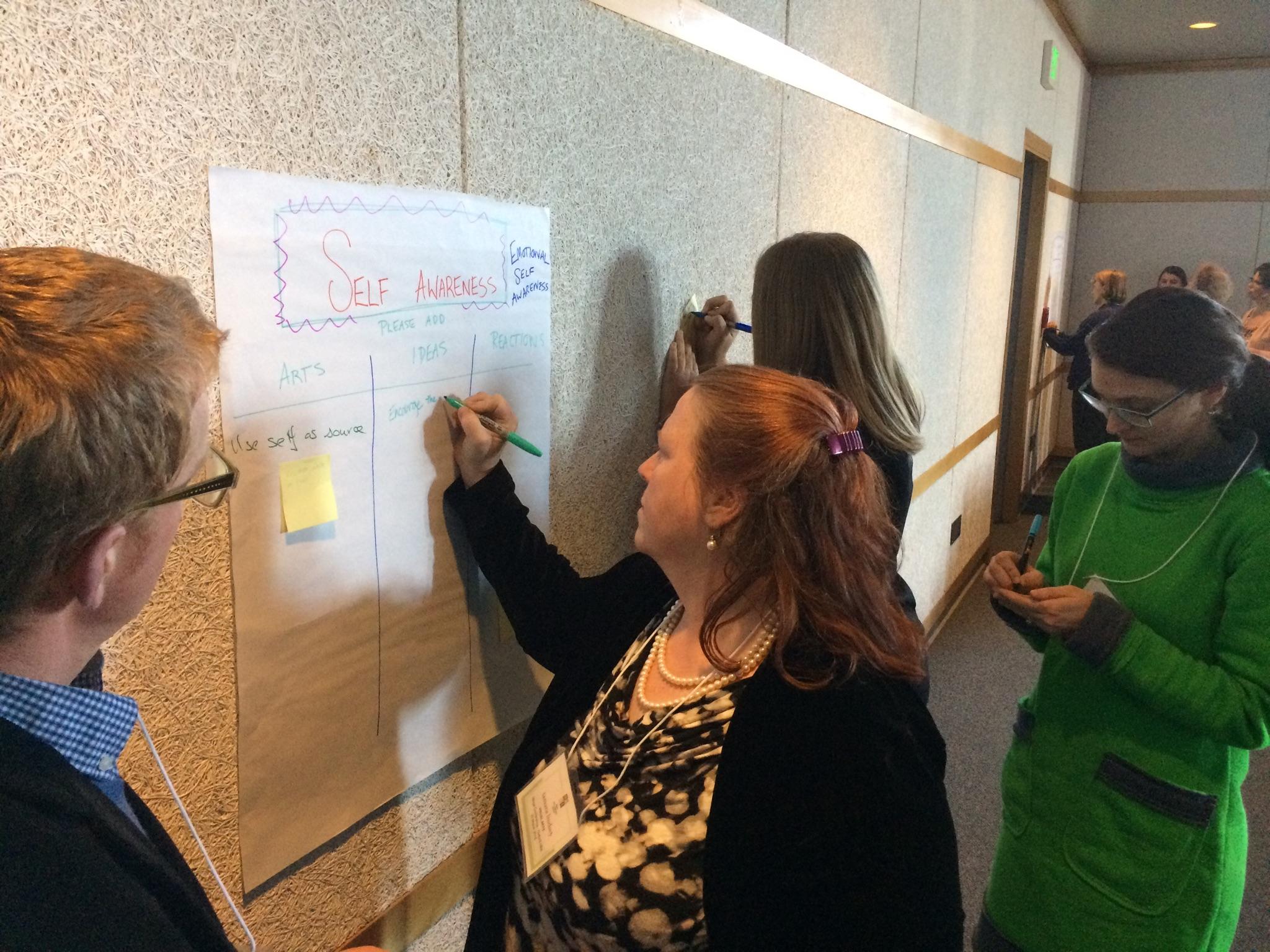
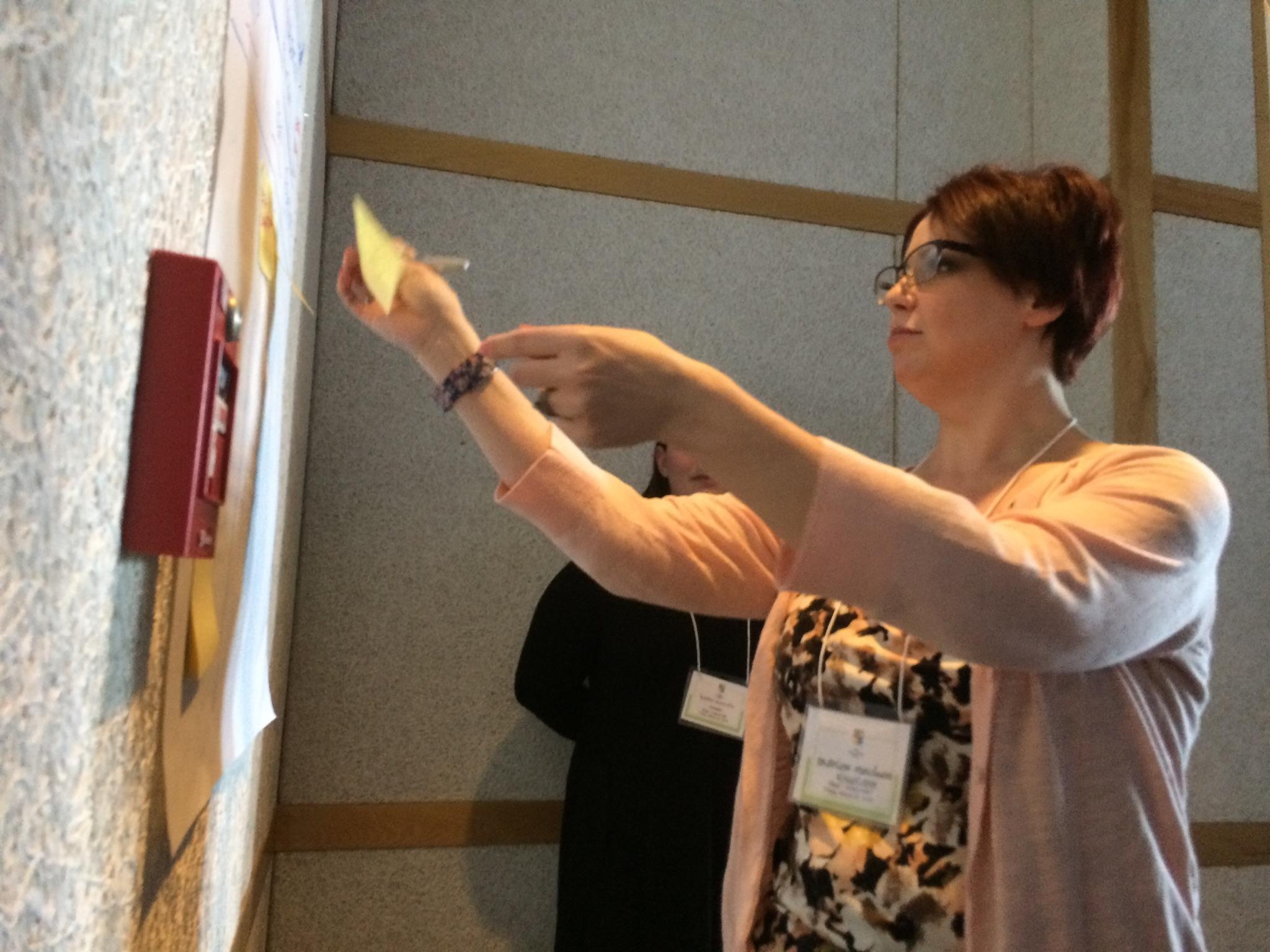
Over 70 PK-12 arts educators and Teaching Artists traveled to Oxford Hills High School in late March to attend the Maine Arts Leadership Initiative conference. The workshops varied greatly and participants had the opportunity to attend three during the day.

Thank you to the Oxford Hills visual and performing arts staff and administrators for providing the space for the conference. One week before the conference we learned that their workshop day turned into a teaching and learning day due to the many snow days. We are grateful that they were still able to make it happen.

Kris Bisson, Kate Smith, Brian Evans-Jones

A huge THANK YOU to visual arts teachers Cindi Kugell and Samantha Armstrong for all of their attention to detail.

Thank you to the following who offered workshops:

  • Cindi Kugell – Bookmaking 101: summative assessment never looked so good!
  • Lindsay Pinchbeck – The Arts and Emotional Intelligence
  • Dorie Tripp – Flexible Grouping Strategies for the General Music Classroom
  • Catherine Anderson – Tableaus of Courage: How to Help Students Engage with Complex Content through Theater
  • Samantha Armstrong – Stars and Stairs
  • Phil Hammett – Creativity
  • Tom Luther – Improvisation Crusader: Improvisation as an Essential Musical Skill
  • Nancy Harris Frohlich – Inspiring Environmental Stewardship Through Visual Arts
  • Lori Spruce and Tim Christensen – Integrating Curriculum: Making it Happen at the High School Level
  • Mandi Mitchell – Looking in the Mirror: The Importance of Student Self-Reflection
  • Brian Evans-Jones and Kris Bisson – Bridging Adolescence: A River Runs Through Us – Composing our Story
  • Jenni Null and Linda McVety – All Aboard for Arts Travel, Full STEAM Ahead!
  • Bronwyn Sale – Teaching Aesthetics and Criticism: Approaches to Standard D
  • Andrew Harris – Creativity and Taking Back the Classroom

Amanda Huotari

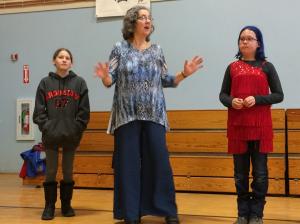
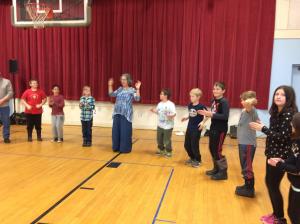
In the middle of the day we had the fabulous opportunity to work with and learn from Teaching Artist Amanda Houteri from Celebration Barn Theater.

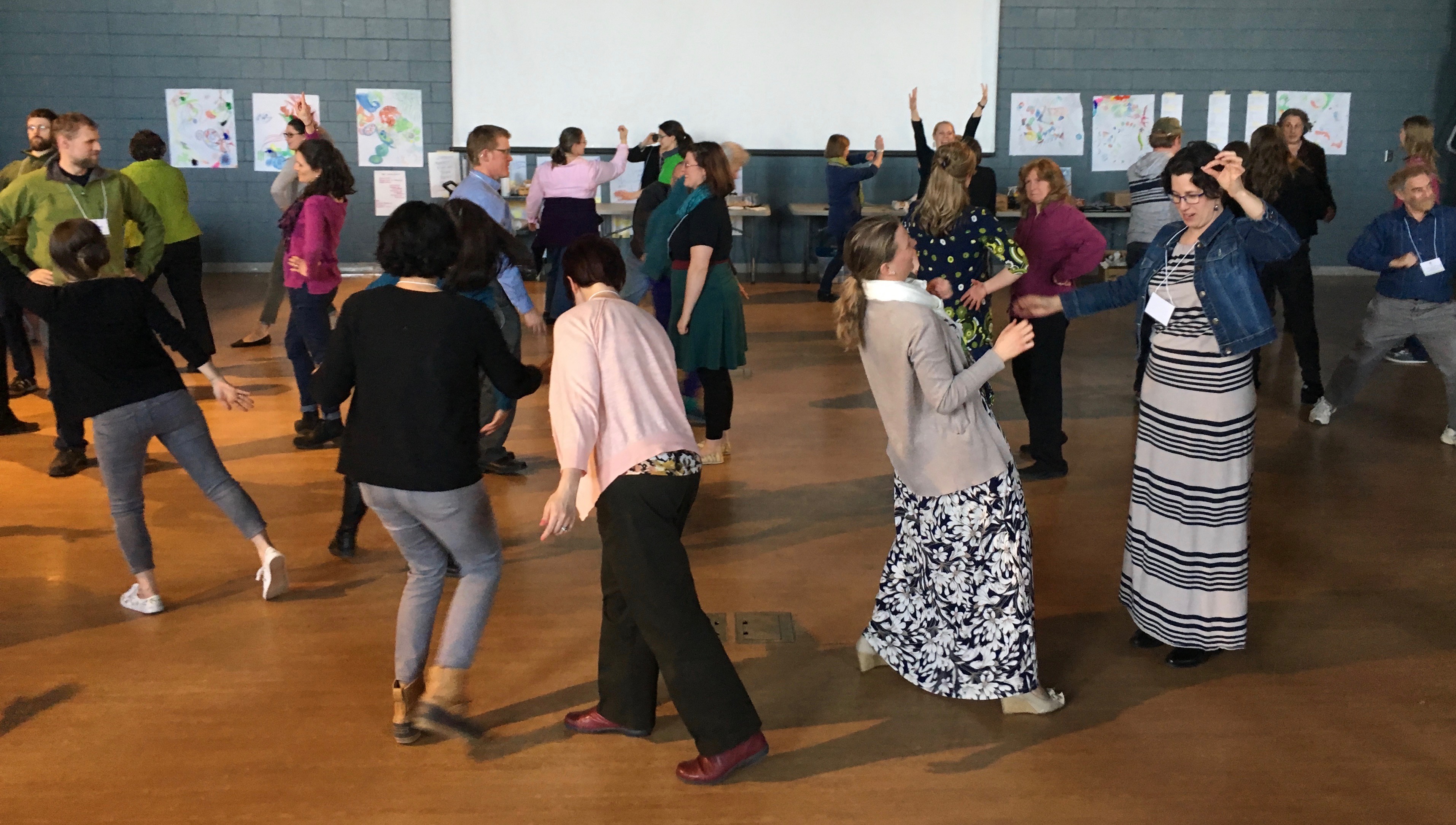
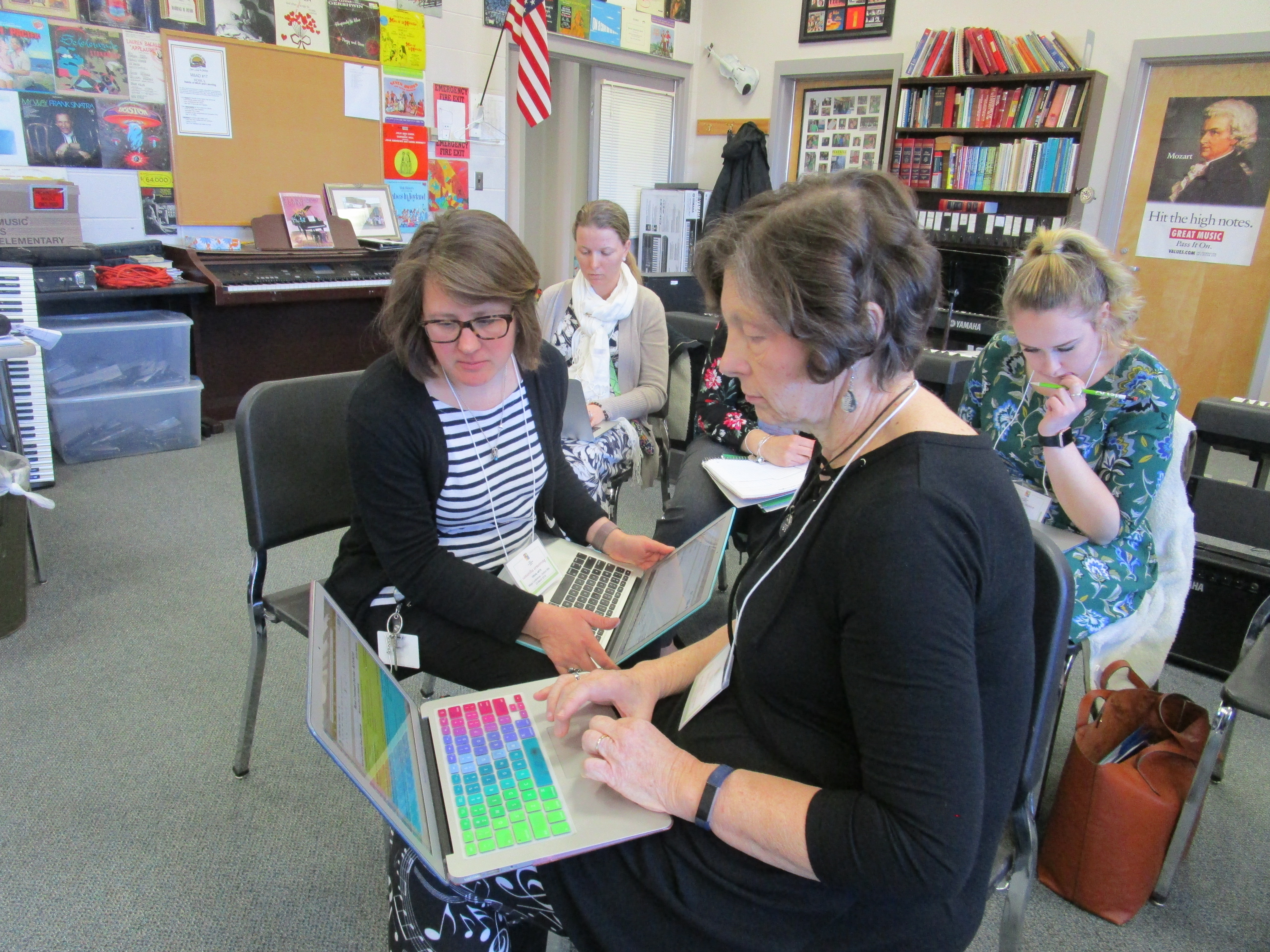
Participants during Amanda’s session

In June there will be an opportunity for teaching artists. PK-12 arts teachers and teaching artists will have an opportunity to apply to be a leader. Watch the blog and weekly email to learn more.

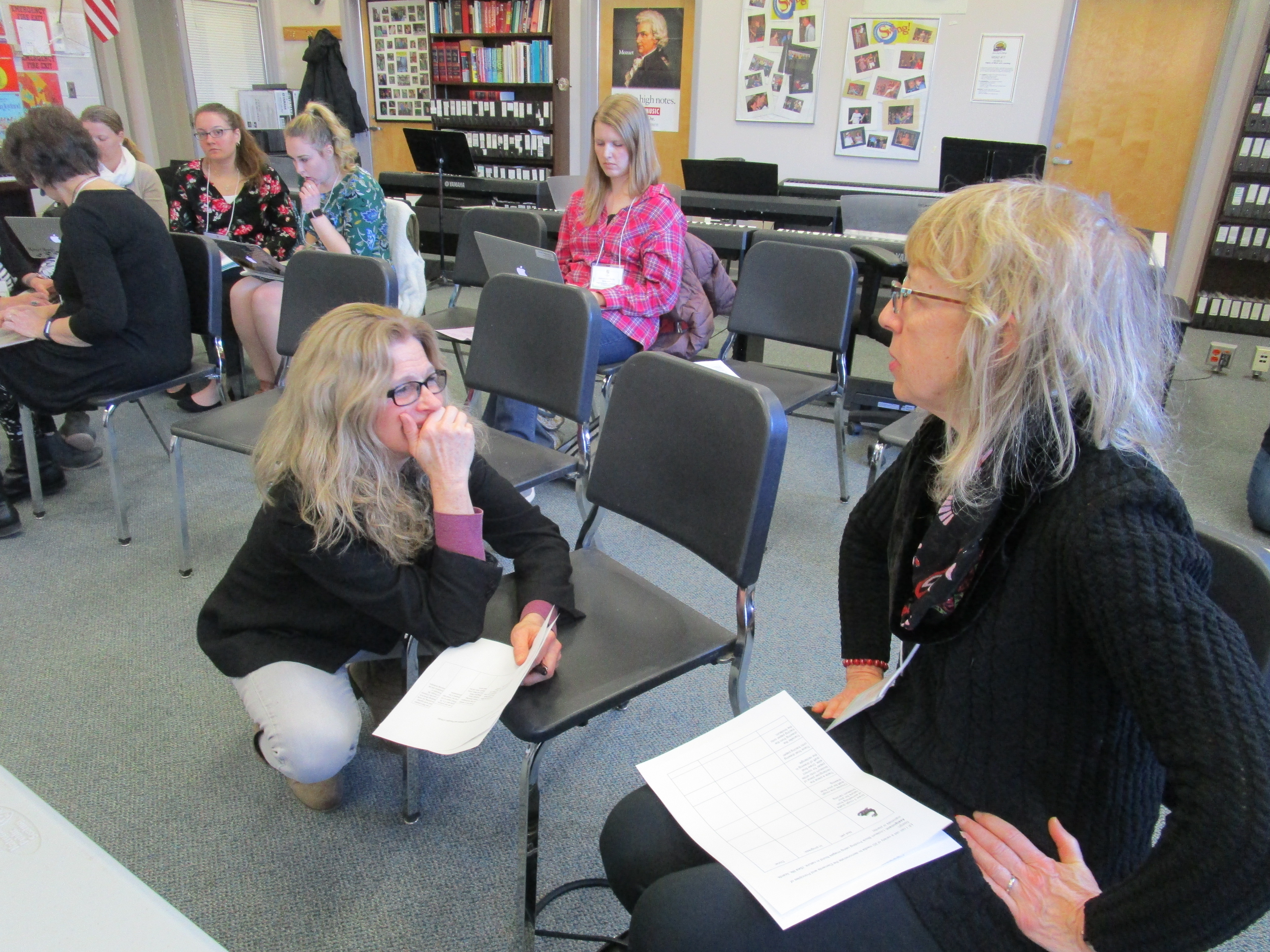
Dr. Katie Rybakova and Thomas College pre-service teachers

Jan Gill and Jenni Null

Kris Bisson and Brian Evans-Jones presenting

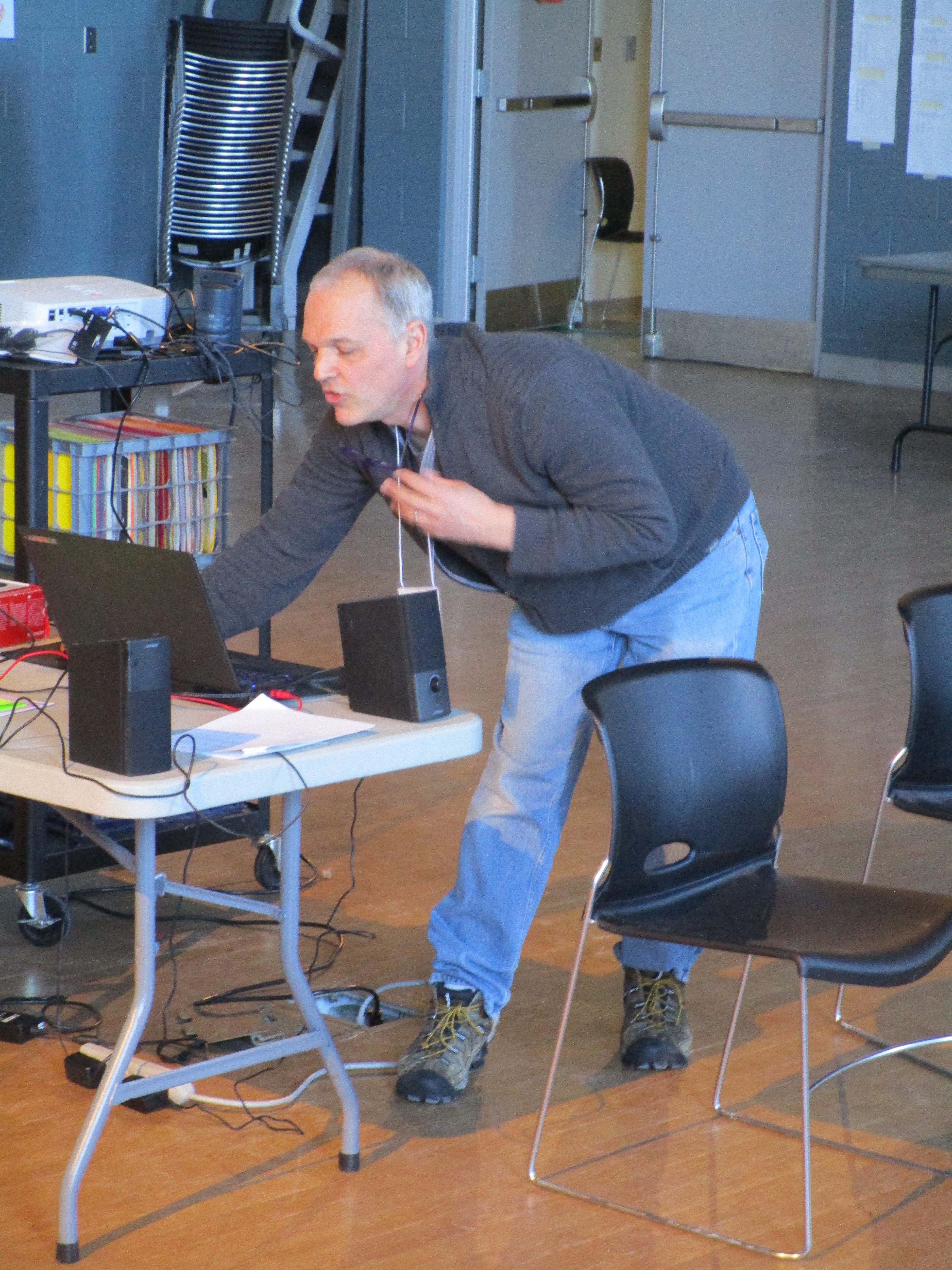
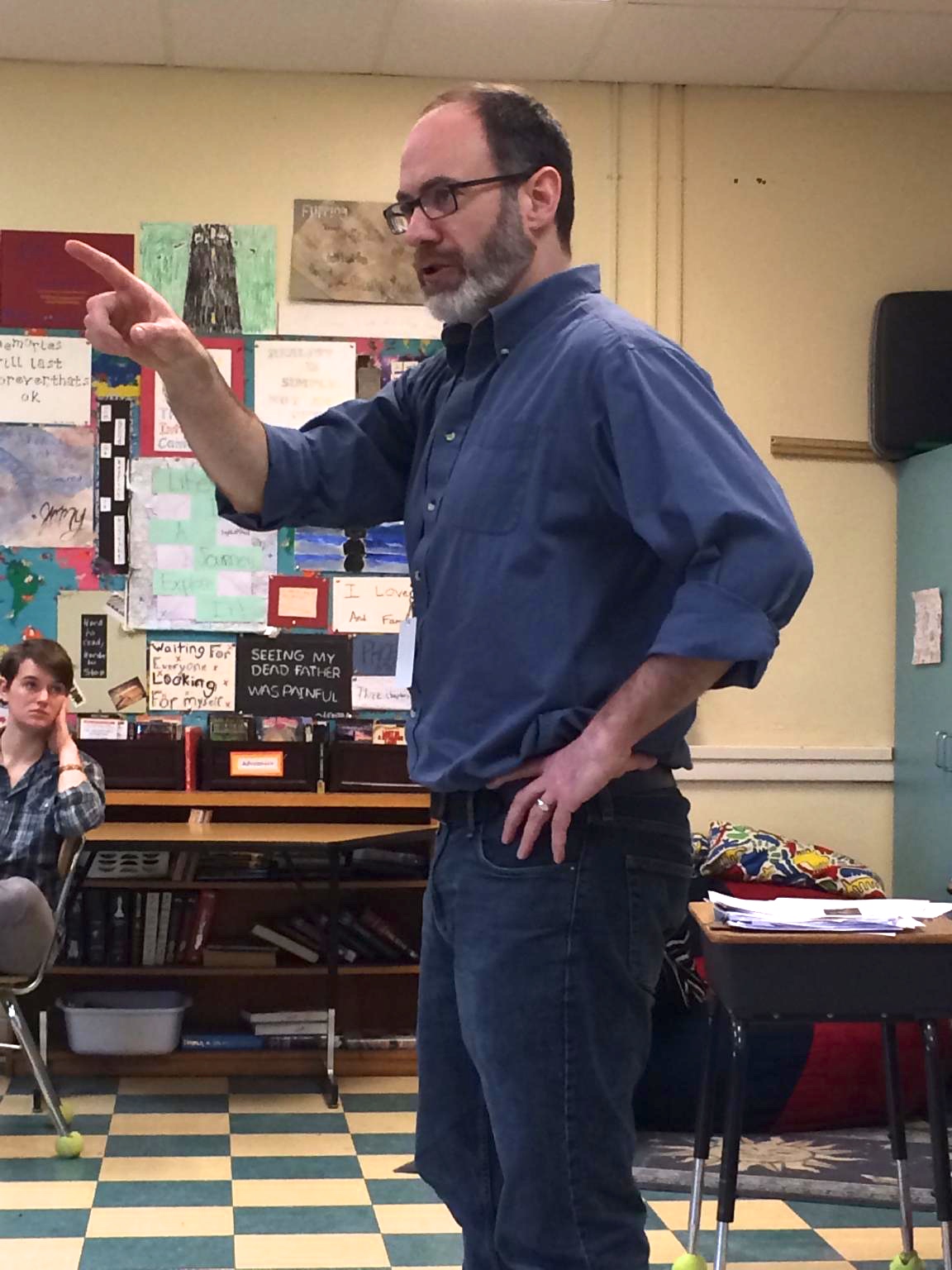
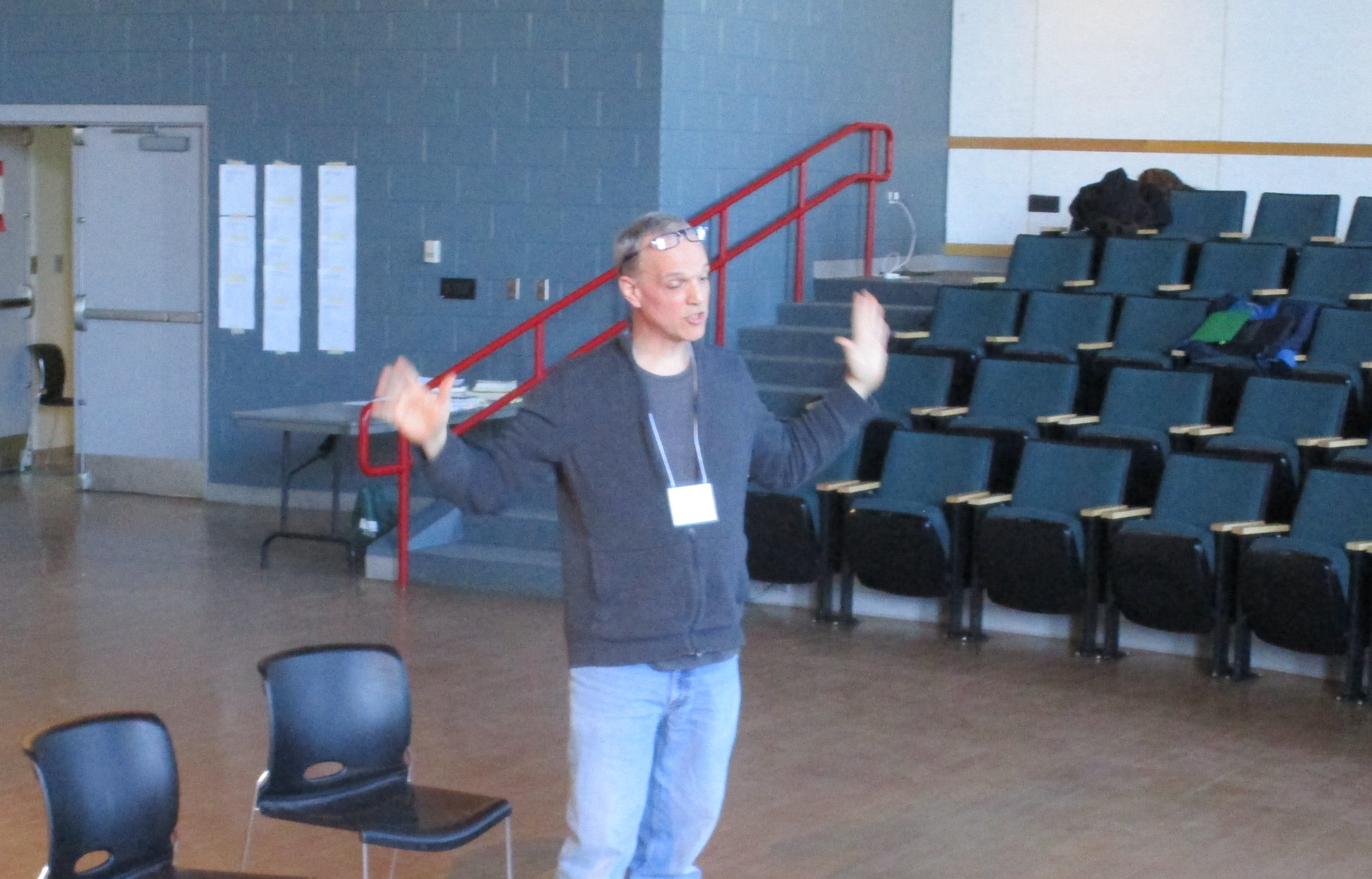
Tom Luther presenting

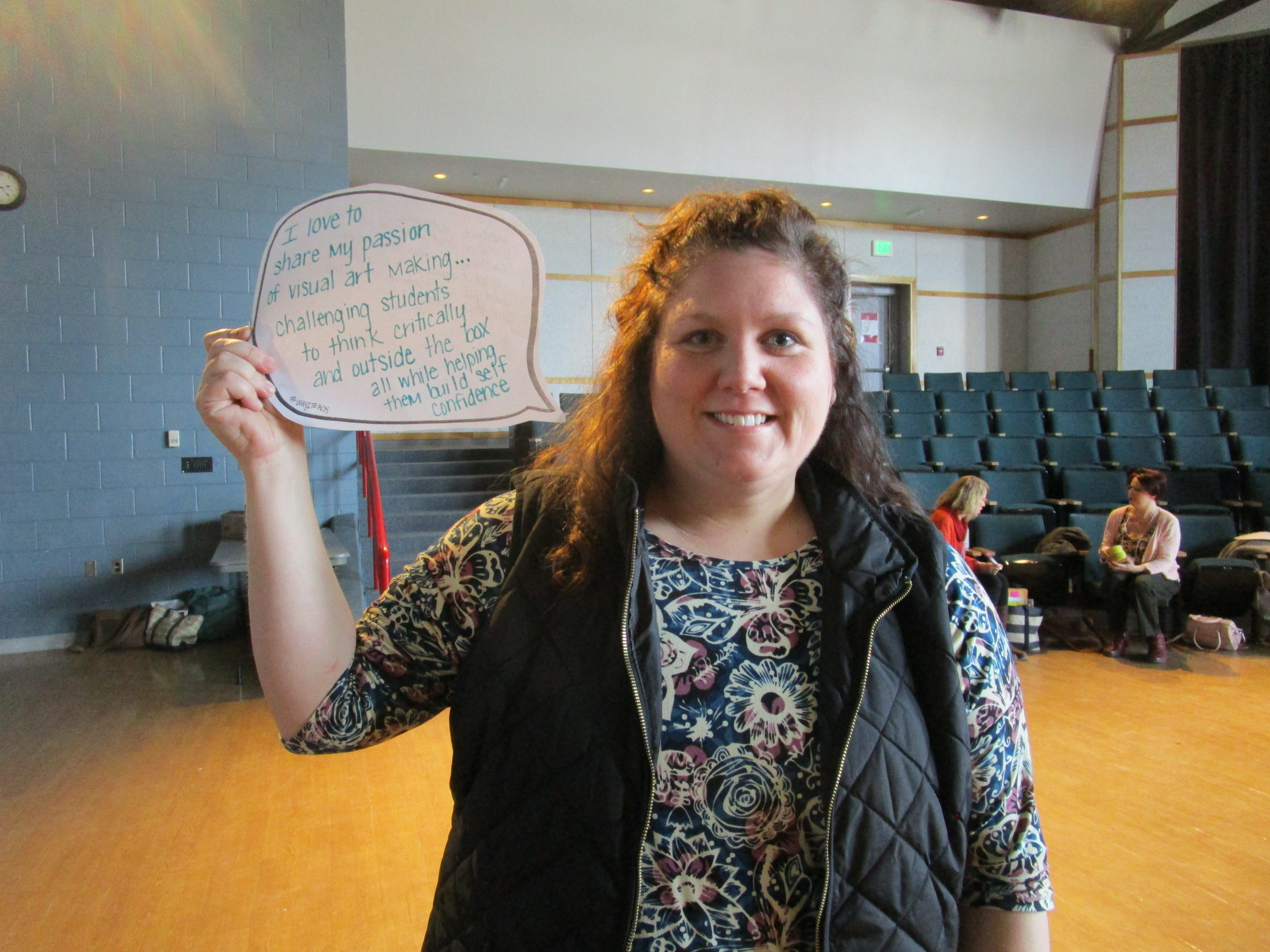
Mandi Mitchell

Samantha Armstrong and Linda McVety

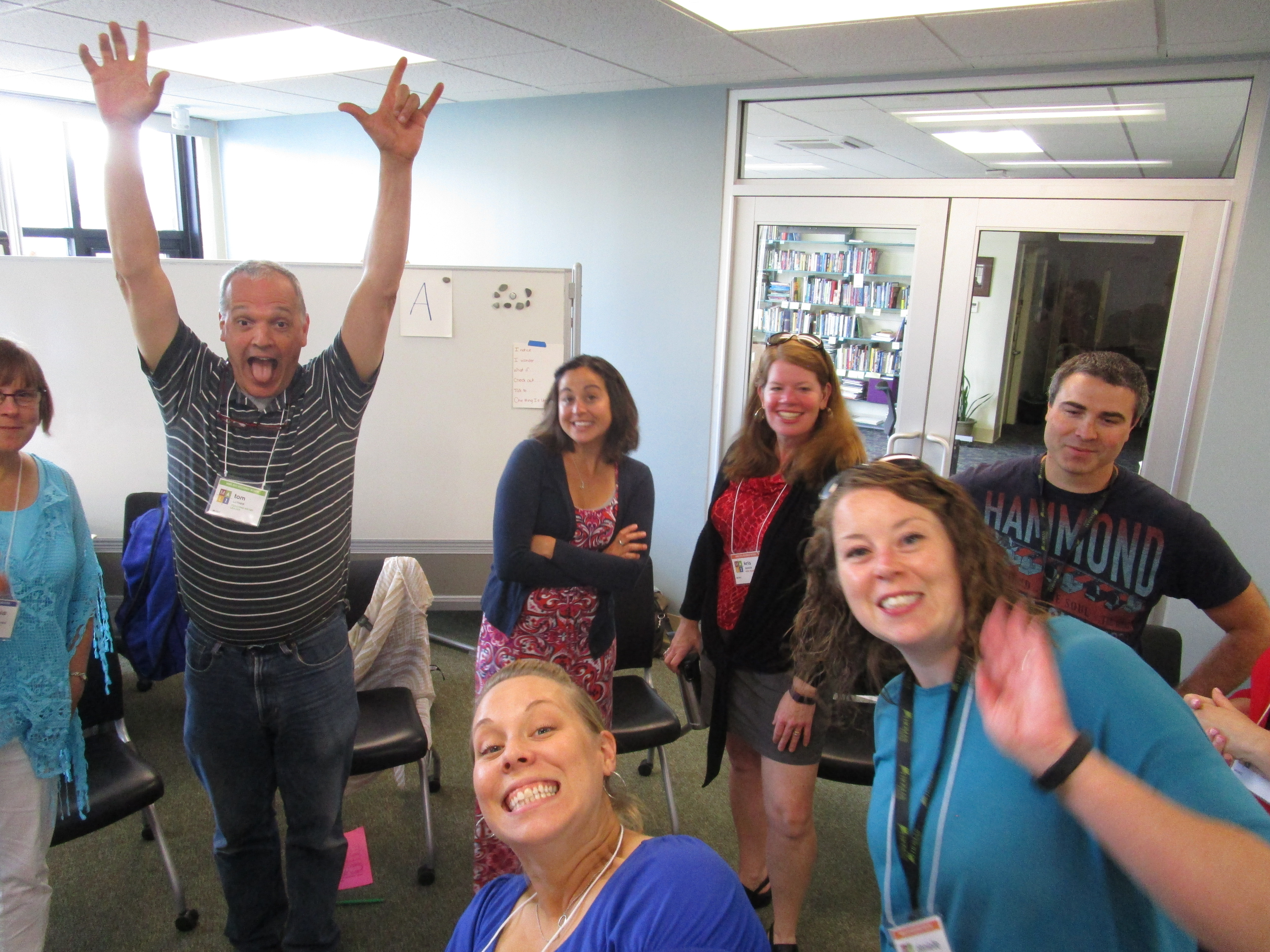
Teaching artists Tim Christensen, Tom Luther, and Brian Evans-Jones

h1

Arts Learning Grant Recipient

April 12, 2018

Portland Stage

Portland Stage received a Maine Arts Commission Arts Learning Grant for the 2017-18 school year. Recently I had the pleasure of visiting Lincoln Middle School in Portland where teaching artists from Portland Stage were on site working with grade 8 students. When I walked in I remembered instantly of how much I love teaching middle school. I’m so fortunate to have had this opportunity to see Portland Stage and middle schoolers ‘in action’.

Students shouted out at one another in their best Shakespeare voices: “I do not like your faults.” They attempted to beat their partner with words, to manipulate and convince them. The only rules in one of the word games: 1) be safe 2) gotta win as they learned about understanding Shakespeare. I was impressed with the engagement of the students and wowed by the teaching artists techniques. What a great way to learn about persuasive language.

Portland Stage Teaching Artists: Khalil LeSaldo, Hannah Cordes, Chris Holt, Ella Mock

Portland Stage provides excellent and age appropriate learning opportunities for these young adolescents. Thanks for your good work Hannah Cordes, Portland Stage Education Manager and the other teaching artists working at the school (and in the theatre): Chris Holt, Ella Mock, Khalil LeSaldo, and Megan Tripaldi.

The following information was provided by Hannah Cordes.

Describe the work you’ve been doing with Lincoln Middle School students. 

Every year, we bring the Directors Lab Shakespeare School Tour program to the 7thand 8th grade students at Lincoln Middle School. Students watch a shortened adaptation of a Shakespeare play performed by professional actors and then are invited to explore the story and language of the play themselves in interactive workshops in their classrooms. In these workshops, students practice effective communication, creative collaboration, rhetoric, and critical analysis. Directors Lab puts Shakespeare’s language into the hands and mouths of the students, empowering them to be the artists, directors, and ensemble with the power to interpret the text and produce meaning. We also work with the 6th grade students at Lincoln Middle school through our winter show. This year, 6th grade students came to Portland Stage to see our mainstage production of It’s a Wonderful Life: A Live Radio Play, adapted by Joe Landry. Prior to the performance, we did pre-show workshops in their classrooms with a focus on the play’s story arc and character development, particularly exploring the theme of how an individual can impact an entire community. We find that these workshops enhance student ownership over the language and story of the play. Additionally, many Lincoln students also participate in our In-Theater programming, through camps, after school classes, and other programming.

What language do you hope impacts these students and what language do you want them to walk away with? 

Chris Holt, teaching artist

I hope that our work helps students realize how brilliant they are at understanding and bringing Shakespearean language (and any complicated or dense language, for that matter) alive. The workshops are designed to empower students to feel a connection to the language by using their bodies, voices, and ideas to explore the text.

In terms of specific language, I would love for each student to come away knowing at least one line of text from Julius Caesar. In her feedback, Language Arts teacher Antona Bailey remarked that students were quoting the lines from the play that we used in contrapuntal arguments on the bus! So I would call that a success!

What do you want the learners to remember in the near and/or far future?

The goal of our programming is to enhance literacy and to empower students to be brave with their creativity, so that is always my number one hope of any given program. More simply than that, I hope that Portland Public School students look back on their Portland Stage experiences from K-12th grade and feel connected to art in a meaningful way. I hope that our programming inspires them to seek out theatre and other art forms, as both audience members and artists themselves. I hope that the access to art provided by Portland Stage programming will help shape future generations into people who appreciate and value artistic expression as a means of understanding and investigating the world.

What are the greatest benefits of the work with Lincoln Middle School students/staff?

Hannah Cordes

What I love most about our work with Lincoln Middle School students/staff is that we are able to continue to build relationships and build upon the work that we do both with teachers and students. We interact with students all three years of their Middle School experience, with the intent to build upon the work we have done the previous year. In 6thgrade, we focus on the elements of storytelling (characters, theme, plot, etc.) and how to bring that alive using your voice, body, and imagination. In 7th grade, we engage students with Shakespeare (often their first experience of Shakespeare’s work) through the lens of creative collaboration, exploring how to tell stories as an ensemble. Then in 8th grade, we explore Shakespeare again, this time with a focus on rhetoric and critical analysis, investigating how to make an argument, how theatre engages with its audience, and how the audience/actor interpretation impacts the content of a play. With teachers, I am grateful for the relationships we have created with Lincoln teachers. This allows us to find more and more ways in which Portland Stage can continue to support classroom teachers and how we can make our work even more impactful to teachers and students alike.

STUDENT FEEDBACK

  • “This was the best day ever”!
  • “It was so cool being Brutus, I might seriously be an actor one day”.

TEACHER FEEDBACK 

  • “We used a lot of the resource guide. The comic and synopsis were essential. The historical facts gave good background knowledge and helped kids have an in-road for the plot of the play.”
  • “The actors are so talented and committed. They are clearly present in the work and it’s so fun to see them experimenting to convey the meaning of the text, and connecting with the audience. I loved that the staging was including the audience and surprising them—reinventing how they think “the theater” should be. Their reactions to the drumming, to “Citizen 3,” were just awesome.”
  • “The multiple modalities that are included—the resource packet, the performance, the Directors Lab become a kind of perfect storm for a memorable experience. I think Shakespeare can be seen as an elitist text and this program brings equity, and equal access, to it.
    The fact that all of my students, because of this experience in a public school, will be able some day to be saying, “Oh, well, yeah,
    Julius Caesar, that was all about power and betrayal.” That is really empowering. They might shatter a stereotype of their culture or economic background because they can summarize or allude to Shakespeare. So many of them already see the relevance now, and my hope is that all of them can reach back to this experience and use it, build on it, surprise or delight someone with their knowledge about it. Also, the teaching actors are seemingly endless fonts of energy for this work. It was lovely to see them being energized by students”.

NOTE: In the fall I posted a series of blog posts on Portland Stage. You can access the series by typing in Portland Stage in the “search archives” box located on the right side of the blog.

h1

Dance Ed Grant Opportunity

April 11, 2018

Dance Education Grant Deadline May 2

FOR IMMEDIATE RELEASE: April 10, 2018

CONTACT: Ryan J. Leighton

Marketing Director

207-287-2726

Don’t miss this great opportunity for Maine schools and teaching artists

AUGUSTA-April 10, 2018—The May 2 deadline for the Maine Arts Commission’s dance education grants for PK-12 schools and teaching artists is quickly approaching. Applications must be filed by 5 p.m. that Wednesday in the Commission’s online grants management system at www.MaineArts.com.

Launched in 2015, the dance education grant provides high quality learning opportunities for students and educators in schools where dance education is not being offered. Dance education changes lives, yet only 5 percent of all schools in Maine offer opportunities in this artistic discipline, according to the Arts Education Census study conducted in 2016 by the Maine Arts Commission.

This past year, the program funded residencies at Hebron Academy in Hebron; Prescott Memorial School in Washington; and East End Community School in Portland.

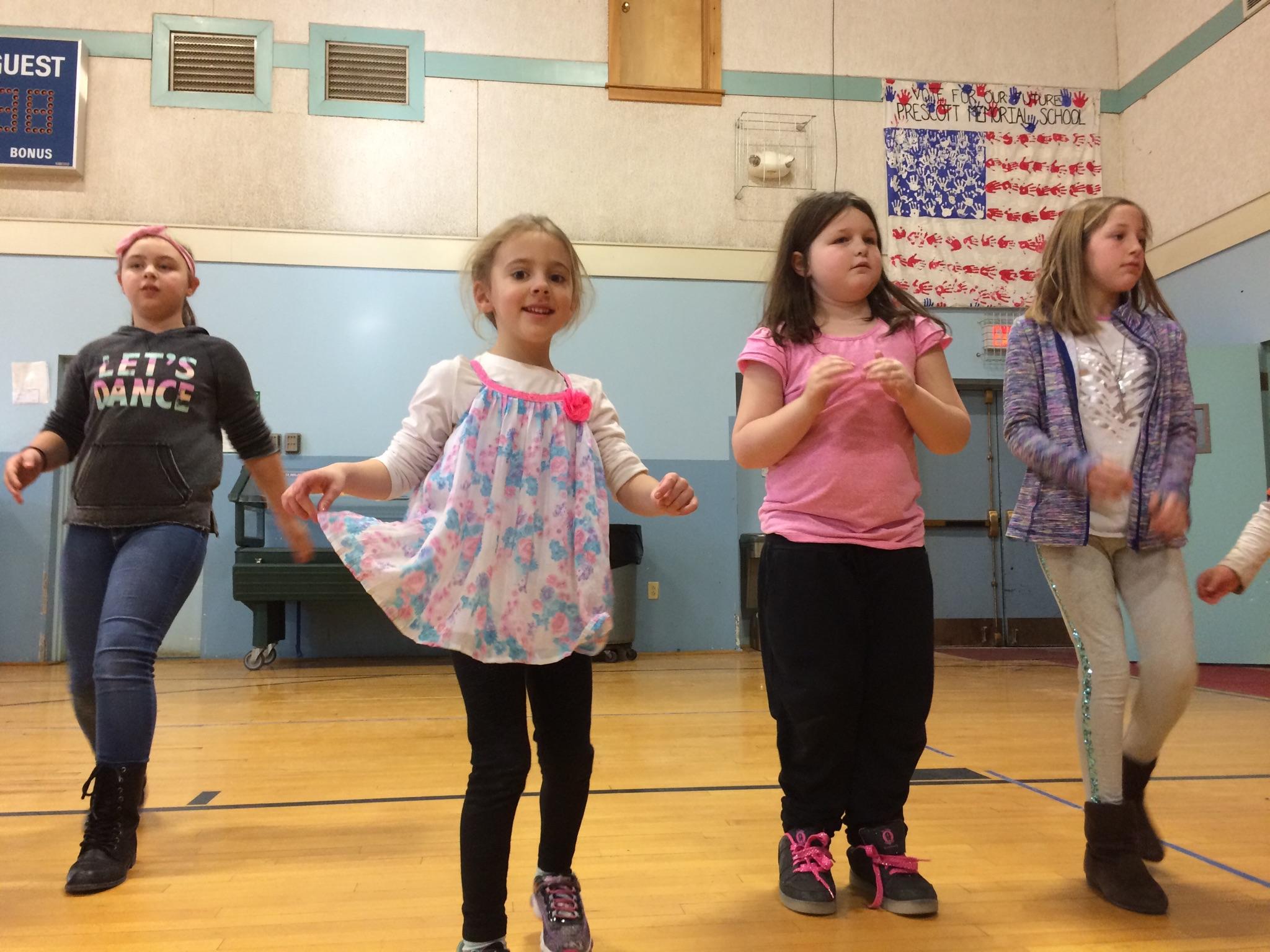
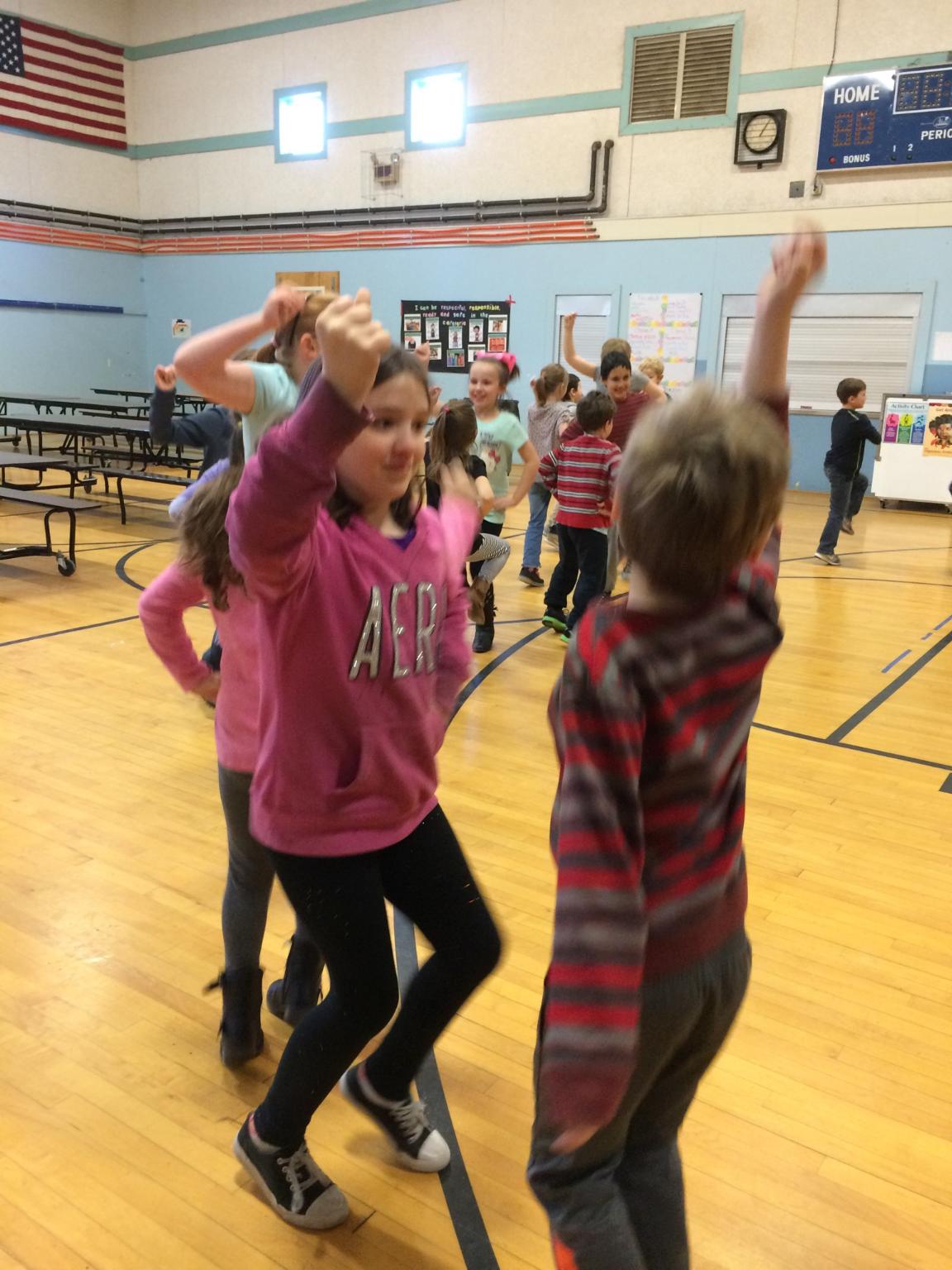
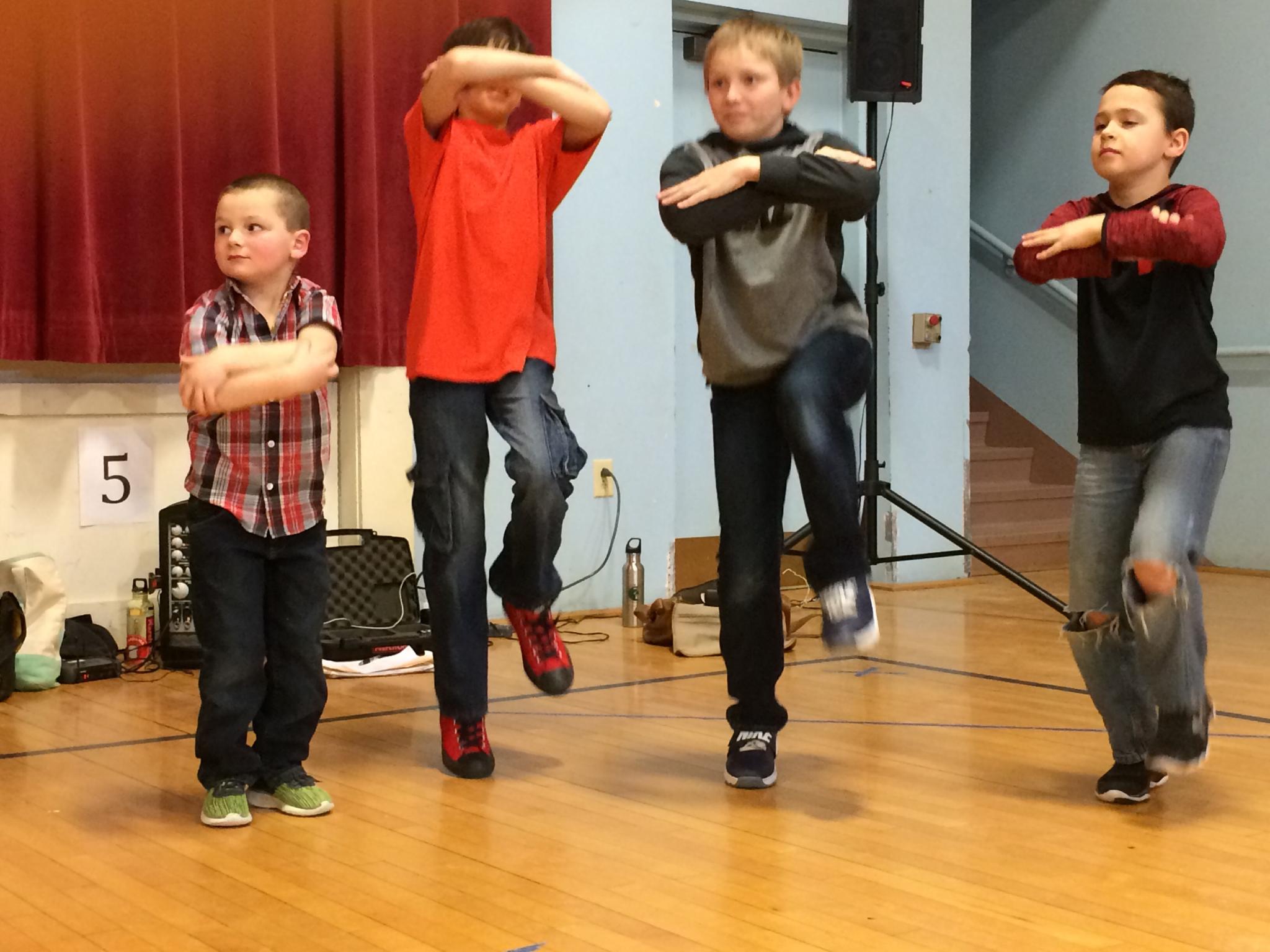
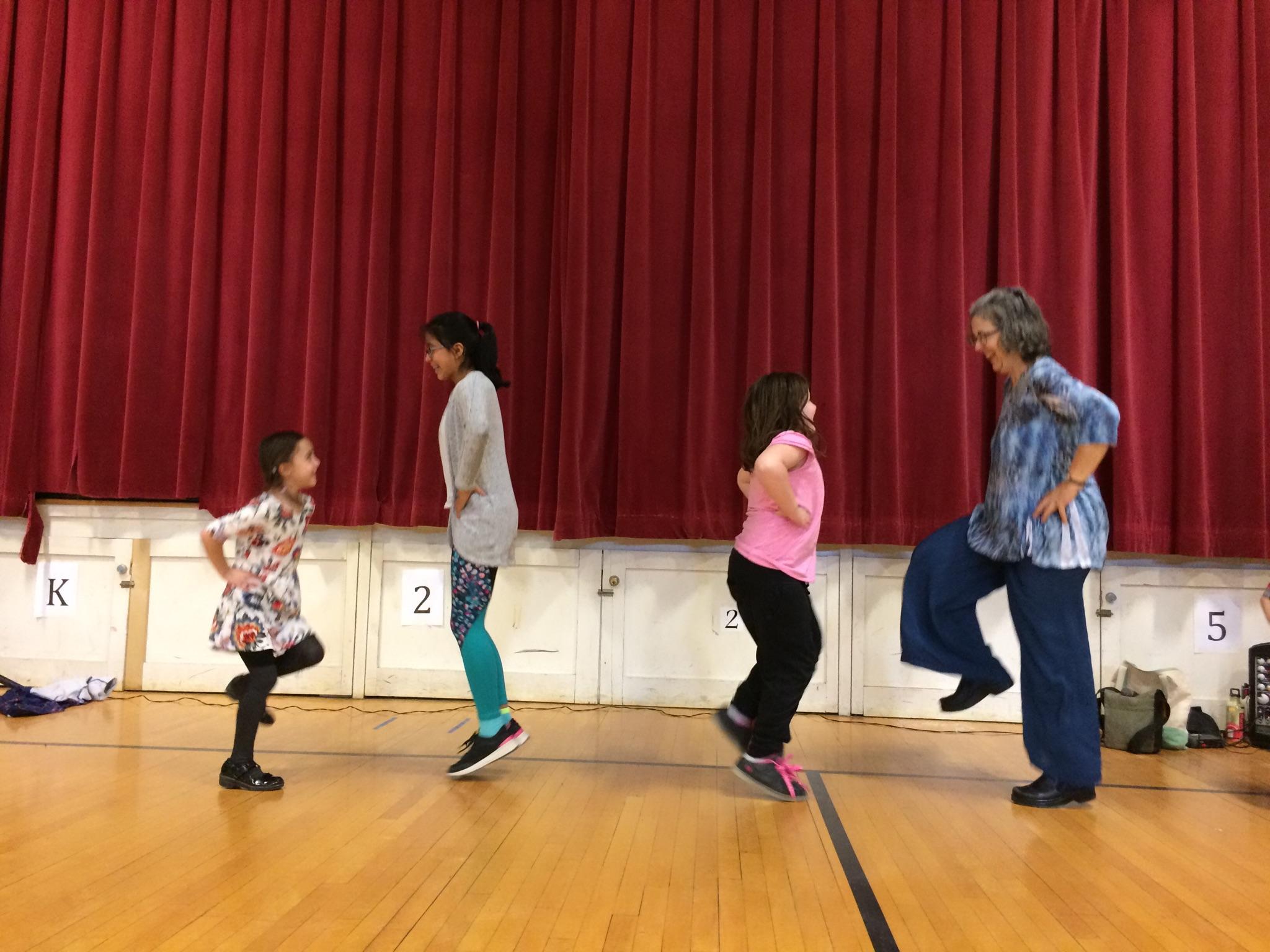
Chrissy Fowler was one of three recipients chosen from the Maine Arts Commission’s Teaching Artist Roster for one of the previous dance education grants. Chrissy’s dance residency included four weekly visits to Prescott Memorial School, culminating with a community dance.

“I think students, staff and families value the chance to connect in a fun and active way,” Chrissy said. “All of my residencies have common goals: everyone participates in the dancing, exhibits pro-social behaviors, and makes connections across grade levels.”

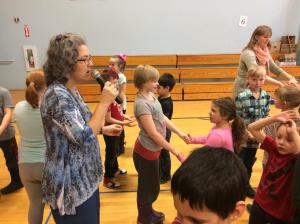
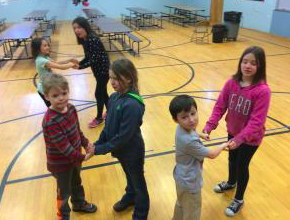
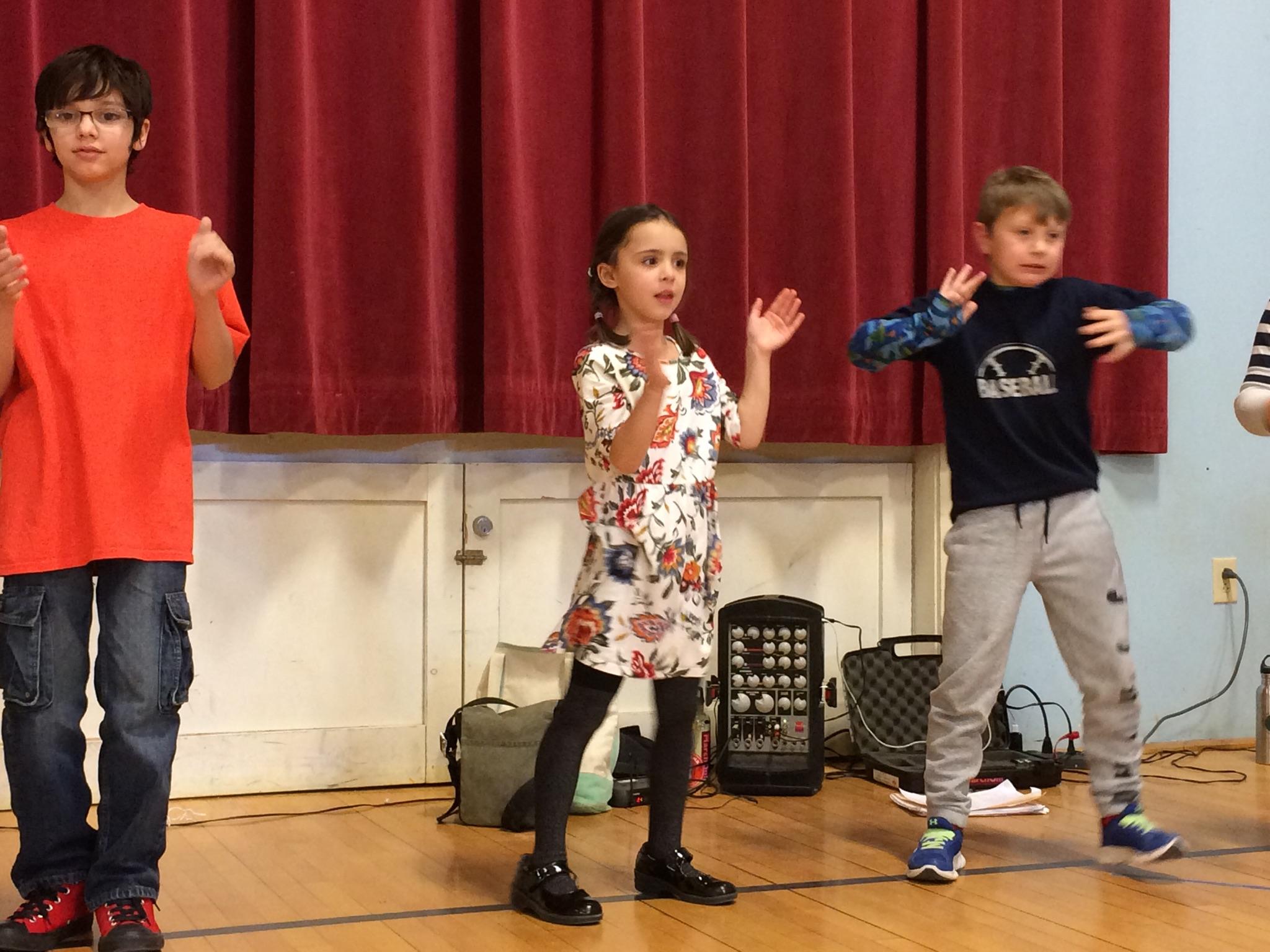
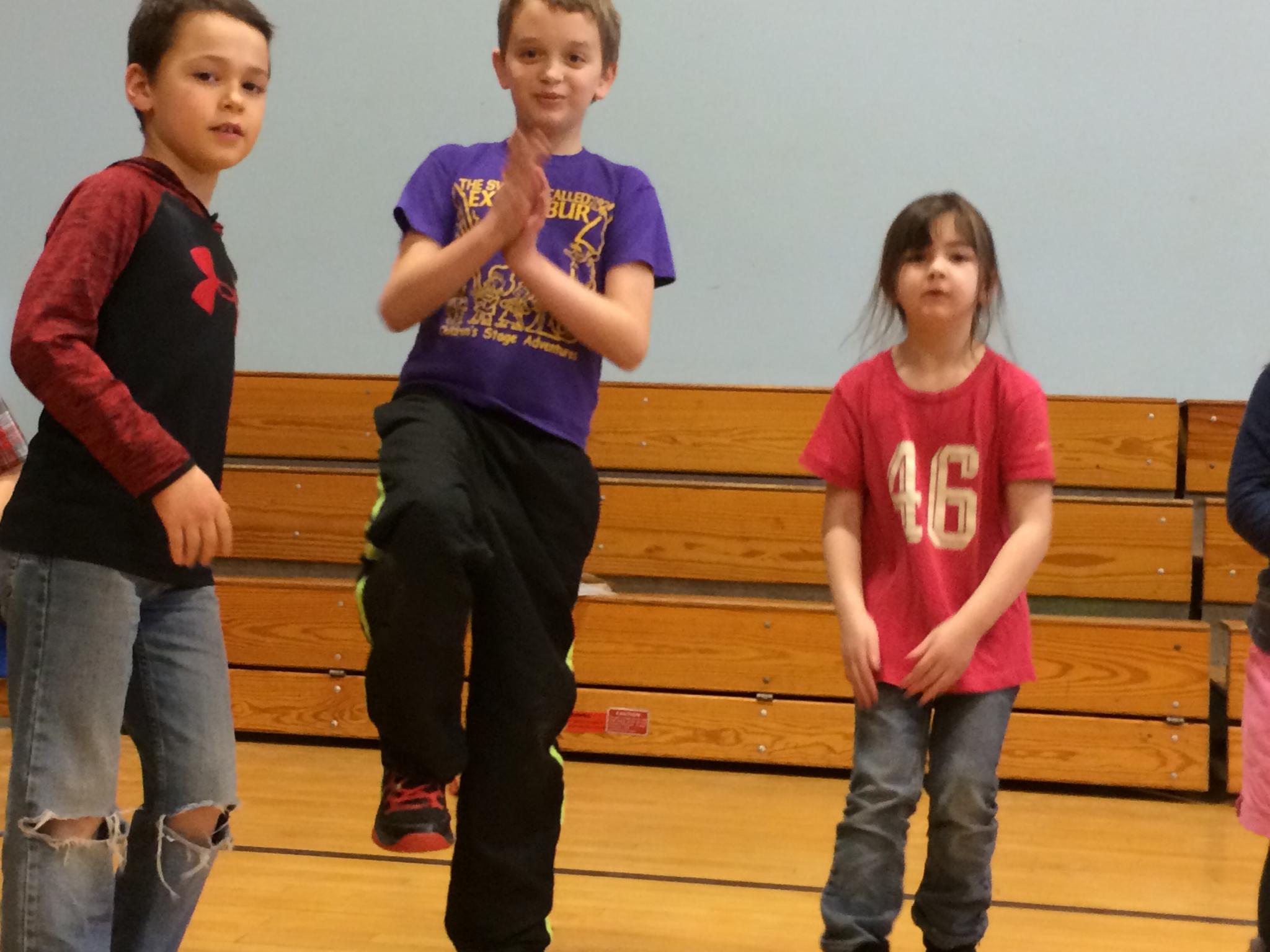
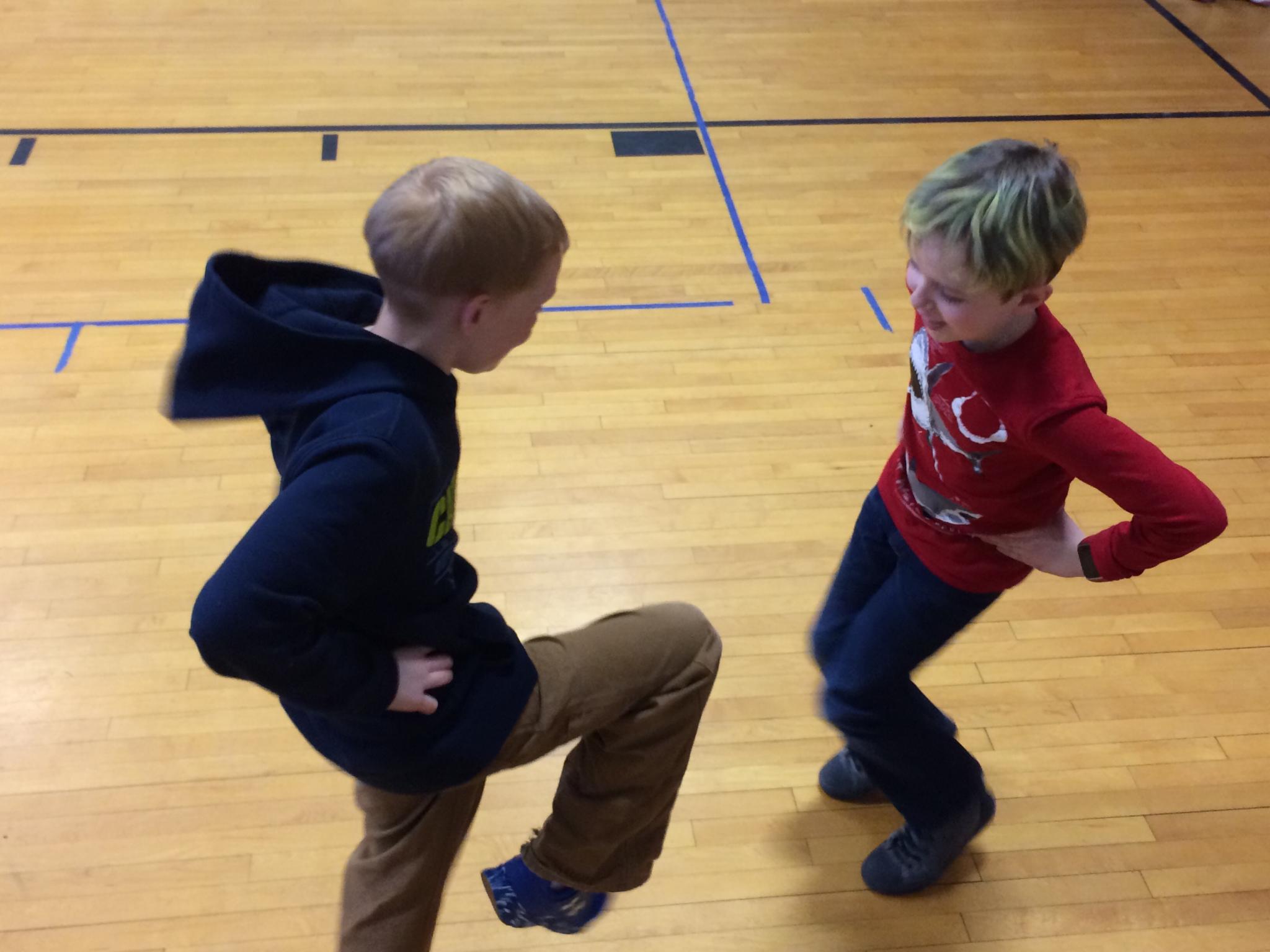
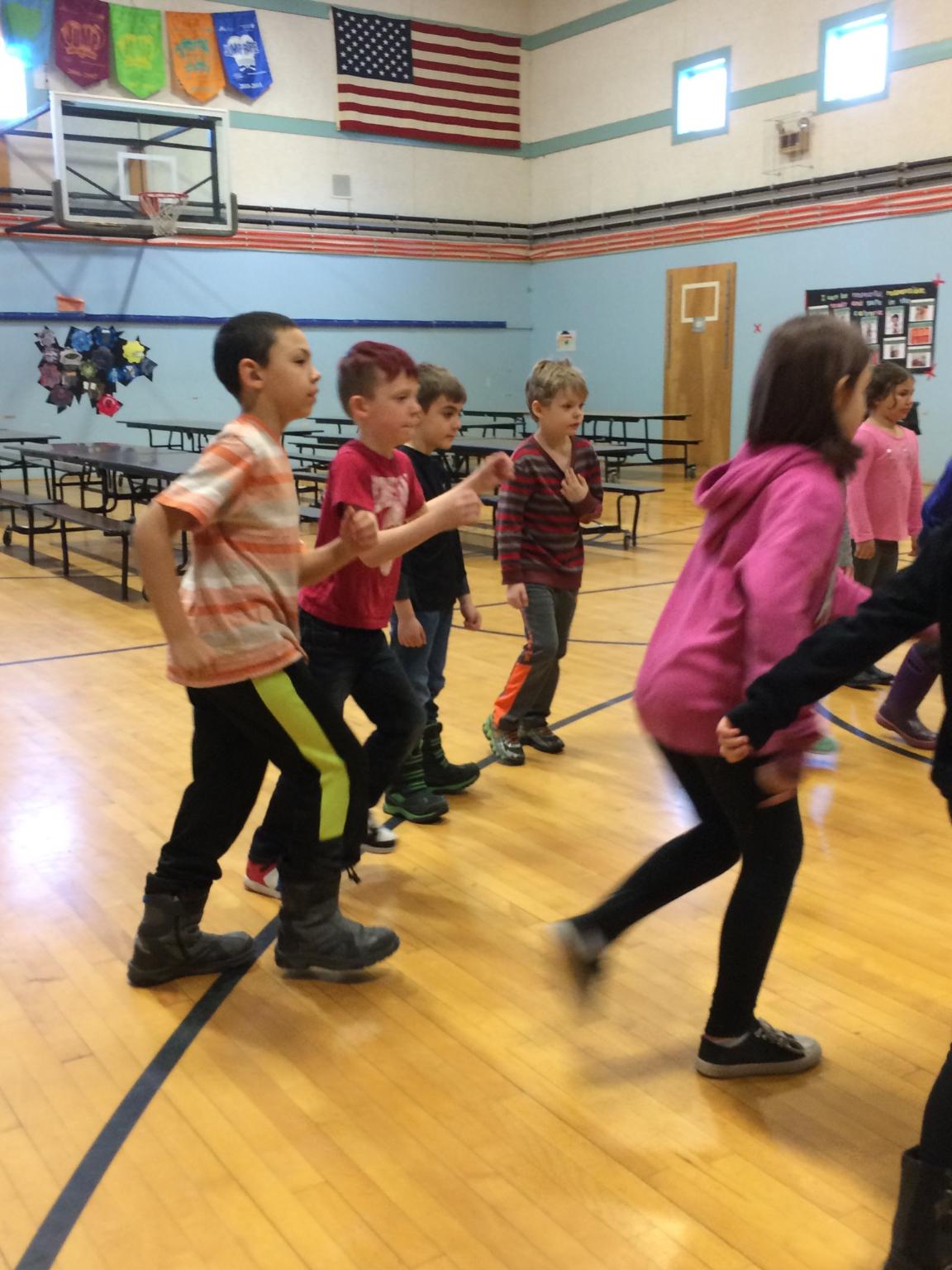
Chrissy’s residency specifically focused on K-6 students learning contra dance, or social dancing that consists of lines of partners pairing off and performing sequences led by a caller.

When asked about the dance residency, sixth grade students said it was a welcoming new experience. “I have been amazed at how quickly the students picked up the rhythm and the steps,” said Jim Freyenhagen, a sixth-grade teacher at Prescott Memorial School. “Not only are they learning to dance, they are practicing their social skills with their peers and younger students.”

See the full story of this and other dance residencies at the ME Arts Ed Blog.

Funding for this program is made possible through the generosity of a collaboration facilitated by Thornton Academy dance educator Emma Arenstam Campbell, Dancers Making a Difference non-profit organization, and several community dance studios committed to raising funds for dance education.

“We are extremely appreciative of these contributions and the impact they will have on dance education in Maine,” said Julie Richard, Executive Director of the Maine Arts Commission. “There are so few dance education programs in our state and this is one important way we can make a difference for the students that we serve.”

Grant guidelines and application criteria are at www.MaineArts.com and the Commission encourages PK-12 educators or teaching artists to review them prior to applying. The funding cycle for these grants is for projects from September 1, 2018 through March 30, 2019.

For more information visit the grants and the teaching artist roster webpages at www.MaineArts.com.

For questions regarding the grants or current teaching roster, contact Argy Nestor, Director of Arts Education at 207-287-2713 or email at argy.nestor@maine.gov.

_____________________________________________________

The Maine Arts Commission supports artists, arts organizations, educators, policy makers, and community developers in advancing the arts in Maine. For more than 50 years the Commission has encouraged and stimulated public interest and participation in the cultural heritage and cultural programs of our state; has worked to expand the state’s cultural resources; and encouraged and assisted freedom of artistic expression for the well-being of the arts, to meet the needs and aspirations of persons in all parts of the state. Additional information is available at MaineArts.com.


h1

MALI Teaching Artist Leader Story: Tom Luther

April 10, 2018

Teaching Artist – musician

This is the one of several blog posts in 2018 that include stories of the Maine Arts Leadership Initiative (MALI) Phase 7 Teacher Leaders and Teaching Artist Leaders. This series includes a set of questions so you can learn a little bit about each leader. CLICK HERE  for more information on MALI. CLICK HERE  for more information on the 93 Teacher Leaders and 8 Teaching Artist Leaders. CLICK HERE  for Arts education resources. CLICK HERE  for the MALI Resource Bank. Search in the “search archives” box on the bottom right side of this post for past teacher leader stories. Thank you Tom for sharing your story!

Tom Luther teaches piano, digital/computer music, composition, and improvisation. He’s been at it for 6 years and has no real favorite ages or levels. Teaching is very much a shared pursuit with Tom’s students, meaning he considers himself as much a student as they are. He can, and has, studied the same material/concept as his students, and they can share what they’ve learned about it. Tom tells his students: “I’m not any better at this than you are, I just have a bit more experience practicing”. He thinks this notion is essential for learners, especially new learners, to take ownership of their study.

What do you like best about being a teaching artist?

Being able to revisit concepts through my student’s eyes, and re-experiencing the study in new and unexpected ways.

What do you believe are three keys to ANY successful visual and performing arts education?

  1. Ownership of the art, and having the permission to create.
  2. Objective observation/reflection
  3. Active participation as both audience and performer. This is especially true of the audience piece. Experiencing work outside your own is essential for greater learning and particularly inspiration.

Have you found assessment to be helpful in your classes, workshops and residencies, and if so, how?

I have two main methods of assessment; recordings/listening sessions and master class style formats. Each allows the opportunity to practice objective listening, and speaking objectively about music. Having students listen to their own performances is especially helpful, as is will often point to a) how much progress they have made, and b) help them to hear how much better they sound than they initially felt. It’s also tremendously helpful as in terms of “practice performance” and dealing with the accompanying anxiety .

What have been the benefits in becoming involved in the Maine Arts Leadership initiative?

The opportunities for learning are tremendous, and very motivating and inspiring. This is coupled with an amazing network of teachers who are a fabulous resource for feedback. I think that we all benefit from the collective intelligence and imagination of the group.

What are you most proud of as an artist and/or a teaching artist?

I take great pride in helping my students believe. For too long, the arts have been viewed as “for them, not us” because of a misguided idea about talent and ability. I am proud to be helping my students believe in themselves, and strive toward their goals.

What gets in the way of doing a better job as a teaching artist?

The current culture’s emphasis on “end product” versus “process”; the lack of belief in the intrinsic value of the arts( and the accompanying over-reliance on utilitarian value); general “anti-reflective” attitudes. I would also cite the rampant commodification of music as a fairly significant hurdle.

What have you accomplished through hard work and determination that might otherwise appear at first glance to be due to “luck” or circumstances?

I raised $4400 in a crowdfunding campaign a few years back. Those things always look easy until you run one.

What advice would you give to someone who is thinking about becoming a teaching artist or is just starting out?

This is one of the most important and fulfilling things one could ever do. This is an opportunity to guide an inexperienced mind into the world of the arts. This is an opportunity to sculpt learning, both for the student and yourself. This is an opportunity to help make lives better, more rich, and more well rounded. Don’t do this if you think it will be easier than getting a “day job”. Don’t do this if you think its “easy money”. Don’t do this to gratify your own ego. Becoming a teaching artist is to become a mentor, and take responsibility for starting (or continuing) a student on a magnificent life’s adventure.

If you were given a $500,000.00 to do with whatever you please, what would it be?

Honestly, pay off my mortgage. While this may at first sound a bit selfish (and it may be), but the reality for all teachers is that financial issues are always a source of stress and distraction, and can potentially drive an individual out of the profession, simply because they can’t take care of the everyday basics. That said, I would take the remainder and consult with my finance whiz brother-in-law to grow a fund to support arts education programs in under-served areas. Arts education should not be contingent on income level.

Imagine you are 94 years old. You’re looking back. Do you have any regrets?

Probably. I maintain pretty high, and probably unrealistic, standards for myself and it is extremely likely that there will be at least one thing I haven’t done yet. Then again, I have a bad habit of assuming things and ideas that won’t necessarily transpire, so who knows. I can say that I am going to try my best to avoid regrets.

Tom spends some of his time teaching in Rockland at the Midcoast Music Academy

In the fall of 2017 Tom had two strokes back to back. As part of his ‘come back’ he created a weekly video to share his learning, his pathway to recovery, and to inspire his students (and others) to use a growth mindset. The amazing video series is called Practicing My Way Back and can be accessed at Spheremusik, Tom’s YouTube channel. 

h1

Arts Learning Grant Recipient

April 9, 2018

Bangor High School

Potter and MALI Teaching Artist Tim Christensen

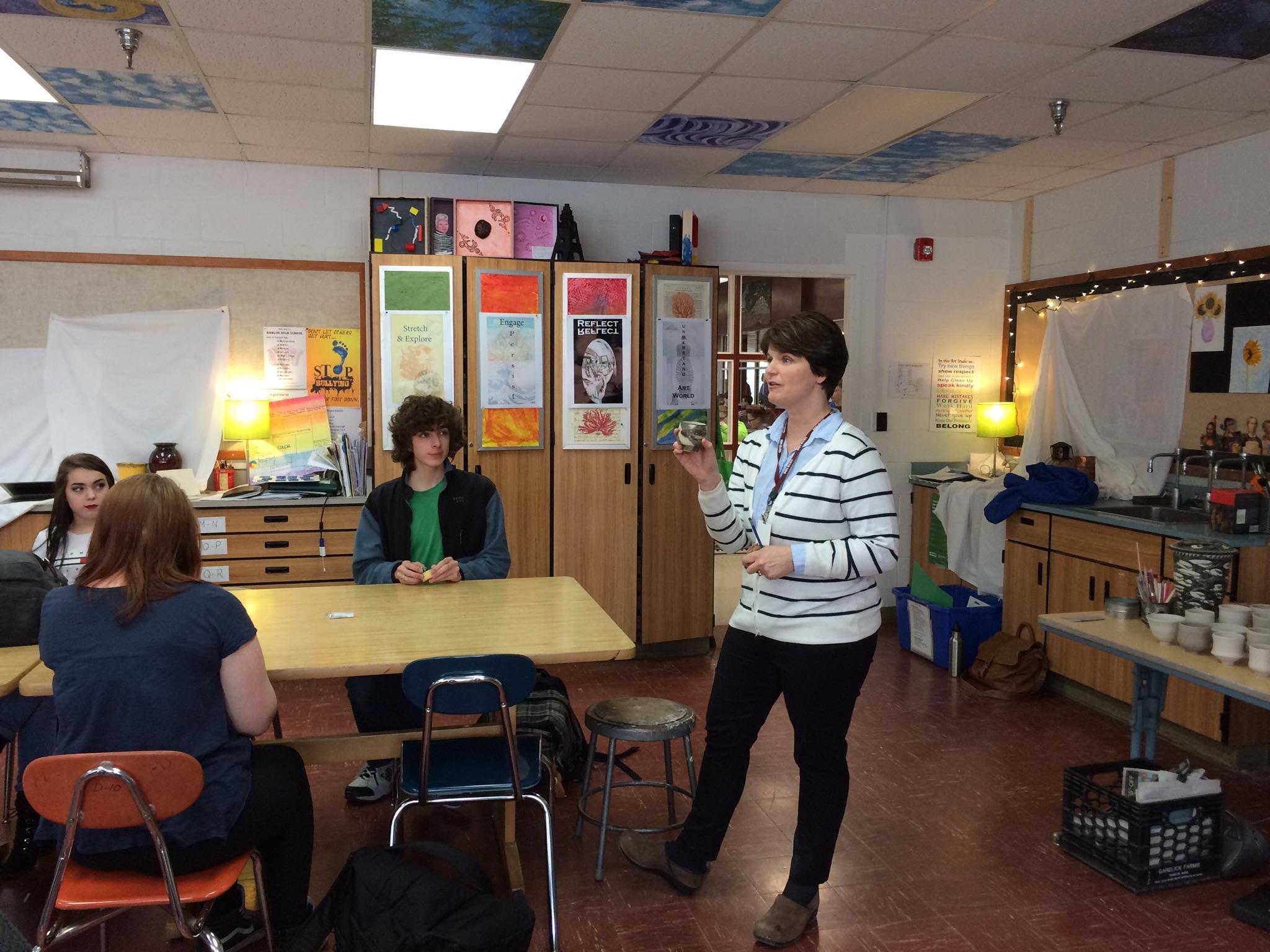
“Sharks, tarpan migration, stingrays. Canoeing in deeper water while a dolphin gave birth under the boat. No tolerance for being bored. I had something to say. Being a potter let’s me capture information and communicate it in a durable way. In 500 years what do you want someone to know about you, what your life is like in 2018”?

These are some of the stories that teaching artist Tim Christensen shares when he visits classrooms – stories of how he got where he is and how he is living in Maine and working as an artist. He shares why he does what he does and how it came to be. He started out selling text books after majoring in writing in college. But at age 28 after losing his job he took time to consider what he really wanted to do.

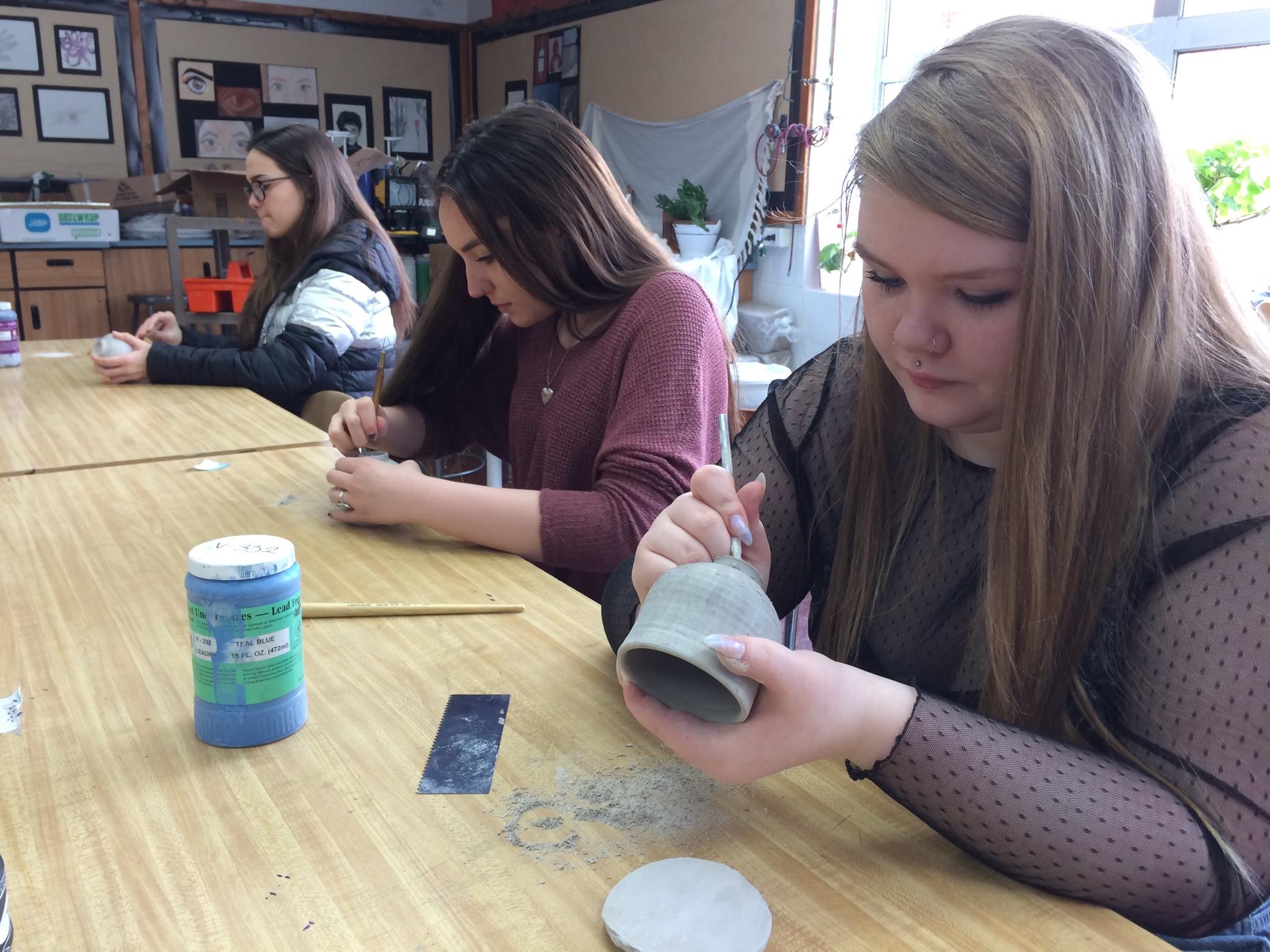
Earlier this month I visited Bangor High School while they had Tim working with their students from all three of their art teachers students. The school received a Maine Arts Commission (MAC) Arts Learning grant to provide this opportunity.

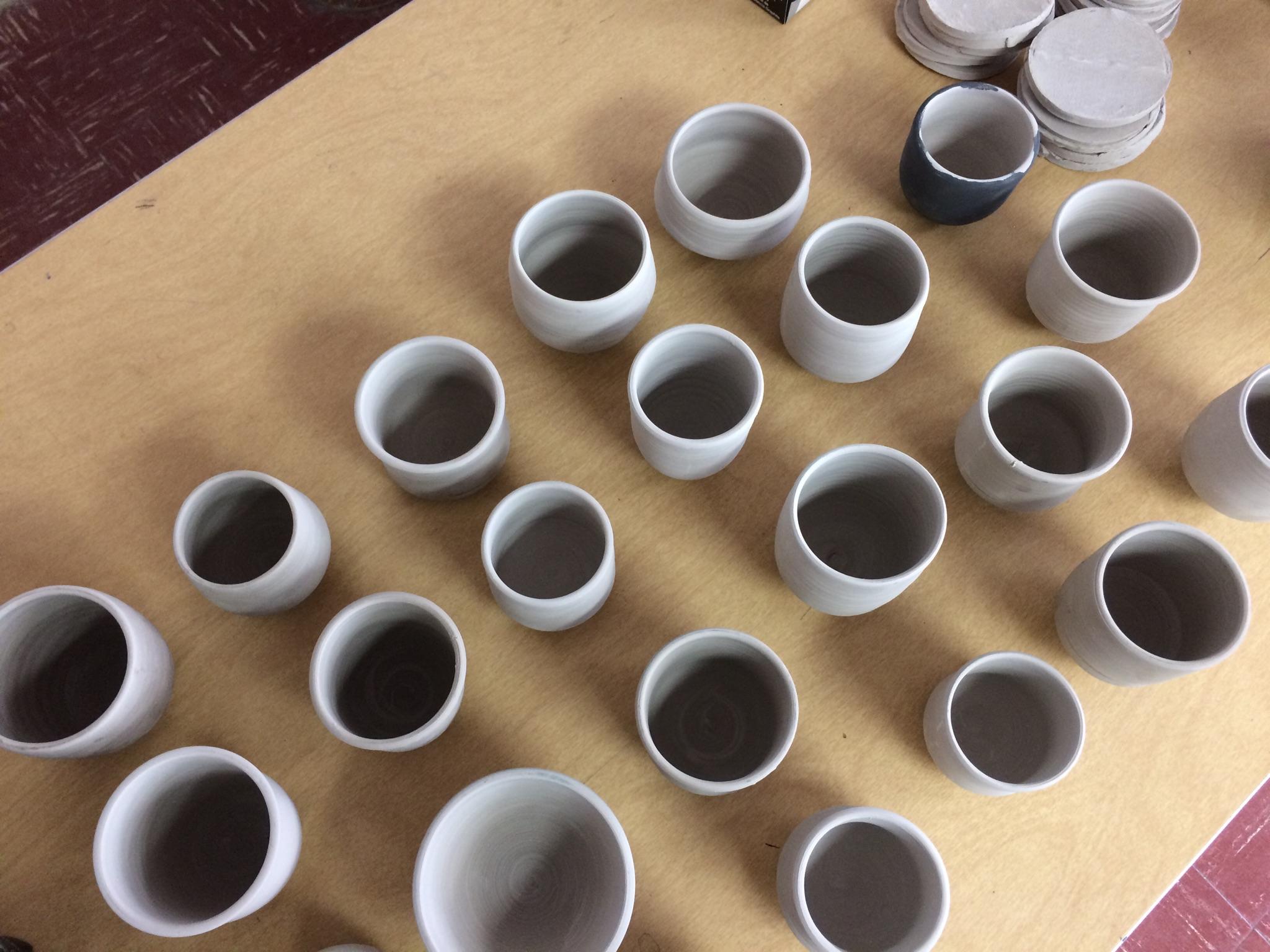
Tim makes clay bowls by throwing them on a potter’s wheel and uses the sgraffito process to decorate the pottery. Sgraffito is made by scratching through a surface to reveal the lower layer of contrasting color.

I’ve visited Tim in action in other classrooms and its always interesting to see where he is in his development as an artist and as a teacher. The Maine Arts Leadership Initiative (MALI) is pleased to have Tim as a Teaching Artist Leader and on the Maine Arts Commission Teaching Artist roster. It is clear from the teacher and student responses that Tim did a fabulous job and impacted students and teachers during during his four days at the school.

ART TEACHER EVA WAGNER’S REFLECTIONS

Tim Christensen was such a refreshing presence in our classroom. His knowledge, skills, talent, creativity and energy inspired our students to create truly unique artwork. I learned so much from him in just a few days and I am hoping to get him to come back and work with my classes again.

He is a great story teller and he really took an interest in the students’ artwork. They really responded to him personally.

Working with a professional artist is such a valuable experience to give to our youth. It helps them to see fine art as a viable career and exposes them to a whole new way of working and caliber of work. Often high school teachers, like myself, become a sort of jack of all trades because of the amount of time we spend teaching and preparing different lessons. A professional artist has the luxury to focus which raises their production and craftsmanship –  it is wonderful to be able to expose the students to someone who works in this way.

STUDENT REFLECTIONS

  • I enjoyed working with a professional artist because it’s broadening who we learn from. It was cool working with someone who makes and sells art for a living.
  • I learned that quality is better than quantity. I would love to work with this artist again.
  • I enjoyed that Tim took the time to teach us individually and took interest in our art. I also enjoyed the story he told us about sailing across the Pacific ocean.
  • It makes us realize that there are artists out there that make a living from their art. It broadens our outlook on art and gives us perspective of art in the real world.
  • It was inspiring to hear someone’s personal story of how they became a professional potter.
  • I learned about creating sgraffito that tells a story on pottery. I would love to learn more about throwing with Tim Christensen.
  • I liked hearing about Tim’s life story and how he started art. He had many interesting views on art and how he saw the world because of his art. His art itself was incredible, and I had never heard of the techniques he used.
  • Having a Teaching Artist in the classroom can further your understanding of a subject to have someone that is specialized in that art. They can inspire students with their story and give hands on advice.
  • It helped me to see what it would be like to be a professional artist.
  • I enjoyed it because I got to work with a professional on my favorite subject.
  • I learned that there were more than just the few art styles that I’ve learned about over the years so far.
  • I learned how to do sgraffito and that sometimes you don’t need to work from an immediate drawing, you can just start from nothing and keep going from there.
  • It allows you to explore ideas and techniques you might not normally do.  It allows you to learn from them, and hear their stories and get new ideas.  It dispels the idea that artists are unapproachable. It allows you to see other career options beyond lawyer, doctor, teacher, etc.
  • Working with a professional artist was really nice and eye opening to see what his type of life is like. He was a really good artist that was super different from any work that we’ve done in school but it was really eye opening. He was really nice and helped me personally open my eyes to doing different work that was outside my comfort zone.
  • Tim Christensen taught me to step outside my comfort zone and to realize that when I think I’m done with an art piece, if there is still open space on my work, then I am not done. He helped me make my work better and was overall a good teacher.
  • He was an excellent teacher, and had a thoughtful answer to everything we asked.

ART TEACHER ERIC HUTCHINS REFLECTIONS

Many of our students want to become professional artists, but it is a scary thought for them and even their parents to survive as an artist. It is really nice for them to see a Maine artist that is successful at what he does! Tim was able to introduce new and different techniques to many different classes, and offer opportunity for ceramic works to classes that would never get a chance to experience that. Every opportunity students have can open new doors for them.

Tim’s stories about his travels around the world set it apart from other artists that have spoken to our students. His travels and stories connect to the art that he creates, so the students can hear and see the stories at the same time.

We had teachers from other departments visit while he was presenting and even had the opportunity to create their own work with him. They were as engaged as the students.

Students were so impressed with how incredible his work was they were captured by him at the very beginning. It was nice to be “on the outside” and see the students entire conceptual process with the art and see how they react to someone else. It provides you with insight in how students understand and comprehend what is being taught.

PRINCIPAL PAUL BUTLER’S REFLECTIONS

The quality of the contact between Tim and the students was outstanding, and he brought great energy to his visit. Technique sharing is one thing, but interacting with a practicing artist in the way that our students were able to is quite another– and will have a lasting impact on them.

TIM CHRISTENSEN’S REFLECTIONS

I see my value as a teaching artist to be manifold. I create connective tissue in the arts education field by helping people to network, and by connecting art teachers working on the same ideas. I also can bring specialized knowledge into the classroom, whether it be about natural history, technical clay knowledge, or professional and funding opportunities. For the students, I am a fresh face with no baggage, someone who is working in the field of fine art, and is very comfortable sharing all of my professional knowledge. I also provide a platform from which the students can speak and be heard, by stressing the communicative, content bearing parts of any art project.

I very much enjoy teaching the sgraffito technique as a communication tool that transcends culture and/or time. In a way, sgraffito was the original emoji. I urge the students to think about what they would like to say to someone five hundred years hence, and to create artwork that is capable of doing that. I am successful when I have empowered students to speak using their visual voice and to create from a place that is uniquely theirs, confident that they will be heard and that what they have to say matters in the global conversation about our world.

h1

Congrats Waterville High School

April 6, 2018

Heritage Festival, New York City

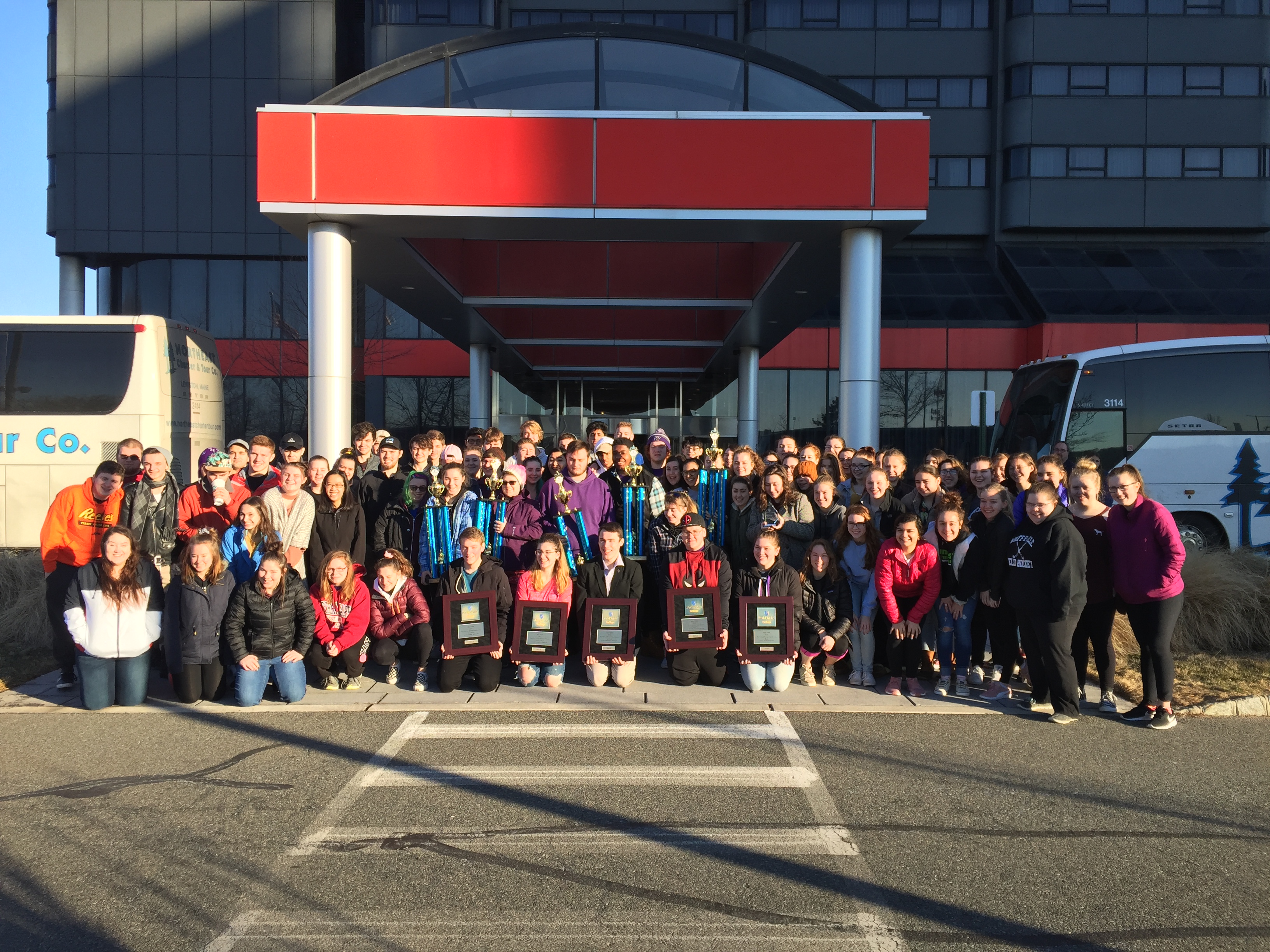
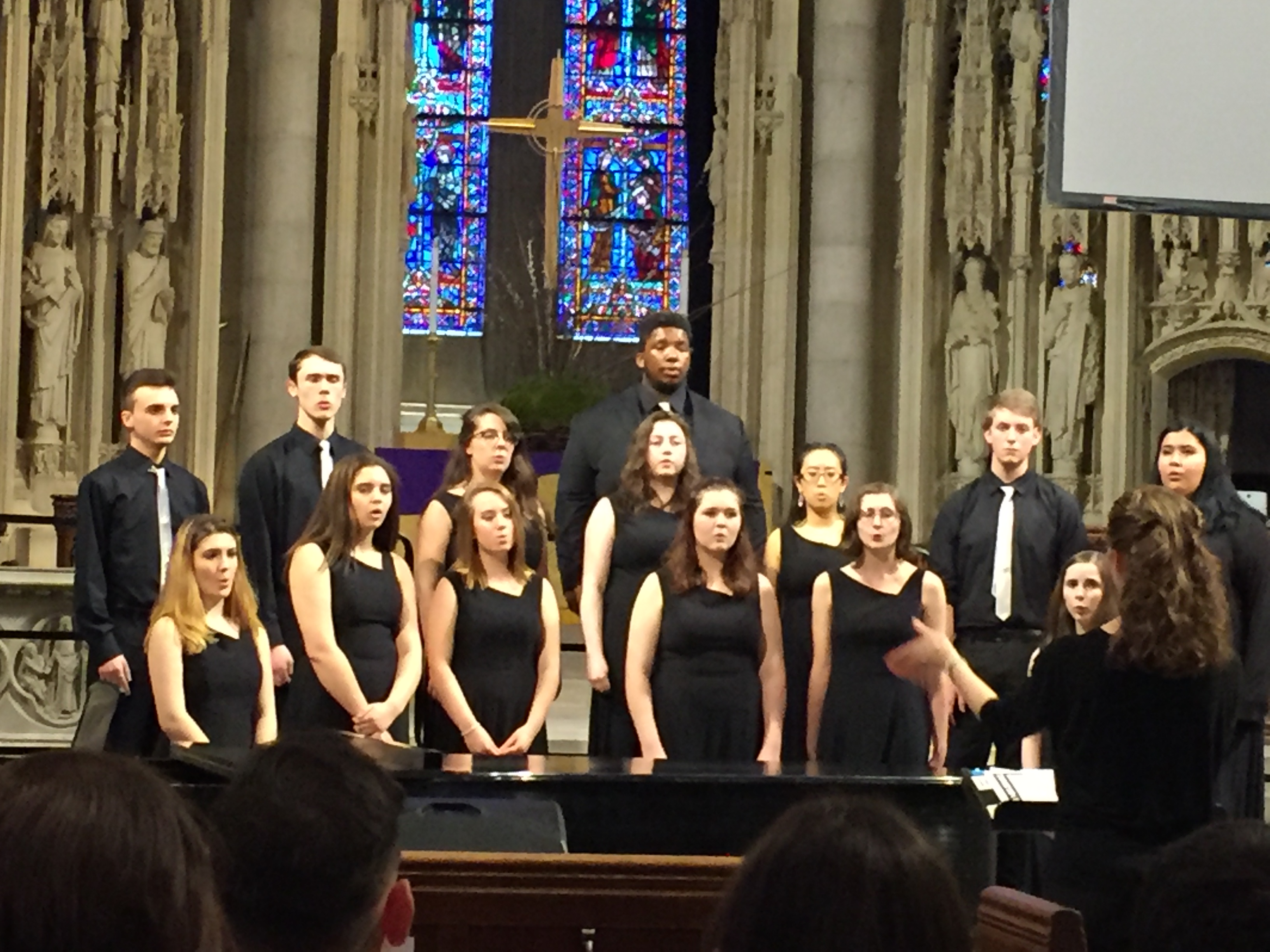
Recently Waterville High School musicians traveled to New York City for the Heritage Festival. Not only did they come home with awards but they had a chance to experience part of the culture that New York has to offer.

Chaperone and Waterville High School nurse Ann Bouchard describes the pride in the music students and their trip to New York City:

So lucky to have been part of this amazing experience with exceptional musicians and people—-our students!!!  Colleagues and chaperones were top notch.  Thanks to our music educators for giving the gift of music to our children and students and for enriching our lives with their gifts.  As was said at the festival, “The arts make our world civilized.”  Thank goodness something does and these educators and musicians have a hand in the civilizing of our part of the world”.

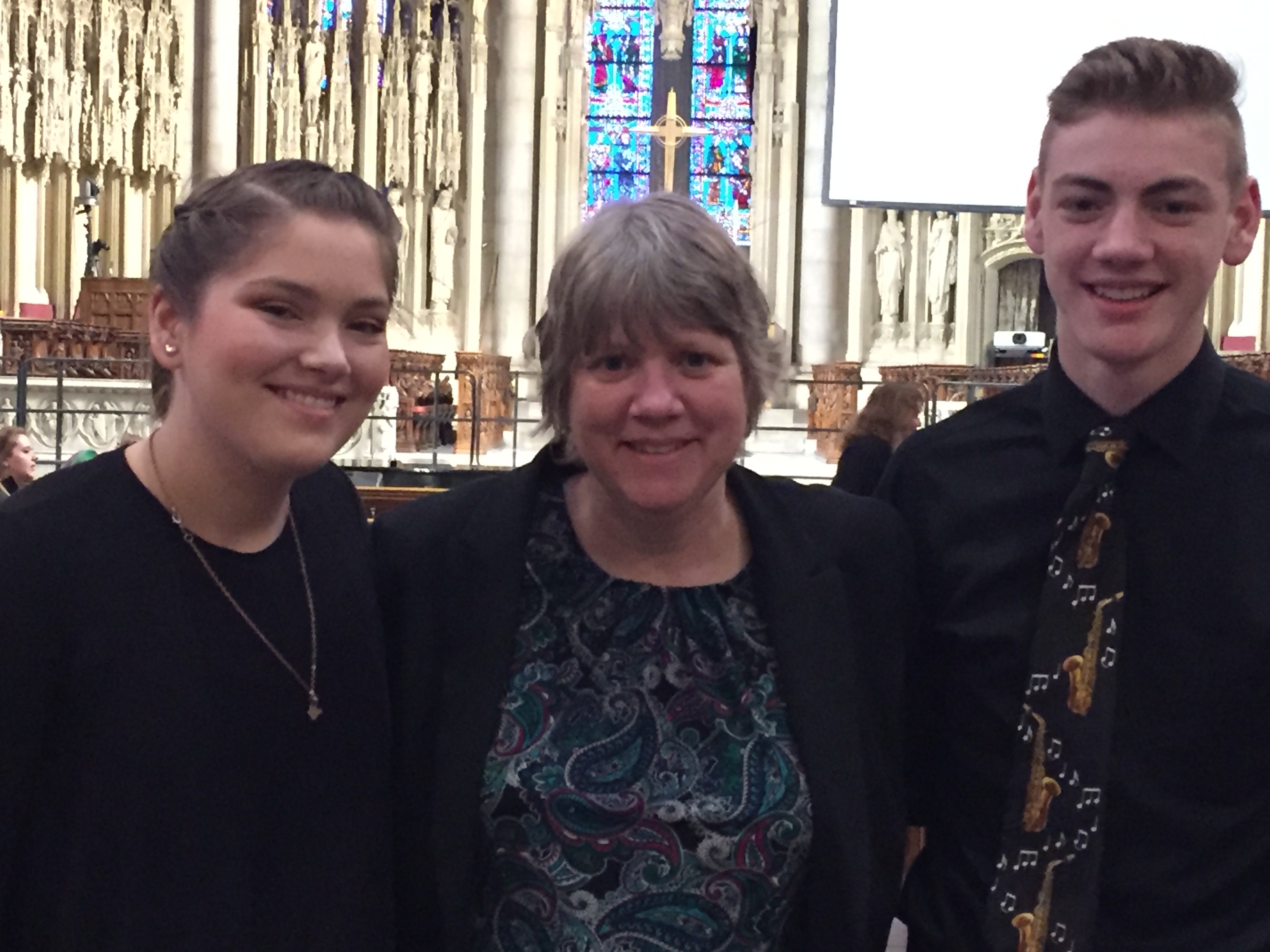
Sue Barre with her son and daughter, juniors at Waterville High School

Waterville music educator Sue Barre words to school staff on the return from New York:

“We had a wonderful few days. First and foremost we would like to share the compliments we received on how polite and well behaved our students are. Kudos to all at WSHS for that”!

DESCRIPTION OF THE EXPERIENCE

Ensembles are adjudicated on a scale that is used nationwide at Heritage Festivals. Student ensembles were from California, Florida, Maryland, Ohio, and Maine. This included 700-800 students.

Gold awards indicates scores of 90-100. The Waterville ensembles that earned Gold ratings:

  • chorus
  • sound check
  • strings
  • band
  • jazz band

Four of the six awards presented for Outstanding Musicianship were presented to Waterville students

  • Alex Lecrone – sound check
  • Soren Nyhus – strings
  • Natalia Fuentes – string
  • Aubrey Fossett – band and jazz band

Each school was asked to nominate a student who not only is a strong musician but also a good school citizen, scholar, and overall person. Selected for this award from the entire festival was Waterville’s Soren Nyhus!

  • Best overall Band Program – Waterville
  • Best overall String Program – Waterville
  • Best overall Instrumental Program – Waterville
  • Adjudicators Award for Concert Band – average of 92 or more on scores – Superior Performance
  • Festival Award for Best Program – Waterville

Congratulations to the Waterville Music educators for their outstanding teaching and preparing students to participate in this event!

  • Sue Barre – Band and department chair
  • Ciara Hargrove – Vocals
  • Graybert Beacham – Strings
h1

Dance Grant Recipient: Prescott School

April 4, 2018

MAC Dance Education Grant – Chrissy Fowler

The Maine Arts Commission (MAC) established the Dance Education grant in 2015 to provide funding for schools to provide a learning opportunity for students in grades PK-12. Four schools, hundreds of learners, and four dance teaching artists from the MAC teaching artist roster have benefited from the funding. This funding is made possible through a dance performance sponsored by several community dance studios and school dance education programs in Maine.

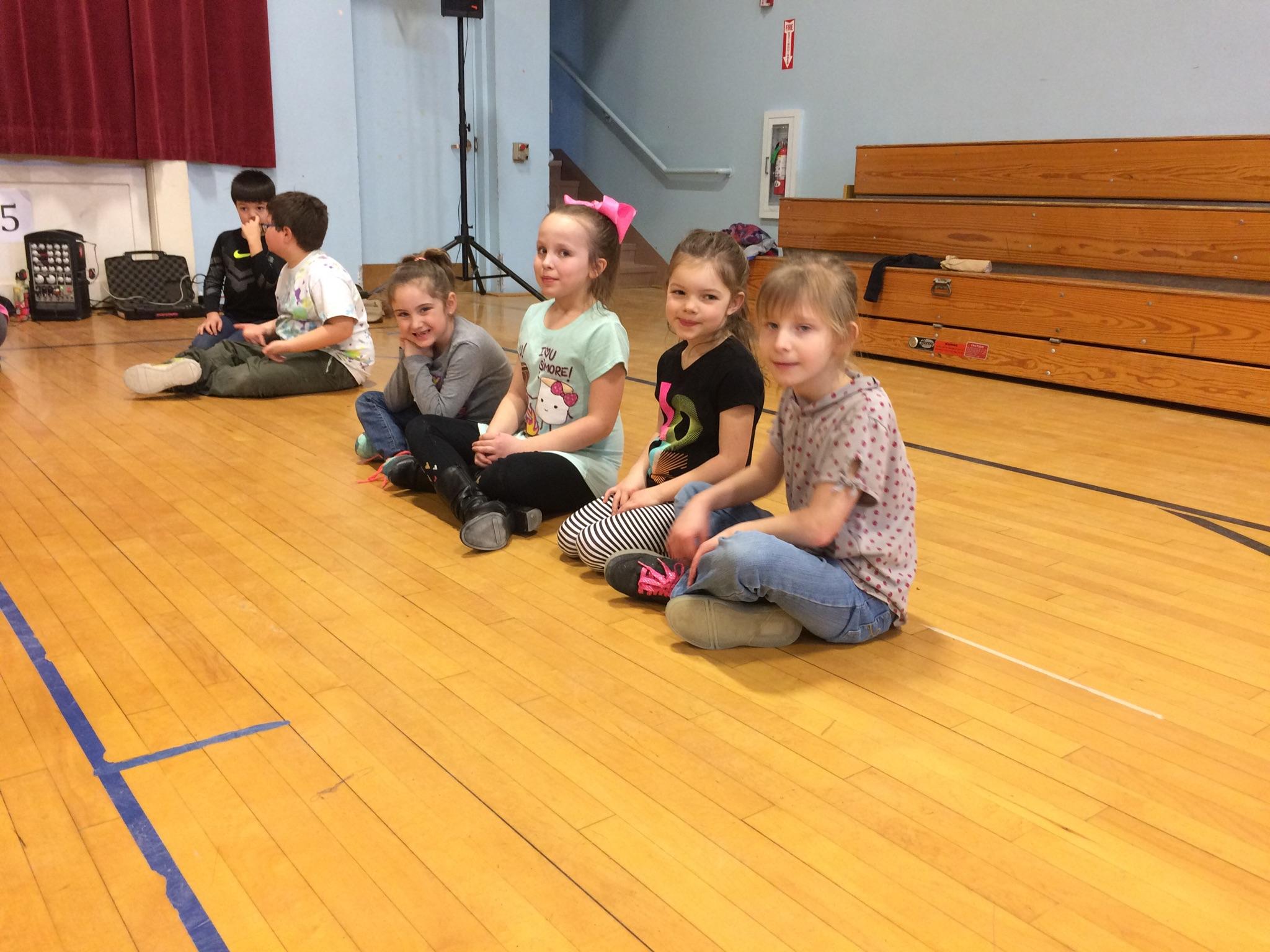
Traditional social dance artist, Chrissy Fowler has been working in Prescott School, Washington this year providing instruction for the school’s K-6 students and staff. This dance residency is made possible from the Dance Education grant.

You can find Chrissy’s teaching artist profile on the Maine Arts Commission roster. The dance education grant is available right now for those interested in obtaining funds for the 2018-19 school year. For more information please go to the blog post called DANCE EDUCATION FUNDING. The deadline is Wednesday, May 2. 

Here’s the story from this year’s grant recipient… Thank you Chrissy for providing it.

Chrissy earned her M.Ed. in 1996 and started calling both community and contra dances in 1999. She has led school residencies for about a decade, and has been an educator for aeons. Leading contra dance residencies lets her combine PK-12 teaching and traditional New England social dance, the dance form which lets her identify as a “dancer” even though she doesn’t feel physically graceful. In this tradition, you work with a partner as well as everyone else in your set. Although there are sometimes roles which can be danced by anyone (e.g. “lady” or “gent”), there is no designated leader or follower. All dancers have equal agency in making the dance work—and we’re all in it together. Chrissy loves that! She’s also on the board of a local non-profit, Belfast Flying Shoes, which has a comprehensive outreach program including support for school dance residencies, such as the one at Prescott School.

RESIDENCY DESCRIPTION
All of my residencies have common goals: everyone participates in the dancing, exhibits pro-social behaviors, and makes connections across grade levels, and the residency culminates with a community dance for students, staff, and families.

At Prescott, we’re trying a few new things. First, my visits are structured in three mini-residencies, each comprised of four weekly visits and a culminating dance. Spreading it out over three seasons (fall, late winter, and late spring) has allowed me to integrate a bit more into the school community.
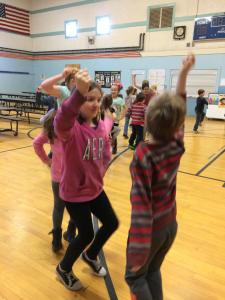
The residency also specifically connects to local history. Charlie Overlock, who fiddled and called for dances for 66 years, was born in Washington. He led dances all over his hometown and nearby. I’ve shared some of Charlie’s story with the students and I’ve taught dances I don’t usually use in schools – such as the foxtrot, which featured prominently in his program for the Washington High School Class of 1921’s graduation dance.

Finally, I was privileged to meet with the staff before the start of school, to find out what they wanted from the residency. Based on their input, I have made a special effort to articulate ways they can use the dances in their own classrooms (e.g. adapting them for movement breaks) and I’m putting together an annotated bibliography of children’s literature related to dance, especially various forms of traditional social dance. (When complete, the bibliography will be available to others via chrissyfowler.com and belfastflyingshoes.org)

GREATEST BENEFITS 
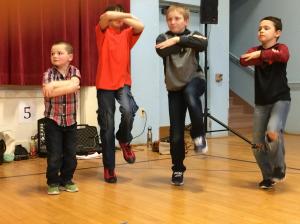
I lead dance residencies in many schools; some have me back every year. I think students, staff, and families value the chance to connect in a fun and active way… with eye contact, broad smiles, cooperation for all ages, and a lot of moving to music. And I think that’s the same at Prescott. We’ve witnessed a lot of joy and delight, and the best part is that contra dancing is something that they can do in their community for the rest of their lives. Maybe even with their own children.

LANGUAGE
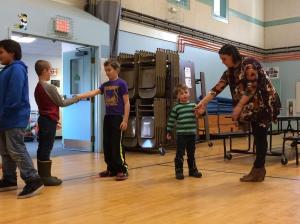
Rather than any specific vocabulary words, I hope the learners take with them the kinesthetic language of moving their bodies through space in particular patterns. Contra dance figures such as “do-si-do” or “allemande left” are very positional, and there is also a tremendously strong left:right, clockwise:counter-clockwise dimension. We know that movement builds cognitive pathways, and contra dance can be a great way to learn, concretely, about equal and opposite forces, patterns, or directionality. The various figures also can support strong proprioceptive and vestibular systems, although that’s certainly not something I’d expect learners to articulate!
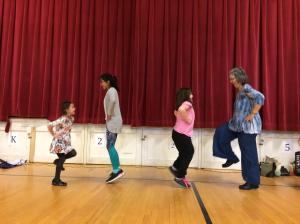
I also hope that they experience some social-emotional learning, such as the thrill of positively connecting with someone by dancing with them. Or doing the hard work of getting through a dance that’s challenging—either because the figures are complex or because you have to muster the inner strength to be kind and respectful to someone who’s not your favorite dance partner.

FUTURE REMEMBRANCE
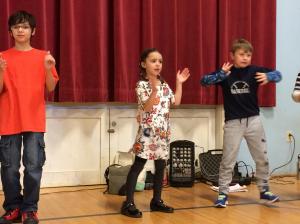
It would be a thrill if anyone remembered the ways that contra dance is part of their own local history in Washington. Beyond that, I hope they internalize that moving – together – to songs and fiddle tunes can be both social and fun for all ages… and at any level of gracefulness!

WHAT PARTICIPANTS ARE SAYING
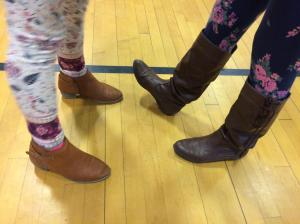
When students were asked for their response to the opportunity to learn with and from Chrissy, 6th graders said:

  • It is fun to learn to social dance.
  • It’s really different than I thought it would be.
  • I think it kind of feels like country but also feels a little like Scottish dancing.

Grade 6 teacher, Jim Freyenhagen:
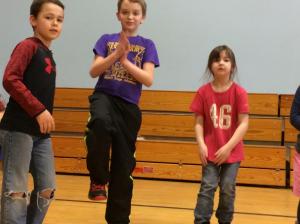
I have been amazed at how quickly the students picked up the rhythm and the steps. The dancing makes them interact (in a positive way) with kids they don’t normally interact with.

Not only are they learning to dance but they are practicing their social skills with their peers and younger students.

Principal, Nancy Stover:
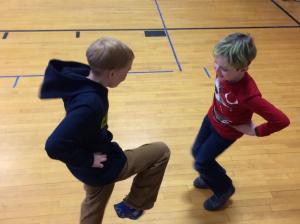
I think one of the highlights of this residency has been watching (through Chrissy’s magical techniques) how the students and staff have been able to abandon their inhibitions and try something out of their comfort zone. It has been amazing to observe students who struggle with peer relationships walk up to someone from another grade and ask if they could be their partner. It’s also heartwarming to see how well the older and younger students work together. They help each other learn the dance steps with patience and kindness, laughing and smiling all the way.
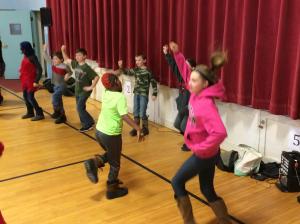
The community dance was a huge success! Parents and community members participated and those that initially observed from the audience, joined in and before the evening had ended, everyone was on the dance floor. The word spread throughout the community and we’ve had many people ask when the next community dance is scheduled. This residency has been one of the most rewarding I’ve experienced. It gives everyone a sense of belonging and inclusion while having fun! 

COMMUNITY MEMBER, HAZEL KOPISHKE, HISTORY
Charles E. Overlock was born in Washington in 1870.  His father Samuel played fiddle for kitchen dances. At the age of 6 or 7 Charles was sneaking his father’s fiddle and learning to play.  He played for his first kitchen dance at the age of 11 and continued playing for dances for 66 years. For the first years, most of the fiddle playing was for dances in homes in the neighborhood that could be  walked to. Later he would travel by horse and buggy, and in 1916 in his first automobile, to play at the many grange halls and dance halls in the area often traveling from 5 to 20 miles. Through the years the Overlock Orchestra included his wife Clara and daughter Josephine playing organ and piano and his son E. Burnell  on drums along with local cornet players. His orchestra usually consisted of 2 or 3 people but did grow to 4, 5 and once 6 members. He played for more than 300 dances at Light’s Pavillion located within sight of his home on Rt 220 between Washington village and So. Liberty.

Charles Overlock was a country fiddler that could not read music but kept people dancing for many, many years.

This information was taken from the book Sixty-Six Years A Country Fiddler, Charles E. Overlock  by E. Burnell Overlock, published 1984.
h1

MALI Teaching Artist Leader Story: Dana Legawiec

April 3, 2018

Teaching Artist – actor, theatre maker

This is one of several blog posts in 2018 that include stories of the Maine Arts Leadership Initiative (MALI) Phase 7 Teacher Leaders and Teaching Artist Leaders. This series includes a set of questions so you can learn a little bit about each leader. CLICK HERE  for more information on MALI. CLICK HERE  for more information on the 93 Teacher Leaders and 8 Teaching Artist Leaders.  CLICK HERE  for Arts education resources. CLICK HERE  for the MALI Resource Bank. Search in the “search archives” box on the bottom right side of this post for past teacher leader stories.  Thank you Dana for sharing your story! You can find Dana’s teaching artist profile on the Maine Arts Commission roster

Dana Wieluns Legawiec (‘Wheel-ins’ ‘Luh-GAHV-yetz’) is an actor, theatre maker and arts educator who specializes in Physical Theatre. Dana teaches Stage Movement with the Department of Theatre at the University of Southern Maine, and works as a teaching artist in local schools. She’s been teaching just about as long as she’s been making theatre, leading physical training for her professional theatre ensemble – so for about 25 years – but she’s been working more consistently in elementary and secondary schools for the last eight years. Every age group brings its specific challenges, discoveries and delights. Dana is currently inspired by the creativity, energy and fearlessness of elementary school kids.

What do you like best about being a teaching artist?

I love dropping into a new community, becoming a sponge to the energy and dynamics in the room, and assessing and meeting the needs of the group and individuals—drawing out the stories they need to tell, the way they want to reimagine themselves and their worlds, the bodies they want to animate.  The promise of transformation has drawn me and kept me working in the theatre, and I strive to create that potential for students.

What do you believe are three keys to ANY successful visual and performing arts education?

Dana in the back coaching high school acting interns for the Camden Shakespeare Festival’s 2015 production of A MIDSUMMER NIGHT’S DREAM.

Hmmm. I’ve returned to school myself (pursuing an M.Ed. in Arts in Education at Harvard Graduate School of Education) to ponder this very question…I’ll have to get back to you when I’ve landed on a definitive answer!  Eric Booth says “80% of what we teach is who we are;” giving kids access to artists who are actively engaged in the arts-making process, who are living an artist’s life first and foremost, has value.  I believe the process IS the product; that the process centers on posing challenging questions rather than finding right answers.  I also believe in the power of collaboration and ensemble, and that arts education should provide opportunities for kids to work together and lead in every possible permutation.  I am a fan of David Perkin’s theory of learning as “playing the whole game:” programs that allow kids to tackle big, ambitious projects with lots of moving parts have enormous potential for realizing ‘the impossible’ and making learning whole. Theatre affords the opportunity to play ‘the whole game’ of human experience.  OK, I guess that’s four things 😊.

Have you found assessment to be helpful in your classes, workshops and residencies, and if so, how?

In my experience and context, I have not yet been exposed to much in the way of formal assessment. But I have experienced the necessity for clear communication between stakeholders to align the values and purposes between those in the room (kids, teachers, teaching artists) and outside the room (administrators, funders, parents, school board, community).

What have been the benefits in becoming involved in the Maine Arts Leadership initiative?

Definitely the people! This can be lonely work. It’s very buoying to meet others who are in the same space. It’s also inspiring to meet teachers who are artists themselves, who’ve found ways to integrate their art and teaching practices within the school setting. MALI provides a ton of resources and a robust network of support.

What are you most proud of as an artist and/or a teaching artist?

Honestly, to still be working in the space as a theatre artist. When we moved to rural Maine eight years ago from Los Angeles, I had the fantasy of rehearsing in a big empty barn, putting on shows in the local town hall, weaving together day-to-day life with creative work based in community.  Well, it isn’t always pretty or easy, but I like to think I’m ‘living the dream’ every day.

Dana at the MALI Summer Institute

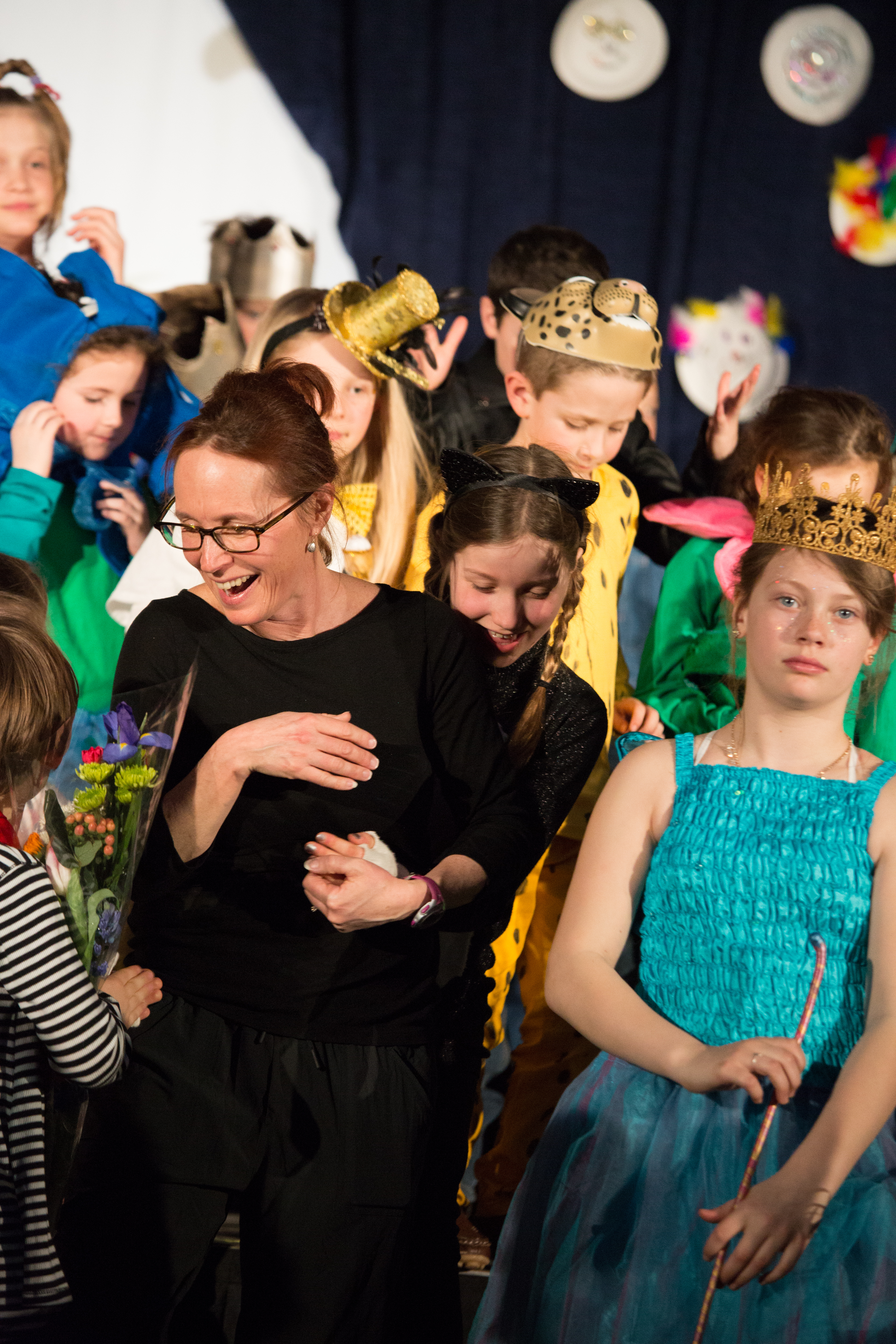
I’m proud of my work toward establishing an extracurricular theatre program at my kids’ elementary school, Bowdoinham Community School, but this has truly been a group labor of love. The school’s principal, Chris Lajoie, created the initiative, bringing together a core group of dedicated parent-volunteers to spearhead the project. This is our third consecutive year putting on a school play. This year it’s a lean-and-mean adaptation (with a cast of 43) of Shakespeare’s rollicking comedy that we’re calling A MIDSUMMER NIGHT’S DANCE PARTY. Public performances are Saturday, April 7th at 3pm and 6pm.  Come one, come all!

I dream of the day when theatre will be fully integrated into the elementary school curriculum.

What gets in the way of doing a better job as a teaching artist?

Midsummer Night with participants

The same constraints that apply to any artistic endeavor (and possibly educational endeavors as well): time, space and energy. I do think confronting these challenges offers its own rewards: We don’t need a big fancy theater, expensive costumes or a ton of time to make great art. By the same token, I impress upon kids that their creative expression, exploration and play has value, is worth my time and energy. I hope that by modeling this behavior, I’m investing in the creative capital of the community. Ultimately, we need a cultural shift where the arts and arts education no longer have to scrape for dollars, minutes and respect. 

What have you accomplished through hard work and determination that might otherwise appear at first glance to be due to “luck” or circumstances?

I’m fond of the expression “you make your own luck.”  I believe in intentionality; I believe that art only happens because one or more passionate, committed, brave and vulnerable people work tirelessly to make it happen. I hew to this message, because I want to challenge and empower young artists to mobilize.

What advice would you give to someone who is thinking about becoming a teaching artist or is just starting out?

Do your practice. Be flexible. Breathe. Teaching, learning, and art-making are two-way streets – prepare to learn at least as much from your students as you will share. And do share! Be generous with your knowledge, be transparent with your experiences, offer insights not usually gleaned from a classroom.

If you were given a $500,000.00 to do with whatever you please, what would it be?

Dana clowning around

So glad you asked, because in my secret, other life, I’m a fantasy grant-maker. I’d create an incubator for arts and wellness initiatives in rural Maine. Maybe I’d open a community arts center. I wouldn’t reinvent the wheel, though, so I might funnel those funds right back into other arts and social service organizations that are doing great work. I’d shop local.

Imagine you are 94 years old. You’re looking back. Do you have any regrets?

No, no regrets.  Nothing but gratitude.

h1

Dorie and Hope Connect

March 28, 2018

Arts integration at its finest

Art Teacher Hope Lord and Music Teacher Dorie Tripp collaborated to create an amazing learning opportunity for their students in the RSU 38, Maranacook area schools.

Hope working on the drum at the MALI summer institute

Hope and Dorie became Maine Arts Leadership Initiative (MALI) Teacher Leaders last spring as part of phase 7. Both are inspirational leaders who shared their integrated work at the MALI winter retreat in March.

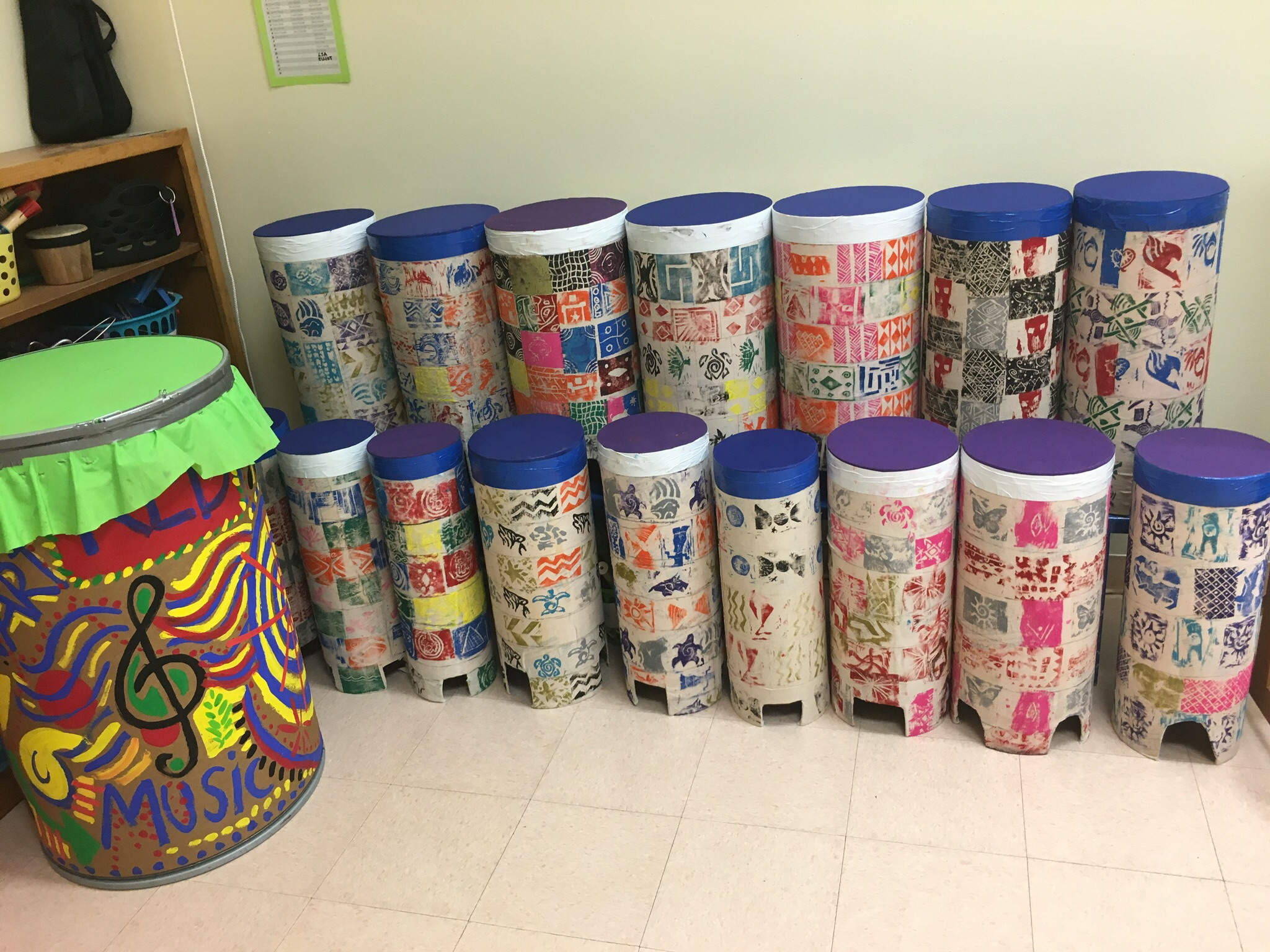
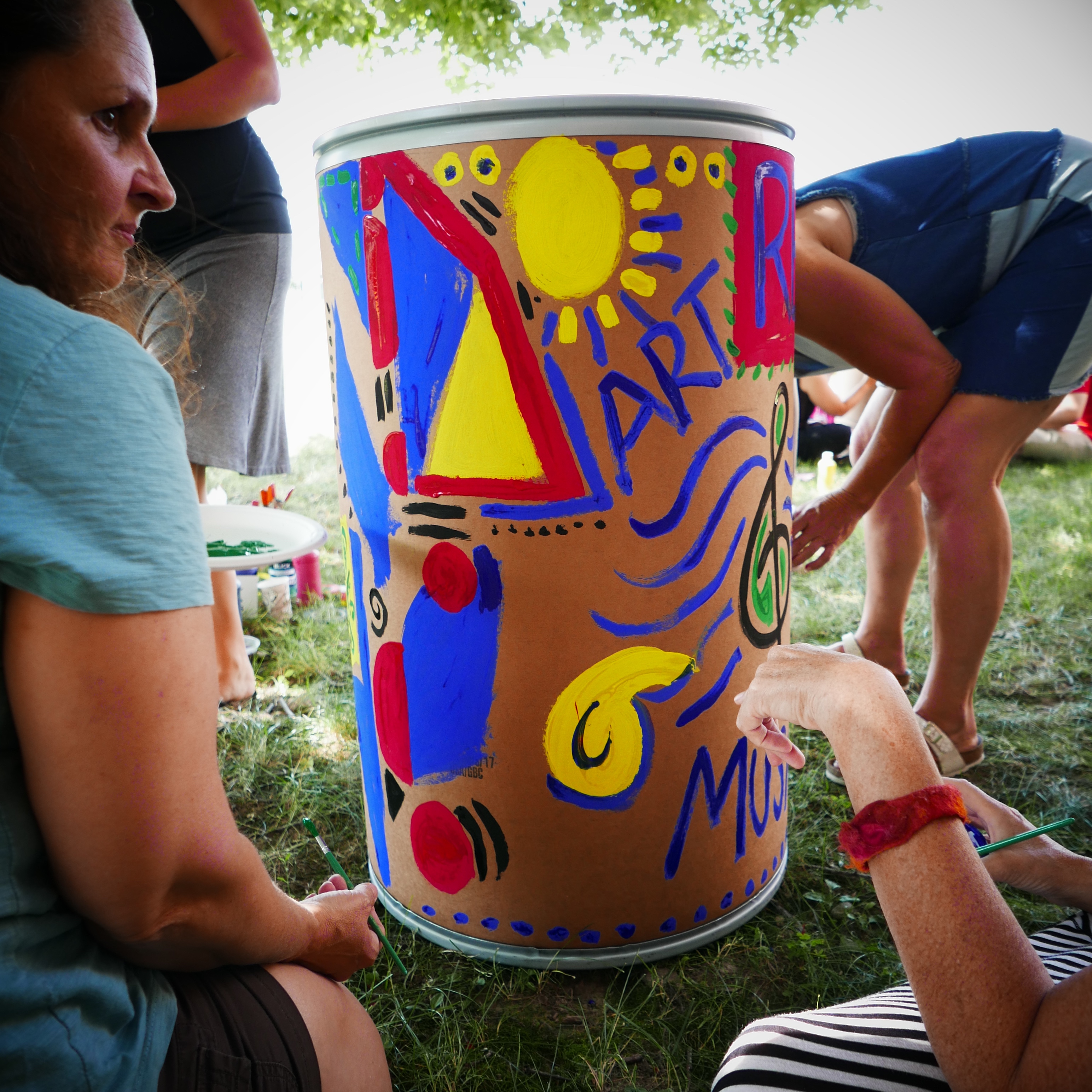
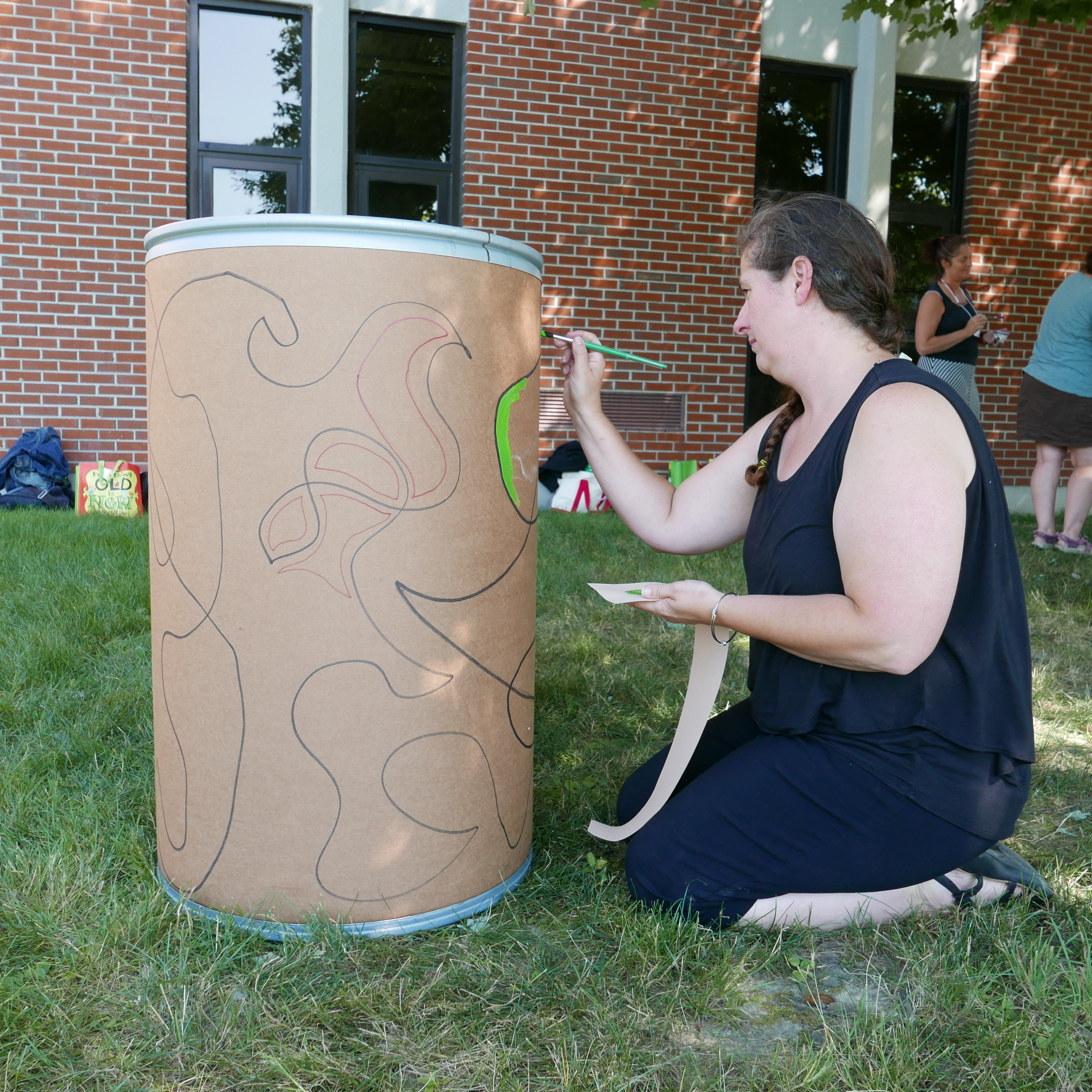
At the MALI summer institute in August 2017 they participated in the drum building session with MALI Design Team member Lindsay Pinchbeck. Out of the learning opportunity they decided to involve the students in cross-curricular and cross grade level learning.

Hope worked with her general art & design students to build drums and create tribal printing stamps. They brought their ideas and stamps to the 5th graders who used the stamps to make designs on 16 drums.

The students experimented with the sounds that the drums make by using different materials for the drum head and by how tight they attached them. They already started to use the drums and are looking forward to the spring concert to perform with them for the community. Both Hope and Dorie are glad to share their ideas in more depth, if you’re interested!