Posts Tagged ‘arts education’

h1

Arts Learning Grant Recipient

July 25, 2018

Leonard Middle School – Old Town

Leonard Middle School art teacher and MALI teacher leader Adele painting student

Adele Drake became a Teacher Leader with the Maine Arts Leadership Initiative during phase 7 (2017). The work she has underway is a great example of approaching curriculum and assessment to meet the needs students in a very authentic way. She addresses their needs of today. Adele’s ongoing collaborative work is helping to prepare them for the future, all the while empowering them for the challenges of their world. Not to mention this is REALLY REALLY COOOOOOL! Read on…

In September 2012, the Leonard Middle School in Old Town art teacher Adele Drake and school counselor, Tracey O’Connell began the Leonard Middle School garden. Adele and Tracey shared a vision that small organic gardens were the optimal way of providing high quality produce to their local community and that this collaborative effort would create a nurturing environment where students would thrive. In the process students would be empowered by creating a space, the garden: a functional work of art which produced food.

Their first consultant for the project was Kate Garland from the University of Maine Cooperative Extension. She agreed to meet and share her considerable expertise. She counseled them to get a soil test and helped them select a suitable location for the garden. The university has been a great resource in many ways. Kate has presented to the school’s garden club and art classes many times. They have had many volunteers from the master gardeners program and visited the university green houses.

After getting approval from the superintendent, they started digging. They soon found that digging was not an option due to debris and clay deposits in the soil. Faced with these challenges, they opted for raised beds. That first fall, they started with one 3’ X 3’ raised bed, a 50 pound bag of compost and several bulbs of garlic which they planted. Their dream of having a school garden had begun. That spring their first crop of garlic emerged from the earth.

COA volunteer Teagan and Susan preparing materials.

Adele wrote her first grant which was a service learning grant to construct an earthloom which would be the centerpiece of our garden. As the Leonard Middle School art teacher Adele has found the garden has provided a way of integrating the arts with the study of other disciplines. They have had so much support for this endeavor that they have built a garden shed, a greenhouse, several raised beds and fencing. Students designed the garden layout, help to create a gardenloom, made mosaic tile stepping stones and have most recently designed functional sculptures which collect water and beautify the garden at the same time. In a community where food insecurity is a reality the garden as a focal point for the curriculum makes sense.

Talk about trust!

This year they worked with Susan Camp to grow gourds into self-portraits. This project was funded by the Maine Arts Commission Arts Learning grant. Susan’s work is a natural fit to the already established goals of Adele Drake’s arts curriculum. The lesson concept: Harvesting Identity / you are what you eat was the focus throughout the process. Susan invited the to be co creators; they made plaster casts from their faces, made molds, and used these molds to grow gourds. The gourds are flourishing in the garden and after harvested in the fall will be used as wall hangings and made into bowls to be used at the culminating event which is a community feast.

Adele reflects: Large-scale food producers shape crops, such as watermelons, in order to make packing and shipping more efficient. Our project subverts this practice, shaping gourds to create portraits that are individual and reflect both the character of the subject and the growing fruit.

I see how engaged these students have been in the process and I know that I am getting them to think differently about food, art and the future.

I hope that students will be involved in growing food for their communities and that they will understand the importance of food and art in bringing communities together.

Trusting enough to take a selfie together – even if he can’t see.

I have learned a lot about formative assessment and the need to collect evidence which is triangulated from different modalities. I plan to evaluate students on their use of media and techniques and on their ability to analyze the process of using these materials and techniques.I will collect this evidence through observations, student reflection and teacher feedback.I will creating opportunities to analyze the process and the product with rubrics. Students will also reflect on where the process takes them through a critical response process which will help them grow as artists.

College of the Atlantic student volunteer in the program, Teagan reflects: Waiting!

I was amazed at how both students and teachers worked together and communicated throughout the process of making casts. I felt that everyone was looking out for each other. I believe that this sense of collaboration is needed for engaging in broader dialogues within food systems. I see this project as a way for people to take action creating new relationships with food and community.

Leonard Middle School Principal David Crandall reflects: Gardens grow communities, not just of plants, but of students. Students that are engaged in the school garden are focused on growing plants and also growing themselves. Being a part of fostering life and working with peers to maintain a productive garden is a motivation that encourages attendance and engagement at our school.

Our Garden Club has an active role in managing our school garden and they continue to work toward more and better resources to support their work. Under the guidance and leadership of Tracey O’Connell and Adele Drake, the students have sprouted into successful young gardeners that grow vegetables, flowers, relationships and communities. The group dreams big and we can’t wait to see what blossoms next!

I’m sure there will be a great celebration when students see their own faces on the gourds this summer. This is a unit that the students will always remember!

Imagine what you might do with funding from the Maine Arts Commission Arts Learning grant?! Grant application deadline will be in March 2019 for the 2019-1920 school year. Watch this blog and the Maine Arts Commission site for more information.

Waiting!

Waiting patiently for the paris-craft layer to dry before taking them off.

Example of the gourd about to grown into the mould.

Example of the gourds in the garden once they’ve come out of the mold.

h1

Thunderstorm

July 23, 2018

Music and theatre

The Angel City Chorale performs “Thunderstorm”. I’ve always loved this since the moment Mike Davis led the 300 participants in a rendition of it at the statewide arts education conference at the Samoset in 2007. Were you there?

Be sure and turn up the volume.

An additional website that you may find interesting!

h1

317 and Casco Bay

July 20, 2018

Songwriting Intensive

The Maine Arts Commission Arts Learning grant funded a collaborative with 317 Main in Yarmouth and Casco Bay High School in Portland during this past school year. The program provided an intensive and inspiring week for students who made incredible music together. For some of the students involved it was their first opportunity to collaborate on writing and performing new songs. The impact was incredible and will go on for years.

This short video provides a glimpse into the work that students and instructors did.

h1

Arts Learning Grant Recipient

July 18, 2018

Union Elementary

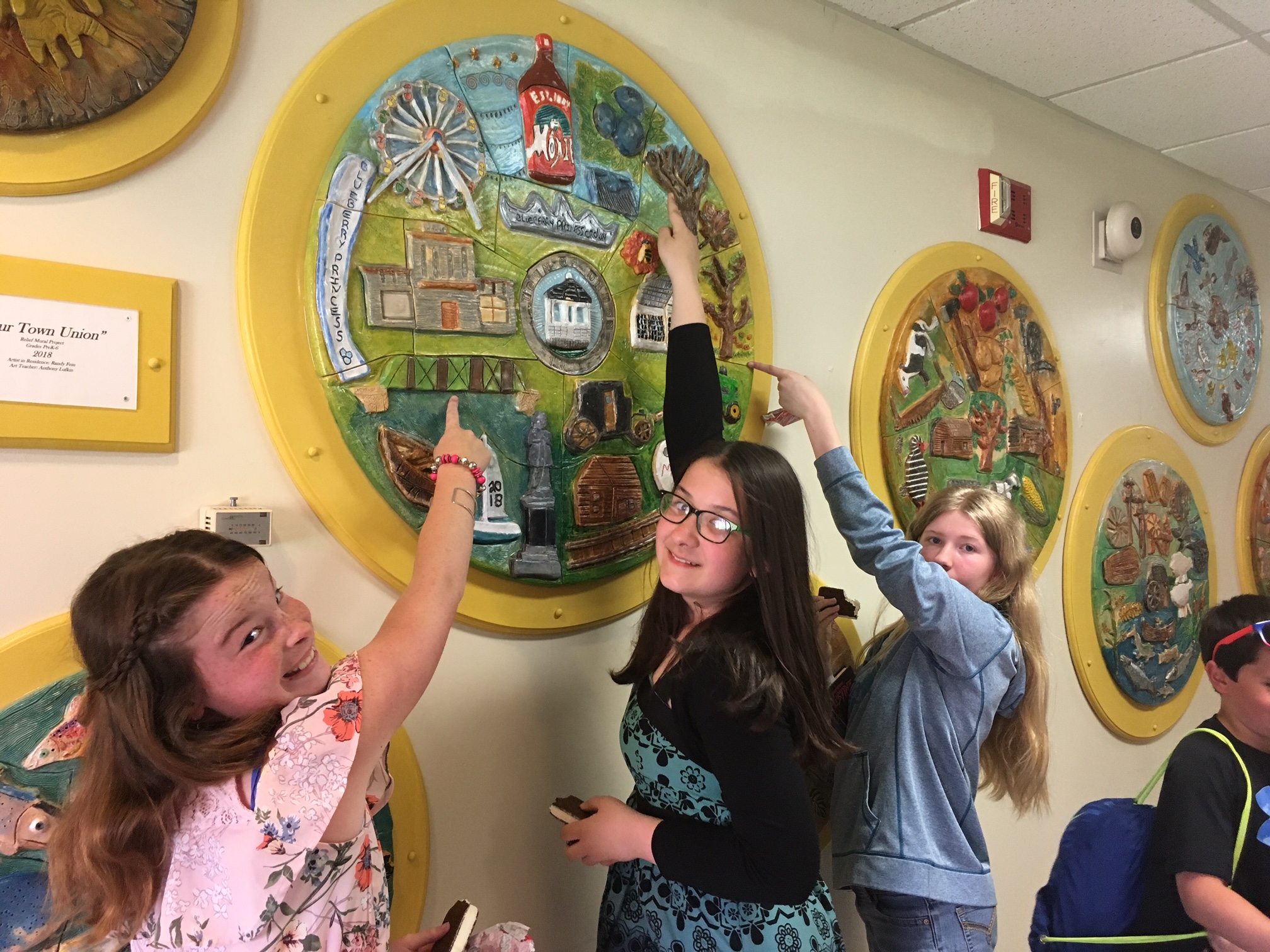
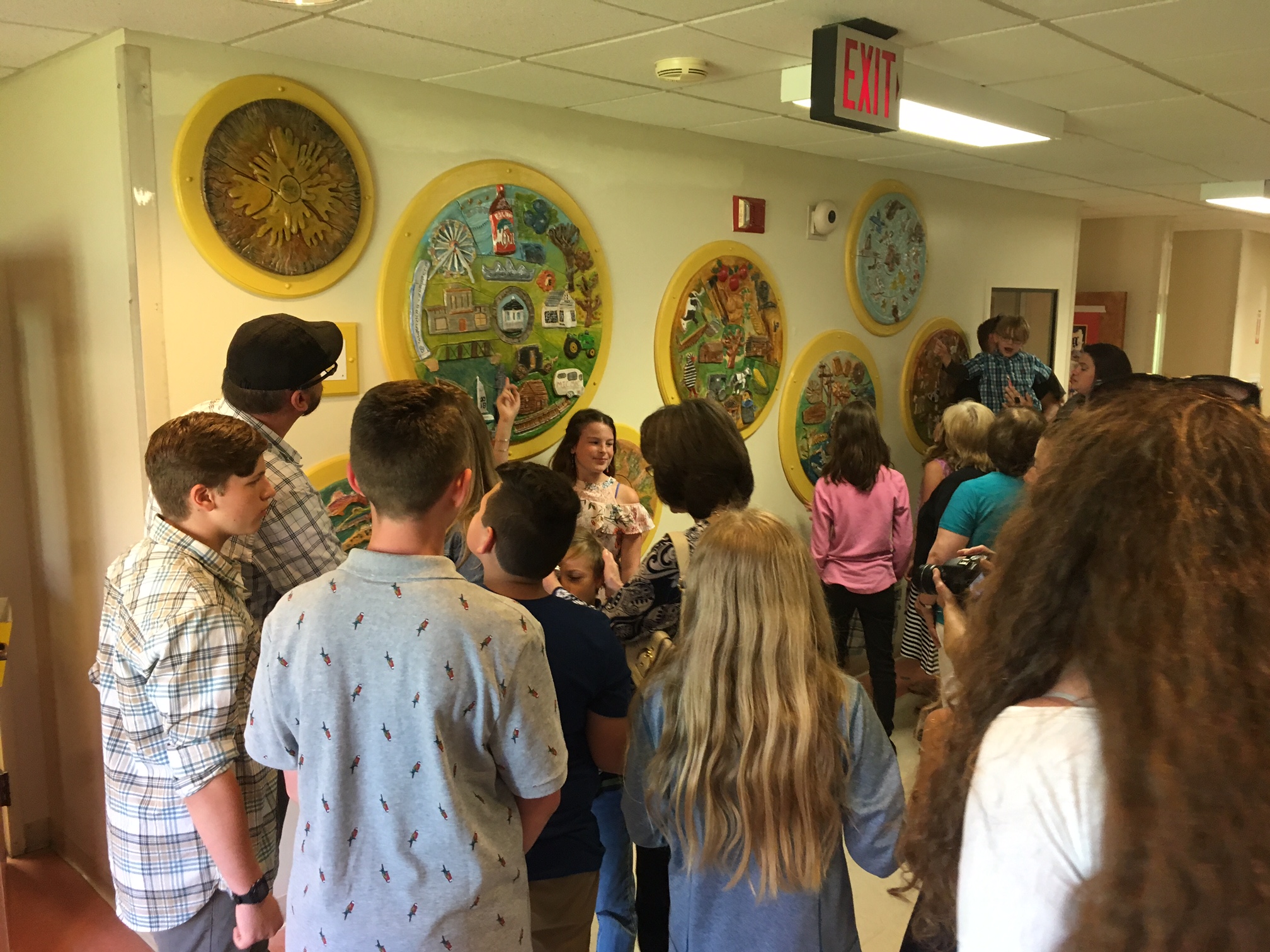
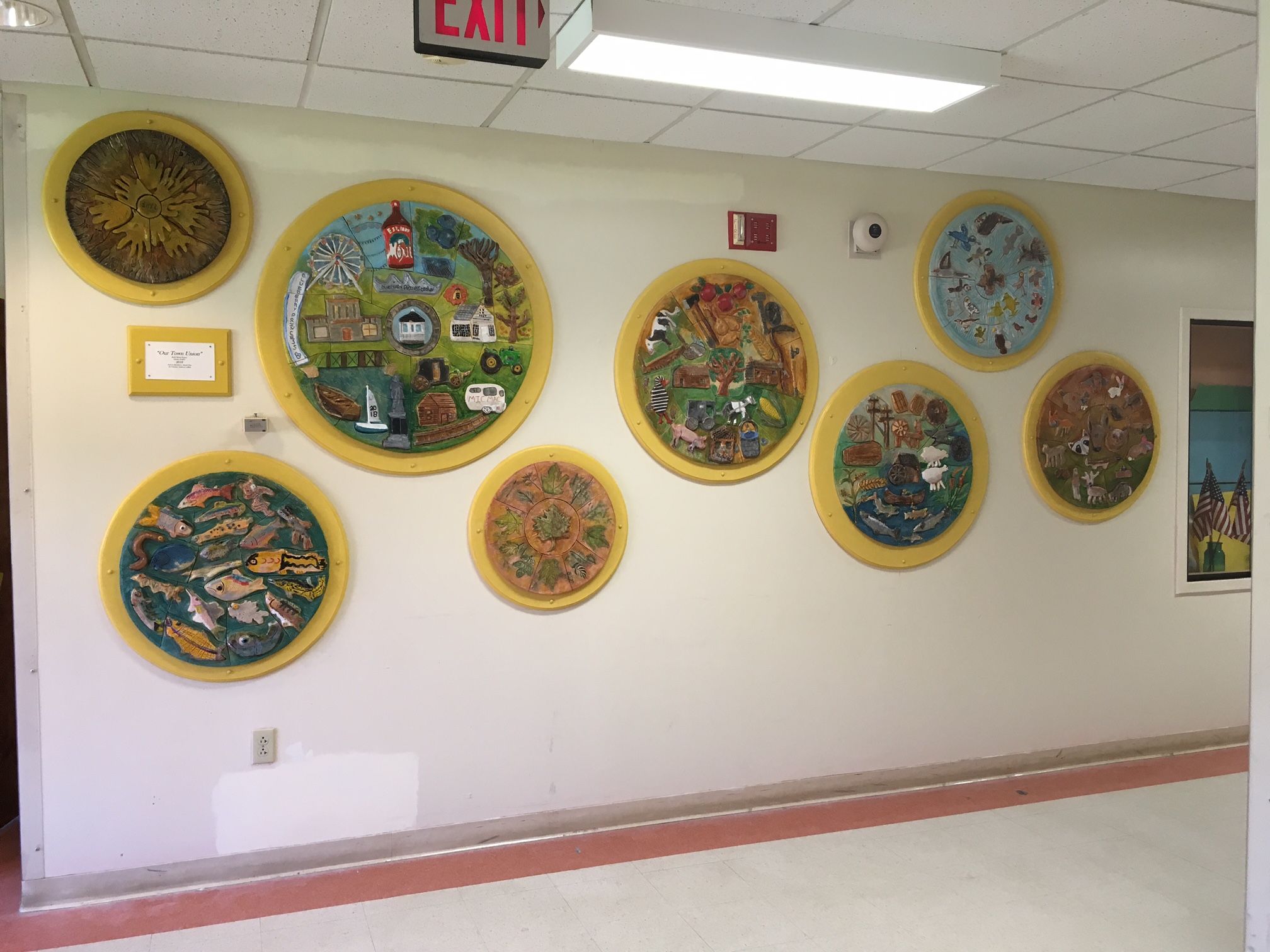
Over a two month period this spring art teacher Anthony Lufkin and teaching artist Randy Fein collaborated to provide an outstanding learning opportunity for all the preK-6  students at Union Elementary School. The residency was funded by an Arts Learning grant funded by the Maine Arts Commission.

Union School has a long history of providing learning opportunities in visual art that go above and beyond the curriculum. When the school was built in 1987 George Mason provided two relief murals as part of the Percent for Art program. He followed that work with a month long residency with middle school students and created a relief tile mural based on Greek Mythology, an interdisciplinary unit. Over the years there have been several residencies with artists and large scale integrated projects that involved all of the elementary students and when the D.R. Gaul Middle School was housed upstairs, grade 7 and 8 students participated.

It was a pleasure to watch this project unfold and develop, the steps involved are too many to count, the commitment from all staff to help with the success, the student learning observed and so much more. It is easy to forget during the day to day details of “school” that these type of large projects hold meaning and learning way beyond the actual project. I suggest you consider taking on something like this, if you haven’t done so in the past.

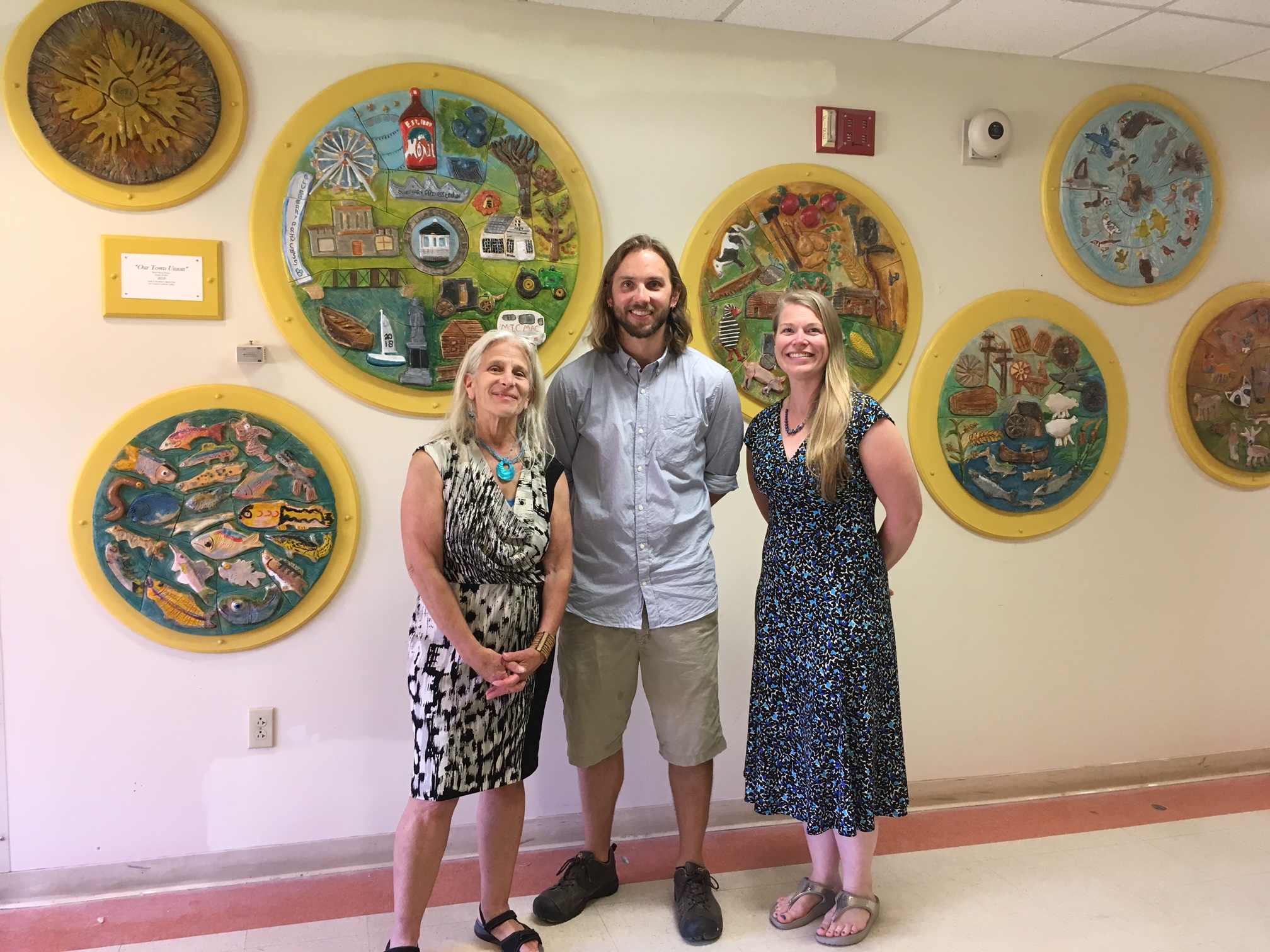
The theme of the ceramic relief mural is “Our Town Union” and had been planned for almost 2 years before its completion in June. The mural celebrates the community of Union, including the history, environment and architecture and how students interact and connect with these components. The completed work will continue to educate future learners, young and older, about their community.

Hopefully you can get a sense of what it involved from the description and the photos embedded in the blog post. Please don’t hesitate to contact me (argy.nestor@maine.gov) about the MAC Arts Learning grants. Or contact teaching artist Randy Fein, her information is on the MAC teaching artist roster. Or contact art teacher Anthony Lufkin, who is the 2018 Knox County Teacher of the Year.

This project was funded by an Arts Learning grant from the Maine Arts Commission ($2,300), the Perloff Foundation Fund ($2,000), and from the Maine Space Grant Consortium ($1,000).

Thank you to Anthony, Randy, and the school principal, Christina Wotton for the information in this blog and for working together with other staff to make this project so successful!

Describe the overall goals/plans that you’ve carried out with this learning opportunity for Union School students.

The overall goals for this project were two-fold. First and foremost, it is an art project with instruction and experience focusing on the medium of clay, but also with emphasis on communication through the medium. Throughout the process students have had to quantify their image development, making sure they are utilizing the medium to make their message clear, whether it’s a specific icon of Union historical significance, or the recognition the unique and identifiable features of native species. As a collaborative installation, it has become an experience that will be solidified in time and place.  

The second component, was to help foster connections with other subject areas and connect students with the local ecosystems and history of the community. Classroom teachers have been very helpful introducing the topics through multiple lenses.  Students have had to research their subjects, and then use that research to educate their image development. Members from the Union Historical Society came in and presented to students in grades 4-6, giving them first-hand information about some of the past events that helped shape the town into what it is today. As students images developed through sketching and then sculpting, their understanding of the subject grew.  They also learned much more about working with clay as a medium, and some of the logistics of putting together an installation like this. 

What do you see/know are the greatest benefits to students in having an artist in residency? What does Randy bring that supports/enhances your curriculum Anthony? 

Having an artist come in through a residency like this does several important things.  First, it is a “new” experience for students, having someone different offering new perspective and something of a “revitalizing” of the art concepts being taught. It also tends to change the structure of instruction giving students a chance for more in depth work and a closer look at some of the components of creating artwork in professional practice. Students have been able to really analyze the subject of their imagery and were committed to making a clear representation. It creates more instructional opportunity as well. With two art instructors working in relatively small groups, students receive more individualized instruction.  

What do you hope that students will remember or will be saying in the near or far off future about the opportunity to learn this way?

We hope that students have created a connection to this project whether through working with Randy, working on something of this scale, or with the subject matter they helped to generate. The emphasis of the project, both to make it happen, and to create the cross-curricular connections have transformed the normal schedule and so that alone may also have had an effect on student perception. Hopefully, students will recall the information learned through this process by being a part of it and by seeing it regularly throughout their elementary experience. With the nature of being an installation piece, it will hopefully remind students of the experience, give them a sense of pride in the work they were able to accomplish, and help scaffold future learning and understanding about art and the connections to community and environment. I think that students will become more aware of the opportunity this project has been as we get back into a more routine schedule again. I think that they will begin to recognize the hard work and time it takes to create something like this. I anticipate them to say in the next few years, “I did that,…its represents…”.   

Hopefully, they will appreciate the opportunities they have had to work on something for extended periods of time with direct instruction from both Randy and myself.  Hopefully, they will appreciate and help advocate for these opportunities in the future. 

Stories

There were many interesting conversations early on with students especially around the topics of community and local development. Many students related to the community components based on where they live and how the natural and man-made resources have structured community as it is now.  hey were able to identify features in the landscape or structures and were able to contribute to the conversation based on their experiences. Some were able to describe the lasting imprints on the landscape from Native Americans, the railroad, and several of the many mills. One student described the arrow heads his family had found along the St. George River. Another talked about the dam at Morgan’s Mills. Many younger students also connected with their organisms whether from personal experience or from experiences by family members. I was surprised at how many had seen a bear! They definitely like to elaborate but there are clearly past events that could be the basis for some good folk lore.

ARTICLE from Village Soup about the residency.


Randy, Anthony, and Christina

h1

Blues Festival

July 14, 2018

Rockland

If you love the Blues I’m sure you’re aware that the annual North Atlantic Blues Festival is happening this weekend at the public landing in Rockland, July 14 and 15. Amazing performers will be there to delight the audiences and all of Rockland will be providing music and food offerings in the spirit of the festival. Performers include: Kat Riggins, Vanessa Collier, Bobby Rush, Tab Benoit, Lil Ed and the Blue Emperors, Wee Willie Walker and the Anthony Paule Soul Orchestra, Monster Mike Welch and Mike Ledbetter Connection, Lurrie Bell, Ilana Katz Katz, Slam Allen, and Mud Morganfield.

Opening the festival are students from the Midcoast Music Academy. After a week of music camp where they’ve had the chance to broaden their music abilities they’ll open on both days on the main stage.

They were featured on WABI 5 television which will give you an idea of the amazing opportunity that they’ve had this week. Maine Arts Leadership Initiative Teaching Artist Leader, Tom Luther, is seen in the footage working with students. His bright smile says it all! And, the students say it best! CHECK OUT the LINK.

h1

Downtown Aurora Visual Arts

July 9, 2018

Amazing work

The Americans for the Arts Education Council members visited and took a walking tour led by Karina Banuelos in the neighborhood of the Downtown Aurora Visual Arts (DAVA). Twenty five years ago an artist from Aurora, CO started a project with young kids in the community creating a mosaic. After two years of work the mosaic was installed on the side of a building in the heart of Aurora. The students asked if they could continue visiting the artists’ studio and the Downtown Aurora Visual Arts was born. From day one they’ve been evaluating this creative youth development program and the data has been aligned with a bump in the test scores in the nearby schools. Consequently the program is supported by the school district. The positive impact has been continuous on young people and the community. They are doing cutting edge work in multiple programs from drawing classes to an engaging job training program.

Aurora is only a 25 minute car ride from Denver and the arts community successfully meets the needs of young people and families. Working with teaching artists and a dedicated staff it is a fine example of not just surviving but thriving. The Americans for the Arts Education Council members visited and took a walking tour in the neighborhood.

The art center was alive with students from young elementary through high school. Creative Youth Development at it’s best. We saw an amazing exhibit that was created in connection with many science topics; nutrition, the body system, parasites, bacteria, microbioms.

Their programs build upon each other starting with young children, ages 2-6, and their parents two days a week. The after school programs services 100 kids a week and the program continues throughout the summer with even more learners. The clay program had 30 students of all ages – learning from and with each other. This summer they will mix their own glazes so students can be introduced to chemistry.

The Job Training program had students solving a murder mystery while creating a plaster skeleton learning about tissues, bones, and the anatomy of a human. They combined science and art to help solve the identity of the person. In addition they were learning about how to take care of their own body.

For the past nine years they’ve had a film program which partners with the Colorado Film School located close by.  They’ve had students receive recognition at the state and national Scholastic awards program for PSA films that they’ve created.

Their creative youth development program continues to move young people forward in the experiential learning environment filled with student choice and voice. Originally their goal was to get kids to and through high school. Their success has raised the bar and now they are getting into college and some return to give back by working at the art center.

Info below is from a handout provided to us:

Downtown Aurora Visual Arts (DAVA) is a nonprofit organization dedicated to strengthening the Aurora community through the arts, with a primary focus on youth engagement. By providing a safe learning environment for youth ages three to 17, DAVA programs reinforce 21st century life skills, build self-esteem, and connect youth to the community. DAVA represents a unique combination of arts education and youth development, demonstrating how quality arts programming during after- school hours forms a critical framework for long-term youth success. DAVA reinforces the message that youth are an integral part of community cultural development and in 2016 received the National Arts and Humanities Youth Programs Award (NAHYP) for providing a solution for urban communities through its model of creative youth development, combining excellence in the arts with positive youth development. DAVA “taps the untapped potential” in young people by providing access tocreative programming year-round.

In addition, DAVA takes a lead role in organizing the Colorado Alliance for Creative Youth Development (http://cocreativeyouthalliance.org/). We regularly meet with 10 community-based arts organizations to share best practices and evaluation methodology, as well as advocate for creative youth development opportunities across the state. Members have benefitted from the use of a common survey—to track youth outcomes both in terms of arts skills and youth development, use data for improvement of programs, monitor feedback from youth, share results, and advocate for dedicated support for young people who benefit from experiential learning with an emphasis on equity and access.

h1

Traveling for Learning

June 22, 2018

Enhancing learning and teaching

Sydney Chaffee, the 2017 National Teacher of the Year, went to the capital city of Addis Ababa, Ethiopia last year and provided workshops on theater education, interdisciplinary learning, and student-centered learning. Students, teachers, and members of the general public came to the workshops. She keeps a personal blog and shared her experiences. Instead of being the “expert” she spent time listening and began to consider ways to collaborate.

Photo by Lindsay Pinchbeck

In 2016 I traveled to Malawi with Lindsay Pinchbeck, founder and director of Sweet Tree Arts Center and Sweetland School in Hope, Me. We provided a 13 workshop for teachers in arts integration. You can read about our experience at the Go! Malawi site. Go! Malawi is a program that one of my former students established. Their mission is to collaborate with rural Malawian communities to develop sustainable programs in education, health care, commerce, and conservation. If you’re interested in traveling to Malawi in the future please email me at argy.nestor@maine.gov to learn more.

Both of these are just two examples of traveling – learning and teaching. This summer consider taking time to research ideas on ways to learn other than in a classroom. There are plenty of opportunities just waiting for you!

h1

Happy Retirement!

June 21, 2018

Maine is fortunate to have such marvelous educators!

We know that what a teacher offers can have an enormous impact on student development day to day AND over their lifetime. As educators retire at the close of another school year, 2017-18, I know that you join me in THANKING them for their years of service and dedication to students across the state.

I certainly appreciate your commitment and I wish each of you a healthy retirement and many, many years of laughter and love!

The following have contributed a combined 483+ years to teaching visual or performing arts education!

  • VICKI BOVE, Gorham Middle School, Visual Arts, 40 years
  • FLO ESINGER, SAD l5, Visual Arts, ? years
  • ALLEN GRAFFAM, Mt. Ararat High School, Music, 42 years
  • KATIE HALL, Falmouth Elementary School, Visual Arts, 24 years
  • PHIL HAMMET, Oxford Hills Comprehensive High School, Visual Arts, 16 years
  • JULIE KLEHN, Waterboro Elementary School, Visual Arts, 31 years
  • STEPHANIE LEONARD, Fairmount School, Bangor, Visual Arts, 25 years
  • ANNE MACEACHERN, Sanford Junior High School, Visual Arts, 40 years
  • JENNI NULL, Songo Locks Elementary School, Music, 40 years
  • SAM MOORE-YOUNG, Carrie Ricker School, Litchfield, Music, 32 years
  • BEVERLY PACHECO, South School, Rockland, Music, 36 years
  • CANDACE PARKER, Lee Academy, Theatre Arts, 22 years
  • MARYELLEN SCHAPER, Bonny Eagle Middle School, Dance and PE, 42 years
  • CAROL SHUTT, Mount Desert Island Elementary School, Visual Arts, 22 years
  • KATHI SUSI, Pittston Consolidated School, Gardiner, Visual Arts, 28 years
  • THEO VAN DEVENTER, Mt. View Middle School, Thorndike, Music, 43 years
  • Flo Eslinger, who is retiring from elementary visual art after serving SAD

A wonderful note from Ann MacEachern on her retirement from Sanford Junior High School after 40 years:

“I’ll miss the chance to interact with kids as they discover talents they didn’t know they had. The outliers, the experimenters and the endearingly quirky denizens of the art room have made most days a joy. 

Retirement will give me a chance to reorder my priorities: more family time (I have 5 grandchildren), my OWN art projects need attention, traveling adventures, live music venues, environmental concerns, sorting years of accumulation to make space for new blessings… the list goes on. 

To ARTS teachers everywhere: Keep pushing for expansion ARTS time in school schedules, physical space in school buildings and fewer students per art teacher. The world needs creative problem solving now more than ever!”

h1

MALI Teacher Leader Story: Will Stecher

June 19, 2018

Music Educator

This is the LAST of several blog posts in 2018 that include stories of the Maine Arts Leadership Initiative (MALI) Phase 7 Teacher Leaders and Teaching Artist Leaders. This series includes a set of questions so you can learn a little bit about each leader. CLICK HERE  for more information on MALI. CLICK HERE  for more information on the 93 Teacher Leaders and 8 Teaching Artist Leaders. CLICK HERE  for Arts education resources. CLICK HERE  for the MALI Resource Bank. Search in the “search archives” box on the bottom right side of this post for past teacher leader stories. Thank you Will for sharing your story!

Will Stecher is a music teacher working with students in grades PreK through grade 4; including beginning band in RSU19 – Newport and Corinna Schools. Will is I finishing up his 4th year in his current position and his 7th year of teaching overall. He is responsible for around 460 students between the two schools, teaching general music and 4th grade band.

What do you like best about being a music educator?
The moments when the kids begin to see and feel why we do this thing called art, when they know the song so well that they aren’t even thinking about who is watching them or whether it’s a cool thing to do. The moments when they realize that making music in any form is fun and they want to do it more. The moment when a kid who has been working hard on a song finally breaks through and plays it just right. When kids come into a performance feeling good and regardless of the how that performance went, they are feeling good about what they have done.
What do you believe are three keys to ANY successful visual and performing arts education?
Literacy of your discipline is extremely important, being able to talk about what you are doing when you perform, or discuss the techniques of playing an instrument or what style you are creating within is a key to arts education. Great instruction is also a key, so that kids have a good foundation in the discipline no matter where they go in their schooling or in life. Passion from the instructors the kids have in the arts is a third key. We wouldn’t be in this line of work if we didn’t love our material and transmuting our love so that kids can make it something they love or like to be a part of, is extremely important too.
How have you found assessment to be helpful to you in your classroom?Assessment has allowed me to see where students are doing well and where they need assistance. It helps students to see these things too, so that ideally, they can become stewards of their own improvement. As artists, we live a life of assessment. always looking at the way things are becoming or happening right in front of us. Ideally, we are passing that on to our students.
What have been the benefits in becoming involved in the Maine Arts Leadership initiative?
The people I have met and connected/reconnected with in my involvement with MALI have been the biggest benefit. It can make such a difference in the life of a teacher to know that all you have to do is reach out and someone will answer and help in a way that is pertinent and useful. MALI has done that for me.
What are you most proud of in your career?
I am most proud of the students who continue on in the arts due to the experiences they have in my classroom. Some of these are students who decided long ago they were going to be musical and those kids are great. Just as sweet though, are the kids who haven’t made that decision yet and still participate fully and completely and begin to decide that they want to sing in the middle school chorus or audition for show chorus or keep on playing that instrument because they want to, not because someone is making them.
What gets in the way of being a better teacher or doing a better job as a teacher?
Paperwork and time. Paperwork essentially creates a second job for the teacher when the time could very well be spent on improving and creating meaningful instruction. And I always wish that I had time for those kids just starting out with band instruments to really secure fundamentals before they move on.
What have you accomplished through hard work and determination that might otherwise appear at first glance to be due to “luck” or circumstances?
I have frequently been told by supervising teachers, administrators and others that I seem to get along with students at all levels, that I know how to relate to them. I feel that this is something that I have not come to just by chance, though circumstances of my life have certainly contributed to it. I think it has come about through experiencing all types of people and learning about all sorts of things, even those that don’t seem to have a connection to our profession.
Look into your crystal ball: what advice would you give to teachers?
Remember to make time for the things that remind you why you teach. Join a band, sing with a group, draw or paint or create or whatever you do. Don’t lose touch with your art because it can help ground you even when you seem to be floating off.
If you were given a $500,000.00 to do with whatever you please, what would it be?
Professionally, I think the $500,000 would have to go at least partially toward teaching materials and making sure that I and the other teachers in my area had everything wanted or needed to teach the kids I have to the best of my ability. Orff instruments, band instruments, the whole nine yards. SmartMusic for the band kids. A piano lab at the high school. Funding to improve the coming auditorium space in our district
On a personal level, that is a big number and I don’t rightly know what I would do.
Imagine you are 94 years old. You’re looking back. Do you have any regrets? At 94, I don’t imagine I’ll have too many regrets. I think that even though I could have chosen so many other paths in my life, the one I have continually chosen is the one that I was meant to be on.
h1

In Today’s News

June 18, 2018

Union Elementary School

For the past several weeks artist Randy Fein has been working side by side with art educator Anthony Lufkin and the students at Union Elementary School to create a community themed clay mural. The project was partially funded by the Maine Arts Commission. Check out the article and photographs from the Village Soup at THIS LINK.