Posts Tagged ‘arts education’

h1

Arts Accessibility Webinar

May 13, 2019

Shawna Barnes

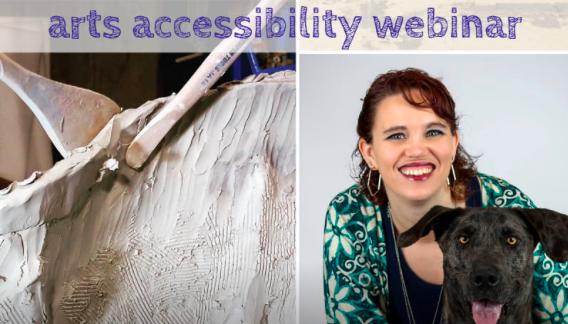
On Sunday, May 26, 7:30 – 8:30 p.m. Shawna Barnes will be hosting a webinar on Arts Accessibility. Shawna is a Teaching Artist Leader with the Maine Arts Leadership Initiative.

Shawna N.M. Barnes is a disabled artist and arts accessibility educator. One of her passions is helping educators, camp counselors, and relatives of those living with a disability, find economic solutions to arts access barriers.

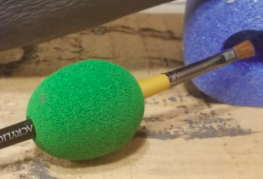
In this short webinar, Shawna will introduce several inexpensive and immediate modifications to tools that can be done to help your student or loved one be able to create as independently as possible. Adaptive tools can be expensive. So a big focus for Shawna is finding those creative adaptive solutions by using products you may already have at home, in your studio, or in the classroom.

Do you have a specific tool, disability, or pain point you’d like covered? Ask your question, or describe your situation in this event, and Shawna will be picking 2-3 to use as examples during this webinar.

This introductory webinar is FREE and scheduled to last 30 minutes. If there is higher interaction and engagement, time may be extended an additional 30 minutes. Material will be presented via a live Facebook video on her sculpting page – Shawna N.M. Barnes – Beyond the Clay Art Studio.

To learn more contact Shawna at info@shawnabarnes.com.

h1

Sustainability Festival

May 11, 2019

Sweet Tree Arts

h1

Teaching Artist Professional Development Workshop

April 23, 2019

Space limited

The Arts Commission is providing a one-day professional development workshop for Maine Teaching Artists.
Monday 17 June 2019
8:45 a.m. – 3:00 p.m.
Only 20 spots available – REGISTER TODAY
Viles Mansion/Governor Samuel Cony House, 71 Stone Street, Augusta.
$25.00. Registration is required.
Purpose
The workshop is focused on the role and benefits of a teaching artist. We will address how to structure and market a residency as well as tips for communicating and collaborating teachers,  administrators, and community arts representatives. The workshop will include resources and techniques on applying your expertise as an artist to the structure of your work as a teaching artist including communication tips, connecting standards and assessments in your lessons, promotional information, funding opportunities, messaging and much more.
Outcomes
  • Information on applying your expertise as an artist to the structuring of your lessons and residencies.
  • Hands-on experience in relating the learning standards and assessments to your work.
  • Participation in sessions that are planned to fit your specific needs as a teaching artist.
  • Promoting yourself and your work as a teaching artist
Workshop Presenters
  • Tom Luther – Teaching Artist, Musician, Maine Arts Leadership Initiative Teaching Artist Leader
  • Lindsay Pinchbeck – Arts Educator, Founder and Director Sweetland School, Hope
  • Kate Smith – Elementary music educator, Central School, South Berwick
Please note: To be eligible to apply for the Maine Arts Commission Teaching Artist Roster teaching artists must attend the one-day workshop.
h1

Tides Institute

April 15, 2019

Visual Thinking Strategies workshop

The Tides Institute & Museum of Art (TIMA) in Eastport, Maine is delighted to announce a free professional development opportunity for visual art teachers and other educators on Saturday, April 27 from 9 am to 3 p.m. Sara Egan, School and Youth Programs Manager from the Isabella Stewart Gardner Museum in Boston, will be leading the workshop at the Tides Institute & Museum of Art in Eastport.

Thanks to generous support from three private foundations, this workshop is free of charge to participating educators. Contact hours will be provided. The workshop will cover the basics of Visual Thinking Strategies (VTS), which will be an introduction or quick review for those familiar with the educational approach.

Siri Beckman, “Machias Cod”, wood engraving, 2010. From the collection of the Tides Institute & Museum of Art, Eastport.

Teachers will discuss and share ideas about ways to use the recently-published TIMA poster set in classroom settings, including using VTS. Teachers will also learn about ways to partner with the Tides Institute to extend classroom studies on the region’s art and culture, both historical and contemporary, and support student centered learning. Teachers will also learn about outreach opportunities available through the StudioWorks Artist-in-Residence Program.

Lunch will be provided, and limited lodging is available for the night before the workshop for those traveling more than 60 miles (one-way) to Eastport. We have workshop space to accommodate up to 25 educators from Washington County for this workshop, but will consider registrations from other counties in Maine and New Brunswick if space allows.

To register, or for more information, please contact Kristin McKinlay, Director of Exhibitions & Education, kmckinlay@tidesinstitute.org, or call (207) 853-4047.

h1

LEAPS

April 12, 2019

Art program in schools and community

Jonathan Frost speaking with the 5th graders at his gallery. Their portraits are displayed on the left and bark drawings behind him.

Several years ago Nancy Harris Frohlich created LEAPS of IMAGINATION where artists work with students in connecting the environment and history to making art. Much of the work is done through literacy. Recently I visited the Jonathan Frost Gallery in Rockland during a celebration of art created by 5th graders from South School in Rockland.

The students worked with teaching artist Susan Bebee and after studying bark created drawings. The drawings were amazing and it was clear that the students will not look at a piece of bark the same way again. I remember when I learned to make rock baskets (forming a basket around a rock, whatever size), I never look at rocks the same way again. Always wondering what shape the basket might be if I used it for a form.

The bark drawings were followed by portraits created with a combination of prints and drawings. Students were invited to speak about their artwork and I so enjoyed how articulate they were – they learned so much and were so proud. Thank you Nancy and those who work with LEAPS to provide such rich learning environments for learning in visual arts.

Below are some student responses.

Tell us Why Art is Important for Kids?

  • Because if you have a job, you need to have IMAGINATION.
  • Art helps kids feel INSPIRED.
  • Art is a great way for kids to EXPRESS THEMSELVES.
  • Art is FUN!
  • Art lets kids show their FEELINGS.
  • Art helps kids be CREATIVE.
  • Art makes it possible for kids to be ARTISTIC.
  • Art is so important and helps kids CONNECT to NATURE in so many ways.
  • Kids can get BETTER at drawing.
  • Art helps kids TAKE their MINDS off the REAL WORLD.
h1

Maranacook Middle School

April 11, 2019

Dance Education grant

During the 2018-19 two schools in two different districts were the recipients of the Dance Education grant awarded by the Maine Arts Commission (MAC). Freeport High School and Maranacook Middle School created amazing units that impacted hundreds of students in Grades K-12. Freeport High School was highlighted in yesterday’s blog post with a description of the dance education opportunity that was provided during this school year.

G/T teacher Pat Godin, Teaching Artist Nancy Salmon, Visual Art Teacher Hope Lord

This blog post describes the dance education program that took place at Maranacook Middle School this school year. It is wonderful to see what occurred when teaching artist Nancy Salmon, art educator Hope Lord, and gifted and talented teacher Pat Godin collaborated! This is a great example of learning in STEAM (Science, Technology, Engineering, Art, Math).

Thank you to Hope and Pat for providing the plethora of information for this post – the story and resources!

DESCRIPTION FROM HOPE

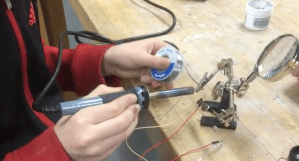
My original idea was to have students create masks and then have them add lights with Little Bits electronics. However, after collaborating with Pat, we decided to teach the students about light circuits and how to soldier their own circuits. This allowed us to integrate science with the electricity and engineering with the design process. For math we introduced proportions as we discuss the features of the face and how to construct the masks and giving students the choice to increase the proportions of the face to make their mask more visible to the audience. We also provided students a variety of mask making materials, including a new medium called Thibra.  This is a thermoplastic sculptable material that costume designers and special affect artists use in designing masks and costumes. The students used the heat gun to soften the material and then molded it around sculptural pieces that were added to their masks.  
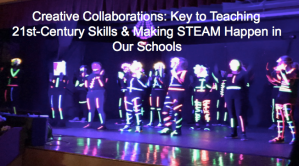
Students performing at the Arts Night Celebration

We showed the students examples of dance groups who performed in the dark with lights and the students wanted to incorporate black lights and glow in the dark paints in their masks and dance. As our dance choreography progressed, the students and Nancy determined which segment of the dance would be performed with lights on and which segment would be performed in the dark with black lights. 

The students started planning their masks with a group brainstorming activity called “brainwriting” where they all charted ideas of how they could represent themselves and their role in our school community. Students could add to other students’ ideas or write new ideas. Then students charted 12-15 ideas to help them plan their mask theme. 

The individual and small group dances came about through the students exploration of dance movement as a means of communication. Nancy helped the students experiment with movement and determine which movements could help them express their role and what their mask was communicating. For example, one student had a camera on her mask because she spends a lot of time taking photographs. She incorporated gestures that communicated someone taking photos. Next, the students worked in small groups and collaborated to create a dance routine that incorporated each of the students individual dance movements.

Nancy, Pat, and I also wanted to have the students end the dance as a community with the group dance. Our goal was for the dance to communicate that even though we all have individual interests and perceived roles, we are one school community.
Nancy introduced the dance collaboration project before we performed our dance since Pat and I were back stage with the students waiting to dance. We did not provide an audience handout because our dance was part of our Arts Night Celebration and listed in the program given to parents. The focus of the entire night was to advocate, educate, support, and celebrate the arts. That is why we chose this event to have the students perform their collaborative mask/dance performance. We feel our project communicated the value of teacher collaboration across content areas, including the Arts.

DANCE, VISUAL ARTS, SCIENCE STANDARDS

MLR Dance standards: A.Dance Literacy, B.Creation/Performance/Expression, and E.Visual and Performing Arts

NCAS:CR2: Organize and develop artistic ideas and work.

CR3: Refine and complete artistic work.

Pr5:Develop and refine artistic techniques and work for presentation.

Next Gen Science Stds. ETS:1, 2, 3, & 4 Engineering and Design

IMPACT OF SCHOOLING ON CREATIVITY

Research on this phenomenon is confirmed by Kyung Hee Kim. Kyung is a professor of Innovation & Creativity at the College of William & Mary.

In the last 20 years, children have become less emotionally expressive, less energetic, less talkative and verbally expressive, less humorous, less imaginative, less unconventional, less lively and passionate, less perceptive, less apt to connect seemingly irrelevant things, less synthesizing, and less likely to see things from a different angle (Kim, 2011).

BIBLIOGRAPHY SOURCES

Located at THIS LINK.

RESOURCES

Gem Activity

Thinking Matrix

Design Plan Sheet 

VIDEOS

Learning to solder – I DID IT!

Dance Practice Take II

The Dance Education grant is the only MAC grant that is a grass-roots effort grant. Several dance studios and two high school dance programs have a fund raiser each November. The money raised is what funds the dance education grant at the Commission. Without the dedication and commitment of many educators, dancers, parents, and community members this grant would not be possible. Special thank you to Thornton Academy Dance Educator Emma Arenstam Campbell for her contributions to being instrumental in making the Dance Education grant possible.

h1

Congrats Dance Ed Grant Recipients

April 9, 2019

Dancing in School

Congratulations to Central School in South Berwick and Mabel I Wilson School in Cumberland, recipient of dance education grants for the 2019-20 school year.

Hunt and Allison Smith

Central School music educator Kate Smith and physical education teacher Kristan Tiede will work with Teaching Artists Hunt and Allison Smith to introduce 489 grades PK-3 to traditional-style set dances.

Students in the ten kindergarten classes at the Mabel I Wilson School will have the opportunity to receive instruction from Teaching Artist and dancer Elly Lovin to learn movement and creative dance education.

The funding for this grant is provided by a group of dance studios and two high schools with dance education programs. Each year on a Friday night in November a fund raiser is held to raise the funds. This is the only grass-roots funding program that the Commission has in place. Thank you to all of these amazing dance instructors and students who are committed to this effort. To date they provided over $21,000 and hundreds of Maine students have benefited.

To learn more about about the dance education grant and the Maine Arts Commission other arts education funding opportunities please go to MACs Arts Education funding page.

Students with dance educator Elly Lovin at the East End Elementary School, Portland during a dance education funded residency


h1

Sebago Elementary School

April 8, 2019

Arts festivities

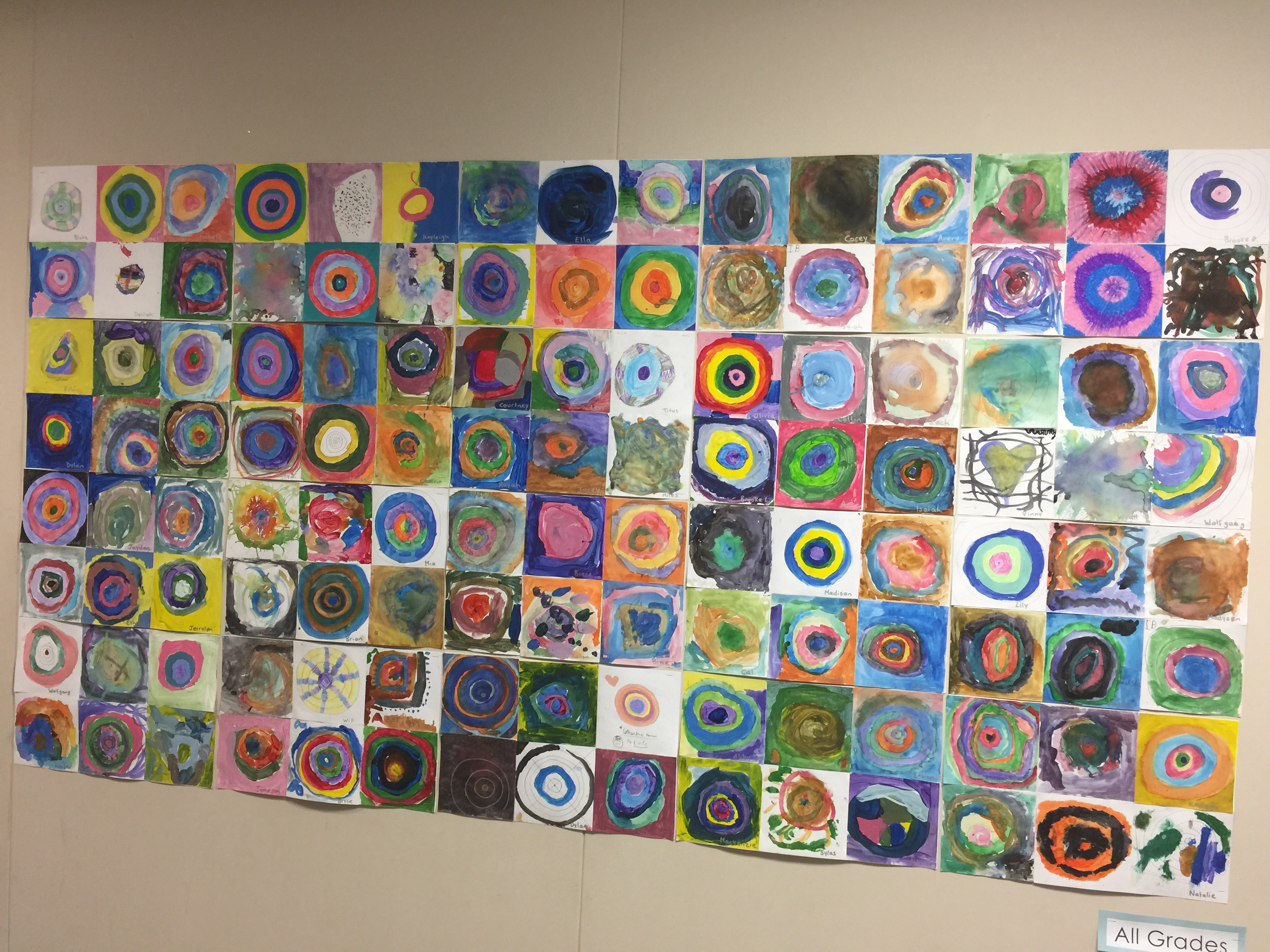
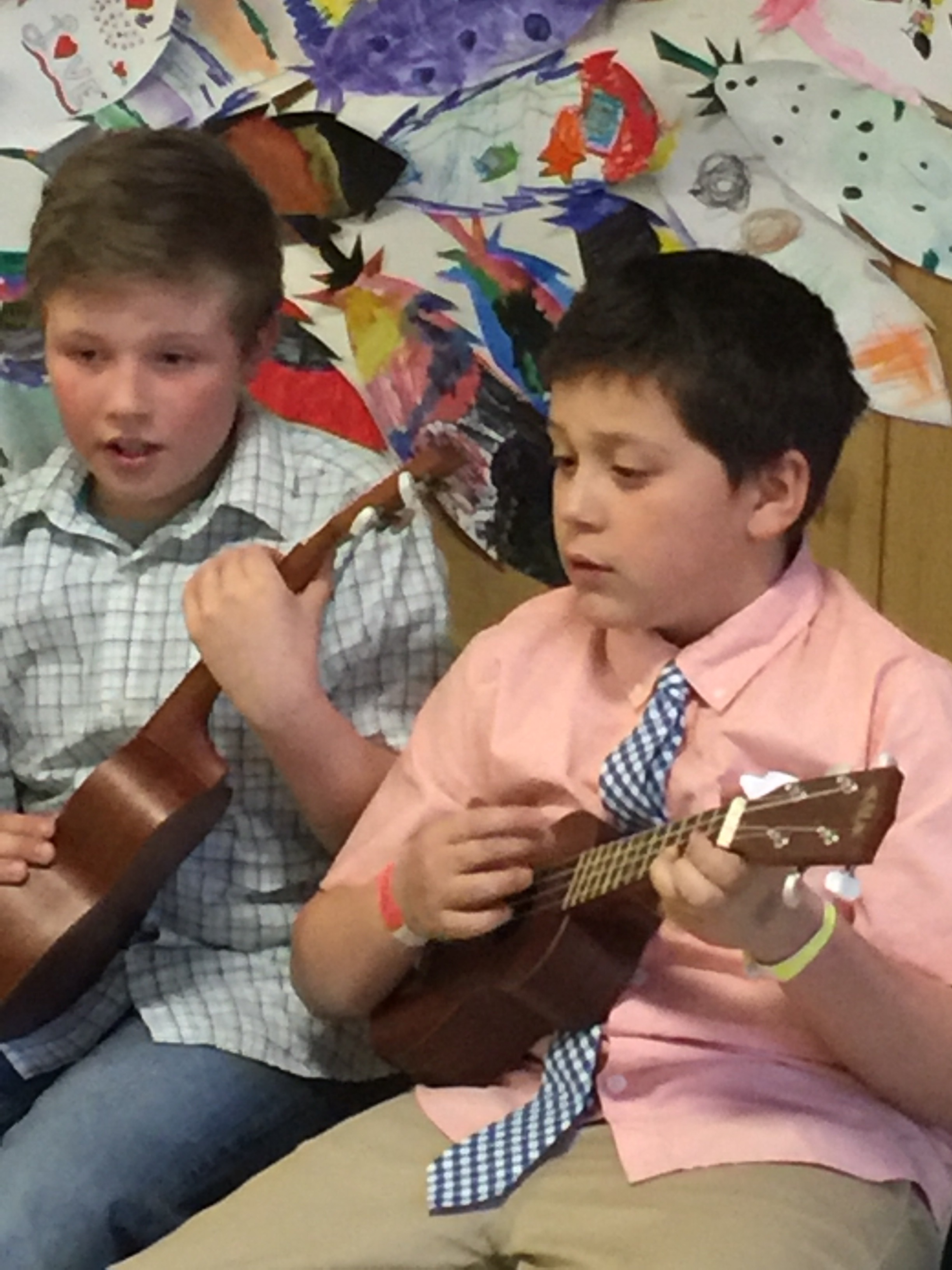
Recently, the 97 students at Sebago Elementary School returned to school with parents and friends to enjoy an evening of arts festivities and entertainment. The entire school building was filled with colorful visual artwork created by children in Kindergarten through Grade 5. The students were clearly excited to show off their masterpieces. There were musical performances provided by the Chorus, the Grades 4 and 5 Bands, and for the first time, the newly formed Ukulele Club. The music added atmosphere for those lost in the beauty and imaginative visual displays around them.

This culminating event was a celebration of Youth Art Month and Music-in-Our Schools-Month, which had been honored throughout March across our Nation. Music students sported buttons that read, “All Music, All People.” The Fine Arts teachers wanted to highlight how important the arts are for students in their overall education.

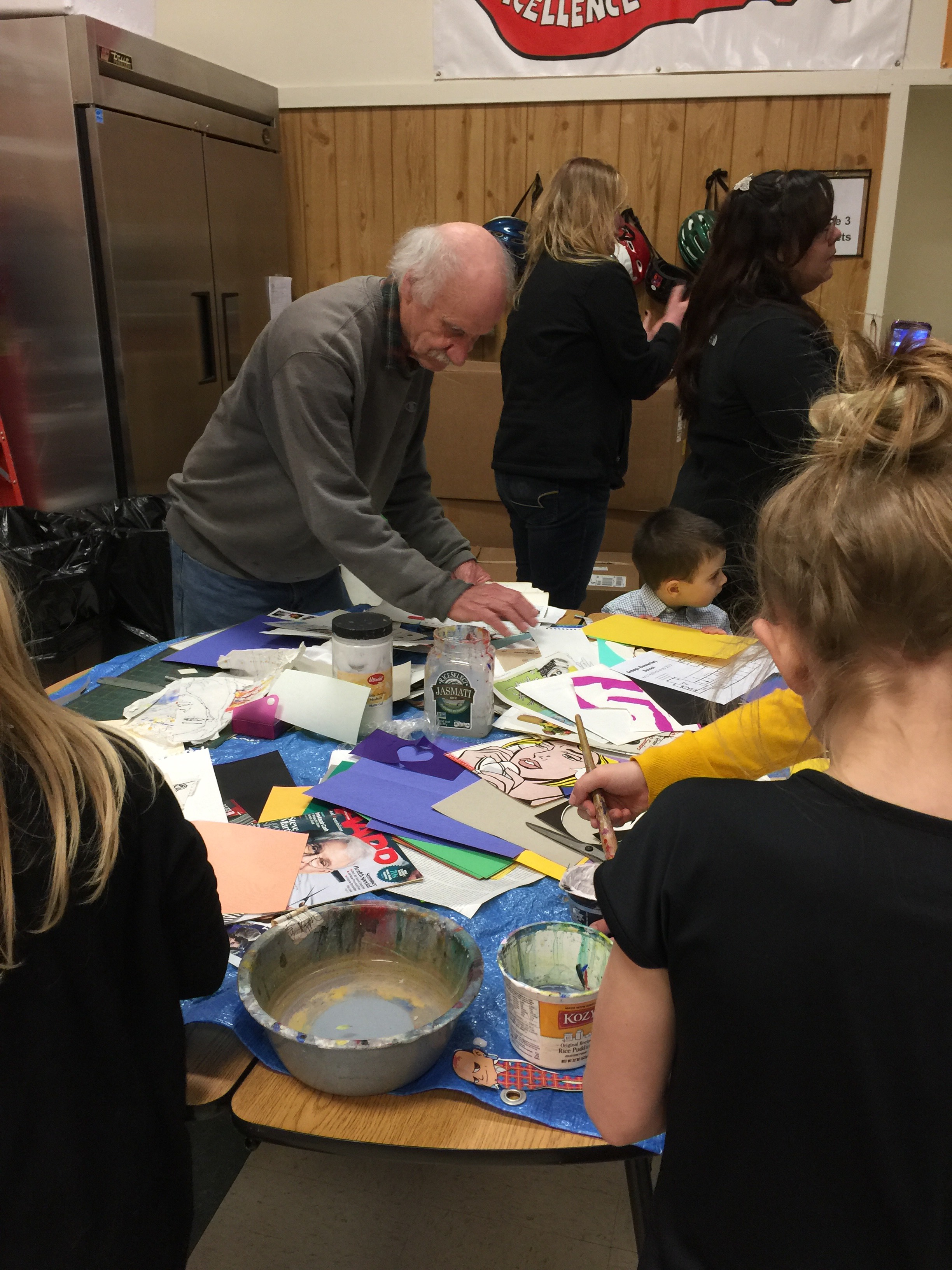
Visitors at the event had the opportunity to explore the work of 4 demonstrating artists. The lovely stained glass work of Nancy Fitch and Kayla Olsen brought a lot of attention. Nancy also led inquisitive children through the creative process. Painter Richard Allen gave students the chance to create work with him, and printer Sarah Parrott afforded people the opportunity to operate her printing press and create some cards.

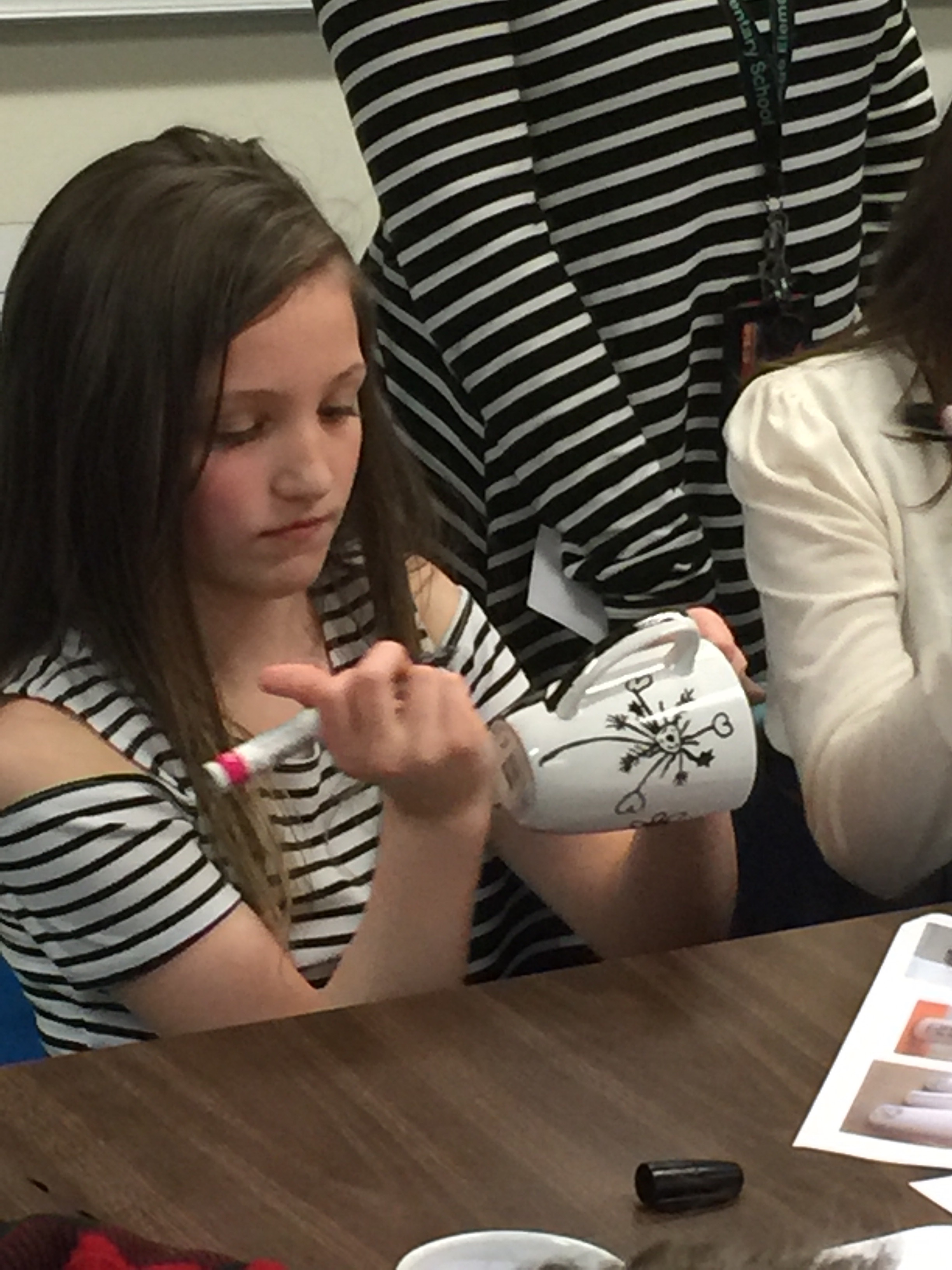
Amidst all of this, there was face painting, which was a huge hit with young and old alike, and mug decorating, which turned out to be the run away favorite indulgence of the night. It was truly a wonderful evening, and people are already asking if it will become an annual event for this newly formed school district!

Thank you to music educator Jenni Null for providing the information for this blog post and for including the photographs. It is obvious that the evening was a wonderful opportunity for the community to celebrate the value of arts education!

h1

Teach to Lead

April 6, 2019

Great opportunity to develop ideas with your team

Many of the Maine Arts Education blog readers remember that the Maine Arts Leadership Initiative (MALI) started as the Maine Arts Assessment Initiative (MAAI) back in 2010. In 2014 a team made up of MAAI teacher leaders and leadership team

Maine MALI team, bottom left

members were invited to attend a Teach to Lead Summit in Washington, D.C. It was an AMAZING OPPORTUNITY!! The team realized that the name of the initiative wasn’t reflecting the future work of MAAI. A focus on LEADERSHIP was clear so the members of MAAI decided to change the name to the Maine Arts Leadership Initiative. Like everything we’ve done in the 8 years that the initiative has been in place it was a careful decision. It proved to be the best thing for MALI. We know that in many school districts across Maine and across the country that arts educators are leaders. They are looked to for their many skills – collaboration, problem-solving, curriculum integration, student-center learning and so much more that takes place in arts education classrooms everyday. Why wouldn’t visual and performing arts educators be asked to contribute their expertise to help move schools and school districts forward?!!

You have a chance to lead your colleagues and community to a Teach to Lead Summit. Do you have an idea that takes some intense planning and time with your colleagues? Do you want to take action around something that is needed in your school? If so, I urge you to consider taking a trip west to the next Teach to Lead Summit taking place on September 19-21, 2019 in Salt Lake City, UT. The information is below – take a look – see if you’re a good match. If you have any questions please email me at argy.nestor@maine.gov.

Whole Child, Whole Teacher Summit

September 19-21, 2019

Salt Lake City, UT

Calling all educators! Submit an idea for our next Teacher Leadership Summit!

Teach to Lead supports teachers as valued experts in instruction and students’ needs. Teach to Lead summits provide teams with time to collaborate, skills development, and professional consultation to incubate innovative ideas that can make a positive impact for students in their schools, communities, districts and states.

This topical summit will bring teacher leaders and other stakeholders together to address the needs of the Whole Child and Whole Teacher in an effort to transition from a focus on narrowly defined academic achievement to one that promotes the long-term development and success of all children, as well as the well-being of all teachers.

Each idea should reflect a need that addresses students’ and/or teachers’ health, safety, learning, support in and out of school, and access to engaging and challenging opportunities. Examples of project topic ideas might include:

  • Healthy: homelessness, hunger, student and teacher well-being and mental health
  • Safe: school safety, bullying and harassment
  • Engaged: cultural diversity, student identity, school culture and climate, professional networking
  • Supported: supports for a diverse teacher workforce, coaching and peer mentoring, adult-student relationships, community partnerships, language services and supports
  • Challenged: access to challenging coursework or professional development, access to extracurricular opportunities, etc.

How do participants benefit from the Summit?

  • Develop a local idea for change into a complete plan
  • Obtain the support of a dedicated “critical friend” from a supporting organization to advance your work
  • Build relationships with ASCD, Teach Plus, the United States Department of Education, and national supporting organizations
  • Be provided with free registration and hotel accommodations for two nights or parking ( hotel will be provided free of charge for teams traveling more than 50 miles; parking will be provided for teams traveling 50 miles or fewer to the summit).

Who may submit an idea application?

  • Any teacher leader with an actionable idea is encouraged to apply here (or cut and paste into your browser) https://www.surveymonkey.com/r/TTLSLC19 by 11:59 pm ET on May 17, 2019 . Accepted ideas will be notified the week of June 10th.
  • Teams must have 3-5 members and must be led by one current teacher. Other key stakeholders (e.g. parent, student, community members, school and government officials) are encouraged.

All submitted ideas must: 

  • Encourage teachers to lead from the classroom.
  • Promote collaborative work among multiple stakeholders.
  • Identify an area in need of innovation or a specific problem with an eye towards actionable solutions.
  • Be viable in the local context and sustainable over time.

All submitted ideas may:

  • Be functioning at any stage of development – an emerging idea requiring input and buy-in to something that has been implemented which is ripe for improvement or expansion.
  • Focus on any level of change – school, district, or state.

Please contact info@teachtolead.org for additional information or questions.

h1

Dance Could Be the Answer

April 2, 2019

Dance articles and videos

Dance resources come across my desk weekly. I’ve combined them into one blog post for your reading and resource gathering. Teaching Artist Elly Lovin provided the information at the third and fourth bullet below. The last three videos listed are from Big Geek Daddy videos. Wonderful resources!

  • Education Week, October 10, 2018 article called Dance Teacher: Arts Ed. Could Be the Key to Student Engagement, written by Jennifer Jackson. CLICK HERE
  • These  next three resources are from Elly Lovin, a dance educator who is on the Maine Arts Commission Teaching Artist roster. Two years ago she did an amazing semester long residency at East End Community School in Portland with the kindergarten classes.
  • Why Dance is Just as Important as Math in School,  March21, 2018,  written  by  Ken  Robinson  for  TED.  CLICK  HERE.
  • A research paper on the pedagogical practices for dance education to achieve content standards in dance–addressing motor, aesthetic, social, emotional, and cognitive development (pages 1-6 are regarding PreK-1st Grade).  CLICK HERE.
  • Snowball (TM) gets down to Queen’s “Another One Bites The Dust.” Please visit our web site http://www.birdloversonly.org to purchase Snowball DVDs, shirts, and other items.
  • Dancers Nils and Bianca deliver a wonderfully entertaining dance performance at the Rock That Swing Festival. The 2018 Rock That Swing Festival was held at Deutsches Theater in Germany and featured many fine dancers but this dance performance set to Bruce Channel’s hit tune from the 1960s’, “Hey Baby”.ROCK THAT SWING DANCE
  • Dancers Tanya and Sondre deliver a wonderfully entertaining Lindy Hop performance at the Rock That Swing Festival. The 2017 Rock That Swing Festival was held at Deutsches Theater and featured many fine dancers but this dance performance set to “Fly Me To The Moon” was one of the best.CHECK OUT TANYA AND SONDRE
  • The Charleston Finals – filmed at the Snowball 2013, Stockholm, Sweden.CHECK OUT THE VIDEO