Thinking, thinking, thinking
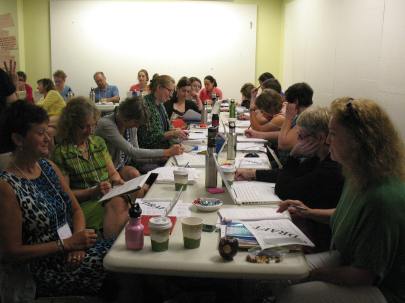
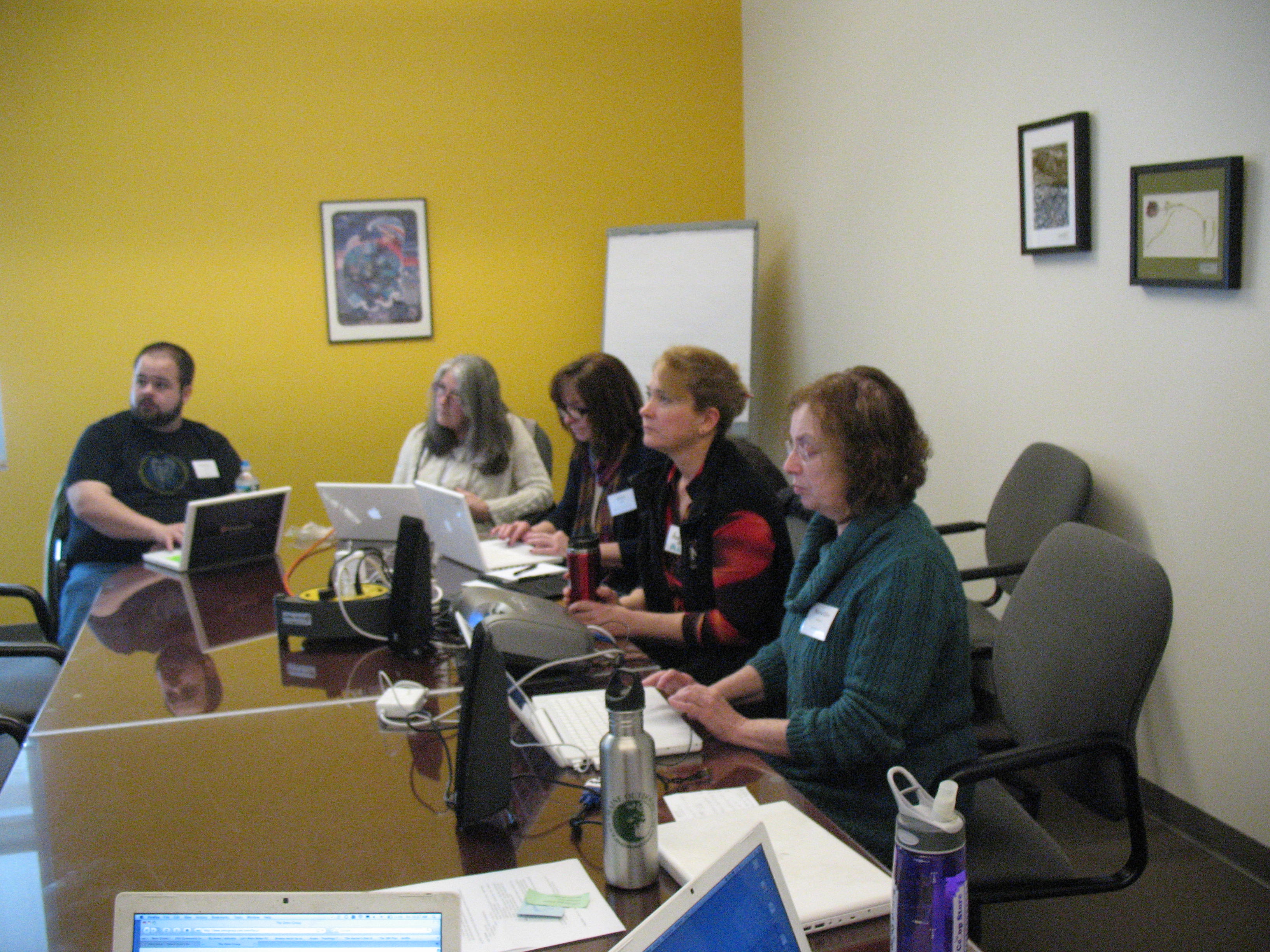
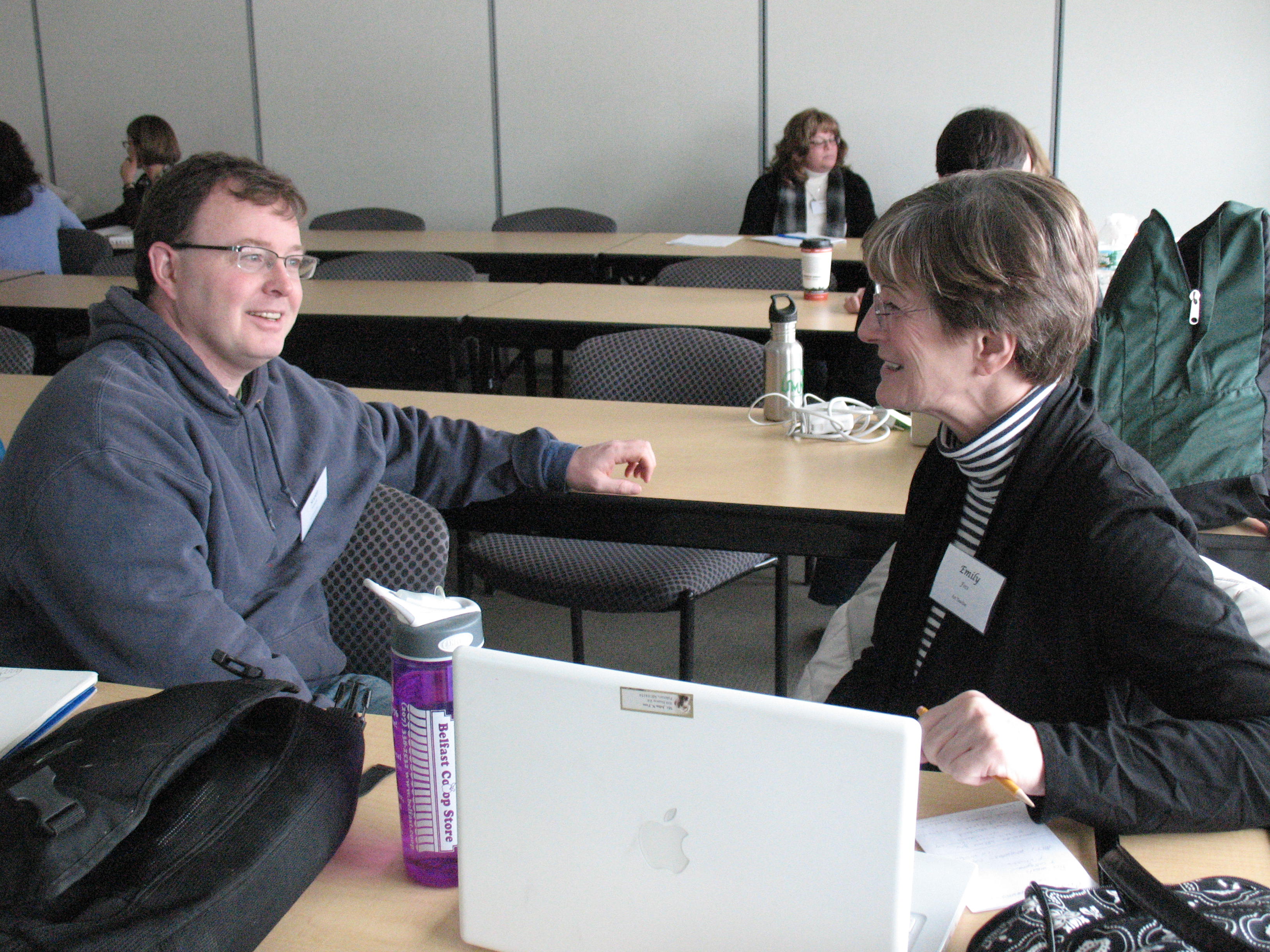
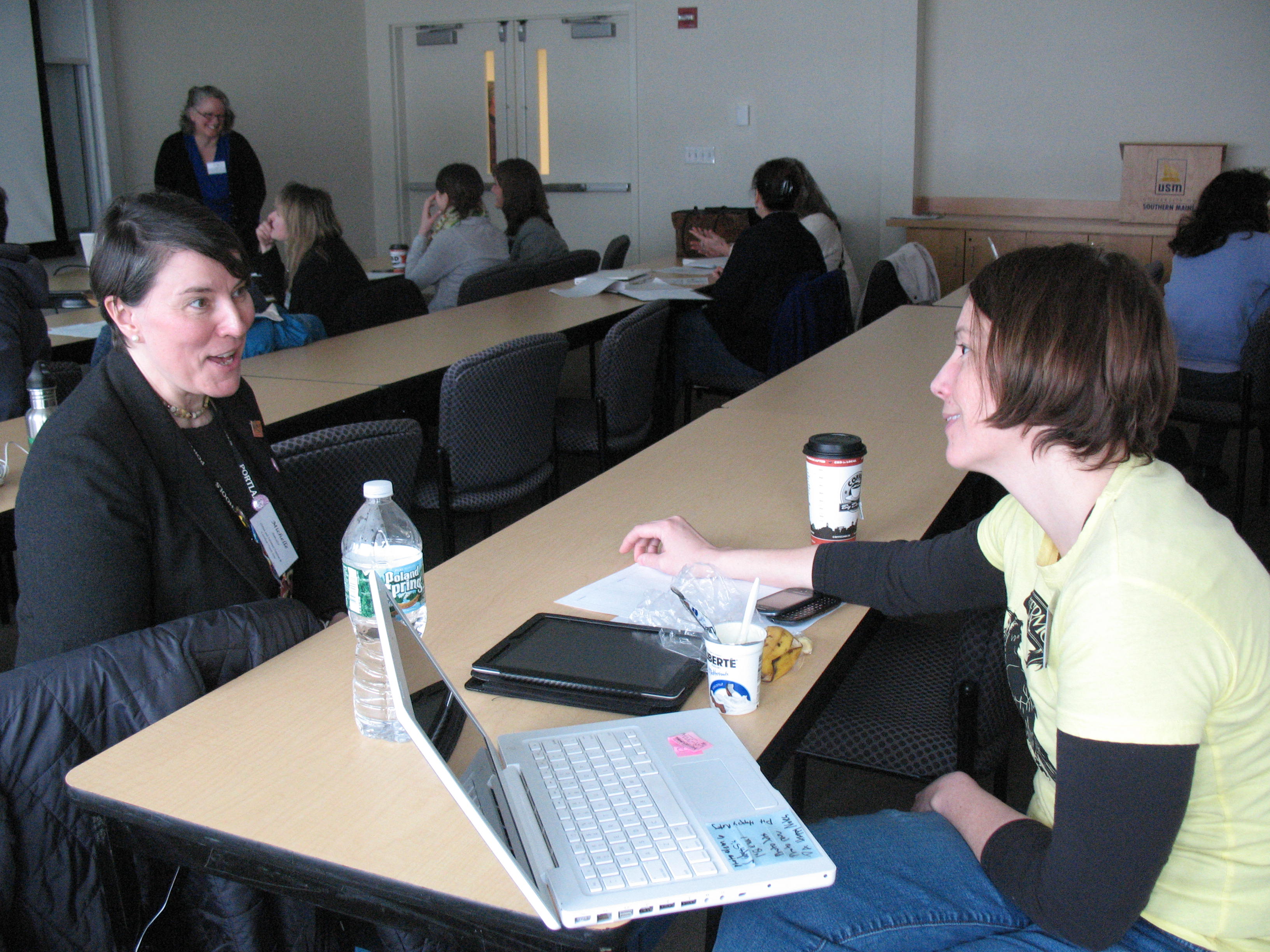
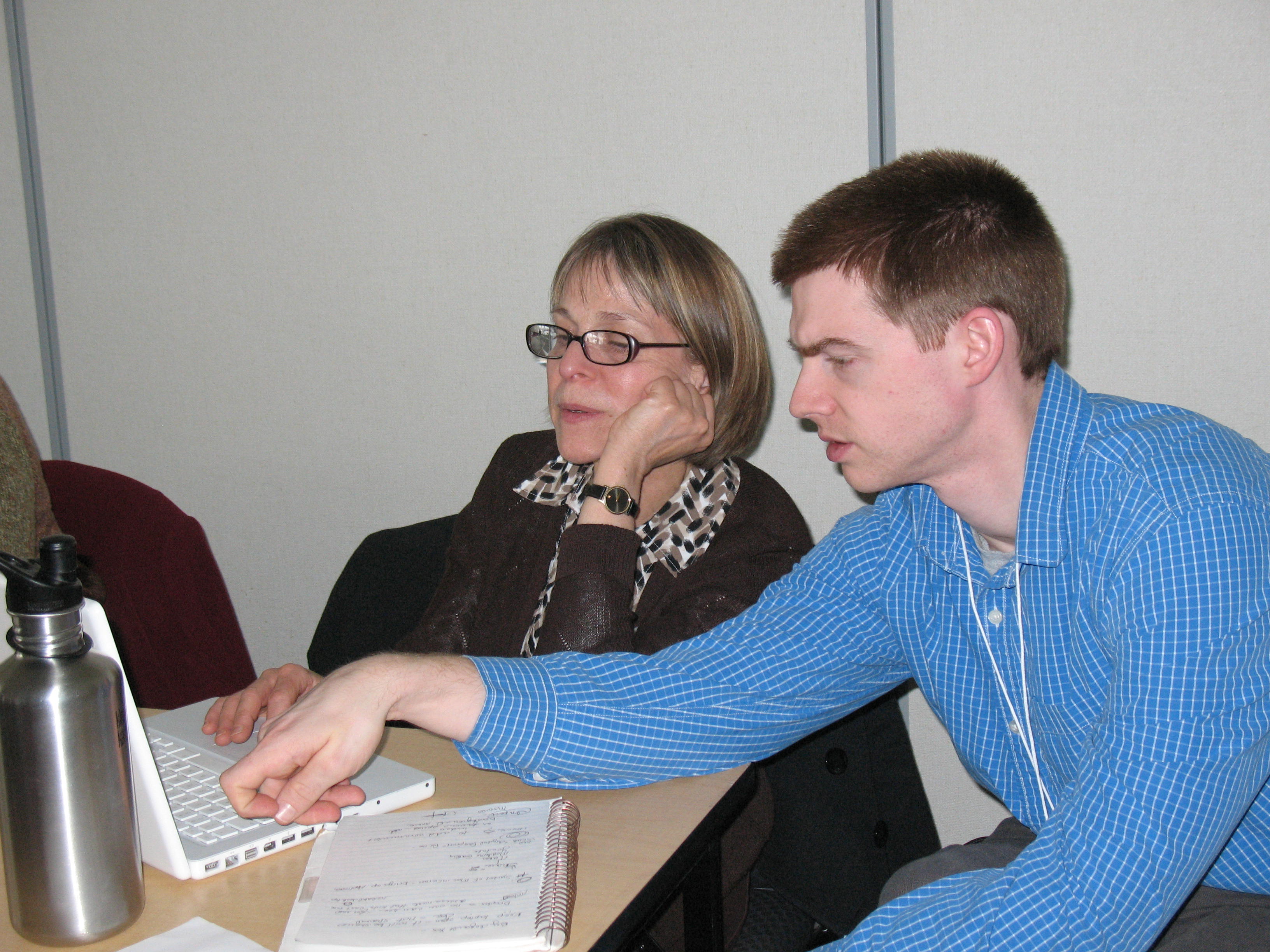
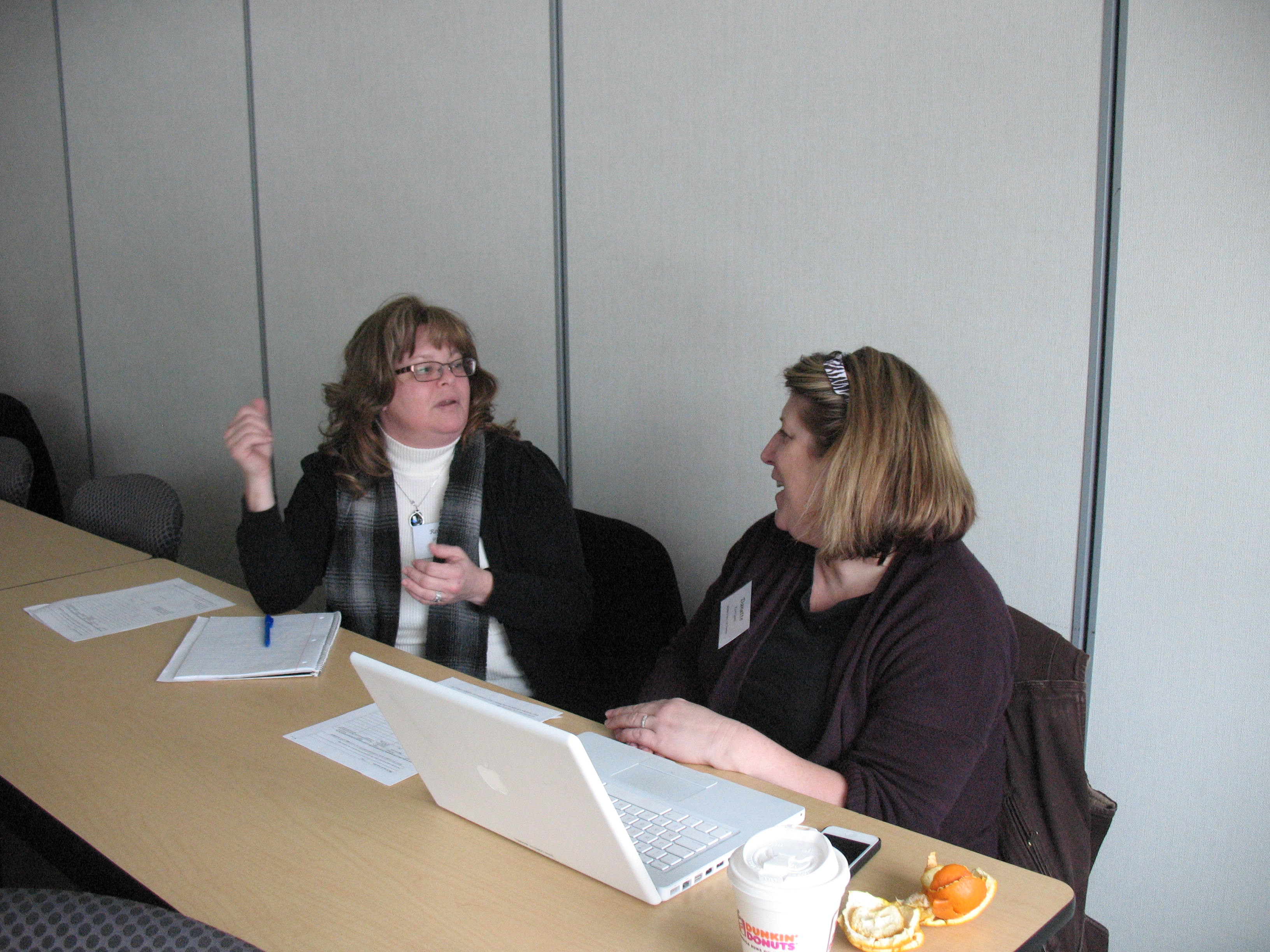
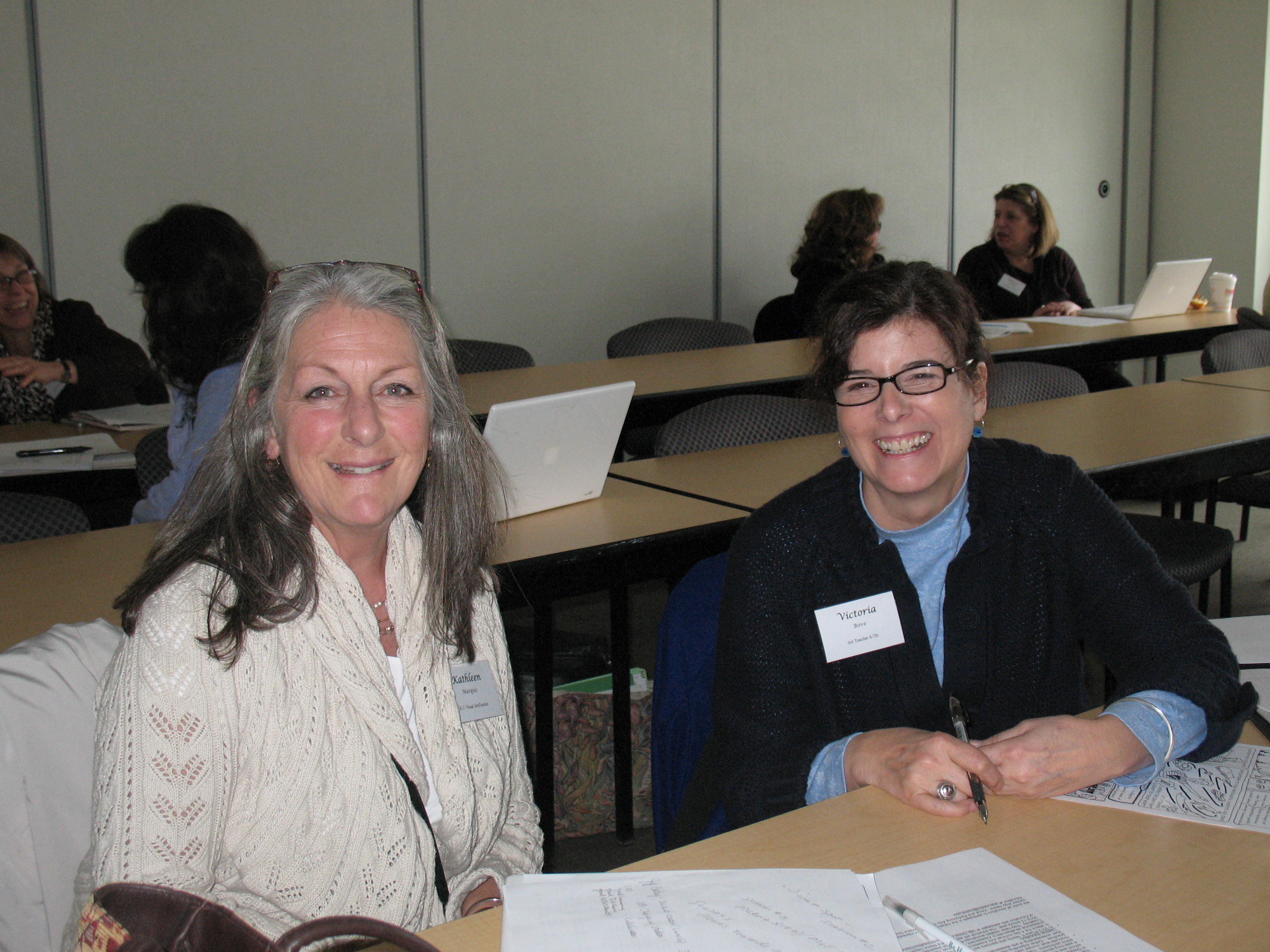
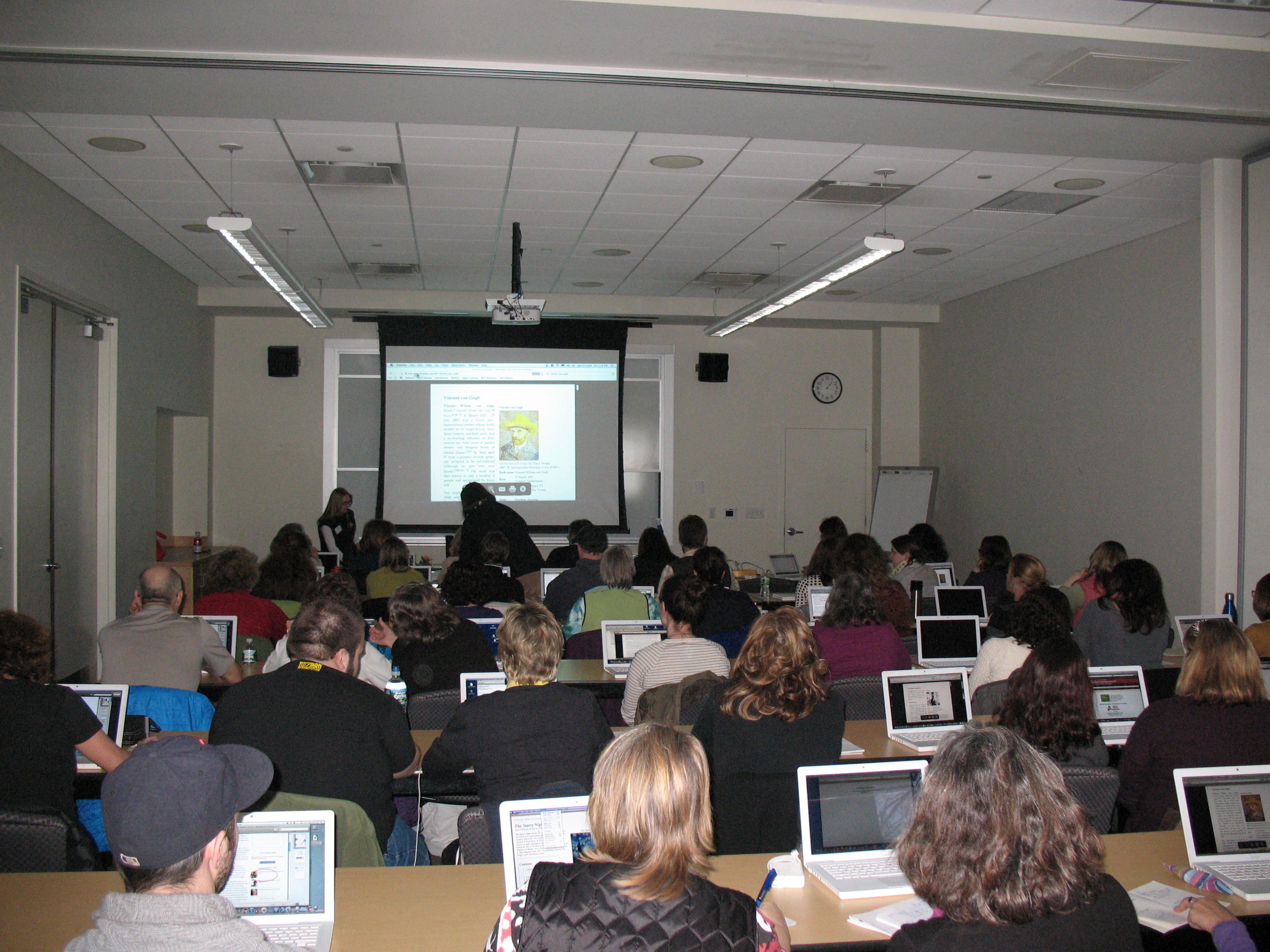
Participants discussing information at the summer institute, June, MECA
I spent some time this weekend putting together the lists of feedback on different topics that we focused on with the teacher leaders at the Maine Arts Assessment Initiative summer institute. It was a good activity since I didn’t have to move around much in the heat. One of the final exercises was to ask the teacher leaders to take a moment and reflect on the work during the three days.
They wrote their reflections to these three questions on stickies that were put on chart paper:
- What is circling around in your head?
- What are three questions you have?
- What is squared with your beliefs?
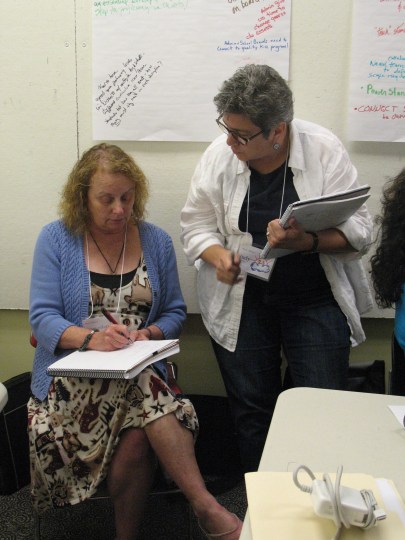
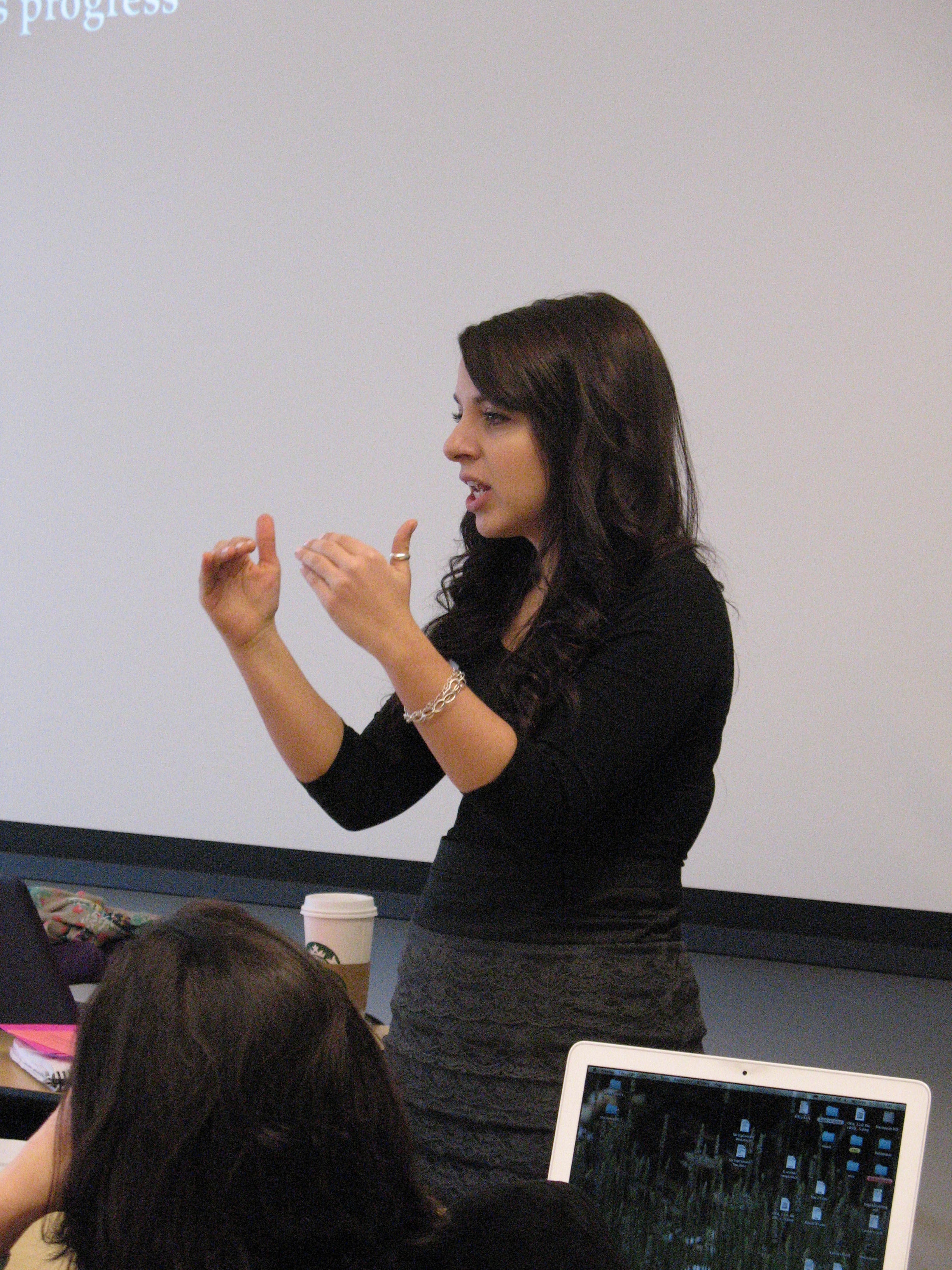
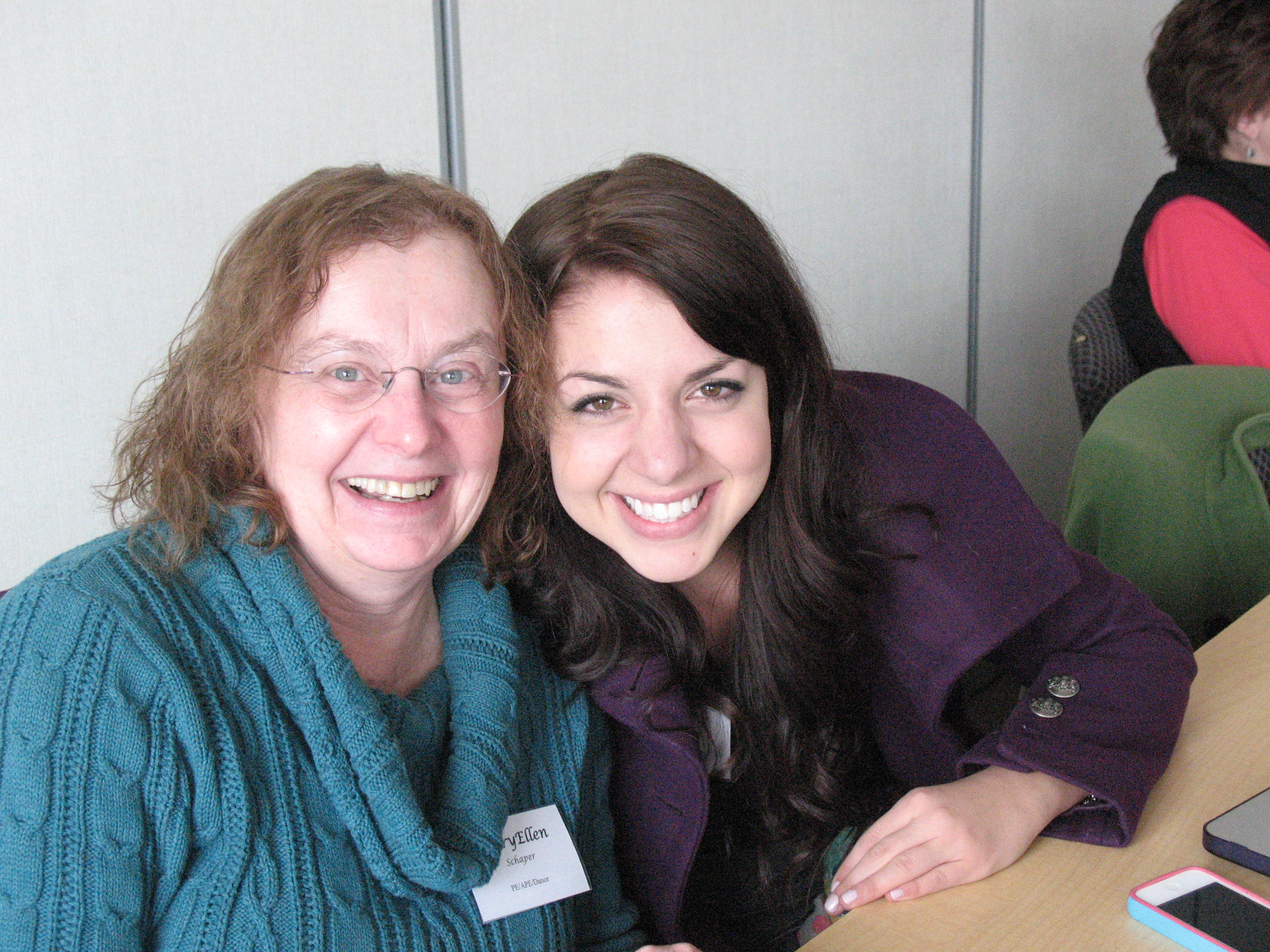
Dance teacher MaryEllen Schaper and Early Childhood/music educator Judy Fricke
The answers were varied but also clustered. During the institute we spent a day discussing proficiency. Participants wrestled with “what does it look like in the visual or performing arts classroom when put up against a standard?” This work helped to prepare for the high school diploma coming in 2018 that will be based on students showing proficiency of the standard. No longer will schools be graduating students based on their seat time but by demonstrating accomplishment of the standards. At the local level you will be making the decision on what that looks like.
After a day of discussions while looking at and/or listening to student work samples some teacher leaders still had circling around in their heads: “What is proficiency?” “How to organize teaching/assessment to check student proficiency.” “I get the importance of standards but it still boggles my mind how differently we “interpret” them and how differently we use them across the state.” “How do we make sure that EVERY school district in Maine offers instruction in VPA that is sufficient for all students to become proficient?” This is not an easy question to answer however, everyone agreed that the conversations are important, necessary, and that they were glad to have the opportunity to be involved in the discussion. As I typed this weekend I wondered: how many teachers across the state are having this type of conversation?!
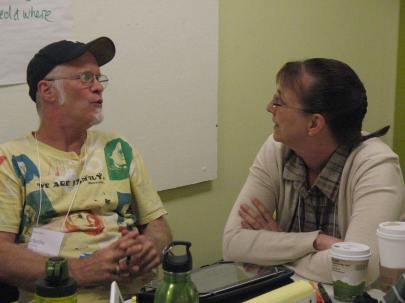
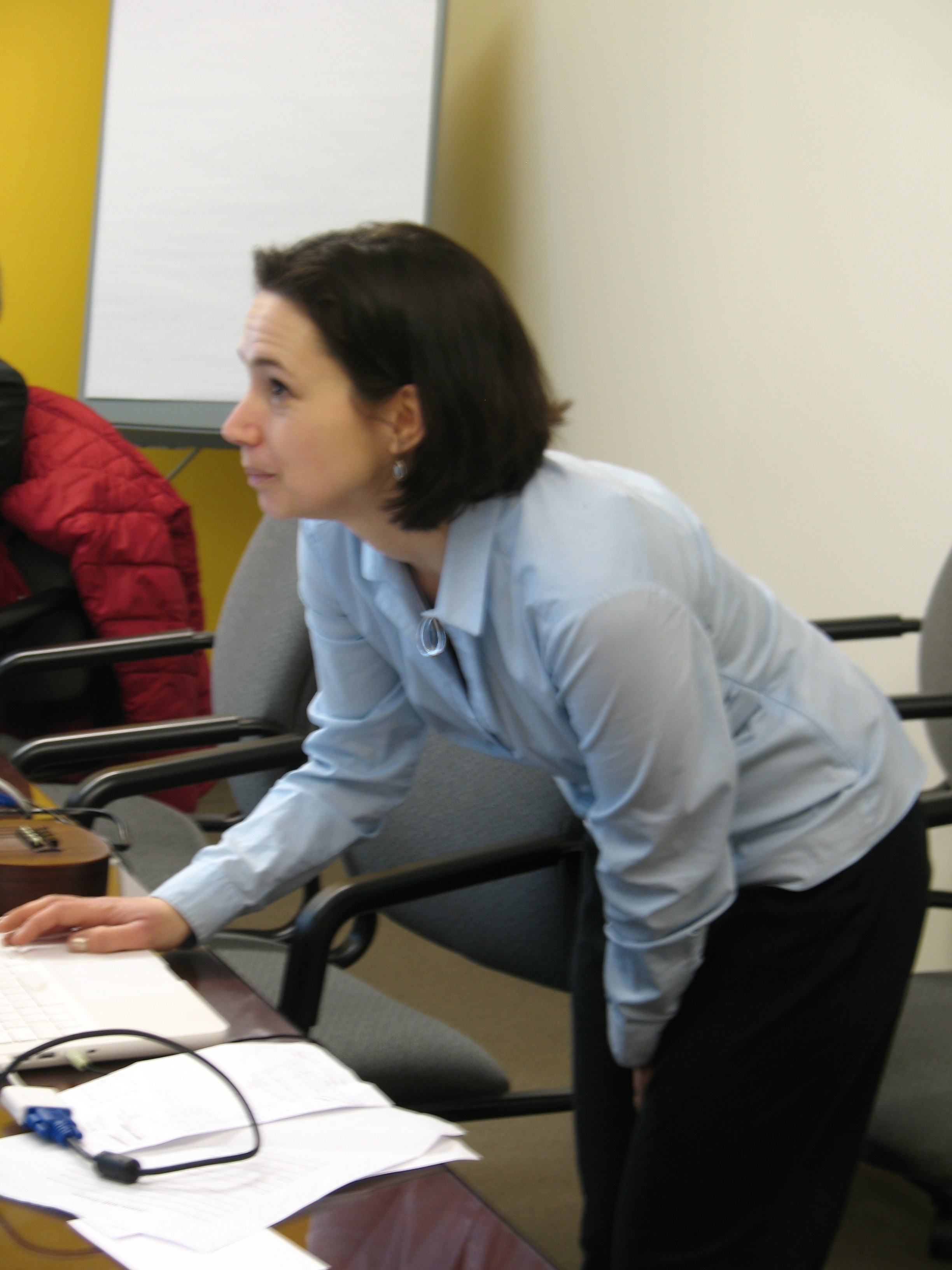
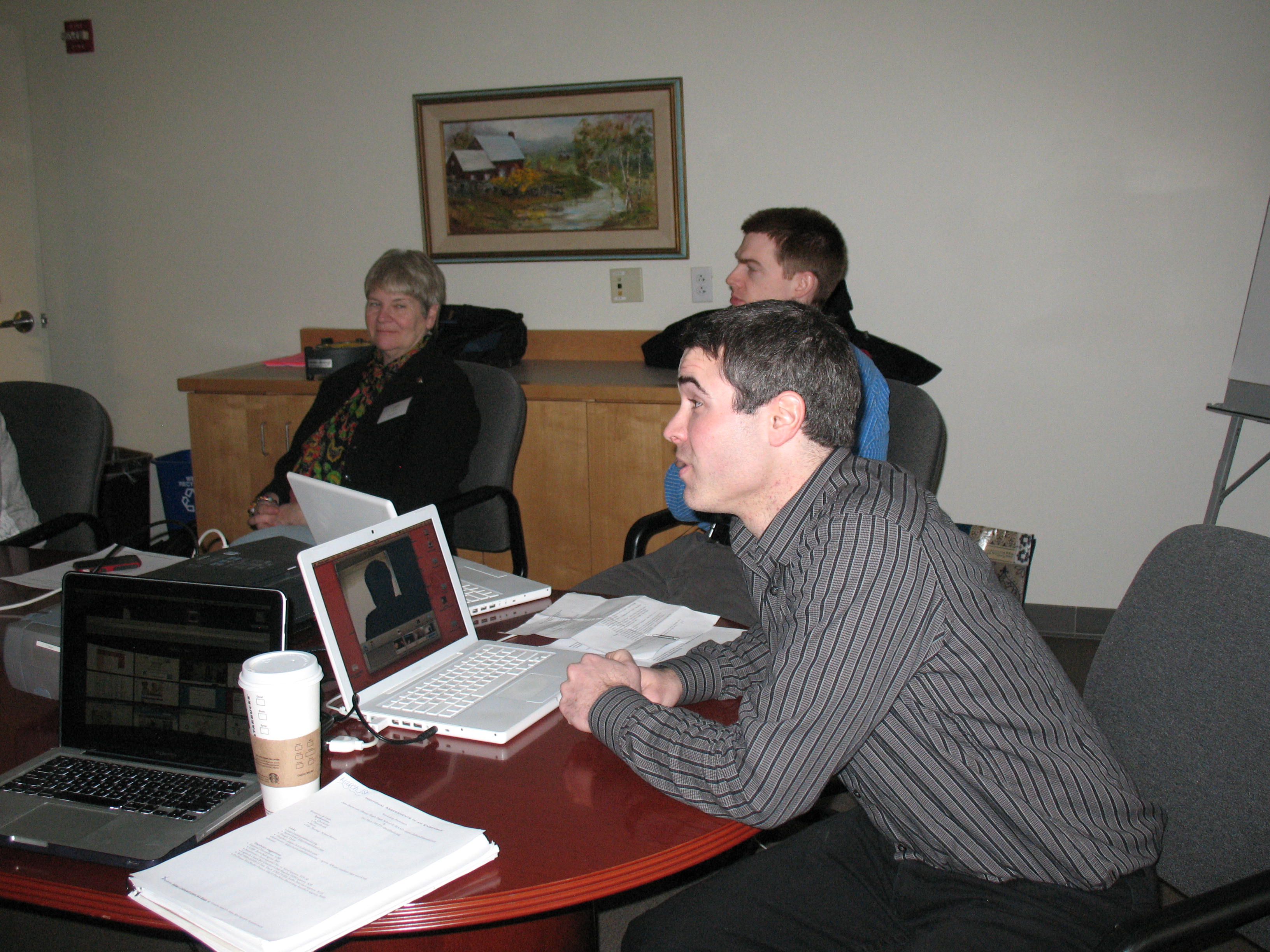
Visual art teacher Charlie Johnson and music teacher Patti Gordan
And for question #3:
“Student feedback informs instruction. Formative assessments. Summative assessments.” “Collaboration and good leadership create a vibrant environment for professional growth.” “I can do this has changed to I AM doing this. The process is far enough along to look back and see success.”
Much of what I read reflects the confidence these teacher leaders have and their willingness to learn from each other and understand that learning is ongoing. They’ve made a commitment to teaching but they’ve also made a commitment to go above and beyond to be a leader. Thirty five teacher leaders are preparing workshops this summer that combines what they learned with their experiences and past knowledge. They will gather in the middle of August to share their workshops for feedback from their colleagues. In the fall they will begin a round of workshops at the regional, mega-regional and statewide level. It is a pleasure to watch their workshops form and their creativity in action. I am grateful that they are doing this important work that benefits all arts educators and ultimately our students are the big winners. So, THANK YOU TEACHER LEADERS!
I suggest you watch this blog for the schedule of workshops taking place during the school year. One date I do know at this point is the statewide conference called Arts Education: Leading the Way being held at UMaine, Collins Center for the Arts, Thursday, October 24. The cost for the one-day conference is $75 which includes a choice of 35 workshops, a keynote, performances, and lunch. You can purchase your ticket at https://tickets.collinscenterforthearts.org/auto_choose_ga.asp?area=116. Our conference this year precedes the Maine Arts Commission two-day conference, The International Conference on Arts and Culture: Strengthen the Core, 2013.
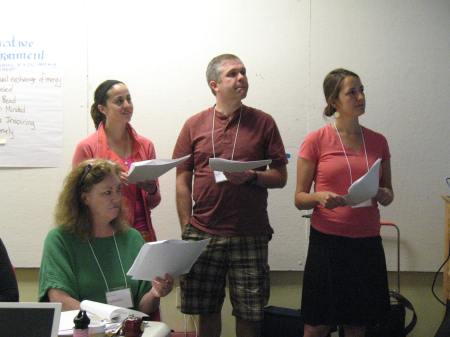
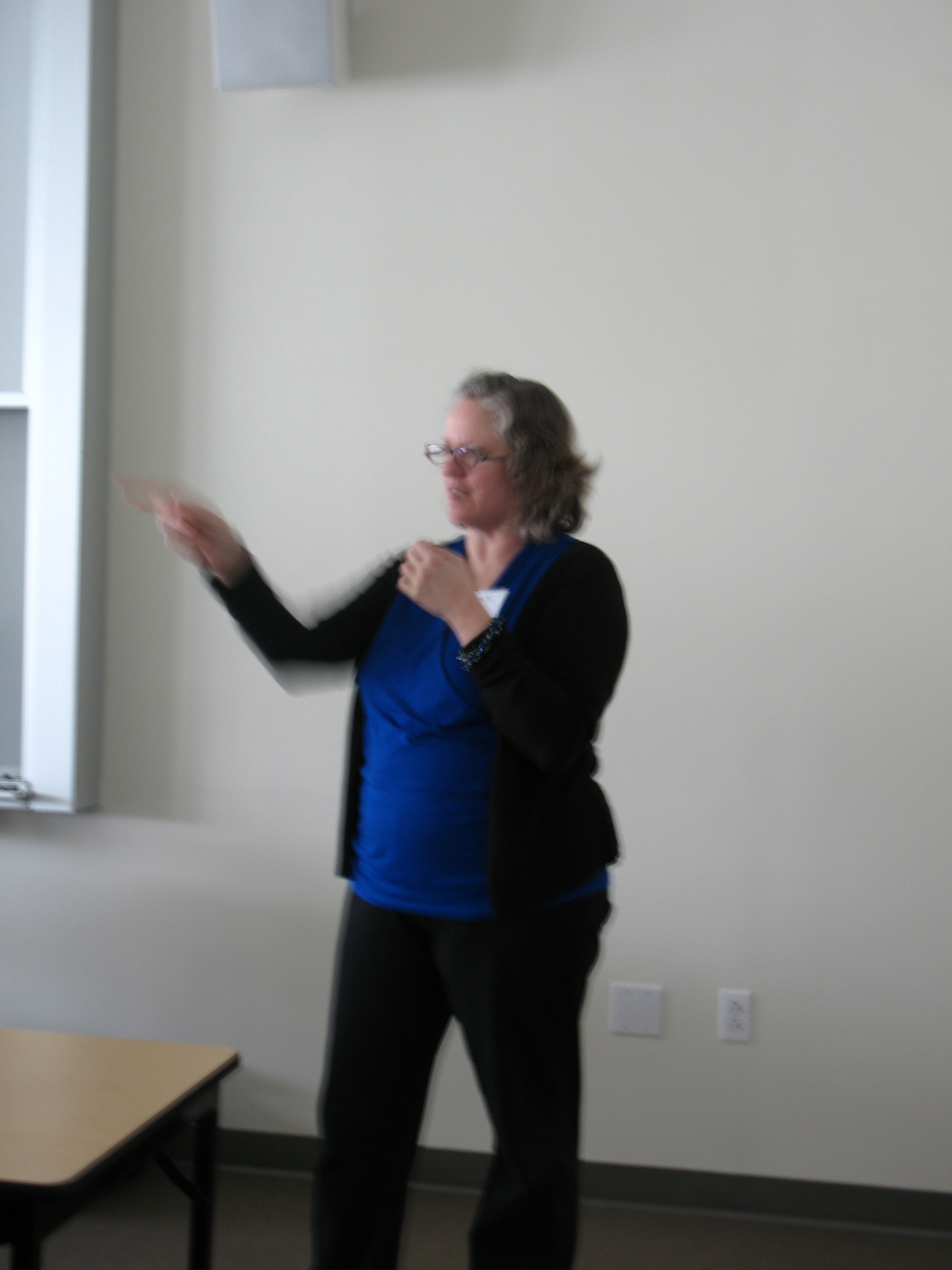
(Seated) leadership team member Catherine Ring, music educators Jen Nash and Bill Buzza, and art educator Shannon Westphal










 me arts ed