Union Elementary
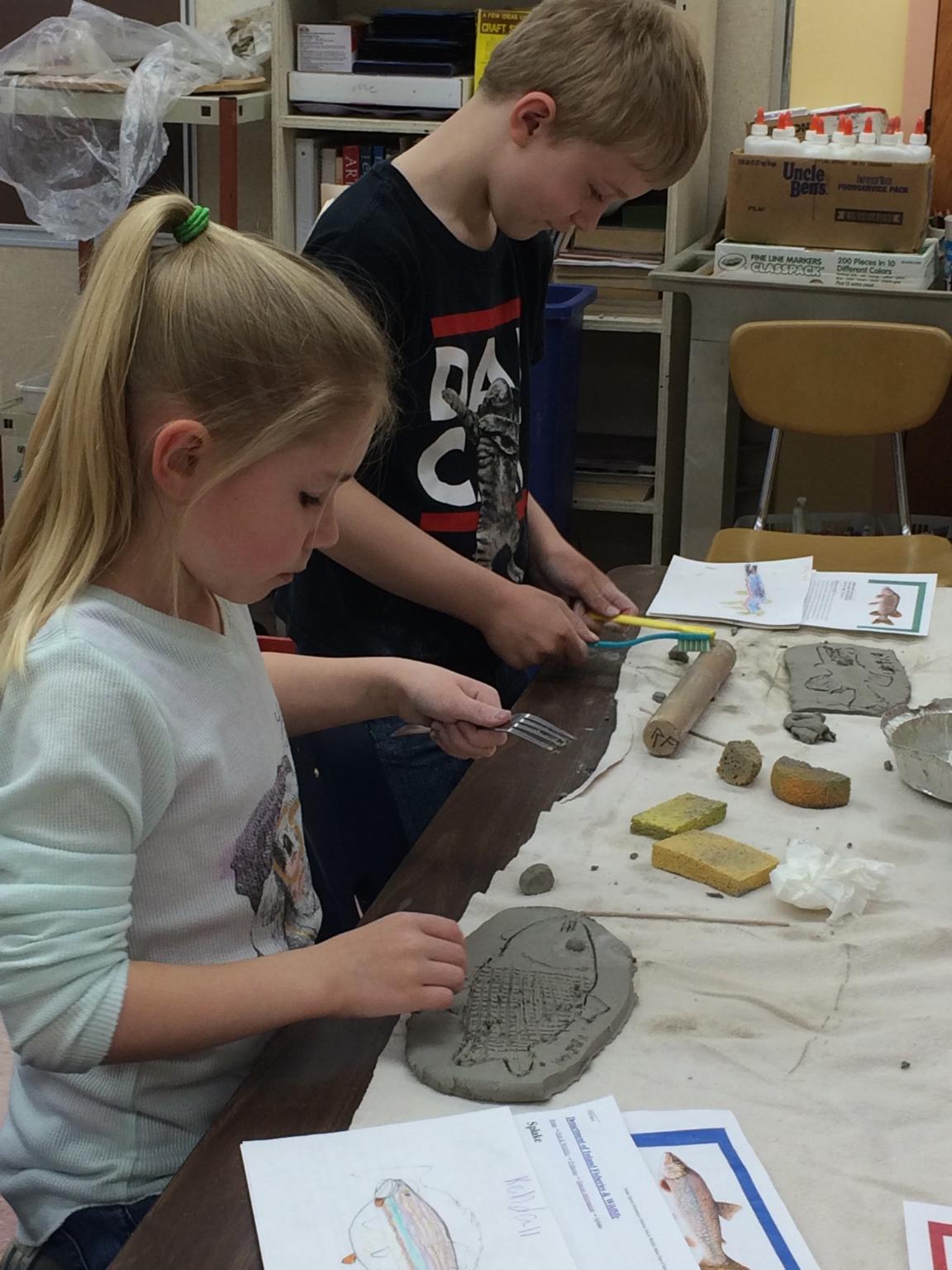
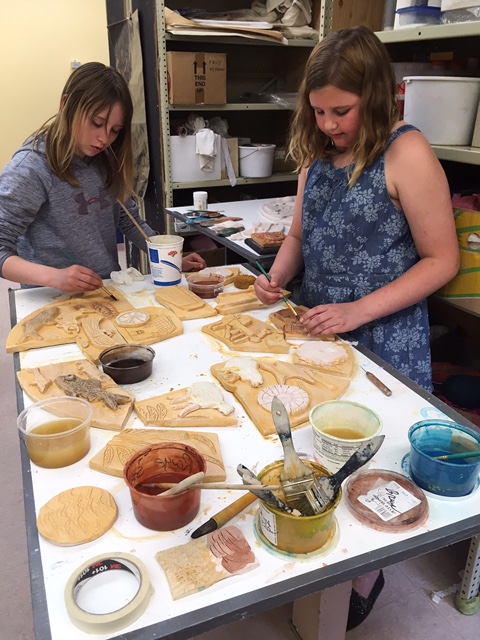
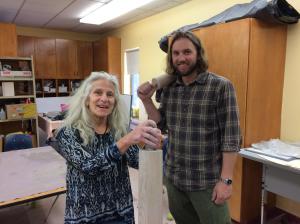 Over a two month period this spring art teacher Anthony Lufkin and teaching artist Randy Fein collaborated to provide an outstanding learning opportunity for all the preK-6 students at Union Elementary School. The residency was funded by an Arts Learning grant funded by the Maine Arts Commission.
Union School has a long history of providing learning opportunities in visual art that go above and beyond the curriculum. When the school was built in 1987 George Mason provided two relief murals as part of the Percent for Art program. He followed that work with a month long residency with middle school students and created a relief tile mural based on Greek Mythology, an interdisciplinary unit. Over the years there have been several residencies with artists and large scale integrated projects that involved all of the elementary students and when the D.R. Gaul Middle School was housed upstairs, grade 7 and 8 students participated.
 It was a pleasure to watch this project unfold and develop, the steps involved are too many to count, the commitment from all staff to help with the success, the student learning observed and so much more. It is easy to forget during the day to day details of “school” that these type of large projects hold meaning and learning way beyond the actual project. I suggest you consider taking on something like this, if you haven’t done so in the past.
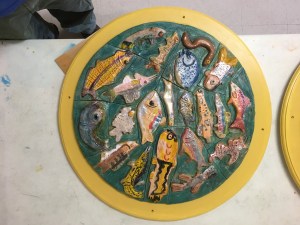
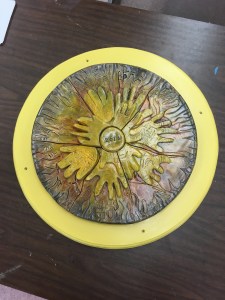
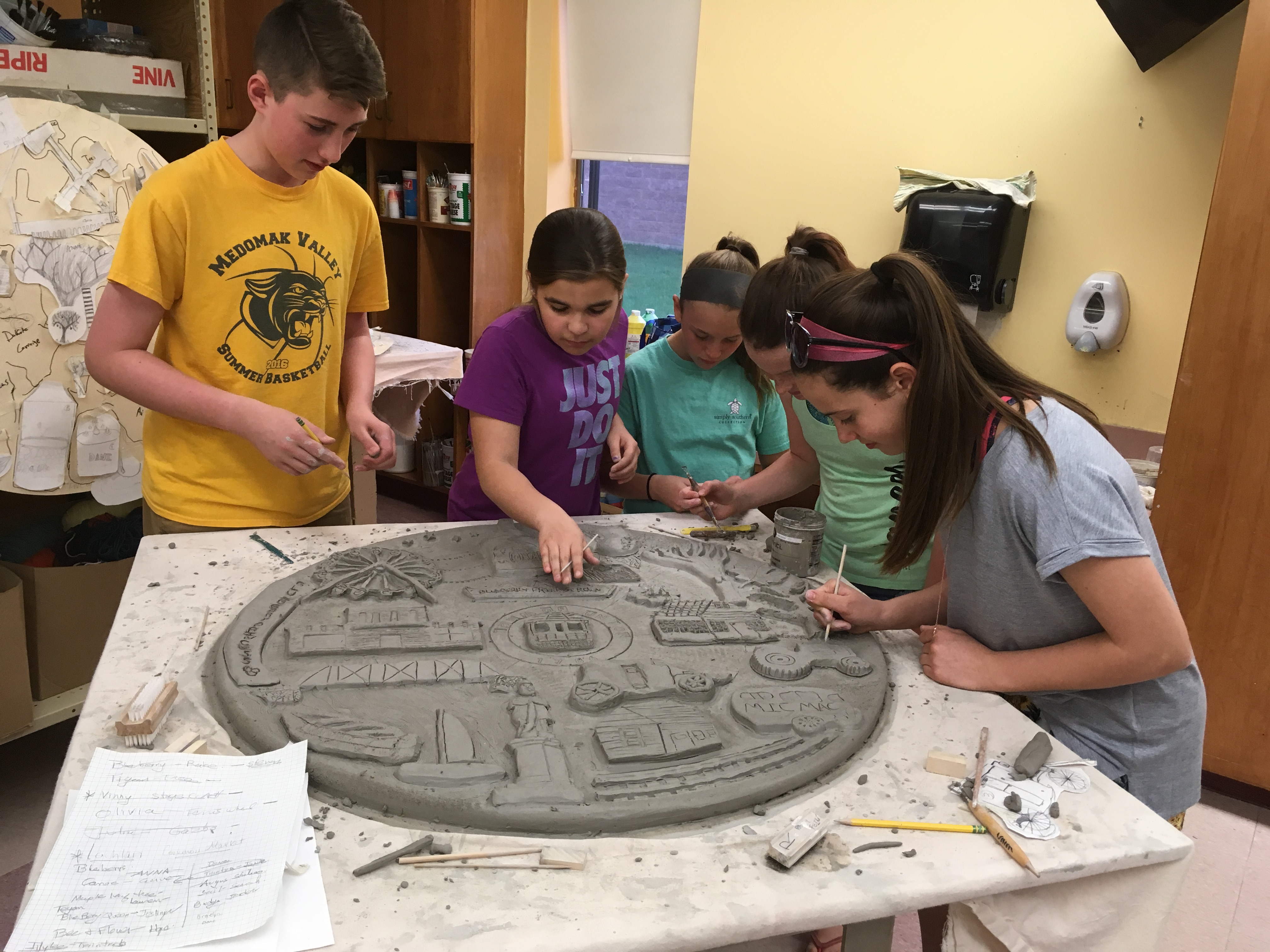
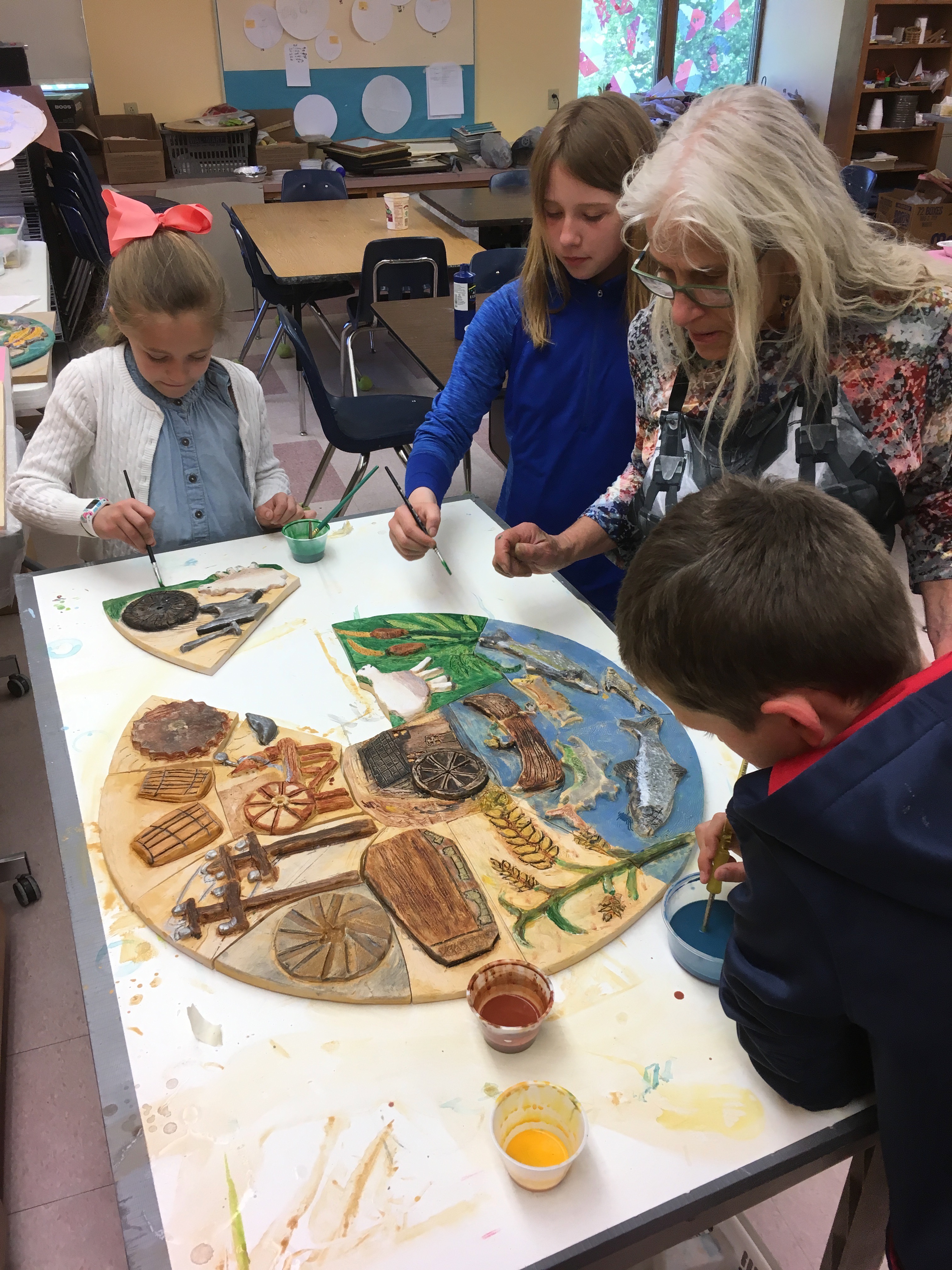
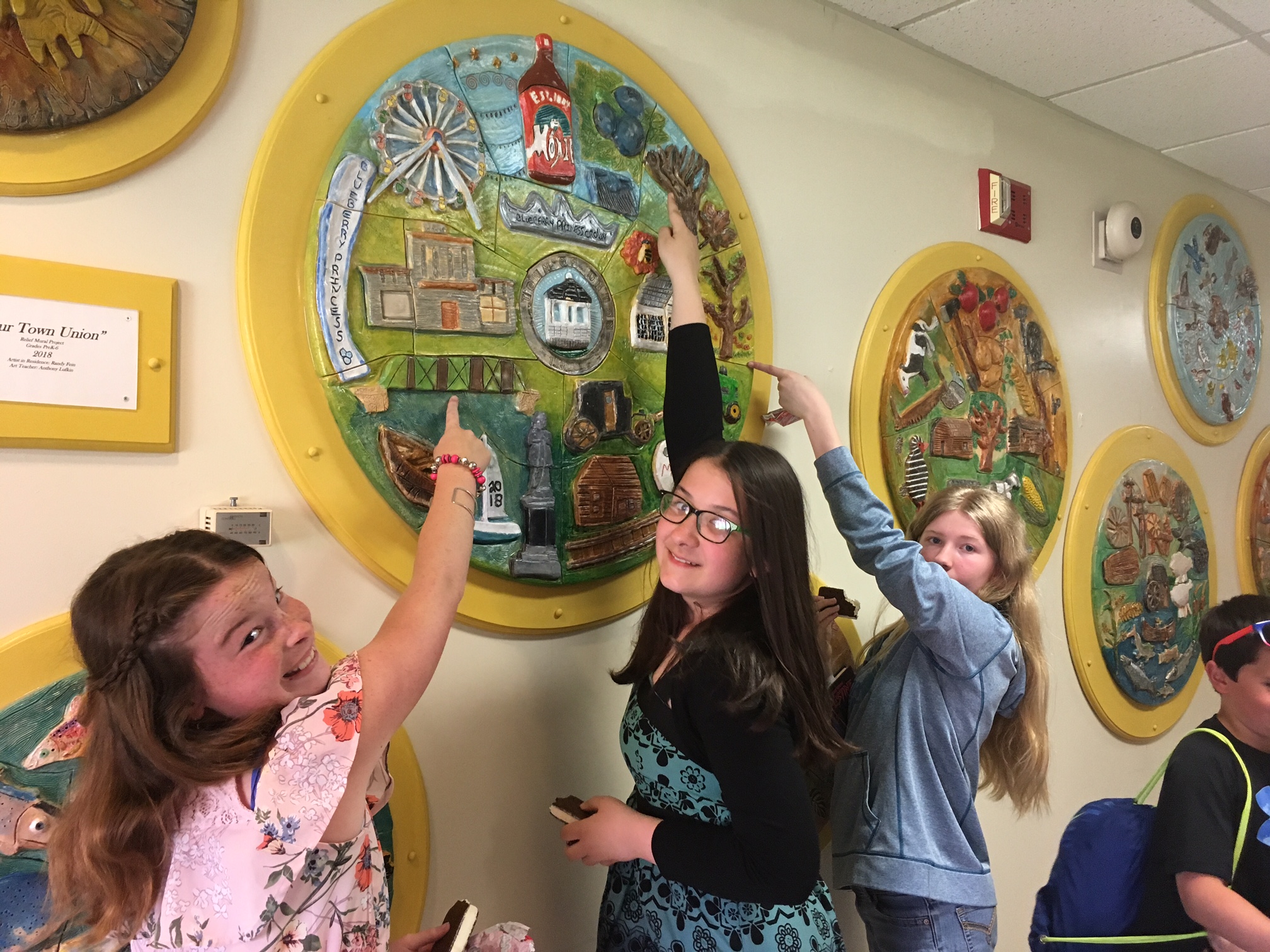
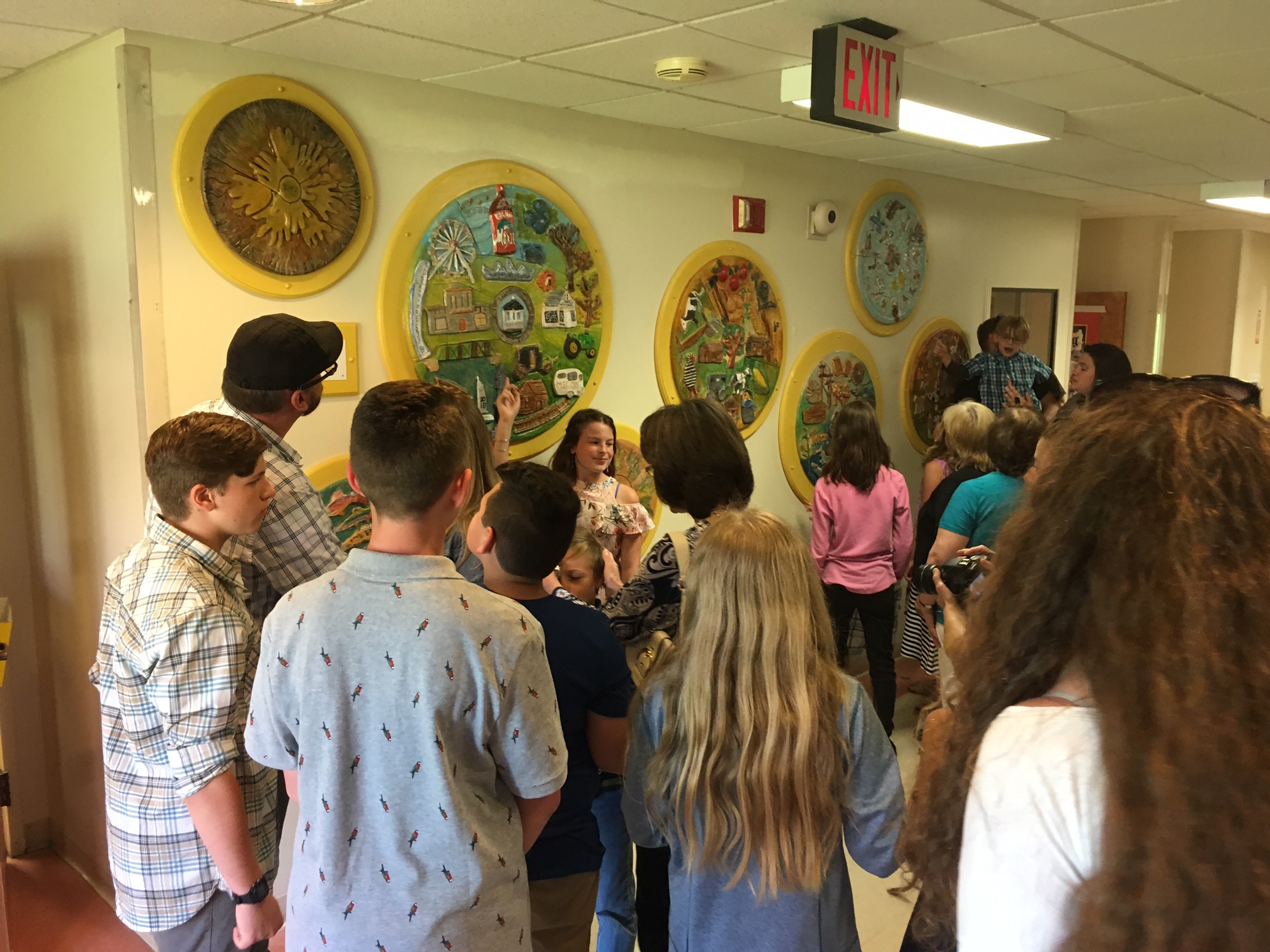
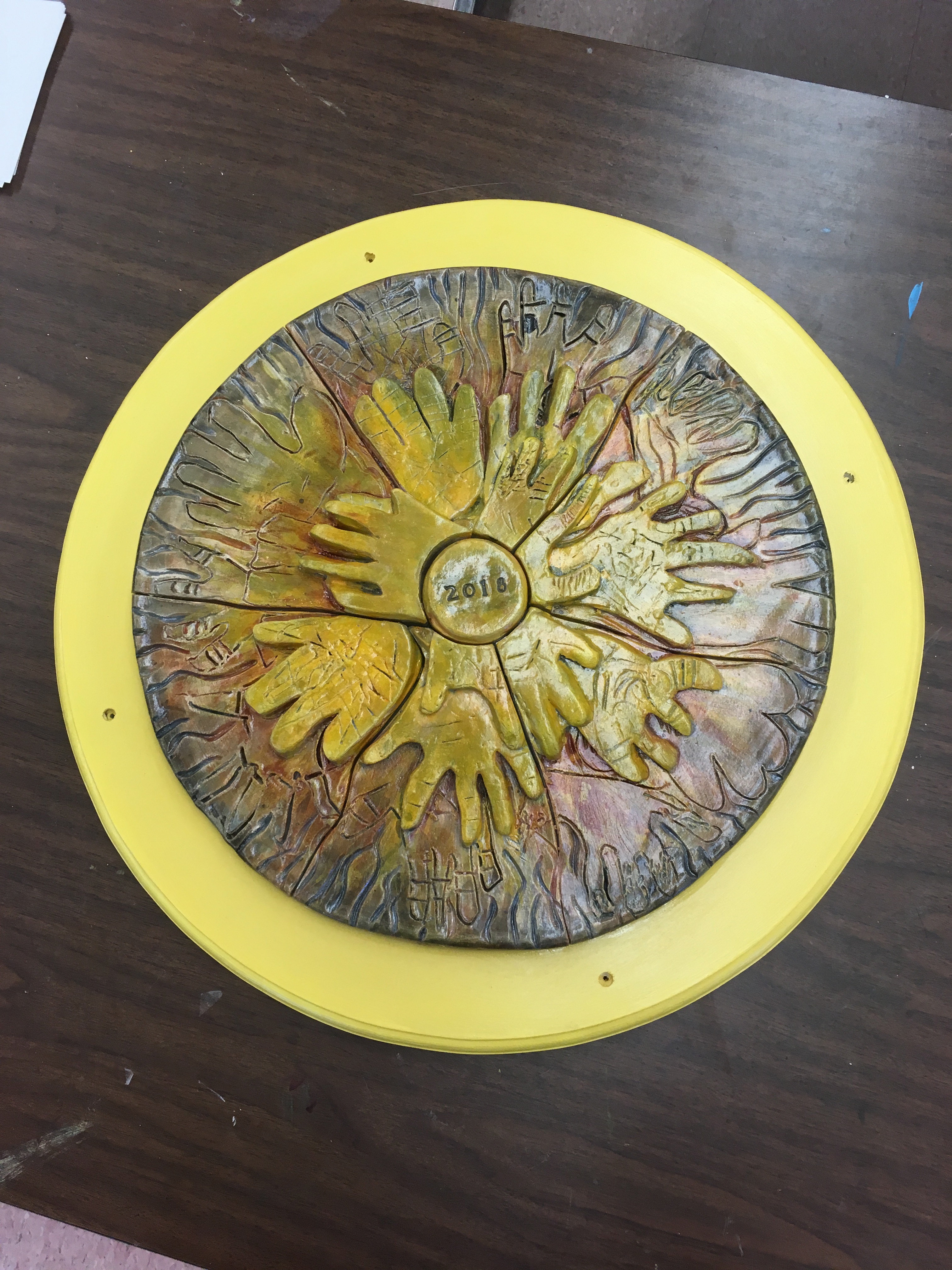
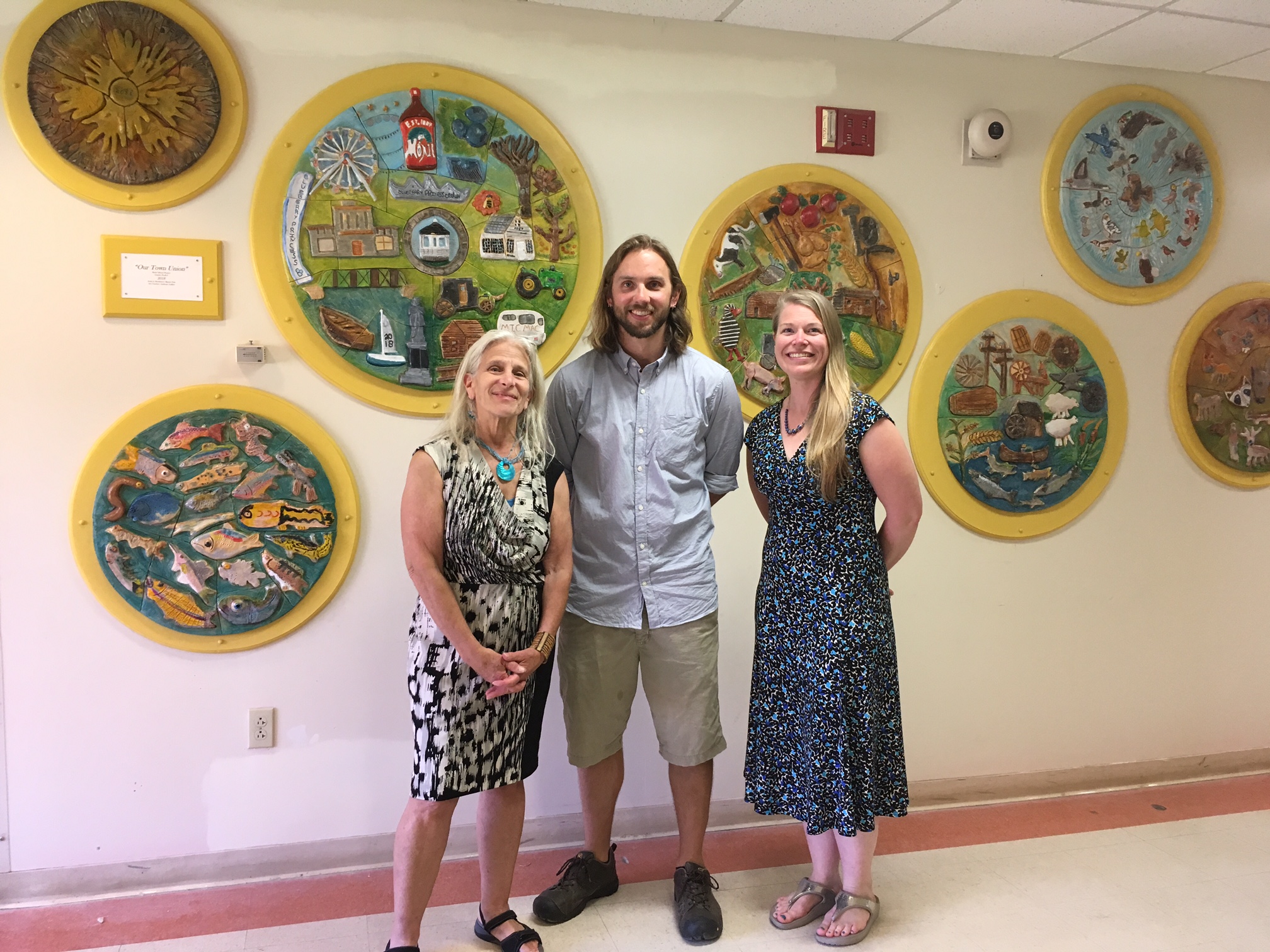
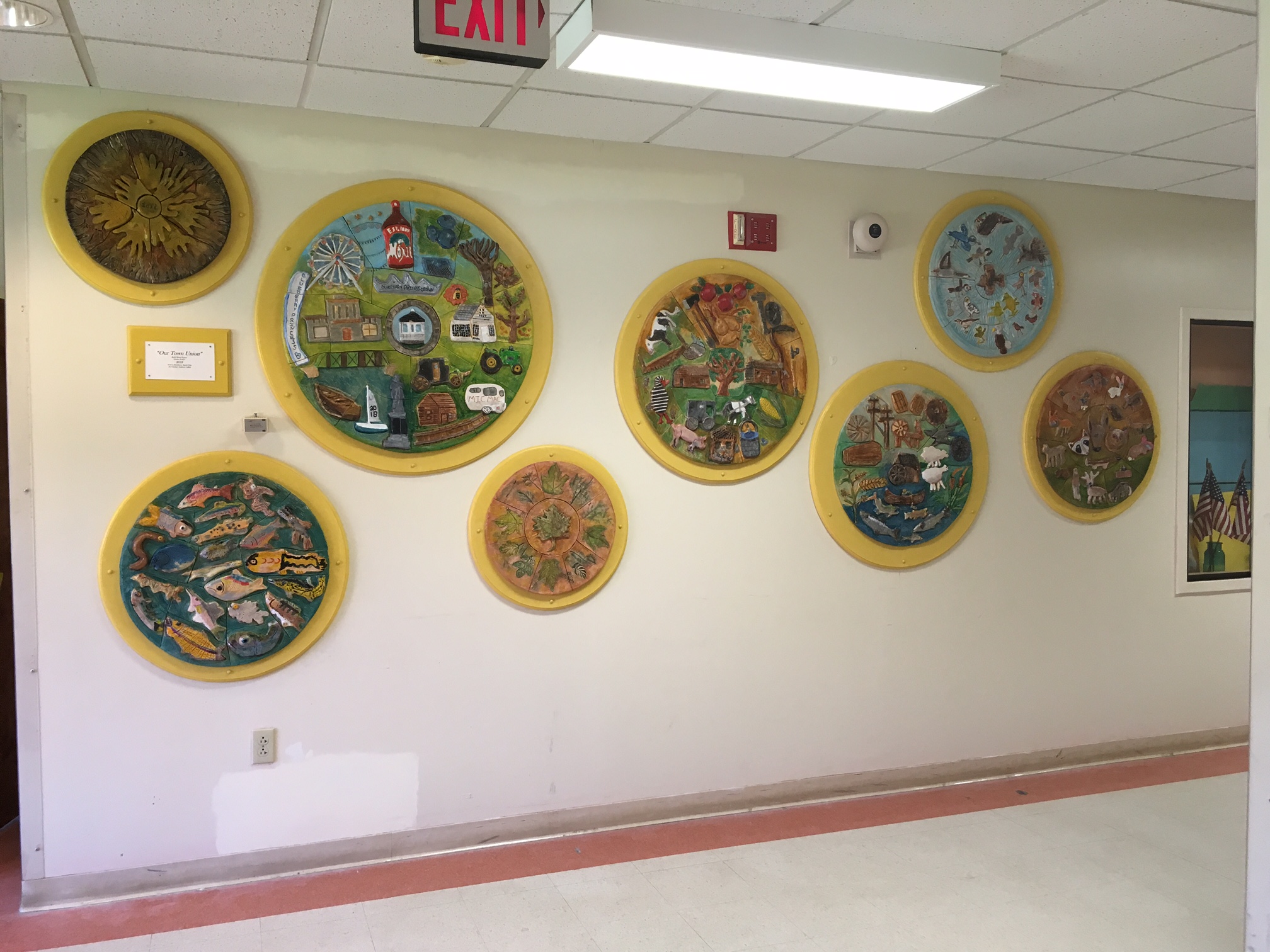
The theme of the ceramic relief mural is “Our Town Union” and had been planned for  almost 2 years before its completion in June. The mural celebrates the community of Union, including the history, environment and architecture and how students interact and connect with these components. The completed work will continue to educate future learners, young and older, about their community.
Hopefully you can get a sense of what it involved from the description and the photos embedded in the blog post. Please don’t hesitate to contact me (argy.nestor@maine.gov) about the MAC Arts Learning grants. Or contact teaching artist Randy Fein, her information is on the MAC teaching artist roster. Or contact art teacher Anthony Lufkin, who is the 2018 Knox County Teacher of the Year.
 This project was funded by an Arts Learning grant from the Maine Arts Commission ($2,300), the Perloff Foundation Fund ($2,000), and from the Maine Space Grant Consortium ($1,000).
Thank you to Anthony, Randy, and the school principal, Christina Wotton for the information in this blog and for working together with other staff to make this project so successful!
Describe the overall goals/plans that you’ve carried out with this learning opportunity for Union School students.
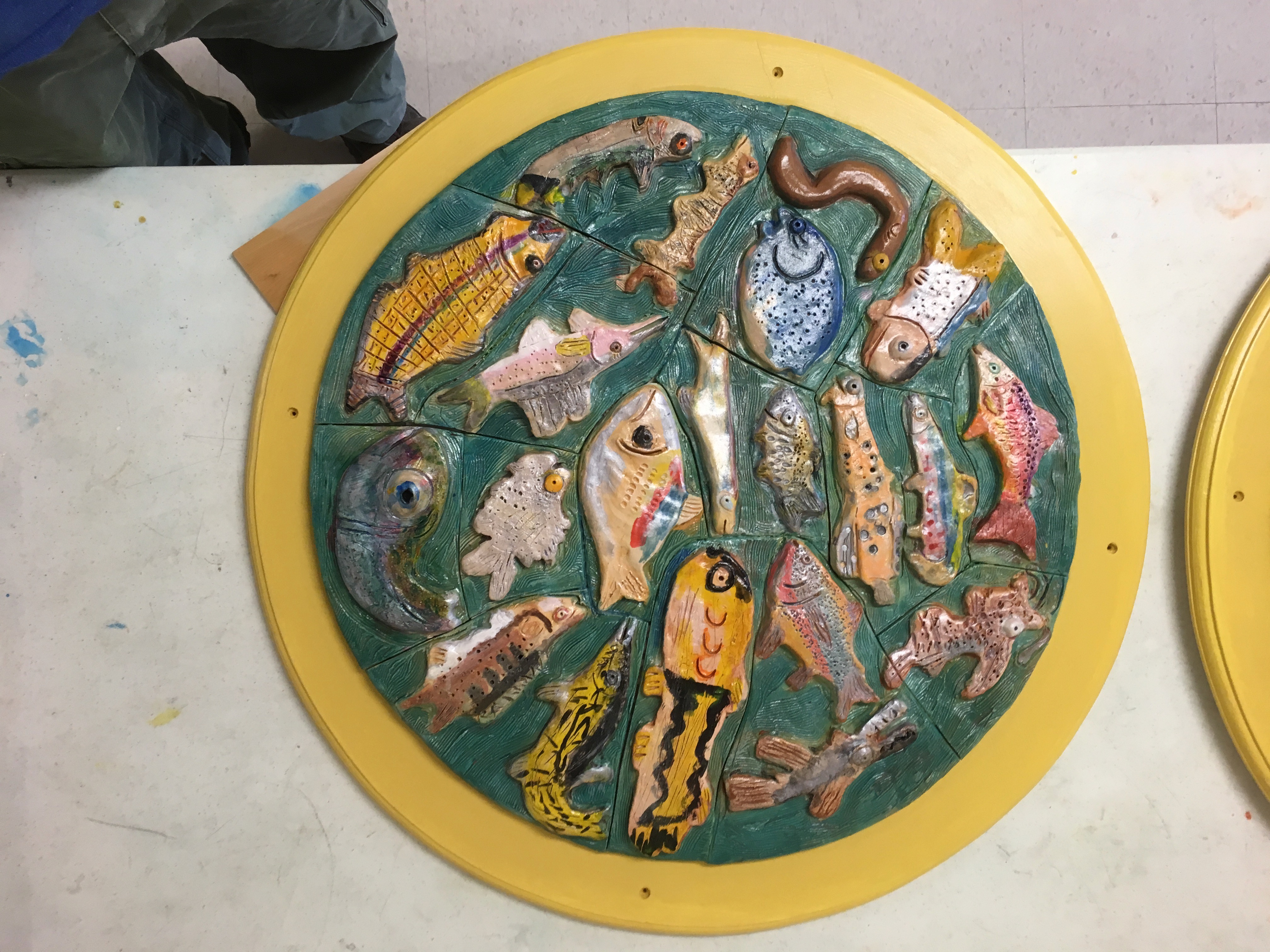
The overall goals for this project were two-fold. First and foremost, it is an art project with instruction and experience focusing on the medium of clay, but also with emphasis on communication through the medium. Throughout the process students have had to quantify their image development, making sure they are utilizing the medium to make their message clear, whether it’s a specific icon of Union historical significance, or the recognition the unique and identifiable features of native species. As a collaborative installation, it has become an experience that will be solidified in time and place.
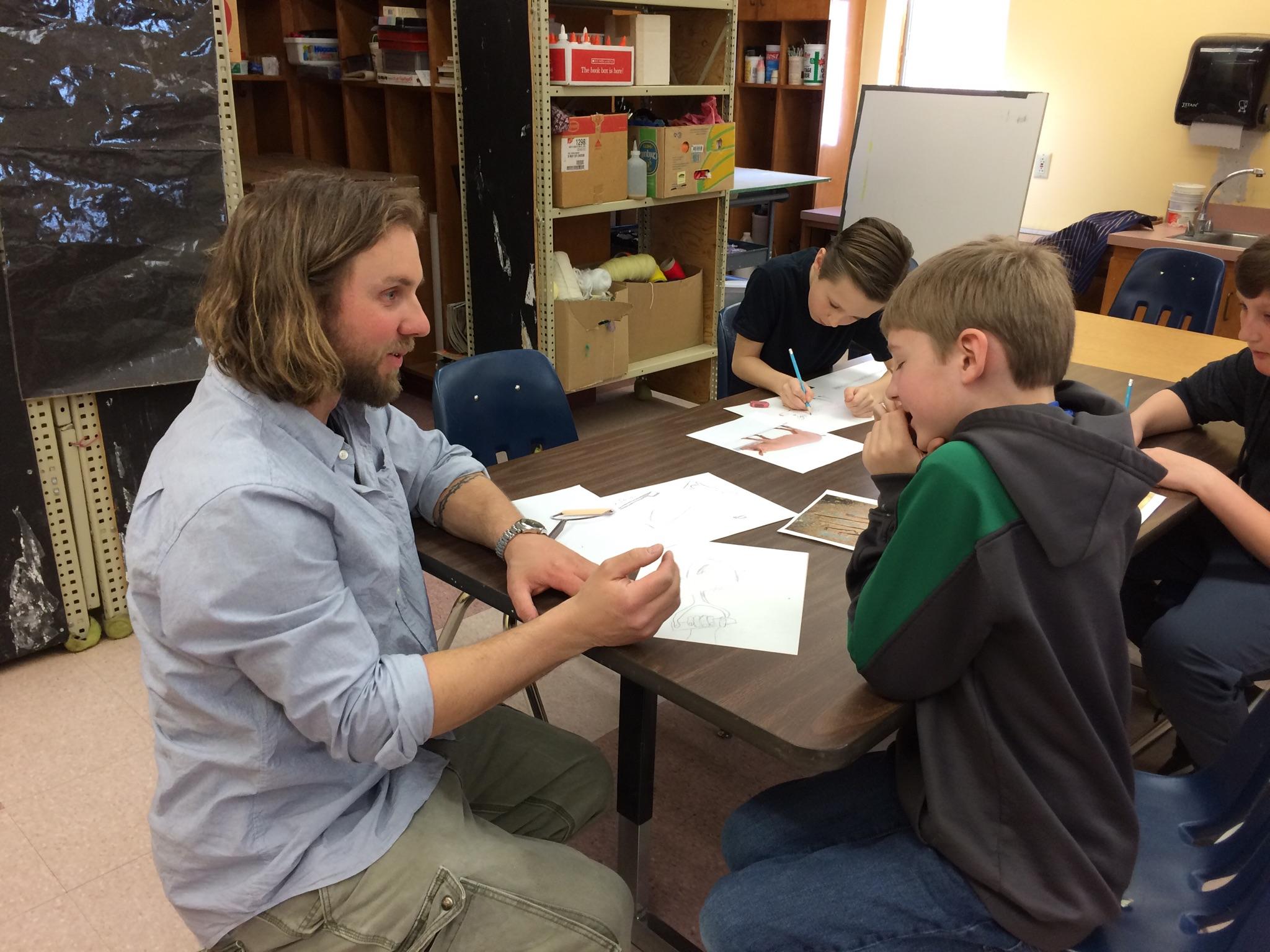
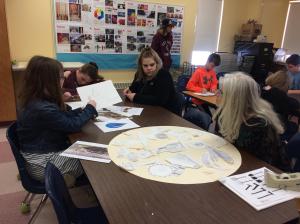 The second component, was to help foster connections with other subject areas and connect students with the local ecosystems and history of the community. Classroom teachers have been very helpful introducing the topics through multiple lenses. Students have had to research their subjects, and then use that research to educate their image development. Members from the Union Historical Society came in and presented to students in grades 4-6, giving them first-hand information about some of the past events that helped shape the town into what it is today. As students images developed through sketching and then sculpting, their understanding of the subject grew. They also learned much more about working with clay as a medium, and some of the logistics of putting together an installation like this.
 What do you see/know are the greatest benefits to students in having an artist in residency? What does Randy bring that supports/enhances your curriculum Anthony?
Having an artist come in through a residency like this does several important things. First, it is a “new” experience for students, having someone different offering new perspective and something of a “revitalizing” of the art concepts being taught. It also tends to change the structure of instruction giving students a chance for more in depth work and a closer look at some of the components of creating artwork in professional practice. Students have been able to really analyze the subject of their imagery and were committed to making a clear representation. It creates more instructional opportunity as well. With two art instructors working in relatively small groups, students receive more individualized instruction.
What do you hope that students will remember or will be saying in the near or far off future about the opportunity to learn this way?
 We hope that students have created a connection to this project whether through working with Randy, working on something of this scale, or with the subject matter they helped to generate. The emphasis of the project, both to make it happen, and to create the cross-curricular connections have transformed the normal schedule and so that alone may also have had an effect on student perception. Hopefully, students will recall the information learned through this process by being a part of it and by seeing it regularly throughout their elementary experience. With the nature of being an installation piece, it will hopefully remind students of the experience, give them a sense of pride in the work they were able to accomplish, and help scaffold future learning and understanding about art and the connections to community and environment. I think that students will become more aware of the opportunity this project has been as we get back into a more routine schedule again. I think that they will begin to recognize the hard work and time it takes to create something like this. I anticipate them to say in the next few years, “I did that,…its represents…”.
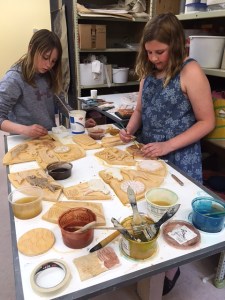 Hopefully, they will appreciate the opportunities they have had to work on something for extended periods of time with direct instruction from both Randy and myself. Hopefully, they will appreciate and help advocate for these opportunities in the future.
Stories
There were many interesting conversations early on with students especially around the topics of community and local development. Many students related to the community components based on where they live and how the natural and man-made resources have structured community as it is now. hey were able to identify features in the landscape or structures and were able to contribute to the conversation based on their experiences. Some were able to describe the lasting imprints on the landscape from Native Americans, the railroad, and several of the many mills. One student described the arrow heads his family had  found along the St. George River. Another talked about the dam at Morgan’s Mills. Many younger students also connected with their organisms whether from personal experience or from experiences by family members. I was surprised at how many had seen a bear! They definitely like to elaborate but there are clearly past events that could be the basis for some good folk lore.
ARTICLE from Village Soup about the residency.
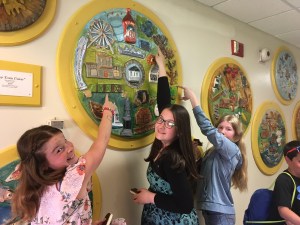

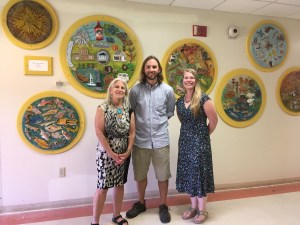
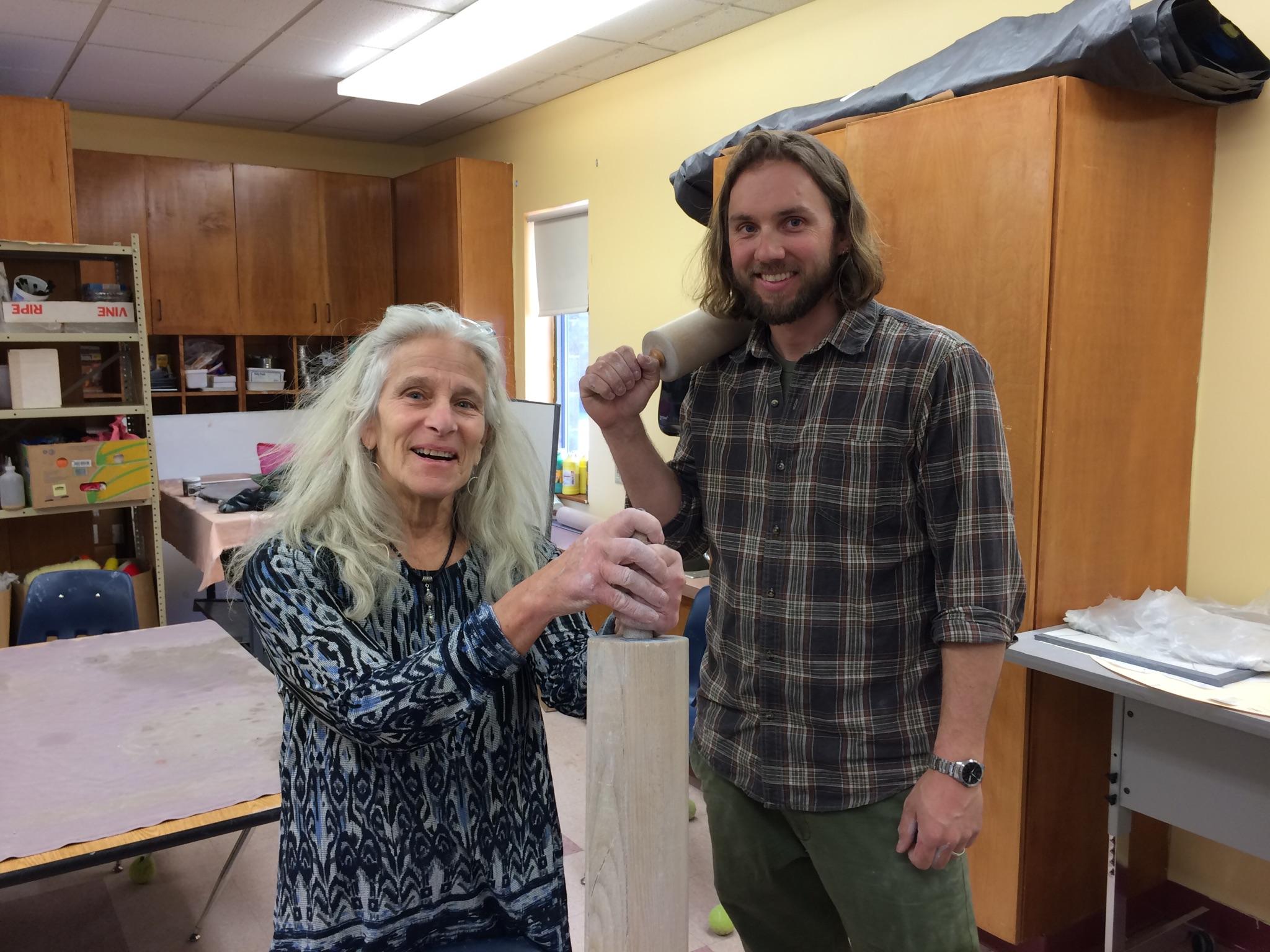
Randy, Anthony, and Christina
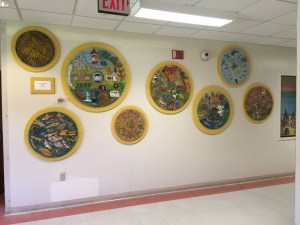




 me arts ed