Lesley University Lindsay Pinchbeck is teaching this course at her center in Hope, Sweet Tree Arts. Lindsay collaborated with Barb Vinal at the Summit on Arts Education, July 29-August 1, to present a session on integration. You can read about it by clicking here.
Posts Tagged ‘Lindsay Pinchbeck’

Integrating Teaching Through the Arts
August 10, 2014Arts Integration Session: Summit
August 8, 2014 An Introduction to Arts Integration
The session “An Introduction to Arts Integration” was provided for the participants at the Maine Arts Assessment Initiative Summit on Arts Education held July 29-August 1 at USM, Portland by Lindsay Pinchbeck and Barbara (Packeles) Vinal. Today’s post is information that they shared along with a plethora of resources during the session. Both can be reached if you have questions by emailing them: Lindsay sweettreearts@gmail.com Barbara barbvinal@gmail.com.
It was GREAT to have both Barb and Lindsay participate in the Summit. They have areas of expertise that the Summit participants benefited greatly from! Thank you Lindsay and Barbara for joining the MAAI community and sharing your richness!
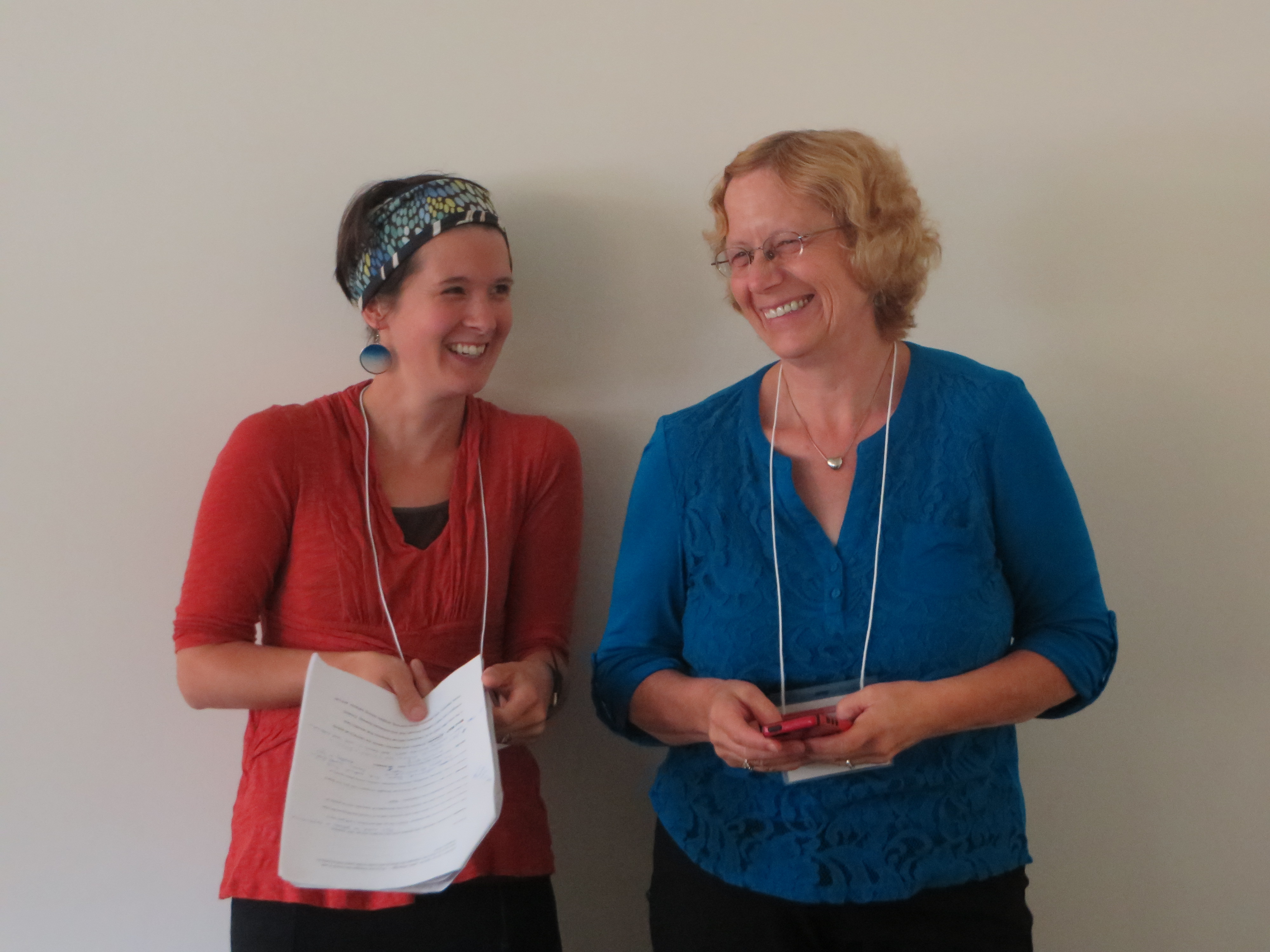
Lindsay Pinchbeck and Barbara (Packeles) Vinal Photo taken by Catherine Ring
About Lindsay Pinchbeck
Originally from Scotland Lindsay Pinchbeck came to Maine for her undergraduate degree. Lindsay has been teaching with and through the arts in a variety of settings for the past 15 years. Lindsay is now the director and founder of Sweet Tree Arts L3C, a community arts organization in Hope, ME. Pinchbeck gained her Masters in Education through Lesley University’s Creative Arts and Learning program. Creatively Lindsay works as a print maker and photographer. Lindsay believes the creative arts should be accessible to all. She encourages us to be active participants and keen observers with the hope of enriching our communities through the arts.
Collected ideas by Lindsay Pinchbeck
Arts integration brings the driving forces of the arts; story, drama, movement, poetry, visual thinking and music into our lives allowing us to deepen our knowledge as educators and to bring the feeling and emotion inherent in the arts into the curriculum. Further the creative process of Imagining, Creating, Critiquing, Exhibiting/ Performing allows students to retain their knowledge for life rather than just holding information for a test. We can also confidently say we are engaging in ‘21st century skills’ of communicating, collaboration, critical thinking and creativity.
“It is ironic, but the enlargement of life through the arts is a powerful way to see what is lifelike. By making things larger than life or by recontextualizing them, reality, whichever it is, seems to be made more vivid…..The arts provide a platform for seeing things in ways other than they are normally seen. In so doing they help us wonder, ‘Why not?”. – Elliot Eisner, The Arts and the Creation of Mind
When you engage in the arts you cannot escape the emotive qualities and questions which arise. The question which continues to come to the forefront when deeply engaged in the arts is ‘Why Not?’ This questioning allows us to take risks, and engage in innovative ideas and practices which propel us to higher level thinking and allows us to move forward as a society as well as in our own personal growth.
“If no one changes the world it will stay as it is, if no one changes the play it will come to the same end as before.” Augusto Boal.
Integrating the arts in an arts curriculum is just as important as integrating the arts into a math or science curriculum, as we are better able to meet the needs of variable learners in our classroom. The perception that art is a special talent attainable by just a few limits the potential for rich experiences in our classrooms and daily lives. Just as every child can learn to read and understand mathematical concepts so every learner should be expected to ascertain the skills to draw, sing or move with confidence and proficiency. These are measurable and attainable skills as the MAAI has proven and encouraged, and we can better meet the standards and needs of our students when we have more ways to engage many learning styles present in our classroom. With all the research now available on the success of Arts integration the question should be why are we not making this a standard in our approach to classroom teaching?
Process and Product are equally important in art making, as Elliot Eisner states –
“ The phrase ‘work of art’ can have two meanings. It can refer to work of art, or it can refer to the work of art. The former refers to the product created, the latter to the process of creating it. Aesthetic experience can be secured at each location.”
The value of process and product reminds us we gain from action as well as from observation and experience. For example standing in a museum and experiencing a pulsating Mark Rothko painting or listening to live music allows us to have both personal and shared experiences allowing for new thinking.
Arts Integration nurtures the teacher – Arts integration is enriching and engaging for the teacher. When you apply the creative process to your classroom you too are communicating, collaborating and applying critical thinking skills.
Empathy and Human Connection is also an important element to consider when engaging in the arts. When we connect with others through non-verbal experiences we are likely to experience an emotive response which encourages our empathic awareness. The arts offers us new perspectives; The child you are struggling to reach through your own teaching/learning style may let you in when given an opportunity to express herself through poetry or drama, allowing you another avenue to support.
Thus Arts Integration uses the power of the arts to learn more about the people we work with, ourselves included. It is truly about the human connection and having many ways in which to engage and deepen our understanding. Seeing with fresh eyes, listening to stories, moving through space together, are the elements of the arts we as arts educators know in our core. The ability to risk, play, make mistakes and create, allows us to engage deeply with students and inspires creative classrooms and schools.
Recommended resources:
Theory:
Jensen, E. (2001), Arts with the brain in Mind,
Robinson,K.(2011), Out of our Minds, UK, Capstone Publishers
Elliot Eisner, E (2002) The Arts and the Creation of Mind. New Haven, CT.
McLaren, K. (2013) The Art of Empathy, Boulder, CO: Sounds True
Powell,M.C. & Speiser V.M. (2005), The Arts, Education, and Social Change, Little signs of Hope, New York; Peter Lang Publishing.
http://www.arteducators.org/learning/learning-in-a-visual-age/summit-participants/elliot-eisner
http://www.edutopia.org/stw-arts-integration-research
Action:
Way, Brian. (1967) Development through Drama, London: Longman Group.
Gilbert, M. (1997) Creative dance for all ages. VA: National Dance Association.
Collins, B. (2005) The trouble with Poetry. New York, Random House.
Boal, A. (2002) Games for Actors and Non Actors, London, Routledge.
Hamilton and Weiss(2005) Children Tell Stories, New York: Owen Publishers
London, P. (1989) No More Second Hand Art, Boston, MA: Shambala.
About Barbara (Packales) Vinal
Barbara (Packales) Vinal – Hello! This year marks the end of my 23 years in the music classroom. I have taught music predominantly at the elementary level, a few years teaching high school and continue to teach piano privately. I spent 12 years in Maine teaching Elementary music in MSAD #11 – Gardiner; as a member of the DOE Learning Results Review Committee; and part of the Maine Music Educators Executive Board. In 2010 I moved to Raleigh, NC to continue to teach elementary music and also coach teachers in Technology Integration for the Wake County Public School System. I now am a Technology Integration Specialist full time. I also develop and teach online Fine Arts courses for LearnNC a division of the University of North Carolina.
Visual Art Assessment project by Barbara (Packales) Vinal
This project was done with Grade 5 but is adaptable to any grade level.
Driving Question: “How can I use technology to assess my artwork?”
Tools needed:
- Any device that takes digital pictures.
- PicCollage (available on any Smartphone, iOS device or Android device)
- Digital voice recorder – (built in to a Smartphone or stand alone)
- Web space for uploading finished product
- Optional: QR code generator and reader
Similar ways to use this type of assessment by modifying the media (video with voice over)
- Portfolio of various works/performances
- Music Composition
Black History Performance Project
This project was done with Grade 5 but is adaptable to any grade level.
Driving Question: “How can I create content for a performance about Black
History?”
Tools needed:
- Research medium (Discovery Education or guided Internet searches)
- Word processing program; Google docs or DE Board Builder
- Video camera
- Optional: Google forms for assessment
All links and tools will be found at:
http://maai2014artsintegration.weebly.com/tech-links.html
Twitter: @BarbVinal
Text or call: 919-607-6541
Sweet Tree Arts
December 18, 2013What is Sweet Tree Arts?
The following post was contributed by Lindsay Pinchbeck who I met about a year ago. I had the privilege of visiting with her at Sweet Tree Arts. It is a warm and welcoming space and Lindsay is a DELIGHT! I look forward to visiting another day when there are learners making magic as I imagine so easily taking place in the space.
Sweet Tree Arts logo:
Roots in the Community,
Branches to the Wider World.
Encouraging Creativity and Connecting Community through the Arts.
 Sweet Tree Arts is a community arts organization in Hope, Maine. Our mission is to educate, enrich and connect communities through the arts. Although are roots are based in Hope, working with our immediate rural community our branches reach nationally and globally bringing fresh voices and views through the arts to our community.
Opened in February 2013 Sweet Tree Arts is a place that encourages creative thinking, play and experimentation. We currently provide arts programming for preschool, elementary, middle school and high school students, visiting artists inspire adults at all ability levels and adults with special needs visit weekly. We offer drawing, printmaking, painting, drama, music, marital arts, storytelling, film, photography, quilting and sewing and expressive arts therapy. We also offer a low residency Masters in Education Integrating the arts across the curriculum through Lesley University.
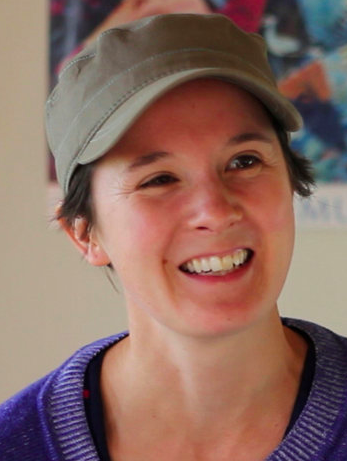 When I envisioned an arts center in Hope I saw a place that welcomed all out of the love of creating and creative living, a place where professional artists and amateurs could learn and work together. Hope is a unique hamlet with a small general store, a black smith, cobbler, bagpipe maker, and two retired circus elephants, so an art center fits in nicely in this eccentric village. Sweet Tree Arts work hard to respond to the needs and concerns of children, families, teachers, and members of our community. This is less about art making initially and more about responding creatively to community needs and suggesting creative solutions.
After almost a year working here I have thought again and again about the power of this SPACE in which we – my husband Chris Pinchbeck and I have created. How different ages move through the space or respond to different materials and personalities.
The movement through the space comes with emotion and power: For example a 3rd grader arrives off the bus after school hanging her head, tears held back, she takes a breath grabs a snack and dives into her mural project with fresh and welcoming faces. A middle school boy says each day he wakes up and hopes it’s a Sweet Tree day, because he can be himself in this space. A mother with 3 kids , has a cup of tea in the kitchen and finds a moment to sneak in a bit of creativity in her own day. An adult with special needs is wheeled over the threshold by his caregiver and handed a camera to show us the way he sees his world. I have learned over this past year, providing the space to take risks and try new things is at the heart of original thinking and creative possibilities. My role is less about offering art skills and materials although these are tools we foster and more about being ready for each person walking through the door. My goal is to provide the opportunity for individuals to grow through the creative process. We all have stories, we all have challenges and in our search for connection we can use the arts to respond, reflect and grow.
As the founder of the program I continue to consider how the act of creating a space for people to gather and connect is of great importance in a rural community. How the arts acts as a vehicle for us to connect and share ideas and I continue to marvel at the need to share story which is a part of us all.
The video located at http://vimeo.com/79822313 was created by a high school film maker Alex Forcillo. I was fortunate to meet Alex when he was six years old and pass him his first single lens reflex camera. Now a high school sophomore I am thrilled to reconnect and be a part of his creative process.
I believe the arts provides opportunities to connect and reconnect, experiment and play. I think it is of great importance we provide a safe place where children and adults can be free to try new things, try on new roles, speak their minds and grow and learn with their, hearts, minds and bodies. As Sir Ken Robinson and Einstein so beautifully said: “if you aren’t wiling to make a mistake you will never create anything new.”
You can follow what’s happening at Sweet Tree Arts by going to their blog at http://sweettreearts.wordpress.com/.

 me arts ed