Posts Tagged ‘MAAI’

h1

Another Arts Teacher’s Story: Mari-Jo Hedman

April 9, 2013

This is the 26th in a series of blog posts telling arts teacher’s stories. The first 19 were told last year by the phase I Maine Arts Assessment Initiative teacher leaders. The  series continues with the stories from the phase II teacher leaders. These posts contain a set of questions to provide the opportunity for you to read educators stories and to learn from others.
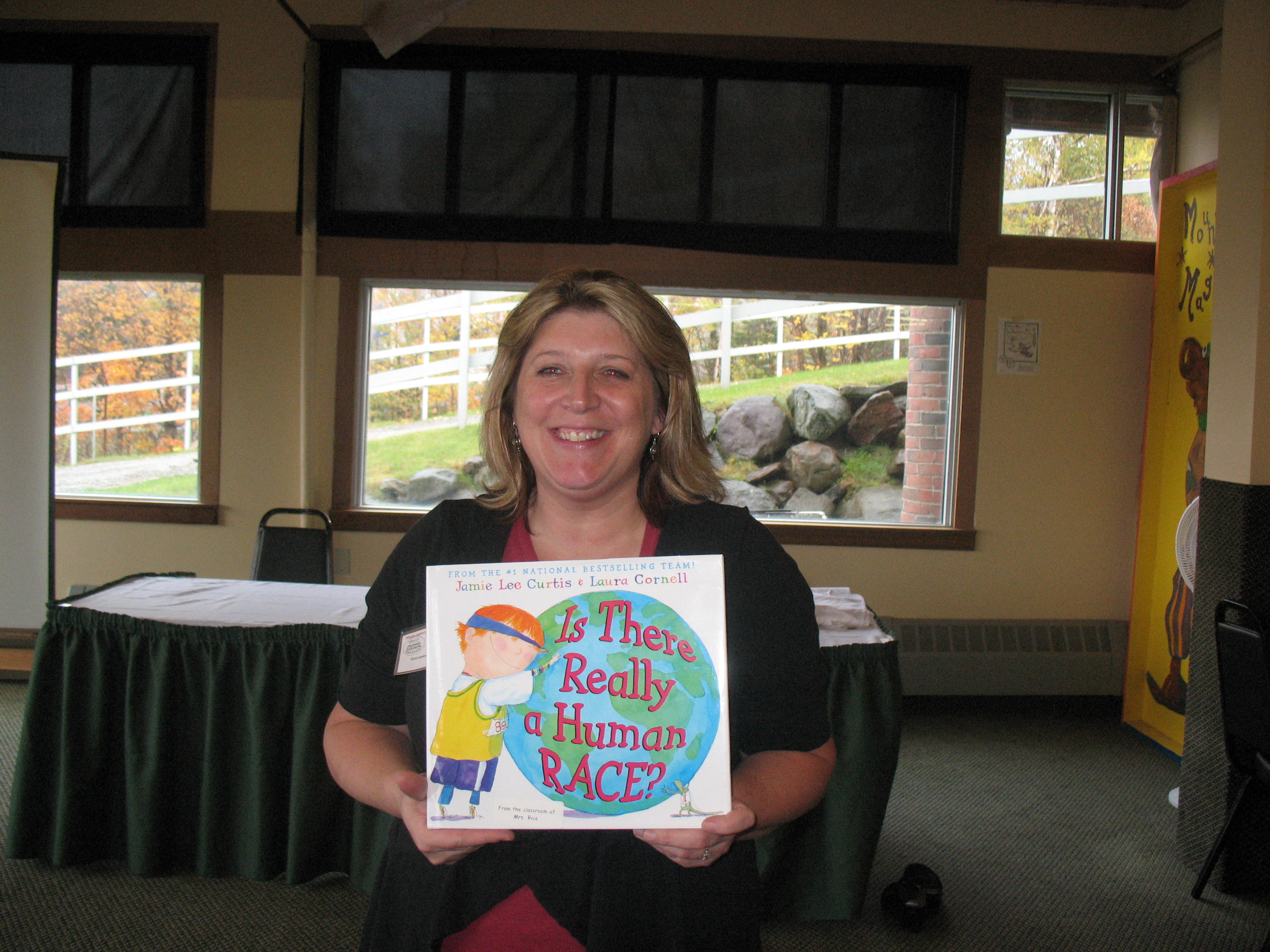
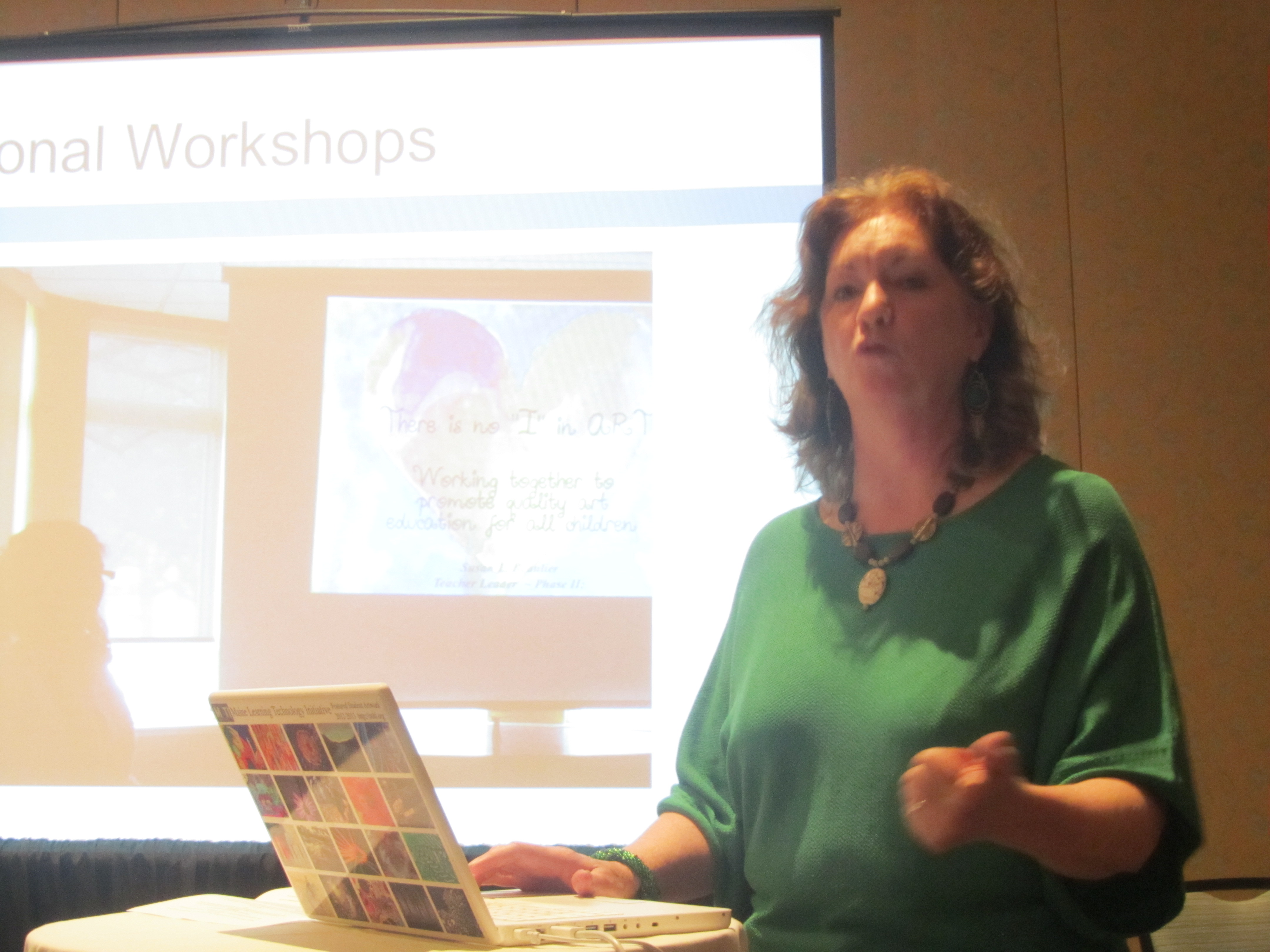
IMG_0096Mari-Jo Hedman has been teaching music since the fall of 1982 after graduating from the University of Southern Maine with a B.S Degree in K-12 Music Education. Mari-Jo is currently teaching K-12 music in the Fort Fairfield School District, MSAD #20.  She has taught in this district for a total of 17 years. She has also taught in Mars Hill, Caribou, and Union #122, which was at the time comprised of Stockholm, New Sweden, Westmanland, and “the other Woodland”.  In MSAD #20, she is responsible for about 300 students K-12 and teaches everything from classroom K-5, beginning 5th grade instrumental and band, 5th grade chorus, 6-8 chorus and 9-12 chorus. Mari-Jo also teaches a piano/percussion class at the high school.

What do you like best about being a music/art/drama/dance educator?

I love the fact that I work with grades K-12 because I can really see the growth from the first day of kindergarten right up until the day they graduate from high school, providing they continue with the vocal music program throughout their middle/high careers. I also love seeing kids come in that are struggling with many other classes in school, but they thrive in the music classroom.  That makes my day!

What do you believe are three keys to ANY successful visual and performing arts education?

  1. There needs to be a well-rounded curriculum that allows for as many musical experiences as possible. For most students, except for the music they hear on the radio or TV, their only musical experiences will take place as part of what I offer in the music classroom, and extend to the musicians that I bring into the school, or the local field trips that we go on.
  2. You need to LOVE what you do so that you can get your students to pick up on that excitement and want to keep coming back for more. You need to get the students turned on to music as soon as you have them in your classroom for the very first time.
  3. You really need keep up with what your students are listening to and try to incorporate some of their musical choices into the curriculum. It helps me to stay excited about what I am doing when I see a student come to me and they can’t wait to show me their newest favorite song that they just can’t live without. They especially love it when I like it enough to buy it and add it to one of my playlists.

How have you found assessment to be helpful to you in your classroom?

I am the only “special” in our system that truly does assessments and gives grades like the “regular” classroom teachers. I find that it gives me an opportunity to get to know each and every student’s needs and accomplishments and be able to communicate that to the parents. I think that this has benefited me in regard to justifying that music is essential, especially in these days of budget and job cuts. I also feel that students have a better understanding of what and how they are doing. It also helps students know on what they need to continue working.

What have been the benefits in becoming involved in the arts assessment initiative?

MAAI has been such a breath of fresh air for me in regard to assessment. Being with so many creative and hard working minds, sharing and receiving great ideas as to how assessment is done, what works and what doesn’t, has been true incentive for me. It has really made me look at what I am doing in my own classroom. I have so many new ideas and have tried some new things in not only elementary classrooms, but up through the middle/high levels as well. I have made strides in the right directions, but still have a long way to go.

What are you most proud of in your career?

I am most proud of students who have continued on in some aspect of music after they leave the halls of Fort Fairfield Middle High School. It is so humbling to realize that you have had enough of an impact on a student that they want to pursue a music career or maybe sing/play in some local music groups. The other thing that I am most proud of is the student that struggles and just keeps at it and at it until he/she finally gets it! I love to see the pride in children’s faces when they overcome that musical “hurdle”.

What gets in the way of being a better teacher or doing a better job as a teacher?

The massive amounts of paper work or details that are constantly added to our plate. It would be great to be able to just focus on teaching!

What have you accomplished through hard work and determination that might otherwise appear at first glance to be due to “luck” or circumstances?

I have been fortunate to get some grant money that helped to enhance the elementary program by offering new opportunities that otherwise our school district would not have been able to afford. I have a wide variety of percussion equipment for 5th percussion ensembles, ukuleles which I also teach at grade 5 along with enough piano keyboards to use in a group of 30 students if I ever had that many. I still do recorders in grade 3. It doesn’t magically happen. This also requires a solid underlying curriculum in grades K-2 in order to prepare students for being successful in developing the skills and knowledge needed in order to perform on these instruments.

Look into your crystal ball: what advice would you give to teachers?

As an arts teacher, you always have to have a clear vision of what you want your students to accomplish.  Be creative and think outside of the box when building your curriculum and the musical experiences that you want to offer your students. Be diligent and don’t take “no” for an answer. If you want/need something badly enough, fight the fight to get it and don’t give up.  You will be majorly reward in the end.

If you were given a $500,000.00 to do with whatever you please, what would it be?

I would use this as a start up fund for a new performance facility. Currently there is not a place at the elementary school where all grades that I teach, K-5, can be at the same time while including friends and families. This means I have to hold concerts in the high school gymnasium OR split the concerts over a two-night span of K-2 then 3-5. This performance also takes place in the gymnasium. Right now we split the concert into two nights. There is only room for one performing group and the audience. The other groups must wait in their classrooms until it is their turn to perform and we do not have a set-up that allows them to watch ongoing performances. A performance venue such as an auditorium would be a dream!

Imagine you are 94 years old. You’re looking back. Do you have any regrets?

I wish that once I had started teaching in Fort Fairfield I had stayed in that one location. Moving around and coming back to Fort Fairfield 3 times during my teaching career put me at a disadvantage and more importantly, the students were at a big disadvantage. We used to have large performing groups, competitive show choirs and jazz choirs, as well as an active music boosters organization that allowed us to travel as a group every 2-4 years. We went to Boston and Halifax, Nova Scotia for competitions in which we did well. By not staying put in one school system it allowed other teachers to come in that were not competent in the same areas. It truly hurt our extra-curricular groups to the point that we have none of the things listed previously. Consequently it has also hurt our regular concert choir and concert band; we are a fraction of the size that we had in the past. Our school enrollment is so small that I know we will never have the opportunity to get that quality of program to return. Very sad!


h1

Another Teacher’s Story: Gloria Hewett

April 2, 2013

This is the 25th in a series of blog posts telling arts teacher’s stories. The first 19 were told last year by the phase I Maine Arts Assessment Initiative teacher leaders. The  series continues with the stories from the phase II teacher leaders. These posts contain a set of questions to provide the opportunity for you to read educators stories and to learn from others.

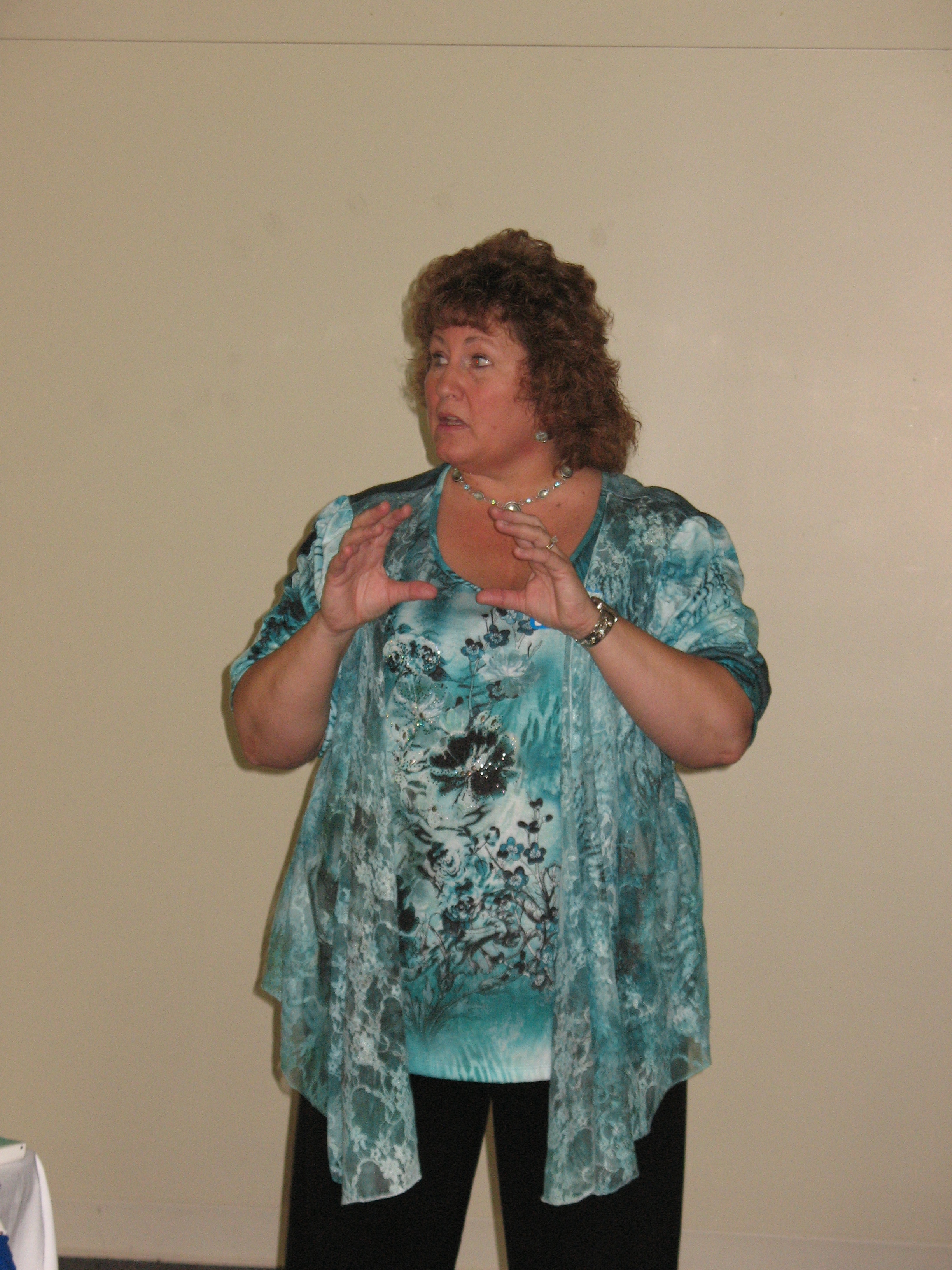
GloriaGloria Hewett has been teaching art for 24 years. For the past 13 years she has taught middle school art at Mount View Middle School in Thorndike. Gloria works with about 380 students during the school year in five, seven week rotations. She has 4 classes a day and sees her students every day for 7 weeks. She has a beautiful, new art room. In Gloria’s words: “It’s the best room I’ve ever had and I’m very happy here.
When I look back at my teaching career I realize how far I’ve journeyed as a person and a teacher. I started out my teaching career in Richford, Vermont, one mile from the Canadian border in a small, poor high school. I had an L shaped room with one tiny window in the back that I could barely fit through if there was an emergency. My room was under the gym and adjacent to the shop on one side and the band room on the other and with no sound proofing. I had daily headaches from no ventilation and the noise. My principal never came to my room to see how I was doing, not even once. I taught there for two years and determined that I needed to go back to school to get my masters degree and for the next two years I studied at the University of Arizona in Tucson.”

What do you like best about being an art educator?

Perhaps the thing I like best about teaching art is being surrounded every day by the energy of students learning about art, in whatever form that takes.  I like thinking that I’m bringing to my rural students an awareness of the possibilities of art within their lives.  I believe that a good teacher is paramount to a successful art education.  I also believe that students have success when they feel honored and respected as individuals.  Administrative support is also primary to the success of an art program and I have that in my district and within my building.

How have you found assessment to be helpful to you in your classroom?

I have been assessing student work for my entire teaching career although it has changed drastically from my first year as a teacher to the way I assess student work now. My students are involved in creating criteria for their work and they also help to assess their own work. Because students are involved it helps them to understand their learning and their progress more fully. I find it makes my part in the assessment process more comfortable because students are a part of it, it’s no longer me alone who determines their progress and their success.

What have been the benefits in becoming involved in the arts assessment initiative?

By being a part of the Arts Assessment Initiative I have looked more closely at what I do as an art teacher, both how I teach and how I assess. Assessment is not just about assessing but about how to make teaching better for students. I see assessment from the viewpoint of a student much differently now and that has helped me to be a more informed teacher. I’ve also learned much from working with my arts peers and gained a lot of confidence and support as part of the initiative. We, as arts teachers, work in such a bubble sometimes that we forget the bigger picture and working with other arts teachers over this last year has given me new perspective and new energy to continue to grow as a teacher.  It has also given me the impetus to continue to stay current within my field and to try to spread that growth within my own district.

What are you most proud of in your career?

I’m proud of the fact that I am still an energetic and involved teacher, that I create excitement about art for many of my students and that I still love my job and working with students. I believe that in the end it all comes down to the positive impact that we have on students and I believe I still have that. I do find that sometimes scheduling creates problems for me to do my best work.  As teachers we end up working around the needs of the institution and the time frames that drive that institution. We work around lunch and the high school and elementary schedule because we are in one building. We have many factors that need to be taken into account and sometimes it feels as though the schedule is more important than the needs of students.  And time, time is always an issue, probably for all teachers everywhere. Time to meet with colleagues, time to plan, time to reflect, time to help students stay on track, and time to relax.

What have you accomplished through hard work and determination that might otherwise appear at first glance to be due to “luck” or circumstances?

I feel that one of the reasons I have such good administrative and community support is because people do recognize my hard work and my true caring for my students and my program. I think people see that I put in a lot of time and effort to make my program successful. If I were to look ahead into the future I would advise young teachers to stay current in their field and to work toward things that benefit all students and not just the gifted few. I would suggest teachers create a good relationship with their administrators and community by having art shows and showing the public what happens in their programs.

If you were given a $500,000.00 to do with whatever you please, what would it be?

If I had lots of money to spend I would create permanent display areas for both two dimensional and three dimensional art within the lobbies of all the schools within my district. I would add an art room to each of the elementary schools in my district so the art teachers didn’t have to teach from a cart. I would add another art teacher to our high school so our students had more choices during the day to take art. I would make it possible for every student in middle school to visit an art museum at least once. I would put chorus and band back into our elementary music programs. I would also add a theater program and a dance program.

If you were given a $500,000.00 to do with whatever you please, what would it be?

I can imagine myself at 94 being just as full of energy and excitement as I am now. I can see myself still making art and even being involved with young people in some capacity. I can see my love of art being a part of my life even at 94, it’s the one thread that has remained constant since I was a little girl and I don’t see that changing. Regret my life and what I’ve done? Never. I will always strive to be the best that I can be, that will never change.

Thank you for sharing your story Gloria!

h1

MAAI Update!

April 1, 2013

Last 2 weeks!

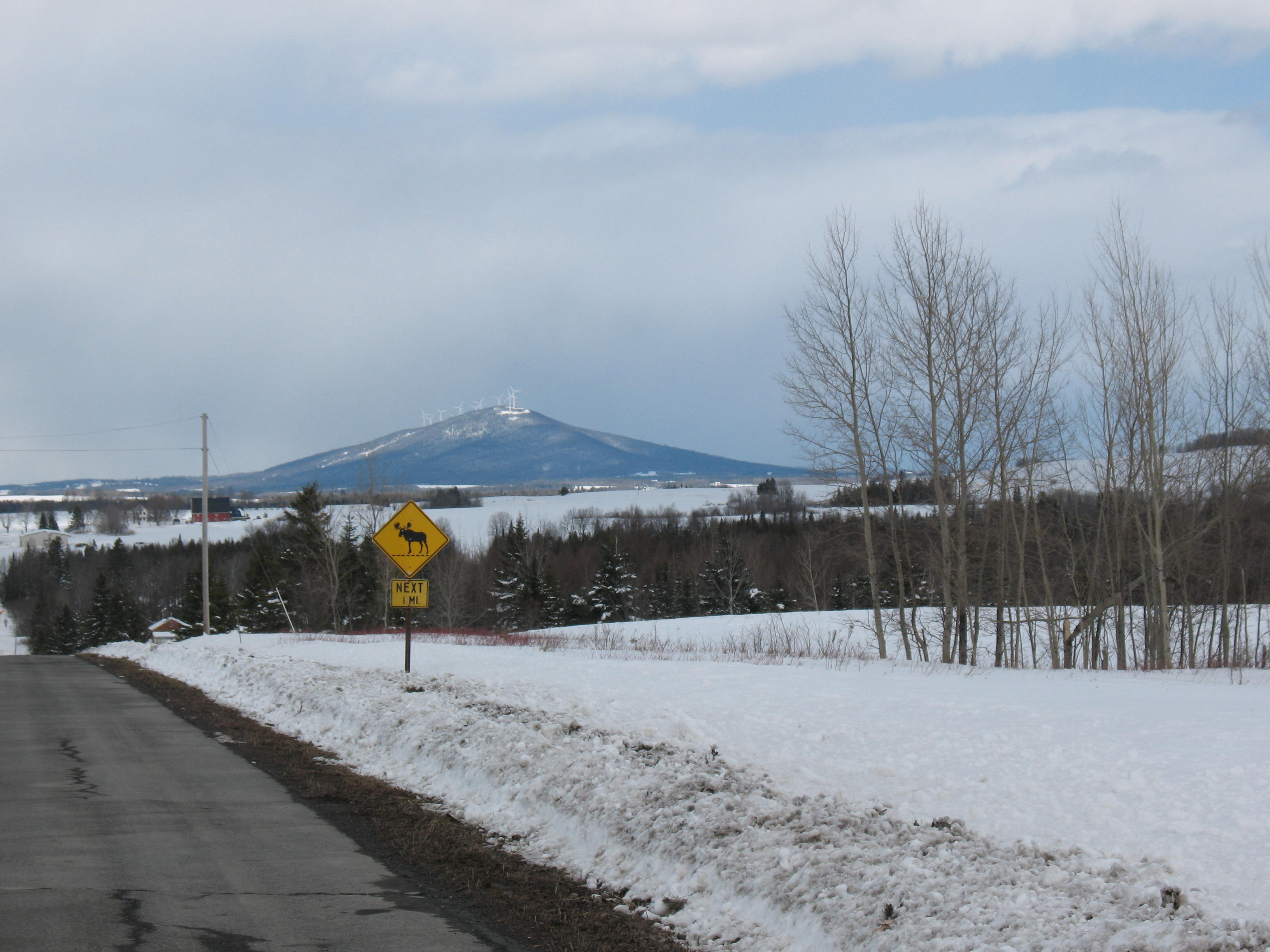
IMG_2891

Windmills at Mars Hills in the distance

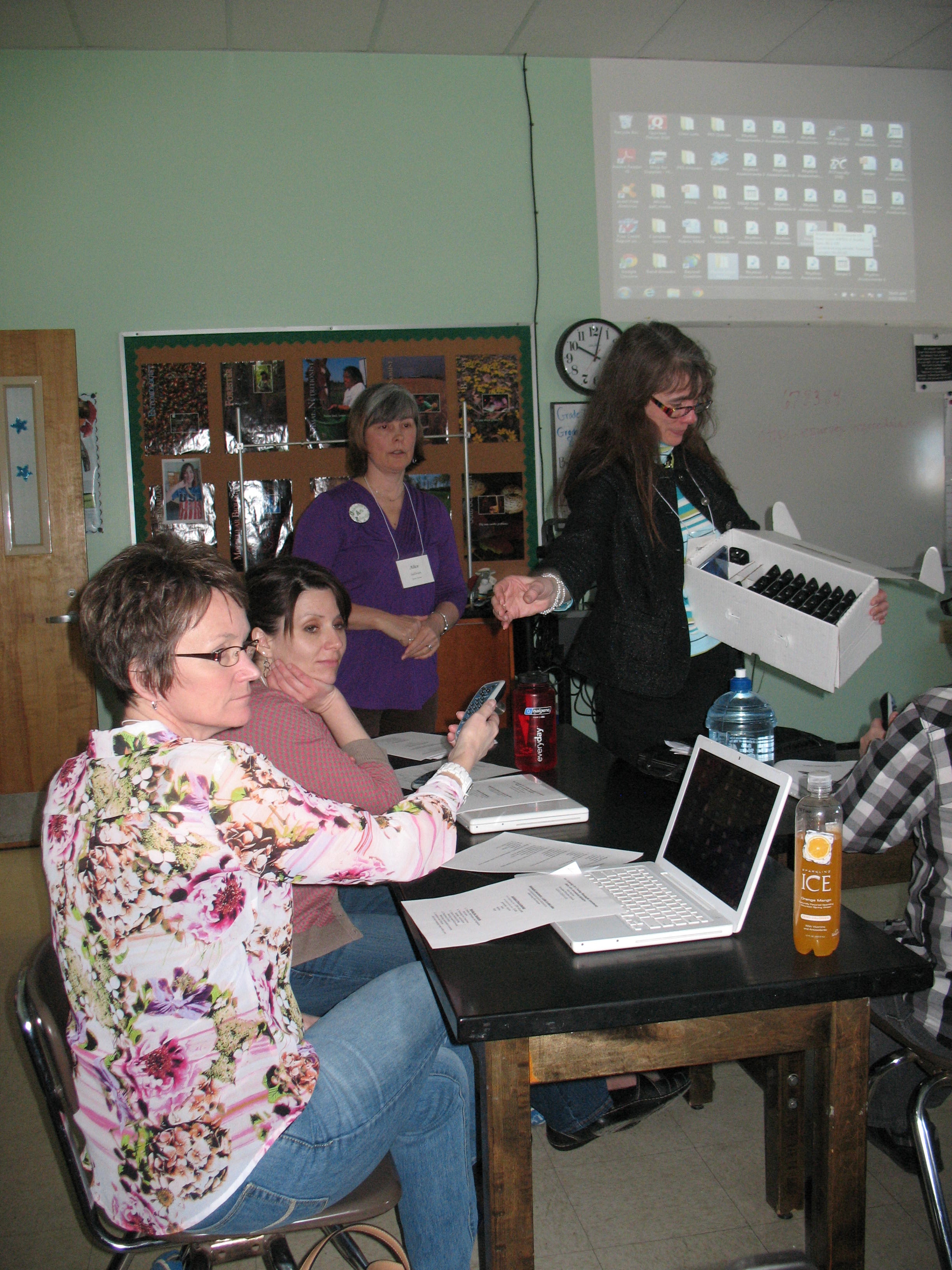
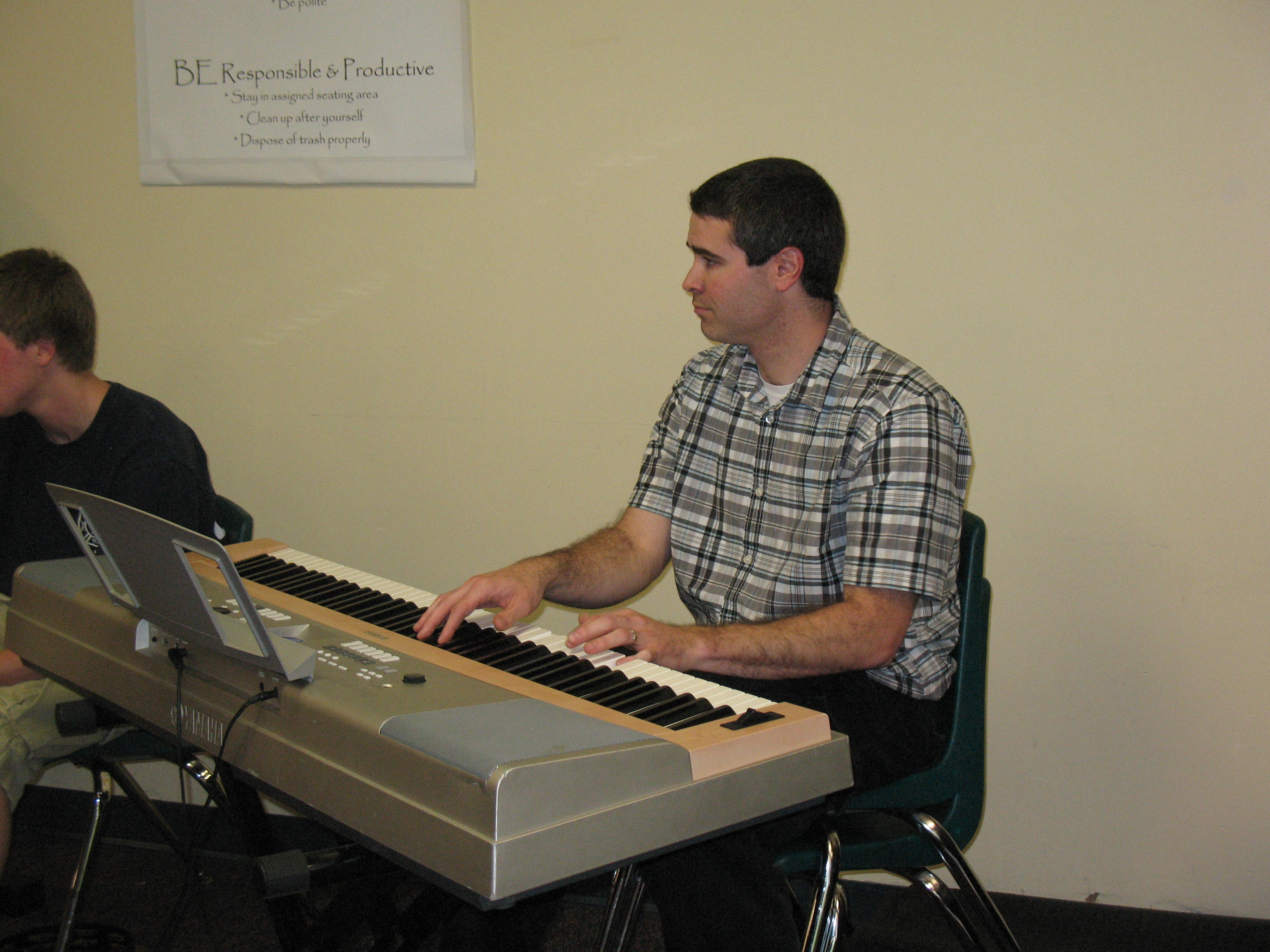
It has been a wild and crazy last two weeks for the Maine Arts Assessment Initiative (MAAI). We’ve had two very full and successful Mega-Regional Workshops. You can read about the workshops that were presented at http://www.maine.gov/education/lres/vpa/assessment.html#megaregional. One was held at the Easton Schools on March 22nd with music teacher Pam Kinsey hosting the event. A great big thanks to teacher leaders Sue Beaulier, Mari-Jo Hedman, Alice Sullivan and Samantha Orchard for providing workshops. Along with them we had an integrated workshop with Ann Marie Hutton (MLTI) and Pam and two MLTI workshops with Lindsey Farnham and Ann Marie, Tim Hart and Jim Wells. Thank you to all involved and the 28 visual and performing arts teachers from Aroostook and Washington Counties who participated.

IMG_2939

Pam’s students perform for the Mega-regional participants!

IMG_2908

Alice’s session

IMG_2922

Samantha answers a participants question

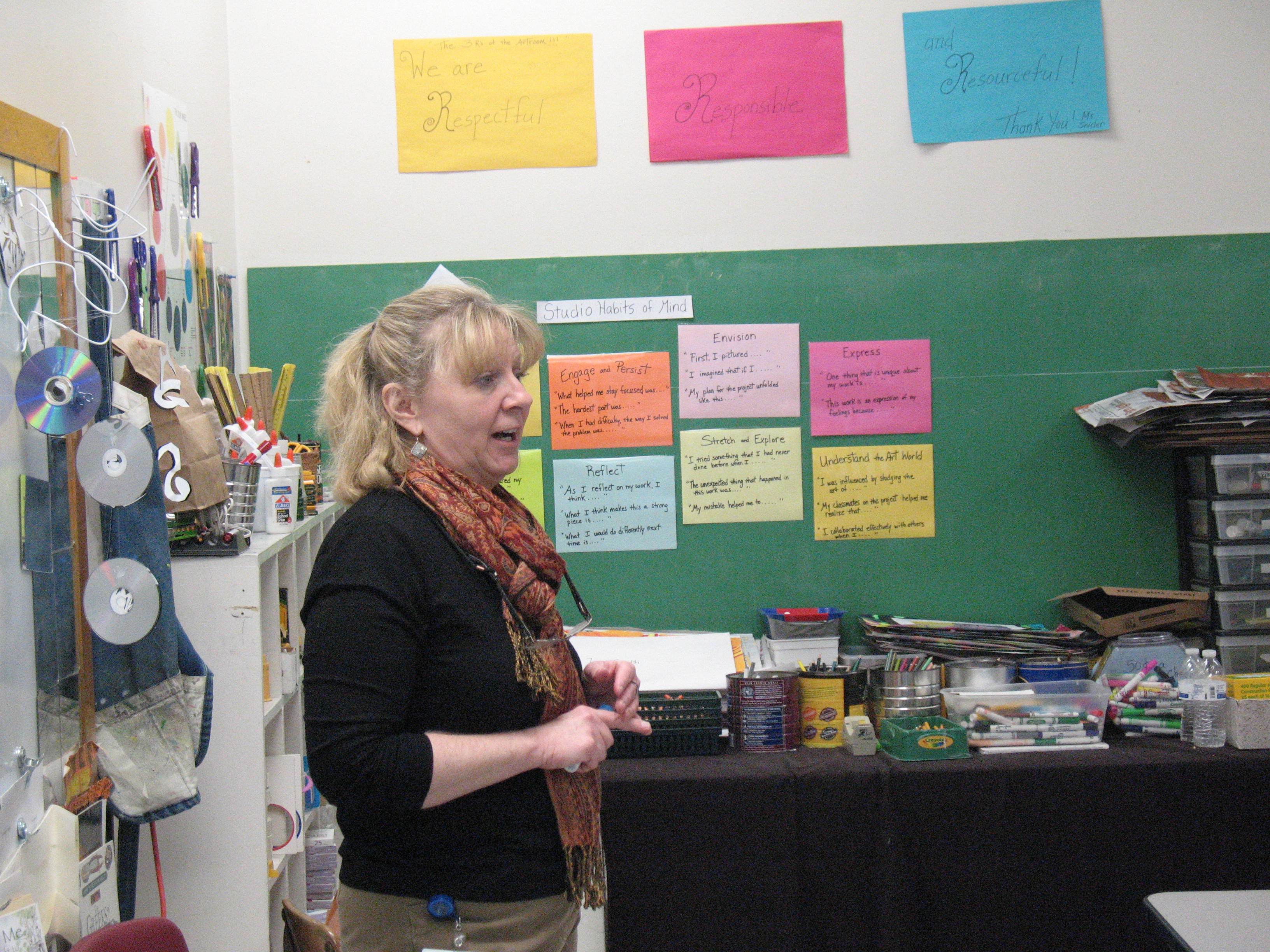
On March 29th we had a second Mega-regional workshop at Ellsworth High School with theatre and teacher leader Rebecca Wright hosting the event. Thank you to the MAAI teacher leaders who presented: Andria Chase, Sarah Williams, Jane Snider, Charlie Johnson (who brought colleague Dan Stillman and two students), Suzanne Southworth, Lisa Marin, Chris Milliken, Shannon Westphall, and Bonnie Atkinson. We had two MLTI integrated sessions with Lindsey Farnham and Charlie, Rebecca and Ann Marie. PM MLTI sessions with Lindsey, Ann Marie, Tim and Jim. Our most attended Mega-regional workshop with 80 participants!! YAY for everyone!

IMG_3037

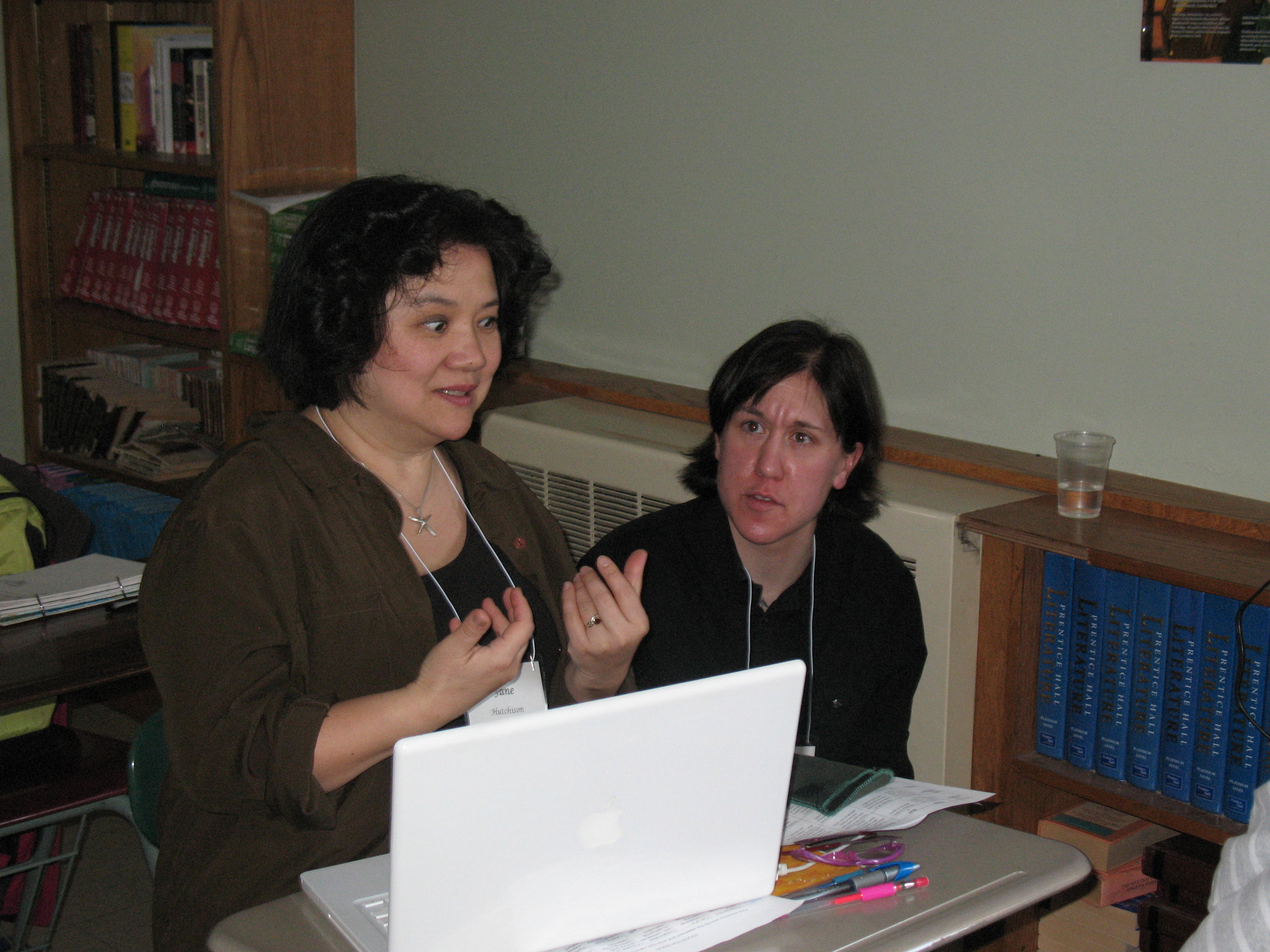
Amanda and Jon planning in Rebecca and Ann Marie’s session

IMG_3000

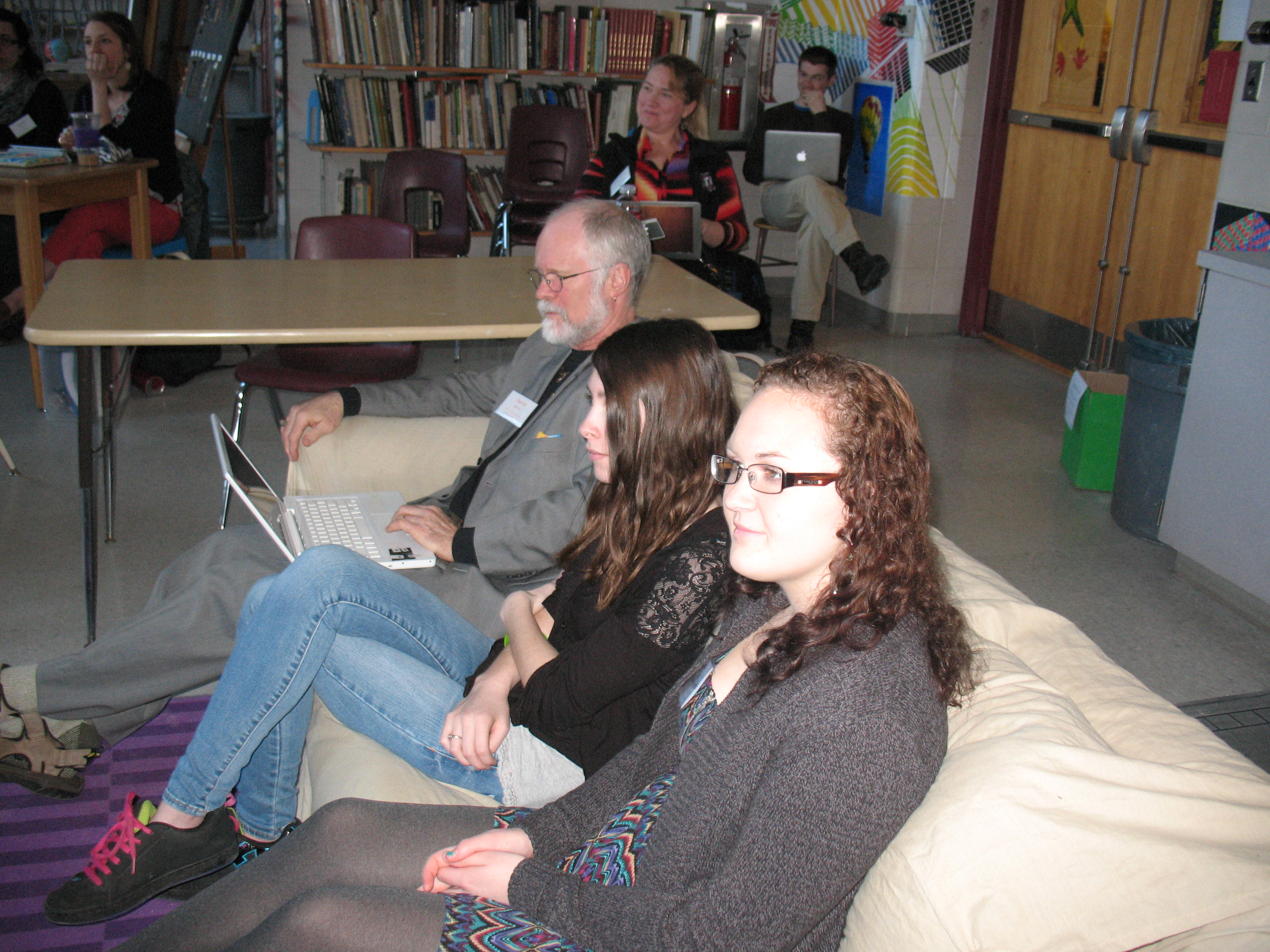
Charlie Johnson and students listen to Dan Stillman present

IMG_3052

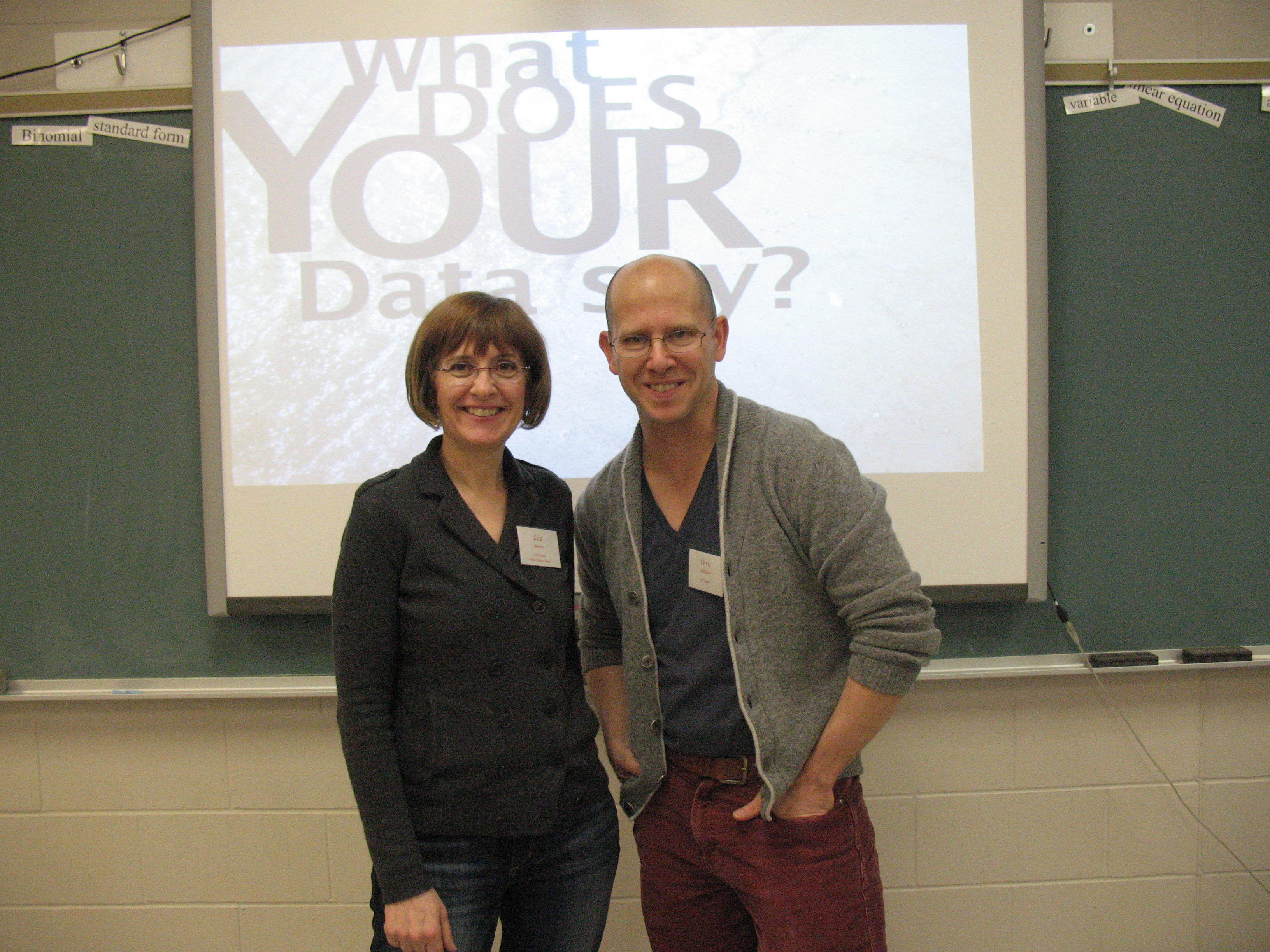
Lisa and Chris present the research findings

IMG_2991

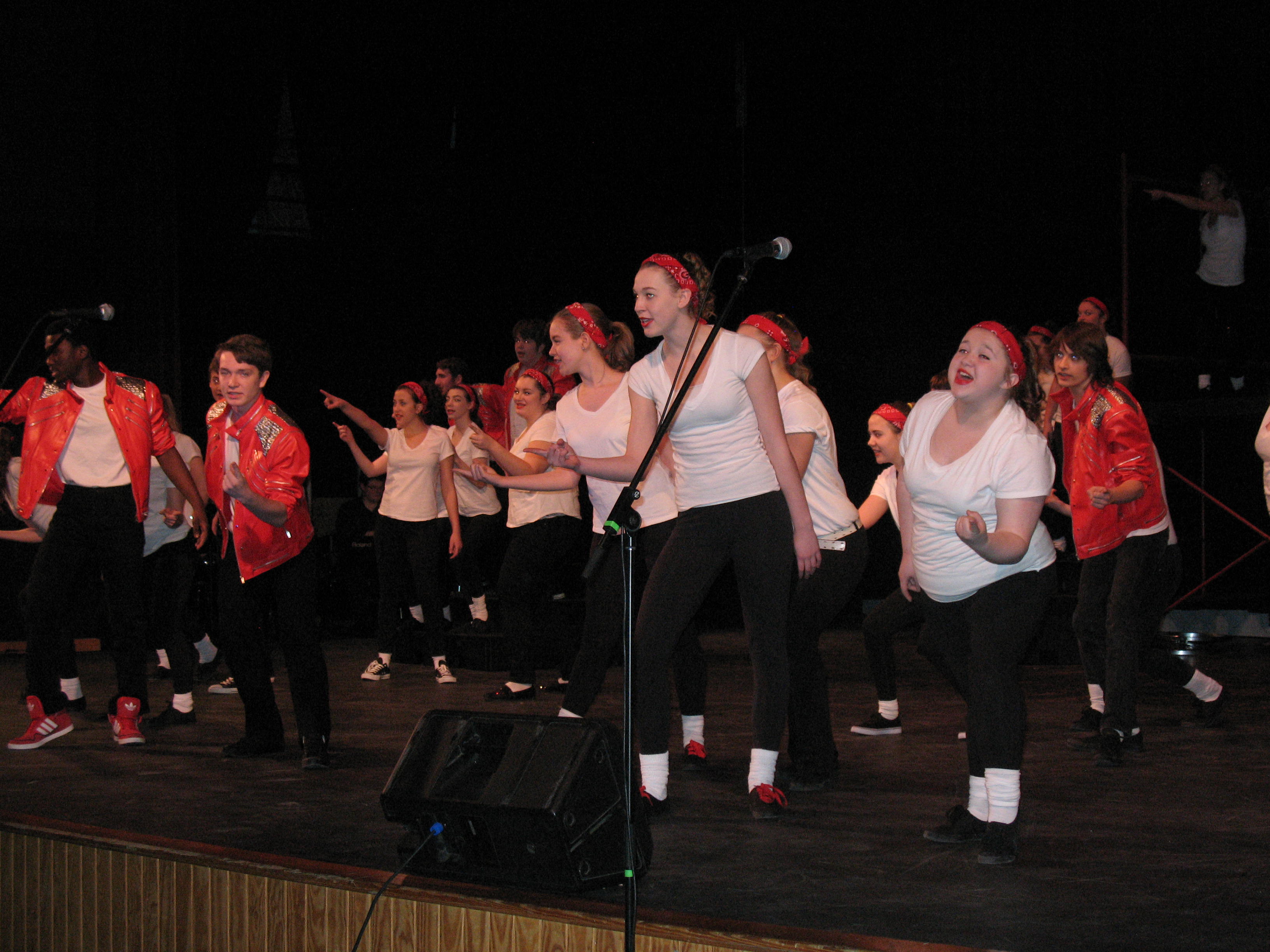
Ellsworth High School Show Choir performs at the opening session for participants

IMG_3047

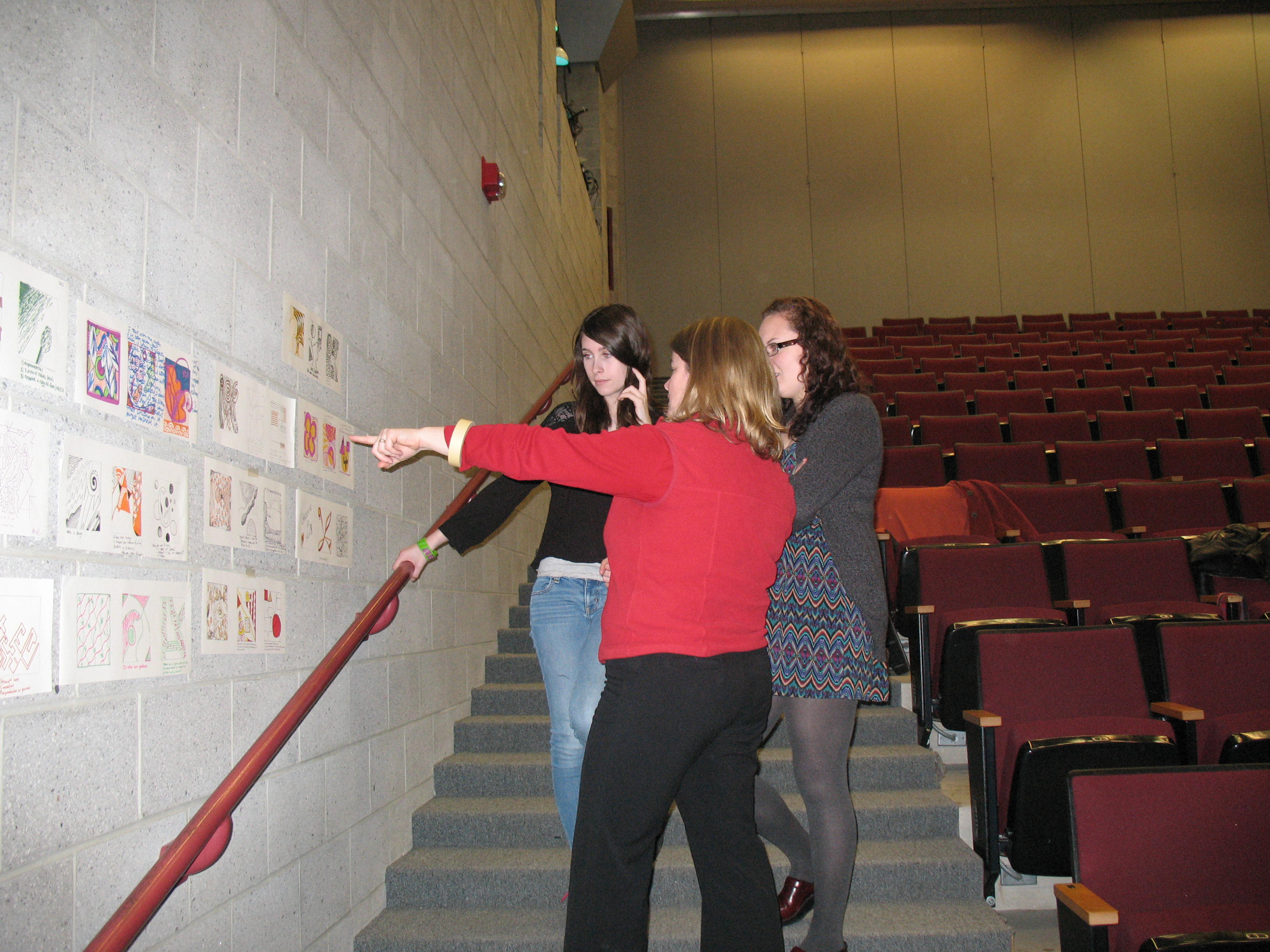
Suzanne displays and discusses work from her session with Charlie’s students

In total we’ve had just over 200 participants attend the 4 Mega-regional workshops. If you have feedback about the workshops please email me since we are in the middle of planning Phase 3 of the MAAI. Your comments and ideas are important to us.

IMG_2960

Janie in action at Hancock Grammar School

Your feedback lead us to including videotaping 4 arts classrooms in phase 2. The taping is underway and part of why the MAAI has been busy…

On March 27th Debi Lynn Baker and I spent the day in RSU 24 interviewing and videotaping teacher leader elementary art teacher Jane Snider working with a grade 7 class. Janie was awesome along with her students, colleagues and administrators!

On March 28th Debi and I traveled to Charlie Johnson’s school Mount Desert Island High School for the third videotaping. Charlie’s visual art colleagues and students were fabulous articulating the value of the standards based environment at MDIHS.

IMG_2988

Dan Stillman poses for class, MDIHS

Debi Lynn will be editing the hours of tapes along with the first one at York High School and Rob Westerberg’s standards based music classroom. We have one more music classroom to tape in May and all four will be complete in June.

h1

Join MaryEllen, Jake, Danette

March 29, 2013

Maine Arts Assessment Initiative

MAAI
Maine Arts Assessment Initiative
Regional Workshop
April 3, 2013
Bonny Eagle Middle School
5:00-7:30
Join local arts educators in Dance, Music and Visual Arts
for a FREE workshop, including potluck dinner and networking opportunities!

Bring some food to share, and learn about what our colleagues are doing in their classrooms. Three workshops will be offered simultaneously in separate rooms that address innovations in assessment and best practices in the classroom.

Workshop #1

MOVIES TOWARDS BETTER ASSESSMENT, Mary Ellen Schaper

What do Netflix and this workshop have in common? Learn to use tools on your MLTI device to create formative and summative assessment that you can watch on demand.  (open to any art form and/or physical education)

Workshop #2

Individual Assessments in an Ensemble, Jake Sturtevant

Participants will learn how to use technology to help with individual assessments, sharing, and keeping track of them over an extended period of time.  The workshop will focus on using Quicktime, networked shared folders, and Bento to categorize files and assessment information. If time permits, participants may also explore web based recording and sharing including SoundCloud (which would require a free registration to use).

Workshop #3

Assessment, A Self Help Program for the Art Teacher,  Danette Kerrigan
A journey to understanding the power of authentic assessment and using technology to manage student product and track student growth.

RSVP:
(OR Please  contact any of the teacher leaders for more information about the event.)
Mary Ellen Schaper: mschaper@bonnyeagle.org
Jake Sturtevant: jsturtevant@bonnyeagle.org
Danette Kerrigan: dkerrigan@sad55.org

IMG_1349

Danette

IMG_2520

Jake

IMG_3644

MaryEllen

h1

Another Arts Teacher’s Story: Andria Chase

March 26, 2013

This is the 24th in a series of blog posts telling arts teacher’s stories. The first 19 were told last year by the phase I Maine Arts Assessment Initiative teacher leaders. The  series continues with the stories from the phase II teacher leaders. These posts contain a set of questions to provide the opportunity for you to read educators stories and to learn from other.

IMG_2645This weeks post highlights Andria Chase! She teaches in RSU 64, the towns of Bradford, Corinth, Hudson, Kenduskeag, and Stetson. This is her third year in the district where she currently teaches grades 4 and 5 general music, grade 5 band, grade 5 strings, grade 6 band, grade 7/8 band, and high school band. Andria previously taught at the Orland Consolidated School for three years where she taught K-8 General music, and grades 4-8 band and strings.

What do you like best about being an art educator?

Doing a job that I love every single day. Having the opportunity to better myself as an educator and musician.  Seeing student growth and seeing the students recognize their own growth.

What do you believe are three keys to ANY successful visual and performing arts education?

  1. TIME
  2. SUPPORT
  3. FUNDING

How have you found assessment to be helpful to you in your classroom?

I have found that assessment is helpful is understanding what the students know. Assessments are also helpful in determining where you want the students to go. They also help students see where they are and help them achieve their goals.

What have been the benefits in becoming involved in the arts assessment initiative?

The initiative has helped in getting to know other arts teachers throughout the state. I am really enjoying the opportunity to collaborate and share stories and ideas with fellow teachers as well. It also has allowed me to assess myself and what I am doing in my classroom.

What are you most proud of in your career?

I am proud to be able to work everyday in a job that is both rewarding and fun; having the opportunity to make a students day better and being a positive influence in their life is a wonderful feeling.

What gets in the way of being a better teacher or doing a better job as a teacher?

The schedules this year have made it very challenging for me to do the best that I possibly can to educate students. The lack of support from fellow teachers and knowing that the arts is for the most part left on the back burner is very frustrating.  Knowing how all of these factors impact my program, makes me work that much harder.

What have you accomplished through hard work and determination that might otherwise appear at first glance to be due to “luck” or circumstances?

I am currently working on building my band programs, especially at the high school level. In order to do this, I’ve had to make my elementary and middle school programs stronger. My biggest accomplishment so far is keeping the retention rate low. When I first started working in RSU 64 I had 35 students in the 5th grade band. They are now 7th graders and I currently have 29 students. Only losing 6 students in two years is a huge thing and knowing that those 29 students will be at the high school level in a year and a half is very exciting!

Look into your crystal ball: what advice would you give to teachers? 

Take one day at a time and breathe!! Always find time for yourself. As arts educators we are stretched very thin and need to manage our time wisely. I try to find sometime during the week, even if it is just once, to do something for myself. Whether it be practice my cello or read, just to do something else keeps me grounded.

If you were given a $500,000.00 to do with whatever you please, what would it be?

  • Pay off my school loans
  • Buy a house or a bigger apartment for my four cats
  • Make sure my parent’s and my brother’s finances were taken care of
  • Purchase a more environmentally friendly car
  • Start multiple strings programs throughout the state!!

Thank you so much for sharing your story Andria!

h1

Another Arts Teacher’s Story: Barbara Weed

March 19, 2013

This is the 23rd in a series of blog posts telling arts teacher’s stories. The first 19 were told last year by the phase I Maine Arts Assessment Initiative teacher leaders. The  series continues with the stories from the phase II teacher leaders. These posts contain a set of questions to provide the opportunity for you to read educators stories and to learn from other.

bweedThis weeks post highlights Barbara Weed! This is her 9th year teaching at Gray-New Gloucester Middle School and works with all (about) 625 students in grades five through eight.

What do you like best about being an art educator?

I like having the opportunity to see kids think in ways that surprise and delight them. Achieving a new skill or understanding in visual art feels like a singularly personal accomplishment, so students’ pride in learning is very heartfelt.

What do you believe are three keys to ANY successful visual and performing arts education?

  1. I believe that the teacher should be educated in and deeply knowledgeable about the content.
  2. I believe that students need to feel that they can take risks when they are learning in the arts, so it is important that tools are available for creating an environment of trust. Students feel vulnerable when they are developing a personal creative thinking process and they need to feel that they are working in a safe environment.
  3. Active support for the inclusion of demonstrated arts standards in all content areas, by all of the adults who work with students, is crucial for communicating the value of arts education to students. Integrated learning that embeds the arts at the center of designed learning experiences, with real world applications, promotes deep learning that make the arts central to the learning process.

How have you found assessment to be helpful to you in your classroom?

Assessments help me understand what students already know, what they learn, and where they can be challenged. Knowing the assessment in advance helps students maintain their focus on the target that is being learned.

What have been the benefits in becoming involved in the arts assessment initiative?

The Maine Arts Assessment Initiative has helped me to meet more arts teachers from across the state, to hear about their experiences in the classroom, and to understand the varied emphasis on assessment in each district. I think that MAAI has highlighted, for me, the need for increased clarity about the expectations of arts education in Maine schools, and I see the opportunity to connect with other arts educators as vital to meeting that need.

What are you most proud of in your career?

I’m proud of the role that I have been able to play in the education of over a thousand students. It’s very gratifying when the young adult who is scanning my groceries, waving at me from the window of a restaurant, or examining the same painting in a gallery turns out to be a former student who fondly remembers work that they did under my guidance. It means that the learning that they acquired in my classroom is still with them, can continue to shape them, and that they are able to share it with someone else.

What gets in the way of being a better teacher or doing a better job as a teacher?

Isolation looms large. Students, teachers, and learning are isolated by the traditional school structures that don’t support connections or collaboration. Teaching large numbers of students, of vastly different ability levels, in isolation means that the reflective part of learning can easily succumb to the pressures of management, and professional collaborations are constrained by the lack of shared teaching conditions or goals

What have you accomplished through hard work and determination that might otherwise appear at first glance to be due to “luck” or circumstances?

I think that many people mistakenly believe that visual art education is easier to teach than other subjects, and that I’m “lucky” that it’s so easy. This mistake is typically because most people, including teachers, have received very limited art education and they equate art with craft or decoration. They might look at a student product and evaluate it simply according to the skill of execution, when the student may actually have been developing a compositional skill or critical analysis skill that is unrelated to their ability to use the media. Visual art, in general, is assumed to be all about concrete skills, but it’s really about critical thinking. Hard work and determination are always required.

Look into your crystal ball: what advice would you give to teachers? 

I think my advice to arts educators would be to become involved in developing assessments of the new national standards as they are finalized. Learn how to teach arts in electronic formats that engage students in 21st century applications. Push your administrators to invest as much in you, professionally, as they invest in your colleagues who teach academic content, so that the arts continue to be a vital part of public education.

If you were given a $500,000.00 to do with whatever you please, what would it be?

  • Put a roof on my house.
  • Buy a working stove.
  • Help my daughters, who will both graduate from college in May, tackle some school loans.
  • Buy myself some art making materials, including a quality camera.
  • Take a ride on the train across Canada.
  • Equip my classroom with cameras.
  • Establish a middle/secondary arts school in southern Maine.
  • Fund an instructional program for Maine administrators, MDOE leaders, and education policy makers in the Legislature to teach them, first-hand, about the value of arts education in public schools.


h1

Another Arts Teacher’s Story: Sarah Williams

March 12, 2013

This is the 22nd in a series of blog posts telling arts teacher’s stories. The first 19 were told last year by the phase I Maine Arts Assessment Initiative teacher leaders. The  series continues with the stories from the phase II teacher leaders. These posts contain a set of questions to provide the opportunity for you to read educators stories and to learn from others.

SarahWilliamsSarah Williams has been teaching General Music, grades 5-8 Band and Chorus at Glenburn School for 9 years. there are 102 students in band and chorus and 141 students in grades 2-4 who meet once a week for 45 minutes. the 5th grade band students have individual lessons for 3o minutes once a week and a full rehearsal once a week for 45 minutes. Grades 6-8 band is combined, each grade 6 student has group lessons for 30 minutes once a week and full band with grades 7-8 twice a week for 45 minutes. Grade 5 band students have individual lessons for 30 min once a week and then a full rehearsal once a week for 45 minutes. Grades 7-8 have combined individual group lessons together for 30 minutes and then full band with grade 6 twice a week for 45 minutes.

What do you like best about being an art educator?

The variety of materials and being able to work with a large amount of students.  It’s motivating to see the grade span of where the kids start when I first have them to their last year with me and see their growth and progression.  I also enjoy that you get to actually “know” them as people, not just see them for a year.  You get to see them grow from young children to young adults.

What do you believe are three keys to ANY successful visual and performing arts education?

  1. Content Knowledge
  2. Love and Enthusiasm for what you do
  3. Confident voice to promote your program

How have you found assessment to be helpful to you in your classroom?

Assessment has always been an on going focus for me. I am always looking for new, more informative ways to assess my students. I want to find out the most information about what their strengths and weaknesses are using the most efficient assessment tool possible. I think assessment is extremely important because you could teach a lesson that you think all the students understand, they all appear to be participating and engaged in the lesson. When you do the assessment to find out what the individual student may or may not know it can be a very eye opening experience. Especially when you realize that you completely missed the mark.

What have been the benefits in becoming involved in the arts assessment initiative?

I’ve gained a better understanding of the initiative, it’s goals and focus. I’ve become more knowledgeable about standard based assessment. I’ve also made some connections with other educators that I may not have normally met through this program and also have people I can now bounce ideas off of when I need help.

What are you most proud of in your career?

When I hear that one of my former students has continued on either in High School or even College.  It’s also a great feeling of accomplishment when you speak with a former student or colleague and find out how prepared for the next level of playing the student is, makes you feel all warm and fuzzy and know you’re doing something well.

What gets in the way of being a better teacher or doing a better job as a teacher?

Time. I always wish I could have just five more minutes, and then I would probably still want five more minutes. I feel there is never enough time to get everything you want your students to know or experience about music out to them.

What have you accomplished through hard work and determination that might otherwise appear at first glance to be due to “luck” or circumstances?

Nine years ago I was asked by my first principal to continue the Chorus that the previous teacher had started. Some may say the odds of success were stacked against me but through patience, time, and sometimes luck, the program has grown from 12 kids to 54. This program is a before school activity that parents have to drop their students off for we do not have an early bus. I continue to try to put this into our regular school day to reach more students but haven’t succeeded yet, partially because of the above issue, time. But there is nothing that makes me more proud of this then standing in front of the students before their concert or even rehearsals and seeing the numbers, it makes me smile.

Look into your crystal ball: what advice would you give to teachers? 

Always be a voice for your beliefs in your program and put your students first.  If what you are doing is student centered and will only enhance their learning, then you will always reap the benefits.

If you were given a $500,000.00 to do with whatever you please, what would it be?

What would I do with $500,000?  Purchase more school instruments so that those students who can’t afford to participate but want to, don’t have to worry about not being able to afford an instrument. I would also save some money for scholarships to help send students to music camps in the summer time. If any money was left over, I would put it into creating a more music friendly room for my students rehearsals and general music since I currently have to teach in a portable.

Imagine you are 94 years old. You’re looking back. Do you have any regrets?

No regrets, every choice is an experience whether good or bad, right or wrong.  I will look back and smile!

h1

Back From Texas

March 11, 2013

National Art Education Association

IMG_2768

Yes, that is hats

The trip to the National Art Education Association conference in Texas was a fabulous opportunity to join 5000 art educators in Fort Worth, Texas. I was surprised about Fort Worth, population about 750,000. The streets are wide, it was easy walking from downtown to the conference center, and the people are friendly. And, yes the temperature did get to 70 degrees one day.

It was a little touch and go leaving Maine in questionable weather. Our flying plan was to go to Fort Worth via LaGuardia which was changed. We left Portland 2 hours late and went through Detroit and landed in Texas an hour earlier. Go figure!

It was great to see the Maine art teachers in Texas and have a chance to get together with all of them in between sessions.

IMG_2755One of the highlights of the conference was attending a session with Jay McTighe whose work along with Grant Wiggins, Understanding by Design has been used as the basis for the National Core Arts Standards work. Jay went over the components of the Framework that provides a clearer picture of the work that is underway.

I also attended a session with Lois Hetland the author of Studio Thinking. During the conference the latest edition of the book was released.

It was great having the opportunity to share the Maine Arts Assessment Initiative  with Catherine Ring and Bronwyn Sale during a session at the conference.

If you’ve attended a large conference you know what it is like to go through the exhibition hall and have the opportunity to speak to the 100’s of vendors and learn about their products and programs. I met Jessica Balsley from The Art of Education. If you aren’t familiar with AOE I recommend you go to the site.

And, as you can see here we also had a lot of fun at the conference, even getting to a genuine rodeo!

IMG_4445

IMG_2792

IMG_2796

h1

Off to Texas!

March 6, 2013

Catherine, Bronwyn, Argy and others

Screen shot 2013-03-05 at 7.18.29 PMFort Worth, Texas is the location of the National Art Education conference this year and starts on Thursday morning. There are several Maine art teachers traveling west to attend the conference that offers over 1000 workshops during a four day period.

On Friday I will be joining Maine Arts Assessment Initiative leadership team members Bronwyn Sale and Catherine Ring to present a session Friday morning on the MAAI. The session is called Maine Arts Teachers Lead the Way: Toward Exemplary Teaching and Learning in the Arts. The description: Explore a grass-roots, collaborative professional development model that has led to exciting growth in teaching and learning, fosters reflection, and bridges the gap between theory and practice in arts classrooms.

We’re all looking forward to sharing the outstanding work that Maine arts teachers have been involved with during the last 2 years.

You can follow the events and happenings a the conference on Twitter at NAEAartmatters. If I can get online while in Fort Worth I will post information on the meartsed blog. If not, I will certainly provide an update when we return.

h1

Another Arts Teacher’s Story: Susan Beaulier

March 5, 2013

This is the 21st in a series of blog posts telling arts teacher’s stories. The first 19 were told last year by the phase I Maine Arts Assessment Initiative teacher leaders. The  series continues with the stories from the phase II teacher leaders. These posts contain a set of questions to provide the opportunity for you to read educators stories and to learn from others.

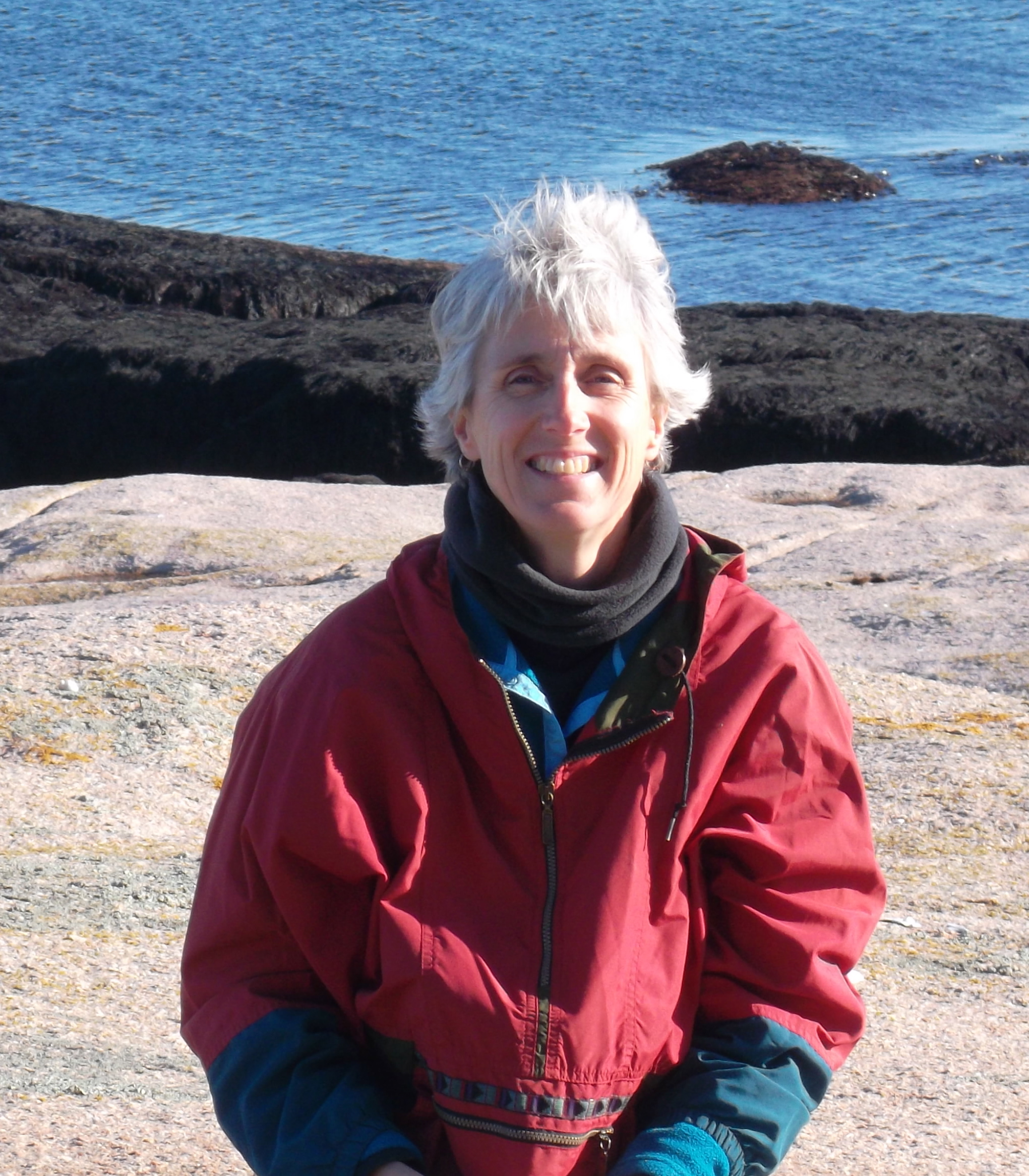
sue beaulier2Susan Beaulier is in her 23rd year of teaching and is presently teaching PreK-12 Visual Arts Teacher in MSAD #32 in Ashland. Additionally, she has been the Coordinator of G/T Education for that same amount of time. In addition to Visual Arts classes, Sue offers a Digital Photography elective, and an Independent Study Seminar for High School students. Ashland Schools are a small school district in Aroostook County. Our district serves 6 communities. She is responsible for providing services for the 338 students in the district. Susan is a phase 2 Teacher Leader with the Maine Arts Assessment Initiative!

What do you like best about being an art educator? 

I like the fact that the students (for the most part) want to be in my classroom.  I think that the arts provide a platform for teachers to be more than lecturers. I like the honest interactions that occur within the realm of an art classroom.  The kids are comfortable sharing their thoughts, and usually appreciate my input as well. I like walking into my room in the morning and finding it already full of kids who feel comfortable there and who are actively engaged without being reminded to get started. I like that kids who don’t have art class sometimes drop in during a study hall and ask if they can draw or paint or sculpt. I like that kids choose to stay after school to work on art projects or just be where they are comfortable. I like the energy of the art room and I like providing a place where kids feel happy and successful. I like working across all age levels.  My job is never boring.

What do you believe are three keys to ANY successful visual and performing arts education?

  1. Creating an environment where kids know that there’s no such thing as getting a “100” in art.  I think it’s important to let kids know that it is through mistakes that they learn. Taking risks is more valued in art class than “getting it right” They need to know that they always have the chance for improvement and growth…no grade is final.  Giving students the time and permission to plan, experiment, play, reflect and re-do is really important.
  2. Creating a place where learners feel productive and successful, and where they feel supported by their peers and instructor.  Allowing for flexibility in pace, practice, and product is also valuable.  Making learning fun doesn’t hurt either.
  3. Highlighting for the students, the problem-solving skills that they are learning and exhibiting, and how these skills can be applied to other areas of their lives. Sometimes they don’t recognize these qualities until we point them out. This connection adds validity to what they’re doing everywhere

 How have you found assessment to be helpful to you in your classroom?

 Refining my approach to assessment has influenced my instructional practices .I used to think that adherence to a set of pre-established criteria might lead to “cookie-cutter” art products. Now, I am working to include the students as much as possible in developing assessment tools for their work. Creating the rubric  together  is now part of our introduction to the process. Assessment has proven to be a very valuable conversation starter in our classroom.  When students are involved in the assessment process, they begin to “talk the talk” of art and art education. I think that kids inherently know what a “successful” project looks like, but sometimes they lack the descriptors to communicate that. When they have the criteria and vocabulary to express them selves, they are empowered to create, analyze, improve their own work, and justify their artistic choices. When students know what is expected of them, and they have the chance to define levels of achievement in language that means something to them, their work improves. Assessment opens up dialogue about art. 

What have been the benefits in becoming involved in the arts assessment initiative?

 My involvement with the Arts Assessment Initiative has provided many benefits. It has invited me to step out from my isolated domain, and share my thoughts with other colleagues in the art education field. It has allowed me to gain feedback about things that I do well, as well as those areas that need revision and improvement. I have met an entirely new group of people who share the same passions, worries, tasks, as I, and it feels good to be part of a group. My involvement has reinforced me in what I am doing, but has also offered suggestions for improvement. I have made new friendships and bonds over a short period of time. I feel like we are a family.

What are you most proud of in your career?

I am at the point in my career where I am teaching the children of my former students. Additionally, I am teaching the grandchildren of some of my former classmates. I am heartened by the positive response I have received from all involved. It delights me when high school students or even parents tell me that they still remember and/or have an art project that they made in one of my classes. That makes me feel like I made an impression on their lives. One of my former students recently joined our staff as an Ed. Tech. She is also a dance instructor in our town. She told me that the opportunity I gave her in high school to participate in dance class changed her life. I recently received  e-mail from a student who I had during one of my first years of teaching. She was very kind in her remembrances of art class. She made me feel proud that I had an impact on her life. The accomplishments of my kids make me proud.

What gets in the way of being a better teacher or doing a better job as a teacher? 

TIME gets in the way of being a better teacher or doing a better job as a teacher.  I do relish time away from the responsibilities of school, but those responsibilities never really go away. I always feel like I’m behind the eight ball! We live in a fast-paced world. There are many demands upon every person today, and achieving a balance is difficult. I think that, despite our efforts, there is never enough time to accomplish what we want.

What have you accomplished through hard work and determination that might otherwise appear at first glance to be due to “luck” or circumstances?

I’m not sure that I’ve made much of an impact  on many of my colleagues through my hard work and determination. My fellow teachers often comment on how “creative” I am, and that I “do things so easily.” I have even had teachers tell me that I am “wasting my creativity” here at school. I truly think that they are speaking from a naive view of what creativity truly is. I feel that they think I am accomplished at my job because I possess artistic skills, and can demonstrate those to the students. They often comment that I “make things look so easy…”  Though they recognize my artistic abilities, many of my colleagues fail to see me as an equal in terms of being an educator. I think that they still see the arts as a “special”  (A term I detest!). They don’t recognize that my artistic skills are really just an extension of who I am as an educator. What they fail to see is that I face all of the same difficulties with educating kids as they do. Visual Arts is a language.  So, when I am introducing the tenets of the visual arts, I am essentially teaching students a new language. That does not just happen because I can draw well. The skills that are developed and fostered in the art room may not be practiced anywhere else in the curriculum. I don’t think that regular ed. teachers know this or appreciate its impact on all other learning. Much of what I teach is really taught “through” art, not” because” of it. The critical/creative problem solving skills, life skills (working collaboratively, taking risks, working through a process, observation, reflection, revision, perseverance, etc.) aren’t really the by-products of an arts education. They are at the core of arts education. I often think that my students understand the benefits of a quality education in the arts better than my adult colleagues do.

Look into your crystal ball: what advice would you give to teachers? 

Don’t let technology replace human interaction…kids crave it.  If all else fails, Play Power Ball!

If you were given a $500,000.00 to do with whatever you please, what would it be?

I would add it to my Maine State Retirement Account because Teacher Retirement is abysmal.

Imagine you are 94 years old. You’re looking back. Do you have any regrets?

Of Course!  I should have sung louder, danced more, and afforded myself more time for my own art.

Thank you Susan for telling your story!