Posts Tagged ‘MAAI’

h1

Maine Principals Association Conference

December 4, 2012

Leadership in the Arts

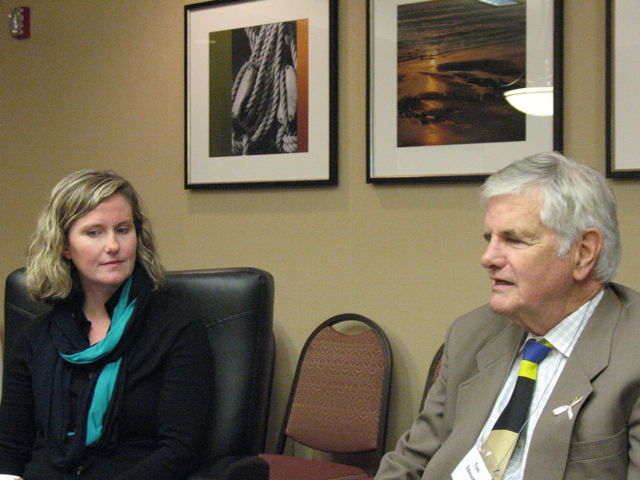
Kimberly and Tom presenting

Kimberly and Tom presenting

Recently I joined colleagues to present a session called Leadership in the Arts at the Maine Principals Association conference in Portland. I was happy to have the opportunity to present a session at the conference and honored to be presenting with outstanding and committed educators.

Kimberly Medsker and Tom Edwards shared information about their collaborative work at Freeport High School. Before joining the teaching staff at USM Tom was principal at Freeport where Kimberly is the art teacher. Evidence of high standards were clear in the student work that Kimberly shared. And Tom’s support for the arts was not only evident but clearly articulated. Each student has a webpage that is their electronic portfolio so progress can be tracked and the evidence is clear. Tom believes that the arts are essential for a dynamic, productive school.

kika

Erika

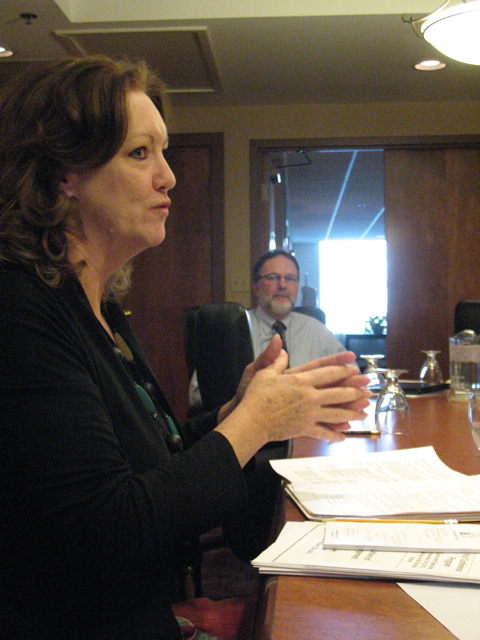
Erika Stump shared information on the report that she co-authored with David Silvernail More Efficient Public Schools: Learning Communities Building the Foundation of Intellectual Work. The report is part of the work at the Maine Education Policy Research Institute, University of Southern Maine. Erika shared some of the research finding. The schools that participated in the study included elementary, middle and high schools throughout Maine. These schools had a culture of pervasive learning, the learning was constant, and learning opportunities are continuous. For example, counting the steps while running up a hill is turned into a teachable moment. Erika said that the “arts are a good way to open the brain using creativity or an artistic approach to reach analytical thinking.”

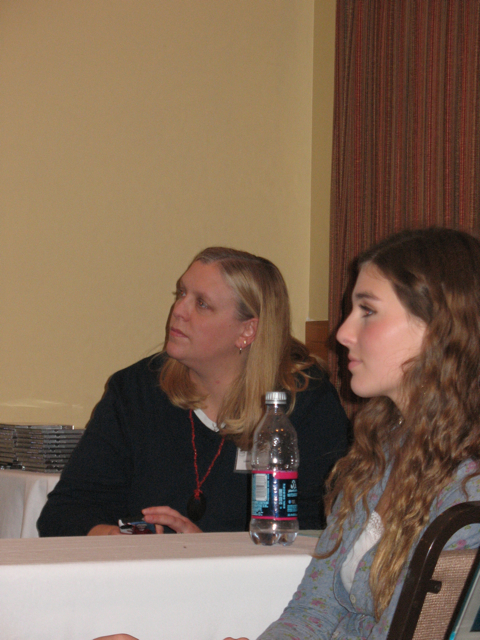
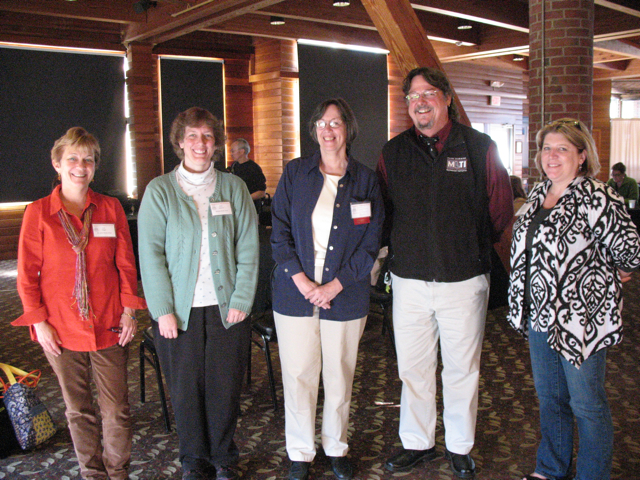
catherineThe session continued with information and discussion on the role of arts educators as teacher leaders, specifically with the Maine Arts Assessment Initiative (MAAI). Leadership is a key component of the initiative and we have provided professional development in leadership at the summer institute along with assessment, technology, and creativity. Jeff Beaudry, USM professor, Catherine Ring, Executive Director of the New England Institute for Teacher Education, and both members of the MAAI leadership team joined me for this segment. We are continually amazed at the leadership role that the MAAI teacher leaders are committed to and the value that they offer to their schools and communities by taking on the responsibility.
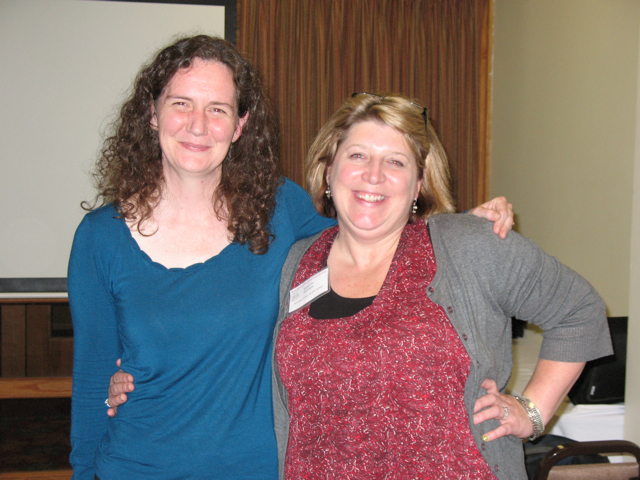
I look forward to another opportunity in the future to connect with the Maine Principals Association.

h1

MAAI Regional Workshops

October 30, 2012

Underway throughout Maine

We are fortunate to have nineteen phase 2 arts education teacher leaders from the Maine Arts Assessment Initiative (MAAI) who have created workshops and started delivering them throughout Maine. The topics vary greatly and I am sure there is something for everyone!

You can find the schedule posted on the arts assessment page at the Maine Department of Education (MDOE) and below. You will notice that some of the details are missing below but as they become determined will be added to the MDOE page. The locations are spread out through the state to make it possible for you to attend a session in your region.

Along with the regional workshop, Mega-regional workshops are being planned as well. They will be posted in the near future. These workshops will be all day opportunities and we have teamed up with MLTI for Mega-regional workshops. If you have questions please be sure and email me at argy.nestor@maine.gov.

WORKSHOP TITLE AND DESCRIPTION DATE & LOCATION PRESENTE
MAAI: Impossible – What exactly is the Maine Arts Assessment Initiative and what direction are we headed in Maine Arts Education? November 2, 2012, 11:00am, Dexter Ridgeview School, District V Middle School Honors Festival Andria Chase, Instrumental, general music, grades 4,5, Corinth, RSU #64 and Sarah Williams, band/chorus grade, general music, grades 2-4, Glenburn Elementary School, RSU 26
Unpack it! Unwrap it! – Breaking down the Standards to Inform Instruction and Learning Information and techniques in breaking down the standards with students to provide a successful learning experience. November 2, 2012, 2:00pm to 3:00pm, Hancock Grammar Schoo Janie Snider, visual arts, grades K-8, Hancock Grammar & Laomoine Consolidated Schools
Getting Started: Incorporating Meaningful Assessment Within the Large Ensemble – A look at incorporating standards based learning and assessment within the large ensemble without the use of technology. District III High School Honors Festival & District III Junior High Honors Festival Drew Albert, Music director, Maranacook Community High School, RSU 38 and Ashley Smith, Choral Director, Brunswick High School, Brunswick School Department
There is no I in ART; Working Together to Promote Quality Art Education for all Learners – Presentation addressed to parents. The Maine Learning Results and assessment terminology will be explained in user-friendly terms. A hands-on component is also included, as the parents create a piece of art. The presentation can be tailored to suit the needs of arts educators, classroom teachers, and/or administrators. November 5, 2012, MSAD#32 Superintendent and Board of Directors
meeting, November 6, 2012 Ashland PTO meeting
Susan Beaulier, Visual Art, K-12 MSAD #32, Ashland
Assessment: This is NOT a Drive By (Assessment is MEANT for ME-student perspective) – Take a close look at a student performance in terms of formative and summative assessment. Through a hands-on exercise participants will determine what needs to be assessed and generate a rubric with the groups’ ideas. Information about the Maine Arts Assessment Initiative and resources will be shared. January 19, 2013, All Aroostook Fesitval Mari-Jo Hedman, Director of Music K-12, Fort Fairfield, MSAD #20
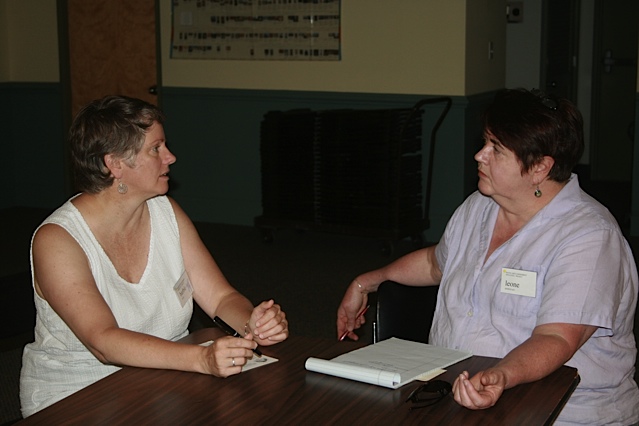
A Skeptic’s Exploration of Rubrics – The presentation follows my research into rubrics in order to improve both the clarity of the assessment instrument for myself and my students and to find ways to genuinely involve my students in the process. January 16, 2013, Messalonskee High School, RSU 18, 4:00 to 6:15 Leone Donovan, Visual Arts, Messalonskee High School, RSU 18
Formative and Summative Assessment Two Big  Words with Practical Applications in an Art Class – Participants will create a clay sculpture and get a hands-on understanding of both formative and summative assessment as part of the creative problem-solving process January 16, 2013, Messalonskee High School, RSU 18, 4:00 to 6:15 Gloria Hewett, visual arts, grades 6-8, Mount View Middle School, RSU 3
Literacy – A Gateway to Creativity – This workshop shows how literacy strategies can be utilized to improve students’ ability to analyze artwork. Stronger art analysis abilities can change and improve students’ understanding of their own creative problem-solving process.  Assessments are discussed as a vital part of this process. January 16, 2013, Messalonskee High School, RSU 18, 4:00 to 6:15 Pamela Ouellette, visual arts, Lisbon High School
Theatre Games: Learning By Doing – Using a Theatre-based rubric allows any teacher to assess students using the MLRs, thus “hitting” standards that may not have been accessible before.  Theatre techniques will be taught to show how to enhance curriculum/learning in any subject area. January 25, 26, 2013, Mt. Ararat High School Susan Jones, chorus, theatre, social studies, Medomak Valley High School, RSU 40
A journey into the 21st Century – Changing the Way I Teach!  – Come along on my journey as I talk about the changes I am making in my Keyboarding Class to fit the learning styles of all my students! January 26, 2013, District I Music Festival, Noble High School, North Berwick Jane Kirton, chorus, keyboarding, music for the soul, Sanford High School
Assessment, A Self Help Program for the Art Teacher – My journey to understanding the power of authentic assessment and using technology to manage student product and track student growth. TBA Danette Kerrigan, Visual Art, Sacopee Valley Middle School, MSAD 55
Sighting in Rubrics: How to Hit Educational Targets – This workshop revolves around the concept of General Rubrics and how they can be used to assess a variety of different products and processes. A good portion of the workshop involves assessment of student examples and discussion of how to interpret criteria using the rubric currently used in my classes. TBA Samantha Orchard, visual arts, Woodland Jr/Sr High School, Baileyville
Conditions for a Creative Classroom Using formative assessments to promote creative thinking and student voice in the classroom. TBA Suzanne Southworth, visual arts, Camden Hills Regional High School
The Sweet Spot: Where Learning Meets Engagement              This presentation discusses the importance of engaging students in their learning and tools that can support them. TBA Barbie Weed, visual art, grades 5-8, Gray-New Gloucester Middle School, MSAD 15
How can we meaningfully assess a large and diverse student population in music classrooms?      A brief overview of: why to assess, formative verses summative, when to use which type, examples of different assessments, and Q & A TBA Andrea Wollstadt, music, grades k-5, Biddleford Intermediate School, John F. Kennedy Memorial School, Biddeford
Assessment: To Educate and Advocate!There are many benefits to bringing authentic assessment into the music classroom. This workshop will discuss fundamental core benefits by identifying connections to the student, the community at large and the classroom teacher. In doing so, the case is made for utilizing assessment as a core component of the educational landscape for all Arts educators. TBA Jarika Olberg, choral/general music, grades 2-12, Waynflete School, Portland
h1

Maine Association for Middle Level

October 29, 2012

MAMLE

This past Thursday and Friday I attended the MAMLE conference at Sugarloaf where arts educators were well received in the workshops they presented on a variety of topics. I have included a bit of information below on each of the sessions where the arts teachers presented.

Allied Arts in the Standards World

Sacopee Valley Middle School art teacher and Maine Arts Assessment Initiative teacher leader Danette Kerrigan and Medomak Middle School music teacher Julie Sanborn participated in a panel presentation on the work they are doing at their respective middle schools and in their classrooms. The other panel members Lisa Hogan from Mt. Ararat, Barbara Greenstone from Boothbay and Phil Brookhouse from MLTI also made connections to the arts. Friend of arts education, Jill Spencer facilitated the session.

Panel members: Lisa Hogan, Julie Sanborn, Barbara Greenstone, Phil Brookhouse, Danette Kerrigan

Steel Drum Band

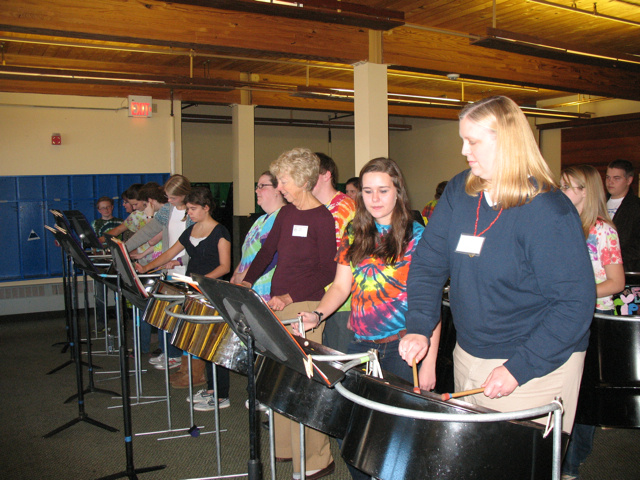
Julie also presented a session with the Pantastics, the school’s steel drum band. The band performs at community events and has traveled to other schools and events in and out of Maine. The students played several pieces at the start of the conference as well as in an individual workshop. Other middle school teachers were invited to play one of the drums as well. The members of the band promised to write a blog post on their involvement playing the steel drums. Look for that in the future.

How Can I Teach for Creativity?

Danette was joined by MAAI leadership team member Bronwyn Sale from Bates College for a session on creativity. They made quite a team with Bronwyn presenting foundational information on the creative process, creativity, and creative problem solving. Danette shared the practical components of addressing the topic in a classroom setting and provided participants with hands-on exercises including SCAMPER which stands for Substitute, Combine, Adapt, Magnify, Put to Other Uses, Eliminate (or Minify), and Rearrange (or Reverse).

Bronwyn Sale and Danette Kerrigan

Service Learning and Music Appreciation

Leonard Middle School music teacher Shianne Priest had students join her to share a service learning project that she her music appreciation class has undertaken for two years now. The 8th graders this past year raised $1600 for the Make-A-Wish Foundation. They collaborated to write the lyrics for a song that 9th grader Lily Muscatell took a step further and wrote the music for and performed. Selling the CD was one part but hearing about their learning and how the experience affected them was amazing.

Shianne and Lily listen while the 8th graders explained the project.

Thank you to everyone for their fabulous work and sharing the opportunities that you afford Maine students!

h1

Maine Learning Community of Learners Website

September 10, 2012

What is MaineLearning.net?

MaineLearning.net is an online community of practice for Maine educators. The idea for MaineLearning.net was established after Stephen Bowen, the Commissioner of Education, learned from touring the state in March 2011, of the desire for sharing resources and best practices amongst and between educators.

Thus was born MaineLearning.net: a project designed to leverage limited resources by creating an online collaboration platform that allows groups of educators to share best practices in their areas of specialty, and allows all educators to observe and/or participate.

Currently the Department of Education has rolled out the site with an initial set of practice groups. Arts education has a “Group” called Maine Arts Education Leaders. The intent of the group is to have discussions, share documents, and participate in online activities to collect and share best practices. This is a collaborative space that provides the opportunity for conversations on arts education topics to share ideas, ask questions, and provide feedback to the group members. Along with me (Argy Nestor) the community is made up of the following educators:

  • Jeff Beaudry
  • Bill Buzza
  • Shannon Campbell
  • Cami Carter
  • Suzanne Goulet
  • Charlie Johnson
  • Lisa Marin
  • Jen Nash
  • Leah Olson
  • Jame Perkins
  • Catherine Ring
  • Ben Speed

Each of the MaineLearning.net practice groups follow the “fishbowl” model: group members can collaborate within their group space, but all interested educators, parents, and community members will be able to view the conversations and resources. The topic we are presently discussing is “proficiency based high school graduation”. I suggest you take a minute and read what these arts educators are saying.

In another space in MaineLearning.net arts educators are submitting to the “Resources” section. During the summer Maine Arts Assessment Initiative Summer Institute for the initiative’s teacher leaders the first phase teacher leaders started populating this site with sample lessons and units. The teacher leaders are working on a method for “peer review” of the resources submitted which will provide the contributor with feedback. If you are interested in contributing click on “Recommend a Learning Object” at the top of the Resources page.

The teacher leaders who have contributed resources to date are:

  • Shannon Campbell
  • Jennie Driscoll
  • Charlie Johnson
  • Lisa Marin
  • Jen Nash
  • Jeff Orth
  • MaryEllen Schaper
  • Jake Sturtevant
  • Alice Sullivan
  • Shari Tarleton

The resource section of MaineLearning.net is open to all however you will notice at this time that most of the resources submitted are from arts educators.

h1

MAAI Resources!

September 5, 2012

Maine Arts Assessment Resources

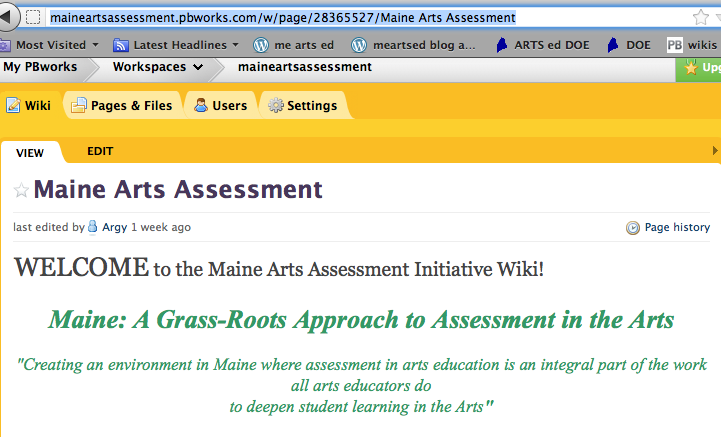
Recently revamping the Maine Arts Assessment Initiative wiki moved to the top of the list of “things to do”. It was prompted by a question from the field, a high school art teacher who emailed asking if the information (“notes and/or minutes”) from the summer teacher leader assessment institute sessions was available. He has been following the work of the Maine Arts Assessment Initiative (MAAI) including the blog posts, webinars, and other resources we have made available on the wiki http://maineartsassessment.pbworks.com and Department assessment webpage http://www.maine.gov/education/lres/vpa/assessment.html. It was as if the teacher had whacked me upside the head. I thought “why don’t we post the handouts, links, and information that we provided in each of the sessions?”

That is when I moved the task up to the top of the “to do” list and Catherine Ring and I skyped to determine who had time to do what, and where we wanted to make changes on http://maineartsassessment.pbworks.com to provide as many resources to all of you as possible from the summer institute.

This is another example of the MAAI transparency. If you want to get to the summer resources page quickly here is how to do that. Go to http://maineartsassessment.pbworks.com read through the front page, and towards the bottom you will see in capital letters INFORMATION AND RESOURCES. Click there for the  Table of Contents. Click on 2012 Summer MAAI Institute Resources which will take you to a TON, I mean MEGA amounts of resources on the four main topics of the summer institute; ASSESSMENT, LEADERSHIP, TECHNOLOGY, and CREATIVITY. The workshop facilitator is listed with the information so you know the sources. Along with the four topics there are many other resources including books, .pdfs, articles, research, and so much more it will take you several rainy days to get through all of it. Is everything included from the summer institute? No, this would be impossible since the Teacher Leaders and other participants shared continuously throughout the 4-day institute held at MECA in July/August. But you know what it is like when you get together with arts educators; the willingness to share is unbelievable! Is it only from the summer institute? No, but most of it is. There are arts education resources that have been shared during other workshops and on the Department site.

My suggestion is to share this page with your colleagues, administrators, and determine what you can use for your local curriculum and assessment development work that you are doing this school year. Please let me know how you use the resources that we’ve provided for all of you!!

A great big THANK YOU goes to the MAAI Leadership Team who facilitated the MAAI summer sessions and our New England colleagues who stepped in and did sessions on the Common Core State Standards and National Arts Standards. I won’t mention any names here with fear of omitting some but please know that it is several amazing arts educators!

h1

What Happens After Teacher Leaders Meet?

August 13, 2012

Teacher Leaders Meet in Maine and in DC

Interestingly enough on the day after our Maine Arts Assessment Institute finished, a teacher leader conversation was taking place in Washington DC. It was hosted by the US Department of Education and it was called Transforming the Teaching Profession: A Teacher Leader Convening. Over 130 educators attended the event representing about 28 organizations. The educators were asked to identify priorities and develop strategies to move the RESPECT Project vision forward. The RESPECT Project is about envisioning a teacher profession for the 21st century and includes plans for teacher leadership, teacher preparation and other topics that directly relate to the teacher in the classroom. The educators in DC discussed what the USDOE needs to do to move the components of the RESPECT Project forward.

During the last part of the one-day event in DC the small group discussions were shared with the USDOE and White House officials and questions and answers were exchanged. Many times educators get together and walk away from similar events wondering whatever happened to those ideas that were so important at the time of discussion? A teacher asked “what’s next?”

When Secretary of Education Duncan launched the RESPECT Project he noted: “This new vision will not appear overnight… It will proceed in different ways in each state and district. There will be no single formula for success.”
When I read the information on the project and thought about the work we are doing in Maine arts education with the assessment initiative I couldn’t help but have similar thoughts. Each Maine arts educator has been invited to participate in the Maine Arts Assessment Initiative (MAAI). We have 38 who have been named Teacher Leaders in the last two years. Many of you have participated in the workshops offered by the teacher leaders, some at the statewide conference and others at regional levels. Many have participated in the 7 webinars when they took place and others have accessed them and used at teachers meetings. In the near future there will be other opportunities. The bottom line is that the MAAI will proceed in different ways in districts across the state of Maine.

Visual Arts Teacher Leaders Gloria Hewett and Janie Snider at the MAAI summer institute, MECA, August 2012

h1

Maine Arts Assessment Inititiave Institute

August 10, 2012

Reflection

Today marks a week since the Maine Arts Assessment Initiative Summer Institute has ended. Over and over again this week I have marveled at the dedication and commitment of the 34 teacher leaders who spent 4 days at Maine College of Art (MECA) learning about assessment, leadership, technology, and creativity. Since we returned home the communications via email, snail mail, phone, skype, and on the teacher leader wiki have been numerous. Each teacher leader is creating a workshop that they will present at the regional level at least twice. Each of you will have the opportunity to attend those workshops. The dates and times will be determined in the next couple of months so watch for the details on the blog.

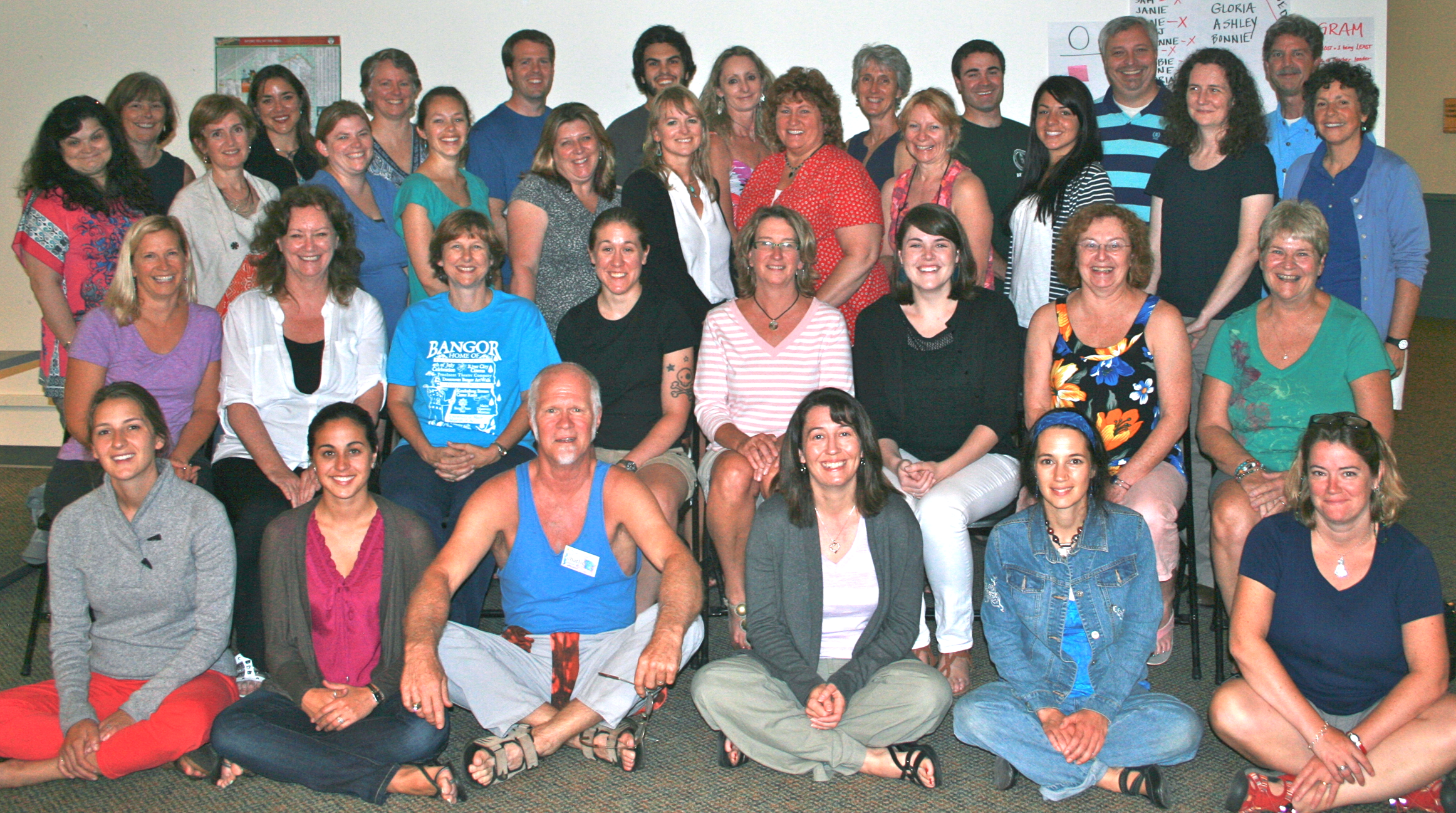
I want to publicly thank the teacher leaders for their willingness to share their important work with you. And a great big thank you to the leadership team who worked tirelessly to plan the summer institute! Below is a group photo that was taken just before we left MECA.

h1

Day 3: Maine Arts Assessment Initiative Institute

August 8, 2012

Leadership and Creativity

On day 3 of the MAAI institute teacher leaders participated in two Leadership sessions and a session on Creativity. Brunswick High School Art teacher Jennie Driscoll facilitated the first leadership session through hands-on experiences that led to identifying the characteristics of leaders. Some of those identified were risk taker, communicator, confident, humility, trust, and compassion.

MAAI leadership team member and Executive Director of the New England Institute for Teacher Education Catherine Ring facilitated the second leadership session where participants took a close look at their role as leaders; in their schools, districts, communities and beyond. They looked at the research and explored questions including How do we work with adults to encourage change?

Leadership team member and Bates College instructor Bronwyn Sale facilitated the Creativity session.  Included in the Maine Learning Results: Parameters for Essential Instruction the Visual and Performing Arts include Standard C. Creative-Problem Solving. As arts educators this standard represents creativity, the creative process, creative thinking, and creative problem solving. All of these were examined in this session and should be taught intentionally in the arts classroom.

Teacher leaders continued working on their individual action plans putting together what they were learning during the institute. The plans include their ideas for their regional workshops that they will facilitate throughout the school year. The day ended with a celebration of the good work the teacher leaders are doing at a reception with MECA’s President Don Tuski in the college’s gallery ICA.

h1

Day 2: Maine Arts Assessment Initiative Summer Institute

August 2, 2012

Moving along

Information continues to be flying! Teacher Leaders have jumped in with both feet. Assessment sessions covering formative and summative assessment, looking at teaching and learning, asking questions, technology sessions looking at tools and how to infuse them into lessons, and leadership sessions considering our roles in and out of the classroom.

Each participant answered the question… What does an ideal arts education for all students look like? Their ideas were combined to create a vision statement. Along with the vision statement all of their ideas were combined in a Wordle and is below. More information on the institute will continue in other blog posts.

h1

Another Arts Teachers’ Story: Charlie Johnson

July 24, 2012

This is the 18th in a series of blog posts telling arts teachers’ stories. This series contains a set of questions to provide the opportunity for you to read educators stories and to learn from others.

Charlie Johnson started teaching at Mount Desert Island High School in 2004. He started his career as the first visual art teacher at the Jay School Department in 1973. He is the National Honor Society advisor for 20 students. His courses include Photography, Video, and New Media Arts. Charlie is a teacher leader with the first phase of the Maine Arts Assessment Initiative.

What do you like best about being a art educator?

I discovered my love for art at an early age, while my love for teaching did not develop until I was in college, so there is one interest overlapping another, and they make each day different and exciting for me. Teaching something I love and that I can “do” as well as teach makes my connections with students real and meaningful, not only to them, but to me as well. The “best” part is that I can learn from them and their solutions to problems in art every day, and it’s something I love to experience.

Tell me what you think are three keys to ANY successful arts ed program?

  1. Teachers with passion for teaching and the ability to transfer that passion to students.
  2. Teachers with a strong knowledge of pedagogy and the content they teach and who can share this effectively with students.
  3. Teachers who constantly make the value of ARTS education obvious to everyone in their school from students all the way down to administrators.

Express yourself in many forms and let others see you do that!

What specific way(s) do your assessment practices tie into the success of your program?

Students who are given the opportunities to be successful at many levels through understanding completely how they will be assessed and have had input into that assessment are usually on one hand very satisfied with their work and the processes involved in achievement or, on the other hand, understand why their work was not proficient and understand what they need to do to alter their processes to accomplish proficient work.

The vast majority of my students enjoy the task of making their work mean something and seeing purpose and content applied in their work as expression of their own ideals and thoughts and feelings. It is through the process of discussion, critique and revision that draws them into their work and lends to it an enhanced sense of accomplishment and satisfaction.

The “Learning Results” are an excellent structure to have students work within, and as soon as they begin to understand what the structures of the ARTS discipline are, their work begins to improve.

What have been the benefits in becoming involved in the arts assessment initiative?

For me personally, it has been similar to earning my Master’s Degree; as intense, but a shorter period of time. Being involved in the ARTS assessment initiative has really helped me to open my mind around education in general and to understand the need for a shift in the way education works. I think ARTS teachers have had it all together as a package for a while, but need to be more reflective and accountable for the important work they do with young people. It has caused me to “read” more concerning the specifics of my profession in general and myself as a teaching artist through books, professional papers, literature and articles/online content concerning the “how to” of methods and software around what I teach. I have “grown” connections to a small, but dedicated group of teachers within my geographical area of Maine, and feel a closer collaboration to teachers from other schools.

What are you most proud of in your career?

Making a difference to my students and what they accomplish in their lives, by far.

What gets in the way of being a better teacher or doing a better job as a teacher?

Nothing, any other answer to that question would simply be an excuse for not being the best you can be. If we are to expect the best from our students, then we need to be able to overcome all kinds of obstacles in our classrooms, from money to obnoxious administrators.

Apple or PC?

There’s a difference? Really, I own an iPhone, iPad and several PCs. The important understanding is around software, not platform. Apple seems to still be a bit more user friendly overall, but more controlling as well.

What have you accomplished through hard work and determination that might otherwise appear at first glance to be due to “luck” or circumstances?

I am fortunate to be working in one of the best ARTS supported schools in Maine, but the pathway to this school required a lot of dedication, hard work, love of craft, and yes, luck!

Look into your crystal ball: what advice would you give to teachers?

Stand up for yourselves, promote our profession as a profession by acting professionally and setting good examples for students at all times.

Do things for your students/school without expecting extra pay, it is much louder than words and will more often be appreciated rather than expected. This also ties into the concept of being professional and of teaching being respected as a profession. Encourage or help colleagues to step up every chance you get.

Technology is about to change the face of education, get on board or get ready for a long cold swim. Don’t succumb to technology, but embrace it, always leaving time for a walk in the woods or along a beach!

If you were given a $500,000.00 to do with whatever you please, what would it be?

I would fund a subsidized living complex for people with mental illness, making it as comfortable and spacious as the money would allow.

Charlie invites you to visit his blog at http://chartliej.blogspot.com.

Thanks Charlie for telling your story!