Posts Tagged ‘MAAI’

h1

Another Arts Teachers’ Story: Shalimar Poulin

July 17, 2012

Featuring one teacher’s journey as an educator

This is the 18th in a series of blog posts telling arts teachers’ stories. This series contains a set of questions to provide the opportunity for you to read educators stories and to learn from others.
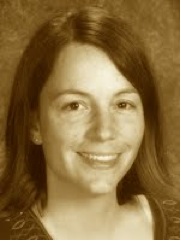
Shalimar Poulin teaches at Wiscasset High School (RSU 12), grades 9-12. She has been teaching for 18 years. Prior to Wiscasset High School for the last year she taught at Gardiner Area High School for 8 years, 3 years at Hyde Schol in Bath, and 6 years in suburban Philadelphia. At WHS she teaches Draw/Paint, Printmaking, Art Revolutions (Art History- inspired Art-making class), Digital Art, Ceramics, Sculpture. Shalimar has served on the leadership team for the Maine Arts Assessment Initiative.

What do you like best about being an art teacher?

It comes naturally to me, always has. Harvesting the belief that all people can practice creativity, can learn the skills of making quality art, and one does not have to be talented to enjoy art-making. This belief is something that works best when discovered first hand; however, learning vicariously through one’s child can change limiting perceptions of art making.

Tell me what you think are three keys to ANY successful arts ed program?

  1. Community attitude towards art (including administration, teachers, staff, students, parents and community at large). One does not necessarily need to be 100% gung ho art, but must have a curiosity, positive learning attitude, and a willingness to accept changes in art education.
  2. Art teacher dedication, commitment, quest for doing one’s best.
  3. The establishment and maintenance of a flexible learning environment where teacher and students learn together, where guidelines are clear and open to interpretation and the door is open for extended-learning and community visitation.

What specific way(s) do your assessment practices tie into the success of your program?

I can’t be sure that it is successful. Right now, it is a lot of work. I hope at some point to better manage the long out-of-class hours I spend on creating quality assessments, modifying quality assessments, providing quality evaluation and feedback to students, and the one I am least successful at- timely feedback. The assessment tools I use are: (1) project rubrics (that ask students to self reflect on their work, modify project goals to suit their interest, and clear teacher and peer feedback for improvement), (2) bi-weekly exit slips- a substitute for quizzing, including: comments about learning and activities, class participation and effort, teacher and self ratings, art language exercises, hopes for upcoming weeks, feedback for teacher (3) start-up questions- discussion questions posed to students to answer individually, in pairs, or groups depending on the pre-start up activity. Usually there is an out-of-class expectation of sorts- read a google doc, visit a blog, do an activity to reinforce learning such as a 10 minute or less class start-up questions. (4) artfolio development and presentation checklist and rubrics (photographing, writing and revising student artist writings and storing, filing and posting of electronic files to student g-site artfolios),  (5) critique preparation, discussion, and reflection 

Next year I am going paper-less with all non-art activities. I am using an on-line classroom called Canvas (supported by our tech integrator). I am looking forward to this practice and I believe it will improve student’s tendency to resist “paper-work” and “academic” activities in art class. I also am certain it will stream-line evaluation such that the required time will be reduced.

What have been the benefits in becoming involved in the arts assessment initiative?

Collaboration- sharing stories, problem-solving together, shop talk. Working with leaders in Maine State Arts Education- kind, thoughtful, energetic, movers and shakers.

What are you most proud of in your career?

The life skills I share with students by example and through the making of art: work ethic, problem solving, commitment to completion, risk taking, development of creative self, allowing a project to take time (not everything we do need be instant gratification). Turning kids on to something they believed they had no aptitude for- the skills of art making.

What gets in the way of being a better teacher or doing a better job as a teacher?

A growing epidemic of the failings of the education system being blamed on those of us in the trenches- teachers. The lack of parent involvement in the lives of their children. The failure of educational consultants and school administration to interview and honor their greatest resource- teachers. The troubled economy and instability of arts place in the future of education. Students who make it their main mission to defy authority (who fail to see we have their backs and want the best for them).

Apple or PC?

Apple

What have you accomplished through hard work and determination that might otherwise appear at first glance to be due to “luck” or circumstances?

Nothing. It seems all that I have perceptively succeeded in has come from hard work, determination, working with others, and intentional moving and shaking. I will say, I have been lucky to be invited to work in some interesting schools and I have had the privilege of working with some amazingly outstanding students. These blessings were not a function of my efforts, they are providence.

Look into your crystal ball: what advice would you give to teachers?

Please don’t consider art an exception to the rule. When our peers in the core disciplines are asked to make changes, meet new standards, jump through hoops, JOIN THEM- be an example of change. Validate what we do as being part of current educational trends. Expect our administrators to include us in all requirements.

If you were given a $500,000.00 to do with whatever you please, what would it be?

I would ask for more money because 500 is a spit in the bucket. Then, I would build and open a state of the art after-school arts center for children ages 4-18. I would include disabled adults as well. This center would be the equivalent of a magnet school for the visual and performing arts- only less formal. It would offer students enrichment, a place to be after school, and the opportunity to create life-time habits in creativity. It would have all the ideal facilities I have ever dreamed of and never had. I would link it to a community center (YMCA maybe) that also offers exercise programming. I would close it in the summer so that I could continue to devote time to personal art-making. Besides there are so many great summer programs already established for young people. I would have a massage once a week, schedule my loved ones for a once a week massage and hire a personal chef and a sherpa. I would establish a college fund for my nieces and nephews. I would by a place on the water.

Websites that Shalimar recommends:
https://sites.google.com/a/svrsu-whs.org/whs-artland-ms-poulin/home

https://sites.google.com/site/arteducatorshalimarpoulin/

http://artjunction.org/blog/?tag=arted-20

http://arted20.ning.com/

http://www.teachingarttoday.com/Teaching_Art_Today/Home.html

http://greenwoodstudiogroup.com/shalpoulinabouttheartist.html

http://www.facebook.com/pages/Shalimar-Corneille-Noire

http://www.artsonia.com/

Thank you Shalimar for sharing your story.
h1

Another Arts Teachers’ Story: Rebecca Wright

July 11, 2012

Featuring one teacher’s journey as an educator

This is the 16th in a series of blog posts telling arts teachers’ stories. This series contains a set of questions to provide the opportunity for you to read educators stories and to learn from others.

Rebecca Wright just completed her 27th year in public education with the last 26 in Ellsworth, RSU 24. She is unique not because she teaches grades 9-12 at Ellsworth High School (EHS) but that she teaches Theatre, Vocal Music, and Dance and each year her student load varies due to her content expertise. On a trimester system at EHS next year she will teach 7 sections of public speaking, a new requirement for Freshmen. Her primary classes are in Introductory Theatre, Dance, and Vocal Music and Advanced sections in all those areas as well. Rebecca also teaches two different sections of Stagecraft; Costumes and Sets, and Concert Choir. The team Rebecca works with is awaiting final approval for instituting a Visual/Performing Arts Academy. Rebecca is a teacher leader with the first phase of the Maine Arts Assessment Initiative.

What do you like best about being an arts educator?

It is ever changing and it is what students can be passionate about. They come to my class and say “I’ve waited all day for this!” I love how it changes or improves their lives forever and they will come back years later to describe how the visual/performing arts classes have helped them, supported their goals, or become a lifelong pursuit.

Tell me what you think are three keys to ANY successful arts ed program?

  1. Community and Administrative Support
  2. Dedication and a thick skin:)
  3. Students first!

What specific way(s) do your assessment practices tie into the success of your program?

Formative, formative, formative. Students are constantly assessed and encouraged daily without being aware of it. Formative assessment is vital to their individual improvement. My emphasis is on individual progress not on comparison to anyone else in class. Everyone can and will improve and graded assessments are based on their self-assessment, peer assessment and my assessment.

What have been the benefits in becoming involved in the arts assessment initiative?

The arts assessment initiative has been one of the best professional experiences of my career. The week spent last summer with people of like philosophy and mind was exhilarating and inspiring. The wealth of knowledge and ideas was a treasure trove to draw from and Ann Marie from MLTI changed my outlook on technology forever!

What are you most proud of in your career?

I have been blessed to have had many highlights in my career. Seven state championship show choir titles, two national titles at Disney, many successful festivals and sold out performances. I am most proud however, of the many students who have chosen to pursue careers and lives in the arts. It has been so rewarding to see them go on spreading the love of music, theatre and dance around the country. Many are teaching and directing at schools around the state, some are dancing in New York City, some are on television and in the movies spanning the nation from Washington, D.C. to Los Angeles. Some participate in community theatre and church choirs. They keep me in the loop of their lives and I could not be more proud.

What gets in the way of being a better teacher or doing a better job as a teacher?

The things that most interfere with being a better teacher are the increasing demands placed upon the teaching profession in general, red tape and paperwork, and also the constant repetition of having to educate administration about the unique and different needs of the Visual/Performing Arts Dept. I have had many supportive administrators but it has taken determination on the part of myself and my colleagues to gain that support and understanding of our programs.

Apple or PC?

Apple because we have “one to one” for our students.

What have you accomplished through hard work and determination that might otherwise appear at first glance to be due to “luck” or circumstances?

I constantly hear from colleagues across the state “It must be nice!”, “You have all kinds of money to work with.”, “Ellsworth has all kinds of advantages”. What I remind them is that it took 26 years to build what we have and we started with nothing more than an aging cafetorium stage and a handful of kids. There have been years full of “blood, sweat and tears” poured into our program not just on my part but on the part of all those students, parents, and volunteers during all those years. Circumstances were often against us but a passion for the importance of performing arts for students carried us through.

Look into your crystal ball: what advice would you give to teachers?

The visual/performing arts are more important than ever to students and our culture.
Don’t give up and don’t expect everyone to be as excited as you are. Always remember who it makes the difference for-students. Be willing to compromise and be flexible and be willing to look at your situation from all sides. It is hard to argue with a program that is always focussed on what is truly best for students.

If you were given a $500,000.00 to do with whatever you please, what would it be?

After paying for my twins education, one is going to SVA in Manhattan for Animation and one is going to USM as Musical Theatre major (go figure:), I would probably finally start the “Wright School for the Performing Arts”. We have joked about it for years, buying The Grand Auditorium in Ellsworth and renovating it to be used as a year round performing arts school and performance center.

Thanks Rebecca for telling your story!

h1

Another Arts Teachers’ Story: Jennie Driscoll

June 26, 2012

Featuring one teacher’s journey as an educator

This is the 15th in a series of blog posts telling arts teachers’ stories. This series contains a set of questions to provide the opportunity for you to read educators stories and to learn from others.

Jennie Driscoll has been teaching visual arts for 24 years and is presently the chair of the Arts Department at
Brunswick High School
She has taught Photography I , Photography II, Art 3, Art 4, and Advanced Placement Studio Art for students in grades 10-12. Jennie is one of the teacher leaders with Phase 1 of the Maine Arts Assessment Initiative.

What do you like best about being an art educator?

Helping students develop confidence as they express their ideas in a variety of media and utilize technical skill. I find media and tools an exciting pathway for the expression. I like seeing personal artistic growth and a seriousness of purpose develop in my students over time.

Tell me what you think are three keys to ANY successful arts ed program?

  1. What –Strong assignments that encourage students to problem solve.
  2. How – Teach technique with media so students have the right set of tools for expression.
  3. Share – Authentic assessments that allow for reflection on craft and expression.

What specific way(s) do your assessment practices tie into the success of your program?

I allow my students to be part of the assessment process and invite them to reflect and revise their art work to make it the best they can be. I invite the class to support one another with feedback. My goal is to help students express their ideas clearly in visual media.

What have been the benefits in becoming involved in the arts assessment initiative?

Sharing and connecting with arts professionals that deal with the same issues.

What are you most proud of in your career?

Always being there to support my art students as they take risks and make mistakes. Student successes  have a big impact on letting me know I am on the right track.

What gets in the way of being a better teacher or doing a better job as a teacher?

Not having enough time and too much to do, oh also the little beep I get when an email comes in.

Apple or PC?

Apple

What have you accomplished through hard work and determination that might otherwise appear at first glance to be due to “luck” or circumstances?

I have done my best to build and maintain a strong visual art program as well as meet the needs of individual students.

Look into your crystal ball: what advice would you give to teachers?

Although there are many days that seem like you don’t know if you are making a difference  or not, hang in there because the universe will share meaningful moments and your purpose will be validated. There will be specific art works that your brain will absorb and will always remember and thus you will in turn remember the student who did it.

If you were given a $500,000.00 to do with whatever you please, what would it be?

I would purchase a kiln and supplies for ceramics in each elementary art department in Maine that does not have one. Of course I would include teacher training in curriculum, assessment, and operation along with clay, some tools and cones!

Thank you for sharing your story Jennie!

h1

Final Arts Assessment Webinar of MAAI Phase 1

June 25, 2012

Commissioner Bowen guest on Back to the Future Webinar

On May 23rd we had the final webinar for the series as part of Phase 1 of the Maine Arts Assessment Initiative (MAAI). Commissioner Bowen was the guest with facilitators Catherine Ring and Rob Westerberg. The webinar was called Back to the Future: Arts Teachers Lead the Way. Catherine and Rob put together a list of questions for the Commissioner which provide a great deal of information.

If you were one of the 40 participants thanks for joining the webinar. Throughout the discussion the Commissioner shared his perspective on arts education. The webinar, along with the interview the Commissioner did for the blog post on August 30, 2011, shows his commitment to arts education.

Below are three of the questions that the Commissioner was asked on the webinar:

  1. Mass customized learning is all about shifting the paradigm in education. The Arts Assessment Initiative has been all about proficiency and assessment of proficiency. How can we use the arts in shifting the new educational paradigm, and how can this shift help the new paradigm of Arts education?
  2. It has been our experience that we have encountered many misperceptions about arts education (comprehensive understanding of what it really is); it is unique in that we are the ones who teach the creative process and we reach all children. There is a difference between creativity as a life skill which you may encounter across disciplines and the creative process grades PK through 12 which is learned only in the arts classrooms. How does the nature of the arts therefore connect to 21st century skills which are the foundation of our future work, and how are they to be assessed?
  3. What is the difference between LD 1422 and what we have now as it relates specifically to the arts?

Thank you to Catherine and Rob for facilitating the 7 webinars that happened throughout the school year. All of them have been archived and can be accessed with meeting plans on the Department’s arts assessment page at http://www.maine.gov/education/lres/vpa/assessment.html.


During the webinar we looked at a crosswalk showing the connections with the MAAI and the Department’s Strategic Education Evolving.

The webinar is archived along with the other 6 MAAI webinars that have taken place during the school year since September. You can listen to the recordings located at http://www.maine.gov/education/lres/vpa/assessment.html. Also at this webpage you will find meeting plans for each of the 7 webinars that you can use individually or at teacher’s meeting.

Thank you to Catherine and Rob for their work on the webinars. They are an important component of the MAAI and will continue to be useful for arts teachers across the state.

Below is the crosswalk that you can download as a .pdf or word document on the Department’s arts assessment webpage.

Strategic Plan

Maine Arts Assessment Initiative

1: Effective, Learner-Centered Instruction
  • The heart of all Professional Development IS student-centered learning
  • Presently using MLR, will transition to national standards, expected in December 2012
  • Individual teachers creating assessment tools to meet needs of their classrooms/students/PK-12 local systems
2: Great Teachers and Leaders
  • Building on what we know, providing Professional Development opportunities for teachers to move – good to great
  • Teacher leader training in assessment, technology, and leadership
  • Going deeper and wider for teacher learning
  • Collaborative opportunities
  • Development and empowerment of teacher leaders
  • Community of practice: Maine Arts Education Leaders
3: Multiple Pathways for Learner Achievement
  • Training teachers to lead in determining what tools will be used at the local level
  • Variety of arts courses available in high schools
4: Comprehensive School and Community Supports
  • Encouraging collaborative work
  • Providing successful stories, examples
  • Beyond phase 2: ideas under discussion
5: Coordinated and Effective State Support
  • Identification of teacher leaders – 36 total, training in assessment, leadership, technology – developing workshops
  • Facilitating workshops regionally
  • Webinars – archived w/meeting plans
  • Graduate courses being offered
  • Arts ed list serv/Blog – ongoing communication
  • Repository of best practices (lessons, units, assessment tools)
  • Community of Practice


h1

Another Arts Teachers’ Story: Leah Olson

June 19, 2012

Featuring one teacher’s journey as an educator

This is the 14th in a series of blog posts telling arts teachers’ stories. This series contains a set of questions to provide the opportunity for you to read educators stories and to learn from others.

Leah Olson is has taught visual art for 16 years. Currently, she teaches five classes of visual art at Hampden Academy. This is her first year teaching high school and has about 100 students per semester. Her teaching assignment includes Art 1 and 2, Sculpture 1 and 2, Drawing and Painting and Advanced Art. She will be teaching a new course of Jewelry and Ceramics in the fall.

What do you like best about being a visual art educator?

Teaching art is like being able to assist people in self discovery. I love watching students learn in the creative process. This job allows me to have a degree of autonomy that allows me to make daily and long term decisions that will bring the best experience for the student.  I feel like an artist when I teach!

Tell me what you think are three keys to ANY successful arts ed program?

  1. Educate yourself about art education daily, weekly, etc., in whatever means possible.
  2. Be a clear communicator. Write about “art happenings” in school newsletters/emails. Schedule time to communicate with your colleagues about curriculum, assessment and make goals. Collaborate with colleagues other than in your content area because students get more out of it when they know others are on the bandwagon.
  3. Be involved with community arts events because public relations is crucial on so many levels.

What specific way(s) do your assessment practices tie into the success of your program?

  • Collaboration is key. My colleague, Bethany Hanson, has been a crucial part of ongoing improvements that correlate with Hampden Academy’s emphasis on curriculum development. She and I work together to develop quality assessments that will help our students meet the standards in the visual arts before students graduate.
  • Backward Planning – for example: Showing student work examples of the projects before students start a unit. Having a discussion about what quality work looks like is important to see before giving students the steps required to achieve and learn.
  • Checklists – Students use them to gauge their time, process and quality of work to meet and/or surpass the expectations. We all use checklists in our life for many different things. It holds us accountable for what we do. And don’t you feel good when you cross those things off your list?

What have been the benefits in becoming involved in the arts assessment initiative?

Arts teachers are very professionally isolated in school districts. Professional development is scarce, schedule is tight, and funds are not available.  Through this initiative, people are developing ways of communication through technology that can help arts teachers access information that is relevant and helpful to their skill levels. I have learned a great deal from other teacher leaders.  It has also been refreshing to meet other arts teachers who love what they do and have much to share with others.

What are you most proud of in your career?

After 16 years, I still love my career!  Students never cease to inspire me.  Teachers shape our perspective about education and little of that changes as the years pass. I hope students leave my classes believing that learning about art is important, it is fun and it is important to support it in their community. I am proud to encourage global thinking, to work hard, and to teach that creativity is being in the process!  Teaching students how to enjoy problem solving can be a tough business!

What gets in the way of being a better teacher or doing a better job as a teacher?

Many people have mentioned time.  Thats # 1 for me too.  When you begin to not take the time to make something better, the less effective you become.  This is not only tough to do individually, but tough to teach others those various problem solving skills using the time effectively.  How can I help students find their “spark” in the creative process? That “spark” fuels the power of the arts.

Apple or PC?

This is my first year being totally Apple!  So far, so good!

What have you accomplished through hard work and determination that might otherwise appear at first glance to be due to “luck” or circumstances?

This is my first year teaching art at Hampden Academy. I owe my accomplishments to having a positive outlook on things and that has pushed me forward towards my present career.  I don’t dwell on my failures – I try to learn from them.  The love of learning does appear to be “lucky” for me (and the self fulfilling prophecy thought pattern comes in handy…..).

Look into your crystal ball: what advice would you give to teachers?

  • “Oh Great Self Fulfilling Prophecy” = Thoughts – Words – Actions –  Habits – Character – Destiny
  • “Never underestimate the power of a small, dedicated group of people to change the world; indeed, that is the only thing that ever has.” – Margaret Mead
  • My advice in general: Do the right thing when no one is looking.

If you were given a $500,000.00 to do with whatever you please, what would it be?

Add to the college fund for my two children. Buy a house on the water with a BIG space for a studio. (OMG, that sounds so responsible.)

Leah’s resources:

Thank you for sharing your story Leah!

h1

Another Arts Teachers’ Story: Matt Doiron

June 12, 2012

Featuring one teacher’s journey as an educator

This is the 13th in a series of blog posts telling arts teachers’ stories. This series contains a set of questions to provide the opportunity for you to read educators stories and to learn from others.

Matt Doiron teaches high school instrumental music in the Sanford Public Schools. He has been teaching for 22 years. The Sanford High School band program involves about 90 students in concert band, marching band, jazz ensemble and pep band. In addition Matt teaches AP Music Theory and about 75 beginning guitar students every year. Matt has been with the Maine Arts Assessment Initiative as a Teacher Leader in the first phase and we’re thrilled to have him serving on the Leadership Team for the second phase.

What do you like best about being a music educator?

It provides me with an opportunity to “walk the walk.”  There is a lot of research and a lot of talk about how arts education is vitally important. The rest of the educational establishment will see us as important when they experience, first hand, what arts education really can do. My goal every day to make that happen.

Tell me what you think are three keys to ANY successful arts ed program?

  1. You have to have an expert understanding of your content area.
  2. You have to have an understanding of how students learn the content.
  3. You have to be driven to use the two understandings to make things happen in your school.

What specific way(s) do your assessment practices tie into the success of your program?

I work to assess students individual musical growth throughout all the semesters they are involved in the band program at SHS. This is quite a shift from “You must attend all performances and behave well in rehearsals.” It’s about being able to individualize instruction for all students and measure that growth over time that matters. When the students get this, they see preparing for what they need to do in rehearsal and performance as a part of their overall musical growth, not simply as “I need to make sure I play Db in the trio.” This is quite a hurdle for many young musicians as it is transitioning them into a much larger and more complex musical world, but once they make the jump, they have begun a truly transforming process of being musical thinkers instead of thoughtless trained doers.

What have been the benefits in becoming involved in the arts assessment initiative?

My involvement in the arts assessment initiative brought me through a process of defining what I really believe my job entails. I don’t hesitate to be direct about what I need to be doing for my kids and what is necessary for growing the program. I have thought through both how and what I grade and how my expectations need to shift to cause the students to take ownership of their musical growth and for my program to be considered valid by the people I teach with and for.

What are you most proud of in your career?

Performing for the President of the United States.

What gets in the way of being a better teacher or doing a better job as a teacher?

Time.  (We never seem to take out the “trash” in education so many of us are still doing 31 different parts of past initiatives because they don’t ever seem to be re-evaluated and removed.)

Apple or PC?

Apple

What have you accomplished through hard work and determination that might otherwise appear at first glance to be due to “luck” or circumstances?

Re-building and maintaining the music program at Sanford High School. When I came to teach here, there were 19 students in the high school band. Now we are talking about everything from better schedules to new facilities and programs and what programs we could look to offer out into the future.

Look into your crystal ball: what advice would you give to teachers?

The long term success of what we do is dependent upon us walking the walk of best practice in teaching all the 21st century skills that can best be delivered by arts education.  We can lead the way on changes in our schools or we can continue to do what we’ve always done and then complain when we loose more programs. Without our leadership we will not be “at the table” when important decisions are made, we will be “on the menu.”

If you were given a $500,000.00 to do with whatever you please, what would it be?

Cover my daughters’ college educations, pay off the house, work on my PhD.  (There would probably be a trip to Europe in there somewhere too.)

Thank you Matt for sharing your story!

h1

Another Arts Teachers’ Story: Audrey Grumbling

June 5, 2012

Featuring one teacher’s journey as an educator

This is the 12th in a series of blog posts telling arts teachers’ stories. This series contains a set of questions to provide the opportunity for you to read educators stories and to learn from others.

Audrey Grumbling currently teaches K-5 Visual Arts to 460 students at two elementary schools: Kennebunkport Consolidated School and Mildred L. Day School, Arundel. She originally taught K-8 Art in Arundel beginning in 2001. In 2006 the school became a K-5 school and later consolidated with RSU 21. Her work includes teaching two Talented Artist Program classes each week. Audrey has been with the Maine Arts Assessment Initiative as a Teacher Leader in the first phase.

What do you like best about being a music/art/drama/dance educator?

I revel when I see the children’s joy as they work with materials and express themselves visually. Seeing them tap into their own creativity and get into their “flow” zone – that’s the best. While my discipline is visual, I am passionate about ideas, and I teach for that spark, that “aha” moment, when a child makes a discovery and grasps a concept.

Tell me what you think are three keys to ANY successful arts ed program?

As arts educators, we are entrusted with the important work of providing children opportunities to directly experience the language of human expression and understanding.

  1. A successful arts education program needs passionate educators who find joy in their own work.
  2. A good arts program helps students practice close observation and build skills that lead to creative problem solving and critical thinking.
  3. It’s no accident that the highest level of the new Bloom’s Taxonomy is “to create.” It’s the quality that businesses, think tanks, and the world most need to nurture for our future. It’s what the arts are all about!  Getting this message out beyond the “choir,” that’s essential to a solid program, as well.

What specific way(s) do your assessment practices tie into the success of your program?

As we found repeatedly throughout our Arts Assessment Initiative, we need to focus on “formative” assessment – immediate feedback that students can apply to their work and teachers can utilize to adjust and differentiate instruction. It opens up a trust, a dialogue, a conversation that helps students grow while they create. Ideally, they learn to reflect, revise, and create (and reflect again). Teaching students the process of metacognition provides a lifelong skill for any discipline. Learning how to revise and change and modify is a key skill, whether one is planning a mural, writing an essay, designing an app for a smart phone, or developing a fuel-efficient engine. The arts do it!

What have been the benefits in becoming involved in the arts assessment initiative?

Through the MAAI, I met some amazing, talented, and passionate arts educators. We experienced a journey of discovery and sharing as we studied and reflected on our own practice together. At our state Assessment conference, we established a dialog with our colleagues, both presenters and attendees, and shared in ways we rarely have a chance to do. I especially enjoyed collaborating with Laura Devin of Bath to present two sessions at the conference.

What are you most proud of in your career?

I treasure those undocumented moments of joy, pride, and “aha” sparks I’ve witnessed over the years.  It is gratifying to see children realize they can make a difference in the world with their art (whether through exhibitions, gifts, collaborative works, or service learning).

What gets in the way of being a better teacher or doing a better job as a teacher?

I am frustrated that I don’t do enough to educate the self-named “non-artists” in our school community about the importance of the arts to build adults who can think independently, solve problems, collaborate, and communicate within our world. The current single-minded emphasis on test scores is a narrow view of what children need to succeed. In 2007 I spoke with university educators in Japan who said they were long “past” that way of thinking, and the schools I visited were, indeed, intensely invested in the whole child. Despite ample confirming research, somehow we get stuck on the test scores.  Of course, there is always the big issue, TIME, or lack thereof. Lack of TIME with children, lack of TIME for research and teaming with other educators, for coordinating that collaboration across disciplines that really cements learning.

Apple or PC?

Both, but with MLTI, more Mac these days.

What have you accomplished through hard work and determination that might otherwise appear at first glance to be due to “luck” or circumstances?

I have found community partners to host whole-school art exhibits in their museums and galleries. For each of my students to see themselves viewed by their community as “artists” in a “real” gallery is priceless. I am also really proud that Arundel was named one of six “Imagination Intensive Communities” in the state during the first year of that program. This recognition represented amazing whole-school collaborations and integrated learning that involved our entire staff, something that suffers when test scores become the prime measure of a successful education and planning time for collaboration is squeezed. When I created integrated units of study for the Portland Museum of Art, the Farnsworth Art Museum, and the Lincoln Center International Institute for Creative Learning I was able to bring world-class professional development back to my students, and when published, to the reach the wider education community. Finding funding to bring in working artists from down the road and across the world has also been an exciting part of my work over the years.

Look into your crystal ball: what advice would you give to teachers?

Hang on to your ideals, find outside experiences that stimulate and support your work, and find some supportive colleagues with whom to collaborate.  Also, educate your administrators, school board and community about the essential relevance of the arts in the life of a developing young person who can solve problems creatively, think critically, communicate within our rapidly changing world, and, by golly, be a happy, contributing member of society. It’s the world I want to live in.

If you were given a $500,000.00 to do with whatever you please, what would it be?

Wow! A financial bonanza would help me bolster my own children’s creative endeavors out in the world (a filmmaker, a poet, and a molecular physicist). I’ve always wanted to fund an artists’ colony, where young artists can live and work and inspire each other. I’d like to work on ways to educate communities, administrators and school boards about the both essential and vast benefits of a solid arts education.

Thank you Audrey for telling your story!

h1

Another Arts Teachers’ Story: Shari Tarleton

May 30, 2012

Featuring one teacher’s journey as an educator

This is the eleventh in a series of blog posts telling arts teachers’ stories. This series contains a set of questions to provide the opportunity for you to read educators stories and to learn from others.

Shari Tarleton has been teaching music for approximately 21 years in Pennsylvania; Guantanamo Bay, Cuba; and Brunswick, Maine. She began teaching in Brunswick 15 years ago at Coffin Elementary School and 6 years ago she moved to Brunswick Junior High School. Her teaching responsibilities include choral music in 6th, 7th and 8th grade, beginning band and 6th grade general music. There are currently about 185 students who participate in the choral music program at BJH. They also have extra-curricular music theater, show choir and advanced choir. Shari is a Teacher Leader with the first phase of the Maine Arts Assessment Initiative.

What do you like best about being a music educator?

I feel the best thing about being a choral music teacher is the interaction that I have with my students. While there are times when I am the instructor and they are the learners, the final creation is a cooperative endeavor between all of us. And those performances, whether they are in class or in public are incredibly powerful; a blend of technique and emotion and whatever is impacting us at that particular moment. I like to remind my students that one difference between music and athletics is that in music, I am right there with you while an athletic coach is confined to the sidelines.

Tell me what you think are three keys to ANY successful arts ed program?

The first item in a successful arts program I feel is having the culture to support arts education. This happens in the school, in the community and at home. The second item for a successful program is creating a learning environment that supports both the technical aspects of the arts as well as the space for creativity. There needs to be a balance between the two. Finally, clear lines of communication are necessary between teacher/students/parents/administration and community.  Culture, balanced curriculum and communication; I feel these are the driving factors in a strong arts education.

What specific way(s) do your assessment practices tie into the success of your program?

Each student owns a piece of the learning process and each student has control over their own learning. Assessment practices support this. When standards are clearly presented and students are aware of the standards, then they work toward achievement. There is no timeline for this. We work together and we support each other. The learning is not dependent on me as the teacher, but it is owned by the student. I provide skills, knowledge and opportunities that support the learning process, but the student learning is owned by the student.

What have been the benefits in becoming involved in the arts assessment initiative?

I have certainly increased skills and awareness of standards-based assessments. The technology support has been amazing through the initiative. I also very much appreciate the network of teachers in the arts initiative and the collegiality and the professionalism that is shared.

What are you most proud of in your career?

This was very hard for me to answer! I am very proud of all of my students every time they choose to be involved in music. Some of my former students are music educators, theater performers, and “in the spotlight” and many of them continue to sing in church and community groups. I am very proud to see that they have chosen to continue in music.

What gets in the way of being a better teacher or doing a better job as a teacher?

My current frustration is schedule. There are so many ways to teach and provide opportunities, but when the students are not able to be present for instruction or the instruction cannot be offered in an optimal way, then learning suffers and adds a layer that is out of my control.

Apple or PC?

 Apple at school but PC at home!

What have you accomplished through hard work and determination that might otherwise appear at first glance to be due to “luck” or circumstances?

Vocal instruction! I am a piano player with an instrumental background. I need to work very hard to learn how to guide students, especially middle school students, through the skills of singing!

 Look into your crystal ball: what advice would you give to teachers?

Be flexible. Do as much as you can with what you have.  Keep up with the technology. And don’t lose the enjoyment.

If you were given a $500,000.00 to do with whatever you please, what would it be?

I would put in a performance area so my students would not have to perform in the gym. Or take a long vacation to somewhere warm!

Thank you Shari for sharing your story!

h1

Honoring Teachers!

May 14, 2012

Thank you for the work you do!

Happy Teachers Appreciation Week (a couple of days late). You are being honored and being thanked for your work each day. I wish it were possible to drive to every school in every district throughout Maine during Teacher Appreciation week and personally thank you for the work you do each day educating students.

I’ve given some thought as to what gift I would give you to honor the work you do with students. I am not able to select only one so here is my list:

  1. A GREAT BIG THANK YOU from each student and parent.
  2. A day off (with no strings attached) to go and do whatever you please.
  3. An attitude change (from the public) that would make teachers heroes.
  4. Most importantly, I’d provide the opportunity for you to learn.

Why do I think that giving you the opportunity to learn is so important? I have watched young teachers blossom and establish themselves when they continue their learning while starting out in their first teaching jobs. I have listened to veteran teachers who have gone from being unhappy teaching to filled with renewed energy because of attending a professional development opportunity.

Since I can’t actually give you any of the items on the list I can ask you to give yourself a learning opportunity. The Maine Arts Assessment Initiative (MAAI) has provided many opportunities this year. The Teacher Leaders presented at the statewide conference in October at USM and continue to offer regional workshops all over the state. Six webinars are archived with meeting plans that you can access. And there is one more webinar scheduled for May 23rd with Maine’s Commissioner of Education, Steve Bowen, as the guest. You can learn more about the MAAI by going to the wiki. I invite you to get involved with the MAAI so you can have ongoing learning opportunities that might just make your teaching a little bit better and your life more fun!

I hope that your week is filled with appreciative moments and lots of fun!

A blog post from Education Week called Building Support for Professional Learning provided by Learning Forward you might want to read.

The”Teachers are Heroes” Infographic is posted on the University of Southern California Rossier School of Education blog. The statistics are grabbing and the teacher hero stories are really inspiring!