Posts Tagged ‘MAC’

h1

Poetry, Poetry, Poetry

February 11, 2019

Join us to support student poetry reciters

Today, Monday, February 11 at 3:00 at the Westbrook Performing Arts Center located at the Westbrook Middle School students from the high schools listed below will walk on stage and recite two of their favorite poems. If they advance to the final round they will recite a third one. Students are participating in the Poetry Out Loud Southern Regional Finals. At the end of the day five students will be invited to return for the Maine State Finals being held on Monday, March 11, 2019 (snow date Tuesday, March 12, 2019) at the Waterville Opera House, 93 Main Street, Waterville.

For both events, the doors open to the public at 2:30 p.m. and the event begins at 3:00 p.m. No tickets are required. The event is free and all are welcome to attend. We anticipate that the event will conclude by approximately 5:30 p.m.

  • North Yarmouth Academy
  • Portland High School
  • Lisbon High School
  • Greely High School
  • South Portland High School
  • Westbrook HIgh School
  • Cape Elizabeth High School
  • Thornton Academy
  • Gorham High School
  • Mt. Ararat High School
  • Waynflete School
  • Yarmouth High School
  • Oak Hill High School
  • Maine Coast Waldorf School
  • Kennebunk High School
  • Deering High School
  • Lewiston High School

    Northern Maine Regional Finalists Shaphnah McKenzie, Emma Jacot-Descombes, Magnolia Vandiver, Hanna Lavenson, Emily Campbell

    Poetry Out Loud is organized nationally by the National Endowment for the Arts and the Poetry Foundation and administered at the state level by the Maine Arts Commission. It begins in Maine’s schools where school champions are selected to compete in two regional finals at which ten students are ultimately selected to recite at the state finals. One student, the state champion, moves on from the state finals to represent Maine at the national finals in Washington D.C., where students from all 50 states, the District of Columbia, the U.S. Virgin Islands, and Puerto Rico will compete for a total of $50,000 in awards and school stipends for the purchase of poetry books.

    Poetry Out Loud uses a pyramid structure that starts at the classroom level. Winners advance to a school-wide competition, then to a regional and/or state competition, and ultimately to the National Finals.

h1

MALI Teaching Artist Leader Story: Shawna Barnes

February 5, 2019

Teaching Artist – Sculptor

This is one of six blog posts in 2019 that include stories of the Maine Arts Leadership Initiative (MALI) Phase 8 Teacher Leaders and Teaching Artist Leaders. This series includes a set of questions so you can learn a little bit about each leader. CLICK HERE  for more information on MALI. CLICK HERE  for more information on the 96 Teacher Leaders and 11 Teaching Artist Leaders. CLICK HERE  for Arts education resources. CLICK HERE for the MALI Resource Bank. Search in the “search archives” box on the bottom right side of this post for past teacher leader stories. Thank you Shawna for sharing your story!

Shawna N.M. Barnes is a Ceramic Sculptor who has been focused on teaching for three years. Her favorite group to teach is the one full of people who “don’t think they can” because of a disability. Or never gave art a try because of their disabilities. “Problem solving and finding ways to show them they can create and engage in creativity… is amazing.”

What do you like best about being a teaching artist?

I love all the people I have met as a teaching artist. Doors that have been opened, and opportunities presented. It has provided me the ability to share my passions with others who appreciate it.

What do you believe are three keys to ANY successful visual and performing arts education?

First, allowing for differential interpretations of a topic. Essentially acknowledging that the world is full of gray. And when it comes to art, the spectrum of how art and its concepts are perceived, truly is a spectrum.

Second, the ability to acknowledge that art is a bridge between worlds. Whether that be yours and mine, real and fantasy, or past and future. It allows for difficult conversations to be had, often bridging a divide caused by a lack of understanding. Teaching this concept to our students is vital.

Third, the ability to appreciate content, subject matter and skills needed to complete a work of art without having to like the art itself. The ability to see it with an objective eye.

Have you found assessment to be helpful in your classes, workshops and residencies, and if so, how?

Thus far, assessments have helped guide the evolution of my classes and workshops. By evaluating what is working, what is not; what different ages and abilities respond to; I have been able to fine tune the classes so that the highest number of people fund value and enjoyment from the class.

What have been the benefits in becoming involved in the Maine Arts Leadership initiative?

The benefits have been innumerable! It has been the push I needed to create the resource center in my website. I have been given the opportunity to grow my speaking career by giving presentations at conferences. It has sparked collaborations between several members for brand music, for upcoming tutorials, and similar applications. It has introduced me to a group of peers that have become my support network. It has given me the confidence in my own set business that my intuition is right and I am on the right path.

What are you most proud of as an artist and/or a teaching artist?

I am most proud of breaking barriers and showing others where barriers exist. As a disabled artist, I often chose to just not participate in events and workshops because it was easier. I’m taking my challenges and helping create solutions that benefit not just me… but hopefully generations of disabled learners and artists so that they can have access to creative outlets.

What gets in the way of doing a better job as a teaching artist?

My health, admittedly. It can cause me to be unreliable and miss deadlines. Another factor is physical accessibility to facilities that may want to host me for workshops or seminars. 

What have you accomplished through hard work and determination that might otherwise appear at first glance to be due to “luck” or circumstances?

Simply being an artist is hard work and requires determination every day to put the work in. I work through a variety of disabilities just to be able to create; myasthenia gravis,  cervical dystonia,  hypermobility joint syndrome, seizures, chronic pain, peripheral neuropathy and PTSD are the heavy hitters.

What advice would you give to someone who is thinking about becoming a teaching artist or is just starting out?

You will stumble as you find your footing but don’t let that detour you from continuing to put the work in to build the foundation of your career. Don’t be afraid to ask for help.  There’s plenty of room for everyone at the top, do not entertain a scarcity mindset. 

If you were given a $500,000.00 to do with whatever you please, what would it be?

Build my handicap accessible studio. Give a few grants to local artists and arts organizations looking to make their space accessible by adding ramps or stairlifts to their infrastructure. And spend a few weeks in Paris, soaking up all the amazingness that is the Louvre.

Imagine you are 94 years old. You’re looking back. Do you have any regrets?

None.

h1

POL Northern Regional Finals

January 31, 2019

Amazing High School Students

Five Northern Maine Finalists: Shaphnah McKenzie, Emma Jacot-Descombes, Magnolia Vandiver, Hanna Lavenson, Emily Campbell

At Hampden Academy earlier this week students, teachers and families traveled from different parts of Maine to recite poetry. The Maine Arts Commission held the Poetry Out Loud (POL) Northern Maine Regional Finals in conjunction with the Poetry Foundation and the National Endowment for the Arts. Students have been practicing and reciting poems in schools across the state and country since early in fall. For the event they had prepared three recitations and wowed the audience with their amazing performances.

We’re so proud of the following students who participated. The names with stars are the five students moving onto the state finals on March 11 at the Waterville Opera House, 3:00 p.m. The event is free and open to the public. All are welcome!

  • Hanna Lavenson, Messalonskee High School **
  • Emily Campbell, Waterville High School **
  • Emma Damboise, Hampden Academy
  • Kate Kemper, Camden Hills Regional High School
  • Maria Dottie, Winthrop High School
  • DiamondRose Dunfee-Platt, Searsport High School
  • Rebecca Collins, Presque Isle High School
  • Emma Jacot-Descombes, Rangeley Lakes Regional High School **
  • Magnolia Vandiver, George Stevens Academy **
  • Shaphnah McKenzie, Bangor High School **
  • Elias Miller, Medomak Valley High School
  • Neily Raymond, Hermon High School
  • Kaitlyn Bilodeau, Leavitt Area High School
  • Kaitlyn Carreira, John Bapst Memorial High School
  • Shelby Skipper, Gardiner Area High School

The Southern Regional Finals will take place on Monday, February 11, 3:00, Westbrook Middle School Performing Arts Center. For more information about the Poetry Out Loud program please go the POL pages at the Maine Arts Commission website.


h1

2019 MALI Mega Conference

January 30, 2019

Friday, March 15

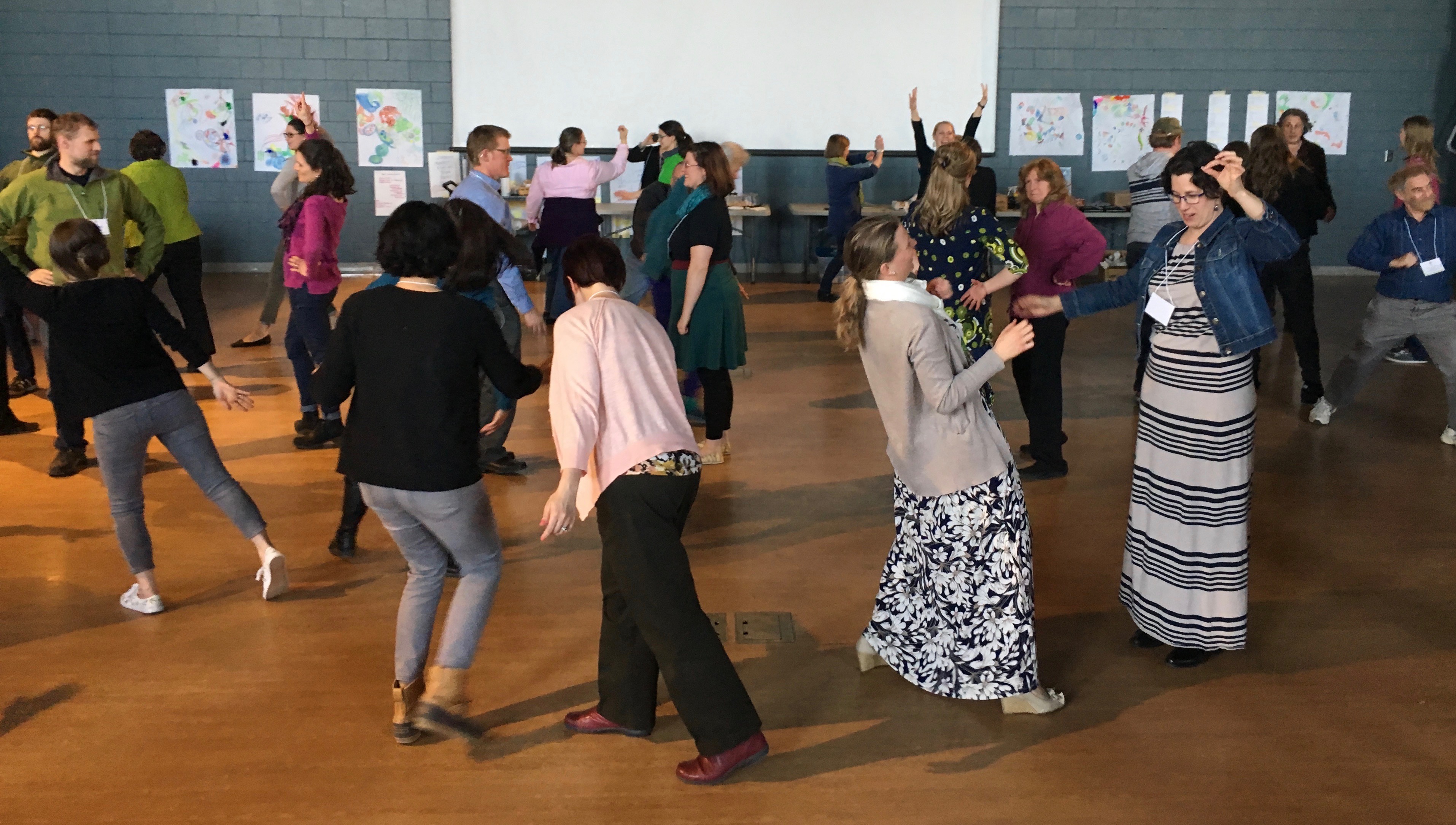
The Maine Arts Leadership Initiative (MALI) will provide a Mega-regional conference at Oxford Hills Comprehensive High School in South Paris, Maine on Friday, March 15, 8:30 a.m. – 3:15 p.m. All educators, PK-higher education are invited to participate in this professional development opportunity in arts education. Workshop facilitators are Maine Arts Leadership Initiative (MALI) teacher leaders and teaching artist leaders from all eight phases of MALI. These educators are providing dynamic work that they’ve been engaged with themselves, some for many years.

Below are the descriptions for the workshops being offered. You will have the opportunity to register for three of these workshops.

  Register for the 2018 Mega-Regional Workshop

Date and Location

Friday, March 15, 2019, Oxford Hills Comprehensive High School, South Paris

Schedule

  • 8:30 a.m. Registration begins
  • 9:00 a.m. Opening
  • 9:15 a.m. – 10:30 a.m. Breakout Session I
  • 10:30 a.m. – 10:40 a.m. Break
  • 10:45 a.m. – 12:00 p.m. Breakout Session II
  • 12:00 p.m. – 12:45 p.m. Lunch, participants on their own
  • 12:45 p.m. – 1:45 p.m. Artist Showcase
  • 1:50 p.m. – 3:00 p.m. Breakout Session III
  • 3:00 p.m. – 3:15 p.m. Closing

Contact hours

5.5 contact hours will be provided to those participating in the full day of the MALI Mega-regional conference at Oxford Hills Comprehensive High School.

REGISTRATION

What does “arts accessibility” mean? Presented by Shawna Barnes

PreK-12 All content

Description

Shawna will share the five key definitions of arts accessibility and what they may look like in the classroom/studio. Participants will learn how to break through these barriers to access, with a few creative solutions.

Sandbox Composing Presented by Joe Cough

Grade 6-Adult Music

Joe will demonstrate how easy it can be to compose music. With participation from the group, we will create a new piece of music with numbers (and talk about other ways to write music too). Risk taking and mistakes will be the driving force of this workshop.

Arts and Community Outreach: “The Stories We’ve Been Told – Preserving the Histories of our Elders” Presented by Kris Bisson

Middle School Chorus, applicable to multi-disciplines and all levels

Reaching beyond the walls of the classroom to explore learning provides many valuable opportunities for both the students and those they collaborate with. Kris will share her students’ current project, monthly visits to a retirement home where the students interview residents to capture their stories, games, pastimes, and events that shaped their lives. Students take these stories and create a multi-movement choral composition to be performed in our Spring 2019 concert.

Students will experience cross-curricular collaboration that moves the arts to the heart of curriculum. Interconnected learning provides students of all learning styles an opportunity to demonstrate and share understanding and knowledge learning using the creative process.

We will compose in the workshop and share ideas that can be used directly in your area of study.

The Possibilities of Full Choice Presented by Shalimar Poulin Chassé

Grade 6-12 Visual Art

A story of a developing full choice approach to art making, hard copy and link-based resources (including student project proposal form, course expectation student guide, self direction management aid, rubrics, do’s and don’t’s, examples of student works, and access to slide presentation) to assist the wild-spirited, brave, and trusting (or crazy) to dive in feet first or the perhaps wiser ginny-pig with an appetite for a savory taste. All wild-spirits and ginny-pigs welcome!

Music & Math Presented by Lindsay Pinchbeck & Tom Luther

Grades 1-12 Music

Lindsay and Tom will share their experiences teaching music and math as a single domain. Using simple, open ended tasks, they will show how to help students make connections between these two normally specialized subjects, and how other “rabbit holes” can be discovered along the way.

Adding Choice to Art History Presented by Cindi Kugell

Middle/High School Visual Art (ele welcome)

Choice-Based Art classrooms are working studios where students learn through authentic art making. Control shifts from teacher to learner as students explore ideas and interests in art media of their choice. This concept supports multiple modes of learning to meet the diverse needs of our students. We’ll chat about how to add choice to a studio art history course (without offering centers) and through the hands-on creation of artist trading cards.

Zines Presented by Samantha Armstrong

Elementary Visual Art

Informational Zines or mini magazines are a great way to bring writing into the art room. In this workshop we will look at combining informational writing with drawing techniques and tools to create unique zines. We will look at student examples, strategies and tools for teaching an arts/literacy integrated unit and have time to create a zine. Once complete zines are easy to photocopy and are always fun to share with classmates and the school community.

Theater as a Life Skill Presented by Nicole Cardano

PreK-12 All content

Play lets us shake off anything unwanted and connect with those that we are with.  Foundational practices of improvisational theater: Listening, Eye Contact, Respect, Support, YesAnd as well as Embracing Mistakes will be discussed and exercised.  Sharing observations and experiences as a student, teacher and general human.

Students Reflective Response & the Digital Process-Folio Presented by Melanie Crowe

Grade 6-High School Visual Art – applicable to all beyond art room

The use of reflective practice allows students the opportunities to gauge their understanding along the process of creating. As students regularly document their experiences throughout process of art making it provides opportunities for discussion and conversation between student & self, student & peers, and student & teacher. These conversations provide checkpoints for reflective practice and growth.

Pre-Assessment: Misconceptions & Building Stronger Student Achievement Presented by Iva Damon

PreK-12 All content

Let’s dive into the misconceptions surrounding pre-assessment and look at easy ways to implement strategies into the classroom that work for both teacher and student.

Practical Self-Care for Teachers – Beyond Bubble Baths and Barre Class Presented by Elise Row

PreK-12 All content

This workshop was born out of necessity. Elise will share her personal experience of confronting the topic of self-care as an elementary visual arts teacher. This ever evolving workshop will provide teachers, artists, and busy people in general tools, resources, insight, and reminders to support their growth and practice of self-care.

Photos from the 2018 MALI Mega at Oxford Hills Comprehensive High School.

h1

Dance Education Funding

January 29, 2019

Schools/districts apply by January 31, 2019

AUGUSTA-January 23, 2019—The power of dance is alive in Maine schools thanks to a Dance Education Grant offered by the Maine Arts Commission that is available to PK-12 schools and teaching artists until January 31, 2019. Applicants can apply for awards up to $2,500 to fund a dance residency in their school district.

Teaching Artist Nancy Salmon with students at Freeport High School

Dance education makes a difference in children’s lives and creativity. Yet only five percent of all schools in Maine offer opportunities in this artistic discipline, according to the Arts Education Census study conducted in 2016 by the Maine Arts Commission.

The Dance Education Grant emphasizes high quality learning experiences for students and educators through a series of residencies that are administrated by teaching artists from the Arts Commission’s Teaching Artist Roster. Each residency is designed to teach the art of movement, performance, creative expression, and teamwork.

Freeport High School students rehearsing their dance

During this past school year, the dance education grant funded residencies at Freeport High School and Maranacook Middle School. Nancy Salmon, a teaching artist listed on the Arts Commission’s teaching artist roster, provided the instruction.

“The students know that dance is more than memorized steps,” Salmon said, reflecting on her residency program at Freeport High School that collaborated with the theater program. “They know how dance movement can enhance meaning of words in a script and how all dance and movement have elements in common. I believe all of us, teacher, students and visiting artist, have honed our adaptation, flexibility, and focus skills.”

Freeport High School students rehearsing their dance

Applying what they learned in the dance residency program, the Freeport theater class wrote a play based on three thematic stories, and then performed the piece as an interactive workshop for all second graders in the Freeport school district.

“The dance education grant is intended as seed money to grow a dance program,” said Argy Nestor, Director of Arts Education at the Maine Arts Commission. “This funding provides a unique opportunity, one that I hope all schools without dance ed curriculum in place will take advantage and apply.”

Collaborators – Teaching Artist Nancy Salmon and Freeport High School Theater teacher Natalie Safely

Funding for the grant is made possible through an annual dance performance presented by two schools and ten dance studios in collaboration with Thornton Academy dance educator and Maine Arts Leadership Initiative Teacher Leader Emma Arenstam Campbell.

Dance Education Grant guidelines application criterion is listed at www.MaineArts.com. Applications will be accepted until Thursday, January 31, 2019.The Commission encourages PK-12 educators or teaching artists to review the guidelines prior to applying. The funding cycle for the grant must take place September 1, 2019 through March 30, 2020.

For more information visit the grants and the teaching artist roster webpages at www.MaineArts.com.

For questions regarding the grants or current teaching roster, contact Argy Nestor, Director of Arts Education at 207-287-2713 or email at argy.nestor@maine.gov.

h1

Performing and Media Arts Position

January 25, 2019

Maine Arts Commission is hiring

Development Program Officer – Performing and Media Arts Director
CLASS CODE 0566 PAY GRADE 26 – $45,094.40 – $ 61,235.20/annually
OPEN: January 18, 2019
CLOSED: February 15, 2019
JOB DESCRIPTION

The Performing and Media Arts Director will be responsible for providing leadership and oversight in planning, development and implementation of media and performance arts programs and projects; regularly surveying and meeting with leaders and artists in the media and performing arts field.

JOB RESPONSIBILITIES
• Identify, document, communicate and respond to current needs for each sector.
• Provide regular updates of the workflow and production in the monthly work report;
• Direct, organize and curate ongoing programming to benefit the Media and Performing Arts fields, including but not limited, to cultural tourism initiatives such as the Maine-New Brunswick Partnership.
• Developing and initiating programs and projects to benefit the media and performing arts field and meeting the goals outlined in the cultural plan.
• Acting as an information resource, both internally and externally, which requires consistent monitoring of the national trends.
• Managing the media and performing arts grants reviews
• Curate, organize and direct ongoing agency programs.
• Direct and manage logistics for bi-annual Maine International Conference on the Arts, in addition to other events and forums.
• Assist with the implementation of ArtsEngageME as needed and as directed.

KNOWLEDGES, SKILLS, AND ABILITIES REQUIRED:

• Knowledge of principles and practices of public administration and financial management.
• Knowledge of state and federal grant management laws, rules, and regulations.
• Knowledge of theories and practices of community, business, and/or resource development planning and program implementation.
• Knowledge of government mechanisms, capabilities, and constraints.
• Ability to communicate effectively.
• Ability to write clearly and effectively.
• Ability to deal effectively with a variety of people representing a diversity of interests.
• Ability to direct and oversee professional and clerical staff.

MINIMUM QUALIFICATIONS

A six (6) year combination of experience, education, and training of a progressively responsible nature in financial, public, business, and/or resource management to include supervisory experience.

Preference will be given to applicants who possess a BA in Performing Arts, Arts Administration or related field, in addition to having a minimum of 5 years work experience.

TO APPLY:
Please visit https://www.maine.gov/fps/opportunities/ where you will find the posting for this position. Click “apply now” and upload both your resume’ and cover letter.
FOR MORE INFORMATION, PLEASE CONTACT:

Mindy Hansen, HR Generalist
207-624-7430 (T)
Melinda.Hansen@maine.gov

BENEFITS

The value of State’s share of Employee’s Retirement: 15.37% of salary for BU positions. The value of State-paid Dental Insurance: $13.13 biweekly. The value* of State-paid Health Insurance:

• Level 1: 100% State Contribution (employee pays nothing): $444.68 biweekly
• Level 2: 95% State Contribution (employee pays 5%): $422.45 biweekly
• Level 3: 90% State Contribution (employee pays 10%): $400.21 biweekly
• Level 4: 85% State Contribution (employee pays 15%): $377.98 biweekly

*The level of the actual value of state paid Health Insurance will be based on the employee’s wage rate and status regarding the health credit premium program.

h1

Arts Accessibility

January 14, 2019

What does it mean?

This post is reprinted with permission from Shawna Barnes’ blog located at THIS LINK. Shawna is a Teaching Artist Leader with the Maine Arts Leadership Initiative (MALi). She is a ceramic sculptor and mixed media artist who loves sharing her passion with others. Shawna is a strong advocate for the arts being accessible to all. She is an Army veteran who served in Operation Iraqi Freedom (OIF 7) from 2009-2010. Shawna lives with several disabilities including myasthenia gravis, cervical dystonia, seizures, hypermobility joint syndrome, peripheral neuropathy, and PTSD. 

Shawna created a survey on arts accessibility which you are invited to complete; access it at THIS LINK. 

One of the things I talk about a lot is the phrase “arts accessibility” and the fact that I am an advocate for it. In discussions with colleagues and friends, I realized that it isn’t really a clear term. This point was driven home even further when I included the question “What does arts accessibility mean to you” in a survey I shared asking for feedback regarding educators’ struggles with arts accessibility in the classroom/studio. So I figured I’d take some time and provide an overview on all the different possible definitions of arts accessibility and what it means to me.

Arts Accessibility – Definition #1

For me, it started when I was exploring different opportunities for artist residencies, workshops,  and seminars. As someone with mobility impairments, I always had to ask if the facility was accessible. No…….handicap accessible, not accessible from the highway. One of the things I discovered was that most of the facilities are not friendly or easy to navigate for those of us who have any type of mobility impairment/disability. This was a discovery made long before I became a teaching artist leader with the Maine Arts Leadership Initiative; it was then, however, that arts accessibility became my pet project. I was disappointed and downright bummed out about missing out on some amazing learning opportunities because the studio spaces were on the second floor of an old barn with no elevator access… or down several flights of outside stairs down the side of a cliff…or lacking any sort of climate control (air conditioning or heat source). And those barriers were from just a few of the locations I looked at locally. The facilities themselves are spectacular and amazing; drawing high caliber artists and professionals from around the world… This is just one example of what arts accessibility could look like – the most literal definition of the phrase – physical accessibility to a facility.

My disabilities are acquired; I was not born with them.  As a result, I am acutely aware on all the amazing things I am missing out on as a result. That FOMO (fear of missing out) is real ladies and gentleman, and the sting is one that is ever present. I quietly made it my mission to let the administrators of these facilities know that I was deeply saddened to be missing out because the facilities were not accessible. Some enlightening and hopeful conversations have been had as a result of this dialogue.

Arts Accessibility – Definition #2

Another quite literal definition of the term is actually having access to the arts. This includes students having access to art classes at their school, having nearby museums or art studios to attend, local theaters and dance halls, et al. There was a big focus on STEM curriculum, and as a result the creative arts saw a lot of cuts in Prek-12 curriculum. Recently however, administrators, educators, and clinicians are acknowledging the importance art has in youth development. This re-discovery has transitioned STEM curriculum to STEAM with the A standing for the arts. There are still many students who do not have the opportunity to take an art class – either one offered as part of their daily curriculum OR after school activities. This access barrier extends well beyond academic and includes all people who have interest in learning more about a topic in art.

Arts Accessibility – Definition #3

A third definition of “arts accessibility” is one of economic hardship. Learners of all ages who live in impoverished communities lack the financial means to be able to explore the creative arts. In areas where art and band are still offered as part of the middle/high school curriculum it’s less of an issue; at least they have the exposure to a creative outlet. However for others where these classes are not available, lacking the financial ability to enroll in after school classes at studios or arts organizations is a barrier. Economic barriers prevent access… which leads me to my next definition…

Arts Accessibility – Definition #4

Accessibility to the arts could have nothing to do with infrastructure and everything to do with the abilities of the staff. For adults and children with a wide range of developmental disabilities, the physical access definition is less important than having access to teachers who are able to meet them where they’re at. What I mean by that, is that for many in this demographic, teaching/leading them through an art class takes considerable patience and an understanding of how their brain functions. When families find artists/educators who ARE qualified and adept at working with these populations, the financial barrier is then factored in. Finding and hiring experienced artists can be expensive.  Investing in custom equipment and tools to allow the student the highest level of engagement in activities can be cost prohibitive.

Arts Accessibility – Definition #5

My fifth and final definition for arts accessibility, is one of the psychological variety. It has everything to do with the possible/potential student. The commonly accepted definition/understanding of creativity is that it’s something artists have. If the student feels and truly believes that they just don’t have the skill to create anything worthwhile and thus are defeated before they even try, that is a barrier to access. If it’s one thing I LOVE doing…it’s breaking down this particular barrier to arts access. It is a barrier that anyone can break down and help the student over if the teacher has the right tools in their toolbox.

And there ya have it. Those are MY five definitions of what  arts accessibility barriers could look like. There’s likely more that I haven’t thought of or come across yet. In future posts, I will break down each definition and explain how I personally work towards overcoming the barrier to access. It’s just as much about breaking down the stigma that only artists can appreciate art and reap benefits from a creative outlet as it is about providing opportunities for people to explore activities they’d never considered.

What does “arts accessibility” mean to you? How do you overcome the barriers?

You can follow Shawna at the following: 

www.shawnabarnes.com
www.facebook.com/shawn.n.m.barnes
www.instagram.com/shawna.n.m.barnes

h1

Maine Excellence in Arts Education Celebration

December 7, 2018

Maine Arts Commission to honor Excellence in Arts Education

The Maine Arts Commission will honor nine schools – nine visual art educators – 36 students for their artwork – 158 students for their music – two music educators at the Maine State House with a special reception with First Lady Ann LePage in the Hall of Flags, December 11, 2:00 p.m.

Marshwood Middle School is recognizing their students in the arts with this sign outside their school!

Starting December 1, 2018 through April 2019, the Arts Commission is featuring an art exhibit of 45 pieces that will include for the first time ever, student work combined with their respective art teacher’s work. The student art exhibit is being showcased throughout the State House Capitol building, the Burton M. Cross building, and the offices of the Maine Arts Commission. Additionally, each student artist and their families are invited to the Hall of Flags for a special reception on December 11, starting at 2 p.m. The reception includes student performances and a certificate ceremony with First Lady Ann LePage.

Acrylic painting by grade 8 student Lydia Phipps, Marshwood Middle School

“The Maine Arts Commission believes it is essential for every student to have access to a quality and comprehensive visual and performing arts education,” said Julie Richard, Executive Director of the Maine Arts Commission. “The arts let’s students develop the critical thinking, collaborative, and creative skills necessary to succeed in the ever changing diverse and global economies of today’s world. “

The following schools, teachers and 4 students from each school will be honored and featured in the student exhibit:

  • Gorham Middle School, Teacher: Amy Cousins
  • Hancock Grammar School, Teacher: Jane Snider
  • Jonesport Elementary and Jonesport Beals High School, Teacher: Lisa Marin
  • Marshwood Middle School, Eliot, Teacher: Melanie Crowe
  • Maranacook Middle School, Readfield, Teacher: Hope Lord
  • Oxford Hills High School, South Paris, Teacher: Cindi Kugell
  • Brewer High School, Teacher: Lori Spruce
  • Richmond Middle School and High School, Teacher: Jeff Orth
  • Waterville High School, Teacher: Suzanne Goulet

“Great Third Hill” created by Marshwood Middle School art teacher Melanie Crowe

Two choruses will be recognized and performing at the celebration. Seventy five students will be traveling from Sedomocha School in Dover-Foxcroft with their music teacher Kaitlin Young. Traveling from Marshwood Middle School in Eliot will be seventy five students with their music teacher Kris Bisson. Their programs will highlight their amazing students and a collaborative project that Kris’ students participated with teaching artist Brian Evans-Jones.

All of the teachers involved are teacher leaders in the Maine Arts Leadership Initiative, a program of the Maine Arts Commission.

The reception is open to the public on Tuesday, December 11, 2:00 p.m.

For more information about the Maine Excellence in Arts Education please contact Argy Nestor, Director of Arts Education at 207-287-2713, argy.nestor@maine.gov.

For more information about the Maine Arts Commission’s programs and services, please visit www.MaineArts.com; follow the agency on Facebook, Twitter and Instagram, or contact the offices at 207-287-2724.


h1

Poetry Out Loud Resources

December 4, 2018

Coming soon

Brian Evans-Jones, teaching artist and poet created a set of “exercises” that will be made available to Maine students and teachers to be used to help prepare them for the Poetry Out Loud (POL) program and for teaching and learning poetry. Recently students, poet and film makers converged on Deering High School in Portland to tape the exercises.

Maine’s 2018 POL champ Allan Monga, senior from Deering and 2018 POL state finalist Emma Lombardo, senior from Westbrook High School provided their POL experiences to demonstrate multiple recitation ideas. They are both amazing young people – I was so impressed with their thoughtfulness during the taping.

Brian directed the individual video clips, Ryan Leighton, Maine Arts Commission marketing & communications director and film maker Cody Mitchell taped hours of footage. It will be edited to create a set of resource videos that will be made available at the beginning of December 2018.

This is an amazing opportunity for Maine! It was great to see the learning taking place for all involved. Thank you to Deering High School principal Gregg Palmer for making the arrangements at the school.

h1

Huey on Maine Calling

December 3, 2018

Henry Thoreau

Katahdin from Abol Bridge. This may be the first viewpoint from which Thoreau would have seen Katahdin in its full glory.

Today, Monday December 3, 1:00 p.m. -2:00 p.m., film maker Huey is a guest on Maine Calling, Maine Public Radio. They will be discussing his film, Henry David Thoreau: Surveyor of the Soul.

Joining Huey on the show will be Kristen Case, Assistant Professor of English, University of Maine, Farmington and Darren Ranco, Chair of Native American Programs, University of Maine.  Both Kristen and Darren are in the film. 
You can listen to the show live at 1:00 p.m. by tuning into 90.1FM in Portland, 90.9FM in Bangor and online at THIS LINK. The rebroadcast of the show can be heard in the evening on December 3, 8:00 p.m. 

Huey

Next Thursday, December 6, 10PM, Maine Public Television will Broadcast Surveyor of the Soul.  This is a television only broadcast and can’t be seen online.

As always DVDs of all of Huey’s films, including Surveyor of the Soul and his documentary on jazz legend Marian McPartland, can be purchased in the “Store”.
Huey is a member of the Maine Arts Commission Teaching Artist Roster. He is available for artists residency’s in schools and communities. If you have questions please contact  Huey at huey@filmsbyhuey.com.
Check out Huey on FACEBOOK or follow Huey on TWITTER and INSTAGRAM.