
MALI Teacher Leaders Series
This is the third blog post of the Phase 6 Maine Arts Leadership Initiative (MALI) Teacher Leader stories. This series includes a set of questions so you can learn a little bit about the work each Maine visual or performing arts teacher or artist is doing. CLICK HERE for more information on MALI. CLICK HERE for more information on the 81 Teacher Leaders plus 4 Teaching Artist Leaders. CLICK HERE for Arts education resources. CLICK HERE for the MALI Resource Bank. Search in the “search archives” box on the bottom right side of this post for past teacher leader stories. There have been 74 posted to date. Thank you Pam for sharing your story!
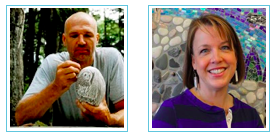
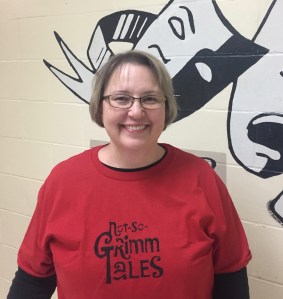 Pam Chernesky teaches theatre and visual art at Houlton Middle/High School. She has taught art and theatre in Maine for the past 29 both downstate (Gov. Baxter School for the Deaf and Bonny Eagle High School) and, has been teaching art in the County for the past 3 years. Her high school courses include Art 1, Art 2, Advanced Art, Ceramics, Photography, and Theatre. She also teaches art and theatre with 6th, 7th and 8th graders in the Middle School. In total Pam teaches about 400 students with 3/4 of her time in visual arts and 1/4 teaching theatre.
What do you like best about being an arts educator?
I love seeing students connect with each other and discover their own creative voice. In my district students have not had any elementary art or theatre so I see them transform into artists. Teaching students to take risks, believe in their ideas, and work collaboratively energizes me on a daily basis.
What do you believe are three keys to ANY successful visual and performing arts education?
Opportunity to learn, passionate teachers who love sharing their craft, and resources and support from the administration and the community. If these happen consistently then success is at hand.
 How have you found assessment to be helpful to you in your classroom?
Many of my students have their first ever art or theatre class in middle or high school and truly believe they can’t create, have no ideas, or are afraid that they will get it “wrong”. Quality assessment provides clear expectations for both the students and me. They see their progress toward meeting standards and realize that they CAN achieve and create.
What have been the benefits in becoming involved in the Maine Arts Leadership Initiative?
I definitely cherish meeting and working with so many wonderful arts teachers from across the state who are like-minded and willing to think outside the box. The trainings and leadership opportunities that have been afforded to me since joining MALI are impacting my practice and leadership in so many ways.
What are you most proud of in your career?
I am proud of the accomplishments of my students. This includes the state and nationally recognized performers and artists, as well as the students who just take my classes to earn a graduation credit and instead learned so much more. I know that when you learn to create, you will be less likely to destroy. When you put yourself out there and take a creative risk, you will be less likely to criticize different ideas. When you connect with others and see diverse ways to express ideas, you will not see your world in such a black and white, right and wrong view. The arts impact every human being who participate in profound and long-lasting ways, and I am proud of my part in facilitating those changes in my students.
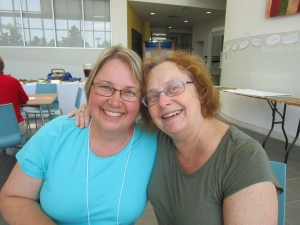
Visual Art and Theatre teacher Pam Chernesky and Dance and Phys. Ed. teacher MaryEllen Schaper (Bonny Eagle Middle School)
What gets in the way of being a better teacher or doing a better job as a teacher?
In schools, time is always a huge factor, coupled with the strange concept that the arts are not a “core” subject and therefore don’t really matter in the same way as other subjects. The resistance to change at a systemic level is most frustrating. I think that if schools let all the arts teachers reinvent the way a school day would operate, I could be a better teacher and my students would see connections and be better learners and future citizens.
What have you accomplished through hard work and determination that might otherwise appear at first glance to be due to “luck” or circumstances?
I have worked hard to expand offerings for students both during school and in extra-curricular areas. Students participate in the MLTI Screensaver Challenge, the Scholastic Art Awards, art shows outside of school and the MPA One-Act Festival. I am on the boards of our community arts center and the local children’s theatre. Most people have no idea of the hours of work and coordination it takes to build relationships, provide opportunities, and share those successes with the community.
Look into your crystal ball: what advice would you give to teachers?
Never underestimate your power as a teacher to change a student’s life and make a difference. Your students are learning more than vocabulary or skills, they are learning to think, empathize, connect and become better human beings, and we teach all those things through the arts.
If you were given a $500,000.00 to do with whatever you please, what would it be?
I would travel with my family and experience arts and cultures around the world. I could probably even get a ticket to Hamilton in New York! I would also save money for my daughter’s college expenses as she pursues her love of music. I would use the rest of the money to provide more opportunities for my students. Field trips to museums and performances are out of reach for many rural schools who live great distances away from those venues. It would be a thrill to be able to afford to take them to see the works of art that they have only seen in books or on the internet, or to see live performances.
Imagine you are 94 years old. You’re looking back. Do you have any regrets?
I hope not. I struggle with balancing my family life with my arts life, and it is wonderful when they intersect. I am lucky to have the loving support of my family but I don’t underestimate the time we have together. Hopefully at 94 I can look back with fond memories of it all! I know I love what I am doing right now.
 Jaclyn Bousquet presently teaches Visual Art to grades 9-12 at Traip Academy in Kittery, ME where she has spent the majority of her five year teaching career. At Traip Academy, Jackie teaches seven visual arts courses including AP/Advanced Art, Mixed Media, Art Fundamentals, Drawing, Painting, Stained Glass, and Pottery. On average, Jackie teaches about 125 students per year with many repeating students taking multiple art courses each year. In addition to teaching art, Jaclyn is also a Co-Advisor for the class of 2017 and the S2S/Interact club.

 Sign up to participate in this Zoom* Online Video Conference – and earn 1.5 contact hours as a Maine Art Education Association member – by emailing Lisa at
  The
The  The
The  The
The 
 The
The  The
The  Americans for the Arts
 The Maine Arts Leadership Initiative provides plenty of resources at
  We know that arts-rich schools benefit everyone. It is our responsibility to help others who may not understand this statement. Arts Education month provides that opportunity and the
  Jason Bannister presently teaches Theater to grade 7 and 8 students at the Troy Howard Middle School, RSU 71, Belfast. He has taught for 14 years, all in Belfast – 5 years at 4th grade, 3 years middle school ELA, 6 years middle school theater. Jason teaches 250 kids each year, one trimester of performing arts (theater primarily) each year for two years. He also directs the drama club productions and created the Maine Student Acting Competition.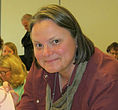
 Stars and Stairs, Where am I now and Where am I going? How can the use of Stars and Stairs in your classroom help to inform you and your students of their learning progression and actively engage them in the learning process. This will be a round table discussion. Looking at your standards and your curriculum how can you use the Stars and Stairs model in your classroom. All grade levels. All content.
 Dive into iBooks Author to harness the power of developing multi-modal, Multi-Touch iBooks. You’ll learn features which make iBooks come to life for learners by incorporating audio files, 3D widgets, image glossaries, study cards, jailbreaking templates, and much more. Be prepared to create an art history chapter together. You can also use this app for making comics and graphic novels or creating art portfolios. This session is great for MLTI beginners and experts. MLTI MacBooks with iBooks Author preinstalled is encouraged. Grades 7-12
 Many arts educators in K-12 education have never had the opportunity to work with a teaching artist. Knowing where to start and identifying the most important steps to take can feel daunting. This workshop provides a framework for creating a high-quality teaching artist residence in the schools. We will focus on the steps needed to create a powerful residency, and the nature of an effective collaboration between teaching artist and arts educator. We will provide experiential work and guidance in addressing the complexities and sometimes different languages of the teaching artist and the school-based educator. All grade levels. All content.
 Playing and composing songs on your own is a blast for some, however there’s something special about making music in collaboration with other like-minded folks that just can’t be beat. In this hands-on, music making session, participants will use GarageBand to learn the basics of song writing and music production. Participants will have plenty of time to explore and experience the fun of collaborative music creation. Musicians of any and all skill levels are welcome. Make sure to bring your Mac and/or iOS device with GarageBand installed. All grade levels.
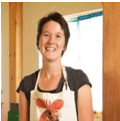 When you are deeply engaged in Arts Integration you realize it is about learning with you mind, body and heart in the present moment. This hands on workshop explores this idea through drama, music, movement, poetry, storytelling, and the visual arts. Come prepared to experience arts integration through your own individual lens in a safe environment. All grade levels. All content.
 A combination of sketching and traditional note taking results in rich educational documents to support learning. Studies show that sketching leads to better retention of information and helps clarify ideas. Sketching is one of our original forms of communication. Visualizing ideas is a great way to learn. Why not bring this creative form of learning into your classroom? Explore how visual notes support learning. Discover techniques to create, share and integrate visual notes into your instructional practice. Visual notetaking, often called sketch noting, uses two parts of your brain, which is referred to as Dual Coding Theory. This has been found to improve learning. Research has shown that people who doodle while listening retain 29% more information (Andrade, 2009). Join this hands-on session and start sketching your notes today. Please bring your updated MLTI iPad, if available, with Notability installed. Arts supplies will also be available. All grade levels. All content.
 This workshop focuses on a collection of techniques that aim to support literacy in the art classroom. From using word walls, sight words, and phonemic awareness participants will leave with a fresh perspective on incorporating literacy while still adhering to their art curriculum. K-5 Visual Arts, adaptable for middle school.
 Guiding the Young Padawan to Become a Jedi Music Master
 The Cloud Ate My Portfolio: No More Excuses…Start a Digital Portfolio Today
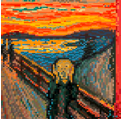 Beginning with early Atari and Nintendo video games, the 8-bit aesthetic has been a part of our culture for over 30 years. No longer just nostalgia art, contemporary 8-bit artists and chiptunes musicians have elevated the form to new levels of creativity and cultural reflection. In this session, we will focus on tools that assist in creating 8-bit images, animations, and music. Please bring your MLTI MacBook. All grade levels.
 The Heart of Advocacy
 Theatre as a Tool: Using Theatre Across the Curriculum

 SLAM! Nurturing Student Leadership through Arts Advocacy
 Networking within Local School Administrations to Increase Art Programming
 Easy Jazz Improvisation Teaching Techniques for Nervous Beginners
 “Who Lives, Who Dies, Who Tells Your Story?”
 Arts Integration
 Teaching Hamilton in the Classroom
 Writing Across the Curriculum in a Performing Arts Classroom
 Forming, Storming, Norming, and Performing: Care and Feeding Teaching Artists as part of a Long Term Education Plan
 Next Step Rubric Makes Learning More Progressive
 Looking in the Mirror: The Importance of Student Self-Reflection
 Using Multiple Intelligences to Teach Students with Disabilities

 me arts ed