
Teachers as Leaders

MALI winter retreat, Farnsworth Art Museum, phase IV
As I reflect on the 6th annual summer arts education institute held last week I marvel that we’ve come so far in a short period of time. The reason is clear – teachers as leaders. The Maine Arts Leadership Initiative (MALI) is very proud of the work that the Teacher Leaders having taken on in the last 5 years and continue to do so with gusto!
During the institute teacher leaders were involved in ‘creating a message’ that is often called an ‘elevator speech’ or ‘elevator pitch’. We used this definition of an elevator speech: The art of persuading a listener through a brief speech to spark interest in an idea, project, product or event. You’ll never know when you’ll have the chance to speak to a parent, school board member, administrator or a colleague in school or out of school. Can you articulate why access to a quality visual and performing arts education is essential for all students? I believe that our number one role is to provide this education. Number two role is to advocate so this happens. This is at the heart of being a teacher leader and part of our roles as educators. What do you think? Please put your thoughts below in the comment section or email me at argy.nestor@maine.gov and let me know! Your thoughts are welcome.
Below is a post that was printed in Education Week – August 5, 2016
A Teacher Leadership Elevator Pitch: And An Invitation to Write Your Own
By John T. McCrann
Have you ever been asked to write an “elevator pitch?” The idea is that you propose your ideas to a thought leader or big wig with whom you happen to be riding an elevator with. Your job: simply describe the crux of your ideas and their value in the time it takes to go down a few floors.
This spring as part of an application for a teacher leadership fellowship/award I wrote the one below directed at my school district’s leader, Chancellor Carmen Fariña.
The idea of an “elevator pitch” feels problematic to me in some ways. As someone who counts reading long novels, engaging in hours-long discussions, and working through complex math problems over several days as some of the most educative moments of my life, I worry that we lose learning opportunities in a world that places emphasis on brevity over depth of thought (feel free to Tweet me if your thoughts on this disagree…just kidding).
That being said, the process of distilling my ideas about teacher leadership into a bit-sized chunk did feel like a beneficial activity for me as a leader. It was useful to be able to read through this as I start to think about the year ahead and where I want to devote my time in terms of teacher leadership activities.
Teachers, what’s the main thing you hope to accomplish in teacher leadership this year? Everyone else, what should teacher leaders be fighting for this year? Share your elevator pitches in the comment section.
Chancellor Farina, I bet at some point you’ve overheard a teacher complaining to another about something coming from the district or administration: “why are “they” doing this to us?”
I am a teacher and teacher leader who doesn’t hear that any more and I want to help make New York City the one place in the country where teachers won’t ever say it. Let’s stop talking about “they” and create a system of “we.”
Students learn best from teachers who can differentiate instruction for all their students, addressing the specific needs of specific students.
A “we” system would give community-based learning experts more influence over policy decisions and a greater ability to innovate on behalf of students. Let’s empower schools to create solutions.
We’ve started this work with the PROSE program, which we should strengthen and extend. Find new ways to incentivize superintendents and principals in distributing decision-making power. Create new avenues for teacher leadership.
Students also learn best when they are given meaningful, supportive, and regular feedback. A “we” system would re-imagine the way we think about assessment and accountability to meet these student needs.
The words assessment and accountability should not invoke abstract systems or number but real student learning evidenced through meaningful work.
The New York Performance Standards Consortium has a proven track record of collecting valid and reliable data with teacher-created performance tasks. As a system, we should learn from this example and expand the use of performance assessment to other schools and grade levels.
At my school, Harvest Collegiate High School, we are proud to be a part of the PROSE program and the Performance Standards Consortium, which you have supported and which are in the vanguard as education reform programs. I am proud to have played a leadership role in these groups.
I would love to work with you to help strengthen these programs and the “we” philosophy that forms their foundation.
To hear others tell it, “they” are incapable of helping our students. Depending on who you ask: they don’t give enough support or they attempt to micro-manage.
We can address this concern by removing “them” from the conversation.
That’s why you, me, my colleagues at my school, our colleagues across districts, we, the educators of New York City, need to lead.

 I hope that your summer has been wonderful and that you’ve had a chance to re-charge your batteries. Last week a teacher leader said how great it was to be at the MALI institute because she is now excited about going back to her elementary art classroom and put in place her new ideas and plans.
 The 6th Maine Arts Leadership Initiative (MALI) summer institute wrapped up yesterday with the 3rd and final day jam packed full.
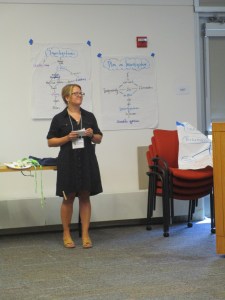
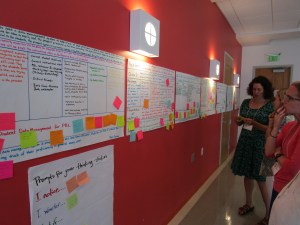 Each presentation will be provided during the school year at least once at the local level and once at the mega-regional level. More information on these learning opportunities will be provided in the future. Please let me know if you have any questions.
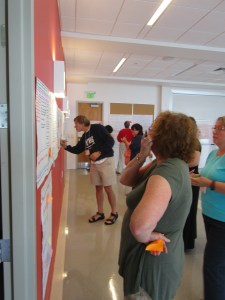 To the TEACHER LEADERS who devoted their time to attend the institute and dig into the work. To the TEACHING ARTISTS who attended for one day and the four TEACHING ARTIST LEADERS who are creating new work for MALI. All agreed that the Teaching Artist Leaders are a great addition to the community. And, a HUGE THANK YOU to the LEADERSHIP TEAM who spent hours and hours of time planning and facilitating the summer institute so all of us could learn.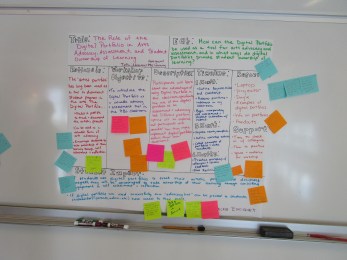
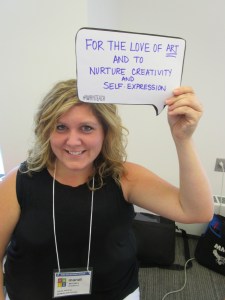

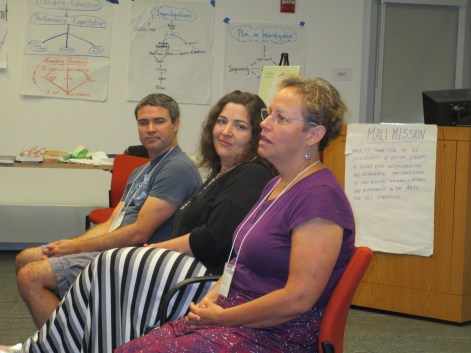
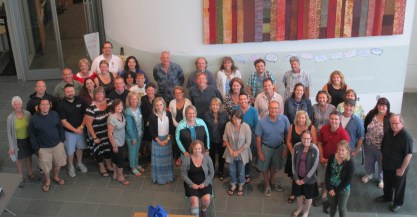 Yesterday was the first day of the Maine Arts Leadership Initiative (MALI) Summer Institute. Over 50 educators including PK-12 arts teachers and teaching artists participated in the professional development opportunity. Theater artist Jeri Pitcher started the institute with warm up and ice breaker techniques, Maine Arts Commission Executive Director welcomed participants, and Jeff Beaudry provided an overview on assessment.
 Quickly following participants jumped into the their respective strands. The topic for the new MALI teacher leaders and teaching artists (including teaching artists leaders) was proficiency and assessment literacy while returning teacher leaders reflected and shared on their past years work.
 Participants shared lunch with their like content areas before an afternoon of advocacy, messaging, and conversations about what the benefits of teaching artists in PK-12 schools. Ideas and lists were generated, questions asked and answered.
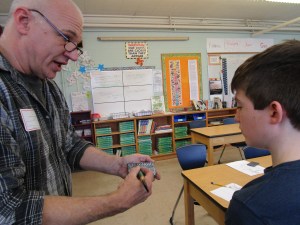
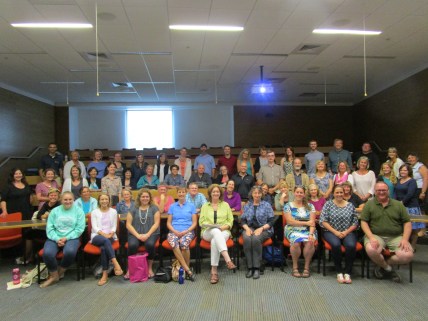
 One educator said: “It is so nice to be able to talk with other arts educators about their views”. Yes, these were all arts educators conversing with other arts educators – the same tribe, our peeps, educators who share a basic understanding about what we contribute in the world. Another participate was grateful to know that “Others are going through the same frustrations as I am”.
  One of my favorite feedback comments of the day is not about assessment or standards or arts skills but about a broader critical piece of what we do: “I learned about helping children to become fearless about making a mistake – mistakes are okay.”
 WHAT QUESTIONS DID PARTICIPANTS HAVE AT THE END OF EACH WORKSHOP?
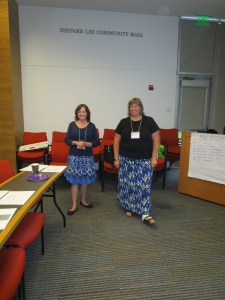 Theresa Cerceo
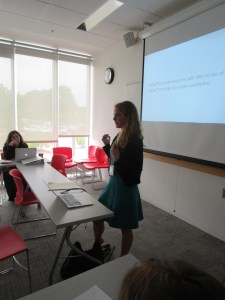 If you couldn’t join us yesterday some of the workshop leaders provided their resources and they are posted online on the Maine Arts Assessment site. You can access them by
  It is not to late to attend the Maine Arts Leadership Initiative (MALI) Summer Conference tomorrow, Tuesday, June 28, Wishcamper, USM, Portland campus, 8:00 to 3:30. If you are interested in joining the 66b registered educators from across Maine and New Hampshire please look at the conference information by
 me arts ed