Posts Tagged ‘Maine’

h1

In Today’s News

June 20, 2015

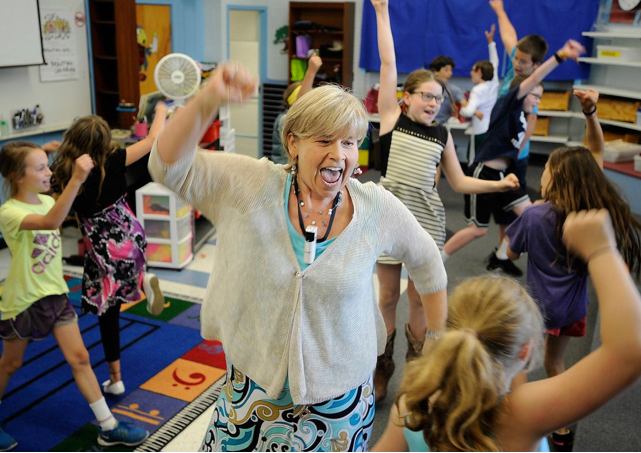
Great article about Karen Renton

Screen Shot 2015-06-19 at 8.02.57 PM

Karen Renton joins her pupils in an exciting and action-packed song called “Sasha.” Gordon Chibroski/Staff Photographer

In Yarmouth, music teacher’s 34-year career ends on a high note – article from the Portland Press Herald, June 19, 2015. Written by Leslie Bridgers and located at http://www.pressherald.com/?p=660790. I love this article since it describes so well an elementary music class.

h1

MAAI Resource Team

June 11, 2015

Amazing resources available soon

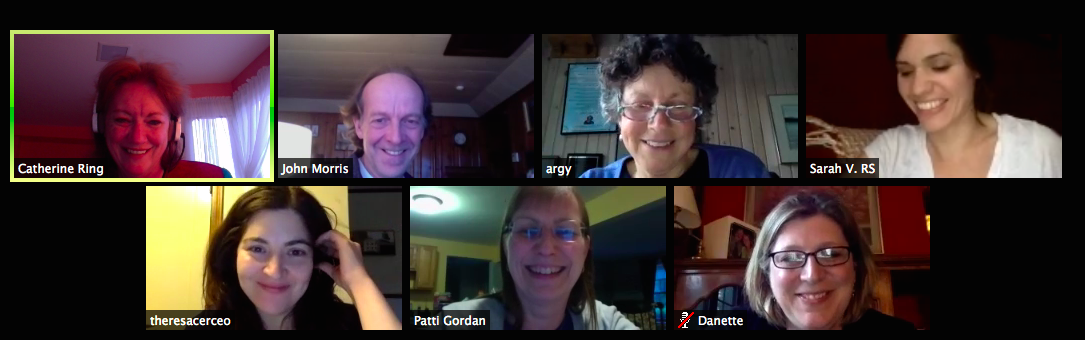
The Resource Team meeting by Zoom updating each other on their progress

The Resource Team meeting by Zoom updating each other on their progress

During the last few months the Maine Arts Assessment Initiative (MAAI) Resource Team has been working to create more resources for the ‘bank’. The quality and variety of information contained in this second series of resources is very impressive. During the next couple of weeks the six team members are putting the finishing touches on their resources. They will be unveiled at the MAAI Summer Institute in early August.

Catherine Ring from the New England Institute for Teacher Education is the Project Manager, contracted by the Maine Arts Commission to oversee the work. Members of the 2015 Resource Bank Team include:  Theresa Cerceo (Frenchville), Patti Gordan (Raymond), Danette Kerrigan (Hiram), John Morris (Bridgton), Jake Sturtevant (Buxton), and Sarah Swain (Westbrook).

The Team has been meeting through Zoom video conferencing.  They’ve shared ideas, documents, and videos and provided each other with feedback as critical friends. It has been an amazing process to watch as the teachers have created their resources and shared them with each other. This years resources will contain documents as well as videos which we hope will provide greater clarity for educators accessing the resources. Last years resources are available at http://maairesourcebank.pbworks.com/w/page/82916230/MAAI%20Resource%20Bank.

This week we had a Zoom meeting with MAAI Leadership Team members, Rob Westerberg and Barb Vinal, to get their technology expertise on where to store the many resources so they are shareable and searchable. There is a lot of work behind the scenes, by MAAI Teacher Leaders and Leadership Team.


h1

Who Are They?: MECA, Part 6

April 15, 2015

Maine College of Art

This blog post is part of a series called Who Are They? where information is provided for the Maine Arts Ed blog readers to learn about community organizations and institutions that provide educational opportunities in the arts. You will learn that they are partnering with other organizations and schools to extend learning opportunities, not supplant.

Screen Shot 2015-03-22 at 12.42.14 PMThis is the sixth and final post as part of this series on the Maine College of Art (MECA) which is located in downtown Portland. Thank you to Raffi Der Simonian
rdersimonian@meca.edu, Director of Marketing & Communications for his help in putting this series together.

The final post includes information about MECAs new music and art program which received $3 million to kickstart the program. Learn about it in this video from Ian Anderson, Vice President of Academic Affairs and Dean of the College.

h1

Another Arts Teacher’s Story: Frances Kellogg

April 14, 2015

MAAI Teacher Leader series

This is the ninth and last blog post for 2015 on the Phase 4 Maine Arts Assessment Initiative’s (MAAI) Teacher Leaders sharing their stories. This series contains a set of questions to provide the opportunity for you to learn from and about others. You can learn more about MAAI at http://mainearts.maine.gov/Pages/Education/MAAI# and learn more about all 61 of the MAAI Teacher Leaders at http://www.maineartsassessment.com/#!teacher-leaders/c1qxk.
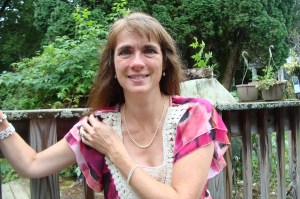
4747f3_d808375765484117b6ae1b7e8f05a0cf.jpg_srz_p_147_138_75_22_0.50_1.20_0Frances Kellogg currently teaches K-3 classroom music and grades 6-8 chorus at Ellsworth Elementary Middle School.  She has taught in Ellsworth for the last three years.  Frances has just over 400 students and sees them twice each week for a total of 60 minutes. Previously, she taught PreK-6 classroom music and 3-8 chorus at Jay Elementary School and Spruce Mountain Middle School. This is her eighth year as a music teacher in Maine. Frances received her B.M.E. from the University of Maine at Orono in 2007, and currently performs with the University Percussion Ensemble there.

What do you like best about being a music educator?

I love to see students get inspired and have fun. I hear so many teachers say how much they wish they could do more creative things in their classrooms, but can’t because there isn’t time–often due to curriculum or testing. I get to watch my students unleash their creativity and give them the chance to think outside the box, while still teaching and giving them the information they need. I love it when my students draw a connection between music and ANYTHING else–their classroom, home, visual art, or physical education–when they make that connection, they get more excited about what we are learning and also remember more of what we are learning .

What do you believe are three keys to ANY successful visual and performing arts education?

A supportive community is a major key to a successful arts education:  support from the students’ parents, teachers, and administration. But building that support needs flexibility and a willingness to be a part of it. Make yourself seen at a parade or a baseball game can make all the difference to a student or the community as a whole. Being willing to adapt the framing of a lesson to be more interesting to your students can make the difference between a lesson they will forget and a lesson they will ask to repeat again.

How have you found assessment to be helpful to you in your classroom?

Assessment has given me a way to know not only what my students are learning, but also how well I am teaching. I have long used assessment as a tool for measuring student knowledge, but have more recently learned how to use assessment as feedback for my teaching. If the students aren’t grasping a concept, what do I need to change? What has worked and what hasn’t?  t has been quite the eye-opening adventure for me.

What have been the benefits in becoming involved in the arts assessment initiative?

Joining MAAI has been a huge growth experience for me. I took a leap, with both feet, into a leadership role which was new territory for me. The greatest benefit of all has been a chance to communicate and collaborate with other arts teachers around the state. I have been very fortunate to not be the only music teacher in my district, but I have often been the only music teacher at my level (elementary vs. high school or middle school). It’s been great to be able to talk with other elementary music teachers and to hear their ideas and perspectives, while at the same time being able to share my own. In addition, MAAI has given me a huge boost of confidence when talking with other arts educators which has in turn given me more confidence in working with other educators at my own school.

What are you most proud of in your career?

My growth. When I first started teaching, I taught things that I thought were fun and would interest students; a lot of them being things I remembered from when I was a kid or things that I learned in college. I tested students on the things I thought they should have learned and never really used them to learn about my teaching. Now, eight years later, I have learned to work with a curriculum, to use assessments with my students to give them and myself feedback, to adapt my lessons to interest my students while still teaching and/or reviewing the concepts that need to be learned, and to still have fun while learning. Looking back eight years, I see a transformation that I am truly proud of and I certainly hope it will continue.

What gets in the way of being a better teacher or doing a better job as a teacher?

Negativity. With all the seemingly overwhelming changes happening in education in Maine right now, it’s easy to get sucked in to people complaining or griping or worrying. The only way to fight it is to be positive!

What have you accomplished through hard work and determination that might otherwise appear at first glance to be due to “luck” or circumstances?

A good image. I started out as a nervous and anxious, fresh out of college kid who needed guidance. I didn’t know how to run a music program, or create/work with a curriculum, or put together concerts. I needed a lot of help (or at least it felt like it) when I first started. But I worked hard: I listened to what people told me about what they thought I should do and “how we’ve always done it”, and in the end, I made my own educated choices about what to do.  Whether it was having concerts in the evening vs. during the school day, or giving students the opportunity to earn their recorder to keep (rather than just giving it to them), or taking the risk to ask for funding for a new idea; I was able to make those decisions based on what I had learned. When I left my first job and came to Ellsworth, I had already started down this path, so I had a better idea of what I should do and how I should act and ask for things.

Look into your crystal ball: what advice would you give to teachers?

Listen to your students. When my students ask if we can learn about something, I try to find a way to make it happen. Last year, one classroom of third grade students asked if we could sing a song about the environment because they were learning about the rainforest and ecology in their classrooms. So, I found a song that not only focused on saving the environment, but also taught students how to listen for a read two part harmony. Another classroom asked about rap; we discussed what students think rap is vs. what it is (and what it can be), and each classroom wrote a rap together. These two activities were some of the most enjoyable things I taught, because the students were so involved in the process.

If you were given $500,000.00 to do with whatever you please, what would it be?

I would split it. Keeping some for myself, I would do some serious house renovations: new kitchen counters, painting, a front deck with a hot tub, and a temperature controlled room for musical instrument storage and enjoyment. With the rest, I would find the right way to invest it in bringing programs and visiting artists into schools, both the school I work for and other schools in my area.

Imagine you are 94 years old. You’re looking back. Do you have any regrets?

None. At that point, I will have had a chance to do what I always dreamed of in life:  teach. If I can inspire just one person, then I have done what I needed to do, and that is something to be proud of.


MAAI Logo_Color_TxtCtr

h1

Who Are They?: MECA, Part 5

April 8, 2015

Maine College of Art

This blog post is part of a series called Who Are They? where information is provided for the Maine Arts Ed blog readers to learn about community organizations and institutions that provide educational opportunities in the arts. You will learn that they are partnering with other organizations and schools to extend learning opportunities, not supplant.

Screen Shot 2015-03-22 at 12.42.14 PMThis is the fifth post on the Maine College of Art (MECA) which is located in downtown Portland. Below is an interview with Fern Tavalin, MECA Director of Art Education.

fern-400

Fern Tavalin

Please describe the educator training programs offered at MECA.

MECA offers a Master of Arts in Teaching that leads to initial certification in visual art for the State of Maine. Our program is accredited by the State of Maine and by National Alliance of Schools of Art and Design (NASAD). Receiving NASAD approval is quite an honor.

What is MECA’s philosophy on teacher education?

We believe that teachers should be both artists and educators. Our admissions policy is rigorous in that we review an artist’s portfolio as well as screening for the dispositions that we feel are necessary for good teaching and learning. Those admitted have the potential to become outstanding artist/educators. Because of this, we make sure that they are given the tools to become effective art educators who use the knowledge, skills, and dispositions acquired in our program to creatively serve children and youth in PK-12 schools, museums, community-based/alternative settings, and virtual learning environments. To ensure that our teacher candidates are prepared, we value learning as a developmental process. That means that our candidates are not graded on each assignment as they begin. Instead, we provide substantive feedback, pointing toward their next steps in learning. At key stages, the candidates undergo reviews to demonstrate attainment of Maine’s initial teacher certification standards and our program outcomes.

Each college or university reflects its institutional aims as well as having to be responsive to accreditation requirements. MECA is a studio-based college, the practices of which have much to add to the overall field of education. By maintaining our beliefs and our educational approach, we hope to add value to the research base about how students learn best.

We encourage our candidates to resist the temptation to want to see the state educator standards written in art specific terms and trust that their coursework will reflect the art specific knowledge that they will eventually being to the classroom. Familiarity with the general concepts of teaching and learning and how they translate to art education will give MECA’s teachers a “place at the table” during faculty meetings and gatherings of educators across disciplines.

Is there something that sets MECAs program apart from others?

When MECA’s teacher candidates enter the program, they enroll in an intensive one-month summer institute that integrates the frameworks for teaching and learning, student creative growth and development and how their lives of artists apply to the field of education.

On the very first day, our teacher candidates enter classrooms in Portland’s diverse public school system. They learn to begin by closely observing rather than judging. As the semester progresses, MECA teacher candidates use a variety of lenses for looking at students in a variety of learning environments. This direct experience is enhanced by collaborative inquiry through theoretical readings and shared discussions. The program emphasizes critical thinking and data gathering to question assumptions – both theirs and those of experts in the field.

What advice do you have for someone considering becoming a teacher in this century?

All learning is cumulative, so we cannot always predict the overall outcomes of our efforts as teachers. Because the future is unknown, we cannot say what it will bring. However, studio habits of mind such as developing craft, engaging and persisting and envisioning will be essential now matter what our teachers face.

h1

Another Arts Teacher’s Story: Sarah Gould

April 7, 2015

MAAI Teacher Leader series

This is the eighth blog post for 2015 on the Phase 4 Maine Arts Assessment Initiative’s (MAAI) Teacher Leaders sharing their stories. This series contains a set of questions to provide the opportunity for you to learn from and about others. You can learn more about MAAI at http://mainearts.maine.gov/Pages/Education/MAAI# and learn more about all 61 of the MAAI Teacher Leaders at http://www.maineartsassessment.com/#!teacher-leaders/c1qxk.

4747f3_99e8f0ca14cd47a597dd42c859c217f3.jpg_srz_p_147_138_75_22_0.50_1.20_0Sarah Gould is a Visual Art teacher who is on her ninth year at Gray- New Gloucester High School. This semester she has just over eighty art students in her classes that range from Foundations, Sculpture, Ceramics, Painting, and IB Art. She has been department head and a teacher leader team member at the school for seven years.

Sarah is actually a GNGHS alumni, who came back as a long-term substitute for her high school art teacher, who then decided not to return after her maternity leave. Sarah earned her BFA at USM with a concentration in Art Education in 2006 with a double focus in drawing and ceramics.

What do you like best about being an art educator?!

I can’t say as if there is one single thing I like best about being an educator, it is the complete picture that encompasses so much; connecting with students, teaching them, watching them grow, encouraging them, giving them the power to be proud of themselves, celebrating accomplishments with them, learning about life as well as art.

What do you believe are three keys to ANY successful visual and performing arts education?

Comfortability. Art, visual or performing, naturally displays student ability. Kids can be nervous to participate in fear they will be no good, and that others are going to see it. I think providing an open, safe, friendly environment is an absolute must to nurture student participation, experimentation, and expression.

Personalization. Some students have natural ability, others have to work for it. Students all connect with different media and processes. Each has their own personal interests and pathways ahead. I think it is important to find how art can fit or connect into students lives, so they can value it’s importance and relevance as it’s importance to them. Also leaving room for personalization and student choice creates greater investment on top of creativity. !

Balance between “fun” and “rigorous.” I think we all want students to enjoy our classes and find inspiration in the things we teach and love. I also think we all want students, parents, colleagues and administration to respect our content areas. I do think there are many ways to find a balance, and it certainly looks different for everyone. But I think it is possible and important to find a happy place between students being excited to come to class to create and perform, and also want to work hard and have an appreciation for the subject and what they are learning.!

How have you found assessment to be helpful to you in your classroom?

Assessment has played a large role in my teaching style, especially over the last few years. When we started our early transition to becoming a proficiency based school, the theory and the practice had a large effect on my approaches and strategies. Once we organized our standards and broke down what we wanted to assess, it changed our curriculum, units, lessons, and targets. With assessments and rubrics, it became clear what we were measuring, and in turn what to teach. It also became more clear to students, who then knew expectations, why they earned certain scores, and how to improve or revise their work. It also became a tool to communicate with parents, who may have thought scores were based on personal opinion. Well made assessments have gained our department respect and have become an advocacy tool.

What have been the benefits in becoming involved in the arts assessment initiative?

It has been great being a part of the MAAI work. Making connections and forming relationships with other teachers in the same content area can be awakening and rewarding both. It’s always nice to meet others with similar passions, and interesting to hear how different schools are structured, but learning from one another is the greatest benefit. I have found the conferences provide an open and understanding atmosphere where you can feel comfortable asking questions or sharing what you do. It is the friendly atmosphere that made me feel comfortable in becoming a teacher leader and presenting what I do, hoping someone can learn something from me and take that with them as I have from others in the past.

What are you most proud of in your career?

I think I am the most proud of building a well structured and respected art program. The other art teacher and I have worked really hard for years designing our courses and curriculum, and are constantly making changes, revising, and improving what we do. I believe we have earned respect professionally and in the community.

What gets in the way of being a better teacher or doing a better job as a teacher?

Time. There is never enough time! I know I could invest more, and use strategies better, and add steps, but sometimes there just isn’t time. Time in the block, time in the day, the week, the quarter, the year. There are so many things I’d love to do with my kids, and I can’t squeeze them in, or find time myself outside of the school day to further develop ideas. Most obstacles we can work around, but time seems to be the one thing I always need more of.

What have you accomplished through hard work and determination that might otherwise appear at first glance to be due to “luck” or circumstances?

I think originally when I became the electives department head/ teacher leader at GNGHS some felt that I didn’t deserve or earn the position because I was a relatively young and new teacher. But I took the role very seriously and have invested myself in the greater improvement of our school, and I think I literally worked my way out of the doubts others had and proved myself.

Look into your crystal ball: what advice would you give to teachers?

Well, who knows what the future holds, but I would say the biggest piece of advice I can think of now is to be constantly evolving. Change what you do, let go of things that don’t work, take chances and try new things, revise things that work and make them better, be inspired yourself and keep things exciting, adapt to changes, be constantly changing and growing yourself, as an educator and artist, visual and/or performing.

If you were given a $500,000.00 to do with whatever you please, what would it be?

Hmm… how far does $500,000 go? Our economics class does that project, maybe I should sit in! 🙂 As an art educator I would like to invest in a program for either underprivileged children or a program for individuals struggling with mental or emotional wellness as a means of therapy.

Imagine you are 94 years old. You’re looking back. Do you have any regrets?

I dislike the thought of having regrets, I like to think we should try to appreciate the path we have taken and what it has given us. With that said, I do fear that I will look back and be disappointed I didn’t take more risks, or take advantage of opportunities, or push myself harder. I’m afraid of playing it too safe. Perhaps knowing that fear will encourage me to prevent it from happening and break out of what I find comfortable.

MAAI Logo_Color_TxtCtr

h1

Megas UMaine USM

April 6, 2015

MAAI Mega-regional workshops – last of the school year

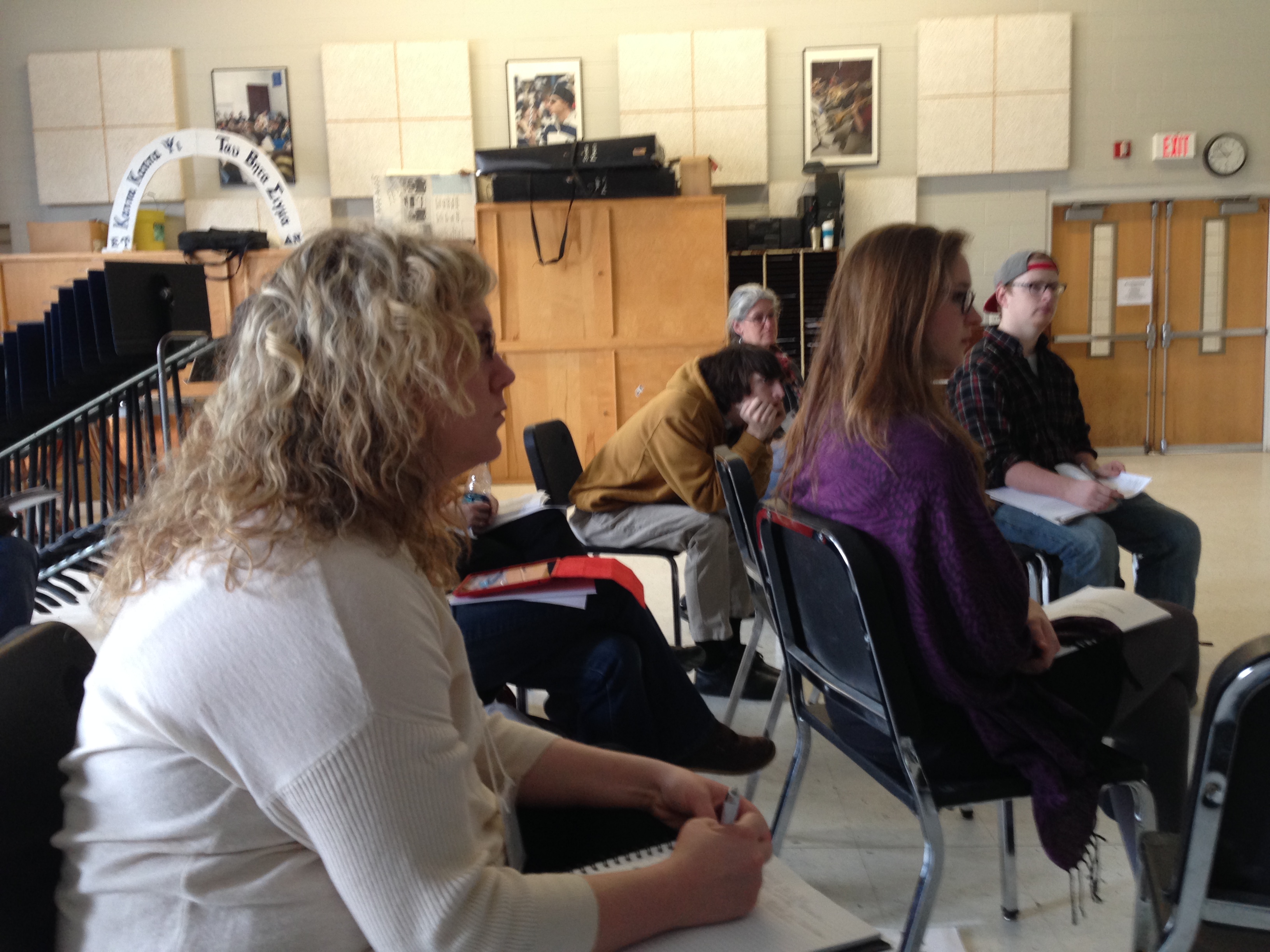
Last Thursday and Friday the last two Maine Arts Assessment Initiative’s (MAAI) Mega-regional workshops were held at UMaine, Orono and USM, Portland campus. Both were a success and the 127 teachers who participated had positive feedback. It was an opportunity designed just for visual and performing arts educators including teaching artists.

I am so proud of the Teacher Leaders and the workshops they created. MAAI believes that “teachers teaching teachers” is very powerful!

Thank you to the following Teacher Leaders listed below who provided the following workshops:

UMaine, Orono – Thursday, April 2

  • Finding the Hidden Treasure in Art with Student Self Assessment, Jennie Driscoll Brunswick High School Visual Arts
  • Efficient and Effective Assessment in the Elementary Music Classroom, Frances Kellogg Ellsworth Elementary Middle School Music
  • Multiple Pathways: Helping Students Achieve Proficiency in ELA and Social Studies through Performing Arts Class!, Beth Lambert Carrabec High School Performing Arts
  • The Foolish Man Builds his House Upon the Sand: Laying a Firm Foundation for the Arts (and life) in Early Childhood, Judy Fricke Main Street Music Studios Music
  • My Choice-Based Art Class, Nurturing Proficiency through Voice, Choice and Reflective Teaching, Theresa Cerceo Dr. Levesque Elementary, Wisdom Middle/High School Visual Arts
  • Proficiency-Based Education in Visual Art, Gloria Hewett Mount View Middle School Visual Arts
  • Gold, Silver or Bronze? A Rubric fit for the Olympics!, Pam Kinsey Easton Schools Music
  • Rappin’ Differentiated Instruction and Implementing Standards Based Grading, Lisa Neal Nokomis Regional High School Performing Arts

Theresa         IMG_1273

IMG_1276USM, Portland – Friday, April 3

  • The Studio Habits of Mind: Using the “Hidden Curriculum” to Encourage Student Autonomy, Lisa Ingraham Madison Elementary School Visual Arts
  • The Recipe: Ingredients in a Proficiency-Based Curriculum, Michaela DiGianvittorio and Sarah Gould Gray-New Gloucester High School Visual Arts
  • Unpacking the Standards with your BFF (Best Foot Forward), Cynthia Keating, Village Elementary School Music and Kate Smith, Central Elementary School Music
  • The Foolish Man Builds his House Upon the Sand: Laying a Firm Foundation for the Arts (and life) in Early Childhood, Judy Fricke Main Street Music Studios Music
  • Writing What We Do: A Guide to Standards-Based Curriculum Mapping & Unit Design, Brian McPherson, Woodside Elementary School Visual Arts and Jake Sturtevant, Bonny Eagle High School Music
  • Using Digital Process Folios as a Journaling Approach to Self Assessment, Melanie Crowe Marshwood Middle School Visual Arts
  • Hatching A Songbird: Teaching and Assessing Singing Skills at the Primary Level, Patti Gordan Raymond Elementary School Music
  • Moving Towards Your Goals: Using Technology for Self-Assessment in a Performing Arts Classroom, Emma Campbell Thornton Academy Dance
  • Dancing With the Standards: How to Incorporate Standards-Based Dance and Movement Activities in Classroom Learning and Assessment, John Morris Dance
  • The How and Why of Digital Portfolios, Jeff Orth Richmond Middle/High School Visual Arts

IMG_2242

IMG_2231

IMG_2217Thanks also to MAAI Teacher Leaders Janie Snider, Jenni Null, and Shari Tarleton.

Artist showcases took place at each Mega with Teaching Artists John Morris and Stevie McGary provided information on their role and some movement as well.

In the afternoon sessions Proficiency-Based Education and Teacher Effectiveness were the discussion topics. Teachers shared what is happening in their schools, had a chance to ask each other questions and learn from what others are doing. Thanks to the following Teacher Leaders who facilitated the discussion:

UMO – Gloria Hewett and Jen Nash

USM – Jake Sturtevant and Amy Cousins (and several others assisted)

Both Megas were successful due to the work of Leadership Team members:

UMO – Catherine Ring

USM – Rob Westerberg and Jeff Beaudry

A special THANK YOU to Laura Artesani who arranged for the space on the UMaine Orono campus. And to Jeff Beaudry who arranged for the space on the USM, Portland campus!

At the end of the day at USM I said to all the participants how proud I was of the work all visual and performing arts teachers do. I know that the jobs you do can be challenging. At the end of the day at UMaine Orono Catherine asked folks how they were feeling and these are some of the words expressed by the group: inspiring – exhausted but happy – encouraged – enthusiastic – can’t wait to try things back in my classroom – my head is full – overwhelmed but supported – not alone anymore – great resources.  Catherine’s word: proud.

If you didn’t attend any of the four Mega-regional workshops provided this school year by MAAI and are looking for resources I suggest that you go to http://www.maineartsassessment.com/.

h1

Another Arts Teacher’s Story: Pamela Kinsey

March 31, 2015

MAAI Teacher Leader series

This is the seventh blog post for 2015 on the Phase 4 Maine Arts Assessment Initiative’s (MAAI) Teacher Leaders sharing their stories. This series contains a set of questions to provide the opportunity for you to learn from and about others. You can learn more about MAAI at http://mainearts.maine.gov/Pages/Education/MAAI# and learn more about all 61 of the MAAI Teacher Leaders at http://www.maineartsassessment.com/#!teacher-leaders/c1qxk.

Sunday best 1Pamela Kinsey serves on the MAAI Leadership Team along with being a Teacher Leader. She teaches music in Easton, Maine where her responsibilities include General Music K-6 (including Recorder), Beginning Band, Elementary Chorus, 7-12 Band, 7-12 Chorus and High School Jazz Choir. Pam has taught Music Appreciation at the High School level as well and she is the Co-Team Leader of the Wellness Team! She has been teaching music in some form since high school and gave private lessons. She has maintained a private ‘studio’ of varying numbers of students ever since. She earned her Bachelor’s Degree in Music Education (with an instrumental emphasis on Flute) from the School of Music at Wittenberg University in Springfield, Ohio. Pam has been teaching in schools since 1984, and in Easton since 1988.

What do you like best about being an music educator?

One of the things that I like best about teaching music is that it gives me an opportunity to share my love of all types of music with new ears. I see students from a young age and watch them grow and mature into wonderful young ladies and gentlemen and amazing young musicians. I can look back at several of my students and see them still actively participating in music! It is very rewarding. I have second-generation students continuing in the musical paths of their parents. I take them to concerts of every type available in a region where that is not necessarily the norm. Seeing their eyes roll at the prospect of going for the first time to the American Folk Festival in Bangor and then seeing their eyes light up at the idea of attending the Folk Festival a second…or third or fourth time….that is what makes me love my job. When students come back and seek me out to tell me how things are going. When students call me on the telephone to chat. When students invite me to their weddings and baby showers because we became friends while we were making music together. Those are all reasons that I teach music. It is a life style, not just a job.

What advice to you have for young teachers?

My advice to teachers and students alike is to take advantage of as many of the opportunities that present themselves to you as possible. You never know when something new will be the thing that hooks your interest and it might just take you places unimagined and amazing!

What do you believe are three keys to ANY successful visual and performing arts education?

Keys to any successful program? I think that first of all, you must love your art form. I think it is important to be out there, practicing our craft, and letting the students see us in that light. My students know that I play in a Community Band. I bring them on a bus to see the diversity of membership from young to old, all participating together. They know that they are invited to play in the group once they have the ability or the desire! My students know that I play in a Community Orchestra. Again, I bring them on a bus to see an orchestra in action. We don’t have a string program and I like them to see that art form live. They also know that I am involved in music at my church. Again, music is more than my job: it is my vocation, my passion and part of my daily life. Truly, I practice what I teach!

I think it is important to help students to succeed, but equally important to let them know that failure is OKAY! They have to make mistakes with their singing and playing so that they can learn from them and grow as musicians. It makes me sad when I ask students ‘Is it okay to make a mistake in music class or in school?’ and have them answer ‘NO’. I tell them of course it is okay…that is how we learn! If we make a mistake because we are trying, then we know it is there and it is something we can fix.

How have you found assessment to be helpful to you in your classroom?

I consider myself an ‘Old Dog’, and ‘new tricks’ come hard to me. Assessment in my classroom has forced me to re-evaluate how I am teaching and connecting with my students…especially the younger ones. We now have clearer reasons for doing what we are doing and the students are taking more ownership. Now when they create, I show them the rubric that tells them exactly what to do for each level of grading. When they try to hand that in, I remind them that they still need the rubric to complete the project. They can view and listen with discerning eyes and ears, because the expectations are clear. That is very powerful.

What have been the benefits in becoming involved in the arts assessment initiative?

Becoming involved in the Maine Arts Assessment Initiative has given me more confidence in my teaching and in my advocacy skills. Finding my way as a department of one was difficult, since there was no support system that understood what I was trying to accomplish. Now, I am part of a caring, safe and supportive community of Arts professionals, ALL of whom understand what I am trying to accomplish and the struggles that I encounter on a daily basis, since they are very often shared struggles.

What are you most proud of in your career?

In my career, I am most proud of the relationships I have built with students and the hope that they possess an appreciation of music that will stay with them throughout their lives. I am proud of the fact that others see me in leadership roles that I might not have seen myself in. I have built up a rapport with other Arts educators throughout the state and region as a result of these leadership roles. I am proud to be a past chair of the District VII Northern Maine Music Educators Association, the former Secretary of the Maine Music Educators Association and the current President of the Maine Music Educators Association. I am also very proud of the work of MAAI and I am pleased to be a small part of the amazing leadership team and ‘Argy’s Army of Artists’!

What gets in the way of being a better teacher or doing a better job as a teacher?

Sometimes, I think that all of the mandates for standardized expectations get in the way of teaching…and learning….simply for the joy of teaching and learning. There are expectations that our students have the very highest level of achievement, but we are allowed only the very minimum of time in a week to meet these expectations. Of course, funding is an issue in all of education. For me, time to prepare and collaborate with others would be amazing, but again, there isn’t time in the day for this type of group planning in the Arts, especially in a Music Department of one.

What have you accomplished through hard work and determination that might otherwise appear at first glance to be do to “luck” or circumstances?

Hard work and determination are necessary in any job. I think that one thing that I have accomplished is a successful blending of a 7-12 Band. Many years ago, we moved our 7th and 8th graders form the Elementary School, where I had a proper Middle School Band, to the High School and I was told there was no room in the schedule for Middle School Band and the program would now be a combined Band. You can imagine my concern at the idea of mixing students with two years of playing experience with students with five years of playing experience. I feel that the people in the position of making that decision really didn’t understand what they were expecting would just ‘happen’. It was a real struggle, especially at the beginning. Now, however, it is a successful blending of abilities and the Band is pretty darned great in my opinion! On the surface, it was just expected, but I had to be creative and work very hard to make it succeed and not lose students due to frustration by being too difficult or too easy.

If you were given a $500,000.00 to do with whatever you please, what would it be?

Wouldn’t it be amazing to have funding like $500,000! I would begin by purchasing instruments, so that every student would have the opportunity to play an instrument, regardless of financial status. New instruments are psychologically better than used. In a rural, depressed area, often cost is the only deterrent to playing an instrument and I hate seeing students have that obstacle in their path. If I could put an instrument in the hands of every child to use for their entire school career, I would love that.

Imagine you are 94 years old. You’re looking back. Do you have any regrets? 

When I am 94, and I can only hope to have that longevity, I hope there won’t be any regrets! I know I won’t regret my career choice. I was fortunate enough to have a grandmother that had a very long life. When she was in her 90s she was still making music, playing in three hand bell choirs, and playing the piano. She is my musical success story for my students. If you have music in your blood, you will always have music in your life!


MAAI Logo_Color_TxtCtr

h1

Who Are They?: MECA, Part 2

March 18, 2015

Maine College of Art

This blog post is part of a series called Who Are They? where information is provided for the Maine Arts Ed blog readers to learn about community organizations and institutions that provide educational opportunities in the arts. You will learn that they are partnering with other organizations and schools to extend learning opportunities, not supplant.

Screen Shot 2015-03-22 at 12.42.14 PM

This is the second post on the Maine College of Art (MECA) which is located in downtown Portland. Donald Tuski has been the President of MECA since July 2010. Tuski received his undergraduate degree at Olivet and then earned both his master’s degree and a doctorate in anthropology from Michigan State University. He built his academic career at Olivet, starting as a faculty member and assuming a variety of posts before serving as president for his last nine years at the college. Don is a Maine Arts Commission member. In President Tuski’s own words…

Next weeks MECA post will be an interview with student Sarah Sullivan.

h1

Another Arts Teacher’s Story: Samantha Davis

March 10, 2015

MAAI Teacher Leaders series

This is the fourth blog post for 2015 on the Phase 4 Maine Arts Assessment Initiative’s (MAAI) Teacher Leaders sharing their stories. This series contains a set of questions to provide the opportunity for you to learn from and about others. You can learn more about MAAI at http://mainearts.maine.gov/Pages/Education/MAAI# and learn more about all 61 of the MAAI Teacher Leaders at http://www.maineartsassessment.com/#!teacher-leaders/c1qxk.

Screen Shot 2015-03-08 at 4.53.33 AMSamantha Davis is a visual arts teacher for grades 6 through 8 at Molly Ockett Middle School in Fryeburg, Maine. She is in her first year in this position. She teaches all students at Molly Ockett Middle School, which is approximately 240. The students have visual art for one quarter – 5 days per week, 50 minutes per day (and then rotate to Physical Education, Health, or Music for the next quarter(s)). Prior to teaching in Fryeburg, Samantha taught visual art at the high school level at Sumner Memorial High School in Sullivan, Maine from 2010-2013. She obtained her B.A. in Art Education at the University of Maine in Orono in 2010.

What do you like best about being an art educator?

I like being a part of my students’ experiences of discovery and creativity; of their excitement with exploring media and engaging in their varied artistic processes.

What do you believe are three keys to ANY successful visual and performing arts education?

  1. CONNECTION – Arts educators collaborating with one another, administration, parents, and most importantly, students!
  2. RISK-TAKING – A willingness to try something new and different…and do it often.
  3. ADVOCACY – Getting others on board with believing that the arts program is essential to the educational experience of all children.

How have you found assessment to be helpful to you in your classroom?

Assessment has taken many shapes and forms in my classroom, but it consistently keeps me grounded. As a teacher, developing assessments requires me to reflect on what is truly essential for my students to know and be able to do as a result of being in the art program. Developing my units, lessons, and projects around assessments keeps everything focused on the end goal. Having clear assessments steers my classroom away from the “opinion-based” or “judgement-based” grading that many students have experienced, and drives it toward meaningful conversation and reflection, authentic learning, and measurable growth.

What have been the benefits in becoming involved in the arts assessment initiative?

By far, the benefit that stands out in my mind the most is that of connection. In my short career as a teacher, I have already discovered how detrimental it is to be isolated in this field (in particular, as an arts educator). Being a part of MAAI has brought me to the heart of what I do, and that is connecting with others through meaningful collaboration, shared experience, team-building, constructive feedback, and all of the other fruits of being connected with other people who are passionate about what I am passionate about.

What are you most proud of in your career?

I cannot point to a single event or achievement in time, but I am proud of my “spark.” I crave new learning about my field. I am excited about trying new things and I continue to work toward improving myself as a teacher and artist. I am a big-picture person, so I am continually thinking about the vision for my classroom and the art program in my district. I am excited about things to come and I think my “spark” will take me to places I can now only dream of.

What gets in the way of being a better teacher or doing a better job as a teacher?

I think many things get in the way of a becoming a better teacher. First and foremost, I think a teacher can get in his/her own way. I know this to be true from experience. Self-doubt can be crippling and it can have a domino effect.  Teachers also need to take care of themselves (eat, sleep, play) or their work will suffer. Lack of support from administration will most certainly get in the way. Lack of connection with other educators will, too.

What have you accomplished through hard work and determination that might otherwise appear at first glance to be due to “luck” or circumstances?

I have a difficult time thinking of something that I have done that would be considered due to luck or circumstantial, but what I will say (that is somewhat related to the question) is that we teachers (especially arts educators) do a lot of background/behind the scenes work that is not obvious to others. We have to prep materials and space, practice  skills with our students outside of regular class time, test projects before assigning them to students, and the list goes on! What is visible to others is not always the full picture of the work that was put in!

Look into your crystal ball: what advice would you give to teachers?

Keeping reasonable expectations of ourselves as teachers is important. Celebrating small accomplishments can keep teachers excited and motivated. Fixating on seemingly large shortcomings can set huge obstacles and does not lead toward improvement, but rather more self-doubt and criticism. Being kind to ourselves is necessary before we can be kind to others we work with – especially our students.

If you were given a $500,000.00 to do with whatever you please, what would it be?

I would like to expand the art program at my school by obtaining the following: a ceramics studio,  photography equipment, printmaking equipment, standing tables, full-size easels, and funding for field trips.

Imagine you are 94 years old. You’re looking back. Do you have any regrets?

I think I will always have small regrets in life, but in general, I do not have any major ones. I see a life fully lived and many dreams fulfilled. I see many lives I have touched, but most importantly, many lives who have touched mine.

MAAI Logo_Color_TxtCtr