Posts Tagged ‘Maine’

h1

Another Arts Teacher’s Story: Melanie Crowe

June 3, 2014

Marshwood Middle School Art, Eliot

This is the tenth blog post for 2014 and the third phase of the Maine Arts Assessment Initiative (MAAI) of this series sharing arts teachers’ stories. This series contains a set of questions to provide the opportunity for you to learn from and about others. Melanie has been a teacher leader during phase 3 of the MAAI.
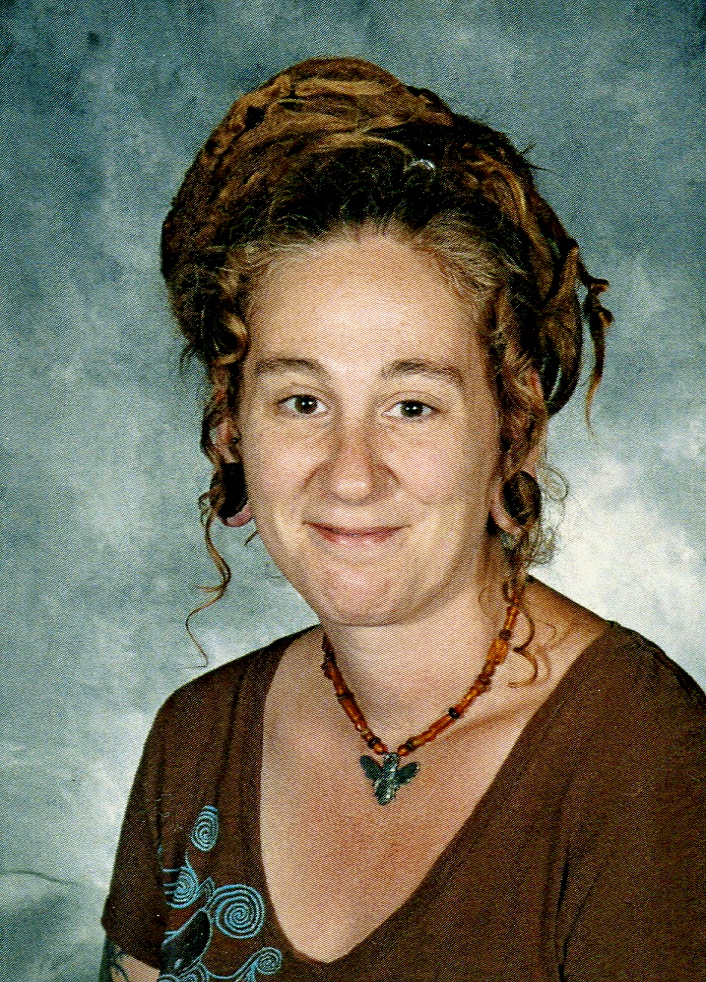
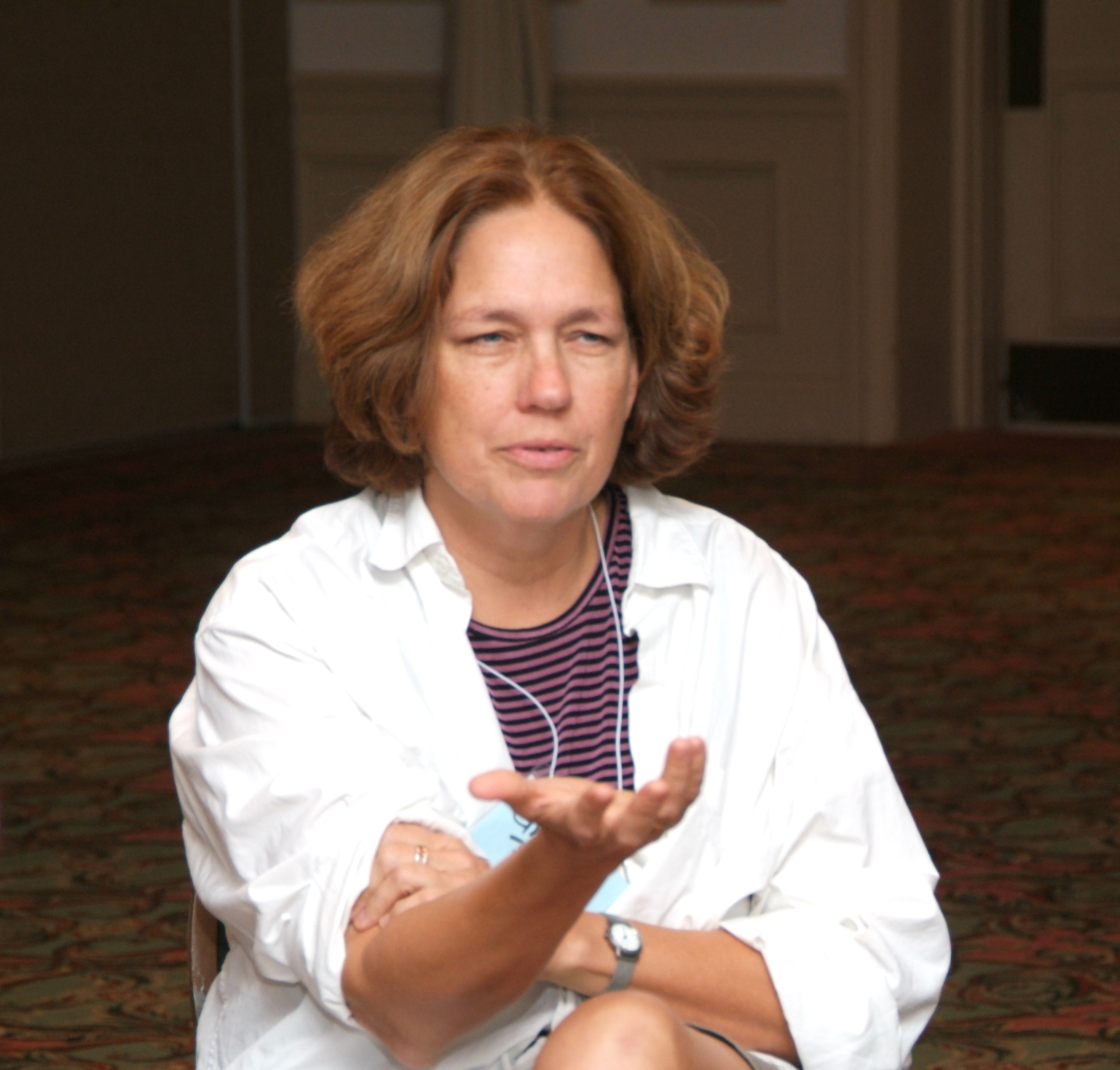
croweMelanie Crowe teaches painting, drawing, printmaking, book arts, multi-media, and sculpture at Marshwood Middle School where she has been for 11 years. During the course of the school year, Melanie has the honor to work with approximately 400 students, sixth through eighth grade.

What do you like best about being a visual arts teacher?

The best part about being a visual arts educator is the unique opportunity to engage with students during the creative problem solving process. For me, it is during this stage that is so rewarding. Challenging students to push the envelope of creativity and exploring ways to see the common, uncommon – is a beautiful moment. In the art room, students know they have a safe place to challenge one’s self and to take risks – when students move outside of that comfort zone – I know I’ve done my job.

What do you believe are three keys to ANY successful visual and performing arts education?

  1. Communication and support from administration, school community, and local community.
  2. Student connection – creating genuine, authentic relationships with kids, to show them their thoughts and ideas are valued and we are all in it together.
  3. Creation of real life connections for students is key to their understanding of how the Arts are so important in everyday life.

How have you found assessment to be helpful to you in your classroom?

Using rubrics along with self assessments, students take the learning ownership directly into their hands. When it is clear what the learning objectives are and students can clearly see what they are to know and be able to do, takes all the guess work out. As a newbie teacher, this was one area I struggled with. Now after my first decade, I see the utmost value in reflection as a tool for assessment along with clear ways to present rubric information.

What have been the benefits in becoming involved in the Maine Arts Assessment Initiative?

Without a second thought, the greatest benefit has been getting to know, work with, and learn from such an AMAZINGLY TALENTED group of arts educators. I have also gained new insight to my own teaching practices along with many ideas to try out in my own classroom. I now feel more a part of a bigger community and that is refreshing. Knowing that there are others that may have the same concerns, ideas, or suggestions and we are all just a few keystrokes aways from each other is liberating.

What are you most proud of in your career?

My students and their accomplishments.

What gets in the way of being a better teacher or doing a better job as a teacher?

Time – never enough always wanting more!

What have you accomplished through hard work and determination that might otherwise appear at first glance to be due to “luck” or circumstances?

I would have to say almost everything – the more hard work you put into anything it may appear effortless to those who may not have gone down the same road of struggle and determination.

Look into your crystal ball: what advice would you give to teachers?

“Be the change you wish to see in the world”. This was told to me by one of my professors in life and I do “life” by it. If you have the desire to work with students in challenging them to open their mind up to the “what if’s” in the world then teaching is the right place for you.

If you were given a $500,000.00 to do with whatever you please, what would it be?

I would build / open a community printmaking studio where students can come, create, hang out and learn the art of lithography and letterpress. There are so few places for just students to showcase and sell their work that I would like them to have a place of their own. Letterpress and Lithography are two forms of printmaking that I hold near and dear and do not want to see disappear. I love technology, but the beauty of ink on paper from a lithography stone is pure magic, I want to share this experience with as many others as I can.

Imagine you are 94 years old. You’re looking back. Do you have any regrets?

No. All paths have taken during my journey in life have brought me to this space in time, for that I am thankful.
h1

Danette Kerrigan’s View

June 2, 2014

Going away to understand what is happening right here in Maine arts education

Thank you to Danette Kerrigan for contributing this post and sharing her experience and her ah-ha moments while on a trip to Washington, D.C. earlier this Spring. Danette is an art teacher at Sacopee Valley Middle School.

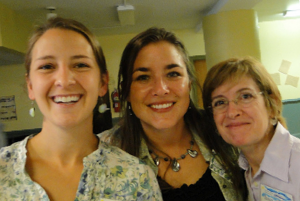
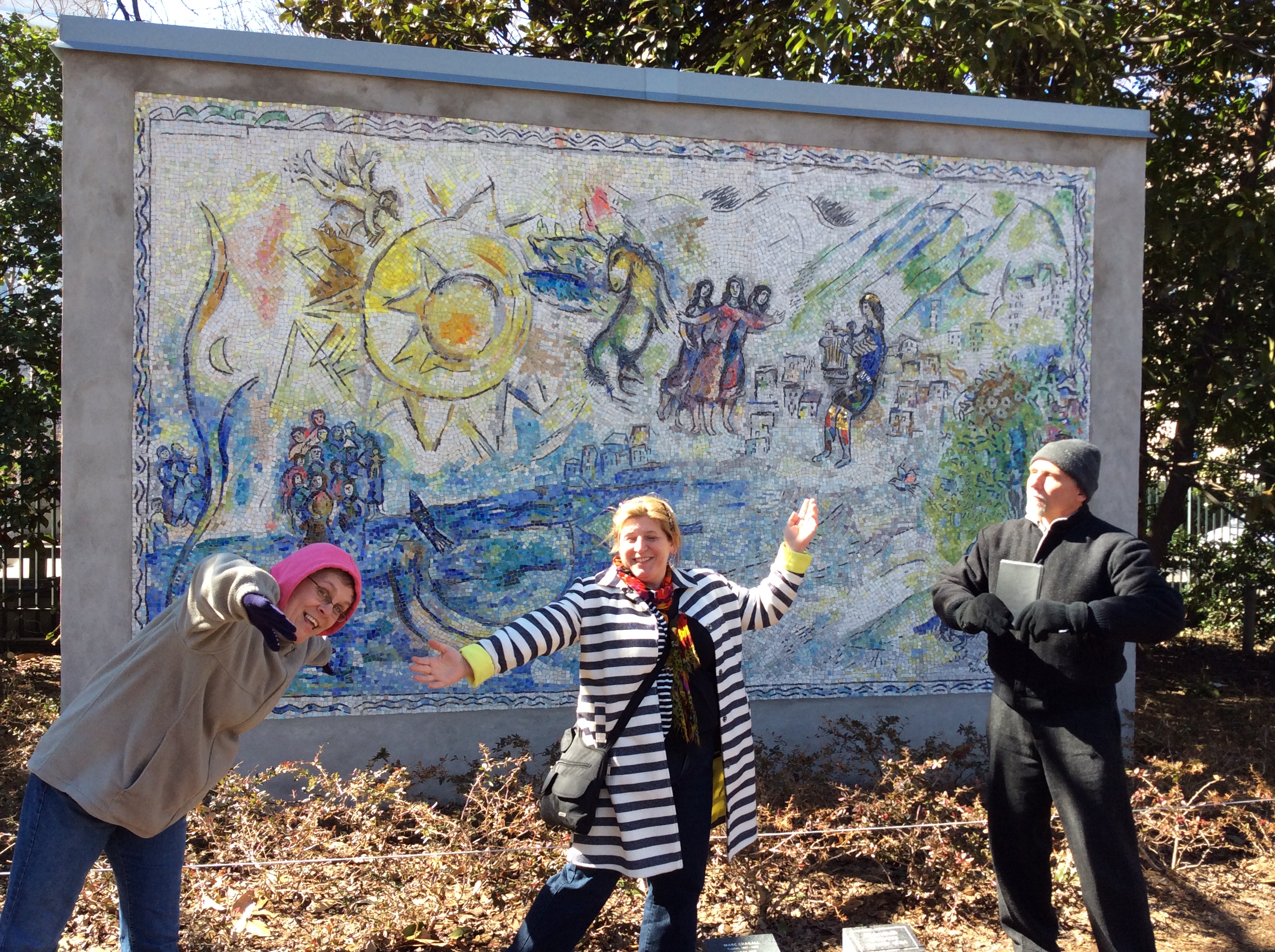
Danette and her two colleagues in Washington, D.C. at a Chagall mosaic.

Danette (in center) and her two colleagues in Washington, D.C. at a Chagall mosaic.

As part of our district’s participation in the Schools for Excellence Grant, three colleagues and I were chosen to attend the National Board for Professional Teaching Standards Teaching and Learning Conference in Washington, D.C. this past April. Our group consisted of an ELL teacher, Special Educator, First Grade teacher and myself (middle school art). We seemed an unlikely bunch, but we share a passion for teaching and learning, so in retrospect it was a pretty fantastic fit.

The amount of professional development available to us during three days was staggering. Plenary speakers ranged from Arnie Duncan and Doris Kearns Goodwin to Bill Gates and Bobby McFerrin.  While a star studded event, the content was serious, meaningful, and frankly, game changing for me and my colleagues.

There was a very clear message throughout……

Teachers are the best resources for educational change and Teacher Leaders can be the conduit for that change.

I attended a number of sessions devoted entirely to leadership. One in particular, Teacherprenuers: Leading teachers that don’t leave was amazing and featured 2013’s Teacher of the Year, Jeff Charbonneau. As I listened to him, he could have been any one of the teacher leaders of the Maine Arts Assessment Initiative (MAAI). His passion, innovation and energy have changed his high school and district by enabling students to receive as many as 27 college credits in the sciences. He shared how when he created a hybrid position for himself that splits teaching with coordinating the college interaction within the district he had to give up nine other extra curricular positions do so. Just as so many of us with a passion for change, he had spread himself quite thin.

I also attended a session with Jen Nash, held by the National Coalition for Core Arts Standards for a glimpse of those newly developed National Core Core Standards and the different plans for support of them. I know that many of us have seen and explored their site, as well as taken part in their public review.  What I would like to share with all of you are my observations about the presentation and discussions therein.

As I listened to the speakers present and the audience questions I was struck by a thought. People were speaking in a way that lead me to believe that they are still scared, searching for the thing that is going to cement relevance for the arts in education. In all of the meetings and workshops that I have attended for MAAI, the tone was different. I thought carefully about what was being said and I realized that MAAI and its members have moved on to a more sophisticated advocacy. No longer are we on the convincing side of persuasion. We don’t have to extol the virtues of an arts education. WE PROVE IT.

We do so every day with actions both within our schools, districts and statewide. With the many presentations we have brought to others we are providing a road map to the future of the advocacy of the arts. During the presentation I thought, MAAI is so far beyond this!

Another sneaking thought crept in….we are not fearful.

MAAI is making strides I don’t think others are. I think we are making a presence and setting the stage for advocacy that is based in fact. I think we are unique and powerful. I want to let Argy and Jeff and Catherine and Rob and all of our people know that we are on the right track….

It was an amazing conference and I encourage any of you to try to attend in the future. But know, we have a solid route to leadership and success in advocacy for the Arts right here in Maine.

To become a teacher leader with the MAAI, applications are now available at this link with a deadline of today, June 2. All teacher leaders need to attend the New England Summit on Arts Education. In addition, all educators are invited to attend the Summit being held at USM, Portland, July 29-31. Registration is available at this link.   Please email Argy Nestor at argy.nestor@maine.gov if you have any questions. Thanks for considering this opportunity!


h1

UMA Interactive Theater Project

May 30, 2014

Opportunity for students

Under the direction of Adjunct Theater Professor, Jeri Pitcher, the University of Maine, Augusta Interactive Theater Project is providing opportunities for college students who are turning around and providing learning opportunities for other students. This project involved creating an original piece of theater with five UMA acting students and bringing the theater piece to perform in classrooms at Cony Middle School. For more information on the UMA Interactive Theater Project, contact Jeri Pitcher, at Jeri.Pitcher@maine.edu.

See the video, created by Zach Greenham, below that demonstrates the project.

h1

Roundtable Music Ed Webinar

May 28, 2014

Review of webinar

Screen Shot 2014-05-27 at 9.42.14 PMThe fourth in a series of webinars for the Maine Arts Assessment Initiative was held on Tuesday, May 20, entitled “Maine Music Educators Roundtable”. The webinar was facilitated by Rob Westerberg, choral director at York High School in direct response to concerns from music educators in the field around a broad selection of topics. The hour included participation by Maine’s Visual and Performing Arts Specialist at the Maine Department of Education, Mr. Kevin Facer.

Roundtable guests were: Drew Albert – vocal and instrumental, Maranacook Community High School, Andria Bacon – instrumental/strings & general, RSU #64; Corinth, Bill Buzza – instrumental & general, Edward Little High School, Jen Etter – vocal music, York Middle School, Jen Nash – instrumental/strings & general, Sebasticook Valley Middle School and Ashley Smith – vocal & general at Brunswick High School. After a brief introduction, the roundtable went to work fleshing out thoughts around topics which included:

  • Effect of common core on music programs
  • Proficiency & standards based assessment
  • Music teachers as leaders in your own schools
  • National Standards release and ramifications
  • Teacher evaluation implementation

Additional discussion prompts were also presented:

* “I feel our district is caught between common core, national standards, Maine Learning Results and our own ad lib set of standards created from the consortium of schools we belong to. It’s mind numbing that we have so many versions of what is ‘important’ in a curriculum versus what should be required of Maine students in order to receive a high school diploma.”

*How can we create an effective mentoring system for teachers who are in need of improving their pedagogical skills?

*As we deal with budget issues, our teachings loads are increasing as we are being asked to do more with individual assessments. We cannot administer these assessments without adequate time in our schedules.

Many viewpoints were presented on all of these topics, providing a practical platform for further discussion by music teachers within and between school districts. The archived recording of the session is located at http://stateofmaine.adobeconnect.com/p5rre115tqg/. Accordingly, a follow-up meeting plan has been developed to facilitate this discussion, applicable for school district professional days or regional meetings between music educators. The meeting plan is located at http://mainearts.maine.gov/Pages/Education/MAAI-Webinars.

On Wednesday, June 11, 3:30 to 4:30 the MAAI will be holding a webinar hosted by Catherine Ring, featuring the ongoing work of the Resource Bank team for Visual and Performing Arts. Teacher leaders on the Resource Bank team will be our guests. Please plan on joining us for an exciting conversation and a sneak peak of some of the rich resources created by the team on that second Wednesday of June. 

h1

Calling All Teaching Artists!

May 26, 2014

Professional Development Opportunity for Teaching Artists Interested in PK-12

Arts-84

Gretchen Berg, Teaching Artist and Director of Ovations Offstage, presenting a workshop at the Statewide Arts Ed conference

This summer, the New England Summit on Arts Education will take place on the University of Southern Maine Portland campus, July 29-31. The Summit is designed to provide an outstanding collaborative opportunity for educators to dig deep into teaching, learning, and assessment in arts education including student-centered classrooms and proficiency.

The Summit is offered through the Maine Arts Assessment Initiative which was established in 2010 and has been responding to the needs of arts education ever since. The overall focus of the MAAI has been to create an environment in Maine where quality assessment in arts education is an integral part of the work all arts educators do to improve teaching and learning, and student achievement in the arts.

During the past three summers MAAI has offered opportunities to PreK-12 visual and performing arts teachers who make a commitment to take on a leadership role beyond the summer work. This year we are broadening the work to include others who make a commitment to educating young people in the arts. Teaching artists are invited to attend the Summit as part of a team or as an individual.

The Summit offers the following:

  • Scholarships for a limited number of Maine teaching artists to participate in the three-day summit
  • Sessions to build knowledge on arts teaching and learning, including assessment
  • Provide a mentor who will be available beyond the Summit
  • Networking opportunities with other Teaching Artists and school personnel from Maine and beyond
  • Hosting of 5-10 minute showcases for Summit participants
  • Three or four days of professional development (See Teaching Artist Leader Opportunity information below)

For detailed information about the New England Summit on Arts Education click here.

Teaching Artists Scholarships Available

The Maine Arts Commission is offering scholarships for a limited number of Teaching Artists to apply to participate in the New England Summit on Arts Education. The application deadline for scholarships is June 9, 2014.

To be eligible for a New England Summit on Arts Education Teaching Artist Scholarship, an artist cannot be employed by a school district as an arts educator.

As a scholarship recipient, teaching artists are required to:

  • Participate in online conversations using a wiki where the teaching artists will share information, ask questions, learn from each other, and establish an online community.
  • Complete a plan (i.e., a marketing packet) that includes a lesson/unit and description of their work that can be used to promote themselves with administrators, and/or teachers. These plans may be included in the MAAI Resource Bank, an online repository of learning units that will be available to all educators.
  • Attend a one-day professional development day in October to present their ideas and plans to invited “critical friends” for review and feedback.

Once the final plan is submitted and approved the teaching artist will be added to the Maine Arts Commission Teaching Artist Roster and receive a stipend.

Please click here for the scholarship application located near the bottom of the page.

DEADLINE FOR APPLICATION: June 9, 2014

If you have any questions please email the Maine Arts Commission Director of Arts Education Argy Nestor at argy.nestor@maine.gov or call 207.287.2713.

The Maine Arts Assessment Initiative is guided by the State of Maine Learning Results legislation Chapter 125 for the visual and performing arts which includes these four disciplines: dance, music, theatre, and visual arts.

In 2015, Arts Learning Grant applicants will be encouraged and given extra consideration if partnering with a Teaching Artist who is listed on the Roster.


h1

Artists selected for 2014 Monhegan Residency

May 25, 2014

So proud of  my former middle school student, Scott Minzy, Erskine Academy Art teacher

Minzy_Scott_longview

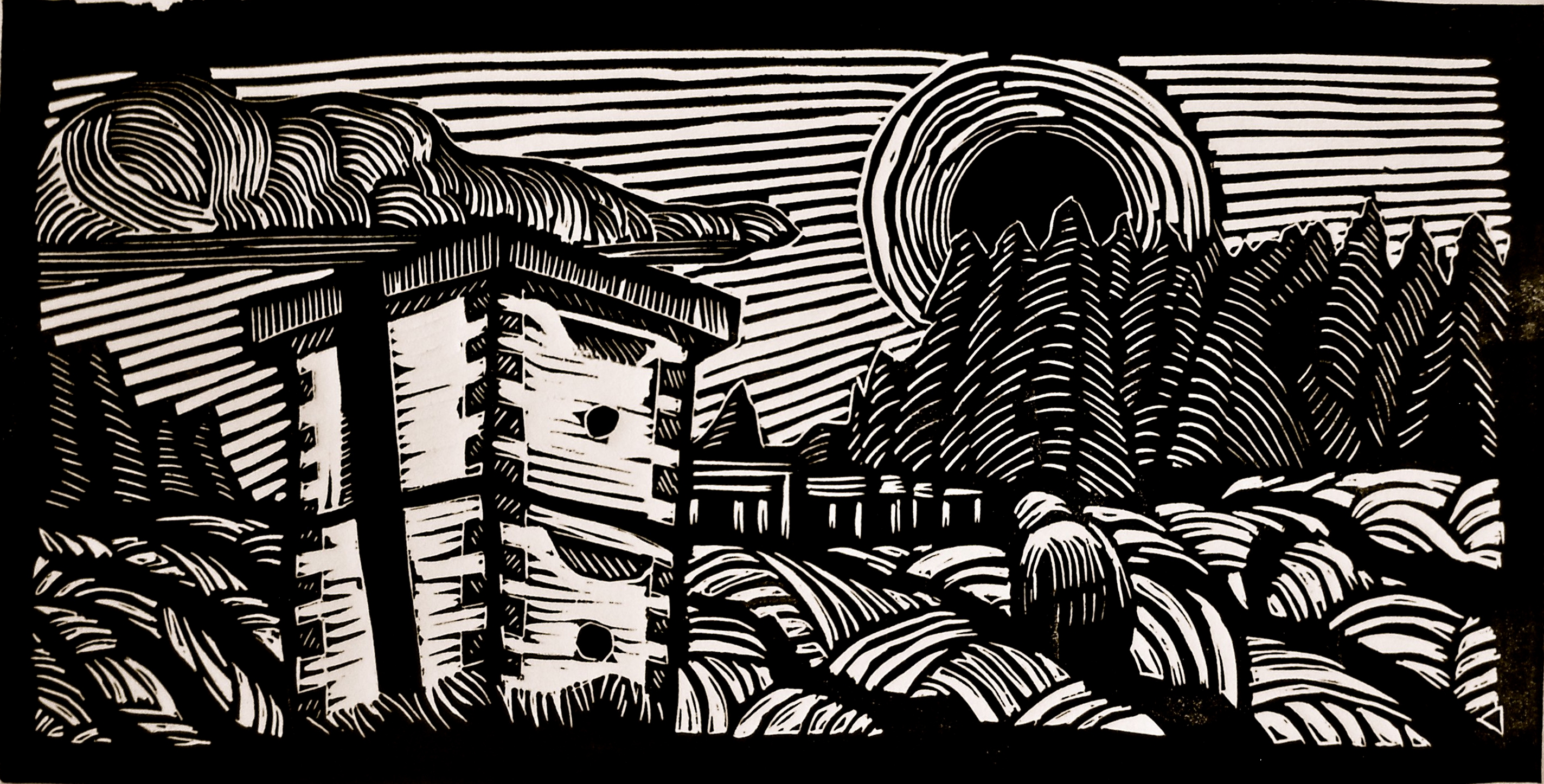
Artwork by Scott Minzy

Multi-media artist Victoria Statsenko of Portland and Falmouth painter Jan ter Weele have been named the 2014 Monhegan Island artists-in-residence by the Monhegan Artists’ Residency Corporation. Printmaker Scott Minzy, an art instructor at Erskine Academy in South China, has received the artist-teacher residency. Scott will be developing statewide art materials. Scott has a solo show this month at KAHBANG.

The residency program is aimed at emerging visual artists working in painting, drawing, printmaking, photography, sculpture, or the digital arts. “An important goal of the program,” says board chair Susan Danly, “is to enhance the careers of serious artists who have yet to gain wide recognition.”

Quality of work is the primary criterion for selection. The 2014 jurors were photographer and installation artist Elizabeth Atterbury; photographer Bryan Graf, who teaches at the Maine College of Art; and Monhegan watercolor painter Bruce Kornbluth.

Since its founding in 1989, the organization has sponsored 48 Maine artists, including Marguerite Robichaux, subject of a retrospective at the Pucker Gallery in Boston in 2013; Joe Kievitt and Alina Gallo, whose work was chosen for the 2013 Portland Museum of Art’s Biennial; and Cynthia Davis, whose inventive “map-making” received critical praise in the Portland Press Herald during her solo show at the Coleman Burke Gallery in Brunswick last year.

To help mark the 25th anniversary of the Monhegan Artists’ Residency program, the work of 34 former resident artists will be the focus of a special exhibition at Thos. Moser’s Freeport, Maine, showroom and gallery, June 19 – October 14.

The Monhegan Artists’ Residency Corporation is supported by individual donations and foundation grants. For information, visit www.monheganartistsresidency.org.


h1

Another Arts Teacher’s Story: Amy Cousins

May 20, 2014

This is the eighth blog post for 2014 and the third phase of the Maine Arts Assessment Initiative of this series sharing arts teachers’ stories. This series contains a set of questions to provide the opportunity for you to learn from and about others.

Screen shot 2014-05-10 at 10.24.31 PMAmy Cousins has been teaching in one form or another since she was 19 years old. She has been in public education, as an art teacher, for 17 years. Amy teaches Middle Level Art and Alternative Education (Integrated Arts and Outdoor Education) at Gorham Middle School. She teaches approximately 300 Art Students and 15 Alternative Education students.

What do you like best about being an arts educator?

I LOVE the creative part of lesson planning and figuring out how to engage all students. Teaching art is about observation. Who are my students? What do they respond to and what engages them to be creative problem solvers? It’s wonderful to watch students wrestle with ideas and concepts and come up with their own solutions.

What do you believe are three keys to ANY successful visual and performing arts education?

1.) Exploration – The freedom to explore.
2.) Ingenuity – To foster ingenuity.
3.) Challenge  – The ability to challenge in unique, individual ways.

How have you found assessment to be helpful to you in your classroom?

Assessment is the key to validating what we do as art teachers. It helps students recognize their strengths and what they need to work on. A good assessment tool guides students through the process of making, analyzing and interpreting their  art work. As a teacher it helps me to craft lessons that meet the standards, but still embrace artistic license.

What have been the benefits in becoming involved in the arts assessment initiative?

The benefits have been plentiful but the biggest gift I have received from the MAAI is camaraderie. It has been an absolute pleasure to meet and be energized by individuals from all over the state! They have given me new ideas, helped problem solve the old ones  and have revitalized my desire to teach.

What are you most proud of in your career?

Not sure yet, ask me when I am 94!

What gets in the way of being a better teacher or doing a better job as a teacher?

Time. There is never enough time to get it all done! We only get a brief glimpse of our students during the course of a year. In some cases as few as 35 hours. That doesn’t allow students enough time to fully explore all the endless avenues of art, nor does it allow for retention of concepts, techniques or processes from year to year. I consistently feel like I am taking 1 step forward and 4 backwards.

What have you accomplished through hard work and determination that might otherwise appear at first glance to be due to “luck” or circumstances?

Think that’s another one you are going to have to ask when I am 94.

Look into your crystal ball: what advice would you give to teachers?

Remember your job is to not only to educate students but to engage them in manner that leaves them craving for more.

If you were given a $500,000.00 to do with whatever you please, what would it be?

Right know I would do just about anything for about 20,000.00 to buy a classroom set of iPads. So I am going to take this opportunity to shamelessly advocate for my cause. Anybody want to make a donation????

Imagine you are 94 years old. You’re looking back. Do you have any regrets?

I have made a gazzilion mistakes in my life and I don’t regret any of them.  Mistakes are how we learn. If you regret them, you haven’t learned anything.

h1

Inviting All Arts Educators!

May 19, 2014

Interested in Being a Teacher Leader?

Regional VPA Assessment Leader Search

Maine Arts Assessment Initiative-Phase 4

The Initiative is a partnership with MAC, MDOE, USM, MAEA, MMEA, MAAE, MLTI, and

New England Institute for Teacher Education

Join us for a GREAT opportunity! The Maine Arts Assessment Initiative invites YOU to be part of Phase IV. We are looking for teachers interested in leading and in taking a close look at assessment in the arts. If you are selected, you will be required to attend the New England Summit on Arts Education, July 29, 30, 31, Aug. 1 at USM, Portland. Details and registration at https://mainearts.maine.gov/Pages/Education/NESummit. We will provide professional development and ask that you take what you’ve learned and share it with other educators in your region and beyond.

If interested, please send a completed application to Argy Nestor at argy.nestor@maine.gov NO LATER THAN JUNE 2, 2014.

APPLICATIONS AVAILABLE AT http://mainearts.maine.gov/Pages/Education/MAAI#.

Selected teacher leader responsibilities for the 2014-15 school year include

  • Communicate by wiki
  • Attend 3-day New England Summit on Arts Ed plus 1 July 29,30,31, Aug. 1
  • Attend all-day meeting as a follow-up to Summit
  • Present a workshop in your region, planned by you
  • Present a workshop at the mega-regional workshop site that will be coordinated by the leadership team
  • Attend an all-day meeting to reflect on work of phase IV with teacher leaders, and leadership team – winter/spring 2015


Screen Shot 2014-05-16 at 1.25.33 PM

MAINE ARTS ASSESSMENT INITIATIVE – BACKGROUND INFORMATION

OVERALL DESCRIPTION

Create an environment in Maine where assessment in arts education is an integral part of the work all arts educators do to improve student achievement in the arts.

Since 2011 the initiative has been building capacity by training arts educators on the “what” and “how” of arts assessment so they can provide the leadership in Maine through professional development opportunities. The details of the initiative are at http://mainearts.maine.gov/Pages/Education/MAAI#.

OVERALL OBJECTIVES

Devise a statewide plan for assessment in arts education, which includes professional development opportunities, regionally and statewide, to expand on the knowledge and skills of teachers to improve teaching and learning.

  • Develop and implement standards-based assessment statewide for Visual and Performing Arts (VPA)
  • Continuation of building a team representing all regions of Maine
  • Workshops to provide ongoing learning opportunities for arts teachers

HISTORY – Phase I, II, III – Summer 2011 to present

  • Fifty two teacher leaders attended summer institutes on assessment, leadership, technology, creativity, standards-based and student-centered teaching and learning
  • Teacher leaders presented workshops at two statewide arts education conference, USM, Portland and UMaine, Orono with over 450 educators attending
  • Teacher leaders facilitated regional workshops across Maine
  • Teacher leaders facilitated workshops at 8 mega-regional sites across Maine
  • Another Arts Teacher’s Story series (52) on Maine Arts Ed blog
  • Arts assessment graduate courses offered by New England Institute for Teacher Education
  • Nine arts education assessment webinars for Maine educators facilitated by Rob Westerberg and Catherine Ring – archived
  • Video stories of 7 teacher leaders that demonstrate a standards-based arts education classroom
  • Teacher Leader Resource Team ongoing development of items for resource bank

Phase IV components

  • July 29, 30, 31 2014: New England Summit on Arts Education, USM, Portland
  • August 1: Professional Development for teacher leaders
  • Regional and Mega-regional workshops throughout Maine
  • Webinars
  • Video stories
  • Resource Bank continuation
  • Professional development for teaching artists

Goals of Day 4, August 1

  • Professional development for teacher leaders that will prepare them for their role of the MAAI, phase IV

For More Information

Screen Shot 2014-05-16 at 1.26.01 PM


h1

Introducing Kevin

May 18, 2014

Kevin Facer, Visual and Performing Arts Specialist, Maine Department of Education

KFacerI am happy to introduce you to Kevin Facer who joined the Department recently. He’d love to hear from you so don’t hesitate to contact him at kevin.facer@maine.gov

  1. Tell us about your professional (and if you’d like to include personal) background. How did you get where you are?

Hi Argy, thanks for the opportunity to meet arts educators through the blog. I was an arts kid in high school. The arts were, and still are important to me and most likely helped me stay in school. After high school, I served in the U.S. Marine Corps, and then started a community college program in photography. I worked as a blue collar chef and then photographer in commercial and fashion sectors in Philadelphia. I went back to graduate school and did an MA in Humanities and M.Ed. in Arts Ed., and started teaching photography after having a show at college. Currently, I’m working on a dissertation about artists and creative problem solving toward an Ed.D.

  1. What did you think of this real Maine winter?

This one seemed harsh. I hope it gets better.

  1. Why did you become an art teacher?

I didn’t set out on a career to become a teacher. I suppose it found me by accident. Having experience as a working photographer and making my own photographs to show led me to start teaching after an exhibit I had at a college. After a few years adjunct teaching, I began teaching high school photo and art. Working in a studio environment with students is a rewarding experience and I believe all arts teachers share a similar perception about what they do.

  1. What are you most passionate about in arts education?

As a teacher, for me it is all about creating memorable learning experiences. The kind of experiences students will know and remember because they grew and gained from doing it. Arts teachers understand the uniqueness of the creative learning process that ultimately lead to both self and creative discovery. Curriculum standards and learning outcomes are part of the process of teaching that frame steps in learning, but as teachers we also want to do things that spark creative thinking as a lifelong habit.

  1. What are your most important goals as VPA specialist?

Right now all of the core functions of the job seem important, with emphasis on supporting Proficiency Based Education and Educator Effectiveness. But with arts education specifically my work with MAAI, promoting arts integration with other content specialists and teachers, STEAM education as an approach to teaching, gifted education opportunities in the arts and building partnerships with arts teachers across the state, and connecting to community, state and national arts organizations are my priorities.

  1. What is your advice for arts educators?

I may not be the best choice for advice. But, I believe arts teachers need to take ownership of the arts programs in their school. Network and gain support from parents and your community. Showcase your work and the work of your students; collaborate and acts upon discussions with teachers and administrators in your school and those connected to you as these discussions can create great things. Look for unusual and customary ways to advocate for the arts in your conversations as these connections help everyone involved to become stronger and more engaged. Years ago, I taught in a high school that didn’t have a gallery space to show student work. Sure the hallways are okay, but I really wanted to do more. So, during a week there were school board and community meetings I got a 16’ truck and turned it into a mobile gallery, parked it in front of the meeting places and in town on Friday evening. Many people walked up the ramp to see the student show, which turned into strong support for the school and our arts programs.

  1. What do you believe are three keys to ANY successful visual and performing arts education?

I spent some time thinking about how success can be defined in terms of stability of the arts program, status within the school and community, experience and notoriety of the teacher. These things can have influence on a program, but it’s all about student learning and their engagement with the arts. So, with this out front, my three keys are:

  • Challenging Instruction – Think “Habits of the Mind” for the arts area you teach.
  • Engagement – How active students are in their school and community about the arts.
  • Legacy – This is from my experience as a high school art teacher, but when students wrote to me ten years after graduation about how their art experiences are used in their jobs, that they have a job (that they like) directly related to the arts, or send an invitation to an exhibit or performance, makes you think that maybe you made a positive difference.­
  1. You’ve had a chance to check out the MAAI what benefits do you see in educators becoming involved?

Arts assessments are going to change the scope of arts instruction, not necessarily in the content of what is being taught, but definitely in how the arts will be taught and the nature of evaluation. Therefore, assessment is split into two major areas of Arts Knowledge (basic skills to include tests) and Art Ability (examples of production). This implies there is a shift in thinking from grading an assignment or project, to evaluating student learning. This is why being part of MAAI and learning new approaches to teaching and assessment will be valuable to teachers.

  1. If you were given a $500,000.00 to do with whatever you please, what would it be?

It’s been far too long since my wife and I had a real vacation, but after that I would like to put the funds into the development of a center/institute for arts, craft and science where the mission is to discover connections between disciplines. Light on curriculum, heavy on creating, that would be my ideal learning environment.

Contact Information: kevin.facer@maine.gov


207-624-6826

h1

Maine Music Educators Roundtable

May 17, 2014

Tuesday, May 20, 2014

As a supplement to the series being presented by the Maine Arts Assessment Initiative this Spring, MAAI will be holding a webinar entitled, “Maine Music Education Roundtable” on Tuesday, May 20 from 3:30 to 4:30. Hosted by Rob Westerberg, choral director at York High School, this webinar is being held in direct response to music educators in the field who are asking subject specific questions pertaining to their own classrooms and issues confronting them in the current educational climate. The roundtable format will intentionally make this hour conversational in nature, leading to what will no doubt be a rich dialogue around current topics in Music Education. Topics will likely include issues around proficiency, standards, creation and assessment of individual student learning targets, PK-12 curricular alignment and advocacy. All attendees will also be encouraged to ask their own questions, voice their own concerns, and share their own perspectives. Roundtable guests will include music educators from across the state. Please plan to join us so that YOUR voice can be heard as well!

  • To join the meeting, please click here.
  • Enter as a guest and sign in using your first and last name please.
  • Click enter room.
  • Please be wired and do not use a wireless connect.
  • No telephone is required. (There is no call-in number).

I suggest that you join the webinar at 3:20 and go to the top left corner of you screen, click on the drop down menu, Meeting, Audio Setup Wizard and follow the directions to check your audio.