Posts Tagged ‘MALI’

h1

Summer Arts Conference

May 23, 2016

MALI provides PD on June 28

Summer Conference – June 28th, 9:00 – 3:30

University of Southern Maine – Portland

MALI_V3_Color_100ppi


The Maine Arts Leadership Initiative is offering a one-day summer conference with a variety of outstanding workshops. We’ve listened to the field requesting more professional development opportunities! This is a great way to kick off your summer that will provide you with ideas and materials on developing standards and assessment tools as well as other relevant hot topics. Join your colleagues from across the state and around New England in a collaborative learning environment.

CONFERENCE INFORMATION AND MATERIALS:

https://docs.google.com/document/d/1AQ7v3kosh7ReRijqyQtPvYlukURtxzjRXW_1X5NfxqM/edit#


REGISTRATION LINK:

http://goo.gl/forms/8EpYejbZeFLZxjm73

OTHER CONFERENCE INFORMATION:

http://www.maineartsassessment.com/#!mali-summer-conference-2016/qxjo8

CONFERENCE DETAILS:

  • The conference is being held at USM in Portland, Wishcamper Center
  • $50 registration – teams of 3 or more, $40 per person – check or paypal – no POs
  • Lunch is on your own – coffee/tea and snacks will be provided
  • 6 contact hours or .6 CEUs provided
  • Select from 14 workshops – (descriptions below)
  • Wishcamper Center, 34 Bedford Street, Portland (link to directions here)
  • Free parking is located in the garage attached to the Abromson Center located right next to Wishcamper on this map

  • Overnight lodging in the vicinity of USM* In addition, 10 minute drive away:

    • Fireside Inn 81 Riverside St, Portland

    • Portland Travelodge 1200 Brighton Ave, Portland

    • Super 8 208 Larrabee Rd, Westbrook

            *Please note: These are not endorsements, simply suggestions.

WORKSHOP OFFERINGS
IMG_1942Theresa Cerceo

Studio Habits of Mind, Planting Seeds toward Growth and Proficiency in the Arts K-12 Visual Art

This workshop will offer give a brief overview of the work done by Lois Hetland as outlined in her book, Studio Thinking.  It will offer various strategies one can implement in the arts classroom in order to track and guide students through proficiency toward MLR standards for the Arts  and Guiding Principles.


Jake Sturtevant and Jan Gill

Student’s Choice: Engaging Students in Task Design Make the Concert Theirs

K-12 Music

Jan and Jake are mother and son, both music teachers; Jan in RSU 73 (elementary) and Jake (high school) in MSAD 6. Examples of strategies that allow students to choose, arrange, and perform songs. From a 3rd grade class choosing a name for their band and songs to perform on guitar, bass, keys, drums and vocals to a high school band of 60 students transcribing and arranging Uptown Funk, this session will include strategies for how to negotiate and empower student choice to promote positive interdependence, in a variety of ensembles and general music settings.


Danette Kerrigan

National Board Certification

K-12 All Educators

This session will focus on the benefits, process and incentives available to educators in the state of Maine interested in National Board certification. National Board Certification is the most respected professional certification available in education and provides numerous benefits to teachers, students and schools. It was designed to develop, retain and recognize accomplished teachers and to generate ongoing improvement in schools nationwide. Standards for each content area and developmental level are created by teachers, for teachers.
IMG_1878

Susan Beaulier

Critical Thinking in the Art Room; It’s the Thought that Counts

K-12 Art

Expand your existing art lessons by incorporating critical thinking strategies that drive your students to think more deeply about their own art and that of others. We’ll discuss how to pose questions, frame class critiques, lead thoughtful discussions about the  aesthetic qualities of visual art,  incorporate writing into the studio art lesson, and provide avenues for student reflection on their art making process.


Jen Etter & Rob Westerberg

Developing Your Music Standards and Assessment Strategies

K-12 Music

This extended workshop will allow participants either on their own or in teams to look at desired curricular outcomes for their program, develop standards and indicators that are customized to their specific courses and school, and set up assessment strategies to bring authentic proficiency to life.


Iva Damon

Google Classroom

PK-12 All Educators

Who has time to orchestrate all of the current technologies of Google Drive, digital portfolios, videos, digital imagery, and getting 21 Century skills into the classroom? YOU do with Google Classroom. Make your life easier and find the Holy Grail to simple, easy to use technology that can be utilized in all classrooms.
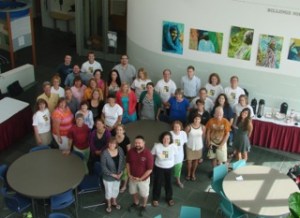


Summer 2015 2nd groupElise Bothel

Death to the Cookie Cutter Project

K-5 Visual Art

Do you cringe when you walk by visual art displays featuring identical pieces of art done by a classroom of diverse students? Would you like to offer more choice, but are worried that the academic content will be lost in the chaos? Are you looking for a balance of creativity and content in your visual arts classroom? This workshop is designed to offer insight and solutions about how to foster creativity while still providing a rigorous and educational art curriculum. Along with group discussion, participants will have the opportunity to work on improving their own lessons through the use of backwards design, student interest, and choice.


Patti Gordan

Hatching a Songbird: Teaching and Assessing Singing Skills at the Primary Level K-4 Music

When the wee folk walk through our door how do we make sure we’re helping them develop singing skills, not just singing songs with them? This workshop will help you plan methodical, proficiency based lessons and assessments, including formative self assessments, that are easily delivered during our limited general music class time. Help your smallest singers reach their highest singing potential and develop a love of singing!


Holly Leighton & Nancy Kinkade

Next Steps Rubrics Makes Learning More Progressive

PK-12 Art and Music

How do you motivate students to move beyond a score of 3 or 4? How do we get students to look at learning as sequential as opposed to”end result” learning?  What tool can I use to make assessment more accessible to teacher and students with greater impact? Educators will leave with strategies to put students on a continuum of learning that is teacher and student friendly.
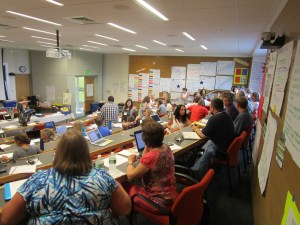


IMG_0019Rob Westerberg

Advocacy

PK-12 All Educators

This session will present strategies for continued implementation of PBL in your own classroom, and highlight the powerful corollary advocacy points that go along with each. If our advocacy efforts have been so useful for the past 20 years, why are we still so much in need of more? Come find out how our most recent PBL work has the potential to finally push arts education to the forefront of our school’s academic agenda while providing the richest, most relevant curriculum possible for our students.


Mandi Mitchell

Strategies to Deepen Student Engagement and Learning in the Arts Classroom, 7-12 VIsual Art

Are you struggling to demonstrate techniques, assess student learning, and still find time within your class to teach criticism and aesthetics? Get the most out of your class, every time that you meet.  Learn how to develop a successful, fully implemented classroom model that offers more “bang for your buck.” You will deepen student learning and motivation, increase student engagement and interest, and encourage self-regulation and reflection while integrating three simple daily steps that structure your classroom without limiting creativity. Adaptable for all levels and all arts disciplines!


Samantha Armstrong

What are the Benefits of Student Self-reflection? (What do I still need to do? What have I learned?)

K-6 Visual Art

In this workshop we will explore the benefits of student self reflection as a means of achieving greater understanding and academic success. We will look at evidence that shows the impact self assessment has on student success and a sampling of self assessment and reflection tools and methods. You will also have an opportunity to discuss and brainstorm how you see these concepts working in your classroom.


Jen Etter & Rob Westerberg

Further Developing Your Music Standards

K-12 Music

Continue to develop your work from the Second Session or join us for the first time to dive into your own work!
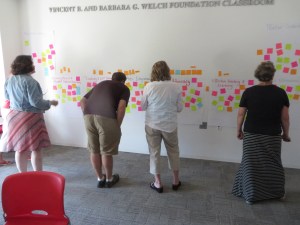
 

IMG_1897John Morris

Creativity: A Group Inquiry

PK-12 All Educators

This discussion group model will help participants make connections with creativity research, while promoting inquiry and dialogue about the nature of creativity, as well as the role of creativity in K-12 teaching, learning and assessment.

If you have questions about the conference please email Argy Nestor, Maine Arts Commission Director of Arts Education at argy.nestor@maine.gov.

h1

Another Arts Teacher’s Story: Lynda Leonas

May 17, 2016

Teacher Leader series

MALI_V1_Color_100ppi

This is the tenth blog post of the Maine Arts Leadership Initiative (MALI) Phase 5  Teacher Leader stories. This series contains a set of questions so you can learn a little bit about the work they are doing as Maine arts educators. CLICK HERE for more information on MALI. CLICK HERE for more information on the 73 of the MALI Teacher Leaders. CLICK HERE for Arts education resources. Search in the “search archives” box on the bottom right side of this post for past stories. There have been 69 posted to date.

Lynda Leonas has been a K-6 Visual Arts Educator  working with approximately 700-800111 - Copy students per year for the past 4 years at two of Lewiston’s elementary schools; Governor James B. Longley Elementary and Farwell Elementary.  Prior to her work in Lewiston, she spent 3.75 years in Auburn’s Public Elementary School system across the river and 3 years teaching all forms of fine art to youth and adults at her private art studio in Lewiston.
What do you like best about being a visual art educator?

I love the opportunity to work with every student at the elementary level of education. Seeing all students, even those without confidence in their artistic abilities, allows me to encourage them to overcome any “fears” and to always trust themselves. Working with every student also allows me to champion the arts as an important tool for cross-curricular development in literacy, mathematics, and the sciences; as well as the ever-important motor skill development and hand-eye coordination skills necessary to become a successful athlete.

What do you believe are three keys to ANY visual and performing arts program?

  1. Listen to your students!
  2. Keep it fresh! Promote the student work locally!
  3. Plan ahead as much as you possibly can.

How have you found assessment to be helpful in your classroom?

I have created assessments inspired by students and credit the new assessments as having been inspired by the students whenever I can.  The sense of accomplishment the students feel as having been listened to produces a total buy-in from their peers and increases productivity and participation tremendously.  The students have fun while using the assessment tools along their learning path in the art room.

What have been the benefits in becoming involved in the arts assessment initiative?

The motivation resulting from working with educators across our state has produced an exciting energy to keep learning and discussing arts education lessons, assessments, and common goals!

Charlie Hewitt MAEA Spring conference

Charlie Hewitt MAEA Spring conference

What are you most proud of in your career?

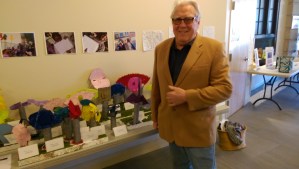
Due to my involvement in MALI, I was encouraged to create a workshop and to present to other arts educators. In doing so, the opportunity to showcase this year’s 5th grade collaborative artwork  to the artist we had studied actually came up! The student work was displayed at the entry of our MAEA Spring Conference and Charlie Hewitt, sculptor of “Lewiston Rattle”, was our keynote speaker. The students were so excited to hear he would be viewing their fabulous pieces! It was so thrilling to present Charlie with student art inspired by him!

What gets in the way of becoming a better teacher or doing a better job as a teacher?

Increased class sizes and reduced class times within the arts education field has hurried along some aspects of the visual art class room. This aspect is truly a challenge for me; and, I have had to search for outside opportunities to increase the amount of one-on-one time I spend with students. During a regular school week, there can be less than two minutes to connect with each student in a class on an individual level.

What have you accomplished through hard work and determination that might otherwise appear to at first glance to be due to “luck” or circumstances?

In working with one principal, I had the opportunity to showcase the importance of the visual arts within the elementary general education system. After 17 individual open houses in one year, I was able to connect with families across cultures and provide opportunities for my students to teach their family members how the visual arts embrace techniques that truly develop the “whole” student. After hosting these events, the students themselves truly became more motivated during art classes!  This was a bonus!

Look into your crystal ball: what advice would you give to teachers?

Advice? Even after planning ahead as much as you possibly can, be prepared to “fly by the seat of your pants” at times!  The art education world can be a hectic environment where everything works out in the end…be flexible!

If you were given $500,000 dollars to do whatever you please, what would it be?

$500,000.00 would start up a terrific college scholarship for those pursuing the arts as arts-for-arts’ sake and arts-related studies that lead toward medical and engineering degrees!  It also might buy me a new car to shuttle between the couple of schools I see each day…I am thinking of a Jeep Renegade…just not certain it would be easy to load student supplies and work along with my Great Dane…any recommendations?

Imagine you are 94 years old. You are looking back. Do you have any regrets?

I believe I may still be teaching at the age of 94…depends upon retirement funds!  I hope I won’t have regrets.  As new opportunities arise, I will be certain to do my best in accomplishing them so that I can avoid regrets down the road.

IMG_0087

h1

Trip to The County

May 16, 2016

Aroostook county

Most days I feel fortunate to do the work I do. Let’s face, I believe working with Maine’s Visual and Performing Arts teachers is a great job! Most days it doesn’t feel like work because I love it so much. (Don’t mistake this for an easy job!) I don’t get to Aroostook County or the areas of Maine that are further away from the Maine Arts Commission office as much as I’d like but, when I do it is a wonderful treat.

IMG_2127Recently I traveled to the County (as Aroostook is affectionately know to many) and learned a great deal AND had a fabulous time. The early morning drive north on 95, once I reach Bangor, is an opportunity to turn off the radio and look and think. It took me almost 4 hours from my home to my first destination, Wintergreen Arts Center in Presque Isle.

IMG_2128

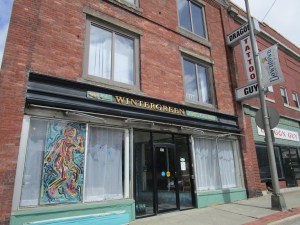
Wintergreen Arts Center, Presque Isle

I met with Dottie Hutchins, the Executive Director of the Wintergreen Arts Center and with the co-chairs of the center board members Heather Harvell, and Kim Guerrette Michaud. I felt like I had known them for a long time. The center has many successful programs that range from pre-school programs to after school art programs for young kids through teenagers to programs for adults. They are a growing center with so much to offer. If you are in Presque Isle be sure and stop in and say hello to the folks there. Dottie and the crew are working on a series of blog posts for meartsed so you can learn more in depth about their programs.

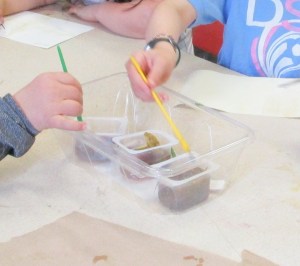
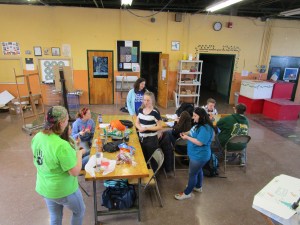
IMG_2132From there I headed north to visit Maine Arts Leadership Initiative (MALI) Art Teacher Leader and Leadership Team member Theresa Cerceo. First stop, after my hour drive was at the Dr. Levesque Elementary School in Frenchville where Theresa was teaching a science lab. Yes, art integration in action. It wasn’t about the product but about learning by asking questions and experimenting with materials. For example, students were grinding leaves with a little bit of water. Students test scores in math and reading have increased due to the work that ALL teachers are doing during the weekly labs.
IMG_2135

SLAM at Wisdom High School, St. Agatha

From there I headed north again  to Wisdom Middle/High School in St. Agatha to visit with the Students Leaders in the Arts Movement (SLAM). It provided the opportunity to talk and listen to the members of SLAM at their own school. We exchanged ideas on the school board presentation they are preparing for. SLAM kicked off the statewide arts education census in December by creating a video inviting principals to submit the survey. It was great to share some of the results – 95% response. So proud of the advocacy work this group is doing. If you are interested in learning more or starting your own SLAM chapter please contact Theresa at tcerceo@msad33.org.

IMG_2141

Sip and Paint

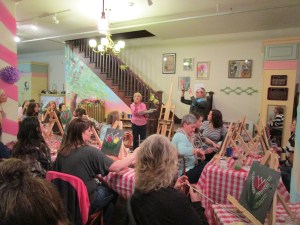
Back to Presque Isle for supper with the MALI Teacher Leaders who planned the workshop I was attending the next day including Sue Beaulier who teaches Art K-12 in Ashland, Josh Bosse (and his lovely wife), Music PK-12 in Madawaska, Leadership Team member, Pam Kinsey, Music K-12 Easton, and Theresa. After supper we stopped into the Wintergreen Arts to see the center filled with 31 adults painting as part of a fundraiser, Sip and Paint.

IMG_2144

Jake Sturtevant presenting long distance

The next day I headed west for the MALI Mega Workshop at the beautiful Ashland School. Students were in session but you couldn’t tell. The school is laid out beautifully and the rooms are lovely places to work. Thanks Sue for hosting. It was a wonderful day with the following workshops offered:

  • Critical Thinking in the Art Room – Sue Beaulier
  • Individual Assessments in an Ensemble – Jake Sturtevant, joining electronically
  • GT Toolbox: Tools for the GT Classroom – Josh Bosse
  • Changing the Way We Think About Special Ed. Students
  • Studio Habits of Mind: Planting Seeds Towards Growth and Proficiency in the Arts – Theresa Cerceo

IMG_2147The day was complete with a discussion on PBE to learn where arts teachers in the County are on the continuum. And, two woman from the Partners in the Arts Presentation shared information about the organization and encouraged teachers to apply for grant funding.
IMG_2157

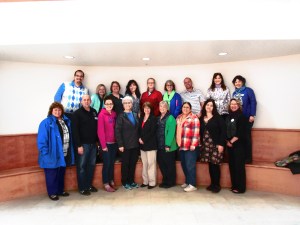
MALI Mega participants

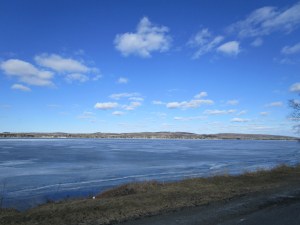
Lunch was delicious and the company was wonderful! Congratulations to the MALI Teacher Leaders and to Dave Ouellette from CACE who planned a great professional development opportunities for their colleagues in the County. The drive to the County is far but it is well worth the distance. I learned a great deal and had fun talking with folks about their arts education program. I had never been that far northeast but I must say the trip was so beautiful, especially along Long Lake (ice still on) in St. Agatha. I still need to get to Madawaska – next trip to the County (Josh!).

Long Lake

Long Lake

h1

Another Arts Teacher’s Story: Trevor Marcho

May 10, 2016

Teacher Leader series

MALI_V1_Color_100ppi

This is the ninth blog post of the Maine Arts Leadership Initiative (MALI) Phase 5  Teacher Leader stories. This series contains a set of questions so you can learn a little bit about the work they are doing as Maine arts educators. CLICK HERE for more information on MALI. CLICK HERE for more information on the 73 of the MALI Teacher Leaders. CLICK HERE for Arts education resources. Search in the “search archives” box on the bottom right side of this post for past stories. There have been 68 posted to date.

Screen Shot 2016-05-09 at 8.43.09 PMTrevor Marcho has taught instrumental and choral music at Mattanawcook Academy in Lincoln for six years.  He also co-conducts the Bangor Symphony Youth Orchestras and teaches private music lessons at Main Street Music Studios in Bangor. He is a graduate of the University of Maine, where he also teaches MUE 217, Brass Methods to undergraduate music education majors.

What do you like best about being a music educator?

I love working with the kids on something that takes a long time to develop. I appreciate seeing that long, slow improvement on skills that only comes from practice and revision, and I think that mindset helps students foster an appreciation for quality and goal-setting.

What do you believe are three keys to ANY visual and performing arts program?

  1. Love for your art form
  2. Charisma
  3. Drive

How have you found assessment to be helpful in your classroom?

The work I’ve done around assessment in the last few years has really helped me to be more organized, and given me a way to provide meaningful feedback in a concrete way. I do a lot with self-assessment, and the students find it to be a way to take ownership in their playing.

What have been the benefits in becoming involved in the arts assessment initiative?

The biggest benefit for me has been to collaborate with other like-minded teachers and artists from around the state to improve what I do, and offer my expertise to others looking for improvement in their assessment practices.

What are you most proud of in your career?

I think I’m most proud of the work my district has done over the last few years. I teach in a small school, where kids are over-extended with activities and sports. They don’t have the time, or will to add to that by practicing their instruments outside of school. Keeping this in mind, I build practice time into our rehearsals and give them skills-based exercises to complete. The freshman, in particular, make huge strides in a semester, and can now play music that would have been impossible for them a year ago.

What gets in the way of becoming a better teacher or doing a better job as a teacher?

I usually get in my own way! Staying the course can be very difficult in the current school climate. I sometimes have to lock myself away from other teachers and administrators and just focus on teaching music in order to avoid burn-out, and to remember why I’m here.

What have you accomplished through hard work and determination that might otherwise appear to at first glance to be due to “luck” or circumstances?

I have had the great opportunity to work with the Bangor Symphony Youth Orchestras for the last three years. I didn’t have any prior experience with string musicians or instruments, so just getting the job was a miracle, but I put the time-in and worked hard to learn the repertoire and the different techniques. I’m learning every day, and look for new things to improve at all times.

Look into your crystal ball: what advice would you give to teachers?

Don’t approach it as a job. This is what I do with my life. I am a music teacher because I love it. I seek out new techniques and constantly look for things to improve in my program. I strive to be the best that I can be because that’s what our students deserve. Don’t ever just slide by.

If you were given $500,000 dollars to do whatever you please, what would it be?

Upgrade all of my students’ instruments!

Imagine you are 94 years old. You are looking back. Do you have any regrets?

None! I am still learning to balance family life with teaching, but I’ll get there someday!

IMG_0087

h1

Thank You Teachers

May 5, 2016

Teacher Appreciation Week

imagesI hope that you receive the shiniest and most delicious apple this week from someone who really cares about you. If you don’t, please imagine me presenting you one with a giant hug and a THANK YOU! I know that the path of educational excellence is through teachers who have taken on the challenge and joys of teaching.

Many of you know that I am supportive of the shift to a focus on the importance on leadership in education. Leadership takes on many forms. Some educators lead within their classroom to expand students horizons, always striving to find new ways to help students succeed. Others take on leadership responsibilities within their schools and/or districts. The Maine Arts Leadership Initiative (MALI) has provided multiple opportunities for educators to step up and take on leadership roles. I believe that everyone has the potential for leadership. I’ve seen plenty of examples of teachers who join MALI and find their voices and go back to their districts and are given leadership roles. They are invited to sit at the table and participate in conversations that are game changers. MALI recognizes and celebrates the good work that Maine educators are doing in their classrooms across the state.

MALI_V3_Color_100ppiThis Friday is the deadline for two MALI opportunities. One is for PK-12 visual and performing arts teachers to apply to be a MALI Teacher Leader. The details of what this involves are located at https://meartsed.wordpress.com/2016/04/14/calling-all-teacher-leaders-3/ in a blog called Calling All Teacher Leaders. The second opportunity is for Teaching Artists to become Teaching Artist Leaders (TAL). The details and what this involves are located at https://meartsed.wordpress.com/2016/04/16/calling-teaching-artist-leaders/ in a blog called Calling Teaching Artist Leaders. The second is new territory for MALI and I am excited about the possibilities! Please be sure and email me at argy.nestor@maine.gov if you have any questions about these professional development opportunities.

Screen Shot 2016-05-03 at 4.39.08 PM

Maine’s 2016 Teacher of the Year, Talya Edlund (in blue)

MALI is fully committed to leadership since the impact of influencing leaders is making a huge difference at the district and school level due to the commitment of Teacher Leaders. Ultimately the work of the MALI Teacher Leaders is impacting students education in the arts!

On Tuesday, Talya Edlund, a third-grade teacher at Pond Cove Elementary School in Cape Elizabeth was honored as the 2016 Maine Teacher of the Year, along with teachers from every state at a White House ceremony with President Obama. The ceremony recognized the National Teacher of the Year, Jahana Hayes, a history teacher from the John F. Kennedy High School in Waterbury, CT. During the ceremony President Obama shared this quote that I love by President John F. Kennedy.

“Our progress as a nation can be no swifter than our progress in education. The human mind is our fundamental resource.”

Screen Shot 2015-01-29 at 7.44.17 AMEveryday each teacher has the potential to influence and shape our nation by the teaching you do. Our young people are our greatest resource and we owe it to them to be the best that we can be at teaching. Thank you for the amazing work you do inspiring and changing student’s lives, going above and beyond day in and day out, for the long days you put in, for the collaboration with your colleagues, the interactions with parents, and for all the things you do as a teacher that go unnoticed. My appreciation for you goes deep and wide – THANK YOU!

h1

Another Arts Teacher’s Story: Nancy Kinkade

May 4, 2016

Teacher Leader series

MALI_V1_Color_100ppi

This is the eighth blog post of the Maine Arts Leadership Initiative (MALI) Phase 5  Teacher Leader stories. This series contains a set of questions so you can learn a little bit about the work they are doing as Maine arts educators. CLICK HERE for more information on MALI. CLICK HERE for more information on the 73 of the MALI Teacher Leaders. CLICK HERE for Arts education resources. Search in the “search archives” box on the bottom right side of this post for past stories. There have been 67 posted to date.

IMG_2438Nancy Kinkade presently teaches in RSU #67: 5-6 general music (150 students), 6-8 choral music (68 students), beginning band, 6th  grade band and ⅞ band (65 students). I was hired 25 years ago in RSU #67 as an elementary music teacher EK-5 (525 students).  My position was eliminated four years ago and she was able to shift to the 5-8 general music & 6-12 choral position (450 students). Last year her school district suffered yet another cut/restructure to the music department which provided the opportunity for Nancy’s present position.
What do you like best about being a music/art/dance/drama educator?

I have always loved sharing music with the students. That incredible sensation when beautiful harmony fits just right, doing a great performance, seeing someone just so happy that it is music day, having a student ask to stay after school to practice, having 56 kids play ukulele and sing a song at the same time!! I guess it is the little things that are hard to measure. Perhaps my favorite thing about being a music teacher is making sure that students have music in their lives.

What do you believe are three keys to ANY visual and performing arts program?

  1. Belief in the program
  2. Administrative support
  3. Time in the schedule

How have you found assessment to be helpful in your classroom?

The assessment movement has created a measurement of success on paper that some people needed to have to give validity to the arts. It has also given us as educators a tool to see where students and teachers need to improve in teaching and learning. It has created clarity to help improve our teaching and to defend what we teach.

What have been the benefits in becoming involved in the arts assessment initiative?

Being a part of MALI has created a great network of people to share ideas, questions and concerns. I am still at the beginning of really utilizing assessment in my new position, but know that MALI and the people I have met will be there to help me improve my teaching and program.

What are you most proud of in your career?

My proudest moment teaching was a few years ago.  In fourth grade we put on the musical Pirates. The entire fourth grade team and “specials” adopted the theme and ran with it. There was Pirate Math with gold coins, a special reading week and so many other great things. We were able to provide t-shirts and bandanas to all the children. The support staff were there in costume putting beards on the students. My Pirate Principal was there opening stages and helping where needed. It was truly a team effort! The music was great, but it was more the fact that so many people were a part of it and supported it that made it so special!

What gets in the way of becoming a better teacher or doing a better job as a teacher?

Scheduling and lack of support seem to be the biggest hurdles. You can’t teach children you can’t get in your room! If you don’t have the support of administration to give you those children then your program is doomed. With the cuts to our music/art positions, we have seen a huge impact on the quality of art and music the students are producing. Elementary music and art were reduced 5 years ago, now the effects are showing at the middle and high school levels. There is also a different attitude towards the arts. You can feel it isn’t valued in administration so it is starting to show in the students.  Sadly, we are losing the arts culture.

What have you accomplished through hard work and determination that might otherwise appear to at first glance to be due to “luck” or circumstances?

The Music and Art teachers in our district are making our programs successful despite the eliminations. Because these teachers are so dedicated and hardworking, the programs are persevering. In a way, this is too bad because it makes the people who cut the programs think they were right in their decision making. It is kind of a “Catch 22”.

Look into your crystal ball: what advice would you give to teachers?

If at all possible, work in a place where you are appreciated and valued. Be happy and work hard. Enjoy what you do, work with the other people in your district to make a cohesive arts community and a higher quality of education for the students.

If you were given $500,000 dollars to do whatever you please, what would it be?

Create an “arts” center. I would probably need more money, but a place where students could sing, act, play, move and enjoy guest artists. There would also be technology involved, but I would love to create a “real” theatre with teaching and performing spaces.

Imagine you are 94 years old.  You are looking back.  Do you have any regrets?

Right now, my regret is the loss of the program we had. When I am 94, I hope my reflections is that this was a dark period, but something great came after it!

IMG_0087


h1

Survey Closing

May 3, 2016

Tonight at midnight

On December 15, 2016 I sent the following message to the Maine Arts Education community:

I am soooooo excited to announce that the Maine Arts Commission has launched the Statewide Arts Education survey which you will be hearing a great deal about in the next few months. We are thrilled that we are partnering with PK-12 Arts educators, Maine Art Education Association, Maine Music Educators Association, Maine Principals’ Association, Maine Department of Education, Maine Alliance for Arts Education, and the New England Institute for Teacher Education.

Here we are four and a half months later and about to close the survey (tonight at midnight). The collection of information has been outstanding. As of this morning, 94% – 556 schools have submitted the survey. This success is because many of you have contributed! THANK YOU seems to small to express how appreciative the Maine Arts Commission is to everyone who has contributed. We are grateful to the visual and performing arts teachers, the census steering committee, principals who submitted the survey for the school, superintendents who urged principals to complete the survey, other educators, teaching artists, parents, community arts organizations, and the many other community members who made phone calls, sent emails, and communicated.

Screen Shot 2016-05-03 at 8.00.23 AM

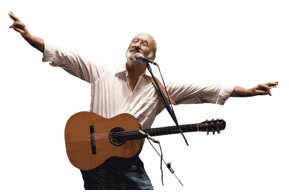
A large part of this happened thanks to 15 Maine Arts Leadership Initiative Teacher Leaders who served as ambassadors and contacted school personnel. And, Noel Paul Stookey who serves as the census Champion has been amazing. He wrote a letter and created a song/video inviting principals to complete the survey. Many participated due to his message. I am grateful for everyone’s involvement!

Washington superintendents region schools reporting – 100%. Aroostook and York regions – 98%. Hancock and Mid-Coast – 97%. Cumberland and Kennebec Valley – 95%.

Screen Shot 2016-05-03 at 8.04.54 AM

Noel Paul Stookey

This work reflects a strong collaboration and is a clear message to me about how much people in Maine care about the future of visual and performing arts education for all learners! The next steps are being done by the census consultant who will be collecting anecdotal information from educators throughout the state. If you are interested in being interviewed for this part of the census please contact me ASAP. Everyone will not be able to participate but we are looking to collect from our diverse population.

By the middle of the summer we should have a report and a draft plan for how to put the report into action. Over the next year we will be putting the information into the hands of policy makers. Of course, the blog will have the information/details. This could be an opportunity for you to help guide and strengthen arts education at the local level.

We do have about 30 schools who have not completed the survey. If you are wondering if your school is one of them please go to https://mainearts.maine.gov/Pages/Education/Arts-Education-Census-Status (not updated with the latest as of 8:15 AM) and check the list of who has completed the survey. Thank you to each and every blog reader who has helped with the statewide census!

h1

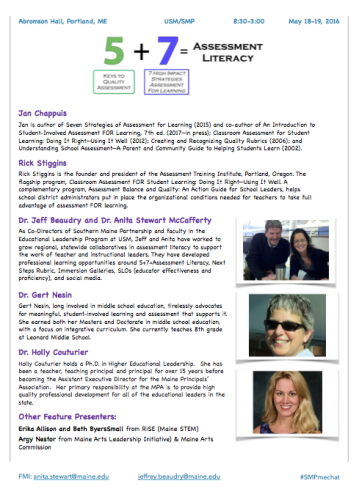
Southern Maine Partnership

April 29, 2016

Learning opportunity at USM – two day conference

Screen Shot 2016-04-25 at 6.17.34 AM

Screen Shot 2016-04-25 at 6.18.04 AM

Screen Shot 2016-04-25 at 6.18.16 AM

h1

Another Arts Teacher’s Story: Holly Leighton

April 27, 2016

Teacher Leader series

MALI_V1_Color_100ppi

This is the seventh blog post of the Maine Arts Leadership Initiative (MALI) Phase 5  Teacher Leader stories. This series contains a set of questions so you can learn a little bit about the work they are doing as Maine arts educators. CLICK HERE for more information on MALI. CLICK HERE for more information on the 73 of the MALI Teacher Leaders. CLICK HERE for Arts education resources. Search in the “search archives” box on the bottom right side of this post for past stories. There have been 66 posted to date.

Screen Shot 2016-04-20 at 8.42.57 PMHolly Leighton has been an elementary art teacher at the Ella P. Burr School in Lincoln for 17 years seeing 400+ students weekly. This year she moved to the district’s high school, Mattanawcook Academy, where she is the art teacher with 92 art students from grades 9-12. (RSU 67) Holly’s main responsibilities are teaching six 70 minute classes and covering the visual art standards.

What do you like best about being a visual art educator?

I love working with the students and watching their confidence in their art abilities grow. When I have a student that feels they “just aren’t good in art” I make it my mission to help them find their strengths and show them their growth as they go. When they begin to show pride in their art, embrace new media eagerly, and start thinking outside the box, I feel I have done my job well. It is very fulfilling and makes me feel proud to hopefully be making a difference in student’s lives.

What do you believe are three keys to ANY visual and performing arts program?

I believe it requires teachers that are knowledgeable and passionate about teaching the arts and understands and loves working with students of all ages. I believe there has to be support from the administration, school board, and community. I believe we have to build strong art programs and continually advocate for them.

How have you found assessment to be helpful in your classroom?

I like to use formative assessments to track student’s growth and guide my teaching. I like to make sure each student knows where they are and where they need to go next in their learning. I have students do self-reflections on their artwork using the critical analysis process. I feel it makes students really think about their art, gives it importance, and makes them proud of what they have done.

What have been the benefits in becoming involved in the arts assessment initiative?

Confidence! I was very unsure about how effectively I was using assessments in my classroom. After attending the conference in the fall I realized many of the others felt the same and we are on the right track. I learned so much from the others, creative resources for assessing in the arts, confidence in using my voice, and that we all have good ideas and need to share them. I have become a much more confident teacher.

What are you most proud of in your career?

I am proud of whom I have become through my years of teaching and this has happened because of the many dedicated colleagues that have mentored and encouraged me on my way. I consider myself a good teacher that cares about the students and really wants them to succeed in life.

What gets in the way of becoming a better teacher or doing a better job as a teacher?

For me it is time. Teachers are expected to spend so much time on new initiatives, trying new programs to improve the way we do things, meetings, and duties. We need to have time set aside on early release and workshop days to work on curriculum and standards, reflect on our teaching, and the multitude of other things that have to be done to keep our programs running effectively.

What have you accomplished through hard work and determination that might otherwise appear to at first glance to be due to “luck” or circumstances?

I have always tried to find ways to bring the students to the arts and artists to the classroom. We have had authors, illustrators, drama and dances teachers, and musicians come preform and/or teach in the classrooms. We have had multiple field trips to the Portland Museum of Art, Colby Art Museum and University of Maine Museum of Art. With help from my arts colleagues, I arrange these events at little or no cost to the district through grant opportunities and foundations. It is a lot of work and sometimes seems to just happen to others. I do it because I feel it is important for students in our rural area to experience the arts first hand.

Look into your crystal ball: what advice would you give to teachers?

Reach out and network with others. Join state and national organizations and be an active member. There is a wealth of resources out there to help with funding for field trips to the arts, to bring working artist to your schools and professional development opportunities for yourself.

If you were given $500,000 dollars to do whatever you please, what would it be?

I would go on vacation and travel to all the places here and overseas that I have wanted to see. I would pay off our home and fix up our family’s summer camp on the lake. With the rest I would fund a ceramics studio for our art program.

Imagine you are 94 years old. You are looking back. Do you have any regrets?

No. I use to have regrets, but finally realized that choices I have made have led me to be who I am today, my family, friends and work ethic. I believe the choices we make in the past lead us in different directions and where I had ended up at this point in my life, I couldn’t be happier.

IMG_0087

h1

R.S.V.P. ME

April 24, 2016

April 26

Screen Shot 2016-03-20 at 2.26.22 PMPlease join Maine educators on Tuesday, April 26th, 3:30 to 5:00 for the last R.S.V.P. ME meeting of the 2015-2016 school year.

This virtual meeting will be a roundtable discussion about how teachers are creating paths to Proficiency-Based Education. Across the state teachers are developing programs to help students adjust to the new demands of Proficiency-Based Education as independent and self-directed learners. This zoom meeting is to provide you with strategies to adjust to the teaching and learning environment. Sign up to share them on Tuesday, April 26th!

To participate in this Zoom Online Video Conference – and earn 1.5 contact hours as a Maine Art Education Association member – email lisa.ingraham@msad59.org. You can also contact me anytime with questions and comments.

*The April R.S.V.P. ME meeting has been moved from April 12th to April 26th.