Posts Tagged ‘MALI’

h1

Measure of Success!

September 9, 2015

Early-bird registration deadline looming

Tomorrow, Thursday, September 10 is the DEADLINE for the early-bird registration for the upcoming exciting professional development opportunity:

Statewide Biennial Arts Education Conference

The MEASURE of SUCCESS

Friday, October 9, Point Lookout Conference Center, Northport

8:30 a.m. to 4:00 p.m.

The conference offers a rich choice of workshops facilitated by some of Maine’s finest educators and artists. http://mainearts.maine.gov/Pages/Education/Biennial-Statewide

TO REGISTER PLEASE GO TO:

http://mainearts.maine.gov/Pages/Education/Biennial-Statewide-Register

Please join us in celebrating arts education!
Register by September 10 – Early Bird

$90.00 payment can be made with a school purchase order, check, or credit card.
$10.00 for undergraduate students with a valid student ID.

Register after September 10
$100 for any payment received after September 10.
$125 for Walk-in registration.

If you need a letter of support to use in your request to your administrator/district to attend please go to http://mainearts.maine.gov/CMSContent/arts_in_education/Biennial_Statewide/MALI_Letter_of_Support.pdf.

MALI_V1_Color_100ppiThe conference is sponsored by the Maine Arts Leadership Initiative (MALI), a program of the Maine Arts Commission (MAC). To view the resources developed by MALI please go to http://www.maineartsassessment.com/. To learn more about the MAC please go to https://mainearts.maine.gov. To learn more about the MAC arts education programs please go to https://mainearts.maine.gov/Pages/Education/Arts-in-Education.

QUESTIONS about anything above please contact Argy Nestor at argy.nestor@maine.gov.

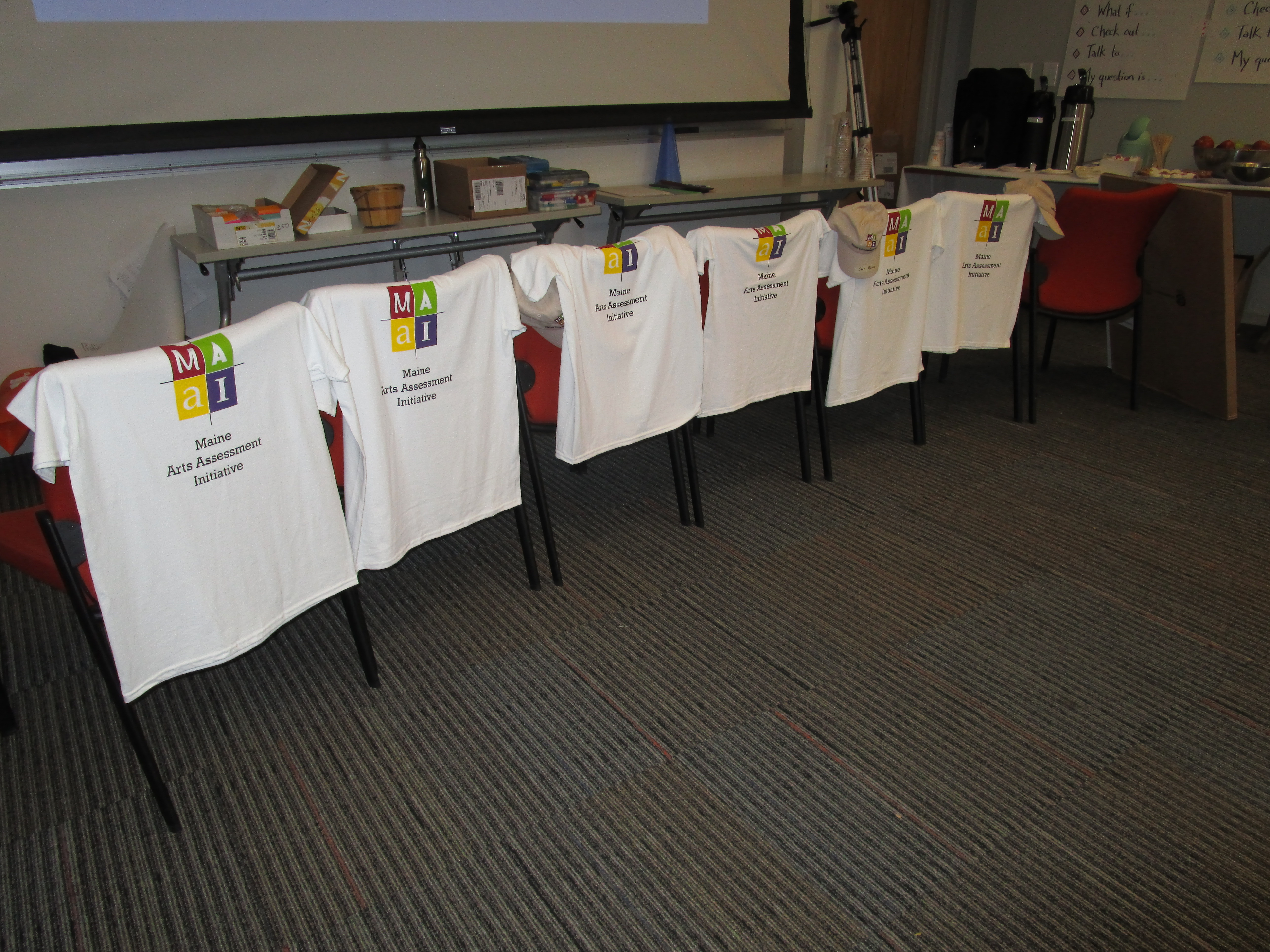
Please note: On August 3, 2015, MAAI, the Maine Arts Assessment Initiative, announced its new name, MALI, the Maine Arts Leadership Initiative. You can read about it at https://meartsed.wordpress.com/2015/08/09/maai-goes-to-mali/. Please email Argy Nestor if you have any questions at argy.nestor@maine.gov.

h1

Rob’s Talking

September 2, 2015

When a former student speaks, listen up

Thank you to Rob Westerberg, music educator from York High School and co-founder of the Maine Arts Leadership Initiative (formerly known as the Maine Arts Assessment Initiative), who provided the following blog post.

Katrina Faulstich is a former student teacher of mine and choral director at Bedford High School in Massachusetts. She has been doing some course work for her Masters degree down in Connecticut this Summer. As part of that work she submitted a paper for her Measurement and Evaluation class called, “The Use of Recordings to Assess Individuals in High School Chorus”. If you are not a high school choral director, don’t stop reading – this is one of the most informing pieces of writing I’ve come across in awhile. There are takeaways that translate to every music educator regardless of age group or specialty. To be sure, Katrina lays out her plans for assessing individuals in her program. And they are really cool. But there is so much more going on here and it’s a game changer when you look at it through a finer lens. She concludes her opening paragraph with the statement, “With so many changes affecting education, teachers must remember to do what is best for student learning and achievement.” Ya think? My takeaways from her paper:

  • We always cry foul when colleagues and administrators marginalize academic music programs, but research shows that they have every right to. J. A. Russell and J. R. Austin (2010): “researchers examining assessment practice in secondary music classrooms found that attendance and attitude were the most common grading criteria employed by instrumental and choral music teachers” (“Music Assessment Research,” para. 3). If this statement were true for any other teacher in any other core subject area, they would be fired. And you know it. We’ve been doing it however – and getting away with it – for generations. The research found that music teachers on average based 60% of grade weight on non-achievement criteria. When MAAI (MALI) ran its first state conference in 2011, the debate we had on the Leadership Team was whether or not to include the word “assessment” in it, the argument being that if we did it would scare arts teachers away. In retrospect, I don’t know which is scarier: that we were actually fearful about including the word or that we had reason to be.
  • We are too often guilty of assessing the skills of an entire ensemble over those of the individuals within. L.H. Tracy (2002): Two hundred and seventy four high school choral teachers completed a survey. (It was found that) teachers seemed to use personal philosophy to decide whether or not to assess individuals. In accordance with previous studies, Tracy found most teachers assess students on attendance, attitude, and effort. Tracey attributed this to the “‘teach as we are taught’ phenomenon” (p. 154). Most participants reported using in-class observations as a form of assessment, but Tracy stated this does not mean teachers know what individuals know and are able to do (Colwell, 1991, as cited in Tracy, 2002). Personal assessment “philosophy” has no place in 21st century classrooms. We know from a national standpoint as well as from an international standpoint that assessment of individual student growth is now a foundational expectation of every classroom teacher, period. We can get caught up too easily in state and federal mandates that carry this to an extreme with the “how oftens” and the “let’s standardize all this” filtering out the real issue here. There are effective ways of assessing that enhance and articulate student learning, and there are ways that don’t. That debate isn’t being held here. But to avoid individual assessment because of those and/or other filters that we allow to impact our choices? Inexcusable.
  • Tracy indicated many chorus teachers lack training in assessment and therefore do not use the best assessment practices. This was the foundational reason we formed MAAI 5 years ago. To date, we have provided professional development to over 1,200 arts educators here in Maine, provided by peers in the trenches fighting the same battles as everyone else. Though it is entrenched in research, all of it is foundational and practical so teachers can individualize their work based on their setting and available resources. Maine’s arts educators are running out of excuses on this one.
  • Individual assessment facilitates growth. Katrina alluded to a study in which students who were assessed on sight reading skills for instance showed significant improvement over those who were not assessed. We cannot look at assessment as something that “gets in the way of what I’m trying to do” any longer. Conceptually, curriculum, assessment and instruction must be an integrated entity. When we divide these elements like slices of pie we miss out on the real power of each. Our students benefit when we transparently link them in a thoughtful, sequential and systematic way. Research supports this for every other core subject area, and it supports it for the arts as well.
  • Many teachers justified the lack of individual performance assessments by claiming teachers do not have time to assess each student during class time. Kotora suggested researchers look into teachers’ use of computer, audio, and video technology to assess individual students in chorus. I literally refer to my career as the years I taught before attending the Hartford, Connecticut MENC Eastern Division Conference in February 2007, and the years I’ve taught since. That was when I discovered Smartmusic. I’m not a Smartmusic shill, and I don’t believe it’s the best technology for every situation. Far from it. But through Smartusic I found a way to assess every individual in my chorus. At the time I had 230 singers in a school of 650 with NO way to individually assess them. Technology changed that, and transformed my courses, my curriculum, my instruction and, most importantly, my students learning. Mind you, that was eight and a half years ago. The vast landscape of technology at our fingertips now offers astounding opportunities for individual assessment in the large group setting.
  • We need to listen to our newer colleagues to the profession. Katrina is a great example of this. She prefaces her paper with the statement that she already utilizes individual assessment in her classroom, but she’s not satisfied with her strategies. She already does it but isn’t satisfied! How many times have we as veteran teachers filtered out valuable growth opportunities with a wee small voice on the inside of us that says as a rebuttal, “but I’ve always done it my way and it works?” To satirize the meme that is often used in social media these days, “But I’ve always done it my way and it works”, said no beginning teacher ever. Katrina and her classmate Kaitlin Young, Drew and Ashley Albert, Jen Etter, Jen Nash, Jake Sturdevant. I wrote my own blog post a couple of years ago on this topic (http://goobermusicteachers.com/2013/03/02/nothing-to-learn-from-beginning-teachers/) and feel even stronger about it today than when I wrote it. Inexperience = searching. And perhaps that’s something we can all give them more credit for.

There’s much more in Katrina’s paper and it’s worth the read. Working with data and educational studies can be very dry. But from that work can be mined some essential truths. “Assessment based on curricular objectives is important if music education is to be perceived as a legitimate subject” (Shuler, 1990, as cited in Kotora, 2005, p. 73). Choosing to ignore research, best practices, new ideas and new strategies for music instruction is an option. It is. But doing so will inevitably lead to the demise of our programs and of our profession, and research supports this. The 2015-2016 school year is a perfect opportunity for each of us to move our assessment work forward in whatever capacity is available to us in our own schools. Not the state, not the DOE, not NAfME, not your administrators, not MALI, but your STUDENTS will be the beneficiaries. And that’s why we’re here to begin with, isn’t it?

Fortunately for us Katrina’s paper is available on the Maine Arts Assessment Resources website at http://media.wix.com/ugd/4747f3_fd6b4c29ecbd434cb73884fa7b3be72a.pdf.

h1

Rock Stars!

September 1, 2015

Great stuff happening with Arts educators and Arts education!

Photo on 8-25-15 at 2.44 PM

Sue Barre’s colleagues on the first workshop day: Strings Teacher Ciara Hargrove, Digital Arts Teacher and MALI Teacher Leader and Leadership Team member Suzanne Goulet, Strings Teacher Sam Lyons, and art teacher Dave Matteson

Everyday I hear about the focus and commitment that Maine Arts Educators have about teaching and to their students. The following all happened on the same day. YES, these made my day – I am so proud of the work that Arts educators do for the sake of their PK-12 students! These teachers are all making a difference and carry the sign ROCK STAR! in my book!

  • Sue Barre sent this early one morning… “In the opening school assembly today the Superintendent told everyone to look to the music document for guidance… kinda cool!” CONGRATULATIONS to Sue who teaches music in Waterville Schools and is a Teacher Leader with the Maine Arts Leadership Initiative (MALI). In addition, Waterville High School VPA teachers (seen in the photo to the right) established this goal: “We made a VPA goal to have all students in our Waterville High School VPA classes do at least one reflective writing assignment and then share those at a faculty meeting this year.”  Awesome work team!
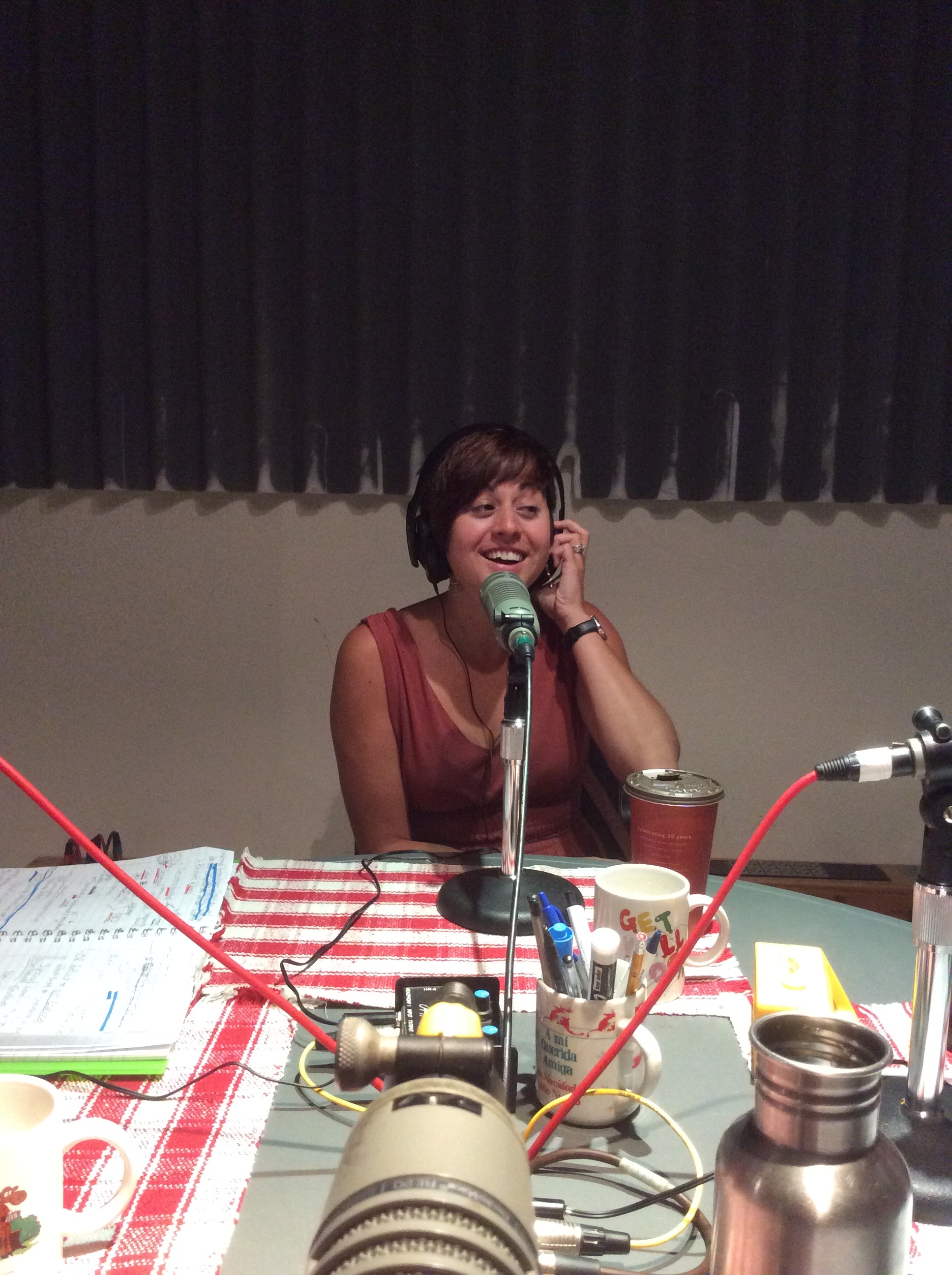
  • jen - Version 2Jen Nash was on WERU morning show called Arts Alive and was a ROCK STAR! Jen was articulate and represented arts educators across the state…. Jen teaches music at Sebasticook Middle School and is an MALI Teacher Leader.
  • Theresa Cerceo is a MALI Teacher Leader who teaches K-12 Visual Art in Dr. Levesque Elementary School, Wisdom Middle/High School, MSAD 33 (all the way up in the County). Her Logic Model plan for her work as a Teacher Leader this year, involves advocacy work with students. In her own words: “I started working with my students today on advocacy work. I had K – 12 come up with possible blog titles and the high school art club created the, “Student Leaders in the Arts Movement” or S.L.A.M.!  We will have a meeting at the start of every art club meeting (once a week).  We had a great talk about the importance of messaging why the arts are essential. They had a lot of great ideas and really took ownership of the project. We have a board going for all the different activities we will work on. They are excited!” (There will be more information about this in the near future. Theresa is piloting this idea and will gladly share more with you about this in the months to come!)
Students (l to r): Daley Pedersen, grade 11 Elizabeth Raymond, Grade 12, Adam Weyneth, Grade 12, Jasmine DeMoranville, Grade 11, Sarah Harris, Grade 12, Dorothy Harris, Grade 10, Cassandra Boucher, Grade 10, Celine "Ce Ce" Young, grade 12

Students (l to r): Daley Pedersen, grade 11, Elizabeth Raymond, Grade 12, Adam Weyneth, Grade 12, Jasmine DeMoranville, Grade 11, Sarah Harris, Grade 12, Dorothy Harris, Grade 10, Cassandra Boucher, Grade 10, Celine “Ce Ce” Young, grade 12

  • Joshua Bosse is the PK-12 Music Teacher in Madawaska and a new Phase 5 MALI Teacher Leader and put this message on the MALI community wiki: “I would like to take the time to just say that I appreciate what each and every one of you have been doing for MALI and for your school districts. With school already starting for me, I can say that I have already seen a dramatic change in my teaching (for the better). I feel that MALI has done great things for me, and I am more excited than ever to be teaching students what I love most! Again, thank you so much for all that you have done, and I hope you all have a wonderful school year, and that all of your workshops go well! I saw a lot of great plans! I will definitely be keeping in touch throughout the school year, and I am so overjoyed about being able to be part of this wonderful organization!”

When you find yourself asking yourself the hard questions about your chosen career field, know that you are not alone! I suggest that you “get off your island” and attend a MALI event to connect with spirited Teacher Leaders. And, join us at the fall biennial arts conference, Arts Education: The Measure of Success, October 9, Point Lookout Conference Center. Information and registration (early-bird through September 9) is located at http://mainearts.maine.gov/Pages/Education/Biennial-Statewide. MALI resources located at http://www.maineartsassessment.com/.

h1

MLR Guiding Principles

August 27, 2015

Interesting day

us

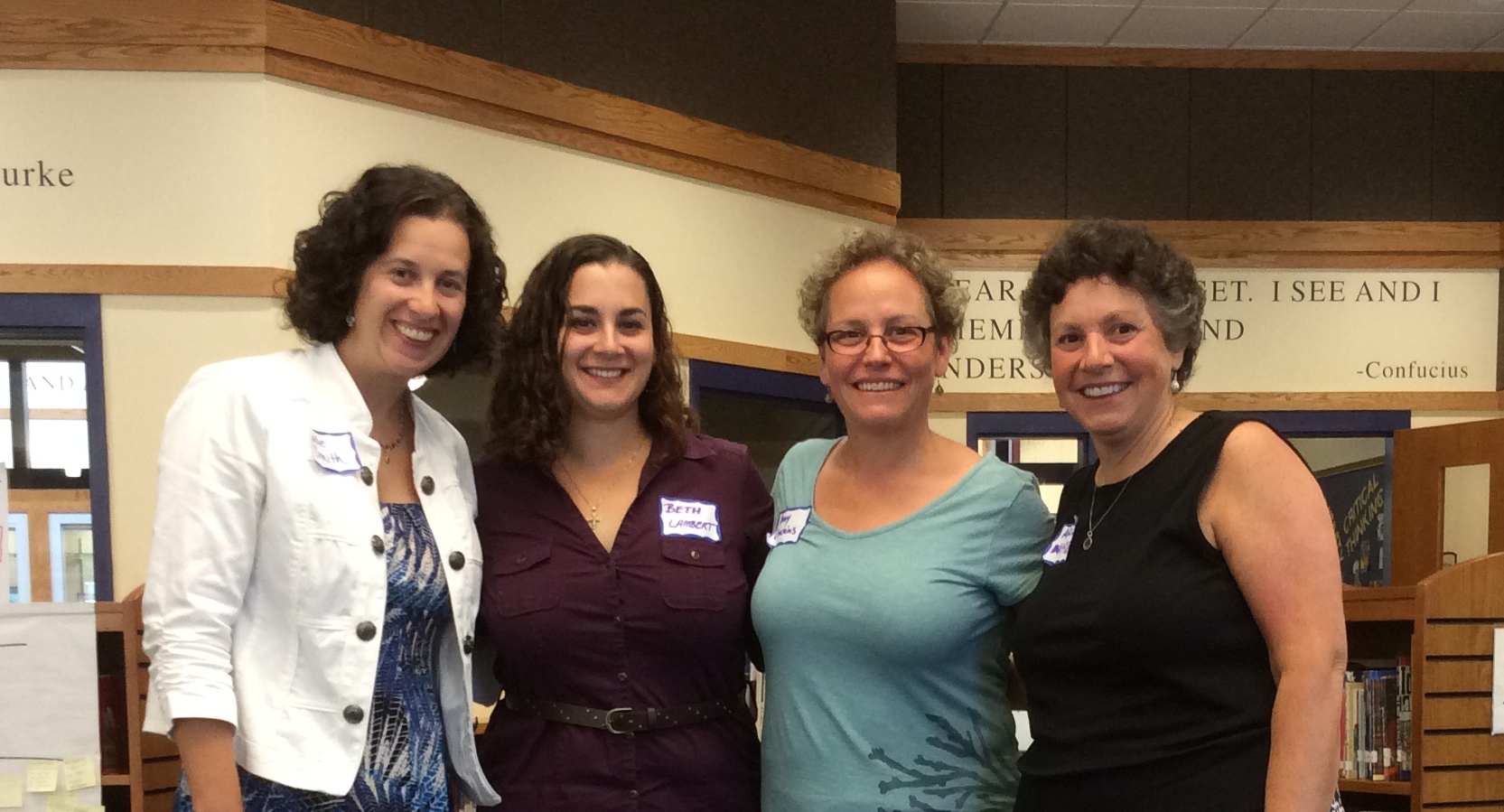
Kate, Beth, Amy, Argy

The Maine Arts Leadership Initiative (MALI) Teacher Leaders, Amy Cousins, Visual Art, Gorham Middle School, Kate Smith, Music, Central School, South Berwick and Beth Lambert, Performing Arts from Carrabec High School joined me today to do work on the Guiding Principles for the Maine Department of Education. It was a wonderful learning opportunity. We had a chance to contribute our ideas to the framework draft. MALI has done work on the topic and included it in the online resources located at http://maairesourcebank.pbworks.com/w/page/82916230/MAAI%20Resource%20Bank. I look forward to sharing the Developmental Frameworks document in the future.

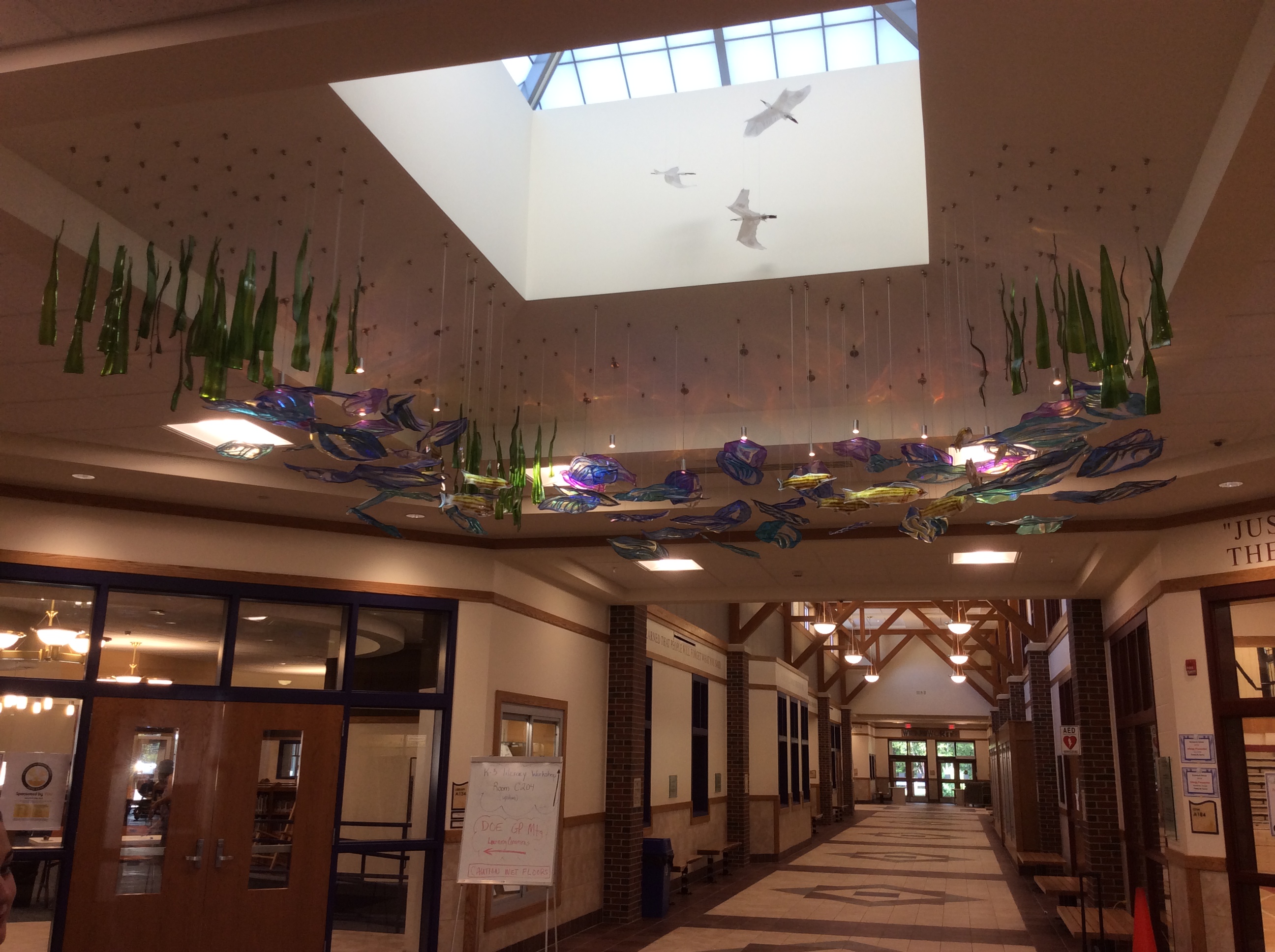
sculpWe met at the beautiful Benjamin F Wentworth Intermediate School in Scarborough. The entrance has a beautiful dichroic glass hanging sculpture created by artist Michelle Gutlove. I hope that you will have a chance to visit the school in the future.

We all know how well the work we do in our visual and performing arts classrooms connects directly with all of the Guiding Principles. I am curious about how many of you are intentionally measuring them? Students will need to demonstrate their understanding of the GP as part of the proficiency-based high school diploma. Please let me know if you are doing this work and/or where your school district is in this process.

Imagine our surprise when driving home we spotted a large animal on a car in the distance. We were so excited to see the cat! And, when we got closer noticed that the car is from Acro-cats. Not sure where they were headed but they made my day! Check them out at http://circuscats.com/.

road catcat


h1

Welcome Back!

August 25, 2015

2015-16 School year

Summer 2015 2nd group

MALI Summer Institute, August 3-5, 2015, USM, Portland

It’s back to school time and the air is changing. Whether you are in full swing with teaching or in your classroom preparing for students or perhaps waiting at home for the first day with “kids”, I know that the school year is upon you in some form.

I can sense that it is going to be a great year for visual and performing arts education in Maine! The Maine Arts Commission has been busy all summer supporting the work of Maine Visual and Performing Arts Education. Read below just a few of the ways in which MAC is doing just that:

  • It’s official, on August 3, the Maine Arts Assessment Initiative became the Maine Arts Leadership Initiative during the opening at the summer institute. Read about the shift at https://meartsed.wordpress.com/2015/08/09/maai-goes-to-mali/.
  • In addition to the name change MALI sent a representative team to the Teach to Lead Summit in Washington, D.C., July 22-24 sponsored by the US DOE and the National Board. The experience launched us into phase 5 in an amazing way. We found ourselves at the same table with Secretary of Education Arne Duncan. Read about it at https://meartsed.wordpress.com/2015/07/25/teach-to-lead/.
  • On August 3-5 the MALI summer institute took place at USM, Portland campus. It was a fabulous learning opportunity where 12 new Teacher Leaders created an action plan that is turning into a workshop to be presented during the 2015-16 school year across Maine. This brings the total of Teacher Leaders to 73! You can read about the Teacher Leader work at https://meartsed.wordpress.com/2015/08/13/teacher-leaders/.
  • The veteran Teacher Leaders used a Logic Model to guide their work. Starting with a “problem” they created a plan that they will take action on during the next several months. Pretty amazing work!
  • The biennial fall arts ed conference is happening on Friday, October 9, Point Lookout Conference Center, Arts Education: The Measure of Success. Early bird registration and detailed information is at http://mainearts.maine.gov/Pages/Education/Biennial-Statewide.
  • Fourteen Teaching Artists participated in one day of the MALI summer institute – what a treat to have so many in one location. Read about their participation at https://meartsed.wordpress.com/2015/08/12/teaching-artists/.
  • The Teaching Artist roster expanded this summer to a total of 40. You can read about the program and check out the roster at https://mainearts.maine.gov/Pages/Education/Teaching-Artist-Roster. Please consider contracting with one (or more) of these artists for your students during this school year. Another call for the roster will go out in the near future. Watch this blog and arts ed list-serv for the invitation.
  • The statewide visual and performing arts education census will be launched this fall and plans are underway to collect data from all 100% of Maine schools. Watch for more information because we will need everyone’s help to make this happen!
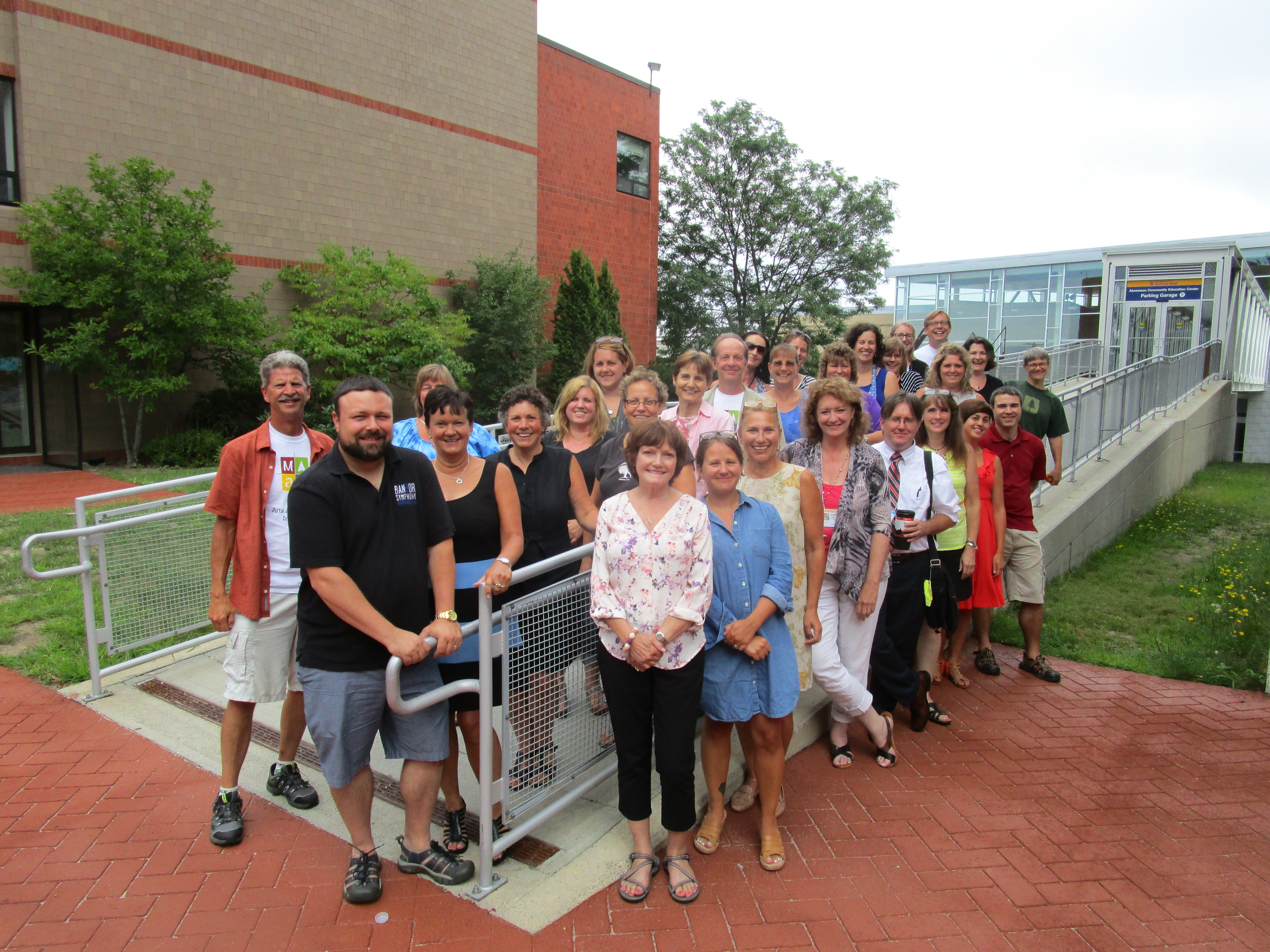
  • MALI had an incredible Critical Friend day with 45 educators attending including PK-higher ed teachers and administrators. Read about it at https://meartsed.wordpress.com/2015/08/22/mali-critical-friend-day/.

As you begin a new school year know that the MAC and MALI are here to assist you on your educational journey. More information on all of the MAC education programs can be found at https://mainearts.maine.gov/Pages/Education/Arts-in-Education.

h1

MALI Critical Friend Day

August 22, 2015

A great day in Portland!
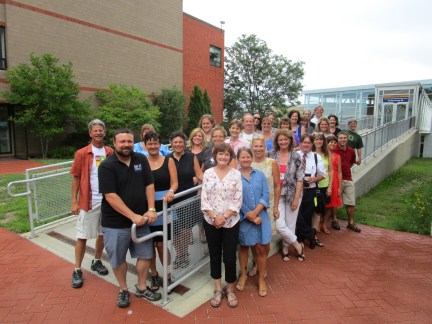
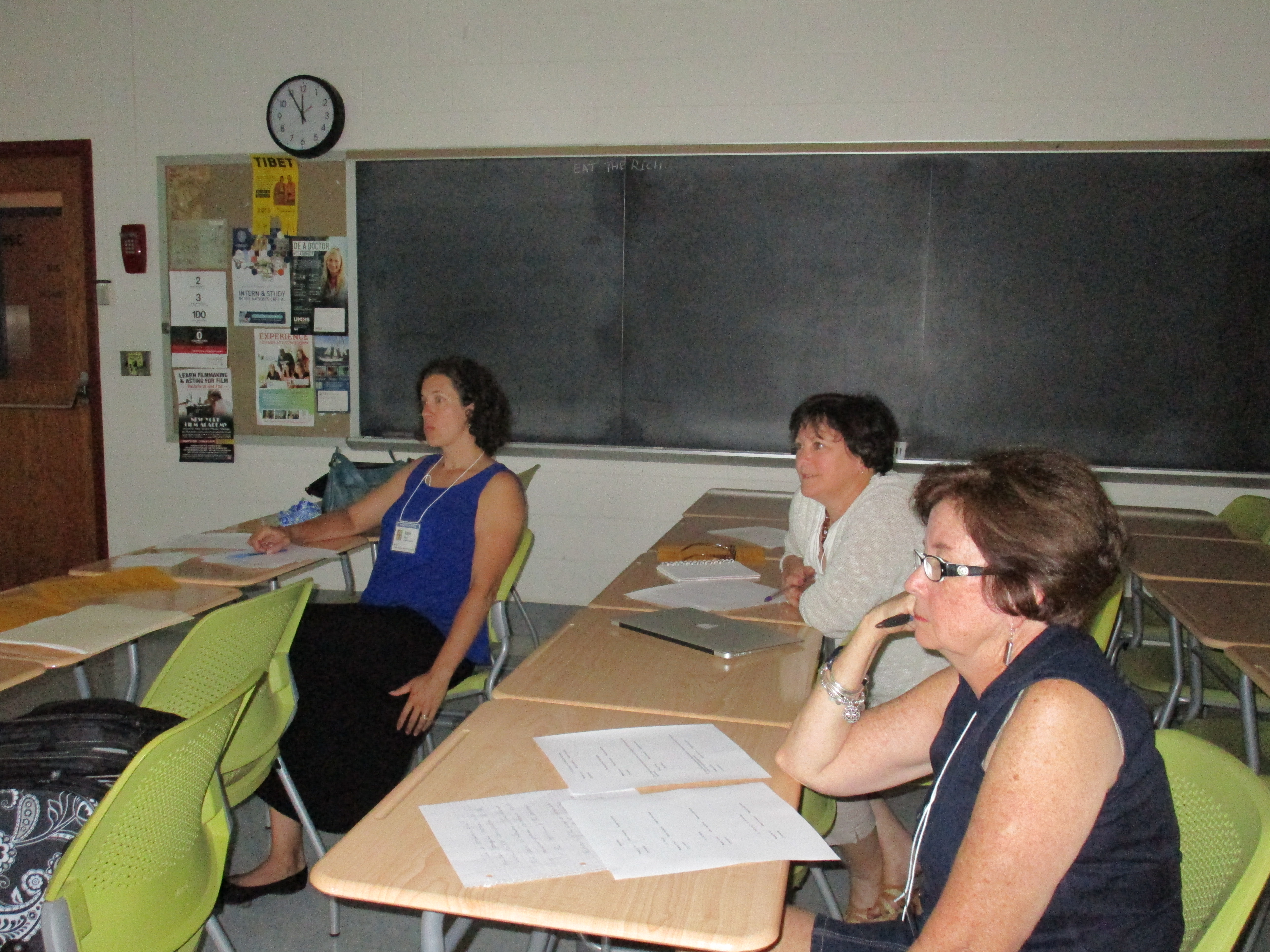
IMG_0233So impressive were the presentations all day on Thursday during the Maine Arts Leadership Initiative (MALI) Critical Friend Day. Forty-five educators convened at Luther Bonney Hall on the USM, Portland campus. Twenty-four educators made presentations, either a workshop or a logic model idea. When not presenting they joined the critical friends who were a collective of teachers, a principal, an assistant principal, curriculum leader, an assistant superintendent, and an Apple employee. In addition, we had three educators join electronically and two actually gave their presentations from Aroostook county during their prep periods (school is underway). Needless to say it was very cool that they could join us from a distance. The entire day was a TERRIFIC learning opportunity for all involved. The presenters received valuable suggestions so they can tweak and expand on their ideas and the critical friends walked away with new information and ideas to apply to their own work. It is a fabulous opportunity for all involved.
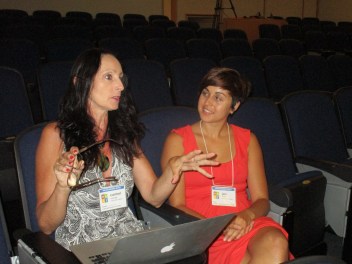
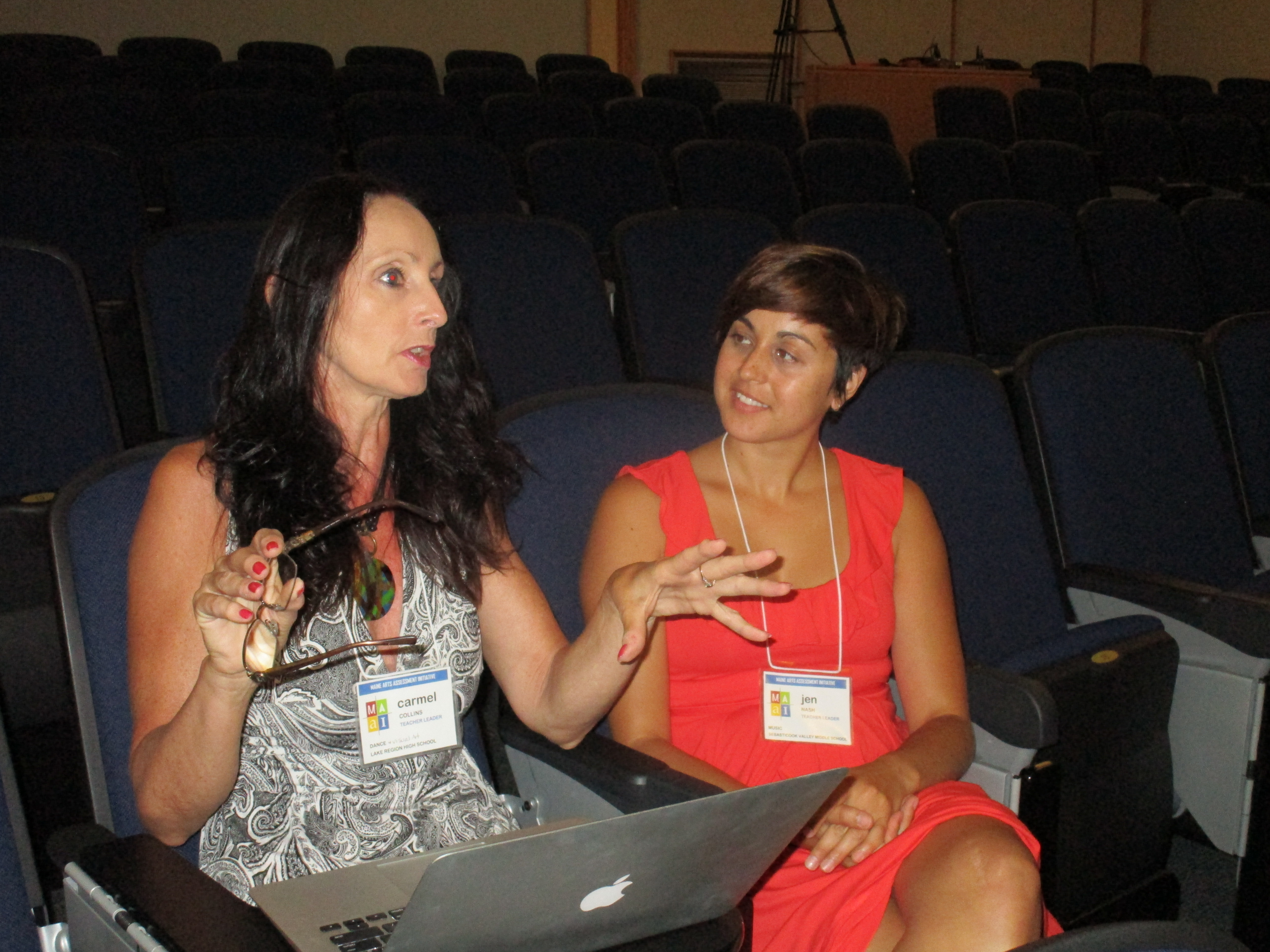
Dance and visual arts teacher leader from Lake Region High School Carmel Collins and music teacher leader from Sebasticook Valley Middle School

Dance and Visual Arts Teacher Leader, Lake Region High School Carmel Collins, and Music Teacher Leader, Sebasticook Valley Middle School

The presentations were in direct connection with the three-day MALI institute that was held earlier this month where over 50 visual and performing arts educators and teaching artists came together for a professional learning opportunity. You can read about the institute in several consecutive blog posts starting with August 10. They had a chance to gain more knowledge in teaching, learning, assessment, proficiency-based education, leadership, advocacy, technology, creativity, integration, and several other relevant topics related to the challenges faced in the visual or performing arts classroom. I had a chance to go from one workshop to the next and it was amazing to see the high quality of work that has been formulated.
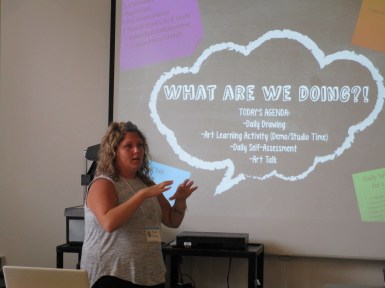
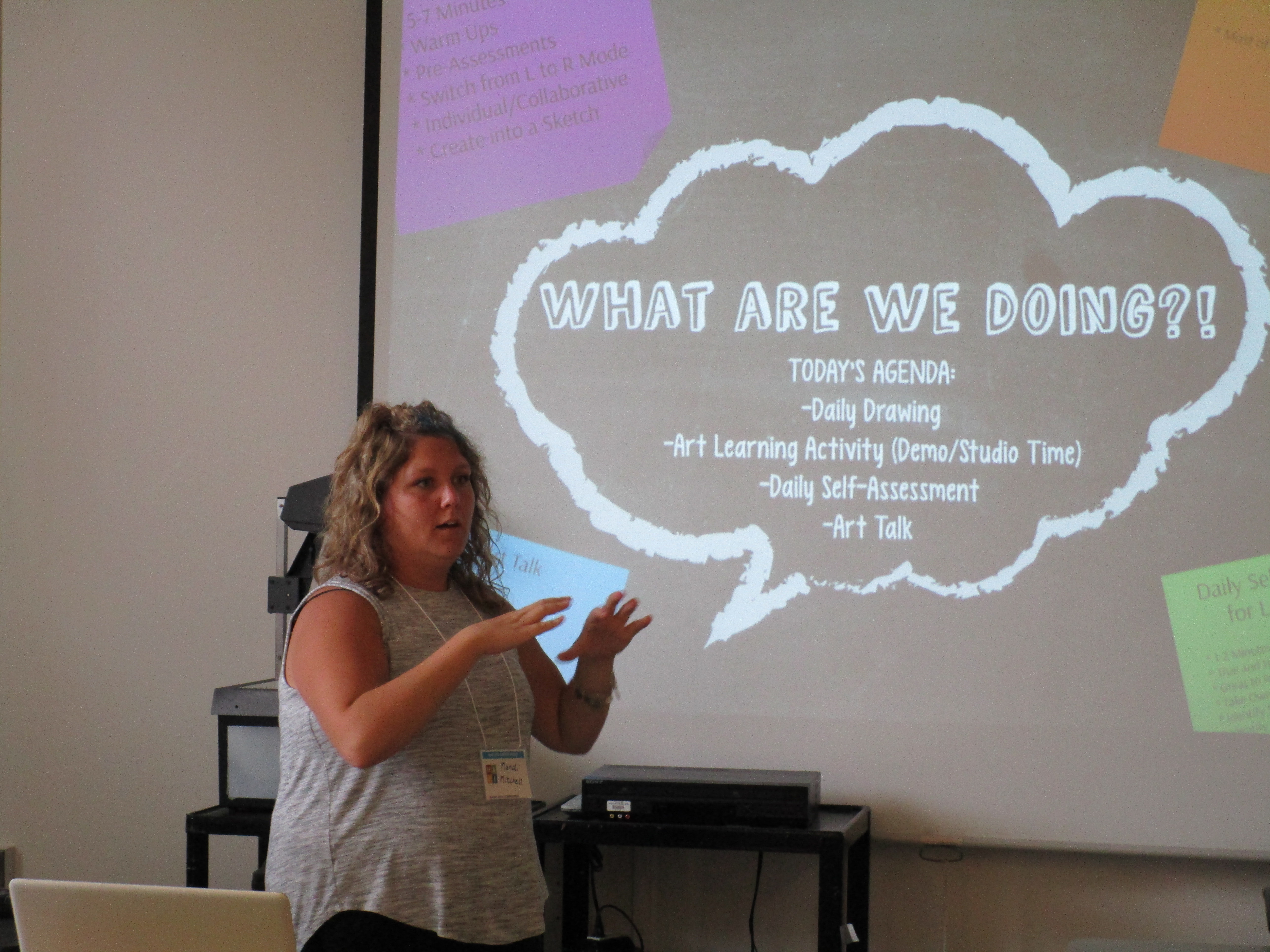
Visual Art Teacher Leader Mandi Mitchell from Hermon High School

Visual Art Teacher Leader Mandi MItchell, Hermon High School

You might be wondering what a critical friend is or does. Below is how we guided the work of those who graciously took on the role as “critical friend”.

One definition of “critical” is expressing or involving an analysis of the merits and faults of a work of literature, music, or art. A “friend” is a person who gives assistance. The MALI leadership team asks you to do both in a gentle helpful way. We want the teacher leaders to create the best work possible so please be honest in your feedback.
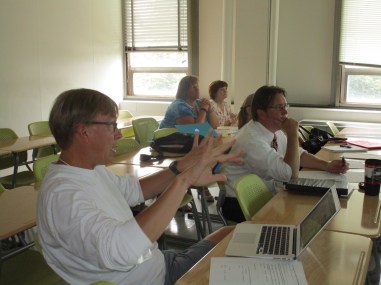
Rob Westerberg, Nancy Kinkade, Holly Leighton, (hidden) Shari Tarleton, and Virgil Bozeman provide feedback

Rob Westerberg, Nancy Kinkade, Holly Leighton, (hidden) Shari Tarleton, and Virgil Bozeman provide feedback

The workshops will be presented at the local level during the 2015-16 school year. The new teacher leaders (https://meartsed.wordpress.com/2015/05/26/phase-5-maai-teacher-leaders-announced/) will be selecting a location and time and all of the information will be posted so you can see what is offered and plan to attend.

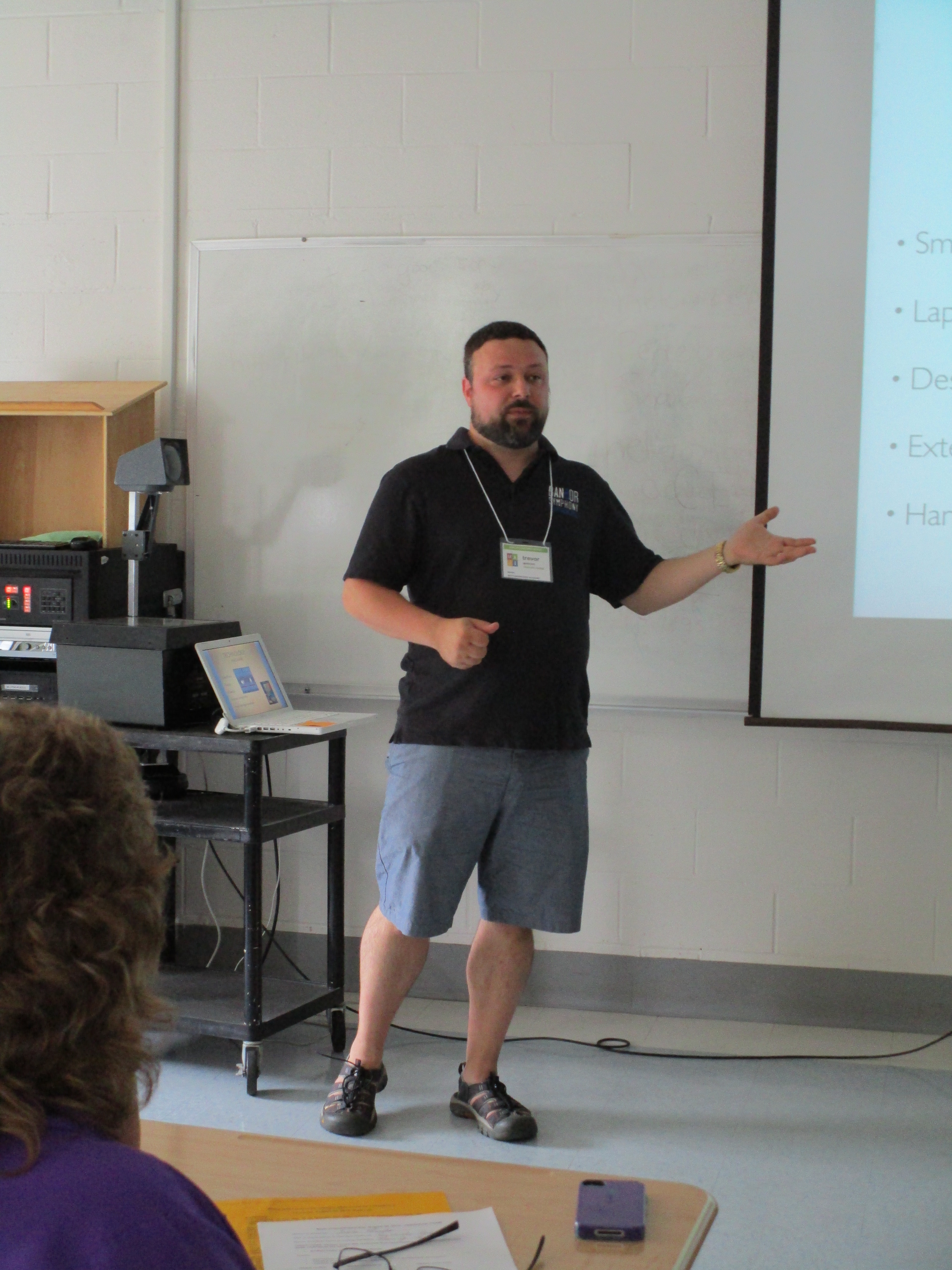
Trevor Marcho Music Teacher Leader Mattanawcook Academy

Trevor Marcho Music Teacher Leader Mattanawcook Academy

The veteran teachers selected a problem and created a plan to solve the problem. The logic model is just that – a way to guide those using it to a clear picture of how to influence and create change. You can read a bit about logic model at https://en.wikipedia.org/wiki/Logic_model.
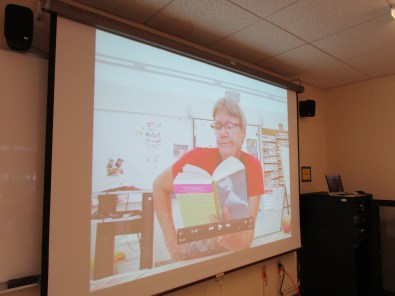
IMG_0181

Allie Rimkunas, Great Falls Elementary Art Teacher Leader

During the afternoon session we participated in a “messaging” workshop that was facilitated by Kate Smith, music teacher leader from South Berwick. Participants selected a topic that they wanted to refine to be able to communicate clearly and concisely at a moments notice when the opportunity arises.
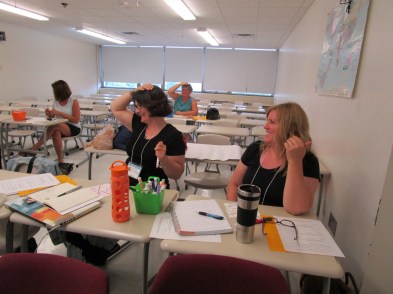
Art Teacher Leader, Lisa Ingraham, Madison and Critical Friend Hollie Hilton

Art Teacher Leader, Lisa Ingraham, Madison and Critical Friend Hollie Hilton

Needless to say yesterday was a great day for Arts education in Maine. Nothing like being in an environment where everyone is talking, thinking, exchanging about visual and performing arts education – directly connected to all the issues and topics of education in general! If you’d like to read about the teacher leaders and leadership team please go to the Maine Arts Assessment site at http://www.maineartsassessment.com/.  You can be part of the next quality learning opportunity at the Biennial Statewide conference being held on Friday, October 9, Point Lookout Conference Center, Northport, Maine. Information and registration for the great day we have planned is located at http://mainearts.maine.gov/Pages/Education/Biennial-Statewide. If you’d like to learn more about being involved in MALI and the opportunities that the initiative provides please be sure and email me at argy.nestor@maine.gov.
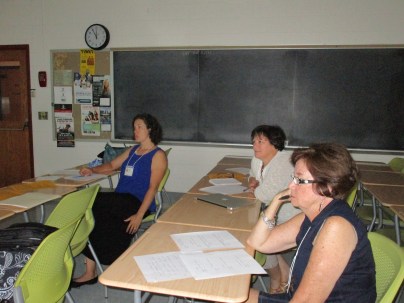
Music Teacher Leader Kate Smith, and Critical Friends, AOS 92 Curriculum Leader Mary Boyle and 2014 Maine Teacher of the Year Karen MacDonald

Music Teacher Leader Kate Smith, and Critical Friends, AOS 92 Curriculum Leader Mary Boyle and 2014 Maine Teacher of the Year Karen MacDonald

Please note: On August 3, 2015, MAAI, the Maine Arts Assessment Initiative, announced its new name, MALI, the Maine Arts Leadership Initiative. You can read about it at https://meartsed.wordpress.com/2015/08/09/maai-goes-to-mali/. Please email me know if you have any questions at argy.nestor@maine.gov.

h1

MALI is Ready!

August 15, 2015

Stuff happening!

Every time I reflect on the work that the Maine Arts Leadership Initiative (MALI)* has underway I can’t help but smile. There are now 73 Maine arts educators who have attended the summer institute and taken on the role of Teacher Leader (TL). Fifty Teacher Leaders are taking an active role during the 2015-16 school year.

IMG_0088Their roles will vary depending on where they are in their educational journey. The 12 new MALI TLs will be presenting workshops throughout the state that they have created on a variety of topics. The returning TLs have used the Logic Model to take on a “problem” facing them and will solve that with a strategic plan they have each created.

Screen Shot 2015-08-15 at 2.09.37 PMIn addition to the TL workshops, the biennial arts ed conference Arts Education: The Measure of Success, will take place on October 9,  at the Point Lookout Conference Center, Northport. The format is unique this year to meet the needs of the 21st century. Take a look at the 1-minute videos at http://mainearts.maine.gov/Pages/Education/Biennial-Statewide-Workshop-Descriptions# that the nine workshop presenters have created so you can see and hear what the sessions are all about. During the morning at the conference the nine will each present for 5 minutes with 5 images to provide further information of what will be an exciting afternoon of 1 hour and 15 minute workshops (you can attend 2). This unique format is designed to provide you with more varied and deeper learning opportunities. Conference early-bird registration is available so I suggest you save yourself a spot. Once the conference is full, we will close down registration so don’t delay! Check out the details and registration at http://mainearts.maine.gov/Pages/Education/Biennial-Statewide.

The MALI Leadership Team continually listens to the Teacher Leaders and those who attend workshops to make available what is needed for addressing the needs of quality arts education for all students. The Maine Arts Education Resource website at http://www.maineartsassessment.com/is managed by Rob Westerberg and is continually updated with new professional learning opportunities.

The new Mission: “MALI is committed to the development of Teacher leaders to ensure deep understanding and meaningful implementation of high quality teaching, learning and assessment in the Arts.”

Please note: On August 3, 2015, MAAI, the Maine Arts Assessment Initiative, announced its new name, MALI, the Maine Arts Leadership Initiative. You can read about it at https://meartsed.wordpress.com/2015/08/09/maai-goes-to-mali/. Please email me know if you have any questions at argy.nestor@maine.gov.

h1

MALI Leadership Team

August 14, 2015

Those amazing leadership team members

Sooooo…. hours of meetings, zoom sessions for brainstorming, tons of time planning, phone calls for tweaking, emails of questions, google docs of compiling, scheduling and keeping lists. The dedication that the Maine Arts Leadership Initiative (MALI) leadership team has devoted to planning and implementing the summer institute has been unbelievable. I am humbled by their work and grateful for their enthusiasm and commitment.

Three of the team members have been around since January 2011 when we had the first planning meeting of the initiative’s leadership team. Periodically I reflect on where MALI is and think about how none of this would be possible without the time that the leadership team has devoted. They are funny, creative, problem-solvers with a “never give up” attitude. They are by far top notch professionals who continuously make me a better person! I am sooooo thankful and Maine arts education is fortunate! Each of the following attended zoom meetings almost weekly since January!

  • Catherine Ring – Executive Director, New England Institute for Teacher Education
  • Rob Westerberg – Music Educator, York High School
  • Jeff Beaudry – Associate Professor, Educational Leadership, USM
  • Pam Kinsey – Music Educator, Easton Schools
  • Barb Vinal – Instructional Technology Facilitator, Raleigh, NC and former Maine Music Educator

In addition Nancy Salmon planned the Teaching Artist segment of the institute which received rave reviews! Thank you Nancy!

Since the Teach to Lead Summit in Washington, D.C. July 22-24, two teacher leaders have stepped up and worked with the Leadership Team with the planning of the institute. Without them the 3 days would have been very different.  I want to thank the following for the work each of them have contributed intensely after returning home from the Teach to Lead Summit.

  • Theresa Cerceo – Visual Art Educator, Dr. Levesque Elementary School, Wisdom Middle/High School, MSAD 33, K-12
  • Kate Smith – Music Educator, Central Elementary School, PK-3
Theresa and Kate in D.C.

Theresa and Kate in D.C.

Please note: On August 3, 2015, MAAI, the Maine Arts Assessment Initiative, announced its new name, MALI, the Maine Arts Leadership Initiative. You can read about it at https://meartsed.wordpress.com/2015/08/09/maai-goes-to-mali/. Please email me know if you have any questions at argy.nestor@maine.gov.

h1

Teacher Leaders

August 13, 2015

Those amazing teachers

What do the Maine Arts Leadership Initiative (MALI) Teacher Leaders have in common? There are many IMG_0065similarities. If I had to select the top six, they would be:

  1. commitment to teaching
  2. life-long learners and a passion for learning
  3. a desire to go above and beyond
  4. positive attitudes
  5. problem-solvers
  6. collaborators

Sounds like many teachers in Maine and across the country you might say. I couldn’t agree more! A guest (teacher from another content) attended the MALI summer institute August 3-5 at USM, Portland and said what impressed her most about the environment was how positive the MALI Teacher Leaders are. “They weren’t sitting around complaining about what they couldn’t control but focusing on what they could do to move the conversation forward about how essential high quality arts education is for all students.”

At the completion of the three-day institute we asked the Teacher Leaders:”What about this professional IMG_0034development Institute has been useful to you?”  These were some of the remarks from some of the new and veteran Teacher Leaders:

  • The positive energy and the connections have been refreshing and revitalizing!
  • In-person collaboration, feedback from colleagues, upbeat atmosphere, opportunity to see old friends.
  • The extended time to work on our workshop ideas with experts available to de-mystify the whole process.
  • The institute has made me go back and look at the MLRs; what I do now and what goals I have for my teaching in the future.
  • It is the connection with others and networking. It is being able to talk with others about what they are doing, getting inspired, and and now being really pumped for the start of this year.
  • All my questions and doubts about PBE has been answered. I love the feedback that I received from the other teacher leaders, and that is what has been the most useful for me.
  • Connecting with other teachers, learning about becoming a teacher leader and my role within MALI. I learned a lot about assessment, proficiency, and creativity.
  • I have gained an incredible amount of knowledge that I will be able to bring back with me and share!! I cannot begin to describe all of the knowledge, enthusiasm, and collaboration that the past three days have given me!
  • The logic model has been so useful with guiding a plan for making change at the local level. Look forward IMG_0027to a great year of stepping into a new different leadership role. Also thought that the “messaging” session was so helpful.
  • The amazing feedback about my logic plan received by the teacher leaders!
  • There have been so many different aspects about this Institute that have been useful to me. I think that the ability to collaborate with others and like-minded educators really helps to invigorate and inspire me in my work as an educator. I think that it is really important to connect with others and it helps to edify our energy and passion for our field and everything that we do. This also inspired me to make sure to be an advocate for myself and the arts. To continue what I have done and push towards advocacy for my program at my school. To be a resource and make myself present for others in my school building and arts educators.
  • There is so much I don’t even know where to begin! I loved the fact that I was able to develop a logic model that helps me put together something that will help to benefit my program specifically. I also loved having the teaching artists as part of the plan!!!!
  • Receiving feedback from my colleagues with reference to our workshop design. Networking with new and old colleagues. Hearing what everyone is doing i.e. SLO’s, teacher evaluation process, assessments, good practice, arts advocacy. How MAAI has evolved and the shift in direction. I love the new name. It truly reflects our purpose of leadership in the arts.
  • The group work around written philosophies and “elevator speeches” was an amazing exercise in how many voices can blend together to create powerful messages.

Perhaps you’re thinking “wow, I’d like to be part of this type of learning”. Plan ahead and consider applying to IMG_0081be a Teacher Leader in the future. Join the Teacher Leaders as well as educators from across the state and attend the biennial conference, Arts Education: The Measure of Success, being held on Friday, October 9, Point Lookout, Northport. Details and registration located at https://mainearts.maine.gov/Pages/Education/Biennial-Statewide. Please move swiftly and take advantage of the Early-Bird Special and join the positive, energetic environment that the presenters will be all about!


Please note: On August 3, 2015, MAAI, the Maine Arts Assessment Initiative, announced its new name, MALI, the Maine Arts Leadership Initiative. You can read about it at https://meartsed.wordpress.com/2015/08/09/maai-goes-to-mali/. Please let me know if you have any questions.

h1

Teaching Artists

August 12, 2015

TA Opportunities

IMG_0037

Teaching Artists Martin Steingesser and Martin Swinger, MALI summer institute, August 2015

The Maine Arts Commission (MAC) is committed to providing learning opportunities for Maine Teaching Artists. On August 3, during the Maine Arts Leadership Initiative summer institute, MAC worked with Teaching Artist Nancy Salmon, to provide an all-day workshop. Dancer and teaching artist/teacher leader John Morris provided a segment on creativity and the Elements of Dance. Teacher Leader MaryEllen Schaper provided a segment on the Maine Learning Results and the visual and performing arts learning standards. Barb Vinal provided a segment on technology tools and how to leverage them as a Teaching Artist. In all, fourteen Teaching Artists participated and received information about arts education teaching and learning standards, technology tools, and discussed their roles as Teaching Artists in 2015.

In answer to the question What about this professional development day has been useful to you? the Teaching Artists response was:

  • Networking
  • Kick started some creativity that has been lacking in my professional life
  • Creating together
  • Exploring arts education verbiage
  • Being able to talk/network with other teaching artists, share challenges, ideas, frustrations, make some work together.
  • Meeting and chatting with other teaching artists what they do and HOW. I enjoyed active workshops.
  • It’s been encouraging and inspiring to share information and experience among my artist and teaching peers—as well as to renew a sense of community among them. One specific area is identifying and re-affirming underlying principles among our different arts disciplines.
    High on the useful list also is networking, meeting teachers and administrators who share like loves, passions and goals who may help connect me with professionally rewarding engagements.
  • The opportunity to come together & meet other TA’s, exploration into marketing and social media, and creative process.
  • ALL of it!  Lively conversations with fellow artists. GREAT information about using technology with Barb. Hints about Pinterest, Password manager, FB, Google Presentation, Personal Learning Network, Klout…
    Inspiring and informative workshop with John about Elements of Dance and the meanings of Creativity….  the tour of all of Argy’s amazing network of information, blog, connection and the new directions for the MAC. Suddenly, I’m excited to be a ‘Maine Teaching Artist’ again!!  THANKS!!

Some of you who are not teaching artists might be wondering what is a Teaching Artist?! MACs definition: Teaching Artists are professional artists who are dedicated to lifelong learning and arts education, have made it an integral part of their professional practice, and who have cultivated skills as educators in concert with their skills as artists.

If you are a PK-12 visual or performing arts teacher or a school administrator, or perhaps a parent/community member please consider hiring a Teaching Artist to enhance your educational program. MAC provides a Teaching Artist roster located at https://mainearts.maine.gov/Pages/Education/Teaching-Artist-Roster to help you consider who you might want to invite to your school. You will find information including the Teaching Artist contact information so you can communicate with them directly.

If you are a Teaching Artist and are interested in applying to be a member of the roster please email me at argy.nestor@maine.gov. For further information please go to https://mainearts.maine.gov/Pages/Education/Teaching-Artists.

Just a reminder that on August 3, 2015, MAAI, the Maine Arts Assessment Initiative, announced its new name, MALI, the Maine Arts Leadership Initiative. You can read about it at https://meartsed.wordpress.com/2015/08/09/maai-goes-to-mali/. Please let me know if you have any questions.