
Teaching Artist – Poet
This is one of several blog posts in 2018 that include stories of the Maine Arts Leadership Initiative (MALI) Phase 7 Teacher Leaders and Teaching Artist Leaders. This series includes a set of questions so you can learn a little bit about each leader. CLICK HERE for more information on MALI. CLICK HERE for more information on the 93 Teacher Leaders and 8 Teaching Artist Leaders. CLICK HERE for Arts education resources. CLICK HERE for the MALI Resource Bank. Search in the “search archives” box on the bottom right side of this post for past teacher leader stories. Thank you Brian for sharing your story! Learn more about Brian at his WEBSITE. You can find Brian’s teaching artist profile on the Maine Arts Commission roster.

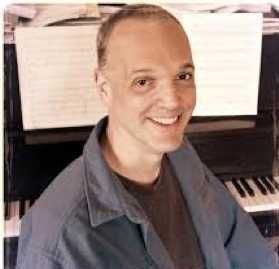
Brian Evans-Jones is mainly a poet these days but also does creative writing. Brian has been teaching since 2005 and doesn’t have a favorite grade or age to teach. “They all offer something different and wonderful. I like to teach by excitement and discovery. I want students to be excited about the idea of writing before they begin, and then to discover what they’re capable of while they actually do it. I want the whole experience to be fun—though also serious fun, the way that kids’ games can be serious.
What do you like best about being a teaching artist?
That’s a hard question! I guess first of all because I get to see a lot of different ages and types of students, and touch a lot of different lives. Lately I’ve also realized it’s because I get to partner with many wonderful great teachers and teaching artists. And on a personal level, I like the flexibility: I could never see myself being happy in a regular job!
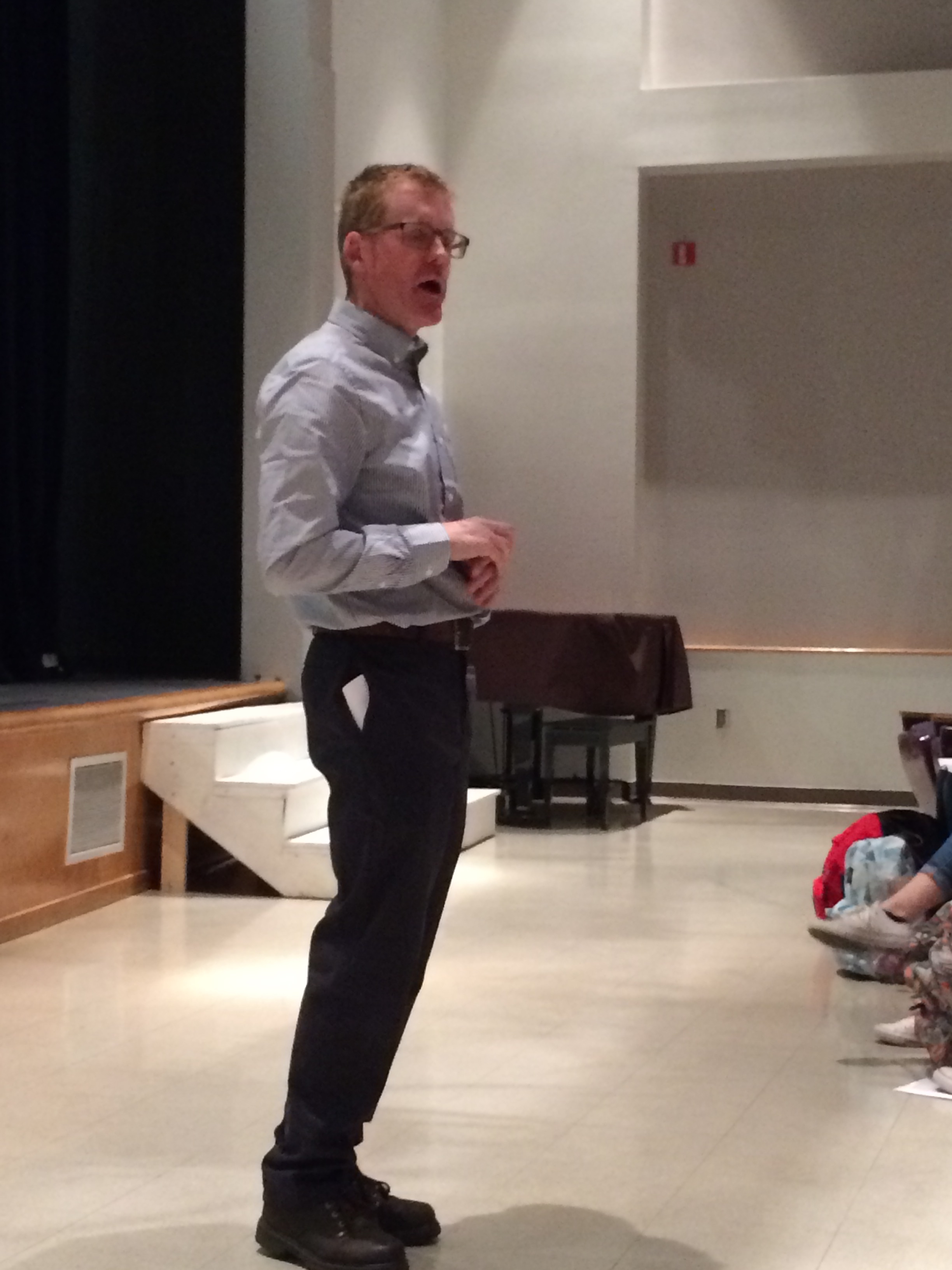
Brian at Hermon High School, November 2017
What do you believe are three keys to ANY successful arts education?
Thinking about creativity in general, I might say:
- To be supported to take risks
- To feel OK about failure
- To learn the unique habits and (wholesome) props that scaffold your own personal creative process.
Have you found assessment to be helpful in your classes, workshops and residencies, and if so, how?
Not being a regular teacher, I don’t often think about “Assessment.” But I do constantly assess how the class is going, how students and I are bonding, how well I am generating enthusiasm, how well my instructions are being understood and used, how well balanced my activities are between support and openness, how much effort students are putting in, how much they seem to be learning, and how keen they are to keep working. I can’t imagine teaching a class without monitoring those things constantly, and many more, but I don’t formalize them. I do frequently use the SWOT framework to assess how I think a class went and plan for the next one, though.

Brian at Hermon High School facilitating a workshop to help guide students working on Poetry Out Loud
What have been the benefits in becoming involved in the Maine Arts Leadership initiative?
People! Meeting cool people who do similar things and make me feel encouraged. Also getting to work on specific projects in partnership with other MALI people, like Kris Bisson, Lindsay Pinchbeck, and Tim Christensen.
What are you most proud of as an artist and/or a teaching artist?
As an artist: winning the 2017 Maureen Egen Writers Exchange Award from Poets & Writers.
As a teaching artist: the fact that I do this at all, having jumped into the financial and professional unknown in order to do it. Also some big residencies I have run or am running, like working with 80 second graders for 2 weeks in South Berwick, ME, and leading a team of 4 TAs on a poetry residency with the 8th grade at Wells Junior High School.
What gets in the way of doing a better job as a teaching artist?
 Isolation, which makes me less likely to find more work, and makes it harder to plan great classes. Collaboration and MALI connections work against this.
What have you accomplished through hard work and determination that might otherwise appear at first glance to be due to “luck” or circumstances?
Leaving my role as a high school teacher, which didn’t suit me, to piece together a patchwork career, including being a teaching artist. It happened because I sought out any opportunities I could to get experience in the right areas.
What advice would you give to someone who is thinking about becoming a teaching artist or is just starting out?
See the previous answer! Plus also:
- Make connections
- Take (some) chances—trust the creative process with your career just as you do when you’re making art.
If you were given a $500,000.00 to do with whatever you please, what would it be?
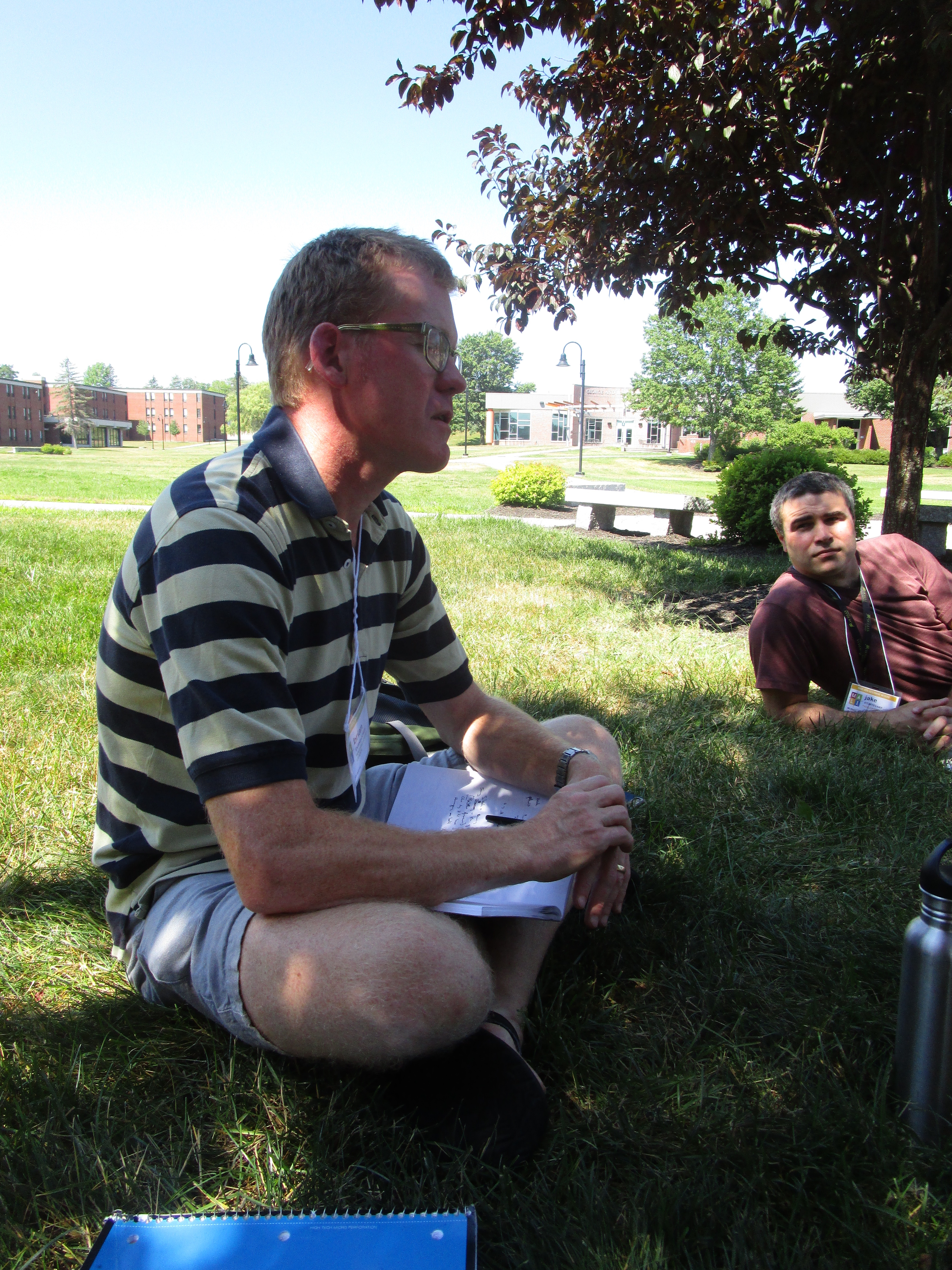
Brian at the summer MALI institute leading a workshop on writing
That’ll be just enough to pay for college for my two kids by the time they’re ready to go, right? I wish I was even joking…
In a world where college didn’t cost so stupidly much, I would use the money to set up and fund a nonprofit to take poetry to places and people who need it but don’t get exposed to it: prisoners, the homeless, older adults, children in poorer areas, etc.
Imagine you are 94 years old. You’re looking back. Do you have any regrets?
I should have ditched other work and done more teaching artist work sooner! It makes the most difference and is the most rewarding of the several things that I do.
NOTE: Brian traveled to Hermon High School and Van Buren District Secondary School in November 2017 to work with students with the Poetry Out Loud program that the Maine Arts Commission provides in collaboration with the Poetry Foundation and the National Endowment for the Arts.
Brian is on the Maine Arts Commission Teaching Artist roster and is available to travel to schools and communities to provide poetry and creative writing instruction.


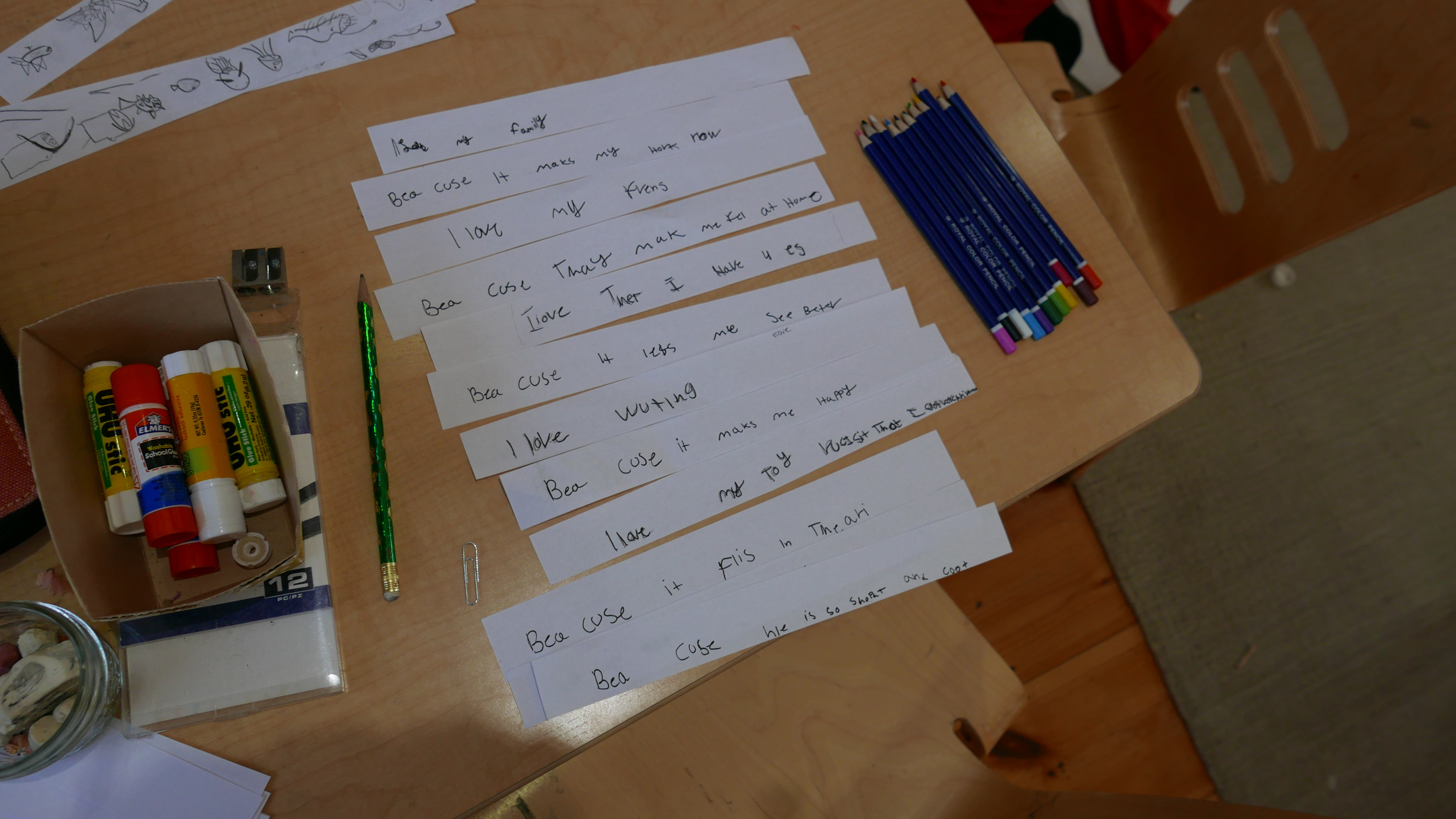
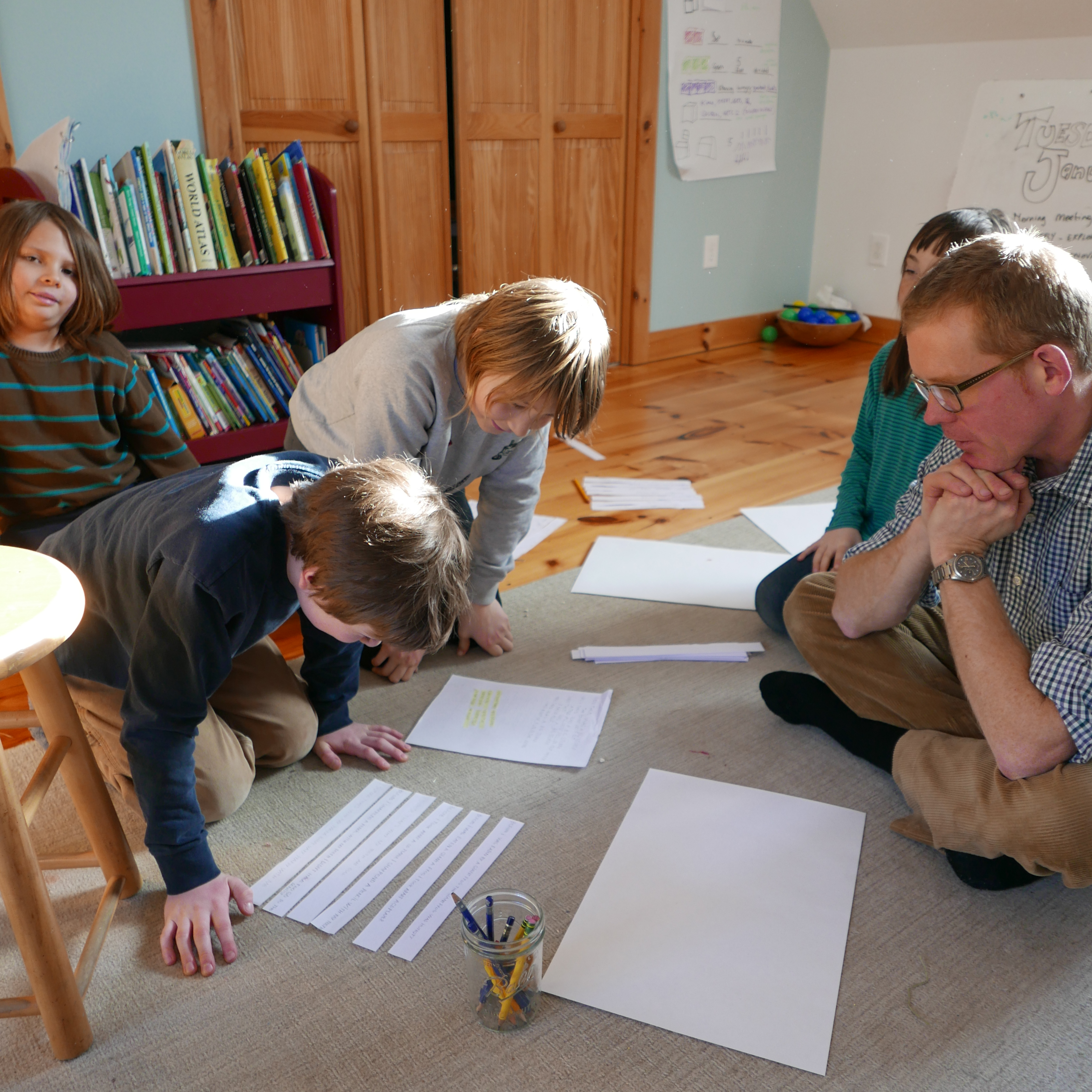
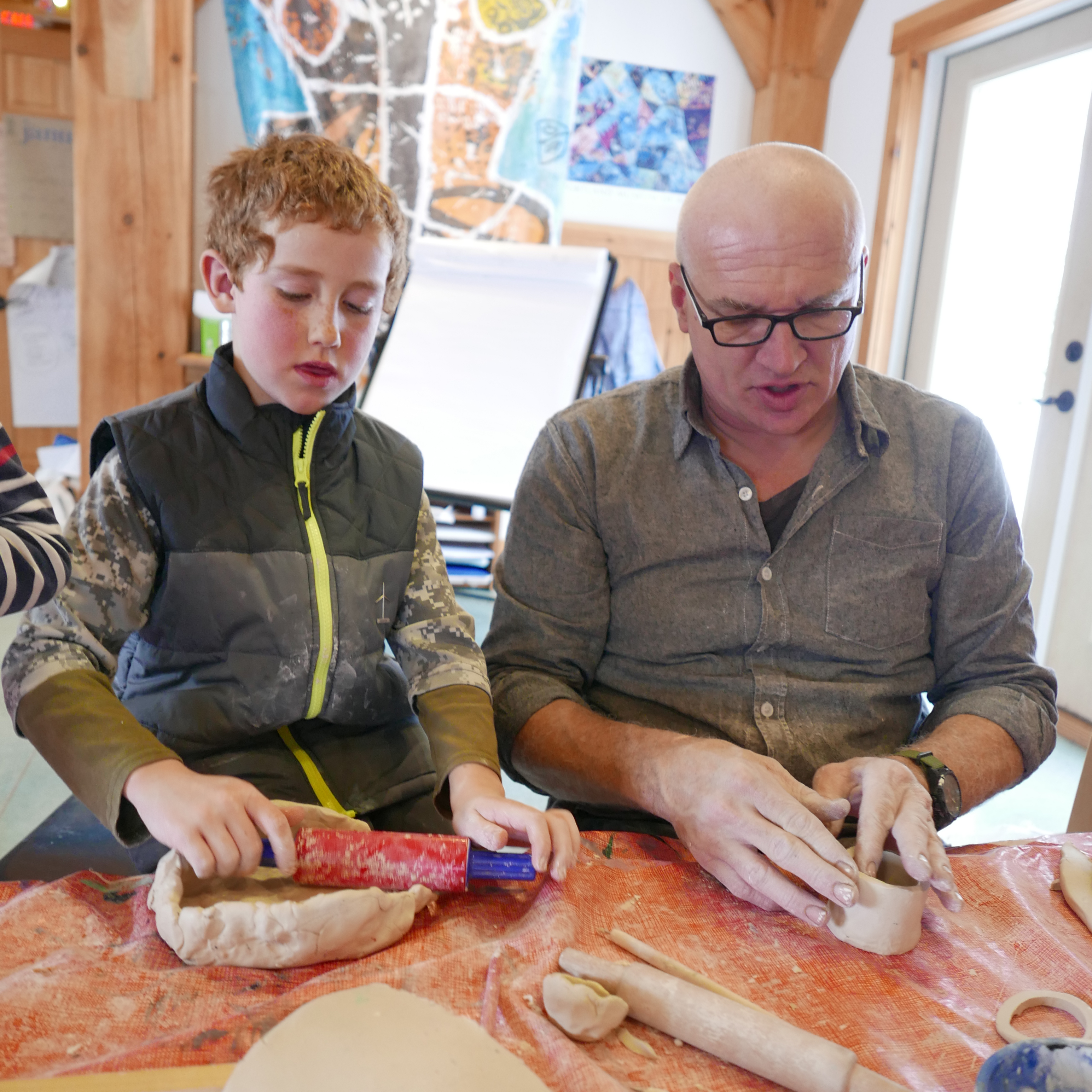
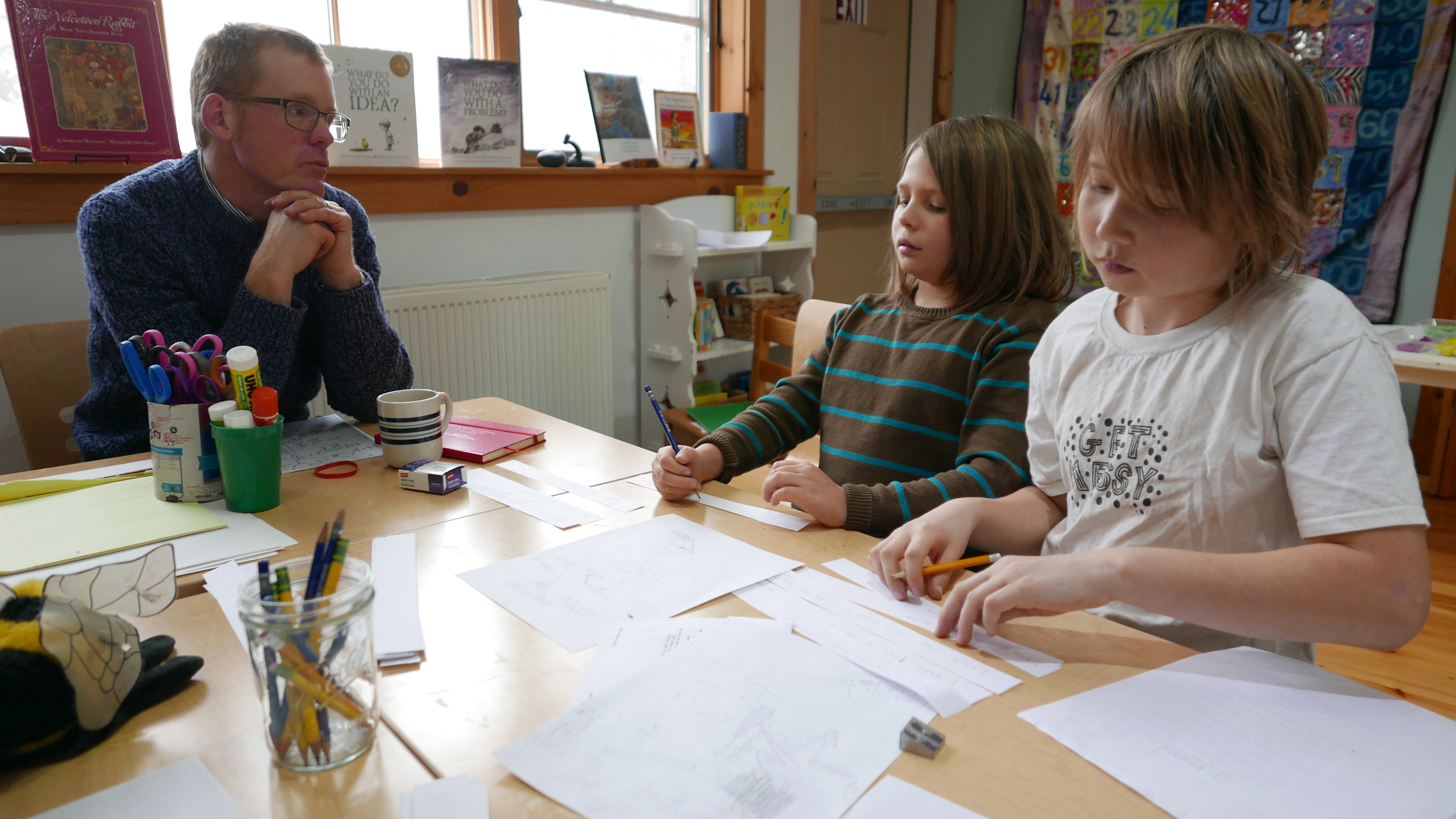





 Develop a creative book making project to assess your students’ authentic learning. Perfect for the end of a grading term, this idea can be tailored to suit the needs of you and your students. Impress your administrators with your ability to keep every student fully engaged in the assessment of their own work. Grades 7-12
 Rhythm!! Is this one of the elements of music that you spend a lot of time on in rehearsal? How are your kids at sight-reading? Have you ever fallen into the trap of singing the part for your students? Are you clapping rhythms in class and finding that it sounds more like applause? Intended for ensemble directors, this workshop will provide a new approach to many based upon a tried and true method of counting and verbalizing rhythmic patterns. Grades 7-12
 Looking at ideas on emotional intelligence and leadership collected by Daniel Goleman we will identify the core elements of emotional intelligence and compare them with habits and skills practiced in the creative process. Be ready to create, journal and discuss ideas together on creativity, the arts and emotional intelligence. All grade levels and all content
 It is the age of customized education and differentiated instruction. Chances are, your building administrators are looking for observable evidence of this in your teaching practice. Time constraints and scheduling difficulties can make customized learning a challenge to implement in the general music setting. In this workshop, we will discuss the benefits of flexible grouping strategies, and how to use them to your advantage. Grades PK-12 General Music
  Ovations Offstage Director Catherine Anderson will introduce workshop participants to Ovations Dynamic School-Time Performance Series for 2018-19, and model for teachers how to help students engage with any story, or content (fictional or not) through the use of “tableau”. Tableau is a wordless theater activity for small groups of students that can be adapted for any age group. Participants will leave with a leasson plan with clear learning targets, and assessment criteria. All grade levels
 Stars and Stairs, Where am I now and Where am I going? How can the use of Stars and Stairs in your classroom help to inform you and your students of their learning progression and actively engage them in the learning process? This will be a round table discussion. Looking at your standards and your curriculum how can you use the Stars and Stairs model in your classroom. All grade levels and all content
 Everyone seems to agree that we need more creativity in education, but just what is creativity, and how can we possibly teach it? This workshop will answer both those questions (gasp…) With one foot planted in neuroscience, and the other dangling in the depths of the subconscious, we will conduct transformative activities (visual arts based) designed to enhance the “brainsets” that contribute to creative states of mind. Grades 7-12
 Improvisation is commonly viewed as a specialty skill, and one that you either have or don’t. This presentation makes the case for improvisation as an essential skill, a naturally growth-minded learning tool, and an additional resource to address any number of Maine Learning Results, and to engage students and give them more ownership over their musical voice. This will be heavily participatory, exploring simple methods to more advanced, and using multiple musical languages/genres. All grade levels
 Art can propel the next generation of leaders to make a personal connection to real world issues. In this workshop participants will explore strategies for helping young people forge a deep and personal connection between the environment and themselves. If our students are to have the courage to address the environmental challenges we face today, they must believe in the power of their ideas and know that they can create something tangible from them. Participants will make art that crosses subject matter boundaries and explore ways to design original curriculum that leads to action. Elementary and Middle Levels and Visual Arts
 Come join a conversation, share thoughts, and cultivate ideas regarding the challenge of integrated curriculum work at the highschool level. How can finding commonalities between subject areas motivate student learning, provide hands on experience with cross curricular connections, as well as benefit the educator as they become more proficient in the language of other disciplines? High School
 Self-reflection is a crucial part in the cycle of learning for both student and teacher. With regular self-reflection integrated in your classroom, students will become more aware, dig deeper, and take ownership of their learning. This applies to us as teachers. We will also discuss the importance of documentation and strategies of reflection upon our own teaching. Information gathered about student growth, understanding, and feedback on units/lessons will not only be beneficial for the development of a curriculum, but also in providing evidence for teacher evaluations. All grade levels and all content
 This workshop documents the progression of a year-long chorus project in which 7th and 8th grade students composed lyrics and music for an original performance piece. The project developed a model of integrated arts programming, including extensive literacy integration through working with a guest poet-in-residence for several weeks. The project also tied in hands-on classwork, a field experience, a connection with a wider community project, video diaries, peer critique, and of course music composition and performance skills. The workshop will give participants a hand-on experience of our project, as well as tools to create their own. All grade levels
 Interested in transforming your school into a STEAM based model? This workshop will include the benefits of STEAM for students, some sample STEAM lessons, and a suggested action plan for incorporating a STEAM approach into your school. Upper Elementary
 How do we teach aesthetics and criticism in our Visual and Performing Arts classes? How do teachers design learning experiences for Maine Learning Results standard D? In this interactive workshop teachers will experience methods for teaching aesthetics and criticism in the 7-12 arts classroom. Sample lessons that teach forms of artistic interpretation to students will be shared as well as methods for critique. The workshop is geared toward supporting the teaching and assessment of Maine Learning Results standard D. During the second part of the workshop participants will be encouraged to share their own approaches. Participants will leave with tools that they can immediately use in their classes. Grades 7-12, adaptable for all grade levels
 This will be a fun and informative program with practical involvement by all. All participants will have ideas to take back to the classroom and hopefully a reinvigorated perspective on their teaching with a theater focus. All grade levels





 me arts ed