Posts Tagged ‘National Education Association’

h1

Juneteenth

June 19, 2023

Teaching Resources

I’m happy to see that there are so many teaching resources available on Juneteenth. I realize that with many schools across the country that the most meaningful teaching on the important topic needs to take place during other times in the school year or perhaps in communities. Educators know that ‘teachable moments’ happen anytime and in many places.

Finally our country, in 2021, made June 19th a federal holiday known as Juneteenth, Juneteenth Independence Day, Emancipation Day, Jubilee Day or Freedom Day. It commemorates the day in 1865 when over 250,000 enslaved Black people in Texas were informed that the Civil War was won months earlier and they were finally free.
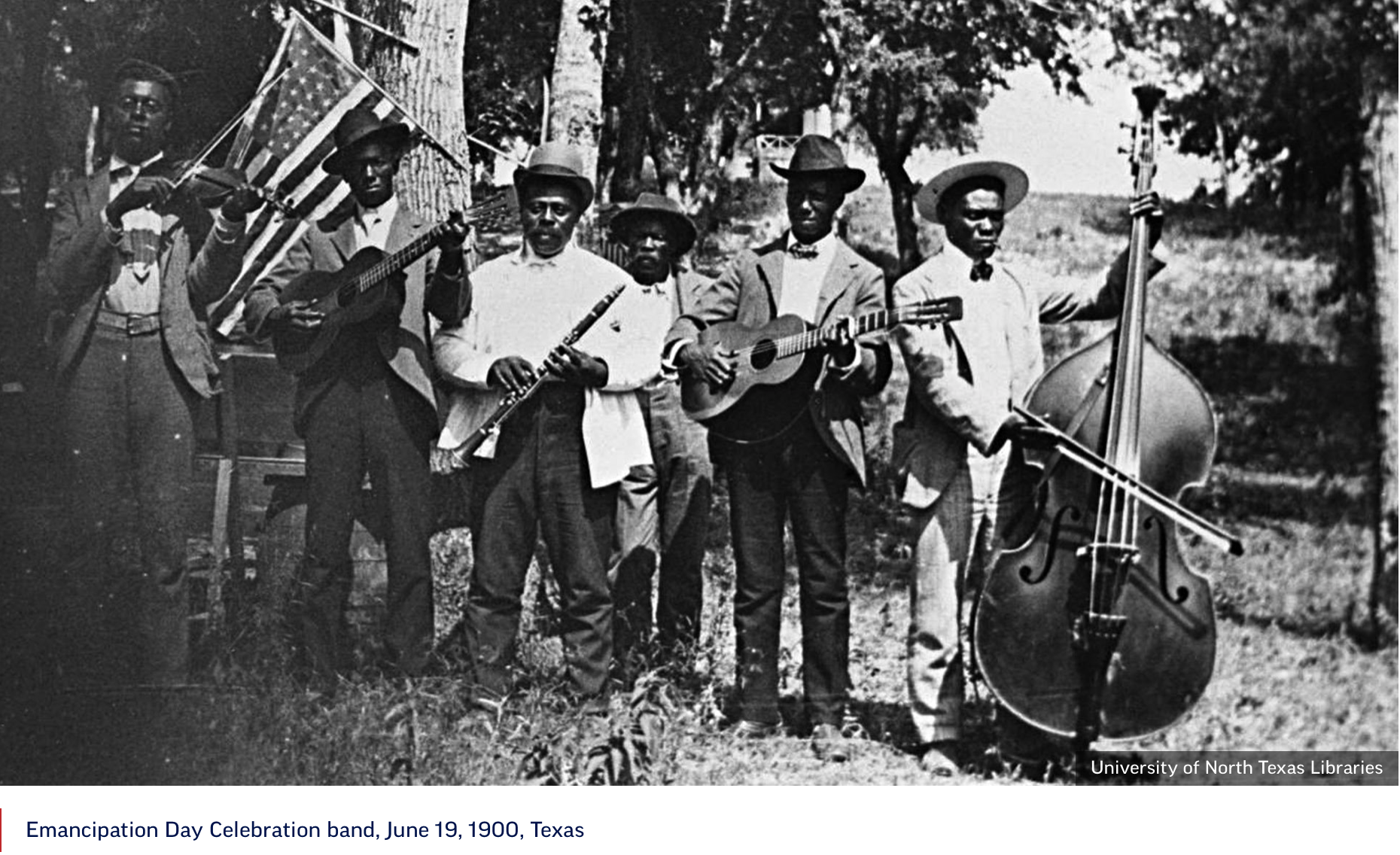
Below are some of the plethora of teaching resources available. I took them from two resources, both have put them together from a variety of sources. Of course, I suggest that you take a close look at them to be sure they fit your needs as a teacher and the students you serve.

Americans Who Tell the Truth

National Education Association

BACKGROUND READING AND INFORMATION

VIDEOS

  • Juneteenth
    BrainPOP presents a short video on the history of Juneteenth, along with classroom activities and discussion questions for elementary students.
  • Juneteenth Explained
    Video-creation software company Vyond created this short, animated video for younger audiences that concisely presents the history of Juneteeth. 
  • Why Juneteenth is Important for America
    The Root released this video about the importance of Juneteenth in 2018. It includes information on the violent backlashBlack Americans faced from white Americans opposing their freedom.
  • Meet the Grandmother of Juneteenth 
    Opal Lee fought for decades to have Juneteenth recognized as a national holiday. Watch her interview on Good Morning America in 2021, after attending the ceremony where President Biden made June 19 a federal holiday.

LESSONS AND ACTIVITIES

  • NMAAHC Kids: Understanding & Celebrating Juneteenth
    The Smithsonian National Museum of African American History and Culture offers a PDF guide to understanding and celebrating Juneteenth for children.
  • History of Juneteenth and Why it’s Now a National Holiday (grades 6-12)
    In this this lesson from PBS, students will explore and discuss the history and context around the Juneteenth holiday in the United States. Topics explored include the history of racial injustice in the U.S., the Civil War and the limitations of the Emancipation Proclamation. Additionally, students are encouraged to explore the modern significance of Juneteenth and its long-term impact. 
  • Teaching Hard Hard History: American Slavery
    No discussion or lesson on Juneteenth is complete without an understanding of slavery in the United States. Learning for Justice offers a framework and the ability to build a learning plan around the history of slavery in the United States.
  • Celebrate Juneteenth!
    The National Council of Teachers of English’s Read, Write, Think website offers a classroom activity designed around having students compare Juneteenth and the 4th of July using Venn diagramming.

RECOMMENDED BOOKS

ISTE – International Society for Technology in Education

  • The National Museum of African American History and Culture The Historical Legacy of Juneteenth is an article with photographs from the Smithsonian that provides context for Juneteenth. It covers the Emancipation Proclamation, the Thirteenth Amendment and Reconstruction.
  • PBS Learning Media Juneteenth: All About the Holidays is a short video that offers an introduction for younger students. This PDF offers grades 3-5 vocabulary words and photographs.
  • Juneteenth.com This World Wide Celebration website offers historical information and archives of Juneteenth celebrations in the news and connects those celebrating the holiday. 
  • The Morningside CenterJuneteenth. Why is it Important to America?” is an article that includes a lesson plan with a short video and discussion questions about the holiday.
  • The Library of Congress Collections The Library is full of original sources. Check out The Birth of Juneteenth, Voices of the Enslaved, and Juneteenth Celebration: A Local LegacyHarriet Smith, a slave in Hays County, Texas, tells interviewer John Henry Faulk about the day she and the other plantation slaves were freed.
  • Read Write Think. This classroom activity asks students to make a Venn diagram comparing Juneteenth and July 4. Several resources are linked here, including the Emancipation Proclamation housed at the National Archives and Records Administration’s site.
  • The New York Times So You Want to Learn About Juneteenth? is an article that puts the celebration in the context of the 2020 protests sparked by the murder of George Floyd at the hands of police.
  • Learning for Justice Teaching Juneteenth. This article from Learning for Justice, formerly Teaching Tolerance, uses the holiday to empower students to advocate for societal change.
  • The History Channel What is Juneteenth? This overview of the holiday offers facts and a short video with links to many other related topics.
  • TED-Ed What is Juneteenth, and Why is it Important? Karlos K. Hill and Soraya Field Fiorio tells the story of a young slave in Texas who learns the slavery has ended and her enslaver is keeping it a secret.
  • Teach for America Celebrate Juneteenth offers articles, lesson plans, and ideas for books and movies to celebrate Juneteenth.
  • Democracy Now! James Earl Jones reads Frederick Douglass’s historic speech, “What to the Slave is 4th of July?”
h1

Teacher2Teacher

May 23, 2021

Black History Resources

Teacher2Teacher gathered resources for teachers on Black History. Below are some of those resources on relevant topics for today’s teachers. These were originally provided during Black History month but educators understand that this topic should not be limited to one part of the year only. I recommend that you have some time before clicking on the links below. You’ll be sure find plenty of ideas that will lead you to more ideas.

EDUTOPIA

  • Arts Education and African American history, a collection of resources from the Kennedy Center ArtsEdge. ArtsEdge has reorganized their digital resources and I’m sure you’ll find their data base filled with resources you can use on the topic and beyond.
  • Resources from Smithsonian Education Black History feature various collections, from “The Blues and Langston Hughes” to “Harlem Renaissance: A Reading List.” It’s a great place to let your students explore primary sources, and there is something for students of all ages.
  • The Library of Congress has lesson plans for teachers and primary sources for students to explore, including artwork, baseball cards, political cartoons, and photographs. Also be sure to check out the Library’s civil rights-themed collection.
  • PBS includes an article about the documentary film titled More Than a Month about why Black History Month should not only be one month – the coldest and shortest month of the year. The young filmmakers cross country story focuses on the four components: education, history, identity, and commercialism.
  • Scholastic provides useful resources for arts educators on African American Heritage. Arts and culture resources including the History of Jazz with Wynton Marsalis.
  • National Education Association: Integrating African-American Culture & History into Your Curriculum. Resources on and about poets including The Poet’s Voice: Langston Hughes and You.

Find more in this Edutopia article written by Matt Davis.

In this ASCD article Historical Black Excellence Provides a Blueprint for Reimagining Education you’ll find Gholdy Muhammad’s review of the reality of the inequities in the education system for black and brown children. Gholdy has been studying the history of African American education and literacy development in the U.S. from the 19th century forward. The article provides a deep look at the facts from the past that frame the what and why of today’s curriculum.

UnboundEd provides a anti-racist tool kit – a set of resources to help school communities disrupt inequity by inspiring reflections, conversations, and actions on issues of race, racism, and bias. There are several resources within the .pdf toolkit that are downloadable.

A valuable article called The Do’s and Don’ts of Teaching Black History from Learning for Justice. I find that the Learning for Justice website is very valuable to support teaching and learning.

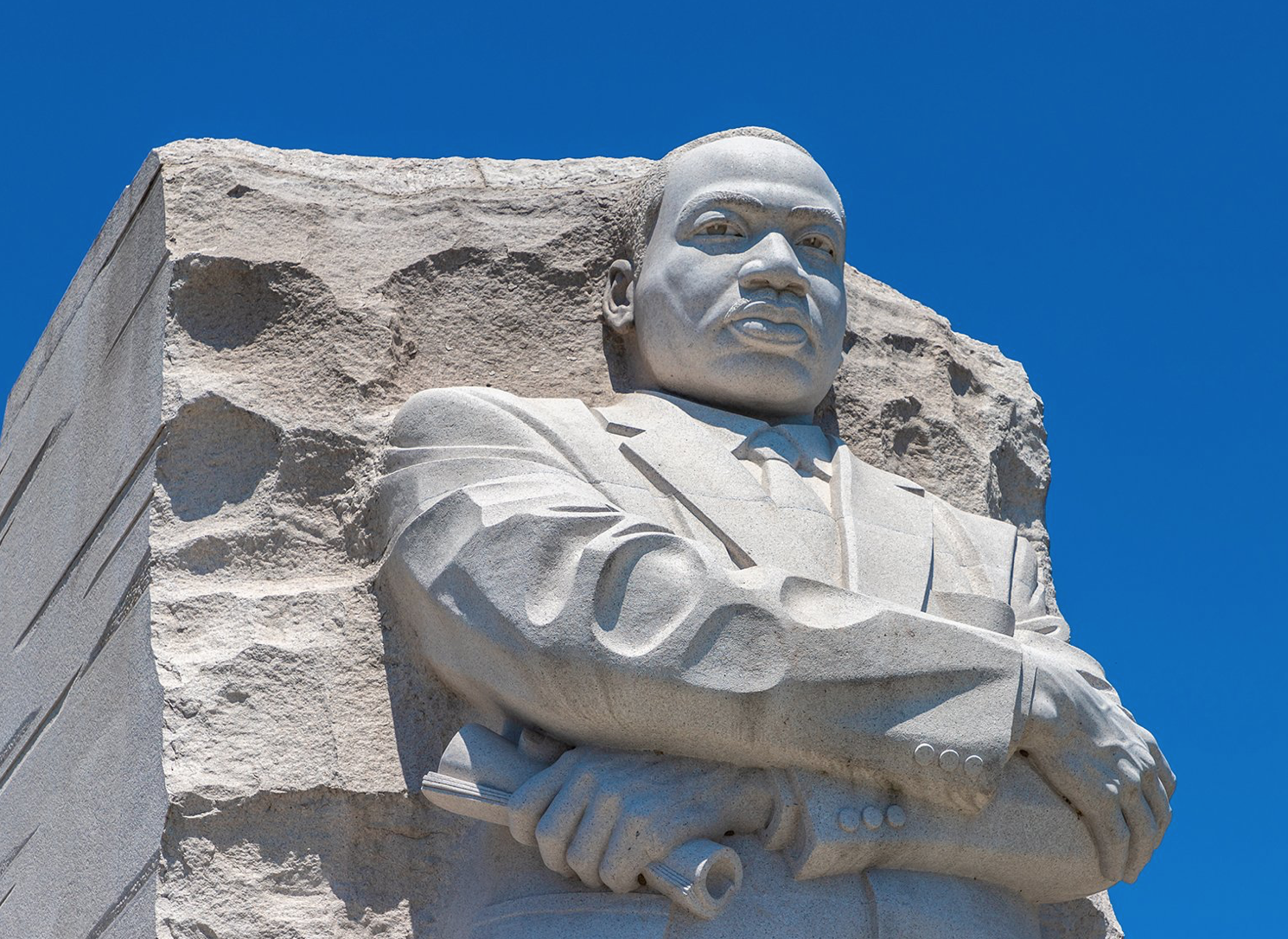
Martin Luther King, Jr. Memorial, Washington, D.C. Sergii Figurnyi – stock.adobe.com
h1

NEA Funding

September 1, 2018

Student Achievement Grants

Fact: Sometimes educators need outside funding for classroom resources. The National Education Association (NEA) has Student Achievement grants available for NEA members. This grant program has provided funding to thousands of educators to enable them to take the lead on a wide range of projects to improve student learning. LEARN MORE.

Two levels of funding are available: $2,000 and $5,000. Grants fund activities for 12 months from the date of the award.

Grant application instructions.

h1

Arts Education for America’s Students

January 14, 2014

A Shared Endeavor

A Shared Endeavor is a recently released statement which represents a groundbreaking joint endeavor with twelve major arts organizations stemming from the Accord meeting in Washington D.C., May 2013.  A Shared Vision defines what quality arts education looks like at the local level, encourages partnerships, and calls on organizations and individuals to actively support and promote:   

  • Policies and resources for arts education.
  • Access to arts education for all students.
  • Collaboration between school-based arts educators, other subject area teachers, and community-based artists and arts educators.
  • Long-term advocacy partnership between all providers of arts education.  

A Shared Vision can be used in a multiple ways. Please share it with your administrators, colleagues, and community members. Encourage other educators to distribute the statement to education organizations. Be a leader and use Shared Vision to start a conversation at the local level, within your school and community.

The arts(1) are part of a balanced education, providing America’s learners with essential skills and knowledge they need to be productive, college and career ready citizens. A core academic subject of learning,(2) the arts are supported by a rigorous set of voluntary national standards(3) and assessment frameworks(4) designed to improve and support arts learning. In addition, forty‐nine states support sequential arts learning in their public schools with state‐adopted arts standards.(5)

The American public values a quality arts education in our schools.(6) When America’s public schools invest in certified arts educators, students gain the opportunity for a sequential, standards‐based education in the arts. Certified non‐arts educators in schools expand students’ opportunities for arts learning by providing curricular connections among the arts and other subjects.(7) Furthermore, students gain deeper, additional standards‐based arts learning experiences through America’s cultural organizations, community arts organizations, and teaching artists. It is the convergence of the contributions of all partners and opportunities that provides a quality arts education for our students.

Despite the rich body of data(8 )demonstrating how students benefit from quality arts education, many American children lack access to it in their schools. According to the National Center for Education Statistics, students in high poverty schools are more than twice as likely to have no access to the arts.(9) We believe that the inequity of access to quality arts education must be addressed. Too often, arts education is squeezed out of America’s public schools.

An education without the arts is inadequate. Therefore, we call on our public policy leaders to provide a systemic and rigorous arts education for all students in all public schools by leveraging the expertise and experience of the partners involved in arts education. To this end, the signatories of this document will support efforts to:

  • Advance policies and resources that ensure access to arts education for all students— delivered by certified arts educators—and that develop artistic literacy through a sequential, standards‐based arts education.
  • Ensure that all students have access to in‐school and community arts learning opportunities that add value to a standards‐based PK‐12 education in America’s public schools.
  • Encourage certified arts educators, community arts providers and certified non‐ arts educators to provide quality arts education for their students by collaborating together in support of improved instructional and classroom practices.
  • Foster proactive, long‐term advocacy collaborations among certified arts educators, community arts providers, and certified non‐arts educators that engage parents, school leaders, and other key stakeholders to support student access to high‐quality arts education throughout the school and community.

Screen shot 2014-01-13 at 8.24.10 PM Screen shot 2014-01-13 at 8.24.26 PM

Screen shot 2014-01-13 at 8.19.42 PMInterested in endorsing this statement? Email SharedEndeavor@gmail.com

1 The arts are defined here as dance, media arts, music, theatre and visual arts, following the National Coalition for Core Arts Standards, http://nccas.wikispaces.com. Each state defines the arts differently within statute. Reference http://www.aep‐arts.org/
research‐policy/state‐policy‐database/ for further state information.
2 Elementary and Secondary Education Act, Title IX, Section 9101, 11, http://www2.ed.gov/policy/elsec/leg/esea02/pg107.html; http://www.aep‐arts.org/wp‐content/uploads/2012/07/State‐of‐the‐states‐2012‐FINAL.pdf
3 http://artsedge.kennedy‐center.org/educators/standards.aspx                                                     4 http://nces.ed.gov/nationsreportcard/arts/howdevelop.aspx                                                        5 http://www.aep‐arts.org/wp‐content/uploads/2012/07/State‐of‐the‐states‐2012‐FINAL.pdf
6 Americans for the Arts (2005), “New Harris Poll Reveals That 93% of Americans Believe That the Arts Are Vital to Providing a Well Rounded Education,” http://www.americansforthearts.org/sites/default/files/pdf/news/press‐releases/2005/06/New‐Harris%20Poll‐
Reveals‐93‐Percent‐of‐Americans‐Believe‐Arts‐are‐Vital‐to‐Well‐Rounded‐Education.pdf
7 http://nccas.wikispaces.com/file/view/Arts%20and%20Common%20Core%20‐%20final%20report1.pdf/404993792/Arts%20and%20 Common%20Core%20‐%20final%20report1.pdf
8 http://www.americansforthearts.org/by‐program/networks‐and‐councils/arts‐education‐network/tools‐resources/arts‐ed‐navigator/ facts
9 http://www.aep‐arts.org/resources‐2/report‐arts‐education‐in‐public‐elementary‐and‐secondary‐schools/

If you’d like to download this information in document form please go to http://www.seadae.org/Corporatesite/files/6e/6e73488d-bd16-4394-b0f5-78629c1d7aeb.pdf or http://www.seadae.org/ or email me.