My thoughts
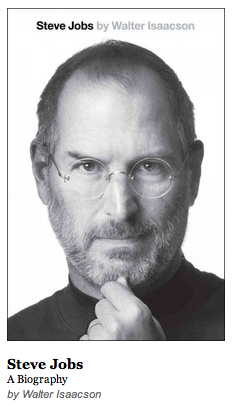
While catching up on reading this morning I got to thinking about how Steve Jobs has impacted arts education. In many ways he lived his life in the best way possible – day to day, being as creative and imaginative as possible. And taking that a step farther and sharing that innovation with others.
I so enjoyed watching a youtube where he was speaking at a graduation about the importance of following your heart and dreams.
“You’ve got to find what you love. If you haven’t found it yet, keep looking and don’t settle. As with all matters of the heart you’ll know when you find it. And like any great relationship it just gets better and better as the years roll on.”

I hear arts teachers say “I have the best job in the world, I love what I do”. During many of my years teaching I felt the same way and now in my job at the Maine Department of Education I feel that same way. What helps us to love what we do? Is it the creativity, finding innovative ways to do the “work”, developing relationships with young people who are excited about creating and motivating others to be excited about creating? Perhaps!
Steve Jobs created cool stuff that have changed the way we think, communicate, and the items have the potential to enable us all to be more creative.
In a statement from the chair of Google Inc., and former Apple board member, in an interview this week Eric Schmidt said about Steve Jobs:
“He’s clearly the most effective and successful American CEO in the last 50 years. He didn’t just found Apple, and he didn’t actually just make it successful in the first decade, he also took it after a bad period, and rebuilt it. Which has essentially never been done in an American corporations, to be the extraordinary company it is today. To me, Steve proves that nerds don’t win. Artists do. And that Steve who is both a technologist, but really an artist, shows that art matters and the rest of us missed the fact that beautiful simple products are what people want.”
Even though I am not in the classroom every day teaching, , after 30 years in the classroom, I still think of myself as a teacher. And… I think the aboive statement is a strong reason of why we can’t think “separate subjects” but have to think integratively. We can’t think one or two subjects are more important than others, we have to teach the whole child and approach teaching mindful of that. We have to be more “intentional” in what we do as educators. We are role models, and our messages are strong and have an impact.
This is my signature for my personal email:
“Steve Jobs has done more Cool Stuff than anybody else in Silicon Valley. . . . one of his success secrets is loading every development team with artist and historians and poets and musicians and
dramatists. He says he wants to bring to bear, on each project, the best of human cultural accomplishment. So how come schools don’t get it? Budget crunch? First programs to be cut? Art and Music. I say the hell with the math budget [I really don’t mean that.] Let’s enhance the art budget and inflate the music budget. Training in Creativity is important, in general. But it is absolutely essential in this Age of Intangibles and Intellectual Capital.”
Source: Tom Peters, Re-imagine
And from Steve Jobs commencement speech at Stanford in June 2005 this story speaking about what he did while not quite “officially” dropping out of school:
“Reed College at that time offered perhaps the best calligraphy instruction in the country. Throughout the campus every poster, every label on every drawer, was beautifully hand calligraphed. Because I had dropped out and didn’t have to take the normal classes, I decided to take a calligraphy class to learn how to do this. I learned about serif and san serif typefaces, about varying the amount of space between different letter combinations, about what makes great typography great. It was beautiful, historical, artistically subtle in a way that science can’t capture, and I found it fascinating.
None of this had even a hope of any practical application in my life. But ten years later, when we were designing the first Macintosh computer, it all came back to me. And we designed it all into the Mac. It was the first computer with beautiful typography. If I had never dropped in on that single course in college, the Mac would have never had multiple typefaces or proportionally spaced fonts.
And since Windows just copied the Mac, its likely that no personal computer would have them. If I had never dropped out, I would have never dropped in on this calligraphy class, and personal computers might not have the wonderful typography that they do. Of course it was impossible to connect the dots looking forward when I was in college. But it was very, very clear looking backwards ten years later.
Again, you can’t connect the dots looking forward; you can only connect them looking backwards. So you have to trust that the dots will somehow connect in your future. You have to trust in something — your gut, destiny, life, karma, whatever. This approach has never let me down, and it has made all the difference in my life.”
I hope that the death of Steve Jobs will cause you to pause and reflect on your teaching approach how to bring out the best in each of your students. We never know which one will be the next innovator and visionary who can make an impact on the community, no matter how large.
“Steve Jobs was our da Vinci” Guy Endore Kaiser


 me arts ed