Posts Tagged ‘teacher leader’

h1

Another Arts Teacher’s Story: Sarah Gould

April 7, 2015

MAAI Teacher Leader series

This is the eighth blog post for 2015 on the Phase 4 Maine Arts Assessment Initiative’s (MAAI) Teacher Leaders sharing their stories. This series contains a set of questions to provide the opportunity for you to learn from and about others. You can learn more about MAAI at http://mainearts.maine.gov/Pages/Education/MAAI# and learn more about all 61 of the MAAI Teacher Leaders at http://www.maineartsassessment.com/#!teacher-leaders/c1qxk.

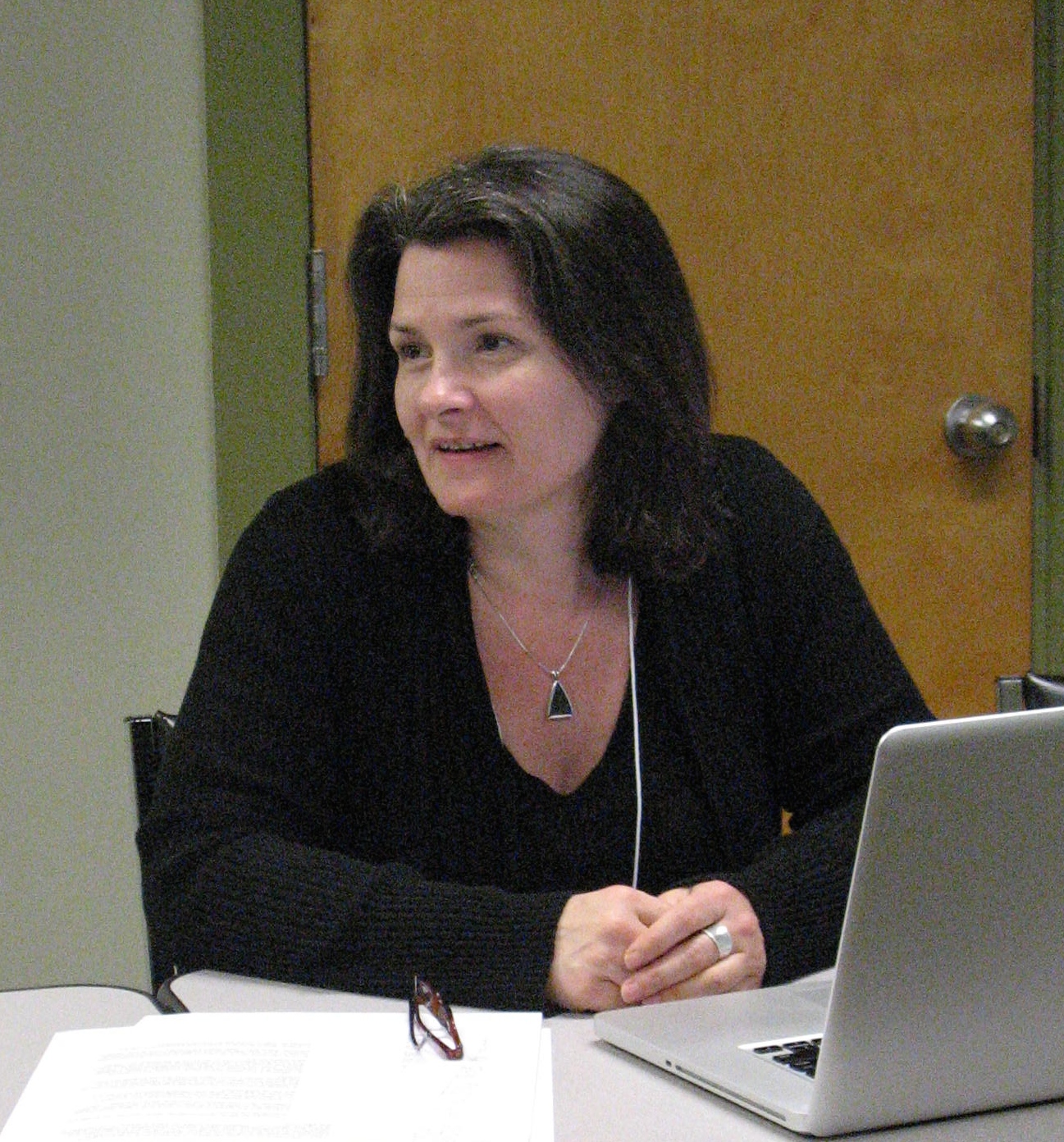
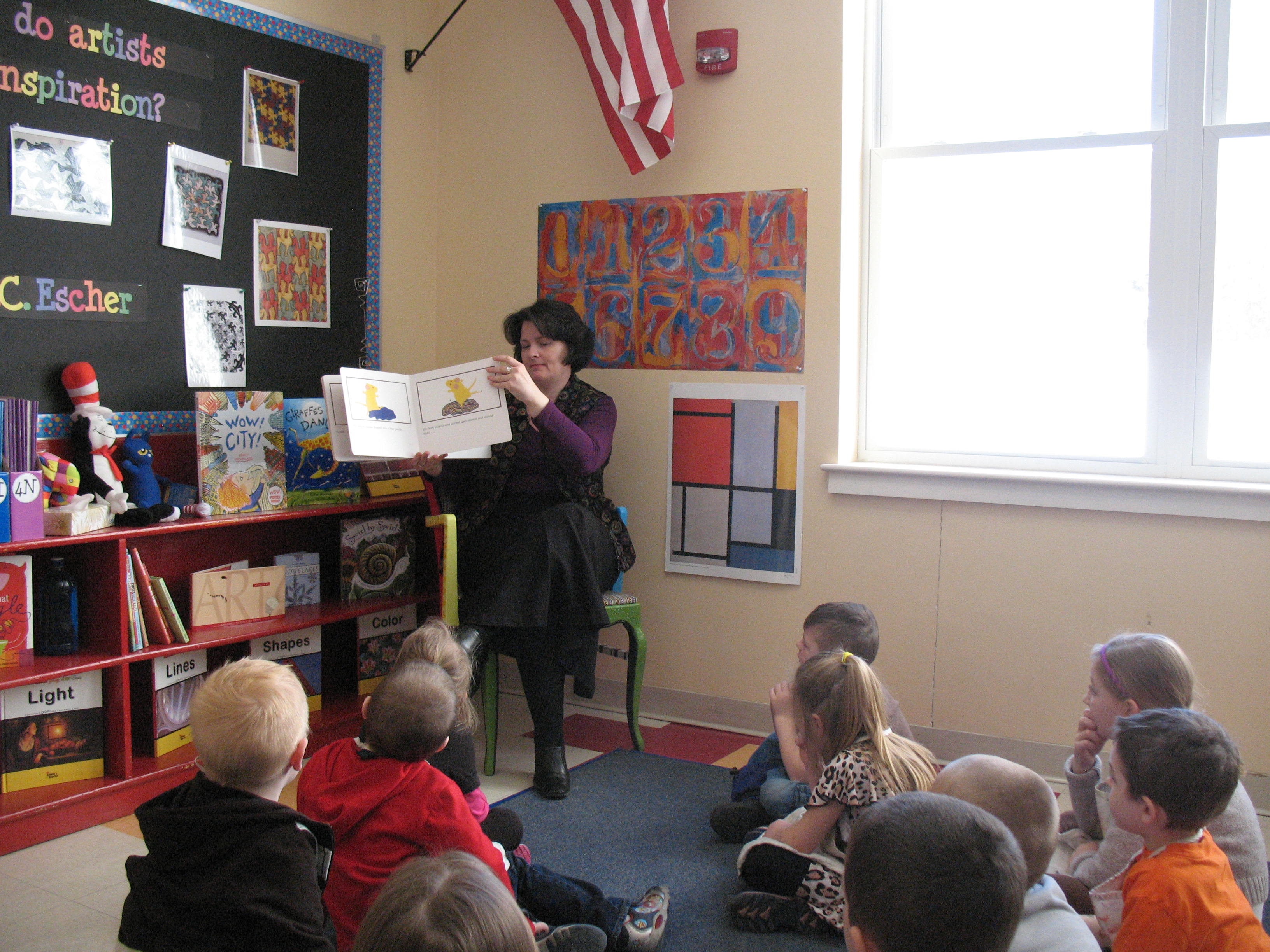
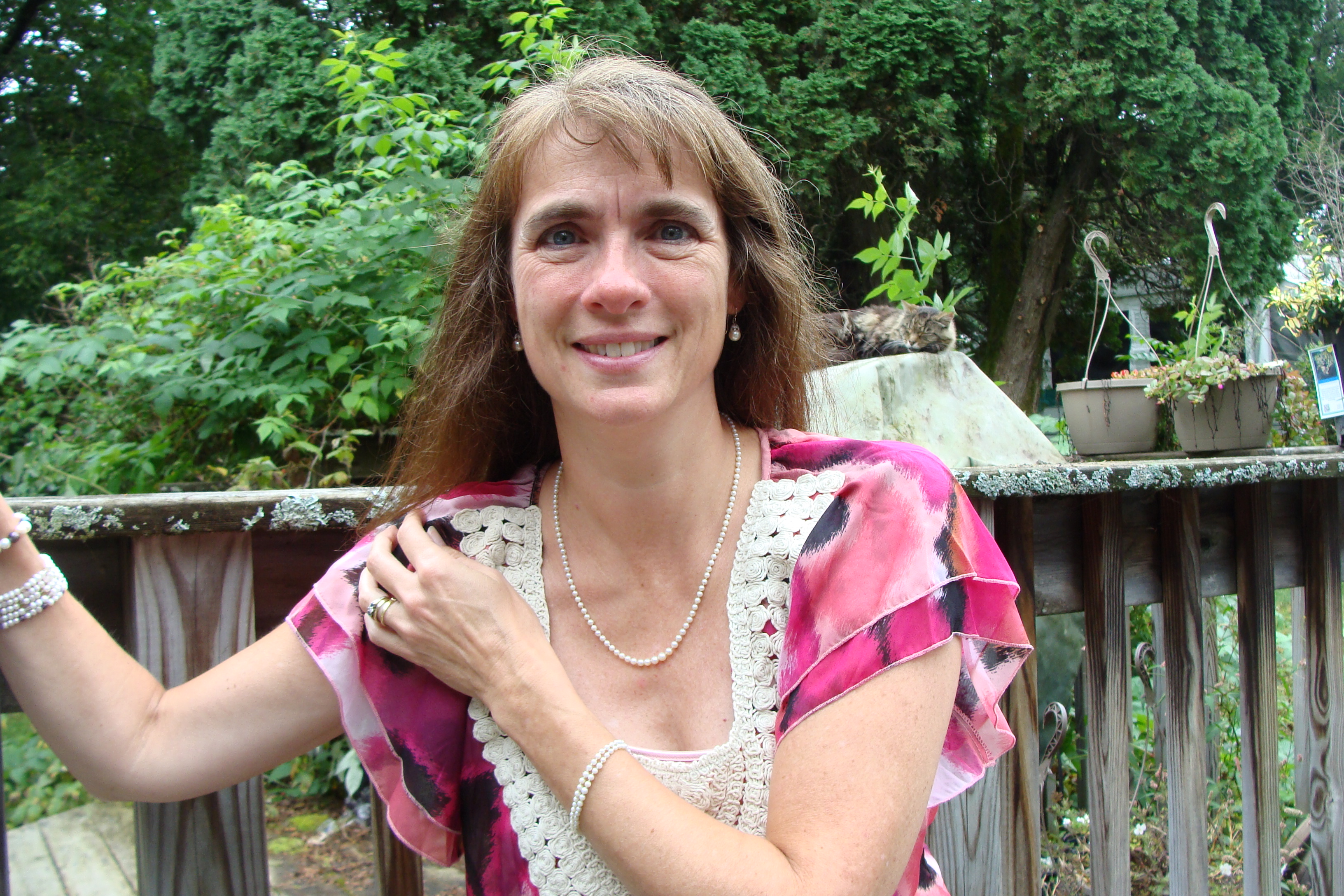
4747f3_99e8f0ca14cd47a597dd42c859c217f3.jpg_srz_p_147_138_75_22_0.50_1.20_0Sarah Gould is a Visual Art teacher who is on her ninth year at Gray- New Gloucester High School. This semester she has just over eighty art students in her classes that range from Foundations, Sculpture, Ceramics, Painting, and IB Art. She has been department head and a teacher leader team member at the school for seven years.

Sarah is actually a GNGHS alumni, who came back as a long-term substitute for her high school art teacher, who then decided not to return after her maternity leave. Sarah earned her BFA at USM with a concentration in Art Education in 2006 with a double focus in drawing and ceramics.

What do you like best about being an art educator?!

I can’t say as if there is one single thing I like best about being an educator, it is the complete picture that encompasses so much; connecting with students, teaching them, watching them grow, encouraging them, giving them the power to be proud of themselves, celebrating accomplishments with them, learning about life as well as art.

What do you believe are three keys to ANY successful visual and performing arts education?

Comfortability. Art, visual or performing, naturally displays student ability. Kids can be nervous to participate in fear they will be no good, and that others are going to see it. I think providing an open, safe, friendly environment is an absolute must to nurture student participation, experimentation, and expression.

Personalization. Some students have natural ability, others have to work for it. Students all connect with different media and processes. Each has their own personal interests and pathways ahead. I think it is important to find how art can fit or connect into students lives, so they can value it’s importance and relevance as it’s importance to them. Also leaving room for personalization and student choice creates greater investment on top of creativity. !

Balance between “fun” and “rigorous.” I think we all want students to enjoy our classes and find inspiration in the things we teach and love. I also think we all want students, parents, colleagues and administration to respect our content areas. I do think there are many ways to find a balance, and it certainly looks different for everyone. But I think it is possible and important to find a happy place between students being excited to come to class to create and perform, and also want to work hard and have an appreciation for the subject and what they are learning.!

How have you found assessment to be helpful to you in your classroom?

Assessment has played a large role in my teaching style, especially over the last few years. When we started our early transition to becoming a proficiency based school, the theory and the practice had a large effect on my approaches and strategies. Once we organized our standards and broke down what we wanted to assess, it changed our curriculum, units, lessons, and targets. With assessments and rubrics, it became clear what we were measuring, and in turn what to teach. It also became more clear to students, who then knew expectations, why they earned certain scores, and how to improve or revise their work. It also became a tool to communicate with parents, who may have thought scores were based on personal opinion. Well made assessments have gained our department respect and have become an advocacy tool.

What have been the benefits in becoming involved in the arts assessment initiative?

It has been great being a part of the MAAI work. Making connections and forming relationships with other teachers in the same content area can be awakening and rewarding both. It’s always nice to meet others with similar passions, and interesting to hear how different schools are structured, but learning from one another is the greatest benefit. I have found the conferences provide an open and understanding atmosphere where you can feel comfortable asking questions or sharing what you do. It is the friendly atmosphere that made me feel comfortable in becoming a teacher leader and presenting what I do, hoping someone can learn something from me and take that with them as I have from others in the past.

What are you most proud of in your career?

I think I am the most proud of building a well structured and respected art program. The other art teacher and I have worked really hard for years designing our courses and curriculum, and are constantly making changes, revising, and improving what we do. I believe we have earned respect professionally and in the community.

What gets in the way of being a better teacher or doing a better job as a teacher?

Time. There is never enough time! I know I could invest more, and use strategies better, and add steps, but sometimes there just isn’t time. Time in the block, time in the day, the week, the quarter, the year. There are so many things I’d love to do with my kids, and I can’t squeeze them in, or find time myself outside of the school day to further develop ideas. Most obstacles we can work around, but time seems to be the one thing I always need more of.

What have you accomplished through hard work and determination that might otherwise appear at first glance to be due to “luck” or circumstances?

I think originally when I became the electives department head/ teacher leader at GNGHS some felt that I didn’t deserve or earn the position because I was a relatively young and new teacher. But I took the role very seriously and have invested myself in the greater improvement of our school, and I think I literally worked my way out of the doubts others had and proved myself.

Look into your crystal ball: what advice would you give to teachers?

Well, who knows what the future holds, but I would say the biggest piece of advice I can think of now is to be constantly evolving. Change what you do, let go of things that don’t work, take chances and try new things, revise things that work and make them better, be inspired yourself and keep things exciting, adapt to changes, be constantly changing and growing yourself, as an educator and artist, visual and/or performing.

If you were given a $500,000.00 to do with whatever you please, what would it be?

Hmm… how far does $500,000 go? Our economics class does that project, maybe I should sit in! 🙂 As an art educator I would like to invest in a program for either underprivileged children or a program for individuals struggling with mental or emotional wellness as a means of therapy.

Imagine you are 94 years old. You’re looking back. Do you have any regrets?

I dislike the thought of having regrets, I like to think we should try to appreciate the path we have taken and what it has given us. With that said, I do fear that I will look back and be disappointed I didn’t take more risks, or take advantage of opportunities, or push myself harder. I’m afraid of playing it too safe. Perhaps knowing that fear will encourage me to prevent it from happening and break out of what I find comfortable.
MAAI Logo_Color_TxtCtr

h1

Another Arts Teacher’s Story: Pamela Kinsey

March 31, 2015

MAAI Teacher Leader series

This is the seventh blog post for 2015 on the Phase 4 Maine Arts Assessment Initiative’s (MAAI) Teacher Leaders sharing their stories. This series contains a set of questions to provide the opportunity for you to learn from and about others. You can learn more about MAAI at http://mainearts.maine.gov/Pages/Education/MAAI# and learn more about all 61 of the MAAI Teacher Leaders at http://www.maineartsassessment.com/#!teacher-leaders/c1qxk.

Sunday best 1Pamela Kinsey serves on the MAAI Leadership Team along with being a Teacher Leader. She teaches music in Easton, Maine where her responsibilities include General Music K-6 (including Recorder), Beginning Band, Elementary Chorus, 7-12 Band, 7-12 Chorus and High School Jazz Choir. Pam has taught Music Appreciation at the High School level as well and she is the Co-Team Leader of the Wellness Team! She has been teaching music in some form since high school and gave private lessons. She has maintained a private ‘studio’ of varying numbers of students ever since. She earned her Bachelor’s Degree in Music Education (with an instrumental emphasis on Flute) from the School of Music at Wittenberg University in Springfield, Ohio. Pam has been teaching in schools since 1984, and in Easton since 1988.

What do you like best about being an music educator?

One of the things that I like best about teaching music is that it gives me an opportunity to share my love of all types of music with new ears. I see students from a young age and watch them grow and mature into wonderful young ladies and gentlemen and amazing young musicians. I can look back at several of my students and see them still actively participating in music! It is very rewarding. I have second-generation students continuing in the musical paths of their parents. I take them to concerts of every type available in a region where that is not necessarily the norm. Seeing their eyes roll at the prospect of going for the first time to the American Folk Festival in Bangor and then seeing their eyes light up at the idea of attending the Folk Festival a second…or third or fourth time….that is what makes me love my job. When students come back and seek me out to tell me how things are going. When students call me on the telephone to chat. When students invite me to their weddings and baby showers because we became friends while we were making music together. Those are all reasons that I teach music. It is a life style, not just a job.

What advice to you have for young teachers?

My advice to teachers and students alike is to take advantage of as many of the opportunities that present themselves to you as possible. You never know when something new will be the thing that hooks your interest and it might just take you places unimagined and amazing!

What do you believe are three keys to ANY successful visual and performing arts education?

Keys to any successful program? I think that first of all, you must love your art form. I think it is important to be out there, practicing our craft, and letting the students see us in that light. My students know that I play in a Community Band. I bring them on a bus to see the diversity of membership from young to old, all participating together. They know that they are invited to play in the group once they have the ability or the desire! My students know that I play in a Community Orchestra. Again, I bring them on a bus to see an orchestra in action. We don’t have a string program and I like them to see that art form live. They also know that I am involved in music at my church. Again, music is more than my job: it is my vocation, my passion and part of my daily life. Truly, I practice what I teach!

I think it is important to help students to succeed, but equally important to let them know that failure is OKAY! They have to make mistakes with their singing and playing so that they can learn from them and grow as musicians. It makes me sad when I ask students ‘Is it okay to make a mistake in music class or in school?’ and have them answer ‘NO’. I tell them of course it is okay…that is how we learn! If we make a mistake because we are trying, then we know it is there and it is something we can fix.

How have you found assessment to be helpful to you in your classroom?

I consider myself an ‘Old Dog’, and ‘new tricks’ come hard to me. Assessment in my classroom has forced me to re-evaluate how I am teaching and connecting with my students…especially the younger ones. We now have clearer reasons for doing what we are doing and the students are taking more ownership. Now when they create, I show them the rubric that tells them exactly what to do for each level of grading. When they try to hand that in, I remind them that they still need the rubric to complete the project. They can view and listen with discerning eyes and ears, because the expectations are clear. That is very powerful.

What have been the benefits in becoming involved in the arts assessment initiative?

Becoming involved in the Maine Arts Assessment Initiative has given me more confidence in my teaching and in my advocacy skills. Finding my way as a department of one was difficult, since there was no support system that understood what I was trying to accomplish. Now, I am part of a caring, safe and supportive community of Arts professionals, ALL of whom understand what I am trying to accomplish and the struggles that I encounter on a daily basis, since they are very often shared struggles.

What are you most proud of in your career?

In my career, I am most proud of the relationships I have built with students and the hope that they possess an appreciation of music that will stay with them throughout their lives. I am proud of the fact that others see me in leadership roles that I might not have seen myself in. I have built up a rapport with other Arts educators throughout the state and region as a result of these leadership roles. I am proud to be a past chair of the District VII Northern Maine Music Educators Association, the former Secretary of the Maine Music Educators Association and the current President of the Maine Music Educators Association. I am also very proud of the work of MAAI and I am pleased to be a small part of the amazing leadership team and ‘Argy’s Army of Artists’!

What gets in the way of being a better teacher or doing a better job as a teacher?

Sometimes, I think that all of the mandates for standardized expectations get in the way of teaching…and learning….simply for the joy of teaching and learning. There are expectations that our students have the very highest level of achievement, but we are allowed only the very minimum of time in a week to meet these expectations. Of course, funding is an issue in all of education. For me, time to prepare and collaborate with others would be amazing, but again, there isn’t time in the day for this type of group planning in the Arts, especially in a Music Department of one.

What have you accomplished through hard work and determination that might otherwise appear at first glance to be do to “luck” or circumstances?

Hard work and determination are necessary in any job. I think that one thing that I have accomplished is a successful blending of a 7-12 Band. Many years ago, we moved our 7th and 8th graders form the Elementary School, where I had a proper Middle School Band, to the High School and I was told there was no room in the schedule for Middle School Band and the program would now be a combined Band. You can imagine my concern at the idea of mixing students with two years of playing experience with students with five years of playing experience. I feel that the people in the position of making that decision really didn’t understand what they were expecting would just ‘happen’. It was a real struggle, especially at the beginning. Now, however, it is a successful blending of abilities and the Band is pretty darned great in my opinion! On the surface, it was just expected, but I had to be creative and work very hard to make it succeed and not lose students due to frustration by being too difficult or too easy.

If you were given a $500,000.00 to do with whatever you please, what would it be?

Wouldn’t it be amazing to have funding like $500,000! I would begin by purchasing instruments, so that every student would have the opportunity to play an instrument, regardless of financial status. New instruments are psychologically better than used. In a rural, depressed area, often cost is the only deterrent to playing an instrument and I hate seeing students have that obstacle in their path. If I could put an instrument in the hands of every child to use for their entire school career, I would love that.

Imagine you are 94 years old. You’re looking back. Do you have any regrets? 

When I am 94, and I can only hope to have that longevity, I hope there won’t be any regrets! I know I won’t regret my career choice. I was fortunate enough to have a grandmother that had a very long life. When she was in her 90s she was still making music, playing in three hand bell choirs, and playing the piano. She is my musical success story for my students. If you have music in your blood, you will always have music in your life!


MAAI Logo_Color_TxtCtr

h1

Another Arts Teacher’s Story: Emma Arenstam Campbell

March 17, 2015

MAAI Teacher Leader series

This is the fifth blog post for 2015 on the Phase 4 Maine Arts Assessment Initiative’s (MAAI) Teacher Leaders sharing their stories. This series contains a set of questions to provide the opportunity for you to learn from and about others. You can learn more about MAAI at http://mainearts.maine.gov/Pages/Education/MAAI# and learn more about all 61 of the MAAI Teacher Leaders at http://www.maineartsassessment.com/#!teacher-leaders/c1qxk.

Screen Shot 2015-03-10 at 9.59.32 AM

Emma Arenstam-Campbell

Emma Arenstam-Campbell teaches dance to students in grades 9-12 at Thornton Academy in Saco, Maine. This is Emma’s 4th year working at the school. She has 200 students in 6 classes. She also co-directs the spring musical and is the junior class advisor. She attended Bates College where she studied Dance and Anthropology and is currently a masters degree student at Savannah College of Art and Design in Arts Administration.

What do you like best about being a dance educator?

My favorite part about teaching is the lessons that I am able to share with my students. My main role is to guide students towards a lifelong appreciation for the arts. If they become a talented dancer along the way that’s great but that isn’t my first priority, especially having 200 students from all different backgrounds.

What do you believe are three keys to ANY successful visual and performing arts education?

  1. Share what you love, what you like, and what you hate. Help students develop their own aesthetic.
  2. Art is not a competition- make sure that your students know that the only person who they should be competing against is themselves.
  3. Be patient! The lesson might not go as planned and that is OK.  Exploration is the lesson as much as the content.

How have you found assessment to be helpful to you in your classroom?

Assessment has allowed me to validate and advocate for what happens in my classroom.

What have been the benefits in becoming involved in the arts assessment initiative?

The Maine Arts Assessment Initiative has transformed the way in which I think about my personal assessment as well as the assessment for dance classrooms in general. I have always been a lone star in professional development opportunities as the classroom dance teacher is an uncommon profession in Maine. Becoming a part of this group of amazing teachers has allowed me to connect with educators in a similar capacity and share teaching excellence.

What are you most proud of in your career?

The thing that really invokes a sense of accomplishment is when I see a student have an ‘a-ha’ moment- finally understanding something as a result of THEIR hard work. This can happen in many different ways, but these are the moments when I know that I am in the right profession.

What gets in the way of being a better teacher or doing a better job as a teacher?

My number one barrier is time. I am trying to reach a huge group of students as the sole dance teacher in my school. I try my best and often times work with students outside of school in order to try to connect with them on an individual level.

What have you accomplished through hard work and determination that might otherwise appear at first glance to be due to “luck” or circumstances?

Growing my program from 75 dancers to over 200. I recruited students who never thought they could dance but were very interested in exploring their creativity through movement. I really try to make dance accessible and not exclusive.

Look into your crystal ball: what advice would you give to teachers?

Patience and flexibility are the two most important things that I attribute to those days when I feel like I am really ‘on’ as a teacher. As we know the ways in which students learn vary from student to student and day to day to the ability to roll with the punches has saved me from flopping in some more challenging lessons.

If you were given a $500,000.00 to do with whatever you please, what would it be?

Open a dance school that offers subsidized tuition to students who could not otherwise afford it. This is a dream of mine.

Imagine you are 94 years old. You’re looking back. Do you have any regrets?

I hope nothing! My hope is that I will have a fruitful career advocating for dance in any capacity that I am able.

MAAI Logo_Color_TxtCtr

h1

Another Teacher’s Story: Cynthia Keating

March 3, 2015

MAAI Teacher Leaders series

This is the third blog post for 2015 on the Phase 4 Maine Arts Assessment Initiative’s (MAAI) Teacher Leaders sharing their stories. This series contains a set of questions to provide the opportunity for you to learn from and about others. You can learn more about MAAI at http://mainearts.maine.gov/Pages/Education/MAAI# and learn more about all 61 of the MAAI Teacher Leaders at http://www.maineartsassessment.com/#!teacher-leaders/c1qxk.

Screen Shot 2015-03-01 at 5.22.59 AMCynthia Keating is in her eleventh year of teaching general music education to K-­2 students at Village Elementary School in York. Her students receive music once a week for 45 minutes. Once a month, on a rotating Friday schedule, students receive music twice a week. She previously taught in Suncook, NH, Ogunquit and Wells, Maine ­ totaling 32 years of instruction in elementary music education. However, you may have wondered who those fantastic musicians were that provided all the ceremonial music for the 1980 Winter Olympics in Lake Placid, NY?!?! Well………Cynthia was one of them because she attended the Crane School of Music in Potsdam, NY! It has been 35 years since she helped play the national anthem for our Men’s Ice Hockey team as they received their gold medals after having beaten the Men’s Russian Ice Hockey team!

What do you like best about being a music educator?

There is nothing more pure and beautiful than the singing voice of a child​.​

What do you believe are three keys to ANY successful visual and performing arts education?

  1. Having support from my fellow teachers and administrators
  2. Being a passionate, engaging and well educated professional
  3. Being flexible and understanding of ALL teaching positions within my school

How have you found assessment to be helpful to you in your classroom?

I have definitely found assessment in my classroom to be helpful. When I used “I Can Statements” for the first time, I had a huge “Ah ha!” moment.

What have been the benefits in becoming involved in the arts assessment initiative?

  • Finding my BFF
  • Having conversations with people that believe, like me, that the arts are essential
  • Having the freedom to express oneself in a safe environment

What are you most proud of in your career?

I am proud that I am a lifelong learner. I NEVER want to become “that teacher” whom everyone is wondering,“When is SHE going to RETIRE?!”

What gets in the way of being a better teacher or doing a better job as a teacher?

BEWARE THE BLACK HOLE filled with negativity!

What have you accomplished through hard work and determination that might otherwise appear at first glance to be due to “luck” or circumstances?

  • Staying up to date on new things in education
  • Staying fresh on current practices.
  • Staying informed and open to new ideas.

Look into your crystal ball: what advice would you give to teachers?

Surround yourself with others that think like you. *Don’t necessarily follow the crowd.

If you were given a $500,000.00 to do with whatever you please, what would it be?

I would create an auditorium, with a phenomenal light and sound system, in OUR school to accommodate our entire school’s population. We would have plenty of room to perform and dance and display our arts properly! It would be ​amazing​!

Imagine you are 94 years old. You’re looking back. Do you have any regrets?

Someday I ​will​ be 94, ­ I have longevity on both sides of my family! But I won’t be looking back ­ I’ll only be looking forward!

MAAI Logo_Color_TxtCtr

h1

Another Arts Teacher’s Story: Theresa Cerceo

February 24, 2015

MAAI Teacher Leaders series

This is the second blog post for 2015 on the Phase 4 Maine Arts Assessment Initiative’s (MAAI) Teacher Leaders sharing their stories. This series contains a set of questions to provide the opportunity for you to learn from and about others. You can learn more about MAAI at http://mainearts.maine.gov/Pages/Education/MAAI# and learn more about all 61 of the MAAI Teacher Leaders at http://www.maineartsassessment.com/#!teacher-leaders/c1qxk.

Theresa CerceoTheresa Cerceo is in her ninth year teacheing Visual Arts, K – 12 with MSAD 33 in Frenchville / St Agatha school district. Check on the map, it is WAY UP NORTH! She teaches full time;  I teach full time; middle / high school in the morning (four times a week) and elementary in the afternoon (each class once a week). In addition to teaching art, Theresa is a certified Gifted and Talented teacher and works with students in this capacity for Visual and Language Arts enrichment.  At the elementary level, she helps facilitate Language Arts, Science and Math Skill Seminars as part of the school-wide daily schedule. These seminars occur for 45 minute Monday – Thursday and change topics every two weeks. Also, Theresa serves on the school district’s Leadership Team for Learner – Centered Proficiency-Based Learning. Before moving to Maine in 2006, she lived in (my home town) Philadelphia.  There, she spent some time at Tyler School of Art (Temple University) before receiving a BFA from Rosemont College and an MAT (Visual Arts) from the University of the Arts.  In addition to working for the Main Line Art Center and the University of the Arts as an arts teacher in their children’s weekend and summer programs,  she taught art for 3 years within Philadelphia and the surrounding area at the elementary, middle and high school level.

What do you like best about being a visual art educator?

What I enjoy most about being an art educator is being able to provide an opportunity for students to engage in one of our basic human instincts, to create. I am humbled that I can assist in nurturing a child’s ability to express their unique identity while providing them the knowledge in skills and  techniques so that they may communicate more effectively.

What do you believe are three keys to ANY successful visual and performing arts education?

In addition to administrative support, I believe love and personal commitment for one’s content, assessment supported curriculum, and teacher flexibility are the three keys to providing a successful art education.

How have you found assessment to be helpful to you in your classroom?

Good assessments offer me a tool in which I can communicate with my students regarding expectations and their growth. It allows me to plan for what students need and how they need instruction delivered. This allows me to make their time in my room as individualized as possible.  Students see constructive feedback regarding their thought processes and skills and then, they can set real goals that are meaningful to them. I am finding that this facilitates not only skill and concept development, but a deeper appreciation for their time spent in art class.

What have been the benefits in becoming involved in the arts assessment initiative?

Becoming involved with MAAI has given me the tools and support to establish my voice in my district. By attending Mega-Regionals and then going through the Teacher Leader training I have gained the knowledge base to establish the arts as an academic subject. At the core, what I have gained through MAAI is the knowledge that I am no longer an isolated arts teacher; that I am part of  a large group of educators that believe that the Arts are essential to human development; they understand why and they are committed to strengthening arts education and advocacy for the arts in Maine. This has reinvigorated my passion for teaching as well as my commitment to building the best art program possible.

What are you most proud of in your career?

I am most proud of my personal growth as an educator. Over the years, I have spent a lot of time developing, reflecting and revising my curriculum and it has gone from a basic outline of what I thought was important for students to know (based on my personal experiences as a student and my personal interests),  to a more (teacher – student) collaborative piece that allows for exploration and discovery, reflection and personal goal setting. The most important thing I have learned, and I am still developing is flexibility in terms of instruction. A concept may be important for all students to get, but the way I deliver it might change from class to class depending on their readiness level, learning styles or even time constraints. I strive to treat students as individuals and to allow the art room to be a place where they can make personal connections to the materials and techniques offered and feel safe to make mistakes and to grow. Although this was always my theory about how an art classroom should run, it took me time and a lot of reflection and revision in order to reach a place where I can feel I am closer to this goal.

What gets in the way of being a better teacher or doing a better job as a teacher? 

I think we can often get in our own way through self doubt or rigidity in our thinking. I realize now, I used to act as though students should be the kind of student I was or should care about the subject matter I find important. Teaching through this paradigm produced some success but not much growth or the overall “ love for the arts” I was hoping to foster. By surveying students, hearing other teachers, reflecting, and trying new ideas, I feel I learned a lot about myself and how to be a better teacher.

What have you accomplished through hard work and determination that might otherwise appear at first glance to be due to “luck” or circumstances? 

I am not sure. I guess I believe luck can only get you so far. For real success to happen, hard work and determination has to be part of it.

Look into your crystal ball: what advice would you give to teachers?

My advice is; do what you know is right, honor your natural instincts and let your classroom be a reflection of who you are and how you want the world to be.

If you were given a $500,000.00 to do with whatever you please, what would it be?

If the money went to my classrooms, I would build a ceramics studio at both schools.  If it was for me to use personally,  I’d get an RV and travel around all the parts of the US I have never seen and/or start an arts center.

Imagine you are 94 years old. You’re looking back. Do you have any regrets? 

No, I believe all the parts of our journey offer learning experiences to help us evolve.  And, as we go through the various ins and outs of our life, we influence and are influenced by those around us.   As long as we keep learning from our mistakes, working positively and honestly toward our goals, there is nothing to regret.

 MAAI Logo_Color_TxtCtr

h1

Celebrating PBE

January 12, 2015

Transitioning to Proficiency Based Education (PBE)

I am well aware of the difficult task educators have taken on across the state of Maine. Each week I receive emails and/or phone calls from visual or performing arts teachers with questions and concerns about the PBE work underway. Fortunately, the Maine Arts Assessment Initiative (MAAI) presently has PBE at the heart of our work. And, thanks to Rob Westerberg, MAAI Leadership Team member and York High School music teacher, who has created the Maine Arts Assessment website at http://www.maineartsassessment.com/ to assist you as teachers tackling this task, alone or with colleagues. MAAI is committed to shifting our work to respond to the challenges of the arts classrooms across the state. If you reach out and connect with the MAAI Teacher Leaders or Leadership Team members, no one needs to feel like an island. Contact information is on the site included above or please contact me at argy.nestor@maine.gov.

As is the case, at any time in educational reform, districts are at different places with the work. At the end of the first grading term earlier this year, I saw one of the MAAI teacher leaders who was very excited to share what was happening in her school. I asked her to write it down and send it to me so I could share it with the Maine Arts Ed community on the blog. Below is her post, I am sure you will read the excitement in her words and get a picture of the journey one school has had underway for two years.

A Celebration of Proficiency Based Learning

by Jen Etter, Music Educator, York Middle School

IMG_4138

Jen conducting a middle level chorus class. She is not that tall, yes, she is standing on a chair.

I imagine it is not an every day occurrence to walk into a staff meeting and be whacked on the head by a gigantic balloon. It certainly isn’t at our school! This particular day, the multi-purpose room was decorated from top to bottom with streamers and colorful dots. There was loud music blaring and enough food to feed an army. So what would warrant this kind of celebration on a random Wednesday in the middle of October? The release of the report card of course!

The report card we released in mid-October is far from perfect, however to say it represents an enormous amount of hard work and commitment would probably be the understatement of the century! In the past year, York Middle School has transitioned to completely proficiency based instruction and reporting. This change required a complete overhaul in the way we do things around here.

IMG_3554

Jen presenting to “critical friends”, summer 2013

For us the process began about two years ago. Our district had almost a complete change over of administration and our new focus became teaching and learning. I always feel odd saying that because really, shouldn’t the focus always be on teaching and learning? Well yes, it should be but I think everyone knows that more often than not, other things seem to get in the way. For many, including myself, this was a major transition in how lesson planning was approached. Until this point in my teaching career, when I planned a lesson, I usually thought about it in terms of two things: what do I want to teach the kids? and how much time do I have? Now, two years later it seems crazy to even think about that. In hindsight it seems so unprofessional! Personally, the shift of focus to teaching and learning has forced me to change my focus in lesson planning. What do I want every student in my room to learn? and how do I know they’ve learned it? For me, this change in mind set has made all the difference.

I don’t mean to paint a picture of perfection at my school because it is anything but that. For all staff, the transition to standards based reporting and proficiency based learning has been a major undertaking. It has raised major questions about the direction that education is heading both in our state and nationally and in many ways has divided our staff because of different philosophies. Despite this, the level of professional conversation that has been happening throughout our school is one of such depth and substance that it could motivate the most unambitious of teachers!

DSC_0108

Jen with colleagues, Rob Westerberg, and Cynthia Keating at the Summit on Arts Education, July 2014

There are major changes happening in the world of education, there is no doubt about that. It is both an exciting and very scary time to be in the profession. I urge you, get caught up in the excitement and be part of the change. Be part of the conversation about what education should look like for our kids because I guarantee, no matter how you feel about proficiency based learning, diving into the discussion about what it should look like could be one of the most valuable things you will do as an educator.

Thank you Jen for sharing part of your journey and taking on a leadership role in your school. Jen can be reached at jetter@yorkschools.org.

h1

Assessing Creativity

September 4, 2014

Can it be done?

7214787

Kate Smith

Thanks to Central Elementary School in South Berwick and Maine Arts Assessment Initiative Teacher Leader Kate Smith for the following review of an article entitled Assessing Creativity. The article is from Educational Leadership.

This is a fantastic article from Educational Leadership about assessing creativity. I like how the author illustrated the importance of separating the assessment of the content knowledge from creativity. I can remember (as a student) a rubric in which covering the content was “mastered”, or an “A” but if you were creative, you got an “A+”. It always felt wrong. Or how about when you’d ask your teacher for feedback and she’d say, “well… (pause) it was creative.” (Okay, maybe that only happened to me.) And I also like the definition of “creative” in this article. Yup, it was a good article!

To read the article please click here.


h1

Literacy Can Enhance Learning and Assessment in All the Arts

August 14, 2014

A clear message

pam

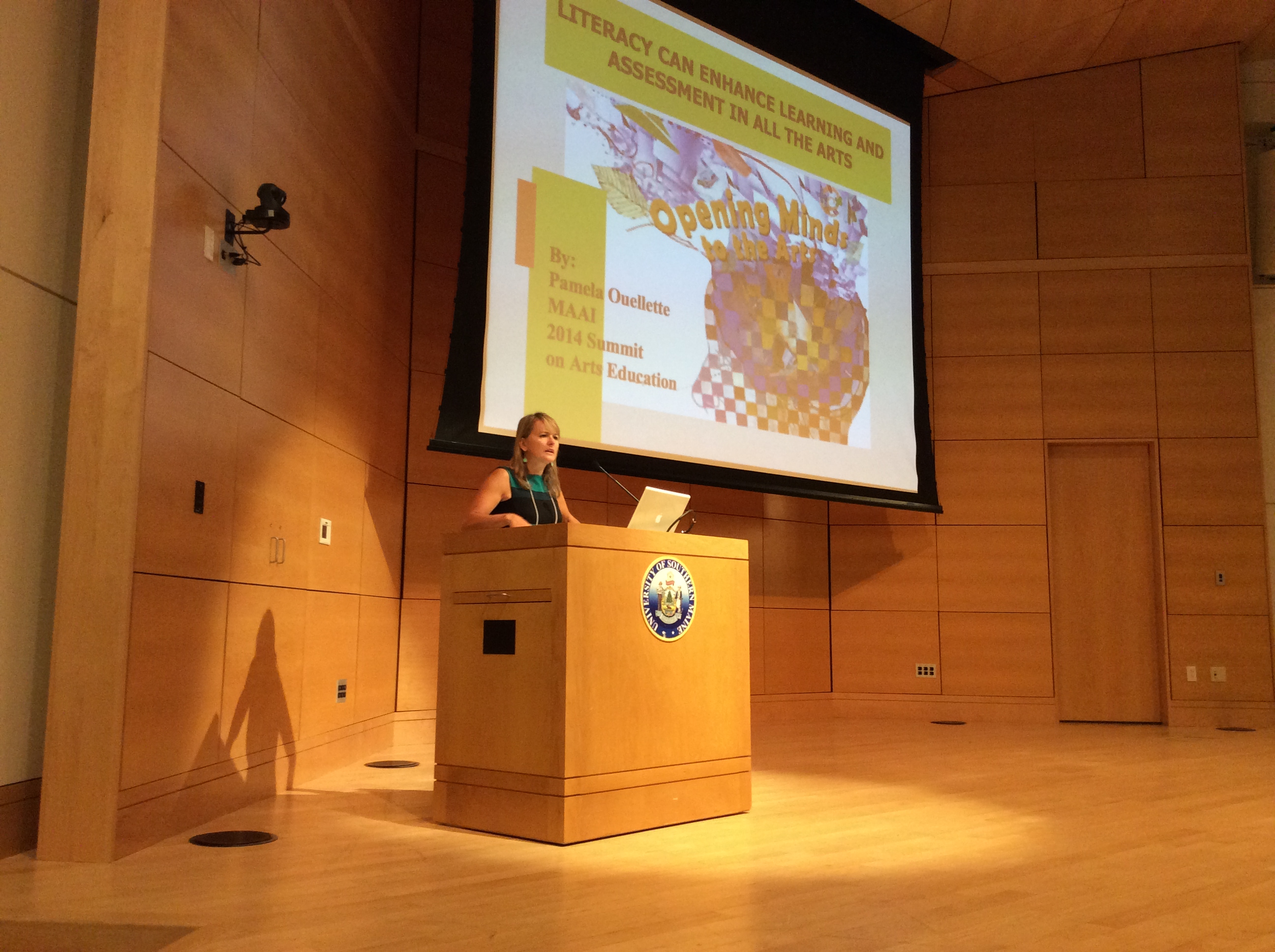
Pam presenting at USM

Literacy conversations are taking place across the state in all classrooms. This is nothing new, literacy has been the hot topic and essential at all grade levels for a few years. Arts educators utilize, present, and support literacy instruction at varying levels. Some of you embrace it and others wish it would just go away. After all, the Maine Learning Results Visual and Performing Arts Standard A is Disciplinary Literacy.

Lisbon High School art teacher and Maine Arts Assessment Initiative (MAAI) Teacher Leader, Pam Ouellette, has put literacy in its rightful place in her visual arts classroom. Just this Spring (of 2014) Pam provided the keynote for the Maine Art Education Association conference at Brunswick High School. Two weeks ago Pam provided the morning session presentation for all participants at the Summit on Arts Education, USM, Portland. She has shared her power point with the MAAI and we’ve made it available to you on the new website at http://www.maineartsassessment.com/#!inter–cross-disciplinary/crz6. Checking out the power point will give you a sense of the amazing work that Pam is doing in her classroom. She speaks eloquently about how her students are articulating fully about their artwork while telling the stories and making deeper connections.

Pam’s presentation should be seen by every Curriculum Leader, Literacy Specialist, School leader across the state. It is spot on and there is valuable information for everyone who hears her. If we can obtain a video of Pam presenting we will be sure and post that as well and you’ll be the first (or second) to know.

If you have questions or would like Pam to come to your school and provide her presentation to your staff please contact her.


h1

Another Arts Teacher’s Story: Lisa Ingraham

June 17, 2014

Madison Elementary School art teacher

This is the 12th blog post for 2014 and the third phase of the Maine Arts Assessment Initiative (MAAI) of this series sharing arts teachers’ stories. This series contains a set of questions to provide the opportunity for you to learn from and about others. Lisa has been a teacher leader during phase 3 of the MAAI.

IMG_3439Lisa Ingraham is a Kindergarten-4th Grade Visual Arts teacher in MSAD 59. She has been teaching all 260 of the students at Madison Elementary School for the past 3 years. She has been teaching art for 9 (!) years, all at the elementary level. Her students attend 50 minute art classes once per week throughout the school year. Lisa joined the MAAI has a teacher leader during the third phase. Lisa and her program are highlighted this year in one of the 8 arts classrooms videos being created that highlight standards-based/student-centered learning. Phase 3 videos are almost complete, phase 2 videos can be viewed by clicking here.

What do you like best about being an arts educator?

My favorite part of being an arts educator has always been working with every student in my school. This is my third year as the K-4th grade art teacher at Madison Elementary School. I have gotten to know each of the students here, their strengths, their preferences, and their quirks. As I have gotten to know more about my students, I have developed an even deeper appreciation for them as uniquely creative individuals.

What do you believe are the three keys to ANY successful visual and performing arts education?

  1. Passion for your content – I firmly believe in the power of the arts to change lives.
  2. Compassion for your learners – Each of my students approaches art in their own way. It is my job to make it meaningful for all of them.
  3. Support from your school and community – I would not be able to do what I do effectively without the support of my administrators, colleagues, and the parents of my students.

How have you found assessment to be helpful to you in your classroom?

I have found assessment to be critical in helping my students understand what they are learning and why, and how it all connects to their classroom goals and the world outside our school. As I have examined and modified the types of assessment I use the focus has shifted from discrete skills and bits of knowledge to helping students think about the bigger picture. Assessment, while helping me determine where we are going in the art room, has also kept me focused on providing depth for the students within our lesson and units.

What have been the benefits in becoming involved in the arts assessment initiative?

The examples set by the incredible leaders, and teacher leaders I have met through the MAAI helped me understand that really good arts programs don’t happen by accident. Really good arts programs are driven by teachers who believe in what they are doing and are willing to work hard to create them. Thank you all for sharing your passion and knowledge! You have helped me realize that no one knows my art program better than me, and if I am going to make it the best program for my students I need to speak up and say, “this is what we are learning, and this is why it is important.”

What gets in the way of being a better teacher or doing a better job as a teacher?

Time is always a factor, as are resources. But I think some of the biggest hurdles I have had to get over have been the narrow expectations of others. While I am working to change this, the perception of the arts as their own isolated content area that will only truly benefit those students who become visual arts professionals limits the types of learning that others can imagine taking place through the visual arts. This affects the importance placed on the arts, their position in the school, and the resources allotted to them.

What have you accomplished through hard work and determination that might otherwise appear at first glance to be due to “luck” or circumstances?

I love my job! I don’t “go to work” in the morning. I rarely think about it like that. I get to go to school and spend the whole day making art with young students. I feel incredibly lucky. However, I also know the years of work that went into switching to this – my second – career, and the work I’ve committed to in trying to bring the best visual arts education to my students.

Look into your crystal ball: what advice would you give to teachers?

When I went back to school to become an art teacher I had this idea that I was going to teach art. This was my loftiest aspiration: To Teach Art. The reality as it has turned out is that I teach kids. Side by side with art content I teach listening skills, how to be kind and responsible, how to work toward a goal and be persistent, how to appreciate the ideas and opinions of others, and how to learn from so-called mistakes.

My first professor in the very first education class I attended shared with us the old adage that “students won’t care how much you know until they know how much you care.” My students have confirmed this again and again, which leads me to my answer for the question…

What are you most proud of in your career?

Reaching students who appear at first glance to be unreachable. Some students take longer to trust that they are allowed to be who they are and express themselves creatively in the art room, but these are the students I am sure I will remember well after they leave me. I am thankful to the teachers who work closely with these students every day and have been very generous with their time in helping me make the connections necessary for them to have the successes they do in the art room.

If you were given a $500,000 to do with whatever you please, what would it be?

I am not really sure what I would do with all the money, but I know my school would have one absolutely incredible art program! (And I would probably still get really excited about finding the best “art supply” at a yard sale or discount store.)

Imagine you are 94 years old. You’re looking back. Do you have any regrets?

I hope not. One of my students’ favorite stories is “Pete the Cat, I Love My White Shoes.” I don’t currently have an art lesson I would like to go with it, but I love reading and singing the book with my students anyway. The best part is sharing the moral of the story, which I tend to repeat A LOT over the course of the school year: “No matter what you step in, keep walking along and singing your song… because it’s all good.”

IMG_4079

h1

Another Arts Teacher’s Story: Lisa Neal

June 10, 2014

Theater Arts, grades 9-12, Nokomis High School, Newport, Maine

This is the eleventh blog post for 2014 and the third phase of the Maine Arts Assessment Initiative (MAAI) of this series sharing arts teachers’ stories. This series contains a set of questions to provide the opportunity for you to learn from and about others. Lisa has been a teacher leader during phase 3 of the MAAI.

Screen Shot 2014-05-16 at 11.04.45 AMLisa Neal teaches Theater Arts to grades 9-12 students at Nokomis High School in Newport. She has been part of the district for 27 years where she began her educational career as an Education Technician. Lisa directed the middle school show chorus for 21 years and will begin her 19th year with the High school show chorus this fall. She also worked as a 7th grade social studies teacher for 10 years at Somerset Valley Middle School. Lisa has been at the high school teaching Theater Arts for the past two years. She  teaches two Acting classes, a Script Writing class, an Advanced Theater Class and a Comedy class. She also assists with the concert chorus and run the after school Drama Club. Her program is growing quickly; she has about 100 students in her classes and between the two after school productions, one of which was a musical, Lisa has about 50 students involved.

What do you like best about being an Arts educator?

There are so many reasons that I love teaching theater arts. It is very exciting to teach in an area where most of the students are excited to be there because they were able to choose the class. These students enjoy the content and are willing to give the effort needed to do the difficult work. I love watching students blossom into confident young men and women. So many come into the class as very shy individuals, not truly believing that they can conquer their fears around public speaking, yet they leave realizing that they have it within themselves to take those crucial risks. I love hearing them use terminology we have learned in class and be able to evaluate the craft based on true understanding of what they are viewing. I love hearing them make connections to other content areas and hearing them tell me they “felt smart” in their other classes because they applied concepts and knowledge they learned in Comedy class. In short, I love my job!

What do you believe are three keys to ANY successful visual and performing arts education?

  1. Effective Educators:  Nothing in education will be successful if there are not people who are passionate about their content, but even more importantly, people who love being with students. Educators must inspire students and help them achieve their potential by encouraging and critiquing. When students know they have someone in their lives that truly care about them, they will thrive.
  2. Opportunities to DO:  The nature of the arts is to share. We need to give students the chance to share their work whether that is in front of an audience of ten peers or a public audience of 800. Remembering to consider each student as an individual while planning these opportunities is imperative, but it is giving them a chance to prove to themselves that they can do it is vital to their growth.
  3. Connections: We need to show students how the arts connect to other content areas, as well as other facets of their lives.  When they make this realization, they will continue to allow the arts to enrich their lives and become life long lovers of the arts.

How have you found assessment to be helpful to you in your classroom?

Invaluable! This year our school has put great emphasis on formative and summative assessments. I use formative assessments in many forms, every day in my classroom. Having a clear picture of your student’s understanding of the content, where their interests lie and what their ability level is, is the most important information that any educator can have. It helps to differentiate instruction for content, process and product, and it gives direction for future lessons. It allows a teacher to decide if they need to reteach certain concepts or if they can move on to the next one. It also assures that students will proficient on summative assessments that are given, which will be even more important as we move towards standards based diplomas.

What have been the benefits in becoming involved in the arts assessment initiative?

I have had the chance to meet other talented, passionate educators from around the state; I have been able to share experiences.  Being a Theater Arts teacher can sometimes be lonely. I am the only one in my entire district to teach in this content area. Meeting other teachers who teach in the same content has been extremely helpful. We have developed a wonderful relationship, sharing ideas, rubrics, costumes and even did an exchange production, bringing each of our respective groups to the fall musical in each school.

What are you most proud of in your career?

I don’t know if I would say I am “proud”, but I will say what I hope that I have done is make a difference in the lives of my students. It is what I strive to do every day. I would like to think that some of them have learned something from me and they might look back and be able to say that they had a teacher who genuinely cared about their well-being and not just their education.

What gets in the way of being a better teacher or doing a better job as a teacher?

It never feels like there is enough time to do everything that needs to get done. I would love more time to reflect on my lessons and discuss with other educators ways to improve my practices. I think the most important thing that any educator has to do is continue to work towards “better.” I have always said that when I think I have it all figured out and that there is nothing more I can do to improve, then I better retire. I think it will take all the time I have to get to be the best teacher I can be.

What have you accomplished through hard work and determination that might otherwise appear at first glance to be due to “luck” or circumstances?

I came into teaching later in life. When my daughter was in 7th grade, I quit my job and went back to school full time. I graduated when I was 35 years old and “fell” into a job during my student teaching. Although this may have looked like “luck”, I had spent 15 years in the community volunteering in my children’s school, working with a theater company that offered Shakespearean residencies to middle school students in the state of Maine, and working as the director of the middle school show chorus. After teaching for 10 years I decided I wanted to get my Masters Degree which I received last December from University of New England in Literacy Instruction. Getting the job as the Theater Arts teacher at Nokomis was lucky in that it opened at a perfect time, but the reason I was asked to be there was because of the work I had done in the district over the last 20 years.

Look into your crystal ball: what advice would you give to teachers?

Remember that teaching is not a job, it is a calling. Not everyone should be a teacher. You must be passionate about your content and know it well, but you must love being with students and imparting that knowledge even more. You must have patience, be flexible and above all, have a sense of humor. Before you become a teacher, make certain it is your calling because when you are called to be a teacher, there is no job more rewarding.

If you were given a $500,000.00 to do with whatever you please, what would it be?

Build a beautiful Performing Arts Center so my students could experience what it is like to perform on a real stage! Okay, I know this amount wouldn’t come close to doing that but I would just multiply my hypothetical money and make it a few million.

Imagine you are 94 years old. You’re looking back. Do you have any regrets?

At this point, I would say I do not have any regrets. I have a full rich life that includes a wonderful family, opportunity to perform with other talented people who love the arts on historic stages like Lakewood Theater and Waterville Opera House, and I work in a field that makes a difference in the lives of others. What could be better?