Posts Tagged ‘teacher leader’

h1

Lisa’s Room

April 16, 2014

Madison Elementary School

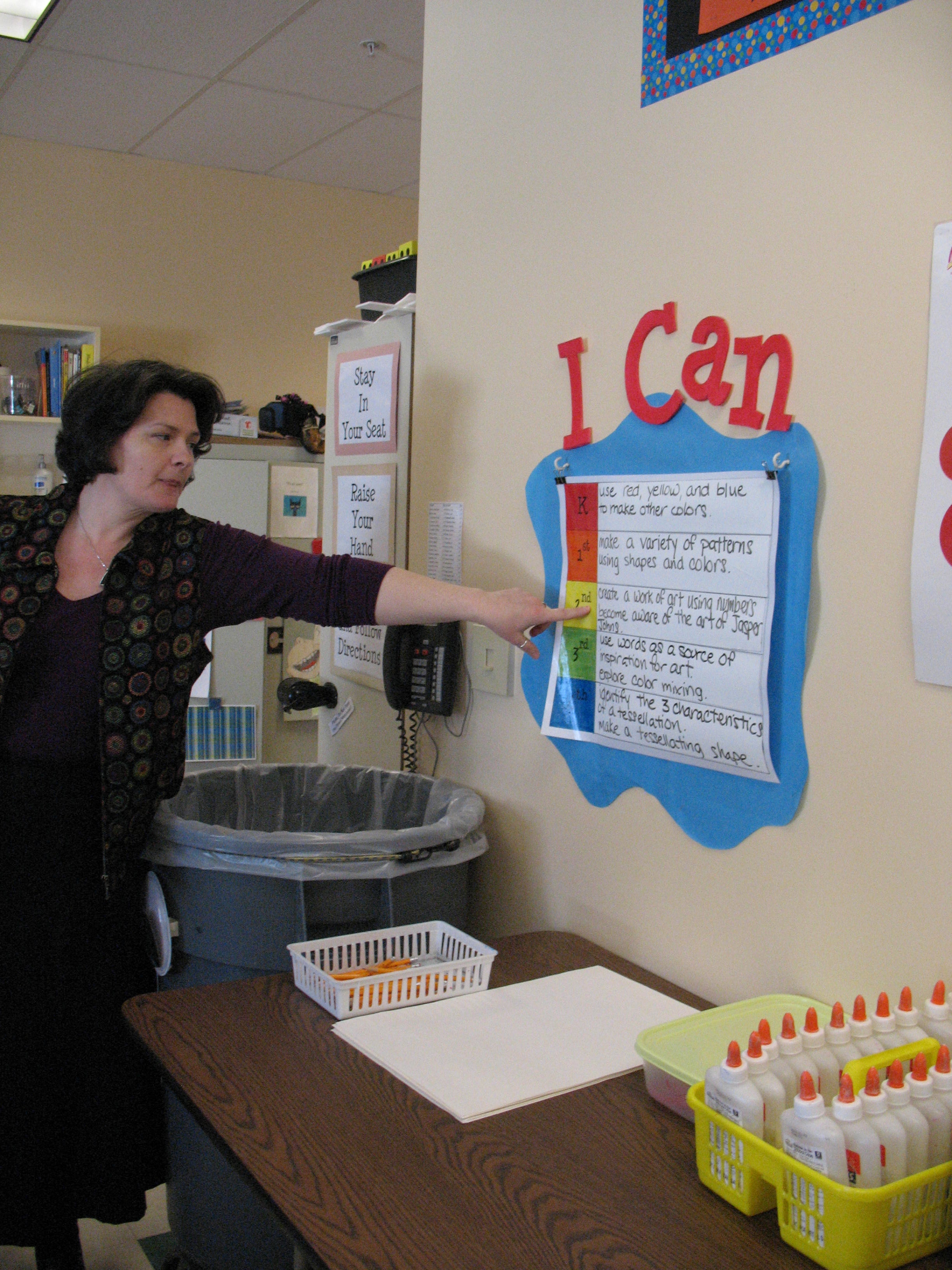
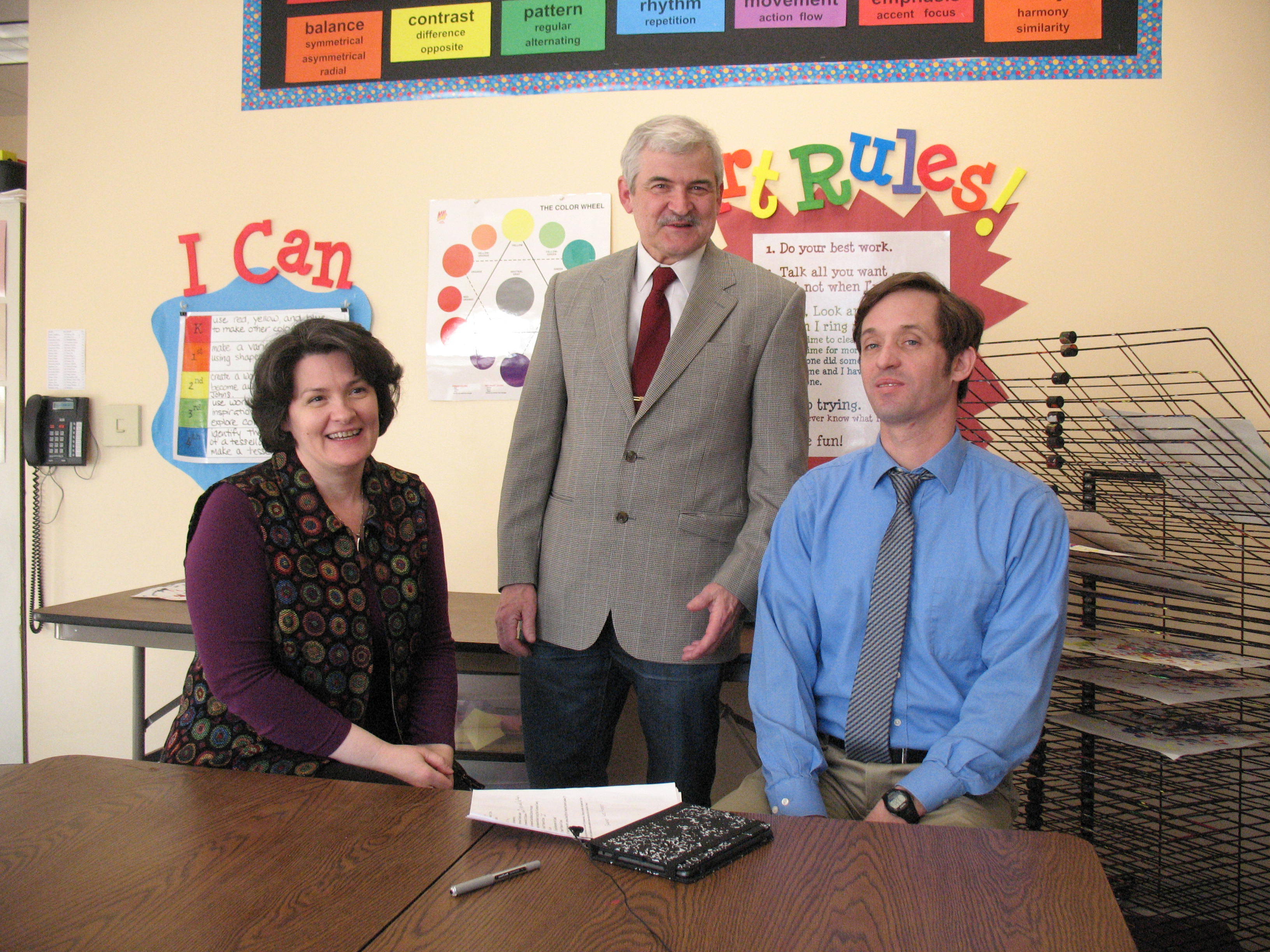
Not to long ago I had the privilege of visiting Lisa Ingraham’s art classroom at Madison Elementary School. Lisa teaches K-5 students and her room certainly reflects her love of teaching but more importantly it is arranged for student success. The colors, organization, age appropriate visuals, and every detail is about the age of her students. Her lessons were spot-on incorporating literacy in multiple ways that enhance the visual art curriculum.

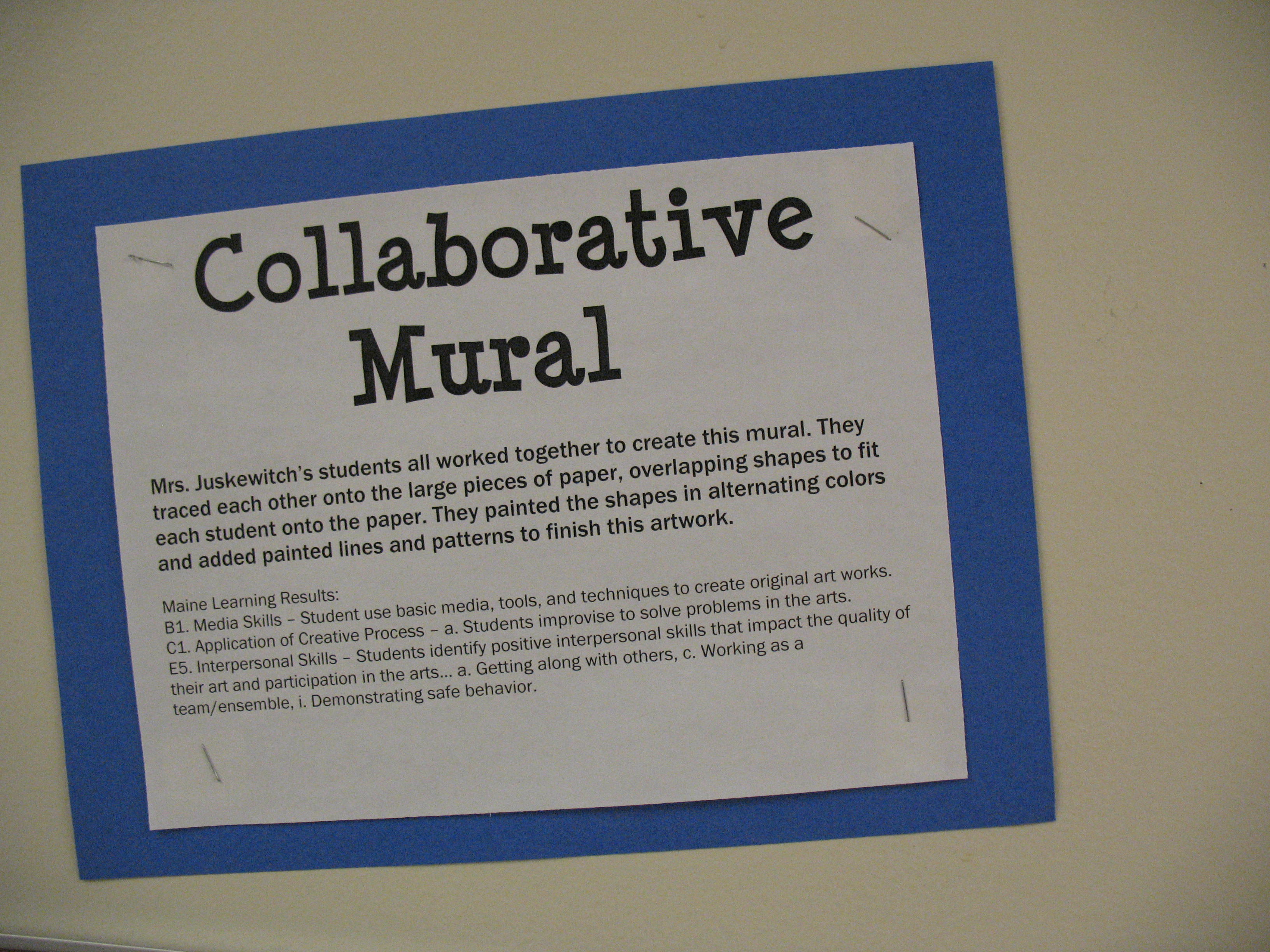
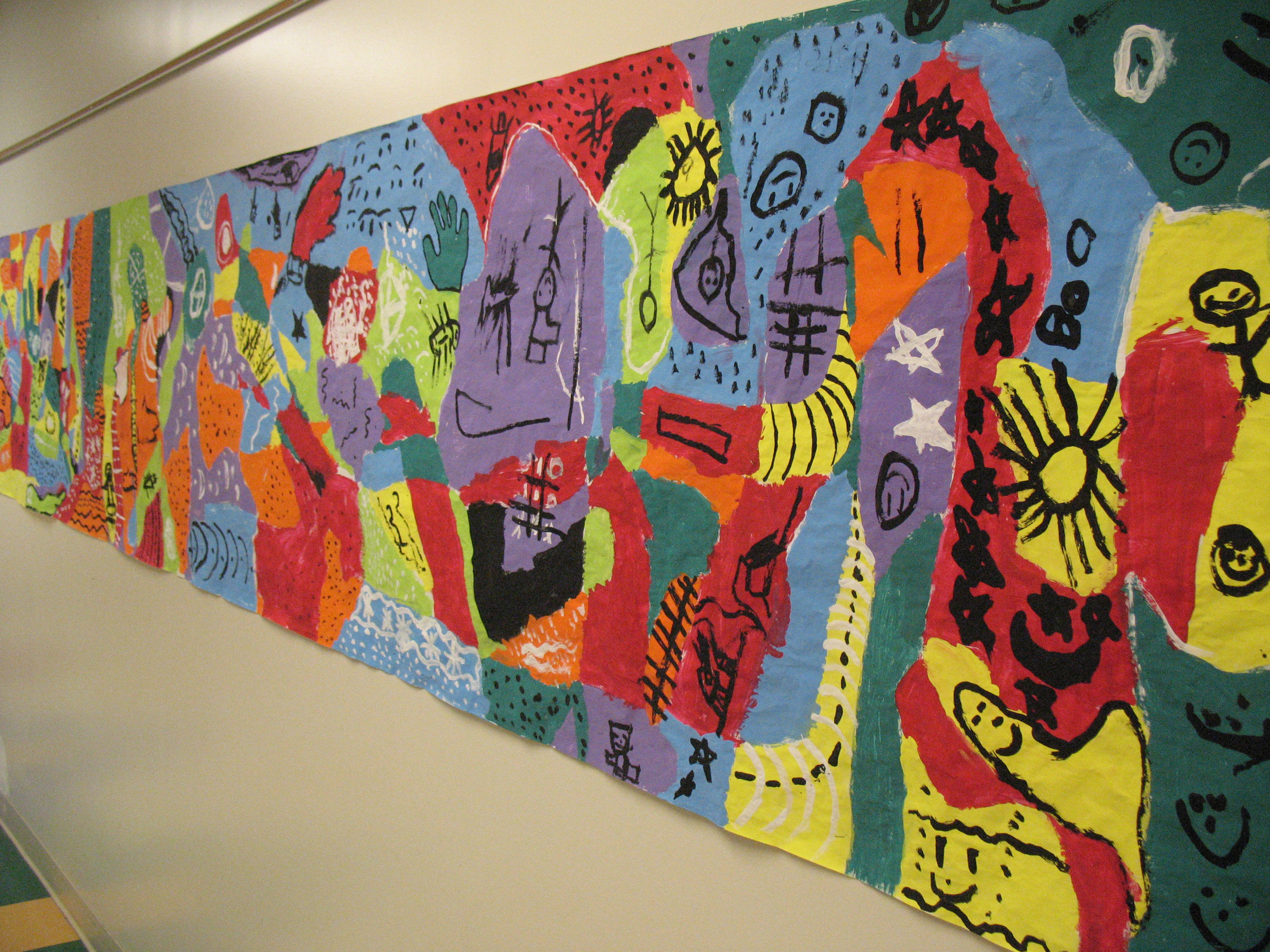
IMG_4012Not only was her classroom amazing but the school was alive with artwork. Every hallway, outside of every classroom she had shown evidence of a standards-based art environment. With each display, an explanation of the lesson.

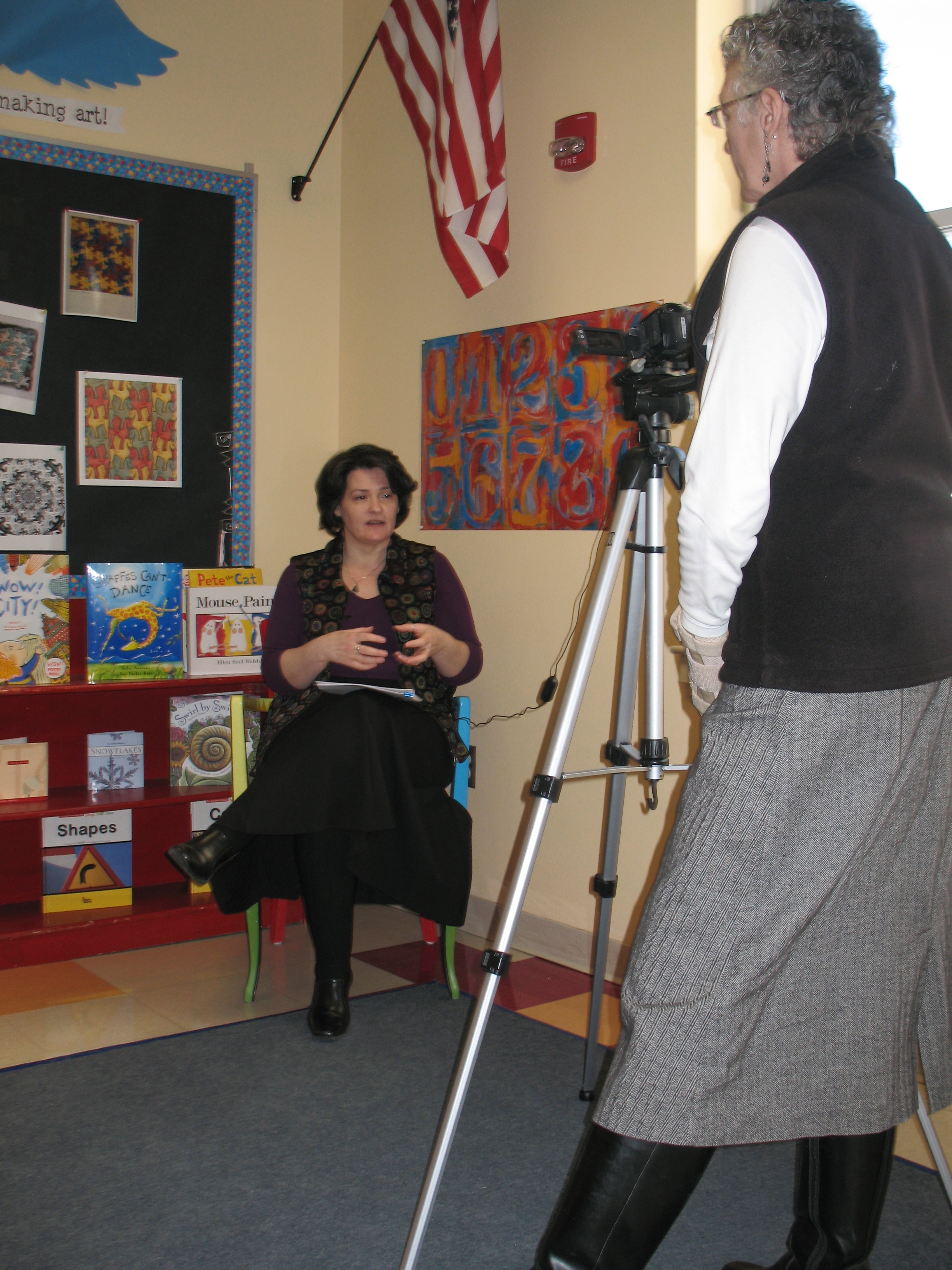
IMG_4040IMG_4041Debi Lynne Baker and I were visiting to video tape Lisa in action for one of the 8 videos that the Maine Arts Assessment Initiative is creating as a resource for educators. It was a pleasure to meet and speak with Lisa’s colleagues as they articulated what Lisa does in her standards-based classroom and why her students are fortunate to have her as a teacher. Not only are her students fortunate but we heard multiple times how fortunate the community is as well.

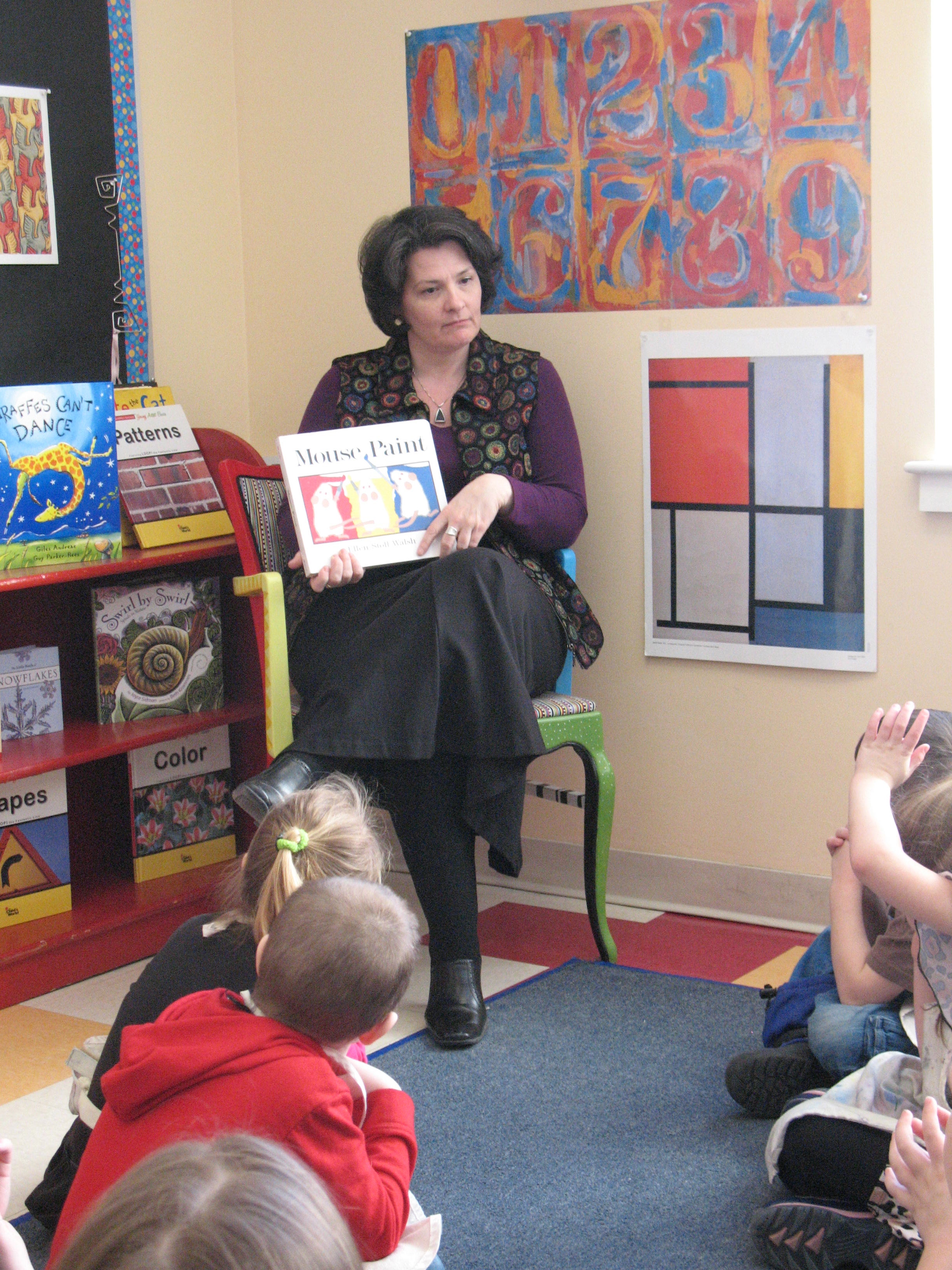
IMG_4077One favorite part of the visit for me was learning about the book called “Mouse Paints”. If you teach early elementary school and color mixing it is a book that I highly recommend. As a follow-up to our visit Lisa was asked to present to the school board. Her information was very well received!

Lisa became involved in the Maine Arts Assessment Initiative during phase 3 and has served as a Teacher Leader. She is also the secretary of the Maine Art Education Association. Last Saturday she facilitated a round table discussion on Teacher Effectiveness and Evaluation. MAEA is writing a position paper on the topic so the information that art teachers shared was very helpful in that endeavor.

IMG_4028Thank you to Lisa for the opportunity and for the important work you do each day providing a quality arts education for the students of Madison Elementary School.

IMG_4089


h1

Another Arts Teacher’s Story: Suzanne Goulet

April 1, 2014

Waterville Senior High School visual arts teacher

This is the fourth blog post for 2014 and the third phase of the Maine Arts Assessment Initiative of this series sharing arts teachers’ stories. This series contains a set of questions to provide the opportunity for you to learn from and about others.

A Visual Art Educator at Waterville Senior High School, her business card reads, “Suzanne Goulet. Art – Traditional, Digital and Emerging Media.” In 1990, after hiking the Appalachian Trail and managing a small ski area, she thought that it was time to begin teaching. In those 24 years she has taught and created classes of all levels; Introductory to AP.

A registered Maine Guide, Suzanne enjoys sharing her love of the outdoors with her students by advising the Outing Club and is a volunteer sign maker with the Maine Appalachian Trail Club and the International Appalachian Trail Club Chapter. She is currently lucky enough to have an eagle’s nest in view of her classroom studio and is eagerly awaiting this year’s clutch.

What do you like about being a visual art educator?

I remember someone telling me that an engineer’s job is different all the time; that it changes every day; and are presented with new problems to solve constantly. Educating has the same benefit. There are no recipes that will be successful with all students, so one must craft an approach and deliver. Lots of medias to explore and creations to be made – before you made it…. it did not exist.

What do you believe are three keys to ANY successful visual And performing arts education?

  1. Trust – Essential between students and teacher. Creating and performing are personal and strategies for accepting criticism can be taught and nurtured.
  2. Understanding – The Arts have different goals (and benefits) that are a bit more complicated to measure achievement and require patience from students, teachers, administrators and the community.
  3. Quality – A continued quest to perform at a high level and to always be learning and seeking.

How have you found assessment to be helpful to you in your classroom?

Assessing is all about taking stock; figuring out where you are and then making a plan for where you want to go and how to get there. Striving for a culture of self-starters with initiative and the confidence to ask for help and collaborate, I have found quality assessments are great ways to scaffold students to meet these goals (which sometimes are shifted).

What have been the benefits in becoming involved in the arts assessment initiative?

Have been provided the opportunity to meet and work closely with colleagues that are striving for quality – personal and statewide. My perspective of our rural state with lots of nooks and crannies is now transformed to a layout of creativity and excellence.

What are you most proud of in your career?

How divergent the careers and paths of my students are: Industrial designers, film makers, public relations experts, attorneys, environmental engineers, botanists, ornithologists and parents…of children that I am now teaching!  Usually the above statement is enough, but I have been blessed with having some pretty amazing teachers throughout my own learning experience. Honoring these educators, remembering what they did for us – for me – by striving to do the same for my students is a goal I strive for…to make a difference.

A number of years ago, Waterville SHS started a Renaissance Award program to recognize student achievement and growth. At the end of the first year, an inaugural educator award was given…I was truly surprised to be the first recipient. The greatest honor of that award is that the nomination came from a very quiet student that took the time to let others know that she truly appreciated the work that we do. It was at that moment that I realized the overwhelming power of quality relationships…and the legacy to my teachers.

What gets in the way of being a better teacher or doing a better job as a teacher?

            The need for sleep.

Seriously, there is always something more that can be done. Instruction, curricular and support services are best when unique for each student…and requires time…and the need for sleep gets in the way.

What have you accomplished through hard work and determination that might otherwise appear at first glance to be due to “luck” or circumstances?

Envisioning, imagining and striving for quality. Building strong foundations takes time and a lot of calculus is employed to improve the timing of converging forces.  Here is one of my favorite movie quotes to help illustrate, (From Star Trek (2009))

Scotty: [back to Spock Prime] The notion of transwarp beaming is like trying to hit a bullet with a smaller bullet wearing a blindfold whilst riding a horse.

Everything is possible…..want something to happen…..just tell me that it is not possible (does this make me sound stubborn…..or optimistic?)

Look into your crystal ball: What advice would you give to teachers?

You don’t have to be a “Teacher Leader” to be a Teacher Leader. A rose by any other name…….

Take the time to develop quality relationships with your students. Consider a three minute “talk in the hall”, a random can of “Moxie” or nominating and taking the time to recognize quality in students – academic and personal.

If you were given $500,000.00 to do with whatever you please, what would it be?

Education – I have five nieces filled with wonder and energy and have always dreamed of a school (education) experience on a bus (even got my Class B license for this). Drive west to study the history of US expansion and its’ impacts, calculate travel approximations, recreate with region specific adventure, enjoy cultural music, play, write, write, draw, draw, photograph and dance. Would love to do this with students and nieces!

Nurturing a Spark – Some know that I “go west” each summer for rejuvenating wanderings. I have challenged former students to find me….the award is a dinner of their choosing – none have yet succeeded….though three came close (less than one mile away) in a remote section of Montana……would use the funds to offer a week in a remote lodge with ranch cooking!

Creating the Space – An addition to my current studio classroom. About 30 feet out….three stories high (so my upstairs colleagues could look down in to our atrium). Did I mention that the roof would be a clear dome so we can watch the eagles? An integrated ramp would be a part of the space so that all students would have access to the fruit tree that is also growing here. If this could not happen….then I would settle for a direct door to the outside in my current studio classroom…a nice set of French doors!

Time Travel – How much is a helicopter?…..this would give me more time (here’s the sleep thing again). Quick trips to Lewiston and Smithfield. Love it!

            Space Travel – Yeah…I’d go.

Imagine you are 94 years old. You’re looking back. Do you have any regrets?

No big ones……just little ones. Still have lots of plans and dreams. Continuing to suck the marrow out of life – why wait?

h1

Another Arts Teacher’s Story: Beth Lambert

March 24, 2014

Carrabec High School Performing Arts Teacher

This is the third post for 2014 and phase three of the Maine Arts Assessment Initiative of this series sharing arts teacher’s stories. These blog posts contain a set of questions to provide the opportunity for you to learn from others.

imageBeth Lambert teaches about 100 students in grades 7 and 8 Unified Arts and grades 9-12 Performing Arts in MSAD #74, Carrabec. This is her second year teaching at this school district.

What do you like best about being a performing arts teacher?

The best part about being a theater educator is challenging my students’ perceptions about their world and about themselves. I get to provide them with an outlet for emotions, thoughts, and dreams that they might not otherwise have means to express. In my class, a student can become another, explore a new role, try out and experiment with various personal choices and solutions to very real problems- problems from their own life, or problems faced by characters in literature or historical figures, in a safe environment.

What do you believe are three keys to ANY successful visual and performing arts education?

  1. Support from administration and community.
  2. A teacher who understands the importance of making and maintaining authentic connections with his/her students.
  3. A teacher who can make the art real for the students- someone who understands what her community needs and offers art as a means to make life richer.

How have you found assessment to be helpful to you in your classroom?

Clear rubrics take the guess-work, and often, much of the fear, out of performing for a grade. Students know exactly what they are expected to be able to do and when they are ready to show me that they can do it, they are assessed. Students are in more control of their own learning and success.

What have been the benefits in becoming involved in the Maine Arts Assessment Initiative?

Without a doubt, the greatest benefit has been getting to know, work with, and learn from such an able group of arts educators.

Additionally, it is has allowed me the opportunity to do targeted work on my classroom from an arts educator’s perspective.

What are you most proud of in your career?

My students.

What gets in the way of being a better teacher or doing a better job as a teacher?

All the non-teaching stuff that teachers must do takes them away from teaching and becoming better teachers. Also, ourselves- sometimes we get in our own way.

What have you accomplished through hard work and determination that might otherwise appear at first glance to be due to “luck” or circumstances?

Everything.

Look into your crystal ball: what advice would you give to teachers?

Always remember that we are here for the students- make your choices based on what is best for them and do right by them. The rest with fall into place.

If you were given a $500,000.00 to do with whatever you please, what would it be?

I would build my students the performing space they deserve and would set up scholarship programs so that I never again have to see a child’s dream fade because they couldn’t pay.

Imagine you are 94 years old. You’re looking back. Do you have any regrets?

No. Every road, no matter how broken, crooked, or difficult, has brought me to where I am today and I wouldn’t want to be anywhere else!


h1

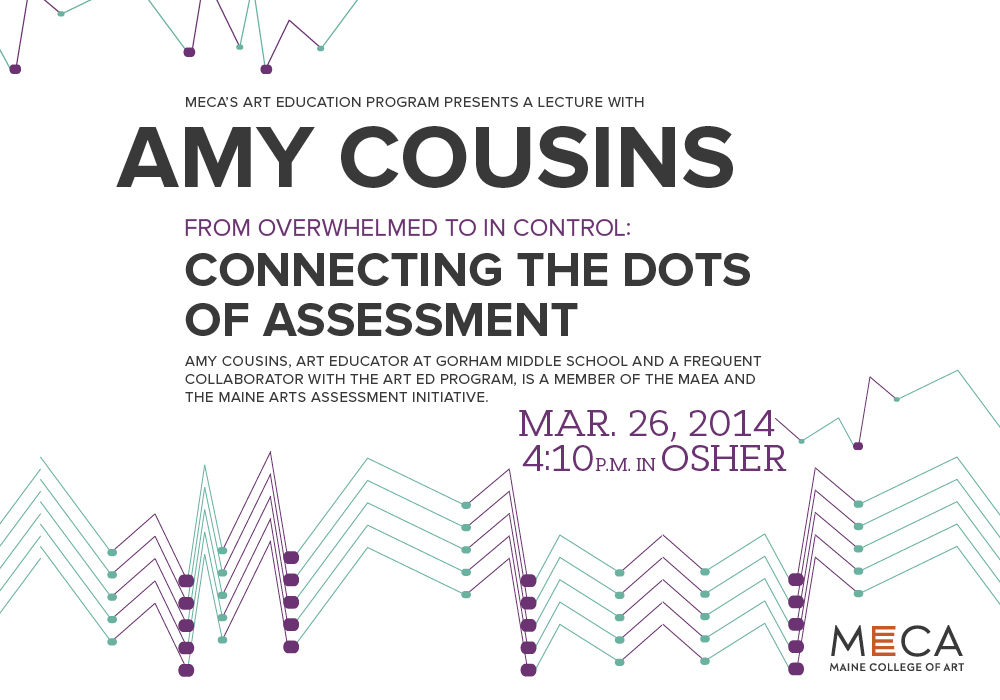
Workshop at MECA

March 23, 2014

Maine College of Art, Portland

EVite-AmyCousins_final

h1

Another Teacher’s Story: Judy Fricke

March 18, 2014

Featuring one teacher’s journey as an arts educator

This is the second blog post for 2014 and the third phase of the Maine Arts Assessment Initiative of this  series of blog posts telling arts teachers’ stories. This series contains a set of questions to provide the opportunity for you to read the stories and to learn from others.

DSCN0239Judy S. Fricke is an Early Childhood (EC) Music Specialist at the Main Street Music Studios in Bangor, Maine. Judy has been an EC Music Educator for twenty years, first in Collierville, TN and for the last four years in Bangor. In those twenty years she has had opportunities to work with children ages one month through five years in parent/child class settings and with children one year to five years old in a large preschool of 350 students. At Main Street Music Studios in Bangor she has 23 students who attend age-bracketed classes with a caregiver. She uses John Feierabend’s First Steps in Music curriculum as the basis for all of her classes since studying with him 19 years ago.

What do you like best about being a music educator?

While working with our youngest learners, I will never tire of watching the “light bulb” gleam in their eyes as they feel the rhythm in bounces or anticipate the tickle at the end of a tickle rhyme. I will never lose the joy in watching a one year old gain control of his or her arm muscles and begin to play a drum with a steady beat, or of listening to a three year old gain control of his or her voice muscles and begin to “echo sing” dead on pitch. I also will never get tired of watching the confidence grow in the parents of these children as they learn how to interact musically with their little ones.

What do you believe are three keys to ANY successful visual and performing arts education?

The three keys I would consider highest on my list for a successful arts program would be:

  1. Unbridled passion for what you teach
  2. A safe, exciting, and encouraging environment in which to teach
  3. A wicked good sense of both humor and humility

How have you found assessment to be helpful to you in your classroom?

As an independent instructor of the very young, formal assessment is not part of my program. Yet, informal assessment has been part of my day to day lesson planning since the beginning. By tweaking my planning based on the specific ages of my students I am able to deliver developmentally appropriate activities for various physical, mental, and attention levels.

What have been the benefits in becoming involved in the arts assessment initiative?

The MAAI has given me the opportunity to meet and interplay with arts teachers and early childhood educators from around the state. I am sure I would never have had that opportunity on my own. Thank you Argy for this gift.  MAAI has made me much more aware of my place, or lack there of, in the incredibly complex world of arts education in the state. I have felt more connected, as well as more alone, in the last year as I worked beside fellow educators. We need more early childhood arts folks involved in MAAI. I need collaborators on my level so that the important work of laying the foundations for the K-12 programs does not feel as much as an afterthought, but more of the beginning of something wonderful.

What are you most proud of in your career?

I was teaching in Tennessee long enough to see children that I had in preschool excel in high school music programs and continue on to study music in college. I cannot take complete credit for these achievements, but when I would see them as young adults and they would raise and lower their arms while making a slide whistle sound, I know I had made an impression. A good impression can bring an exceeding sense of pride.

What gets in the way of being a better teacher or doing a better job as a teacher?

I teach in a lovely old downtown building. The other teachers with whom I work have private studio rooms for private lessons. I teach in the lobby because it is the only space large enough for my classes. Therefore, we have folks walking through the classes, stopping to ask questions, and opening and closing the door to let in very cold air. These physical issues often get in the way of my teaching, but trying to handle it in stride and continue to love what I do makes up for it. The people I work with are professional musicians and teachers and are so supportive of my program, I know I am a better teacher because I am there.

What have you accomplished through hard work and determination that might otherwise appear at first glance to be due to “luck” or circumstances?

I believe finding Main Street Music Studios on-line from Tennessee was a brilliant stroke of luck! I was just looking for any kind of employment in the downtown area so that I could walk to work once we moved to Bangor. Yes, having the 16 years of experience to bring with my proposal for the early childhood program here helped, but the fact that Bangor had the Studio for me to be a part of was definitely luck!

Look into your crystal ball: what advice would you give to teachers?

I believe the word I would most like to share with fellow teachers is “collaborate”. If you are a K-6 teacher, and you have a PreK program in your school, find out what you can do with the EC teachers to help them with their goals for the arts – in doing so, you are only enhancing your programs. Same goes for high school teachers – work with your middle school counterparts. Middle school folks work with your elementary counterparts. In doing so, everyone will be working toward the same ultimate goal – that of giving every student the best arts experiences possible in a way that makes sense to both the programs and the students.

If you were given a $500,000.00 to do with whatever you please, what would it be?

If I were given $500,000.00 to do with as I please, I would make an endowment to the University of Maine Systems for the purpose of creating an Early Childhood Music Education program and a Music Therapy program. Then I would ask to teach in the Early Childhood program and I would take classes in the Music Therapy program.

Imagine you are 94 years old. You’re looking back. Do you have any regrets?

If I have the fortune to live until I am 94, I hope I am still able to bounce little ones on my knee and sing soft lullabies to them when they are tired. If I can do this, I will not have any regrets.

Well, I might regret that I never got that $500,000. And so might a lot of very young children.

h1

Another Teacher’s Story: Sue Barre

March 4, 2014

Featuring one teacher’s journey as an arts educator

This is the first for 2014 and the third phase of the Maine Arts Assessment Initiative of this  series of blog posts telling arts teachers’ stories. This series contains a set of questions to provide the opportunity for you to read the stories and to learn from others.

SueBarreSue Barre teaches students in Grades 5-12 at Waterville High School and Junior High School and the Albert S. Hall School. She has been the Band Director since 2007 and was the Chorus Director from 2007 – 2007. Sue also teaches Band and HS Music Theory. Sue has been a teacher leader with the Maine Arts Assessment Initiative (MAAI) during the last year. She took a graduate course with the New England Teacher Institute for Teacher Education 2 years ago and she was “hooked”. The rest is history as Sue is committed to the MAAI and the quality of work she is doing.

Her student breakdown includes the following:

  • Grade 5 band – 38 students
  • Grade 6 band – 30 students
  • Grade 7/8 band – 55 students
  • HS Band – 58 students
  • JH and SH Jazz Bands
  • HS Pep Band

Sue was the Director of the Pit Orchestra for fall musical, has worked in public schools for 19 years, teaching instrumental and choral music. She is the owner of Music Together, a preschool music program, for 5 years.

What do you like best about being a music/art/drama/dance educator?

I most enjoy watching the light bulbs go on for students, those “aha” moments.  The sense of accomplishment when an ensemble performs a piece effectively is priceless.  In my current position I truly enjoy watching the students grow and mature from fifth graders until they are heading off to college.

What do you believe are three keys to ANY successful visual and performing arts education?

  1. Support of Administration in word and action.
  2. Passion for teaching by the educator.
  3. A “glass is half full” attitude by the educator.

How have you found assessment to be helpful to you in your classroom?

Assessments have allowed me to converse with my students in a meaningful manner using a common language. Assessments have also required me to assess my own teaching and learning.  I am constantly learning what works for students and what does not.

What have been the benefits in becoming involved in the arts assessment initiative?

To be in a room with educators who share a passion for quality education and assessment is invigorating. The Arts Initiative has given me what seems to be bottomless supply of resources for teaching and learning, assessing and reporting and a place where others feel as passionately as I do about arts education!

What are you most proud of in your career?

That I have made a difference in students lives. Facebook has afforded me the opportunity to hear from former students and I am often amazed what affected them the most in the classroom and beyond.

What gets in the way of being a better teacher or doing a better job as a teacher?

At this point in my life it is time, much time is dedicated to motherhood (that I would not trade for the world).  If I could add eight hours a day for prep for school that would be ideal.

What have you accomplished through hard work and determination that might otherwise appear at first glance to be due to “luck” or circumstances?

The improvement of my jazz band programs over the last nine years has been hard work. As a french horn player this is not a genre of music that I studied a lot or performed often. I need to work for every point we earn.

Look into your crystal ball: what advice would you give to teachers?

Remember that no matter how big they appear, all of the students (even those seniors) are children. They need structure and guidance and to know you care. You need to be their teacher and not their friend. If you are honest and hardworking and show that you care success will find you.

If you were given a $500,000.00 to do with whatever you please, what would it be?

10% to charity to repay the help that we have received over the years and then I would take my family to Disney and let them do anything they want!

Imagine you are 94 years old. You’re looking back. Do you have any regrets?

No I do not. I have my faith, I have my beautiful family and I have a job that I find rewarding and truly love.  I tell my students that I have never heard anyone say later in life that they wished they had spent more time at work and I try hard to model the importance of family each and every day.

h1

Another Arts Teacher’s Story: Leone Donovan

June 25, 2013

This is the 37th in a series of blog posts telling arts teacher’s stories. The first 19 were told last year by the phase I Maine Arts Assessment Initiative teacher leaders. The series continues with the stories from the phase II teacher leaders. These posts contain a set of questions to provide the opportunity for you to read educators stories and to learn from others.

LeoneLeone Donovan teaches visual art at Messalonskee High School (RSU 18) in Oakland, ME. She has been an art teacher for 33 years and at MHS for 14 years. Depending on the quarter, she might be teaching almost anything that falls under the heading visual arts. Currently, the list might include any of the following: beginning and advanced art, drawing, painting, sculpture, metal sculpture, craft techniques, graphic arts, digital design, digital photography, pottery, and AP Studio art. She also teaches an online art history class for Virtual High School and online AP Art History for AP4All. Classes at Messalonskee generally have 12-20 students and meet every day for 80 minutes. Most are quarter-long with the survey courses lasting for a semester.

Donovan is also a member of the MHS Leadership Team and Capacity Builders, chair of the accreditation committee, advisor to the National Honor Society, and writer and managing editor of the RSU 18 newspaper, The Messalonskee Messenger.

What do you like best about being an art educator?

I think teaching art is a fabulous fit for someone with mild ADD tendencies! I love the variety of what I might be teaching in any given term and in any given moment. I like juggling all the ‘stuff’ that comes with teaching art and I love watching kids get excited about it all, too. Those moments when you see the student’s belief in his or her abilities and creativity starts to shine out are standouts.

What do you believe are three keys to ANY successful visual and performing arts education?

The commitment and passion of the arts teachers, a schedule and commitment from administrators and the community that paves the way for enough time for meaningful access to arts classes, and students who love making all kinds of art.

How have you found assessment to be helpful to you in your classroom?

I am always questioning how and what I assess, especially now as we, in my district and around the state, are moving towards a standards-based system. Assessments in a variety of forms are helpful to me and to my students, I think. Formative assessments give me the chance to act as consultant to the artist and to the process. Asking the students to reflect on their work, too, can generate deeper understanding for both of us and suggest a path for next steps. Assessment helps clarify objectives and teaching methods for me and, I hope, for my students. I think, too, summative assessments, class critiques, art exhibits, all give the arts more validity in the eyes of those outside of our classrooms.

What have been the benefits in becoming involved in the arts assessment initiative?

I’ve had a wonderful opportunity to explore the whole world of assessments and had the fun of doing so with a lot of funny, smart people! It made me carve out the time to think about methods and rationales of teaching and learning. MAAI has given me fabulous training and resources that I call on all the time. And, of course, I became acquainted with Gloria Hewett’s fabulous brownies!

What are you most proud of in your career?

I’m proud of my students. I’ve kept in touch with some and lost track of many others but I think back to all the different kinds of students that have turned up in my classroom and I’m glad to have met them. And I don’t mean only those students who planned to make art part of their careers. Really, I’ve enjoyed the challenges and pleasures of making connections and hearing their life stories and dreams for themselves no matter what was ahead for each of them.

What gets in the way of being a better teacher or doing a better job as a teacher?

Oh, just like everyone else, I have to say time, money, and energy! Seems like we have less and less of all three, all the time. I don’t know if it really is less but more would be great if anyone can send some.

What have you accomplished through hard work and determination that might otherwise appear at first glance to be due to “luck” or circumstances?

Wow – tough question. I think a lot happens because I’m willing to jump into things and really hate not meeting deadlines. There’s probably a bit of the being in the right place at the right time occasionally, too. I would never have applied to the Fulbright Teacher’s Exchange program had I not been at the MAEA conference at Haystack one fall and heard another teacher talk about her experiences. I don’t know that I would have pursued a Master’s in creative writing if my district didn’t require that degree. And so on. Circumstances got me started but my commitment and determination got me through.

Look into your crystal ball: what advice would you give to teachers?

Run. Run now. Noooooo, just kidding. I would say, hang in there. Let the craziness of the educational politics and budget issues and the odd school demands on your time and attention eddy around you as much as you can and be the teacher you want to be in the classroom. Not that there isn’t something to be learned or used from all those initiatives and theories that fly at us; there often is. But let it be a sidebar to your real life. Make space in your life to grow as an artist and a teacher in the way that excites and inspires you. In the next moment that inspiration will move from you to your students. And, really, really enjoy your summer vacations!

If you were given a $500,000.00 to do with whatever you please, what would it be?

Travel. Travel a lot. And in first class.

Imagine you are 94 years old. You’re looking back. Do you have any regrets?

That Argy was only kidding about the $500,000.

h1

Another Arts Teacher’s Story: Ashley Smith

June 18, 2013

This is the 36th in a series of blog posts telling arts teacher’s stories. The first 19 were told last year by the phase I Maine Arts Assessment Initiative teacher leaders. The series continues with the stories from the phase II teacher leaders. These posts contain a set of questions to provide the opportunity for you to read educators stories and to learn from others.

Ashley Smith has taught for two years at Brunswick High School where she is the Choral Director; she directs Screen shot 2013-06-17 at 7.03.30 PMthree choirs and teaches piano and guitar.

What do you like best about being a music educator?

My favorite part about being an arts educator is that I get to share my love of music with others who have the same passion. Growing up, my most memorable experiences were those created in the music classroom. It is such a joy to go to work everyday and create those same experiences for my students.

What do you believe are three keys to ANY successful visual and performing arts education?

  1. Belief. Although there are many components to a successful arts program, this has proved to be the most important for me. You must first believe in yourself, you must believe in your students, and above all, you must believe in what you are doing.
  2. Commitment. With so much to do and so many people to take care of, it is important to stay true to yourself. As a music educator you have the unique opportunity to create a program that is reflective of yourself and your philosophy. Hold true to your vision, and it’s impossible not to succeed.
  3. Support. Nothing can be successful on it’s own. For any program to flourish, it needs the support of colleagues, friends, family, and community. Most importantly, it needs the support of your students. Support your students, and they will support you.

How have you found assessment to be helpful to you in your classroom?

Assessment in the music classroom is an amazing thing! No matter how you do it, assessing your kids keeps them accountable for learning the information and you accountable for teaching it. I’ve found that it doesn’t have to be in the form of a big written test or a large-scale project, it’s whatever works for me. Assessment has not only helped me to re-evaluate my teaching practices, but it has been a great way for my students to realize what they have actually learned. There is nothing better than having a student say, “I didn’t know I could do this!”

What have been the benefits in becoming involved in the arts assessment initiative?

The greatest benefit of joining the MAAI has been meeting so many passionate arts educators. It has been so encouraging to collaborate with other teachers who face the same challenges on a day to day basis. I am an infinitely better teacher for having worked with such devoted arts educators. It’s good to know I’m not alone!

What are you most proud of in your career?

My students. Their hard work and dedication never cease to amaze me. They continually go above and beyond what is expected of them and they truly embody my vision of what the BHS Choral Program should be. They have embraced me and my philosophy and they are always ready and willing to accept whatever challenge I throw their way. I learn something new from them everyday, and they are a continual reminder of why I love what I do. I couldn’t be more proud of all that they have accomplished in the past two years, and I greatly look forward to all of their future successes.

What gets in the way of being a better teacher or doing a better job as a teacher?

Honestly, being a teacher is what gets in the way of being a better teacher. There are so many tasks and duties to fulfill that the most relaxing part of the day is actually TEACHING. With so many things pulling us in different directions, it’s nice to know that our time in front of the students is really our time. It’s not the actual teaching part that we have to worry about, it’s everything else that goes along with it.

What have you accomplished through hard work and determination that might otherwise appear at first glance to be due to “luck” or circumstances?

I must say that my biggest accomplishment has been the atmosphere that the students and myself have worked to create in the choral department here at BHS. I have always been a firm believer that the music classroom should be a place of mutual respect in which all students feel comfortable to express themselves freely. I have been lucky to learn alongside my students, working to create a space that fosters growth and creativity. I have found that the students take real pride in this environment, and they will work tirelessly to protect what they have worked so hard to create

Look into your crystal ball: what advice would you give to teachers?

You can do it! So often when you are teaching music or art you may be the only person in that discipline at your school, and as a new teacher that can be very overwhelming. There is no doubt that you are going to make mistakes, but that’s what it’s all about. We always encourage our students to take risks, and we have to push ourselves to do the same. Don’t lose sight of the big picture, you are doing what you love and you are making a difference.

If you were given a $500,000.00 to do with whatever you please, what would it be?

After our exciting riser collapse last week, I would have to say that my first order of business would be purchasing new risers for my kids! I would use the rest of the money  to travel with friends and family and to create opportunities for my students like the ones that I was lucky enough to have growing up.

Imagine you are 94 years old. You’re looking back. Do you have any regrets?

As a second year teacher, I can’t help but stress about the small stuff. I get so worried about doing everything right that I often forget to enjoy each moment as it is happening. At the end of each year, I find myself looking back and realizing just how lucky I am to have had such amazing experiences with so many amazing young people. Fortunately, I am far off from 94, and if this is my biggest regret than I daresay I have lived a pretty fulfilling life!


h1

Another Arts Teacher’s Story: Suzanne Southworth

June 11, 2013

This is the 36th in a series of blog posts telling arts teacher’s stories. The first 19 were told last year by the phase I Maine Arts Assessment Initiative teacher leaders. The series continues with the stories from the phase II teacher leaders. These posts contain a set of questions to provide the opportunity for you to read educators stories and to learn from others.

IMG_0135Suzanne Southworth started teaching in NY where she grew up and has now taught for 15 years in Maine Public Schools. Currently, Suzanne is at Camden Hills Regional High School where she has been for the last 6 years. The courses she teaches change up from year to year but she always teaches the Jewelry classes and usually teaches the Advanced Art Portfolio class. This year the IA teacher and  Suzanne piloted a course that they call Metal Sculpture where students learn basic welding techniques and learn to use those skills to design beautiful metal sculptures.

“The thing I like best about being an art teacher is that it gives me the opportunity to help students learn to work with their hearts, hands, and minds together as well as the ultra focus it takes to be a successful artist. In today’s busy world it is so important to teach subjects that engage students this way. I also really like the ever-changing subject matter and the excuse to constantly search for my own inspiration in order to share the joy of the art making process with my students.”

What do you believe are three keys to ANY successful visual and performing arts education?

It doesn’t take much to run an art program but if you want a really good successful program you need to have organization, dedicated art professionals who work hard in the classroom, advocate for the program and exhibit student work, and a community who supports.

I was involved in the MAAI this year and found that after learning so much I realized how much I still need to learn. In my short career everything has changed so much and I find myself digging my heels in, refusing to update my way of thinking. I think I still do to some degree but the change is happening. What it has done for me is to see how the arts have never been more important to the well being of our next generation. As a parent and a teacher there is not so much of a buffer from a child’s environment to do what is right so, it is up to us to arm ourselves with the knowledge to protect and educate our youth at the same time.

How have you found assessment to be helpful to you in your classroom?

I feel that through well crafted assessments we can engage students and make learning personal and relevant. My favorite assessment is a written reflection. I find that having regular assessments in the classroom to be a useful tool in keeping both teacher and student in check. I also like the idea of keeping teachers accountable for good teaching practices and students engaged in their own learning process.

What have been the benefits in becoming involved in the arts assessment initiative?

Being a part of the Arts Assessment Initiative has made me so much more visible in my school and Regional area. It has been so nice to really know what the new ideas in education are and not be left in the dark during staff meetings and workshops. The best thing I got out of it though was the networking. Art Educators are generally pretty dynamic people. Just being around other conscientious Art teachers is a real boost to my attitude toward teaching and provides me with a lot of inspiration.

What are you most proud of in your career?

I am most proud of the results I see in my students work and being there when they make a breakthrough in their work and their individual ideas and watching them go through the stages from directed work to independent.

What gets in the way of being a better teacher or doing a better job as a teacher?

The thing I find most difficult about my teaching is the number of hours outside of the school day needed to do a good job and the multitude of other aspects of my teaching assignment.

What have you accomplished through hard work and determination that might otherwise appear at first glance to be due to “luck” or circumstances?

One of the things about teaching art that looks easy from the outside but takes a great deal of skill is to create an environment in the classroom that is conducive to “thinking” and creativity. Where there is a balance of “free thinking” and guided structure. I think this is a gift that you either have or you don’t but that it can be developed and improved regardless of the level of talent in this area.

Look into your crystal ball: what advice would you give to teachers?

If I were to give advice to other teachers I would say to keep updated on what is going on in art education. It is amazing how much voice we have here in Maine and we are fortunate to have people watching our backs at every level. Those people need our help in understanding the concerns of the classroom. Without our everyday art teacher input the decisions and initiatives won’t work to cater to the needs of our very real programs.

If you were given a $500,000.00 to do with whatever you please, what would it be?

If I were given $500,000 I would hire a team of top-notch educator’s who would write curriculum complete with the core standards, assessments, and technology and any other requirements. The team would write curriculum and build a library of lesson plans and boxes filled with non-consumable tools and materials to support the lessons that could circulate per request of the teacher throughout the State of Maine.

Imagine you are 94 years old. You’re looking back. Do you have any regrets?

Years from now I think I would look back and be really proud of the number of students who went on to continue with creative pursuits but I would also think that perhaps I did not get the concept of “Don’t sweat the small stuff so well and that I had a darn good job!

Thank you Suzanne for sharing your story!


h1

Another Arts Teacher’s Story: Drew Albert

June 4, 2013

This is the 34th in a series of blog posts telling arts teacher’s stories. The first 19 were told last year by the phase I Maine Arts Assessment Initiative teacher leaders. The series continues with the stories from the phase II teacher leaders. These posts contain a set of questions to provide the opportunity for you to read educators stories and to learn from others.

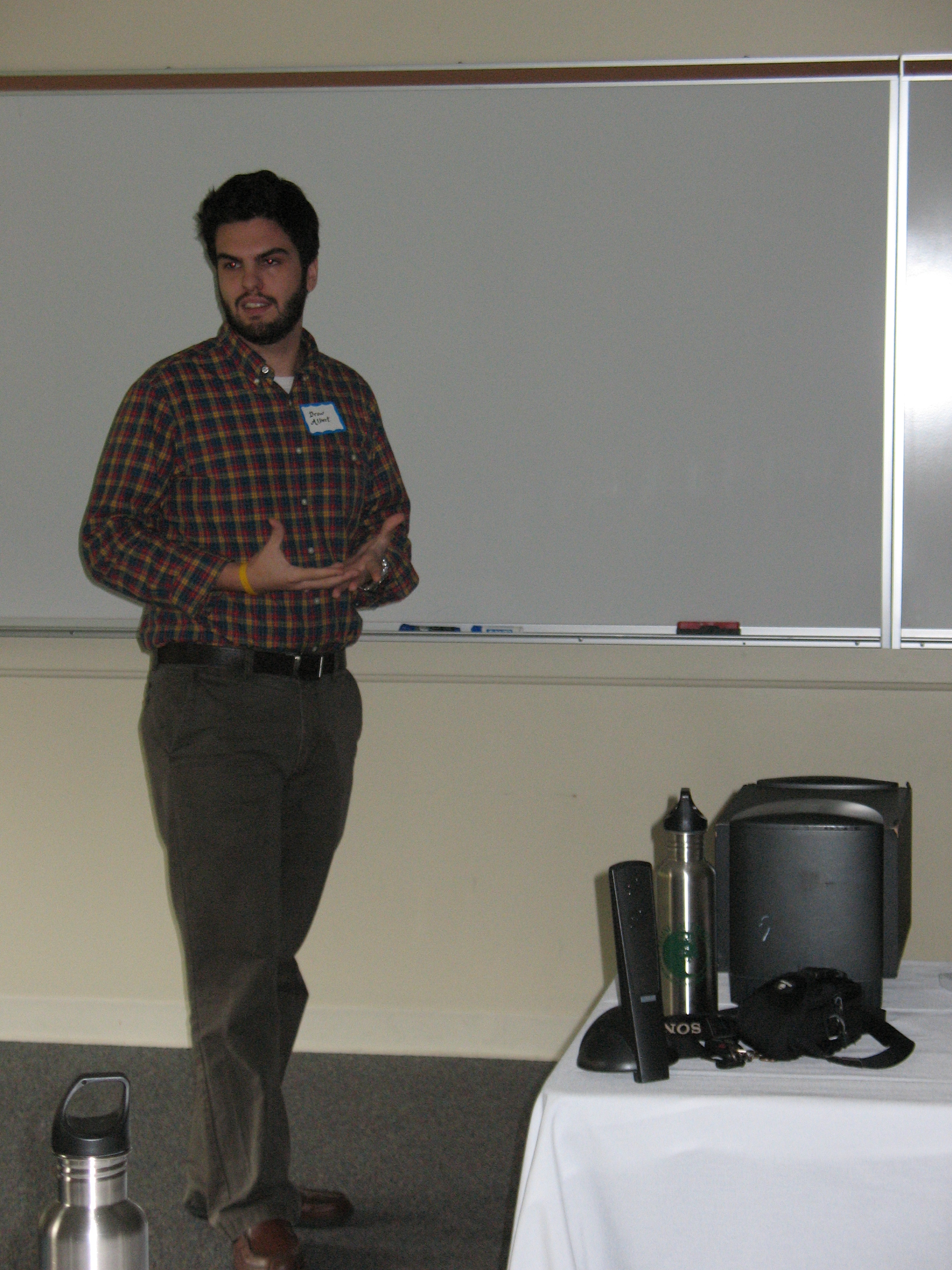
IMG_0126Drew Albert has been teaching at Maranacook Community High School in Readfield, Maine for two years. The high school serves about 400 students and Drew teaches both instrumental and vocal music.

What do you like best about being a music/art/drama/dance educator?

Certainly the most rewarding part of being a music educator is the students. It has proven to be an incredible experience to be their teacher. I feel such a sense of pride when they do something they thought they weren’t capable of, or when they realize a passion for music they might not have known they had.

What do you believe are three keys to ANY successful visual and performing arts education?

  1. Collaboration and support. Everyone needs to work well together: teacher and student, parents and teacher, administration and teacher, student and student.
  2. Vision. Setting goals for any program is the best path for growth, musically and otherwise. Reaching attainable benchmarks leaves myself and my students feeling accomplished, while also developing as both individuals and as a group.
  3. Passion. I want my students to find their passion even if it isn’t for music. Students should feel they are in an environment where they are free to express themselves and create; to take risks and make mistakes; to learn, laugh and grow.

 How have you found assessment to be helpful to you in your classroom?

Assessment has been the biggest tool in guiding my teaching. Having to work with many students, all performing at various levels, I felt responsible for knowing each students’ strengths and weaknesses. Preparing meaningful individual assessments has prevented me from letting any of my students fall through the ‘proverbial’ cracks. More often than not, I found areas in which I needed improvement. Assessing my students on a regular basis provides me with an observation of my own teaching, which is especially important considering the busy schedules of administrators and colleagues. These assessments have been an invaluable tool in evaluating student progress from lesson to lesson.

What have been the benefits in becoming involved in the arts assessment initiative?

To be surrounded by so many incredibly supportive and passionate individuals has been the greatest benefit of the initiative. I have learned so much from everyone that I am able to use in my own teaching, and we have really had a lot of fun together!

What are you most proud of in your career?

Without a doubt, being fortunate enough to be hired by Maranacook High School my first year out of college. They trusted that I was the right person for the job, so I try my best everyday when I get to school.

What gets in the way of being a better teacher or doing a better job as a teacher?

Time, for sure. That’s a universal issue. More time for students and teachers. Our students have so many opportunities to take advantage of. Naturally, the majority want to be involved in as many activities as possible. It’s no wonder we run into scheduling problems! Sometimes the math team is missing from dress rehearsal, others times a track meet is scheduled for the same day as the big Memorial Day parade. We just have to do the best we can and usually things will fall into place.

I also find myself getting in my own way. It is very easy to over plan for a particular lesson. Creating a behemoth of a plan with an unnecessary and confusing set of directions, assessment, rubrics, scales, standards, bells, whistles and the kitchen sink. I have learned these past two years to keep things simple, succinct and meaningful.

What have you accomplished through hard work and determination that might otherwise appear at first glance to be due to “luck” or circumstances?

I felt very lucky to sign my first contract at my current school. The truth is, I’ve been very fortunate to work with many supportive, passionate people. From my high school music teachers to my professors at the University of Maine, they are the ones who got me to where I am today, as well as my colleagues, friends and family. I owe them thanks for inspiring me to work even harder.

Look into your crystal ball: what advice would you give to teachers?

Every once in a while, congratulate yourself! You work hard. You inspire your students. You get to school early. You stay at school late. You put on concerts and fundraisers. You create and motivate. You play music and paint and act and dance. You are pretty great!

If you were given a $500,000.00 to do with whatever you please, what would it be?

Pay off my sister’s student loans and mine. Then I would take my entire family on vacation: aunts, uncles, grandparents, cousins…the whole crew. The last time we did that we went to Disney World. I’m thinking maybe Vegas this time? With whatever was left I would buy lots of new toys like guitars, ukuleles, steel drums…you name it. And of course I would share them with my students!

Imagine you are 94 years old. You’re looking back. Do you have any regrets?

I would be pretty excited to see 94! There will always be regrets in my life and career. In the words of Henry David Thoreau, “Never look back unless you are planning to go that way”.

Thank you Drew for sharing your story!