Posts Tagged ‘teacher leader’

h1

Another Arts Teacher’s Story: Danette Kerrigan

May 28, 2013

This is the 33rd in a series of blog posts telling arts teacher’s stories. The first 19 were told last year by the phase I Maine Arts Assessment Initiative teacher leaders. The series continues with the stories from the phase II teacher leaders. These posts contain a set of questions to provide the opportunity for you to read educators stories and to learn from others.
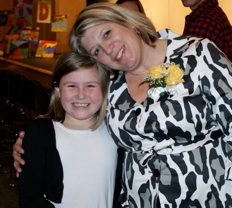
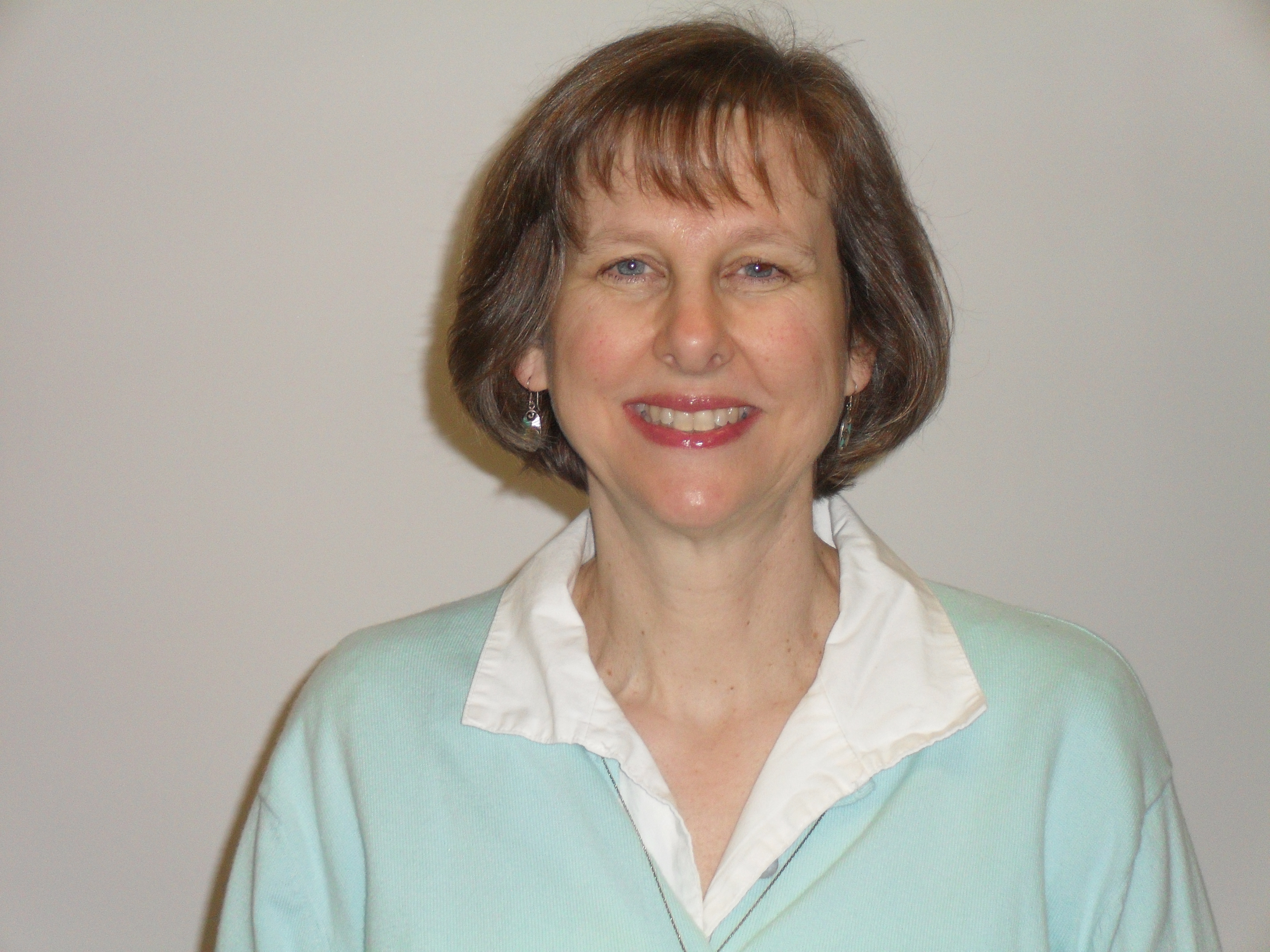
SONY DSCDanette Kerrigan is a Visual Arts Teacher at Sacopee Valley Middle School. She has been teaching in the district for seven years, initially as a traveling elementary teacher in four schools, for two years. Danette then moved into the middle school and currently teaches grades 5-8, approximately 360 students. Her main responsibilities include those grades and she also assists in Response to Intervention (RTI) services in grade six.

What do you like best about being an art educator?

There are moments of such clarity when students gain insight, learn a new skill; experience the joy of success in the shadow of a failure.  It is a privilege to be apart of those moments.

What do you believe are three keys to ANY successful visual and performing arts education?

  1. The passion and commitment of the teacher.
  2. A well thought curriculum that is multidimensional, interdisciplinary and accountable.
  3. Students!

How have you found assessment to be helpful to you in your classroom?

Assessment has been monumental in my ability to provide a rich and individualized experience for students. It has informed my instruction and helped me understand the impact of that instruction.

What have been the benefits in becoming involved in the arts assessment initiative?

Getting involved with the Arts Assessment Initiative came at a crucial time in my career. That 5-6 year period where the shine has come off a little bit, where the politics of education seems to bite a little harder. I was beginning to languish and was primed for being re-energized as a teacher. Being involved in the initiative has re-ignited my passion for the quality of my students’ experience, a renewed energy to reach beyond the school day and explore the possibilities of things I haven’t even yet thought of. It has informed my learning and supported my work as a National Board candidate. It has pushed me to reach out and network with others so that I can be reminded of all the reasons we do what we do.

What are you most proud of in your career?

I am most proud of the experiences with my students. Our district is one of the districts working with teacher evaluation and we are constantly reflecting on goals and outcomes. One of the reflections I have been working with this year has been…”What do I want them to learn?”

As a test, I asked a student…”What do you think you learn in this class? ”  She responded, “I learn to think for myself.  I learn to try something I haven’t tried before. I learn that even if something doesn’t work out, I can get something from it.”

It made my day.

What gets in the way of being a better teacher or doing a better job as a teacher?

My inability to say “no”.

What have you accomplished through hard work and determination that might otherwise appear at first glance to be due to “luck” or circumstances?

I have truly put much hard work into creating an environment in my classroom where students can have respite in their day, whether it is during the art class, or recess, or free time. I believe we all need a place to go where the work we do is valued and that we are appreciated. We all need a safe and welcoming space to create, and not simply art; middle school students create friendships, character and sometimes a little chaos. It is work, it isn’t just circumstances or class lists or the luck of the draw that creates an environment that students can grow, I have to facilitate it.

Look into your crystal ball: what advice would you give to teachers?

Take care of yourself financially. Put 10-15% of your money away every paycheck and after a few months, you’ll never miss it. Plan ahead. Advocate every chance you get.

If you were given a $500,000.00 to do with whatever you please, what would it be?

Pay off my daughter’s student loans; they are just starting off in their lives and already in so much debt. Then mine. Set up a charity. Invest the rest.

Imagine you are 94 years old. You’re looking back. Do you have any regrets?

I certainly hope not, I’m working on the bucket list now!

Thank you Danette for telling your story!


h1

Another Arts Teacher’s Story: Susan Jones

May 21, 2013

This is the 32nd in a series of blog posts telling arts teacher’s stories. The first 19 were told last year by the phase I Maine Arts Assessment Initiative teacher leaders. The series continues with the stories from the phase II teacher leaders. These posts contain a set of questions to provide the opportunity for you to read educators stories and to learn from others.

Susan M. Jones has been teaching for 19 years in MSAD/RSU 40 at Medomak Valley High School. Her present teaching responsibilities include 25 students in chorus, 17 students in theatre, and 65 students in history. Before teaching at MVHS she was in neighboring MSAD 50 for 2 years.
She started teaching music, K-12; general, vocal, instrumental for about 8 years,  and then expanded to Social Studies around 1999. Susan’s purpose was her desire to teach Music History, and learned that she could only do that with a certificate in Social Studies. So she got temporary certification and proudly showed her principal who informed her that someone else would be teaching Music History, but could she “please teach one class of World History?” The pay-off would be that she would only teach in one building all day. Fourteen years later she still hasn’t taught Music History. In 2004 she taught history full time. After four years, Susan was put back into part-Fine Arts and part-Social Studies, and then in 2011, Intro to Theatre class was added to her teaching load.

The main responsibilities of Susan’s classes are to prepare students for college (history classes); to prepare and perform choral pieces and to bring each student’s vocal ability to a higher plane (chorus); and to teach the basics of acting and improvisational theatre to her theatre students.

What do you like best about being an arts educator?

  1. The first is that I often get to see my students for more than one class; I get to see the end product of the growth they have achieved. I feel sorry for classroom teachers that only have the students for a year or for only a semester because they do not get to build the relationship that arts teachers have.
  2. We allow kids to have fun, to be creative in a controlled environment, but to have that fun, they have to be engaged. In Theatre class, they can be silly when we play the games, and when we are reading scripts, they have to be totally engaged so they don’t miss their lines when they come up.  The teamwork displayed in Theatre (and Music and Dance!) is something rarely discussed but is much more vital than that experienced on a playing field.  We don’t have subs on the bench just waiting to take over for someone who is injured or needs a rest!

Three keys to a successful visual and performing arts education:

  1. Enthusiastic, energetic, knowledgeable teachers
  2. Enthusiastic administrative support from administrators
  3. Parental & community support

How have you found assessment to be helpful to you in your classroom?

I have found assessment to be helpful in my Theatre classroom by developing a rubric that students can see and use themselves. I used the rubric I created this past spring to assess a short monologue by the students. First, I filmed the students, then played back their pieces for the class to see (they had performed in front of the class, so it wasn’t anything new), and each student had to grade themselves. I also graded them, and found that most were much tougher on themselves than I was! The rubric gave us a good jumping-off point to discuss what made a good monologue and what they could do to make it even better. It was gratifying to hear the students use the vocabulary and language of theatre to explain their thoughts.

What have been the benefits in becoming involved in the arts assessment initiative?

One of the benefits of becoming involved in the arts assessment is the network of people I’ve met who are so willing to help answer questions and give suggestions and advice. I really feel that I could talk to any one of this group and they would honestly and kindly give of their time to help me…and I would do my best to do the same!

What are you most proud of in your career?

The thing I am most proud of in my career are the students who have returned to say they’ve done or tried something they never would have if it hadn’t been for what they learned in (fill in the blank:  Chorus, Theatre, History, etc.). I have had students who have become music teachers and majored in history; so far I haven’t had any students who have gone on to continue with Theatre because I haven’t taught it long enough – most are still in high school!  I do have two students this semester who are seniors, and one is majoring in Theatre and the other is minoring in it – I can’t wait to talk with them as they go through college! One student I had who took Chorus a number of years ago, well, singing wasn’t her strong suit, but she didn’t mind being in with the whole mix of people and her lack of pitch-matching wasn’t noticeable.  She returned to visit after her sophomore year in college and proclaimed that she had taken part in a community sing-a-long of the Messiah, and that she would never have had the nerve to even try it if we hadn’t sung two pieces from the Messiah when she was in high school. She was so excited, and I was excited for her!

What gets in the way of being a better teacher or doing a better job as a teacher?

Scheduling is probably the biggest thing that gets in the way of me doing my job. In a small district, it’s hard to get the number of people who want to be in your classes to actually have room to be there. Then guidance counselors and administrators who throw up their hands and say, “Sorry, I can’t do anything about it.”  I think they need some creativity in their lives!

What have you accomplished through hard work and determination that might otherwise appear at first glance to be due to “luck” or circumstances?

I was able to get my Master’s Degree through a lot of hard work and determination! I figured if I was going to have to take courses anyway to keep my certification, I might as well have a purpose, so I applied for the program, took all the tests and was admitted. I figured I’d let my school district pay my tuition. Then before I’d even taken one class, I lost my job. Well, I paid for that one class, and through a community scholarship, I kept taking one class at a time.  When I started, my oldest child was 5, the next was 3, and the youngest was 1. For three years, I was unable to get a job, so we were living off my husband’s salary with no health insurance and three kids. And I was taking college classes which often met every day for two weeks at a time in Orono, which meant I had to drive back and forth every  day, plus have a babysitter from 7 am – 6 pm, which we couldn’t afford. I went to the local high school and asked if there were any young ladies who needed tutoring in Algebra and I was able to secure free babysitting by offering free tutoring – a win/win situation! People often think getting a master’s is something that can be done in a couple years while you are working, and it can be done…but that’s not the way I did it!

Look into your crystal ball: what advice would you give to teachers?

I would advise teachers to advocate for themselves, have the absolute best intentions for their students in mind, and be open to learning how to be the best teacher you can be. Lifelong learning is the absolute key to teaching!

If you were given a $500,000.00 to do with whatever you please, what would it be?

I would use the $500,000 to pay off some bills, and put away the rest for those “rainy days” that will come – my parents are getting older, as we all are, and we may need to help them.  Oh, and travel – I would love to travel more! I want to play djembes in Africa, go to the Shakespeare Festival in Edinburgh, learn Russian dancing in Moscow…it’s endless!

Imagine you are 94 years old. You’re looking back. Do you have any regrets?

Yes, I have regrets. I really don’t know that anyone shouldn’t have them. Mostly the regrets revolve around accidentally hurting people. I wouldn’t have said certain things in an off-hand manner, or I would have listened more closely before jumping in. Those may sound like “little things”, not on the level of “I wish had had more courage to take that position”, but those are the things that bother me after years and years, not the major life-moments.

Thank you Susan for sharing your story!

h1

My Last Two Weeks

May 10, 2013

What an adventure!

Some weeks are filled with excitement and adventure and some weeks are filled with excitement and adventure – yes, I repeated that since all my weeks are pretty amazing! However, my most valuable days are when I am visiting teachers and students, learning about the work that is going on in the arts in Maine schools. I am always interested in what teachers are doing with curriculum, assessment, and arts education in general! What I hear and what I see keeps me grounded in what is “real” for Maine arts education. When I do my work at the Department it is first and foremost in the best interest of all Maine kids and their visual and performing arts education. I feel so fortunate to have this job that takes me to all corners of the state. Thank you for the invitations!

During the last two weeks I have had the chance to go to the following:

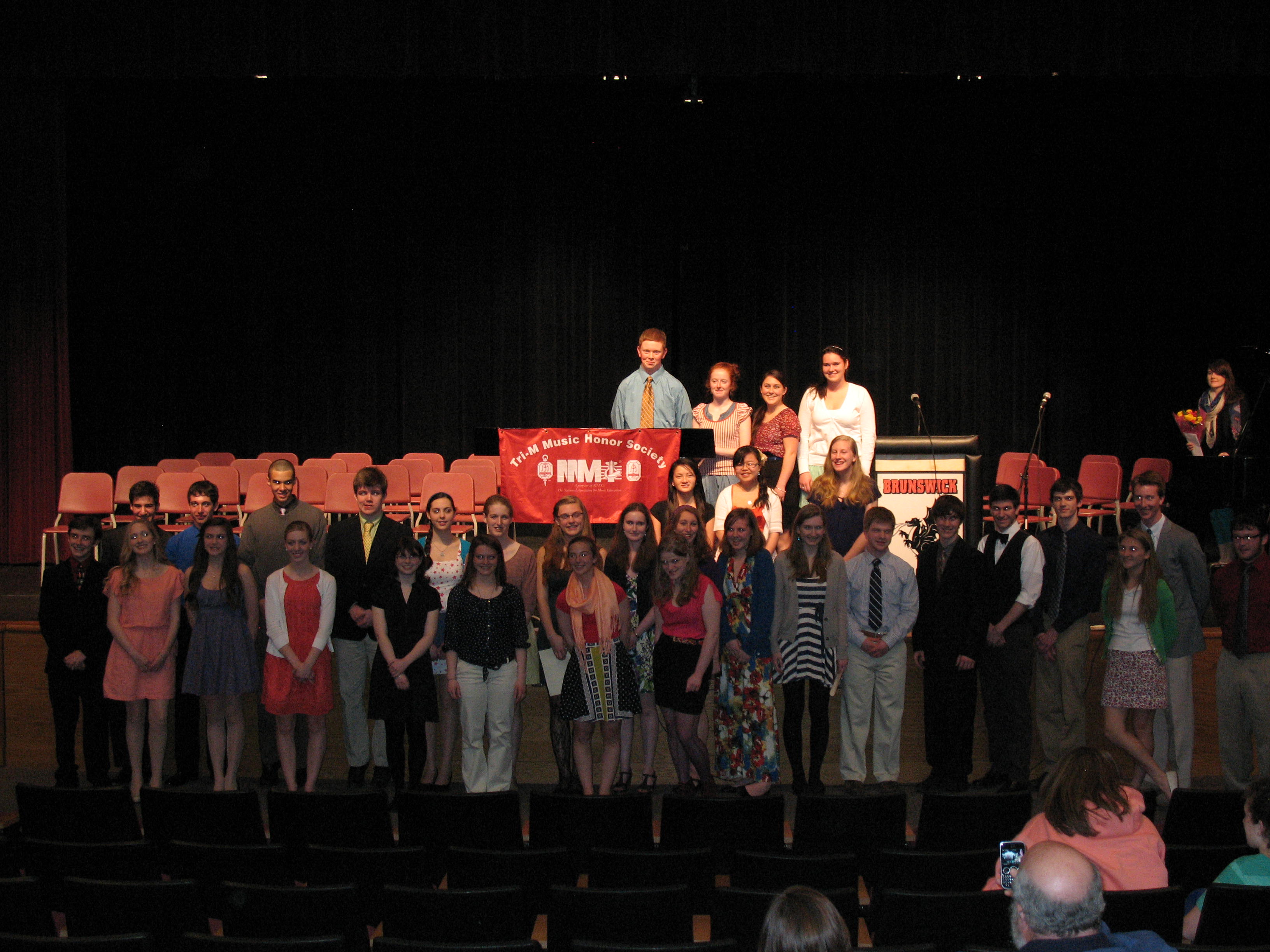
  • Ashley Smith (Maine Arts Assessment Initiative teacher leader) and Mike Scarpone, music teachers at Brunswick High School invited me to speak at their Tri-M Music Honor Society induction ceremony. I was very impressed with the music and the students. Bridget Horan, Chanel Thibeault, Ariel Bouchard, and Joe Waring played the National Anthem to start the program. Throughout the program there were student performances including: Tessa Hauptman was accompanied on the piano by Ben Flanagan. Hannah Judd played the cello. Joe Waring played the saxophone accompanied by Nathaniel Vilas on the piano. Alexis Gillis sang accompanied by Ben Flanagan on the piano. Walter Martin played the trombone accompanied by Nathaniel Vilas on the piano. Nathaniel Vilas ending the evening on the piano. It was wonderful to hear the present members (15 of them) introduce the inductees (21 of them). As these type of ceremonies go, it was very formal however, the students humor shined through which brought several chuckles to members of the audience. Afterwards, parents and students enjoyed refreshments in the cafeteria. Thank you Brunswick Tri-M students and Ashley and Mike for including me.

IMG_3240

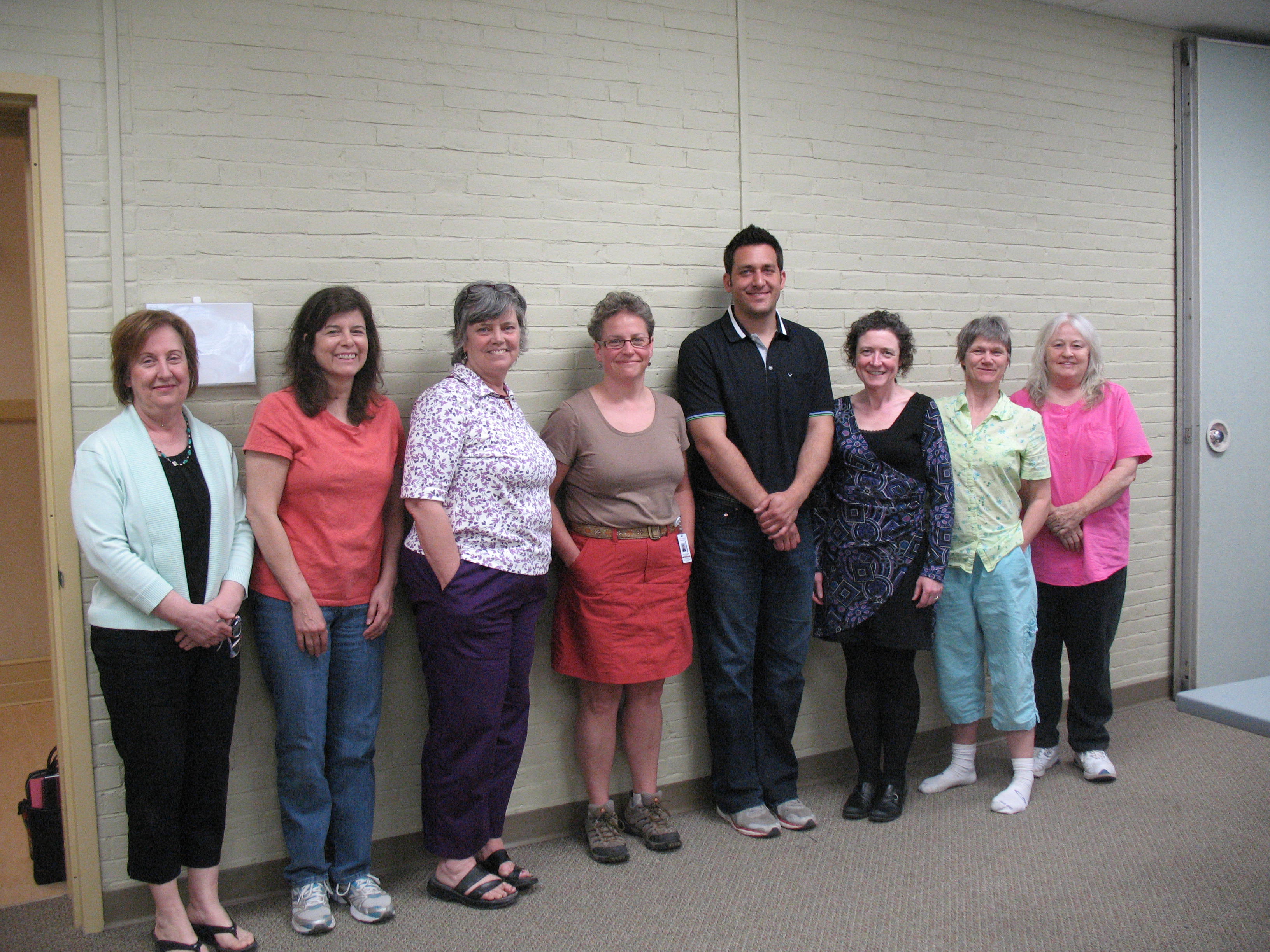
  • Last week I was invited to meet with the arts staff from the Gorham schools. In the Gorham schools they rotate updating curriculum and arts educators are starting this important work. Assistant middle school principal Susie Hanley has been communicating periodically during the last year with questions and information on the work of the Gorham arts teachers. It was great to have a chance to hear discuss their work and the challenges it poses. I did get a photo at the end but it was after some of the teachers had already left the meeting. Thank you to Susie for inviting me!

The teachers include:

  • Gail Thibodeau, Music  K-5, Narragansett and Village
  • Janelle Mosey, Music and Chorus  K-5, Great Falls
  • Allie Rimkunas, Art 1-5, Great Falls
  • Paula Balcom, Art 1-5, Narragansett and Village
  • Amy Stewart, Music K-5, Narragansett
  • Vicki Bove, Art  6-8, Gorham Middle School
  • Amy Cousins, Art 6-8, Gorham Middle School
  • Tracy Wheeler, Music and Chorus 6-8, Gorham Middle School
  • Kim Mathieu, Music and Band  6-8, Gorham Middle School, 5th grade Band
  • Chris Crosby, Art 9-12, Gorham High School
  • Sarah Tucker, Art 9-12, Gorham High School
  • Matt Murray, Music and Chorus 9-12, Gorham High School
  • Tim Ebersold, Music and Band 9-12, Gorham High School

IMG_3259

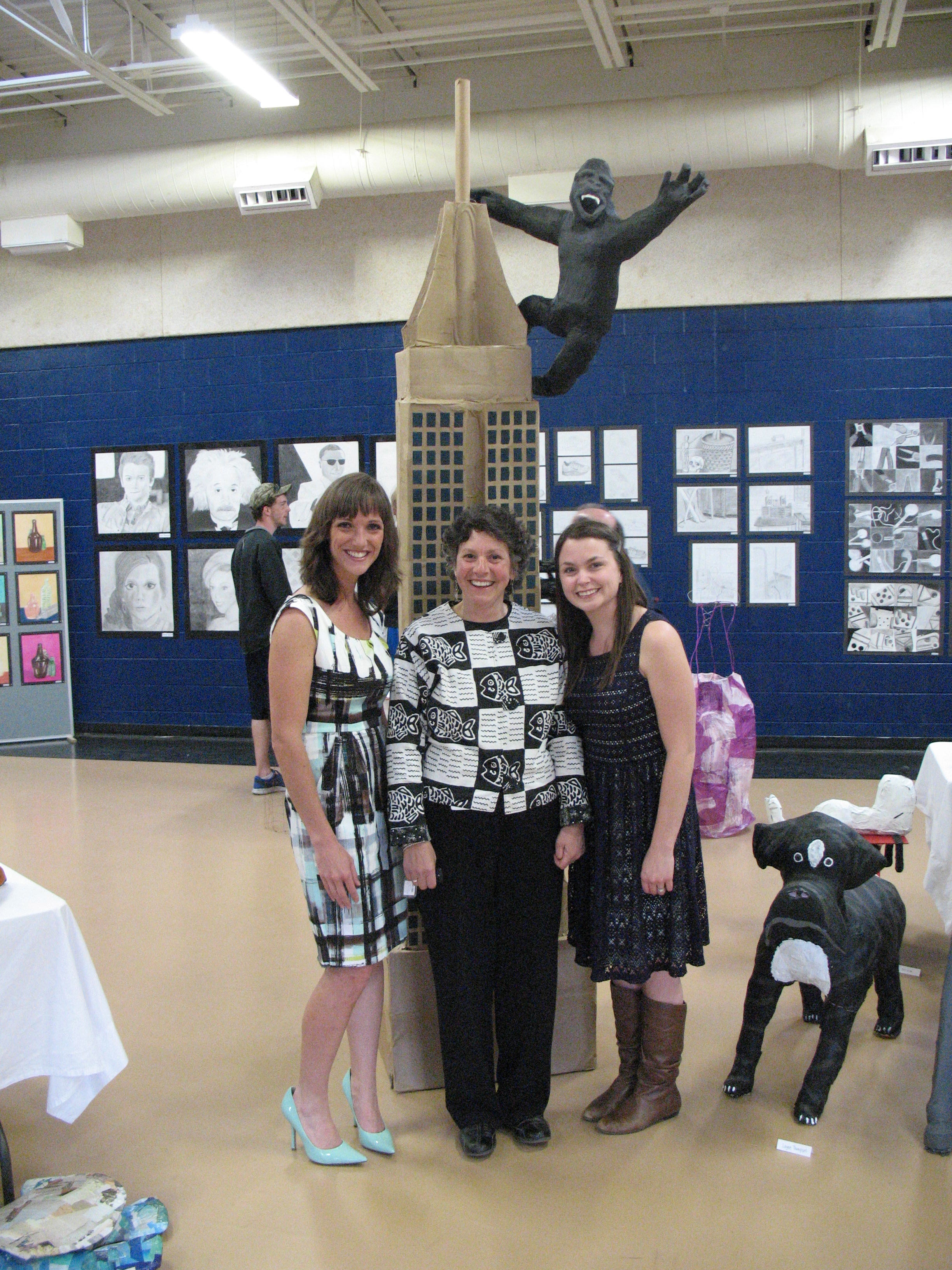
  • Gray-New Gloucester High School art exhibit was held last week in the auxiliary gym on the same evening that the students were performing the comedy The Man Who Came to Dinner. It was great to see Maine Arts Assessment Initiative teacher leader Barb Weed (Barb’s Another Arts Teacher’s story) on my way in to the school. After I arrived Waterville High School art teacher Suzanne Goulet dropped in to see the show. The gym was completely filled with outstanding 2 and 3 dimensional art work and it was great to see art teachers Sarah Gould and Michaela DiGianvittorio. Talk about proficiency?! The evidence was clear! Thanks for inviting me to a great show!
IMG_3260

Sarah, Argy, Michaela

IMG_3277 IMG_3283

  • This week I’ve had more opportunities to visit schools. Debi Lynne Baker and I were at Biddeford Intermediate School to videotape Maine Arts Assessment Initiative teacher leader, music teacher Andrea Wollstadt. (Andrea’s Another Arts Teacher’s story). The last of a series of 4 that Debi is creating showing standards based arts classrooms in action. We had a great day in Andrea’s 4th and 5th grade classes. Her superintendent, Jeremy Ray, popped in to give her an apple for Teacher Appreciation Week. We interviewed Andrea’s principal Debra Kenney, music colleague Jillian Cote, and two of her students. Thanks to the students and staff at Biddeford Intermediate School!
  • I visited Belfast High School and Troy Howard Middle School and the classrooms of Heidi O’Donnell and Lynnette Sproch. Heidi has a lesson where students wrote an artist statement after research and created an artwork that depicted the style of the artist. They were created in small shadow-like boxes. The pieces were fascinating to look at and really made me think. I was glad to see the “man coming out of the ceiling” in real life that Lynnette had created with her middle school students. I also stopped to see my dear friend science teacher John Thurston who is responsible for the garden program at the middle school. It is always great to see John who works with Lynnette on integrated units. You might remember the one that they did on creating posters for the Belfast coop. They were beautiful with bright red giant tomatoes and a great example of service learning. I stopped to see theatre teacher Jason Bannister who caught me up on the event they just held at the school for middle level theatre students – Maine Student Acting competition. Thanks for the visit to both schools!
  • I traveled up the coast to Hancock Grammar School and stopped to see Maine Arts Assessment art teacher leader Janie Snider (Janie’s Another Arts Teacher’s story). We critiqued the video that Debi has created of Janie in action earlier this spring.  We spent some time talking about the idea of writing “power standards” and perhaps rubrics to make available for all arts teachers. What do you think of the idea? Thanks for “great food for thought” Janie!
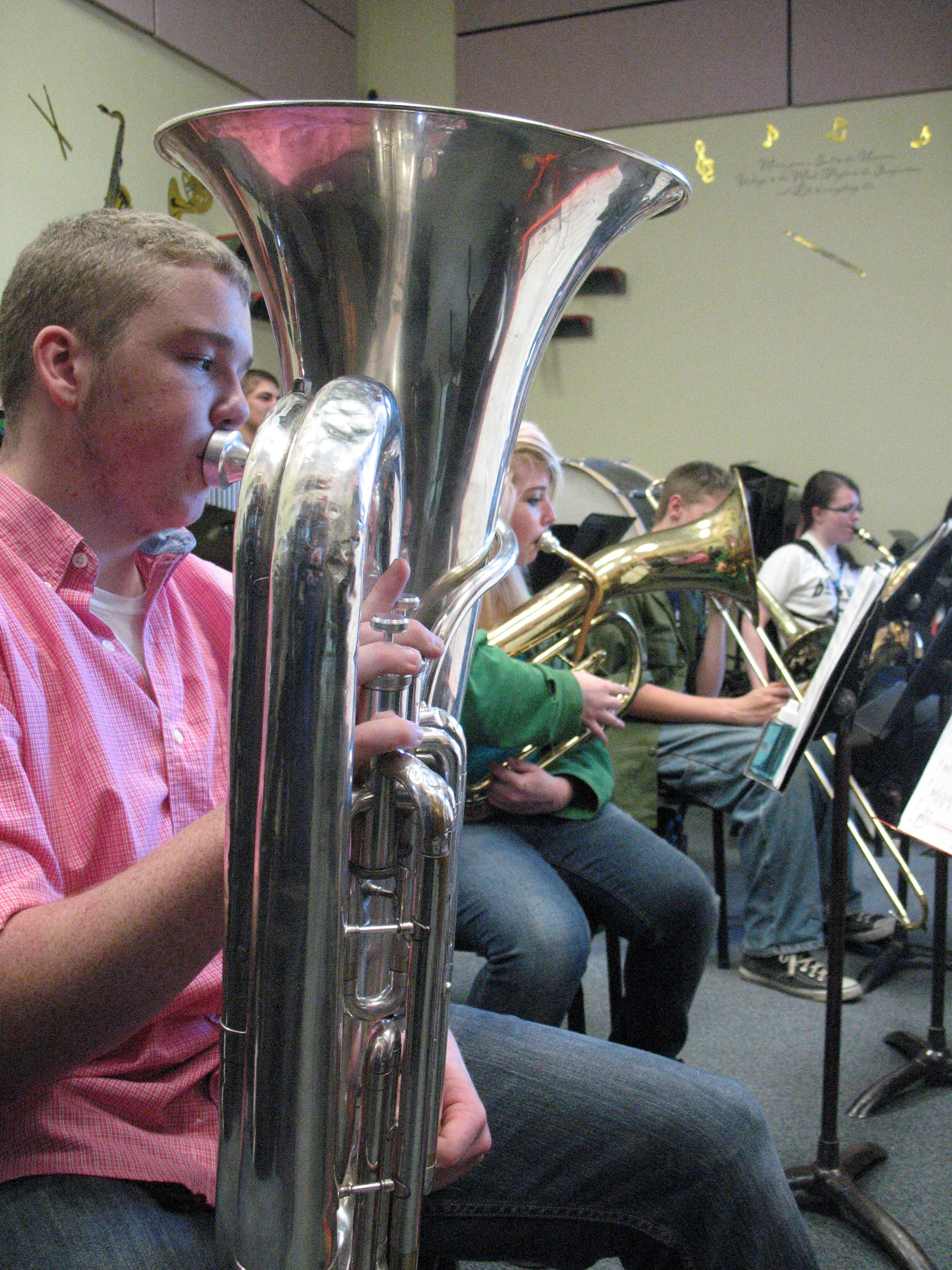
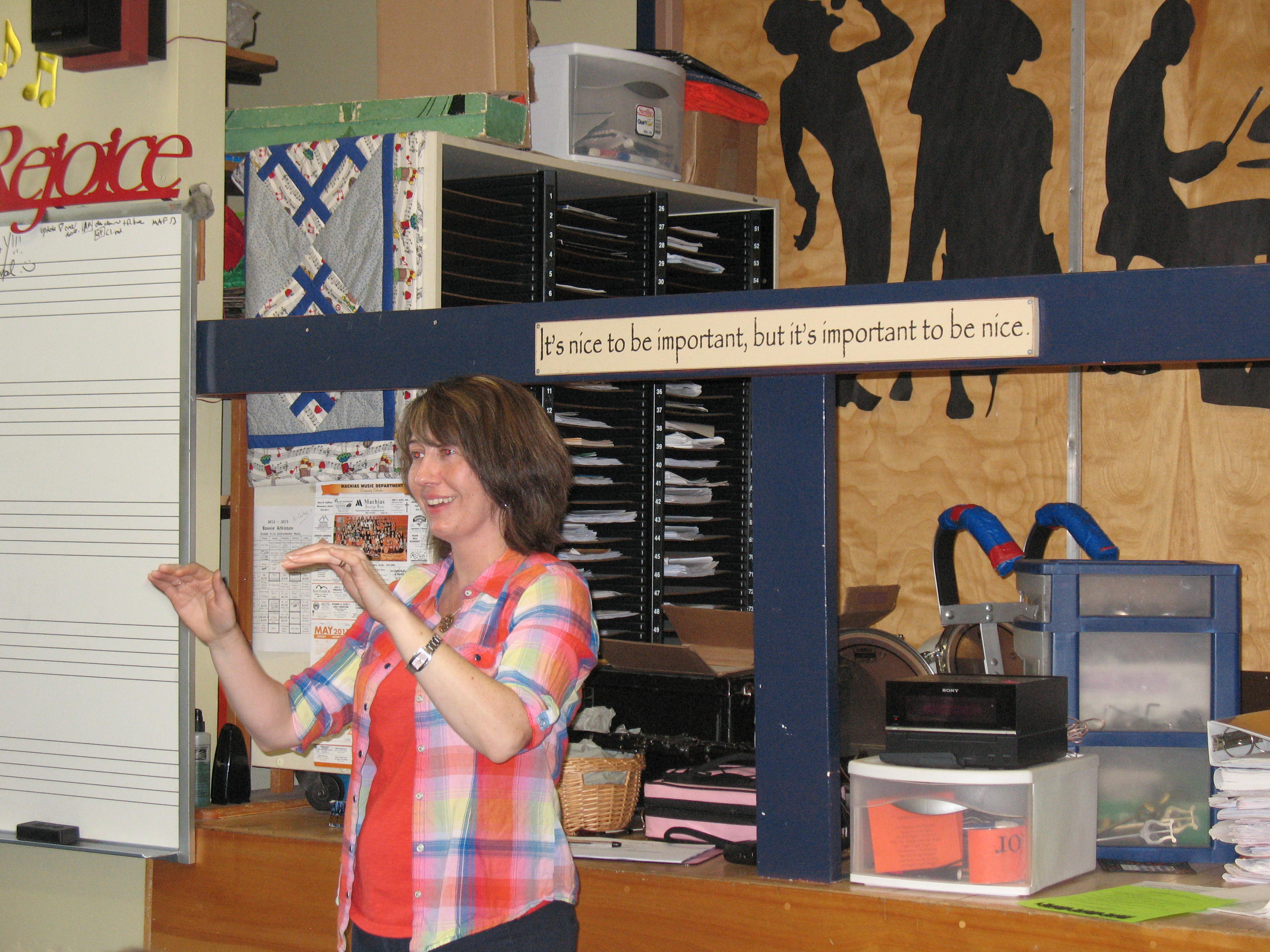
  • Onto Machias and the Rose Gaffney School to visit Maine Arts Assessment music teacher leader Bonnie Atkinson. (Bonnie’s Another Arts Teacher’s story). When I arrived her middle and high school band were rehearsing their pieces for the spring concert. Bonnie has many thought provoking sayings in her classrooms. I loved hearing the students practice and I also had a chance to listen to the chorus practice before I left for the Washington county superintendents meeting at University of Maine at Machias. Thanks for letting me pop in Bonnie! The artwork everywhere in the halls is stunning.

IMG_3288

IMG_3294IMG_3300

h1

Another Arts Teacher’s Story: Jane Snider

April 30, 2013

This is the 29th in a series of blog posts telling arts teacher’s stories. The first 19 were told last year by the phase I Maine Arts Assessment Initiative teacher leaders. The series continues with the stories from the phase II teacher leaders. These posts contain a set of questions to provide the opportunity for you to read educators stories and to learn from others.

OLYMPUS DIGITAL CAMERAJane Snider lives in Milbridge, Maine. This is her 20th year teaching elementary art. Her first 9 years were in Washington County, SAD #37. Jane taught in 5 elementary schools with an average of 550 students. She had an art cart in each school and went classroom to classroom. It was a challenging job, but she loves a challenge and made it a successful experience. In 2002 she downsized to one school In Hancock County, Hancock Grammar School (HGS). She was so excited to have her first “art classroom”. Jane is still teaching at HGS and as a result of the consolidation of RSU#24 she also teaches K-8 at Lamoine Consolidated School.

What do you like best about being an art educator?

I love sharing my passion for art and life with my students. I love teaching and guiding them in “seeing” their world. Watching the development of each student from year-to-year is fascinating. I feel lucky to have many of the students from kindergarten through eighth grade. The relationships that are formed through art learning are very rewarding. The thoughts, ideas and insights that my students share with me, inspire me.

What do you believe are three keys to ANY successful visual and performing arts education?

  1. A committed, passionate, knowledgeable teacher who believes that the arts are fundamental to the human experience.
  2. Students that love and appreciate the arts. Their advocacy is essential for parental, administrative and community support.
  3. Financial funding support is also an added bonus!

How have you found assessment to be helpful to you in your classroom?

Assessment in elementary art has always been of interest to me. How do we assess or score something that is personal and subjective? I believe we assess our teaching objectives. I use many formative assessments in my teaching. I try very hard to dialogue with each student about their process. Most of all, I want students to love what they are doing. I want students to feel good about their work. I want to instill an appreciation for art. We must self-assess our learnings to nurture our growth. Student work must be exhibited. It needs to go up on walls or out in the community. This allows the students an opportunity to quietly self-assess. As the teacher, I ask the questions “Did the student learn the concept or skill being taught? Does the artwork reflect their knowledge and skill?”  Assessment is attached to the validity of a subject. If we want arts programs to be successful we must assess the outcomes.

What have been the benefits in becoming involved in the arts assessment initiative?

The MAAI has been a great experience. I have met some wonderful colleagues to collaborate with across Maine. I have learned so much about assessment, teaching and learning. I have been able to reflect on my teaching practices and make changes that will help students be more involved, accountable and successful. MAAI provided me with the training and opportunity to share this information and knowledge with my local colleagues.

What are you most proud of in your career?

I am most proud of the curriculum and program that I have built for my students. Stories from students, both past and present, have let me know I made a difference in their lives.

What gets in the way of being a better teacher or doing a better job as a teacher?

I am always striving to be the best teacher I can. Time is a challenge, I wish I had more teaching art time with students. More time to collaborate with other teachers would be helpful.

What have you accomplished through hard work and determination that might otherwise appear at first glance to be due to “luck” or circumstances?

I have worked hard to develop a strong arts program. My classes go quite smoothly do to years of learning about child development, teaching and learning practices, classroom management techniques, organization and flexibility.

Look into your crystal ball: what advice would you give to teachers?

LOVE WHAT YOU DO! CREATE your teaching experience. Enjoy it, know that you are making a difference. Advocate for the arts and yourself. Never stop learning about  education and students. Find out what motivates and inspires arts learning.

If you were given a $500,000.00 to do with whatever you please, what would it be?

$500,000 ???? I would become mortgage free!  I would find or build a building to start an art co-op to exhibit local artisans and their work. I’m getting closer to retirement so I would probably do more of my own artwork and offer art classes.

Imagine you are 94 years old. You’re looking back. Do you have any regrets?

I have no regrets, my life has been full, rich and rewarding. I have had some incredible tragedies, some amazing opportunities, the best friends, family and colleagues. I have shared with many what gifts I’ve been given. I have learned much, laughed often, loved with all my heart. I found my purpose in doing what I love.

Thank you Jane for sharing your story!

h1

Another Arts Teacher’s Story: Jane Kirton

April 23, 2013

This is the 28th in a series of blog posts telling arts teacher’s stories. The first 19 were told last year by the phase I Maine Arts Assessment Initiative teacher leaders. The series continues with the stories from the phase II teacher leaders. These posts contain a set of questions to provide the opportunity for you to read educators stories and to learn from others.

photoJane Kirton teaches chorus, keyboarding, and introduction to music at Sanford High School where she has been for 12 years. She is the music director for musicals, helps with Sophomore Awareness, and graduation activities.  Outside of school Jane is the music director at the North Parish Congregational Church and a facilitator for The Center For Grieving Children at the Southern site.

What do you like best about being a music educator?

The best part of my job is being able to touch the souls’ of all my students! Most of the time, the students take my classes have chosen to take them, therefore, they want to be in the class. This makes for an atmosphere of warmth and comfort which is conducive to learning. We, as arts educators, are able to reach some students whom others can’t, this is our most valuable strength.  I tell my students that we’re going to learn a lot about life as well as music in our class!

What do you believe are three keys to ANY successful visual and performing arts education?

  1.  Compassion – we must have and show compassion to all our students.
  2. Versatility – being able to teach something a number of ways to reach all types of learners.
  3. Connection/be present – we must make a connection with each student we teach, show them that we care and that they are valued. Adding a bit of humor and telling them my story are two of my strengths.

How have you found assessment to be helpful to you in your classroom?

There have been times when I have struggled with assessment especially written assessments. I want to be sure that my assessments are applicable to what I teach especially in chorus class. Being a performance based class, writing shouldn’t be the primary assessment. I have worked hard to create a variety of ways to assess – vocally and writing that is pertinent to what we do.  I am always searching for new ideas and ways to assess.

 What have been the benefits in becoming involved in the arts assessment initiative?

The benefits of becoming involved in the MAAI have been wonderful. From the network of new colleagues to the endless possibilities of creativity – wow! I have found that this initiative has put me in the zone so to speak. I have totally reworked the way I teach my keyboarding class and as a result, word is spreading and more students want to take the class than what I can accommodate! I look forward to continue to enhance my other classes. I am anxious to see what year three holds for us.

What are you most proud of in your career?

I am proud that I went back to school at the age of 40 to get my degree in music education! I am proud when I see students graduate from high school and college with a music degree. I am blessed with wonderful students – not just the ones that go to college. I believe in not only teaching music but I teach about life! Making connections with my students while at SHS is very important to me.  Many of my former students stay in touch and visit our class often. I know I have made a difference in my students’ lives when they continue to come back and visit.

What gets in the way of being a better teacher or doing a better job as a teacher?

Time is always a factor! I could spend hours and hours doing what I do. I believe right now my biggest stumbling block is our school schedule. My numbers are sadly dwindling as students cannot fit music classes into their schedule. I also dream of a performing chorus in the elementary schools which we don’t have. I believe that a love for singing must start early on. Kids need to feel singing in their bones and love it in order to continue on at the upper levels. Our children have so many options in their lives today, it’s hard for them to choose and do it all.

What have you accomplished through hard work and determination that might otherwise appear at first glance to be due to “luck” or circumstances?

Despite low numbers, the sound of my chorus continues to be very good. I know this comes directly from the result of teaching. Time spent on music literacy is invaluable! The connections that I make with my students is very important to me. I work hard to create an atmosphere of camaraderie and acceptance in my classes which makes for a peaceful working environment. Through this we are able to make beautiful (bel canto) singing!  Helping a student in need is very important to me.

Look into your crystal ball: what advice would you give to teachers?

As one of my college professors told me . . . “Be the one to make a difference in the student’s life who struggles to thrive in other classes and with other teachers.” I have a quote on my bulletin board in my office that I made up several years ago . . . “Remember, you don’t necessarily know what the person next to you went through last night or before school today . . .”  I believe, as an educator, yes you need to know your content and know it well but it is also extremely important that we care for our students!

If you were given a $500,000.00 to do with whatever you please, what would it be?

I would first pay off my children’s college debt for them. Pay off our mortgage. Put money away for my grandchildren’s college education. Buy some recording equipment for my class at school and at church.

Imagine you are 94 years old. You’re looking back. Do you have any regrets?

No regrets! I made that decision when I turned 40 and went back to school!!! Oh don’t get me wrong, there are some things I WISH I could do such as return to school and perhaps become a counselor but frankly, I’m happy doing what I am doing! I love touching the lives of my students!  Remember, lasting friends are made through music!

Thank you for telling your story Jane!

h1

Another Arts Teacher’s Story: Mari-Jo Hedman

April 9, 2013

This is the 26th in a series of blog posts telling arts teacher’s stories. The first 19 were told last year by the phase I Maine Arts Assessment Initiative teacher leaders. The  series continues with the stories from the phase II teacher leaders. These posts contain a set of questions to provide the opportunity for you to read educators stories and to learn from others.

IMG_0096Mari-Jo Hedman has been teaching music since the fall of 1982 after graduating from the University of Southern Maine with a B.S Degree in K-12 Music Education. Mari-Jo is currently teaching K-12 music in the Fort Fairfield School District, MSAD #20.  She has taught in this district for a total of 17 years. She has also taught in Mars Hill, Caribou, and Union #122, which was at the time comprised of Stockholm, New Sweden, Westmanland, and “the other Woodland”.  In MSAD #20, she is responsible for about 300 students K-12 and teaches everything from classroom K-5, beginning 5th grade instrumental and band, 5th grade chorus, 6-8 chorus and 9-12 chorus. Mari-Jo also teaches a piano/percussion class at the high school.

What do you like best about being a music/art/drama/dance educator?

I love the fact that I work with grades K-12 because I can really see the growth from the first day of kindergarten right up until the day they graduate from high school, providing they continue with the vocal music program throughout their middle/high careers. I also love seeing kids come in that are struggling with many other classes in school, but they thrive in the music classroom.  That makes my day!

What do you believe are three keys to ANY successful visual and performing arts education?

  1. There needs to be a well-rounded curriculum that allows for as many musical experiences as possible. For most students, except for the music they hear on the radio or TV, their only musical experiences will take place as part of what I offer in the music classroom, and extend to the musicians that I bring into the school, or the local field trips that we go on.
  2. You need to LOVE what you do so that you can get your students to pick up on that excitement and want to keep coming back for more. You need to get the students turned on to music as soon as you have them in your classroom for the very first time.
  3. You really need keep up with what your students are listening to and try to incorporate some of their musical choices into the curriculum. It helps me to stay excited about what I am doing when I see a student come to me and they can’t wait to show me their newest favorite song that they just can’t live without. They especially love it when I like it enough to buy it and add it to one of my playlists.

How have you found assessment to be helpful to you in your classroom?

I am the only “special” in our system that truly does assessments and gives grades like the “regular” classroom teachers. I find that it gives me an opportunity to get to know each and every student’s needs and accomplishments and be able to communicate that to the parents. I think that this has benefited me in regard to justifying that music is essential, especially in these days of budget and job cuts. I also feel that students have a better understanding of what and how they are doing. It also helps students know on what they need to continue working.

What have been the benefits in becoming involved in the arts assessment initiative?

MAAI has been such a breath of fresh air for me in regard to assessment. Being with so many creative and hard working minds, sharing and receiving great ideas as to how assessment is done, what works and what doesn’t, has been true incentive for me. It has really made me look at what I am doing in my own classroom. I have so many new ideas and have tried some new things in not only elementary classrooms, but up through the middle/high levels as well. I have made strides in the right directions, but still have a long way to go.

What are you most proud of in your career?

I am most proud of students who have continued on in some aspect of music after they leave the halls of Fort Fairfield Middle High School. It is so humbling to realize that you have had enough of an impact on a student that they want to pursue a music career or maybe sing/play in some local music groups. The other thing that I am most proud of is the student that struggles and just keeps at it and at it until he/she finally gets it! I love to see the pride in children’s faces when they overcome that musical “hurdle”.

What gets in the way of being a better teacher or doing a better job as a teacher?

The massive amounts of paper work or details that are constantly added to our plate. It would be great to be able to just focus on teaching!

What have you accomplished through hard work and determination that might otherwise appear at first glance to be due to “luck” or circumstances?

I have been fortunate to get some grant money that helped to enhance the elementary program by offering new opportunities that otherwise our school district would not have been able to afford. I have a wide variety of percussion equipment for 5th percussion ensembles, ukuleles which I also teach at grade 5 along with enough piano keyboards to use in a group of 30 students if I ever had that many. I still do recorders in grade 3. It doesn’t magically happen. This also requires a solid underlying curriculum in grades K-2 in order to prepare students for being successful in developing the skills and knowledge needed in order to perform on these instruments.

Look into your crystal ball: what advice would you give to teachers?

As an arts teacher, you always have to have a clear vision of what you want your students to accomplish.  Be creative and think outside of the box when building your curriculum and the musical experiences that you want to offer your students. Be diligent and don’t take “no” for an answer. If you want/need something badly enough, fight the fight to get it and don’t give up.  You will be majorly reward in the end.

If you were given a $500,000.00 to do with whatever you please, what would it be?

I would use this as a start up fund for a new performance facility. Currently there is not a place at the elementary school where all grades that I teach, K-5, can be at the same time while including friends and families. This means I have to hold concerts in the high school gymnasium OR split the concerts over a two-night span of K-2 then 3-5. This performance also takes place in the gymnasium. Right now we split the concert into two nights. There is only room for one performing group and the audience. The other groups must wait in their classrooms until it is their turn to perform and we do not have a set-up that allows them to watch ongoing performances. A performance venue such as an auditorium would be a dream!

Imagine you are 94 years old. You’re looking back. Do you have any regrets?

I wish that once I had started teaching in Fort Fairfield I had stayed in that one location. Moving around and coming back to Fort Fairfield 3 times during my teaching career put me at a disadvantage and more importantly, the students were at a big disadvantage. We used to have large performing groups, competitive show choirs and jazz choirs, as well as an active music boosters organization that allowed us to travel as a group every 2-4 years. We went to Boston and Halifax, Nova Scotia for competitions in which we did well. By not staying put in one school system it allowed other teachers to come in that were not competent in the same areas. It truly hurt our extra-curricular groups to the point that we have none of the things listed previously. Consequently it has also hurt our regular concert choir and concert band; we are a fraction of the size that we had in the past. Our school enrollment is so small that I know we will never have the opportunity to get that quality of program to return. Very sad!


h1

Another Teacher’s Story: Gloria Hewett

April 2, 2013

This is the 25th in a series of blog posts telling arts teacher’s stories. The first 19 were told last year by the phase I Maine Arts Assessment Initiative teacher leaders. The  series continues with the stories from the phase II teacher leaders. These posts contain a set of questions to provide the opportunity for you to read educators stories and to learn from others.

GloriaGloria Hewett has been teaching art for 24 years. For the past 13 years she has taught middle school art at Mount View Middle School in Thorndike. Gloria works with about 380 students during the school year in five, seven week rotations. She has 4 classes a day and sees her students every day for 7 weeks. She has a beautiful, new art room. In Gloria’s words: “It’s the best room I’ve ever had and I’m very happy here.
When I look back at my teaching career I realize how far I’ve journeyed as a person and a teacher. I started out my teaching career in Richford, Vermont, one mile from the Canadian border in a small, poor high school. I had an L shaped room with one tiny window in the back that I could barely fit through if there was an emergency. My room was under the gym and adjacent to the shop on one side and the band room on the other and with no sound proofing. I had daily headaches from no ventilation and the noise. My principal never came to my room to see how I was doing, not even once. I taught there for two years and determined that I needed to go back to school to get my masters degree and for the next two years I studied at the University of Arizona in Tucson.”

What do you like best about being an art educator?

Perhaps the thing I like best about teaching art is being surrounded every day by the energy of students learning about art, in whatever form that takes.  I like thinking that I’m bringing to my rural students an awareness of the possibilities of art within their lives.  I believe that a good teacher is paramount to a successful art education.  I also believe that students have success when they feel honored and respected as individuals.  Administrative support is also primary to the success of an art program and I have that in my district and within my building.

How have you found assessment to be helpful to you in your classroom?

I have been assessing student work for my entire teaching career although it has changed drastically from my first year as a teacher to the way I assess student work now. My students are involved in creating criteria for their work and they also help to assess their own work. Because students are involved it helps them to understand their learning and their progress more fully. I find it makes my part in the assessment process more comfortable because students are a part of it, it’s no longer me alone who determines their progress and their success.

What have been the benefits in becoming involved in the arts assessment initiative?

By being a part of the Arts Assessment Initiative I have looked more closely at what I do as an art teacher, both how I teach and how I assess. Assessment is not just about assessing but about how to make teaching better for students. I see assessment from the viewpoint of a student much differently now and that has helped me to be a more informed teacher. I’ve also learned much from working with my arts peers and gained a lot of confidence and support as part of the initiative. We, as arts teachers, work in such a bubble sometimes that we forget the bigger picture and working with other arts teachers over this last year has given me new perspective and new energy to continue to grow as a teacher.  It has also given me the impetus to continue to stay current within my field and to try to spread that growth within my own district.

What are you most proud of in your career?

I’m proud of the fact that I am still an energetic and involved teacher, that I create excitement about art for many of my students and that I still love my job and working with students. I believe that in the end it all comes down to the positive impact that we have on students and I believe I still have that. I do find that sometimes scheduling creates problems for me to do my best work.  As teachers we end up working around the needs of the institution and the time frames that drive that institution. We work around lunch and the high school and elementary schedule because we are in one building. We have many factors that need to be taken into account and sometimes it feels as though the schedule is more important than the needs of students.  And time, time is always an issue, probably for all teachers everywhere. Time to meet with colleagues, time to plan, time to reflect, time to help students stay on track, and time to relax.

What have you accomplished through hard work and determination that might otherwise appear at first glance to be due to “luck” or circumstances?

I feel that one of the reasons I have such good administrative and community support is because people do recognize my hard work and my true caring for my students and my program. I think people see that I put in a lot of time and effort to make my program successful. If I were to look ahead into the future I would advise young teachers to stay current in their field and to work toward things that benefit all students and not just the gifted few. I would suggest teachers create a good relationship with their administrators and community by having art shows and showing the public what happens in their programs.

If you were given a $500,000.00 to do with whatever you please, what would it be?

If I had lots of money to spend I would create permanent display areas for both two dimensional and three dimensional art within the lobbies of all the schools within my district. I would add an art room to each of the elementary schools in my district so the art teachers didn’t have to teach from a cart. I would add another art teacher to our high school so our students had more choices during the day to take art. I would make it possible for every student in middle school to visit an art museum at least once. I would put chorus and band back into our elementary music programs. I would also add a theater program and a dance program.

If you were given a $500,000.00 to do with whatever you please, what would it be?

I can imagine myself at 94 being just as full of energy and excitement as I am now. I can see myself still making art and even being involved with young people in some capacity. I can see my love of art being a part of my life even at 94, it’s the one thread that has remained constant since I was a little girl and I don’t see that changing. Regret my life and what I’ve done? Never. I will always strive to be the best that I can be, that will never change.

Thank you for sharing your story Gloria!

h1

Another Arts Teachers’ Story: Charlie Johnson

July 24, 2012

This is the 18th in a series of blog posts telling arts teachers’ stories. This series contains a set of questions to provide the opportunity for you to read educators stories and to learn from others.

Charlie Johnson started teaching at Mount Desert Island High School in 2004. He started his career as the first visual art teacher at the Jay School Department in 1973. He is the National Honor Society advisor for 20 students. His courses include Photography, Video, and New Media Arts. Charlie is a teacher leader with the first phase of the Maine Arts Assessment Initiative.

What do you like best about being a art educator?

I discovered my love for art at an early age, while my love for teaching did not develop until I was in college, so there is one interest overlapping another, and they make each day different and exciting for me. Teaching something I love and that I can “do” as well as teach makes my connections with students real and meaningful, not only to them, but to me as well. The “best” part is that I can learn from them and their solutions to problems in art every day, and it’s something I love to experience.

Tell me what you think are three keys to ANY successful arts ed program?

  1. Teachers with passion for teaching and the ability to transfer that passion to students.
  2. Teachers with a strong knowledge of pedagogy and the content they teach and who can share this effectively with students.
  3. Teachers who constantly make the value of ARTS education obvious to everyone in their school from students all the way down to administrators.

Express yourself in many forms and let others see you do that!

What specific way(s) do your assessment practices tie into the success of your program?

Students who are given the opportunities to be successful at many levels through understanding completely how they will be assessed and have had input into that assessment are usually on one hand very satisfied with their work and the processes involved in achievement or, on the other hand, understand why their work was not proficient and understand what they need to do to alter their processes to accomplish proficient work.

The vast majority of my students enjoy the task of making their work mean something and seeing purpose and content applied in their work as expression of their own ideals and thoughts and feelings. It is through the process of discussion, critique and revision that draws them into their work and lends to it an enhanced sense of accomplishment and satisfaction.

The “Learning Results” are an excellent structure to have students work within, and as soon as they begin to understand what the structures of the ARTS discipline are, their work begins to improve.

What have been the benefits in becoming involved in the arts assessment initiative?

For me personally, it has been similar to earning my Master’s Degree; as intense, but a shorter period of time. Being involved in the ARTS assessment initiative has really helped me to open my mind around education in general and to understand the need for a shift in the way education works. I think ARTS teachers have had it all together as a package for a while, but need to be more reflective and accountable for the important work they do with young people. It has caused me to “read” more concerning the specifics of my profession in general and myself as a teaching artist through books, professional papers, literature and articles/online content concerning the “how to” of methods and software around what I teach. I have “grown” connections to a small, but dedicated group of teachers within my geographical area of Maine, and feel a closer collaboration to teachers from other schools.

What are you most proud of in your career?

Making a difference to my students and what they accomplish in their lives, by far.

What gets in the way of being a better teacher or doing a better job as a teacher?

Nothing, any other answer to that question would simply be an excuse for not being the best you can be. If we are to expect the best from our students, then we need to be able to overcome all kinds of obstacles in our classrooms, from money to obnoxious administrators.

Apple or PC?

There’s a difference? Really, I own an iPhone, iPad and several PCs. The important understanding is around software, not platform. Apple seems to still be a bit more user friendly overall, but more controlling as well.

What have you accomplished through hard work and determination that might otherwise appear at first glance to be due to “luck” or circumstances?

I am fortunate to be working in one of the best ARTS supported schools in Maine, but the pathway to this school required a lot of dedication, hard work, love of craft, and yes, luck!

Look into your crystal ball: what advice would you give to teachers?

Stand up for yourselves, promote our profession as a profession by acting professionally and setting good examples for students at all times.

Do things for your students/school without expecting extra pay, it is much louder than words and will more often be appreciated rather than expected. This also ties into the concept of being professional and of teaching being respected as a profession. Encourage or help colleagues to step up every chance you get.

Technology is about to change the face of education, get on board or get ready for a long cold swim. Don’t succumb to technology, but embrace it, always leaving time for a walk in the woods or along a beach!

If you were given a $500,000.00 to do with whatever you please, what would it be?

I would fund a subsidized living complex for people with mental illness, making it as comfortable and spacious as the money would allow.

Charlie invites you to visit his blog at http://chartliej.blogspot.com.

Thanks Charlie for telling your story!
h1

Another Arts Teachers’ Story: Rebecca Wright

July 11, 2012

Featuring one teacher’s journey as an educator

This is the 16th in a series of blog posts telling arts teachers’ stories. This series contains a set of questions to provide the opportunity for you to read educators stories and to learn from others.

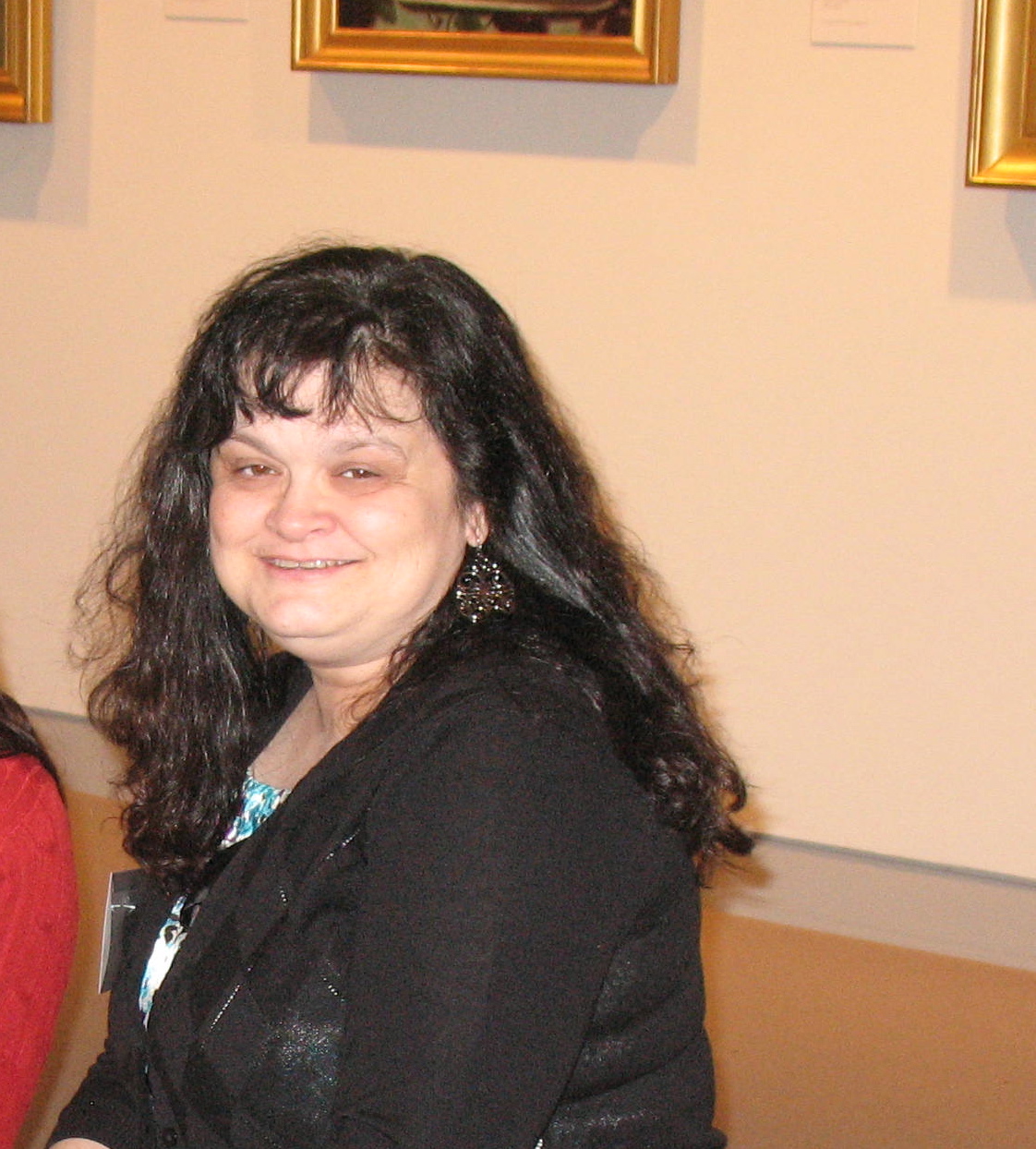
Rebecca Wright just completed her 27th year in public education with the last 26 in Ellsworth, RSU 24. She is unique not because she teaches grades 9-12 at Ellsworth High School (EHS) but that she teaches Theatre, Vocal Music, and Dance and each year her student load varies due to her content expertise. On a trimester system at EHS next year she will teach 7 sections of public speaking, a new requirement for Freshmen. Her primary classes are in Introductory Theatre, Dance, and Vocal Music and Advanced sections in all those areas as well. Rebecca also teaches two different sections of Stagecraft; Costumes and Sets, and Concert Choir. The team Rebecca works with is awaiting final approval for instituting a Visual/Performing Arts Academy. Rebecca is a teacher leader with the first phase of the Maine Arts Assessment Initiative.

What do you like best about being an arts educator?

It is ever changing and it is what students can be passionate about. They come to my class and say “I’ve waited all day for this!” I love how it changes or improves their lives forever and they will come back years later to describe how the visual/performing arts classes have helped them, supported their goals, or become a lifelong pursuit.

Tell me what you think are three keys to ANY successful arts ed program?

  1. Community and Administrative Support
  2. Dedication and a thick skin:)
  3. Students first!

What specific way(s) do your assessment practices tie into the success of your program?

Formative, formative, formative. Students are constantly assessed and encouraged daily without being aware of it. Formative assessment is vital to their individual improvement. My emphasis is on individual progress not on comparison to anyone else in class. Everyone can and will improve and graded assessments are based on their self-assessment, peer assessment and my assessment.

What have been the benefits in becoming involved in the arts assessment initiative?

The arts assessment initiative has been one of the best professional experiences of my career. The week spent last summer with people of like philosophy and mind was exhilarating and inspiring. The wealth of knowledge and ideas was a treasure trove to draw from and Ann Marie from MLTI changed my outlook on technology forever!

What are you most proud of in your career?

I have been blessed to have had many highlights in my career. Seven state championship show choir titles, two national titles at Disney, many successful festivals and sold out performances. I am most proud however, of the many students who have chosen to pursue careers and lives in the arts. It has been so rewarding to see them go on spreading the love of music, theatre and dance around the country. Many are teaching and directing at schools around the state, some are dancing in New York City, some are on television and in the movies spanning the nation from Washington, D.C. to Los Angeles. Some participate in community theatre and church choirs. They keep me in the loop of their lives and I could not be more proud.

What gets in the way of being a better teacher or doing a better job as a teacher?

The things that most interfere with being a better teacher are the increasing demands placed upon the teaching profession in general, red tape and paperwork, and also the constant repetition of having to educate administration about the unique and different needs of the Visual/Performing Arts Dept. I have had many supportive administrators but it has taken determination on the part of myself and my colleagues to gain that support and understanding of our programs.

Apple or PC?

Apple because we have “one to one” for our students.

What have you accomplished through hard work and determination that might otherwise appear at first glance to be due to “luck” or circumstances?

I constantly hear from colleagues across the state “It must be nice!”, “You have all kinds of money to work with.”, “Ellsworth has all kinds of advantages”. What I remind them is that it took 26 years to build what we have and we started with nothing more than an aging cafetorium stage and a handful of kids. There have been years full of “blood, sweat and tears” poured into our program not just on my part but on the part of all those students, parents, and volunteers during all those years. Circumstances were often against us but a passion for the importance of performing arts for students carried us through.

Look into your crystal ball: what advice would you give to teachers?

The visual/performing arts are more important than ever to students and our culture.
Don’t give up and don’t expect everyone to be as excited as you are. Always remember who it makes the difference for-students. Be willing to compromise and be flexible and be willing to look at your situation from all sides. It is hard to argue with a program that is always focussed on what is truly best for students.

If you were given a $500,000.00 to do with whatever you please, what would it be?

After paying for my twins education, one is going to SVA in Manhattan for Animation and one is going to USM as Musical Theatre major (go figure:), I would probably finally start the “Wright School for the Performing Arts”. We have joked about it for years, buying The Grand Auditorium in Ellsworth and renovating it to be used as a year round performing arts school and performance center.

Thanks Rebecca for telling your story!
h1

Another Arts Teachers’ Story: Jennie Driscoll

June 26, 2012

Featuring one teacher’s journey as an educator

This is the 15th in a series of blog posts telling arts teachers’ stories. This series contains a set of questions to provide the opportunity for you to read educators stories and to learn from others.

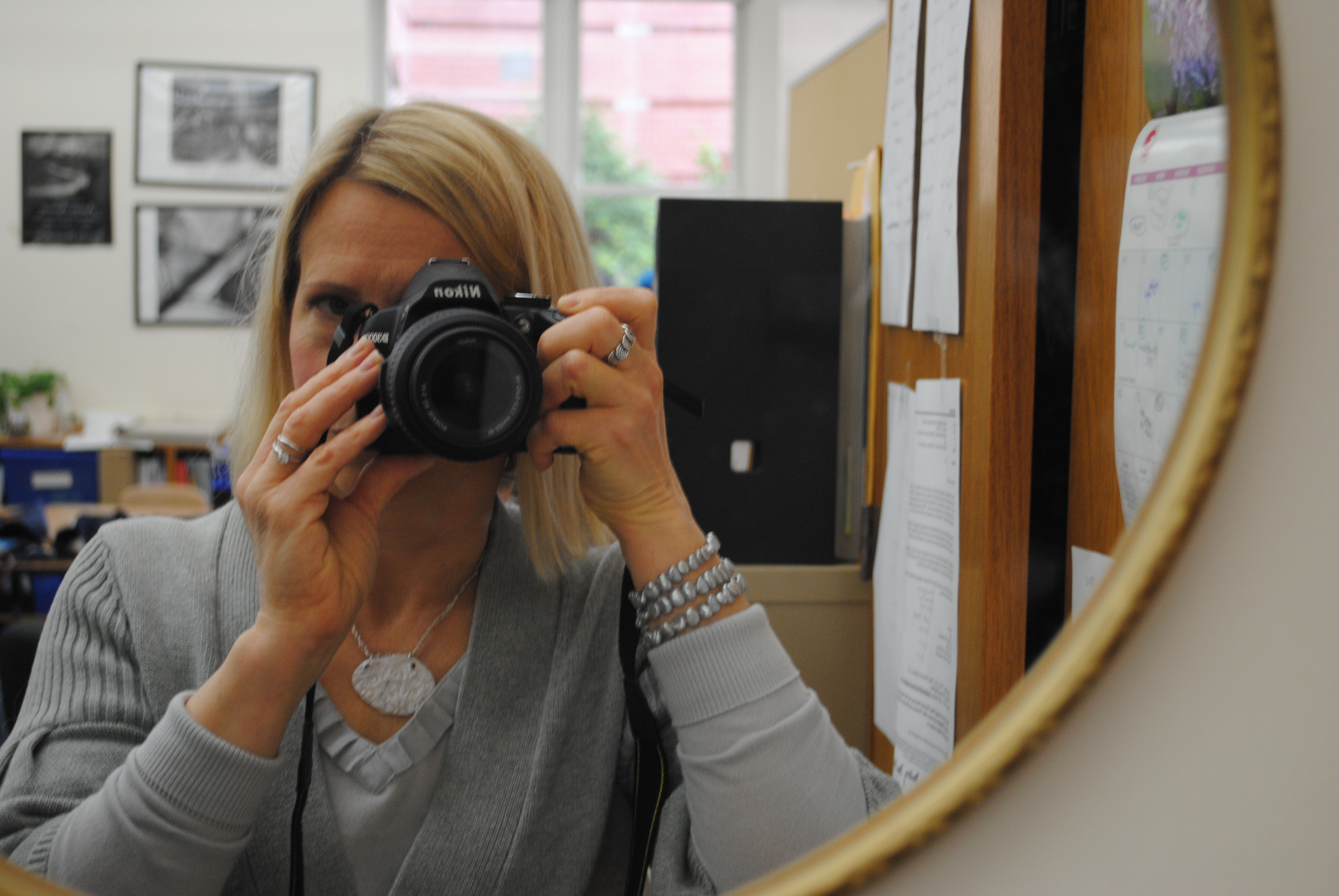
Jennie Driscoll has been teaching visual arts for 24 years and is presently the chair of the Arts Department at
Brunswick High School
She has taught Photography I , Photography II, Art 3, Art 4, and Advanced Placement Studio Art for students in grades 10-12. Jennie is one of the teacher leaders with Phase 1 of the Maine Arts Assessment Initiative.

What do you like best about being an art educator?

Helping students develop confidence as they express their ideas in a variety of media and utilize technical skill. I find media and tools an exciting pathway for the expression. I like seeing personal artistic growth and a seriousness of purpose develop in my students over time.

Tell me what you think are three keys to ANY successful arts ed program?

  1. What –Strong assignments that encourage students to problem solve.
  2. How – Teach technique with media so students have the right set of tools for expression.
  3. Share – Authentic assessments that allow for reflection on craft and expression.

What specific way(s) do your assessment practices tie into the success of your program?

I allow my students to be part of the assessment process and invite them to reflect and revise their art work to make it the best they can be. I invite the class to support one another with feedback. My goal is to help students express their ideas clearly in visual media.

What have been the benefits in becoming involved in the arts assessment initiative?

Sharing and connecting with arts professionals that deal with the same issues.

What are you most proud of in your career?

Always being there to support my art students as they take risks and make mistakes. Student successes  have a big impact on letting me know I am on the right track.

What gets in the way of being a better teacher or doing a better job as a teacher?

Not having enough time and too much to do, oh also the little beep I get when an email comes in.

Apple or PC?

Apple

What have you accomplished through hard work and determination that might otherwise appear at first glance to be due to “luck” or circumstances?

I have done my best to build and maintain a strong visual art program as well as meet the needs of individual students.

Look into your crystal ball: what advice would you give to teachers?

Although there are many days that seem like you don’t know if you are making a difference  or not, hang in there because the universe will share meaningful moments and your purpose will be validated. There will be specific art works that your brain will absorb and will always remember and thus you will in turn remember the student who did it.

If you were given a $500,000.00 to do with whatever you please, what would it be?

I would purchase a kiln and supplies for ceramics in each elementary art department in Maine that does not have one. Of course I would include teacher training in curriculum, assessment, and operation along with clay, some tools and cones!

Thank you for sharing your story Jennie!