Posts Tagged ‘technology’

h1

Maine Arts Ed Institute

August 10, 2011

Soooooo many resources

Jeff Beaudry, USM

To prepare for the institute that was held last week at Maine College of Art (MECA) participants prepared by reading articles, viewing videos, communicating on a wiki, and thinking about their role as leaders, teachers, and collaborators.

There were numerous resources provided for them and that they shared. This post is to provide you with some of the information to help you as a teacher in the 21st century classroom.

Assessment: New Hampshire Department of Education Arts Consultant Marcia

McCaffrey has many resources on the NH DOE website. For several years Marcia, and our Vermont colleague Gail Kilkelly, planned the New England Arts Education Assessment Institute. http://www.education.nh.gov/instruction/curriculum/arts/index.htm Maine’s teacher leaders read Guidelines for Arts Assessment and Envisioning Arts Assessment which can both be found at the above link. However, there are many other outstanding reading resources there as well. I suggest you spend a few minutes checking out what Marcia kindly provides there for eduators.

Jeff Beaudry, one of our planning committee members, teaches at USM. He is an
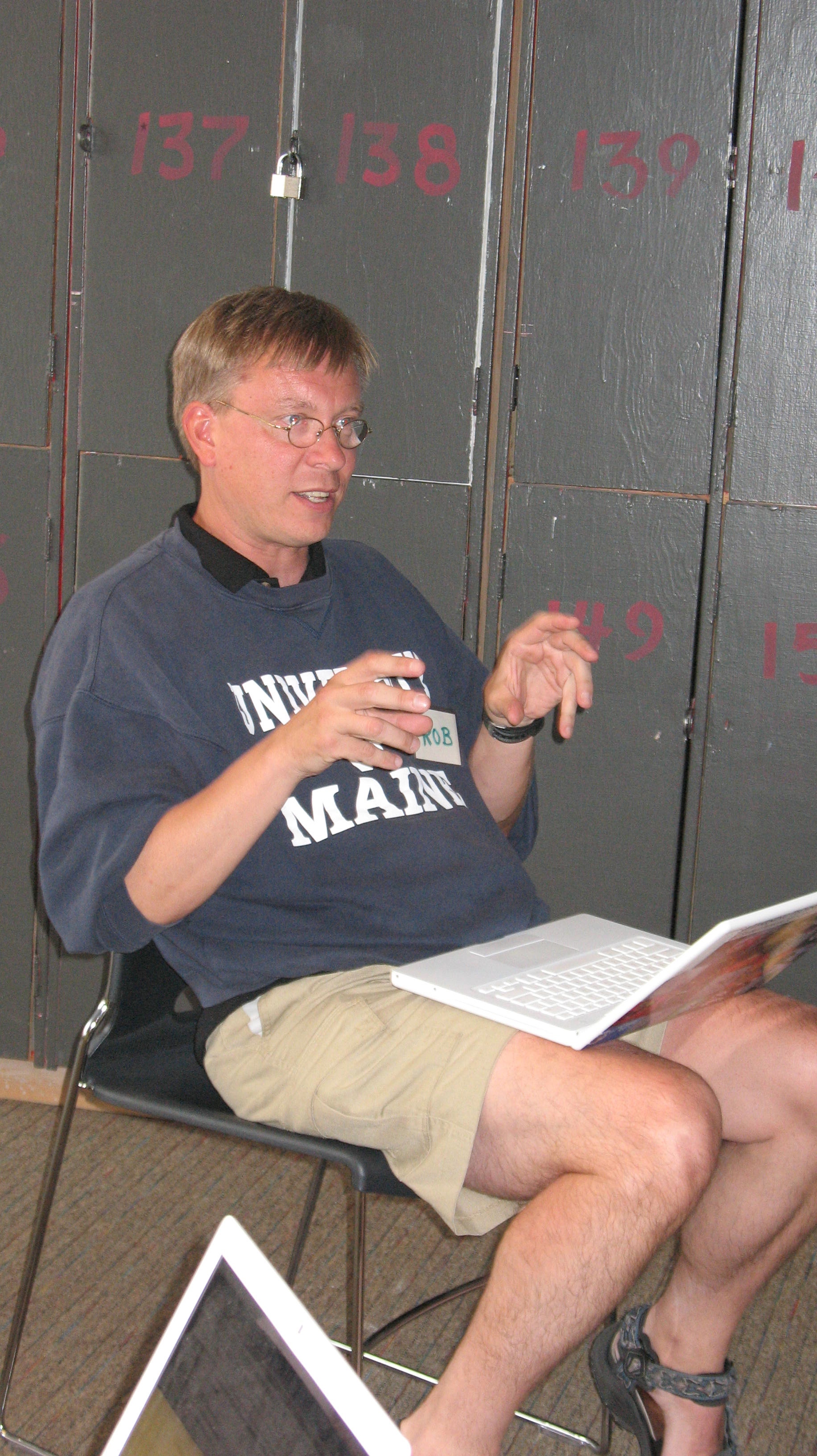
Rob Westerberg, music educator York High School

expert in assessment, data, leadership, is a photographer, and focuses much of his work (and play) on collaborating. In fact he has a really wonderful project that incorporates science and color encouraging participants to carefully observe and document the observations. We know how important observation is in the art and science world. Jeff guided participants readings contributing two chapters from Rick Stiggins assessment book. Chapter 2 is on Assessment for and of Learning and Chapter 4 called Assess How? Designing Assessments to Do What You Want. You can access both of these articles at http://maineartsassessment.pbworks.com/w/page/28367262/Resources#view=edit

Joining Jeff on the assessment portions at the institute were Bronwyn Sale who was an art teacher at Brunswick High School before joining the staff at Bates two years ago. Bronwyn provided a variety of information and led a session on some of the pre-reading assignments using jig-saw. Also at the above link are two assessment articles that participants read called Self Assessment by Heidi Andrade and The View by Maja Wilson.

Technology: To help prepare for the technology segment of the institute participants

Ann Marie Hutton, Apple MLTI

viewed Tony Wagner’s YouTube on the global economy and they read Integrating Technology with Student-Center Learning, a report to the Nellie Mae Education Foundation. We were fortunate to have Ann Marie Hutton join us for the assessment institute and share her knowledge and skills with participants. Ann Marie works for Apple with the MLTI project and was an art teacher before joining the MLTI team. Did you know that you can contact MLTI and request staff to travel to your school for professional development? And, there is absolutely no cost involved!

Leadership: Carol Trimble facilitated the session on leadership modeling her leadership skills. Pre-reading was information written by Linda Lambert from ASCD called Leadership Capacity for Lasting School Improvement. Certainly all arts educators contribute to improving schools, often at the heart of that responsibility. Another article that was written by teacher Scott Hunt is called Teacher Leadership. Both articles are available on the page embedded above.
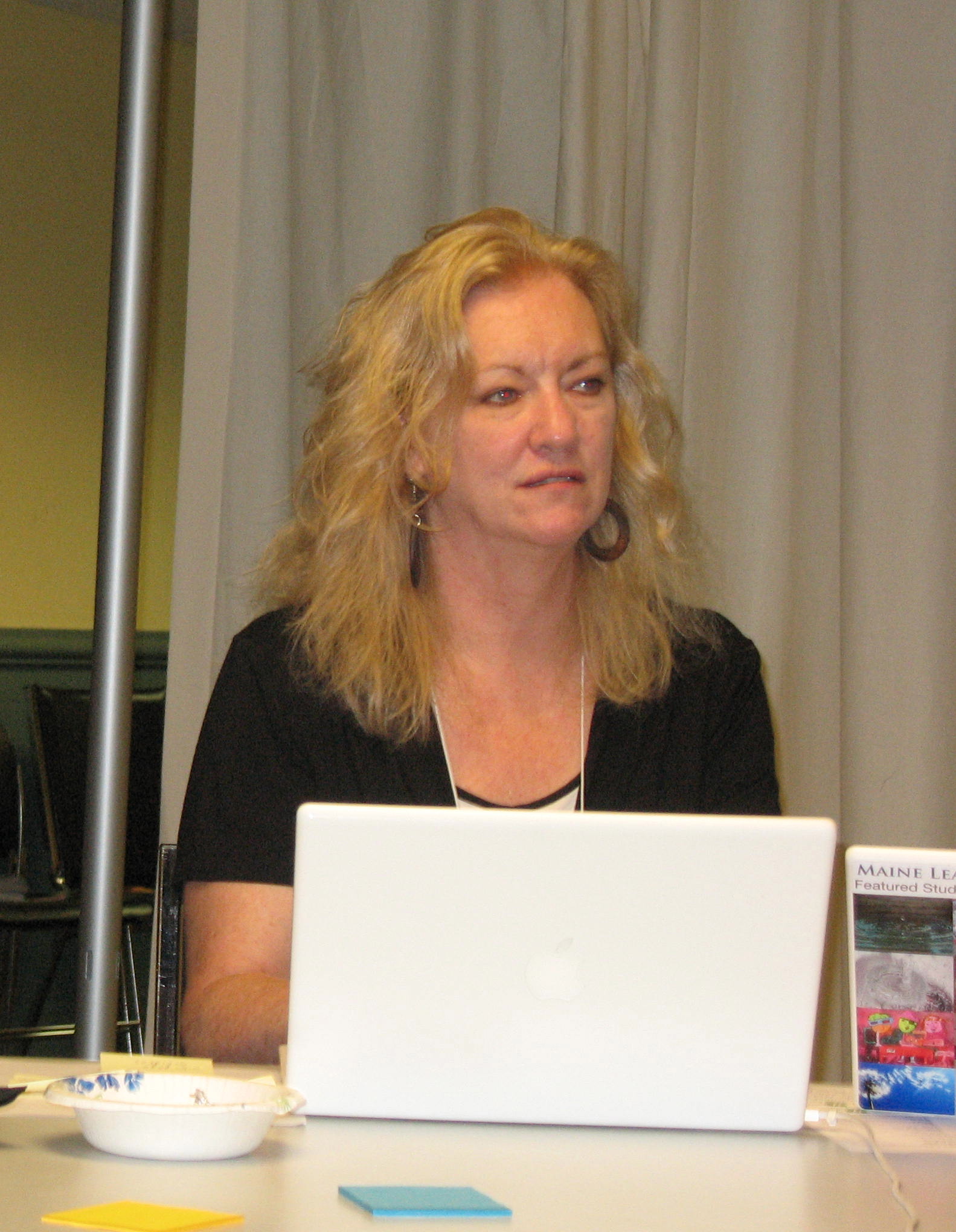
Catherine Ring, arts consultant New England Institute for Teacher Education

Rounding out our presenters last week were music educator Rob Westerberg and arts consultant with the New England Institute for Teacher Education Catherine Ring.  Both contributed resources and their wisdom and experience to the institute. There are many more resources that will be shared as time passes and you can look forward to getting at the October 7th statewide arts conference being held at USM, Portland. More information coming in the near future on the conference. The 18 teacher leaders will be presenting workshops at the conference and will also be presenting in the regions throughout the state during the school year, 2011-12.

For an update on the arts assessment initiative please go to http://maineartsassessment.pbworks.com/ and please email me if you have questions at argy.nestor@maine.gov

Photographs taken at the institute by Jen Nash have been posted at https://picasaweb.google.com/Jen.Acosta.Nash/DropBox?authuser=0&authkey=Gv1sRgCOqAqMzDvbf1lQE&feat=directlink

h1

Cyber Space Meeting of Artwork

July 28, 2011

Connections

You may have read a post from March 5, 2009 called Thank a Teacher where I thanked one of my high school art teachers, Bruce Aydelotte. That post received several comments and on May 9, 2011, more than two years later another comment came through on the post. The time delay was unusual. It said:                 

This is a long shot. I have a pen and ink “Rainy Day” signed Aydelotte ’34. I think your teacher is much too young to have produced this drawing, but perhaps he is the son of ??/? any ideas, please let me know.

I didn’t post it right away since I wasn’t sure if it was spam since so much time had passed. I sent the comment to Bruce and asked him what he thought. He was curious so he emailed the writer and over the next couple of weeks they exchanged many emails figuring out the mystery of the pen and ink she asked about. Below is the story as it unfolded which makes me think without technology this story would not have happened…

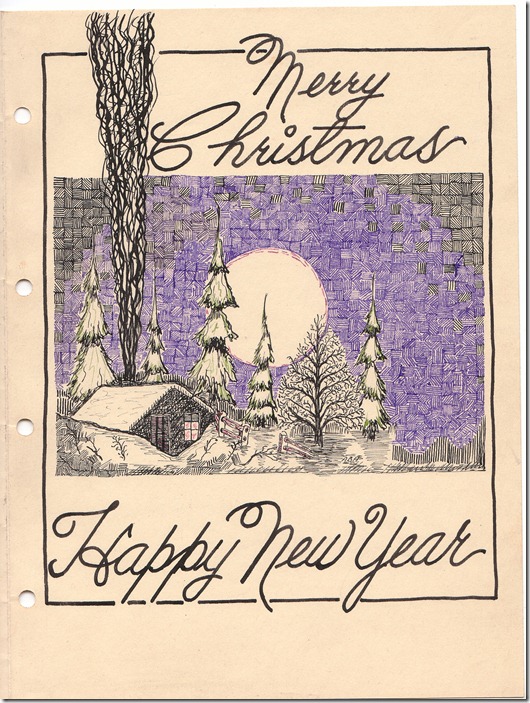
In 1934 Bruce’s Dad, Art, was 25 years old and in the State Police. He was a very talented untrained artist and particularly adept at pen and ink renderings. He used cross-hatching and other textural techniques to enhance his work. In 1947 he created a personal Christmas card for Bruce when he was 5 years old. Below are the drawings…


Bruce was curious enough to know if it was his Dad’s work or not so he contacted the person, assuming from the name, Elon, that it was a man. Turned out that the person is actually a woman who is a lawyer from Kentucky. Elon has a daughter with a degree in Graphic Design who was willing to scan the artwork and send it to Bruce so he could predict whether it was his Dad’s or not. The lawyer had framed the work years ago with a yellow frame. She thinks she had probably bought it at a junk shop or antique shop in Louisville, Madisonville, Henderson, KY or some place in between.

Bruce looked closely at the signature, after all this is the man who taught me calligraphy so he knows “stuff” about letters. This is what he says in his email:

The *A* is a cursive style A as was taught in penmanship class and my father had excellent penmanship……I have inserted several examples of his actual signature that I scanned from various membership cards of  his that I still have……..see his sigs below and notice the angle of the lettering, compared to Rainy Day……and the way the A’s are looped as in typical cursive handwriting….all three are very consistent…And in the sig from the drawing the A is a cursive style as well……… notice how his *y* was connected from the capital *A*, but is separate from the *d*. Unfortunately, in the Rainy Day sig several of the following letters are also separated…….but handwriting styles can, and often do,change over years………the sigs that I have shown are from the ‘50’s, when he would have been in his late 40’s……..roughly 20 years later……..

Interestingly enough he adds:

I am not a handwriting expert by any stretch, but I think there are definitely some similarities……..especially in the *Ayd* part…. there are definite similarities.

Bruce and his Dad

So, how did she stumble upon the post about Bruce? Well, here is where technology played an important part in learning about this art work. Talk about a small world… Elon says:

I’ve googled the name over the years and finally added the term pen and ink and found your student’s piece about you.  I noticed in either that (or something near it) the name of my good friend, Corliss Chastain.  Corliss taught art in Maine for years and still lives there. I’ll bet your former student knows her.

Of course I know Corliss and I am sure many of you do. Corliss taught art at Maranacook High School before she retired two years ago. Elon continued…

Arthur Aydelotte, State Police, circa 1935-36

With the availability of information on the internet, I’ve been able to identify a lot of artists.  The “less famous” are just as interesting to me as others and perhaps more interesting to me.  I don’t equate fame to the art.  The old saying, “I don’t know art, but I know what I like.”

Bruce's parents

And then Bruce learned …

Elon wants to gift the artwork to Bruce. He is has mixed feelings about accepting it since she has been such a wonderful caretaker of it for many years. Bruce thinks it is pretty cool that she has searched for a long time to find out who the artist was and now that she knows she is ready to pass it on.

“Quite an interesting adventure of discovery for her, for me, and for you………pretty amazing place this *cyber-world*.” And remember this all started over two years ago with wanting to thank a teacher. Now that it is summer perhaps you have a few extra minutes to think aobut those teachers from your past who have made an influence on you. Have you takent the time to thank them? I hope so!

Art work from the past

h1

What Do You Think?

July 15, 2011

Check this out and let us know what your thoughts are….

h1

MLTI Summer Institute

May 28, 2011

Bowdoin College, Brunswick

The annual MLTI Summer Institute is happening once again, and this year we’ll convene on the beautiful campus of Bowdoin College in Brunswick. We will continue to draw on the expertise of the MLTI Integration Mentors and content specialists who will share their knowledge and experience as they guide participants in an intensive three day immersion in the topic of choice from our list of Summer Institute Cohorts. This intensive structure is a departure from previous Institutes where a variety of shorter sessions exposed participants to brief experiences with topics.

The goal this year is to allow participants time to dig deep into a topic and become proficient to empower, enhance and engage teaching and learning. If you’d like a break, we are offering Poster Sessions at the midpoint of the institute where you can attend shorter topic presentations. An inspiring keynote presentation and some fun evening extra curriculars (stay tuned!) will round out what’s sure to be a worthwhile professional development experience during the summer in mid-coast Maine.

When registering, please ensure you have reviewed the cohorts available http://maine.gov/mlti/events/institutes/cohorts.shtml. You will need to select one cohort to participate in over the three days. Each cohort is limited to 15 participants unless otherwise indicated in the description. Registration for cohorts will be first come first serve, but we’ll make our best effort to accommodate everyone’s first choice. Please note on registration, there is an option to select a back up cohort!

More information on the Summer Institute can be found at http://maine.gov/mlti/events/institutes/index.shtml

Registration:
Online Registration can be found at http://maine.gov/mlti/events/institutes/registration.shtml

Cost Information:
$75.00 – Title IID scholarship    for teachers who teach at eligible Title IID schools. Includes overnight    accommodations, meals and materials.  (A list is posted online at http://maine.gov/mlti/events/institutes/titleiid.shtml)
$100.00 – Poster Session Presenters includes overnight    accommodations, meals and materials
$125.00 – 3 day commuter    includes lunch, dinner and materials
$185.00 – 3 days includes overnight    accommodations, meals and materials
$250.00    – Out of state Teachers    includes overnight accommodations, meals, materials and MLTI Device to use during the event

If you have any questions, please contact Juanita Dickson at juanita.dickson@maine.gov.

Thank you
The MLTI Team

h1

Access to the Arts w/ Technology

May 15, 2011

A topic on many arts educators mind: what is the role of new media in teaching and learning today in arts classrooms?

Photo taken from Christine Mason Miller's blog

Periodically arts educators ask me questions very similar to the questions in the article recently published in the Harvard Education Letter. What does it mean to be an arts specialist in the digital age? How and when should new media be used? Are the old disciplines blurring? When I was recently interviewed by undergraduate art education students at Montclair State University I was asked a similar question. My response is that we need to embrace new media, incorporate it into our practices, and view it as another tool to add to our bag of teaching techniques in vpa classrooms. I am not suggesting that we eliminate our traditional media but think of this as another or new media. I believe if we don’t we’re missing the boat for our students and jeopardizing arts education programs. Students and the world are different than they were 5 or 10 years ago. They are revolving at a rapid rate and we don’t know what jobs will exist in the future and what skills they will need but I am confident the use of technology and critical thinking will be necessary. Check out the article at the link below.

Schools merge digital tools with arts education
Some schools are using technology to increase students’ access to the arts. A statewide distance-learning program in Alabama is helping students in rural districts fulfill a state requirement that they complete an arts survey course that incorporates dance, music, theater and visual arts. In Arizona, students use computer software to compose original operas and teachers work with visual artists to bring technology-based — as well as traditional — art projects into the classroom. Harvard Education Letter (May/June 2011)