Archive for May, 2023

h1

Changes in History

May 30, 2023

What is lost along the way

I’ve been working with a committee from my town of Union to plan the Sestercentennial – 250 years since it’s founding in 1774. We’re going to kick off the celebration this July and throughout the year we’ll have events that will culminate during a three day weekend, July 19-21. I’ve never been a big history buff but I love hearing stories from the past. Those of you who know me know that I love to get people together and celebrate so this is a chance for me to give back to the town that’s been so good to me since my husband and I moved here in 1980.

One of the highlights of the Sestercentennial will be digging up a time capsule that was buried 50 years ago during Union’s Bicentennial celebration. We have a list of items contained in the time capsule (blueberry cake included) that reflect life during the 1970’s. I’m guessing that about half of my blog readers weren’t born yet. We know approximately the location of the time capsule but there are lots of unknowns. Our instructions include “dig it up and rebury it” and it is buried “deep in the ground”. As you can imagine some of what we’re reading is left up to interpretation. With a crowd surrounding the location to watch the digging this could be problematic.

We’re fortunate that the members of our town’s historical society is a great collaborator and that there are many answers to questions well documented in 3 books that are available. We’re partnering with Union Elementary School knowing that this is a great opportunity to bring history alive in a hands-on and engaging manner. More on that in a later blog post.

Because of my work on the Sestercentennial (since September 2022), I’ve wondered about what I’m learning from the past and the accuracy of the information. It’s only as good as the documentation and the stories left behind. This has led me to writing this blog post about the bigger picture and accuracy of history. We know that visual art, music, and plays have documented part of our American history. With so much more attention recently on the white washing of history how do I know if what I’m reading, hearing and/or experiencing is accurate? School text books don’t always contain the truth or the whole story. Checking the sources of what’s on the internet is necessary. I read a piece yesterday about the history of Memorial Day.
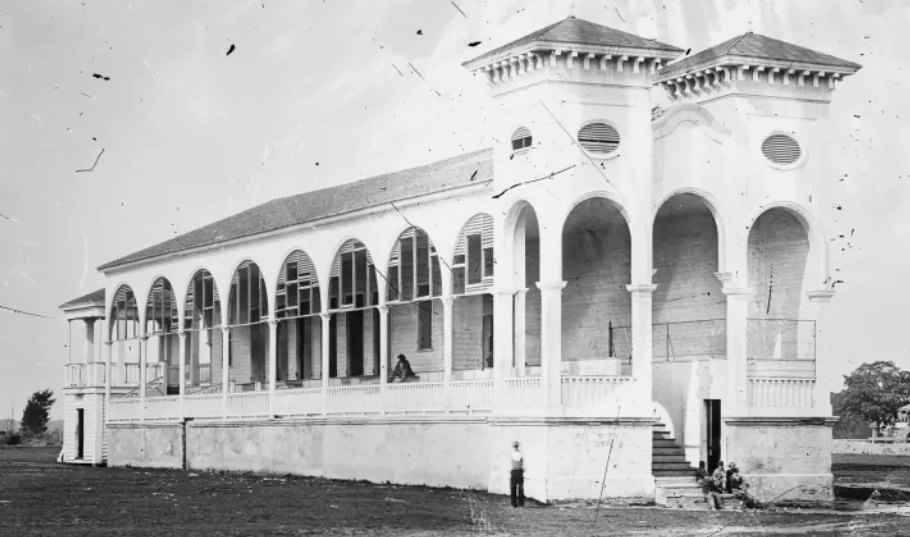
Clubhouse, where Confederates held Union soldiers, held prisoner 1865 | Library of Congress. From Blight’s book: “at least 257 prisoners died, many of disease, and were buried in unmarked graves.”  

This is what I learned:

  • Most Americans will say that May 30th is Memorial Day and they understand we take a day to honor servicemen and women, many of who gave their lives while serving our country. 
  • The first Memorial Day was actually on May 1, 1865 when 10,000 people gathered in Charleston, South Carolina, most of them black and formerly enslaved citizens, to honor slain soldiers from the Civil War. They gathered at an old race track that had been used as a prison to rebury and make a proper cemetery for the U.S. Army soldiers who died. This is according to Pulitzer-Price winning historian David Blight.
  • The Civil War was April 12, 1861 – April 9, 1865. General Robert E. Lee of the Confederacy surrendered his army to Union General Ulysses S. Grant at Appomattox, Virginia. It was the deadliest war in American history.

I know it can be difficult to find accurate information for students and how necessary it is for students to get the full picture. For this blog post I found information and educational resources at the National Archives, from this story on Medium, a video with Blight speaking about the Civil War and his book Race and Reunion, The Civil War in American Memory at Harvard University Press, and ABC News 7, Charleston. We’re fortunate in Maine to have Americans Who Tell the Truth to use as a resource that has unveiled truths and shared stories about some of our country’s history.

h1

Summer MAEA Opportunity

May 23, 2023

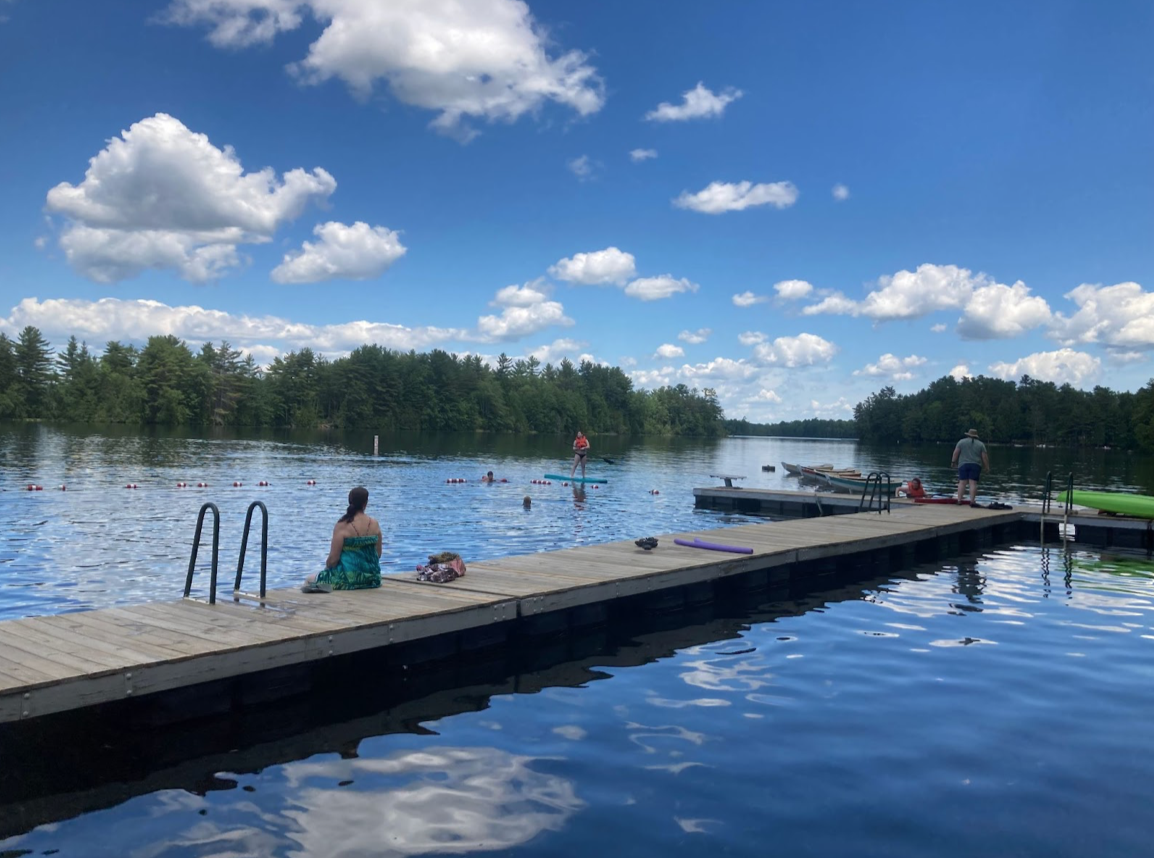
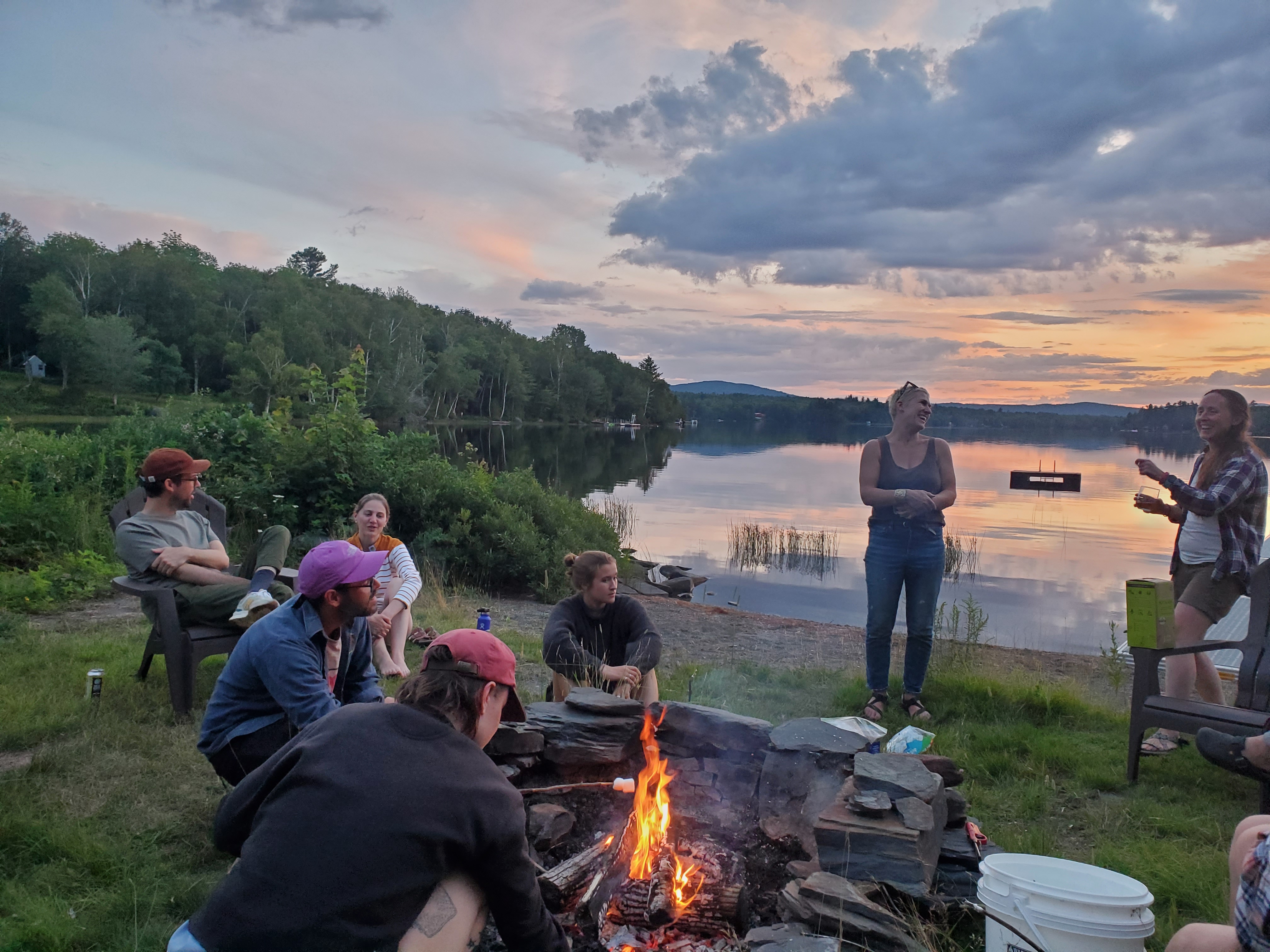
Going to summer camp

REGISTRATION

h1

Monson Arts

May 16, 2023

Wicked visual art summer opportunity

Monson Arts is offering Maine art educators a 25% discount on its 2023 summer workshops.  Monson Arts, established by the Libra Foundation in 2018, offers residencies for artists and writers, community based programs, and summer workshops.  This year’s workshops include offerings in audio, mixed-media, painting, weaving, and writing.  There is also 24 hour studio access. For more information: https://monsonarts.org/workshops/.

Besides ample studio spaces and newly renovated accommodations, participants eat all their meals at The Quarry Restaurant.  It’s the only restaurant in Maine to be a finalist for a James Beard Foundation award this year.

Monson is the last town before the 100 Mile Wilderness of the Appalachian Trail.  A beautiful natural setting, great workshop leaders, studios, and food!  Questions?  Email information@monsonarts.org or call 207 997 2070.

h1

Maine Art Education Awards

May 9, 2023

Congratulations art teachers!

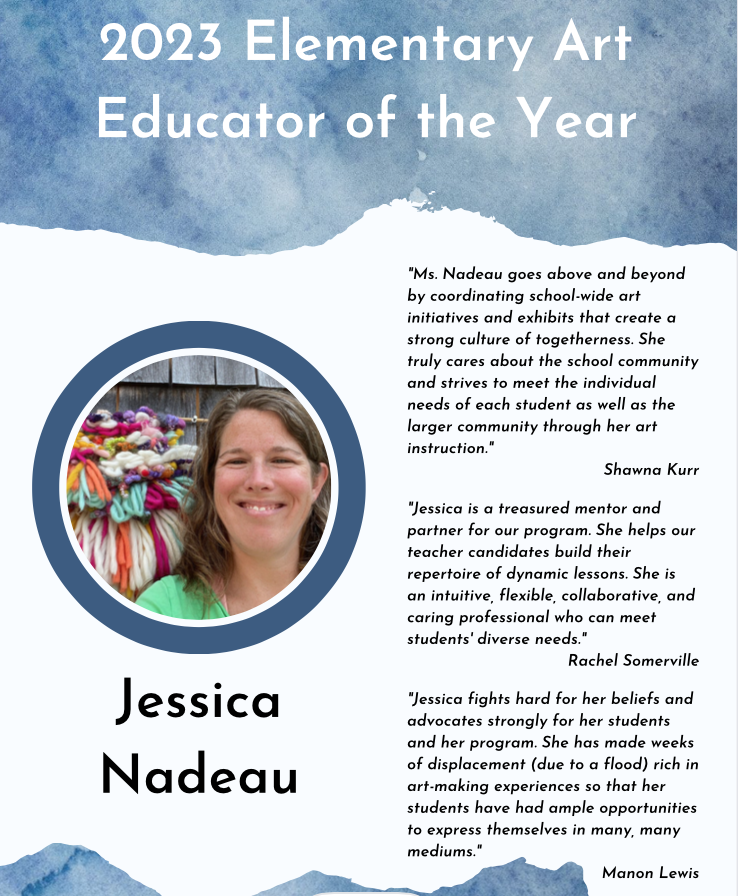
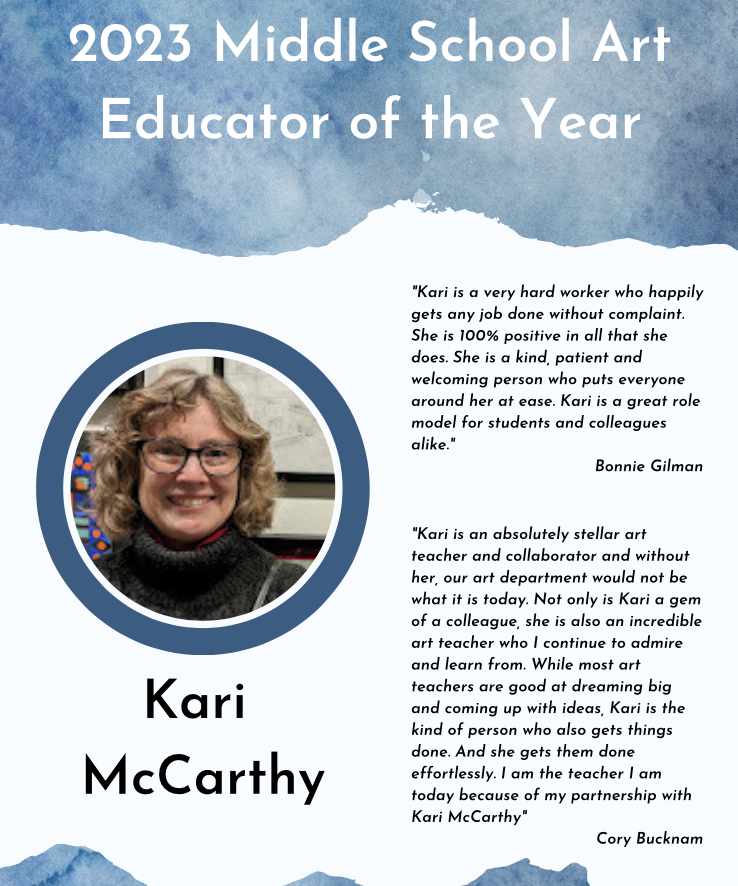
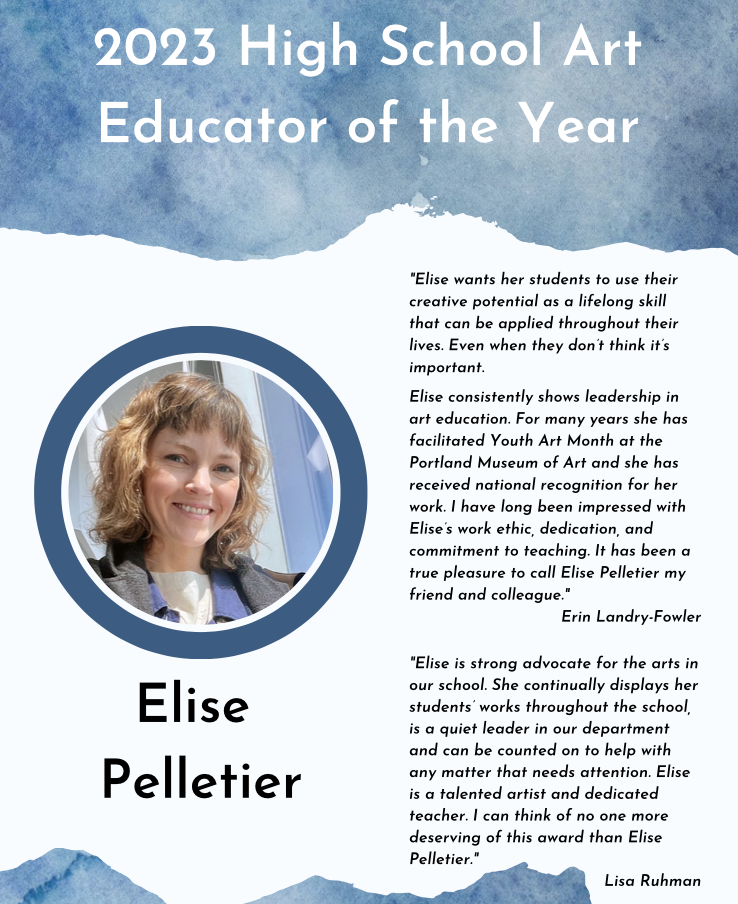
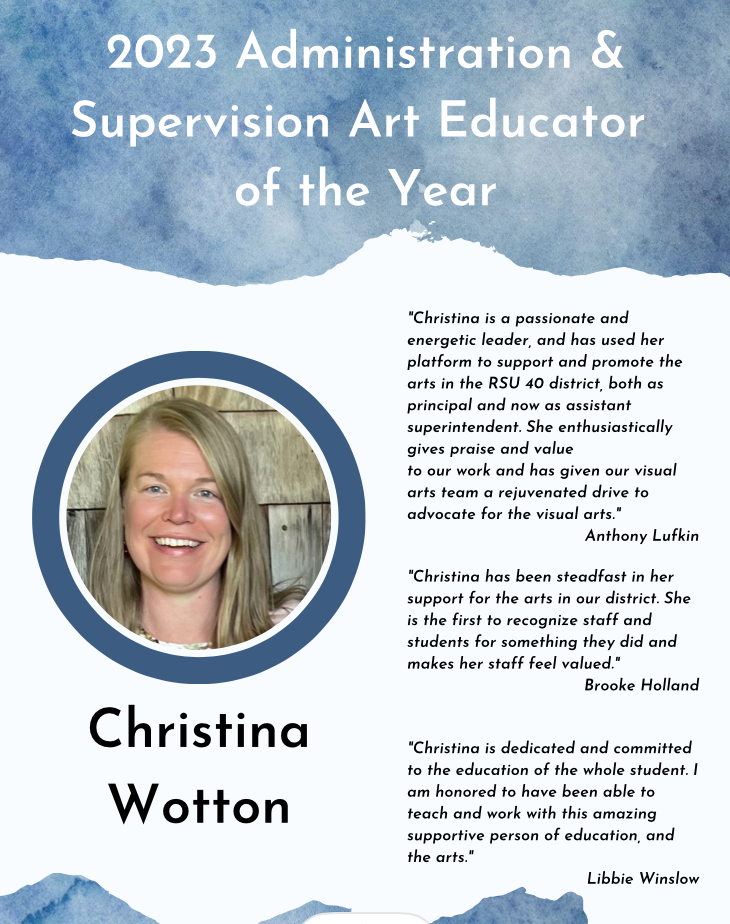
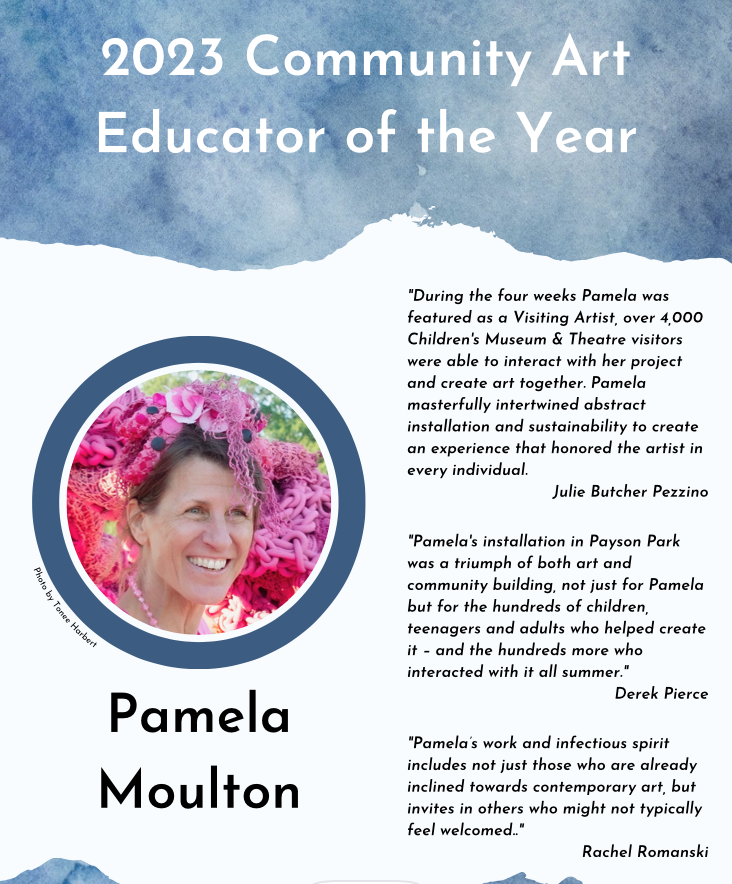
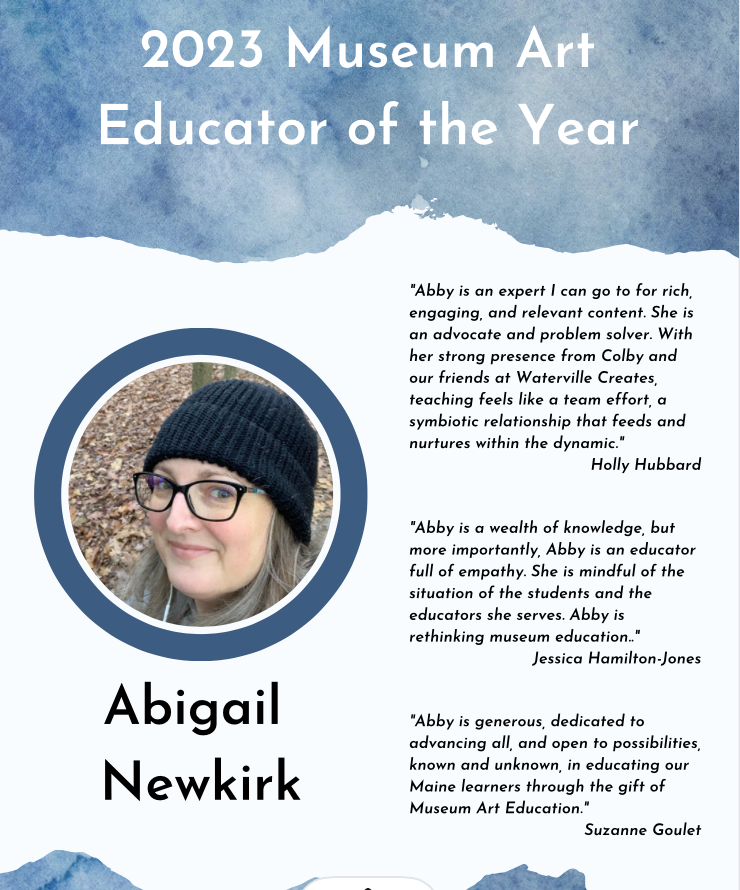
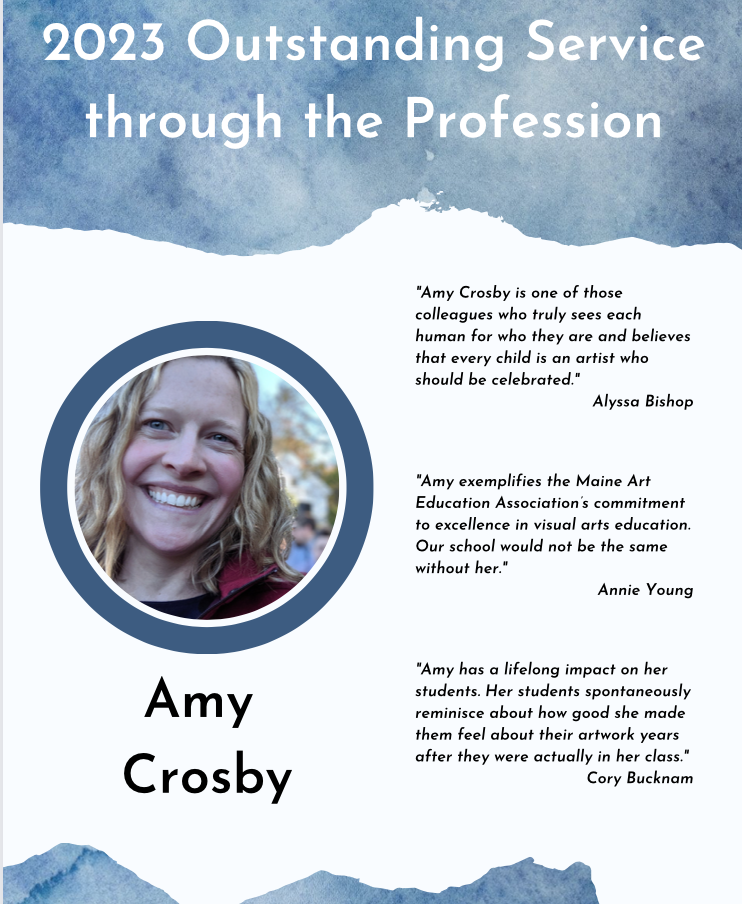
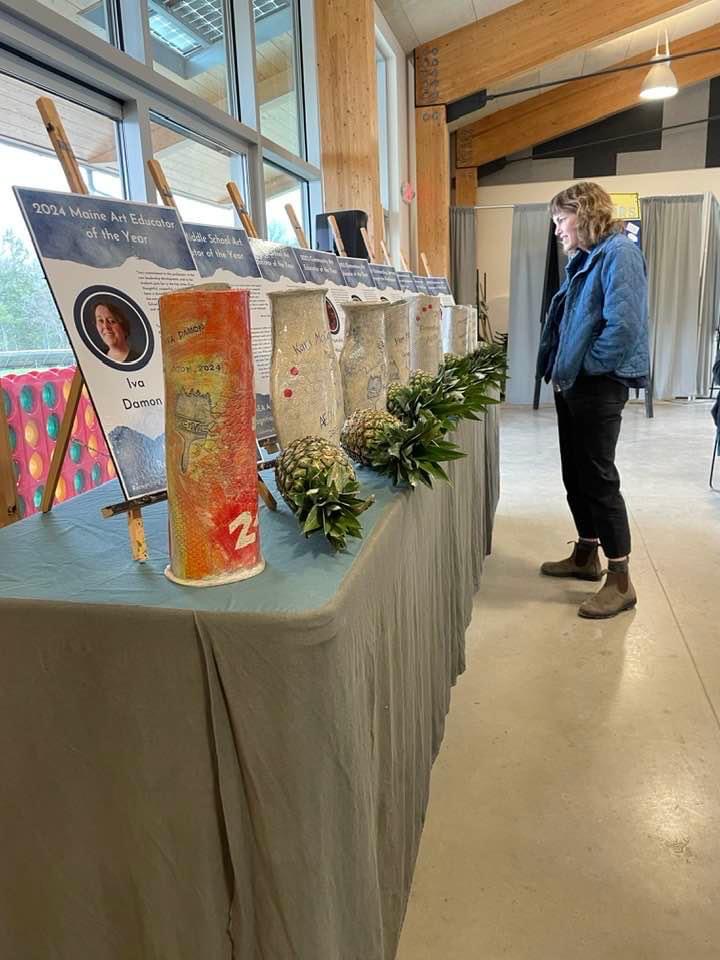
Each Spring the Maine Art Education Association (MAEA) presents awards to individuals who are committed to quality visual art education. Some of these educators have been in the ‘trenches’ with ‘kids’, of all ages, for many years. Others are just beginning their careers, and yet others support quality art education from a distance impacting the lives of learners. Each individual is to be commended for their contributions to the profession.

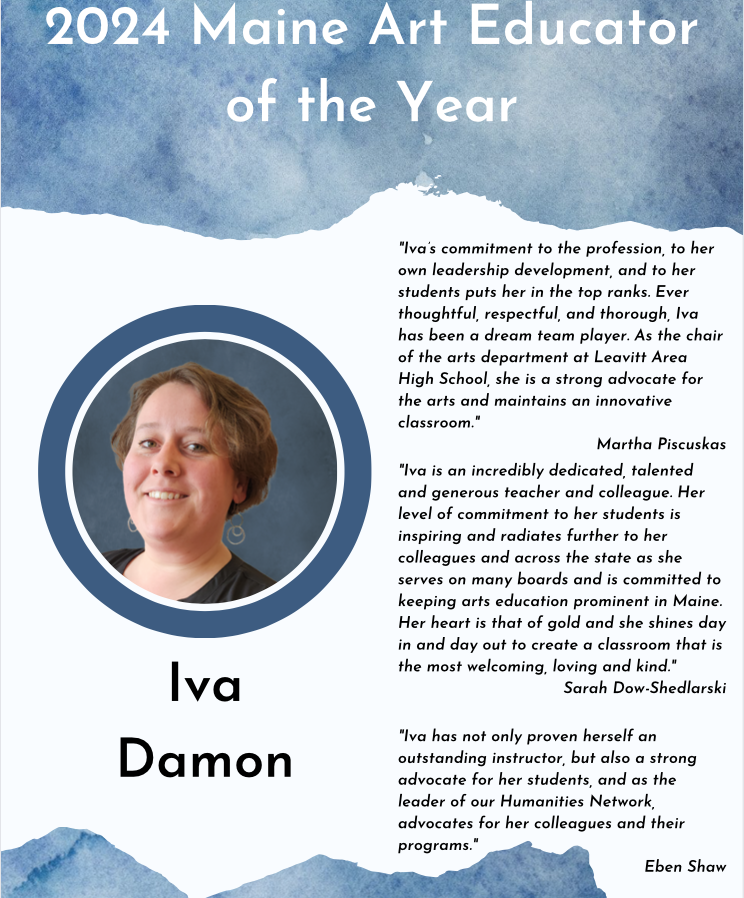
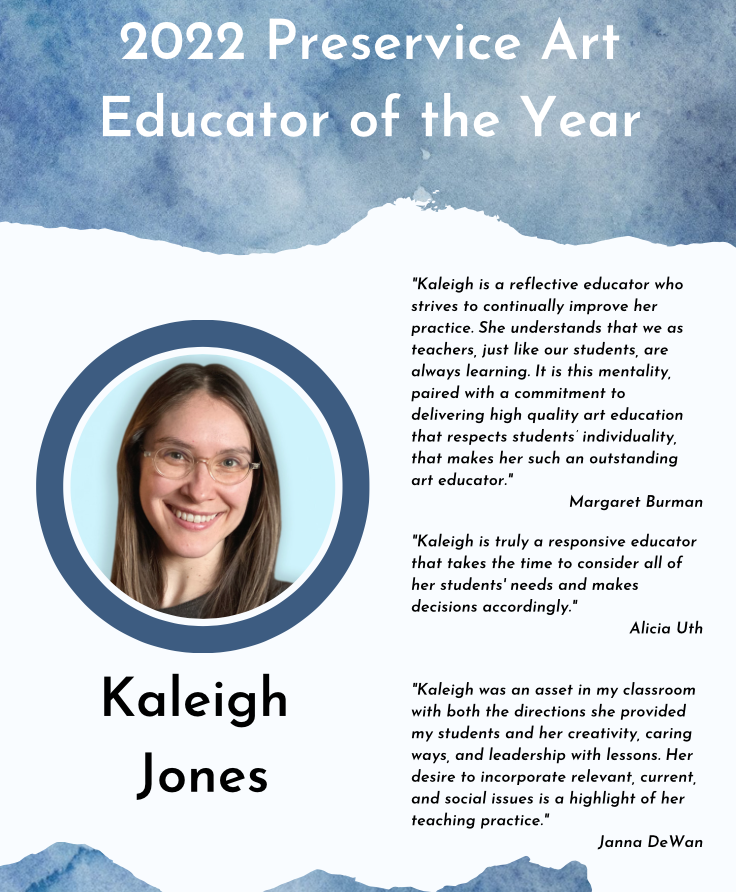
At a recent ceremony each individual was honored for their service. Below are the recipients with their ceramic awards made by Carolyn Brown.

CONGRATULATIONS!

The awardees

Iva Damon, Leavitt Area High School, Turner
Kaleigh Jones, Carl J. Lamb Elementary School, Sanford
Jessica Nadeau, Boothbay Region Elementary School
Kari McCarthy, Brunswick Junior High School
Elise Pelletier, Scarborough High School, Scarborough
RSU 40, Assistant Superintendent
Pamela Moulton, North Bridgton
Abigail Newkirk, Colby College Museum of Art, Waterville
Kate Furbish Elementary School, Brunswick
h1

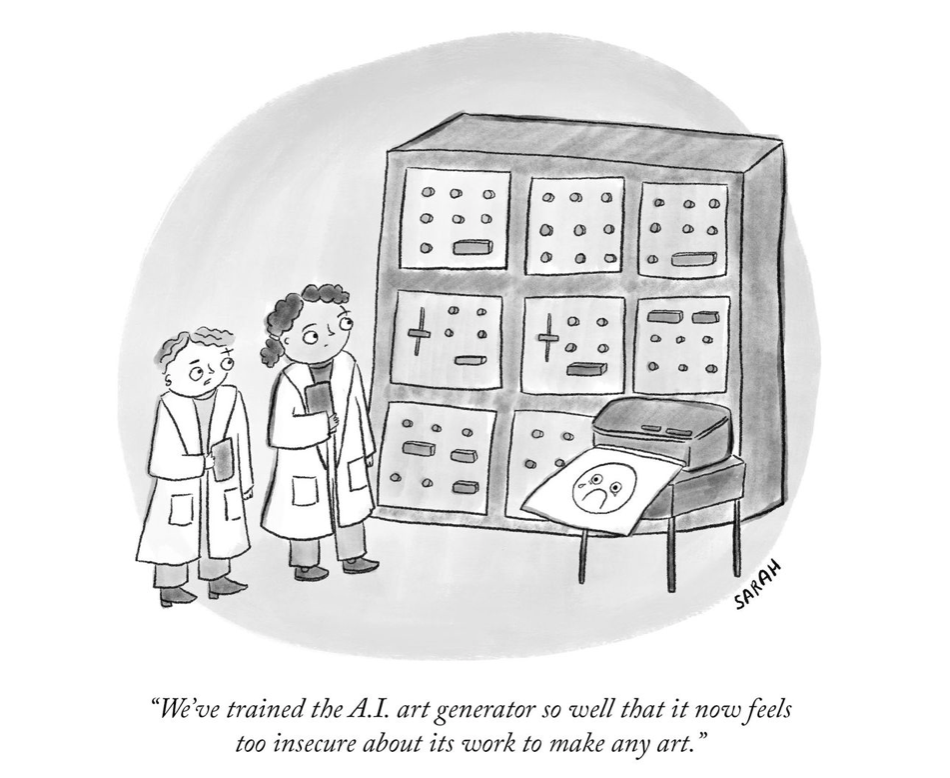
AI – Save Humanity?

May 2, 2023

Beginning conversations

Recently I joined a book group. I’ve never been part of a formal ‘book group’ (secret is out). I’ve never been interested and truth be told its only recently that I’ve been reading books at a very fast rate, now that my schedule allows. I like this book group for several reasons. It’s pretty non-traditional, no one book is read and discussed like in traditional book groups. Actually, its one of the reasons I decided to join the group. We gather over lunch monthly and each participant shares books, films, podcasts and other forms of stories and ideas. The participants are retired educators who have a keen interest in education and other interesting and sometimes challenging topics. At our April gathering we each shared a poem in recognition of National Poetry Month.

At more than one gathering the conversation has included AI – Artificial Intelligence. I’m certain as we learn more that the conversation will continue. I’m reading and learning about what AI is, where it is, and the potential impact on the world. A 60 Minutes episode from a couple of weeks ago provides foundational information that I suggest you take the time to VIEW. It’s very informative and important as educators that we inform ourselves.

You can google AI and come up with the definition but until you begin to ‘see’ and experiment with the online tools I’m not sure it will provide you with the understanding to consider the impact on education. For example, think about this: The sum of all human knowledge is online. AI is replicating the brain. What are the implications on education? What is the impact on art making? AI can solve problems in very little time compared to the brain. Is humanity diminished because of the enormous capability of AI?

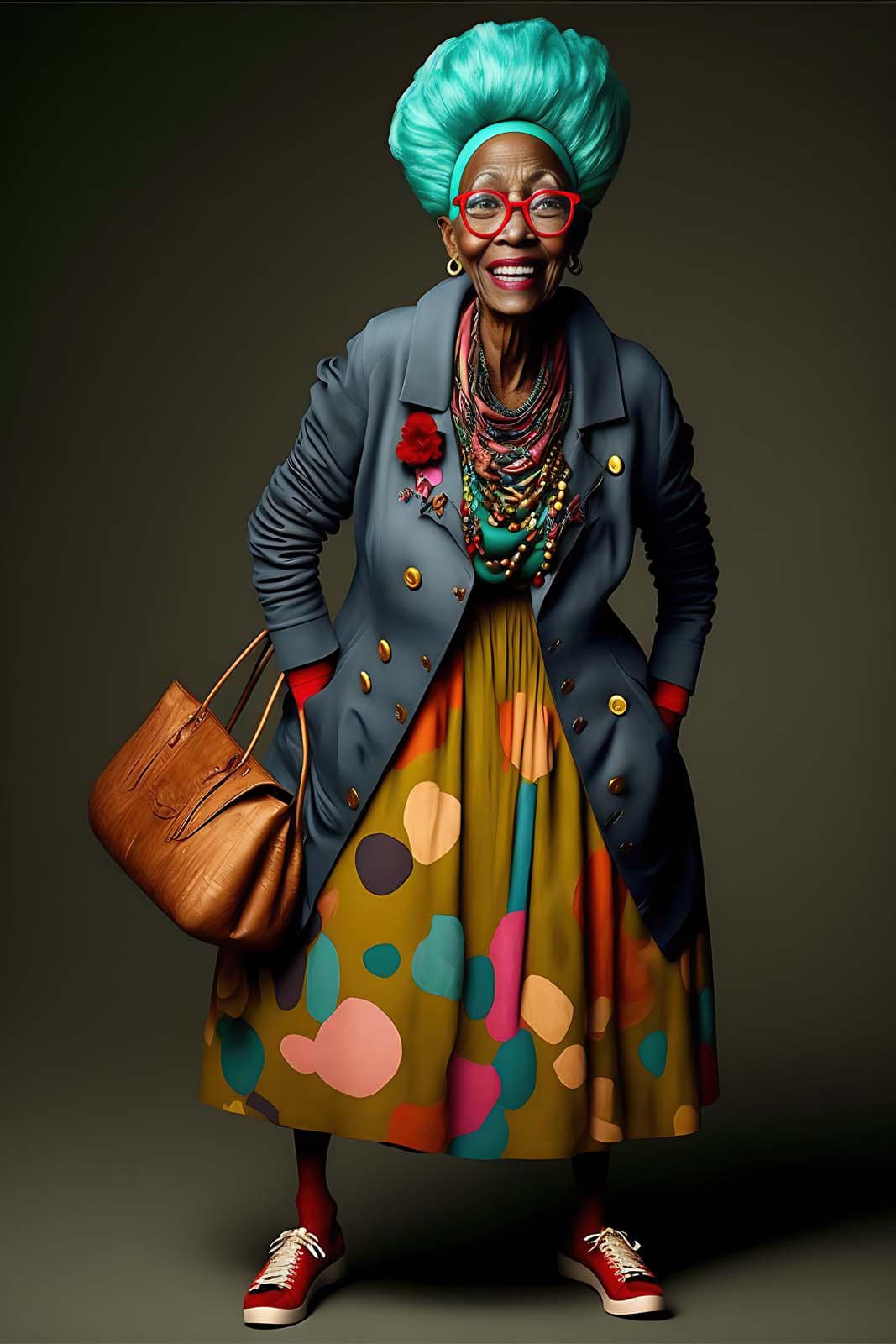
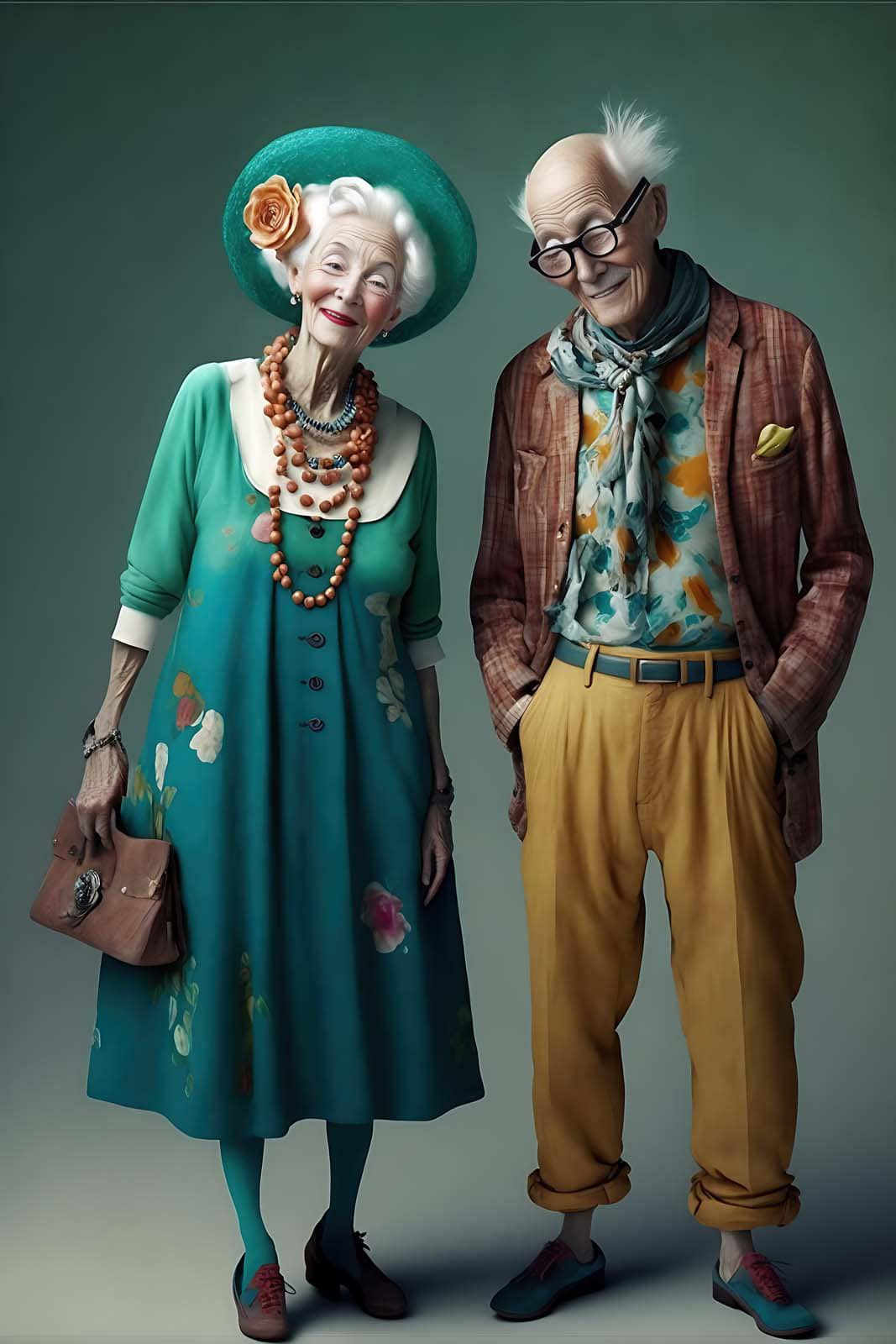
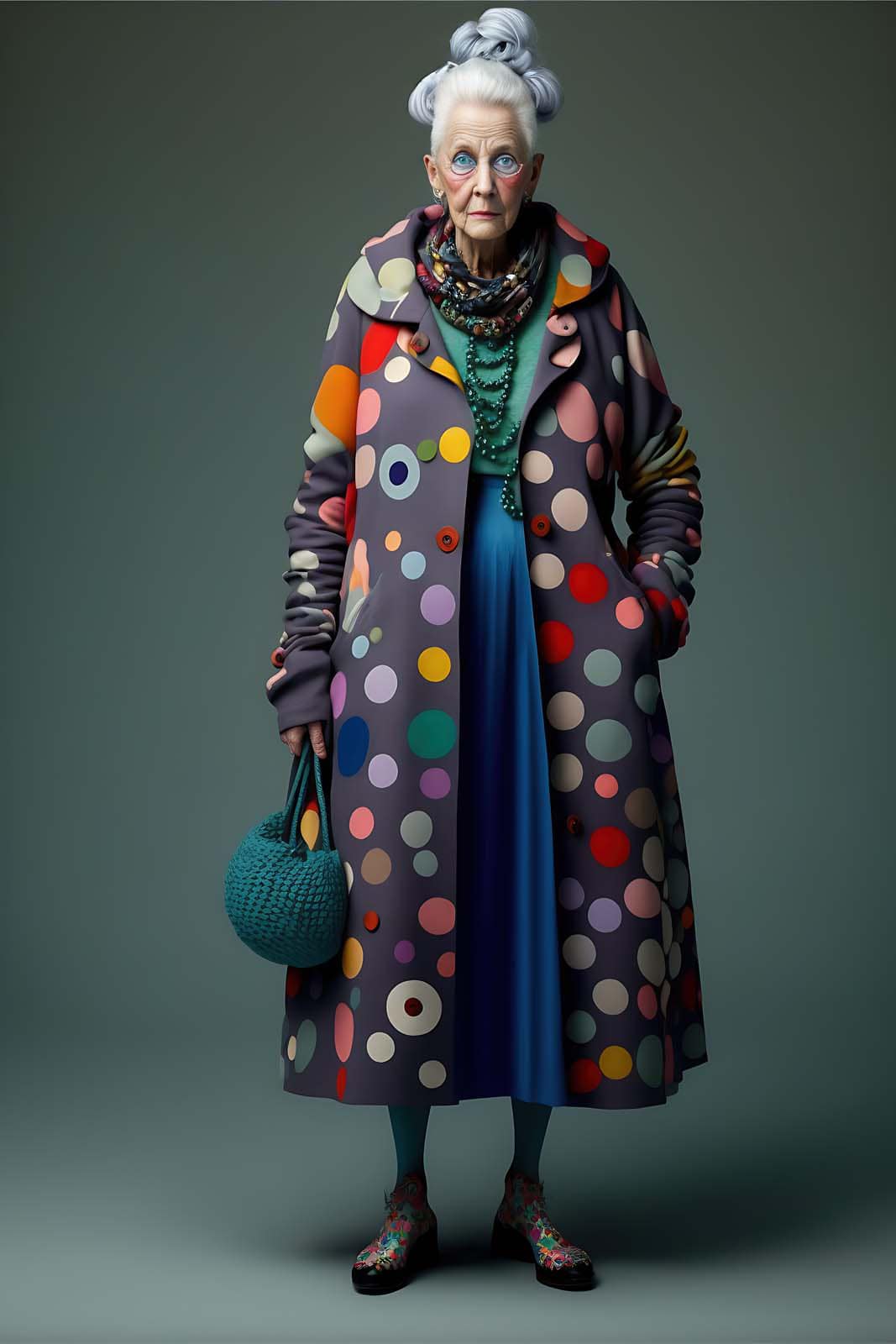
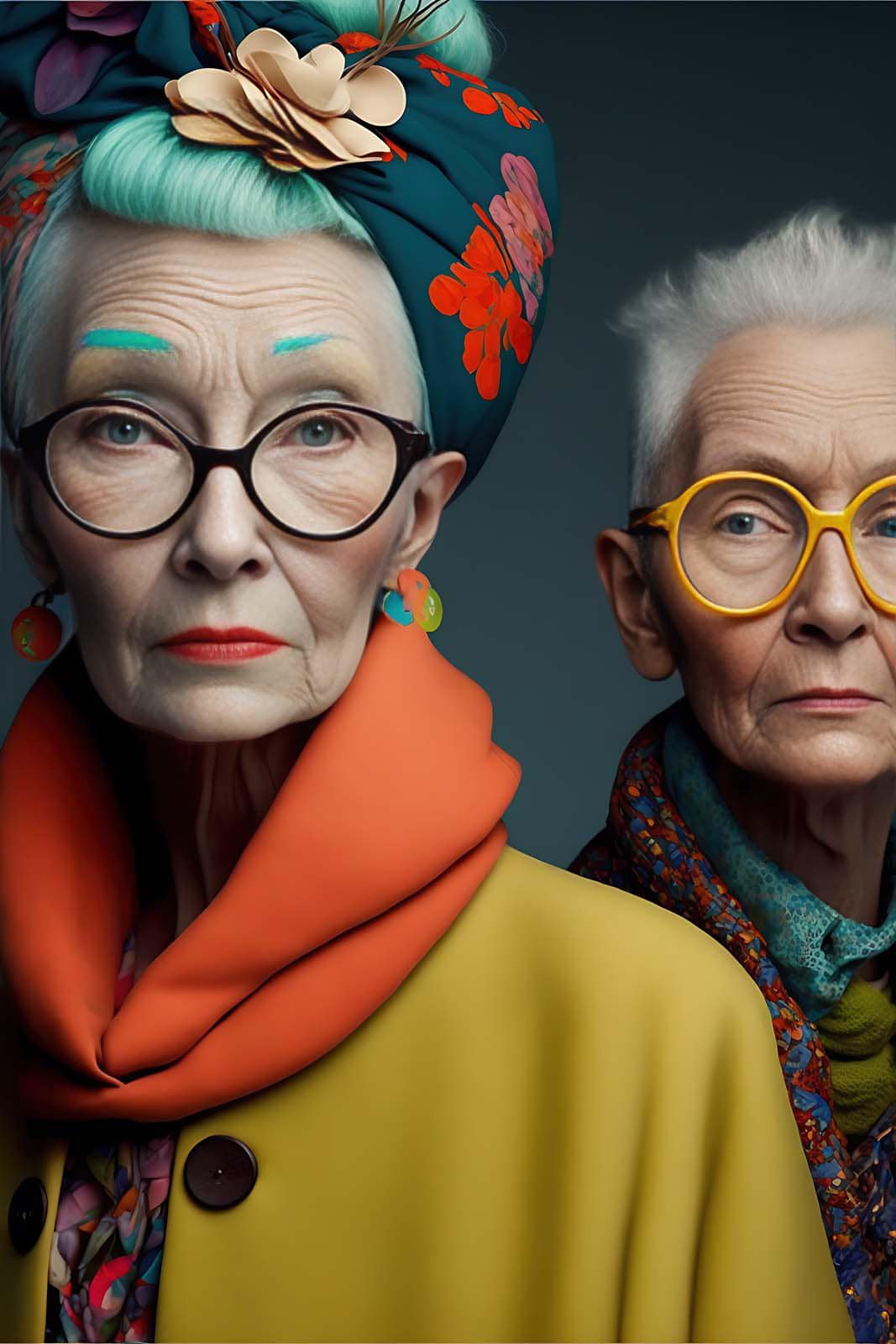
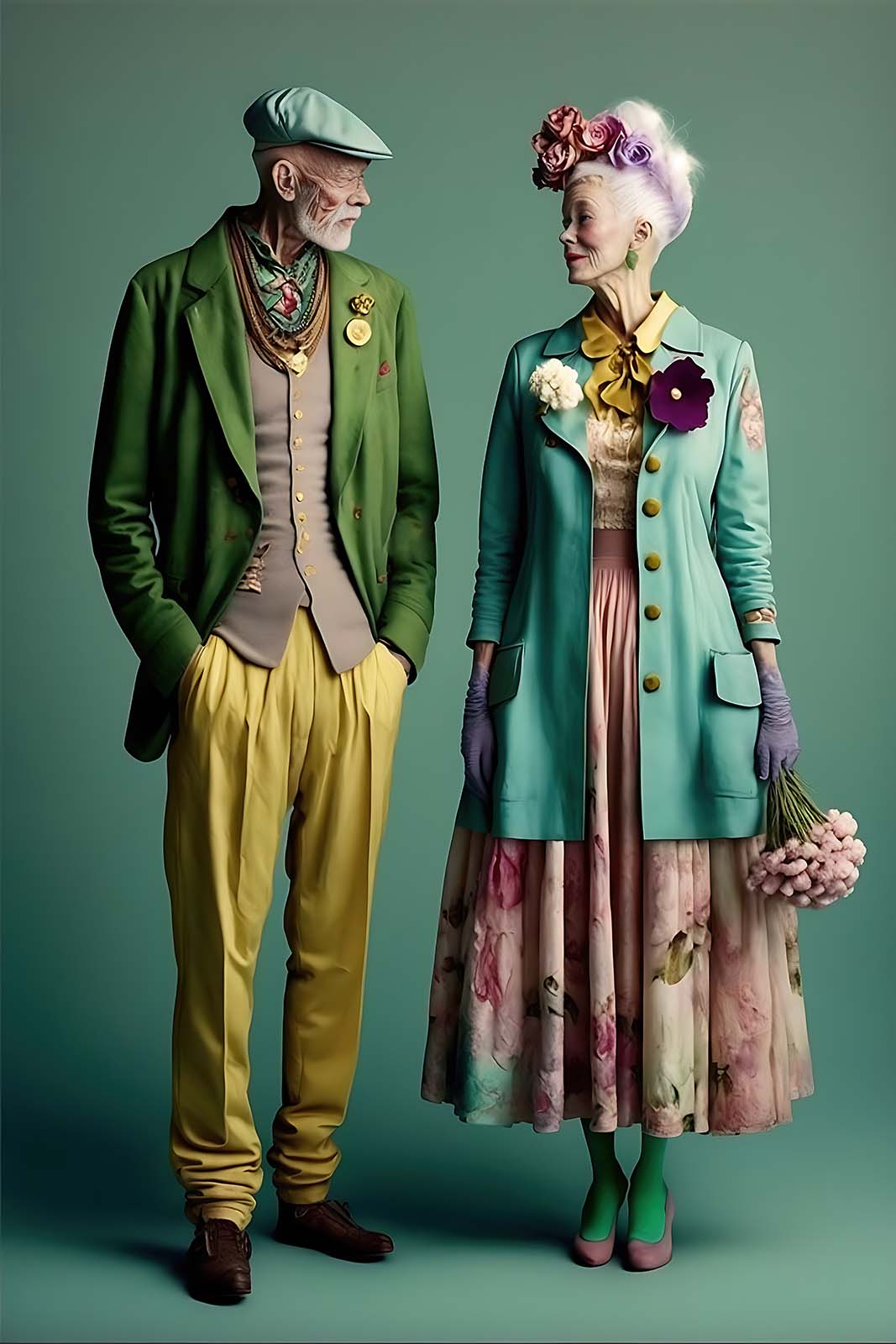
Visual artist Jonas Peterson is creating art work using AI. His collection of art called Youth is wasted on the young is an amazing collection that is his way of celebrating the ‘old’ and a comment on ageism. He used fashion to highlight the personalities of older people. Jonas is a photographer but in this collection he uses AI to create scenes, the people and what they’re wearing. In his own words:

I give specific direction using words only to a program, lenses, angles, camera choice, color theme, colors, styling, backgrounds, attitude and overall look and the AI goes to work, it sends back suggestions and more often than not it’s completely wrong, so I try other ways to describe what I’m after, change wording, move phrases around and try to get the AI to understand the mood. It’s frustrating mostly, the AI is still learning, but getting any collaborator to understand you can be difficult no matter if it’s a human or a machine. After a long stretch of trial and error I get closer to a style and look I want and after that it comes down to curation, picking the renders I believe go well together, I start making it a series. To me the process is similar to that of a film director’s, I direct the AI the same way they would talk to an actor or set designer, it’s a process, we try over and over again until we get it right. Should I get all the credit? God, no, the AI creates with my help and direction, it’s a collaboration between a real brain and an artificial one.

You might be thinking or asking, is this really art? Do I want my students to use this in their art making? Here are some of my thoughts and questions. AI exists in the world. Microsoft introduced ChatGPT, an artificial intelligence chatbot, in November 2022. Bard is a conversational generative artificial intelligence and was released in March 2023. How should educators learn about AI? Should we leave it up to students to teach us? I’m sure that this will be the next wave of education professional development offerings, in person and online.

Jonas Peterson said:

I’m not here to debate the process, I’m a professional photographer, writer and artist myself, I understand the implications, how this will affect many creative fields in the future. I’m simply using a tool available to me to tell stories, the same way I’ve always told stories – to move people. To me that is the point of this, not how I did it. Dissecting something will almost always kill it.

You can learn more about Jonas’s work by googling him and also at this LINK.

I’m sure I’ll circle back to this topic in future blog posts. If you have questions or comments that we can all learn from please don’t hesitate to comment at the bottom of this blog post. Thanks!