Posts Tagged ‘arts education’

h1

Pre-MICA Arts Ed Conference

September 6, 2018

Opportunity to learn 
At the HEART of Arts Education

Biennial conference – Thursday, September 27, 8:00 a.m. – 4:00 p.m.

USM, Portland campus, Abromson Center

Arts educators, teaching artists, community arts leaders, youth advocates, and community arts leaders are invited to attend the Arts Education Pre-Conference: At the HEART of Arts Education.

The cost to attend is $50 and includes a full schedule (see below), lunch, performance by The Extension Chords, students from the Midcoast Music Academy, the Maine International Conference on the Arts Opening Reception: A celebration of the arts with Keynote Speaker Maryo Gard EwellRural Community Development in and Through the Arts, and possible 12 contact hours.

CONFERENCE REGISTRATION

The Arts Education Pre-Conference participants will:

  • learn skills to improve teaching and learning in the arts;
  • make connections among the arts disciplines: dance, media arts, music, theater, visual arts and creative writing;
  • network with other educators and reconnect with old friends;
  • make connections between school and community, including arts organizations, artists, and other arts education supporters.

Description

The 2018 Maine State Teacher of the Year, Kaitlin Young, will provide an engaging keynote and guide participants in creating action steps for educators and their work in schools and/or communities. Attend as an individual or consider bringing a team from your school or organization. The day will start and conclude with creative art and music making.

The conference will be a joyous occasion to learn together and celebrate who we are! We are educating the future, the next generation of artists, arts educators, and appreciators of the arts. To do that we need to:

  • instill purpose/passion;
  • ensure high quality instruction;
  • provide relevant and real-world learning experiences;
  • empower our students to become the teachers of their generation.

Facilitators: Kaitlin Young and Catherine Ring

Morning Session Descriptions (Concurrent)

A. Celebrate Community Through Music

Communities thrive when opportunities are given to connect, communicate, create and celebrate.  The arts are the perfect vehicle for bringing communities together. Come prepared to sing, dance, move or play, there will be something for everyone!

If you choose the Music Making session participants will have the opportunity to learn:

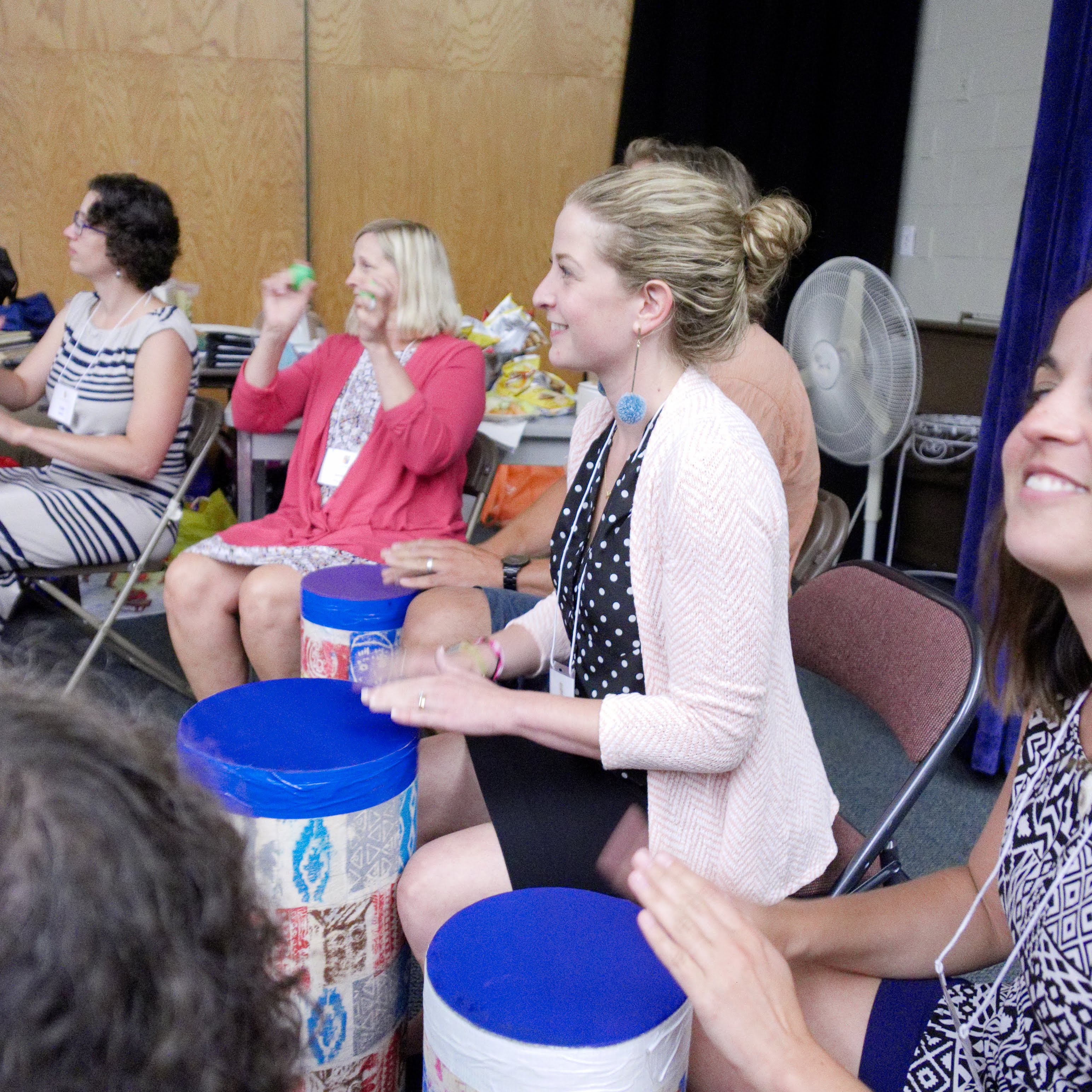
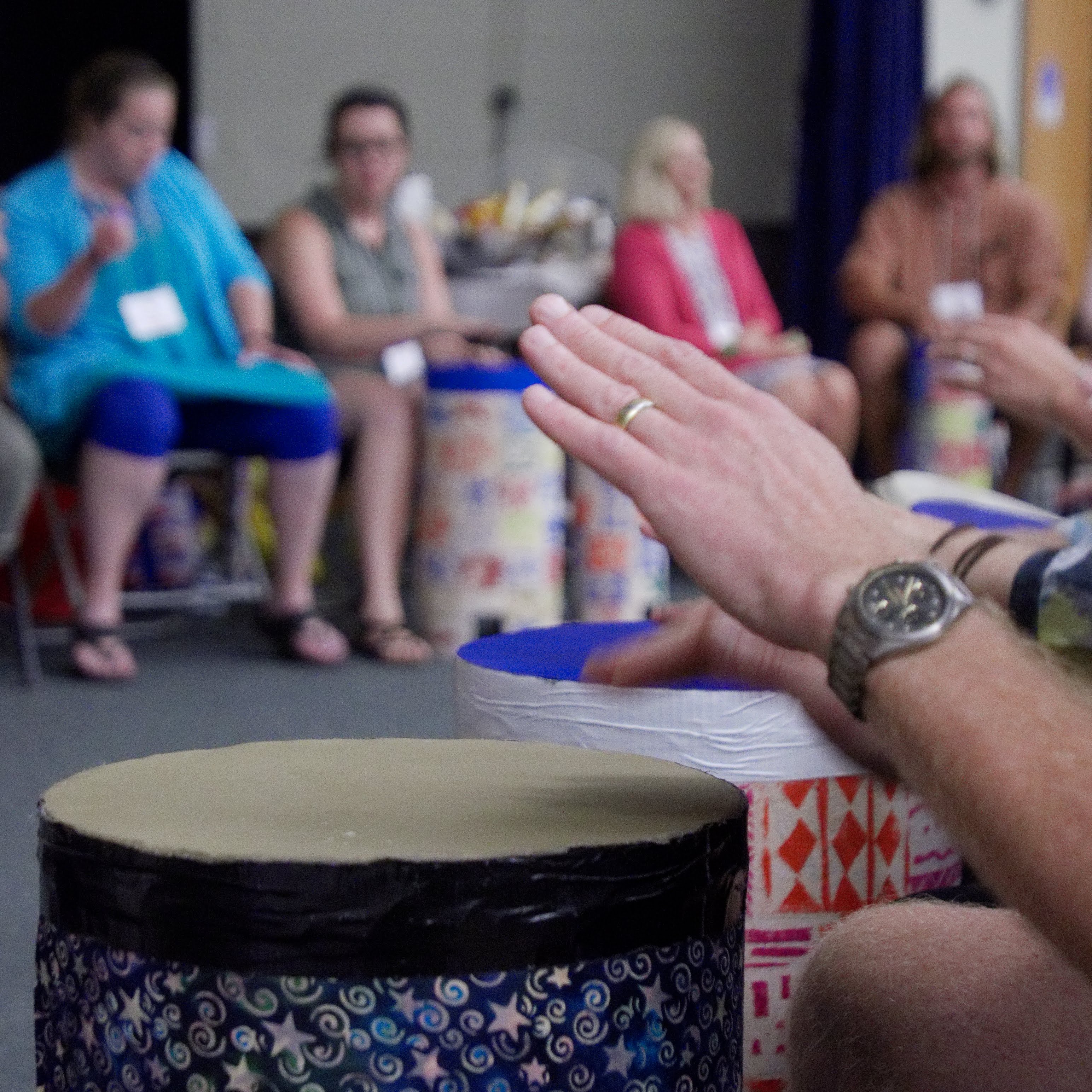
  • Basic African drumming and singing
  • Simplified steps to an African dance

And put it together to make an African processional and use later in the day as part of the MICA processional.

FOLI  – “Foli”is the word used for rhythm by the Malinke tribe in West Africa But Foli is not only found in Malinke music, but in all parts of their daily lives. FOLI: there is no movement without rhythm

Facilitators: Kris Bisson and Kate Smith

B. Lantern Making and Creative Exploration

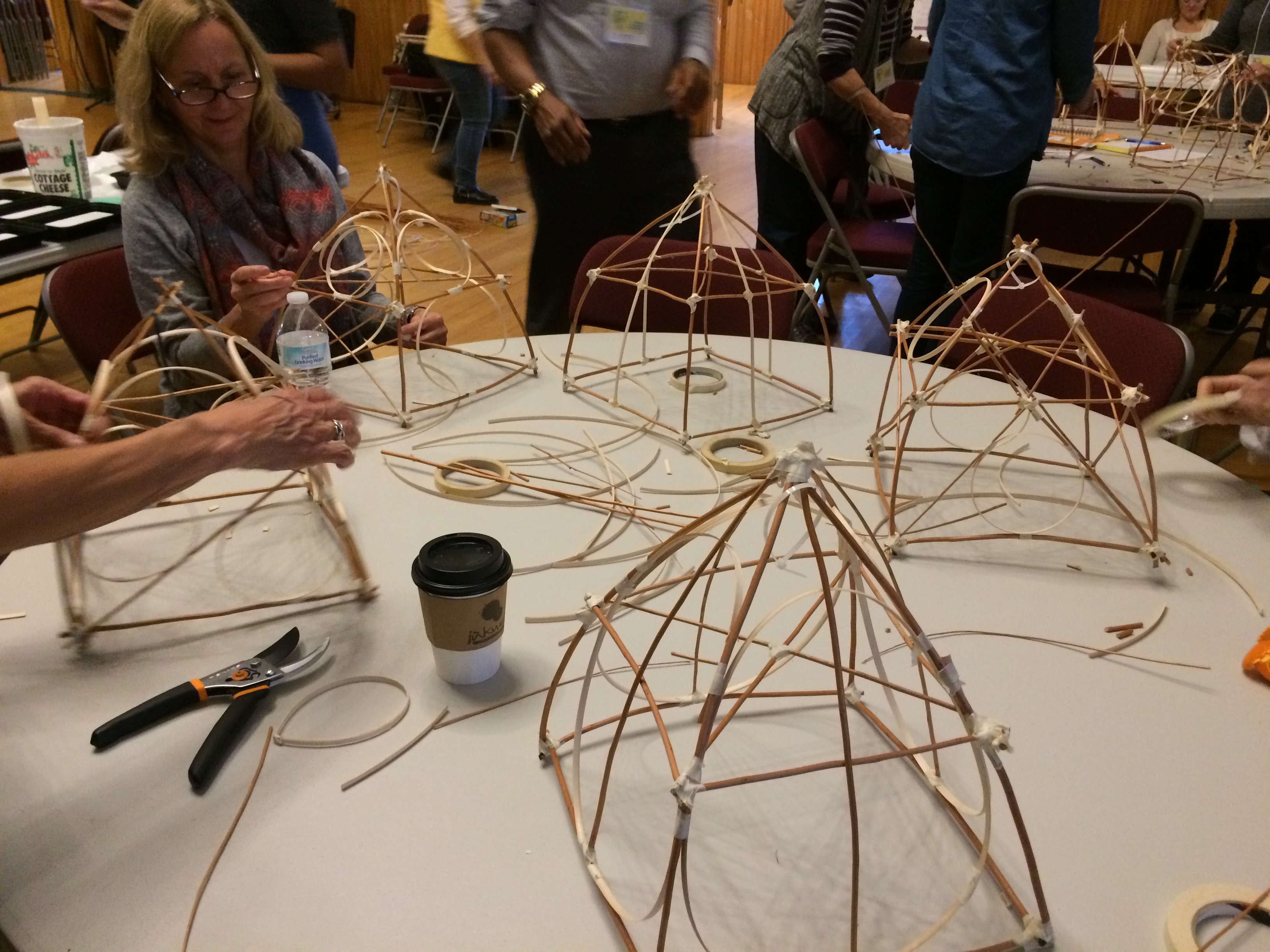
Come prepared with your creative energy to make lanterns using simple materials and be ready to play with the possibilities.

If you choose the Visual Art – Lantern session participants will have the opportunity to learn:

  • How in some cultures light holds a symbolic meaning and is an integral part of traditions
  • How to create a lantern

And, use it later in the day as part of the MICA professional.

Bon Festival – In Japan this annual festival honors deceased relatives while people spend time with their living family members. At the culmination of the festival families place lanterns on the river to be carried away symbolizing the peaceful return to the afterlife.

Facilitators: Lindsay Pinchbeck and Argy Nestor

If you attend with a team from your school/district or community please consider splitting up your team during the morning sessions so the learning can be shared between your colleagues.

Facilitator Bios

Kaitlin Young is the 2018 Maine Teacher of the Year. She currently teaches music to students in prekindergarten through fourth grade and choral music to students in fifth through eighth grade in the RSU #68 school district in Dover-Foxcroft, Maine. Kaitlin graduated from The University of Maine at Orono with a Bachelor’s Degree in Music Education in 2010, and completed her Master’s Degree in Music Education with a concentration in Kodaly Pedagogy at The Hartt School in Hartford, CT in 2017. Kaitlin enjoys spending her free time at her family camp with her husband Bob, cat Zoe, and dog Gabby.
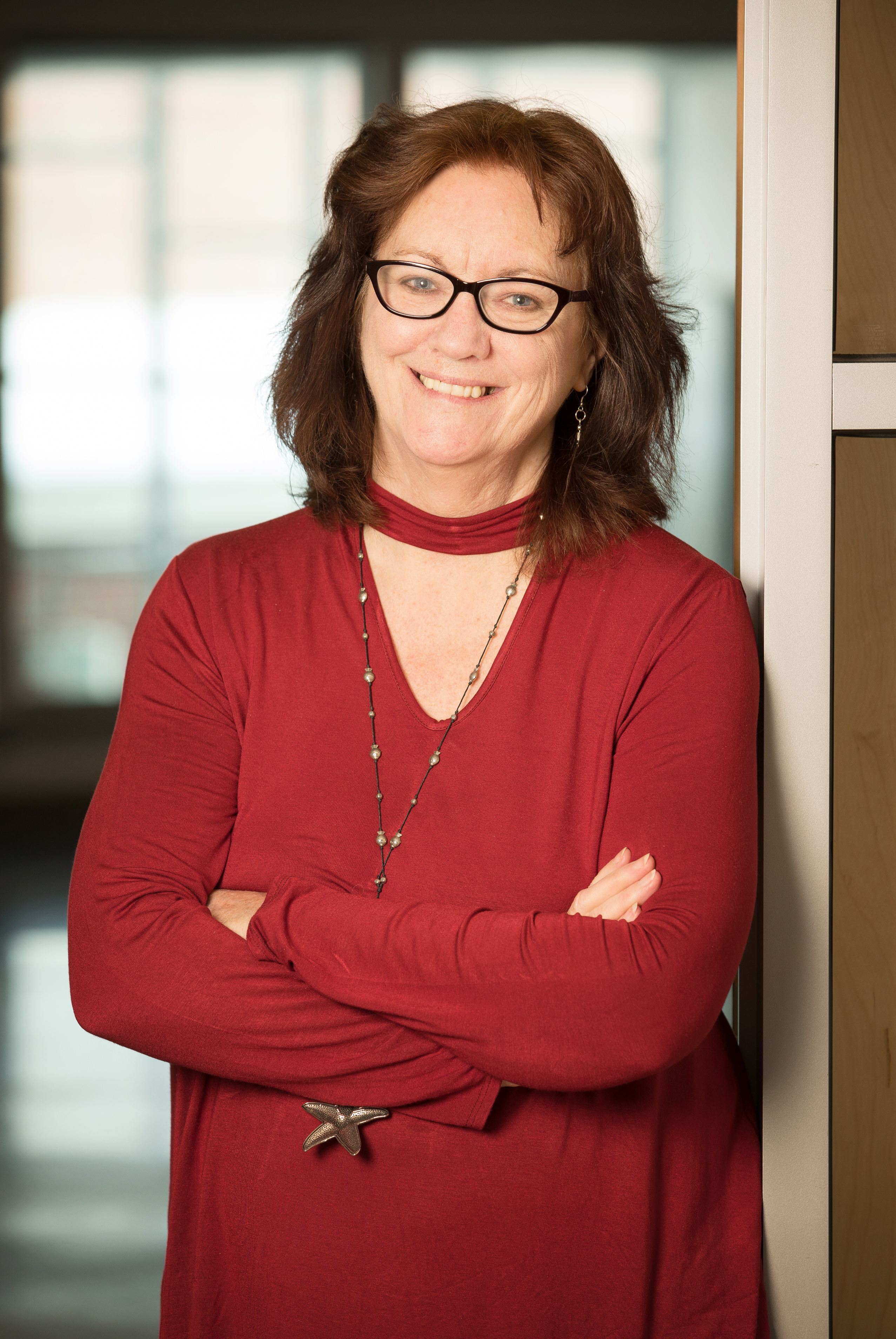
Catherine Ring is Executive Director of the New England Institute for Teacher Education and teaches graduate level courses to educators across the state of Maine. She is co-founder of the Maine Arts Leadership Initiative and has served on the core leadership team since it was established in 2010. Catherine completed her Education Leadership studies at the University of Vermont and received her Master of Arts from Vermont College of Norwich University. For her thesis, entitled “Education and the Arts, Toward Creative Intelligences,” she researched the role of the arts in learning and has worked closely with classroom teachers, helping them to integrate the arts into their regular curricula. As Principal, Catherine helped to bring to her school district the Kennedy Center’s National Partnership program. She assists school districts throughout Maine with differentiated instruction, arts integration, and gifted and talented programs. Catherine is the 2014 Advocate of the Year by the Maine Art Education Association. Catherine returned to the art classroom in 2016 and is teaching on Isle au Haut.

Kris Bisson is Director of Choruses and a music educator at Marshwood Middle School in Eliot, Maine. She received her Bachelor of Science and Master of Music degrees in Music Education from the University of Southern Maine and has served as adjudicator and guest conductor for several district choral festivals. She is a teacher leader for the Maine Arts Leadership Initiative, and a member of the National Association for Music Education and the American Choral Directors Association. Her passion for student engagement is reflected in each class she teaches.
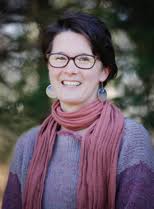
Lindsay Pinchbeck has been teaching with and through the arts in a variety of settings for the past 20 years. Lindsay is the director and founder of Sweet Tree Arts a community arts organization in Hope, ME and began Sweetland School a K-6 Arts Integrated elementary program in 2013. Pinchbeck gained her Masters in Education through Lesley University’s Creative Arts and Learning program. Creatively Lindsay works as a printmaker and photographer. Lindsay believes the creative arts should be accessible to all. She encourages us to be active participants and keen observers with the hope of enriching our communities through the arts.

Kate Smith is an energetic music teacher currently teaching music to preK-third grade students in South Berwick, Maine. Kate earned her music education degree from USM and a Master’s degree in Technology in Education from Lesley University. Kate was honored as 2014 York County Teacher of the Year for her passion for innovation and creativity. Kate serves as a teacher leader and design team member for the Maine Arts Leadership Initiative, the Parade Coordinator for South Berwick’s annual Lanternfest and a coordinator for Central School’s farm-to-table program. Kate lives in southern Maine with her husband and three children.
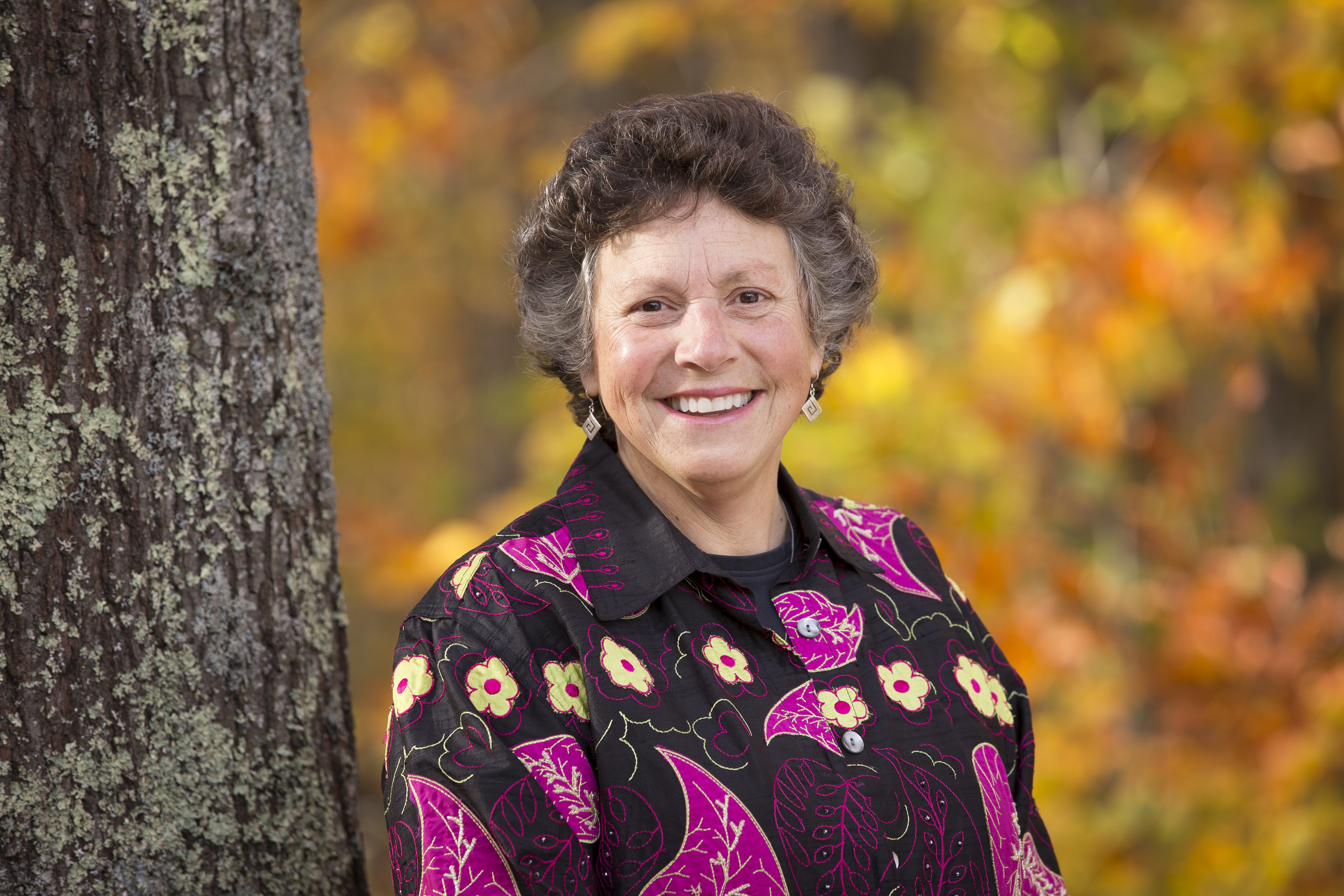
Argy Nestor is the Director of Arts Education at the Maine Arts Commission. She earned a Master’s degree in Education from the University of Maine, Orono. Much of her career has been spent in a middle school where visual arts was at the heart of all subjects. Argy has been recognized for her accomplishments in teaching, leadership and advocacy including the 1995 Maine Teacher of the Year. She has authored many articles and presented workshops at the local, state, national, and international level. She serves on the education council for the Americans for the Arts. Argy is most proud of the accomplishments of the Maine Arts Leadership Initiative, MALI, (formerly the Maine Arts Assessment Initiative) and the work (and play) that all arts educators do in classrooms across Maine. When she is working to further arts education in Maine Argy can be found on a pond somewhere in Maine or making mosaics.

Questions? Please contact Argy Nestor

CONFERENCE REGISTRATION

h1

Storytelling in the Arts Classroom

August 27, 2018

How might you use storytelling?

At the Maine Arts Leadership Initiative (MALI) Summer Institute “Storytelling” was the overarching theme. It was interwoven in many aspects of the 3 days.

Storytelling session led by Jake Sturtevant and Lindsay Pinchbeck

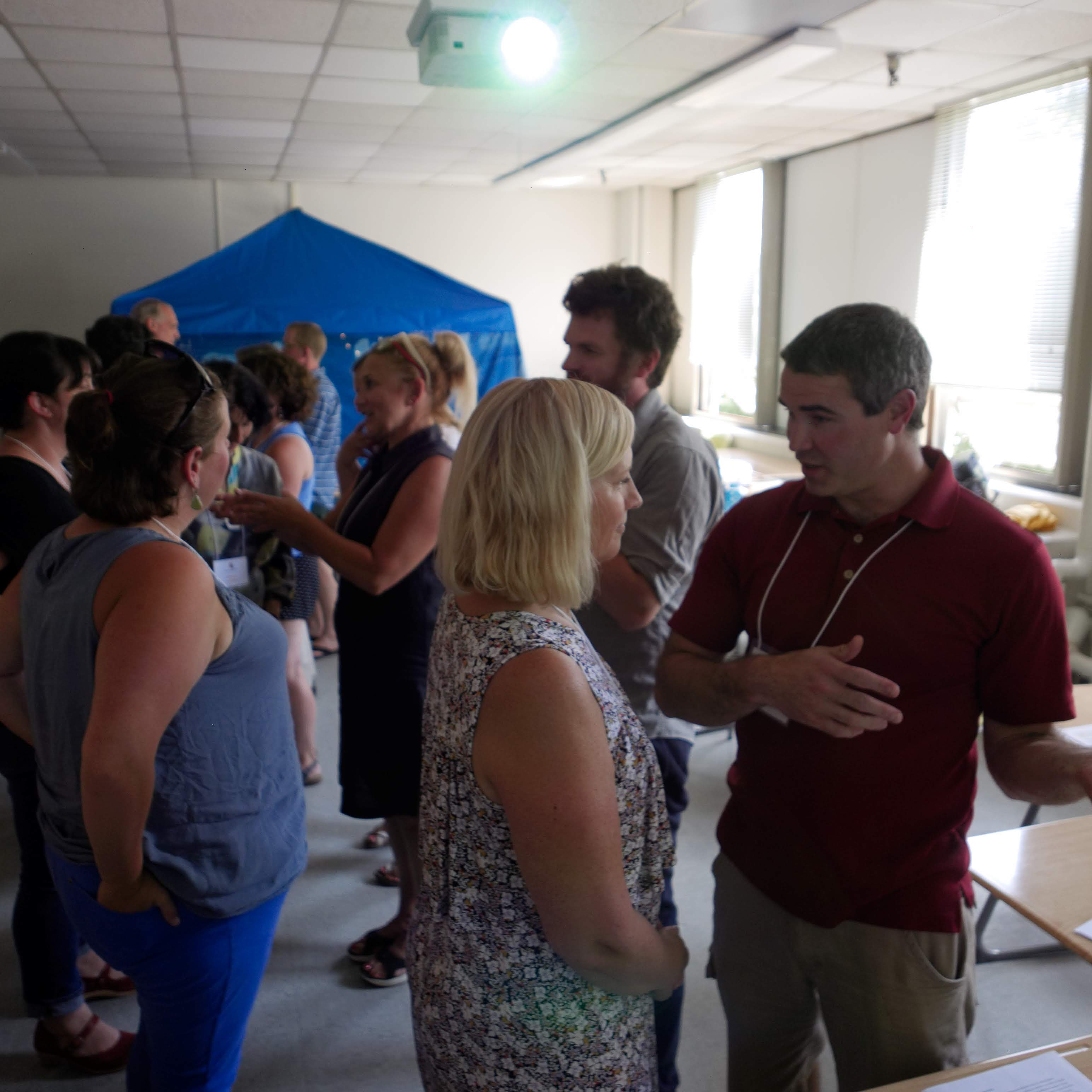
Falmouth High School and MALI Design Team member Jake Sturtevant and Sweetland School founder and director and MALI Design Team member Lindsay Pinchbeck provided a workshop on Storytelling and they set up a Story Corps tent where teachers could visit during the institute and have a conversation, similar to the National Public Broadcasting Story Corps.

We listened to musician and MALI Teaching Artist Leader Tom Luther tell his story of the stroke he had almost a year ago. He worked his way back and to almost full recovery using a ‘beginner’s mind’ and his music.

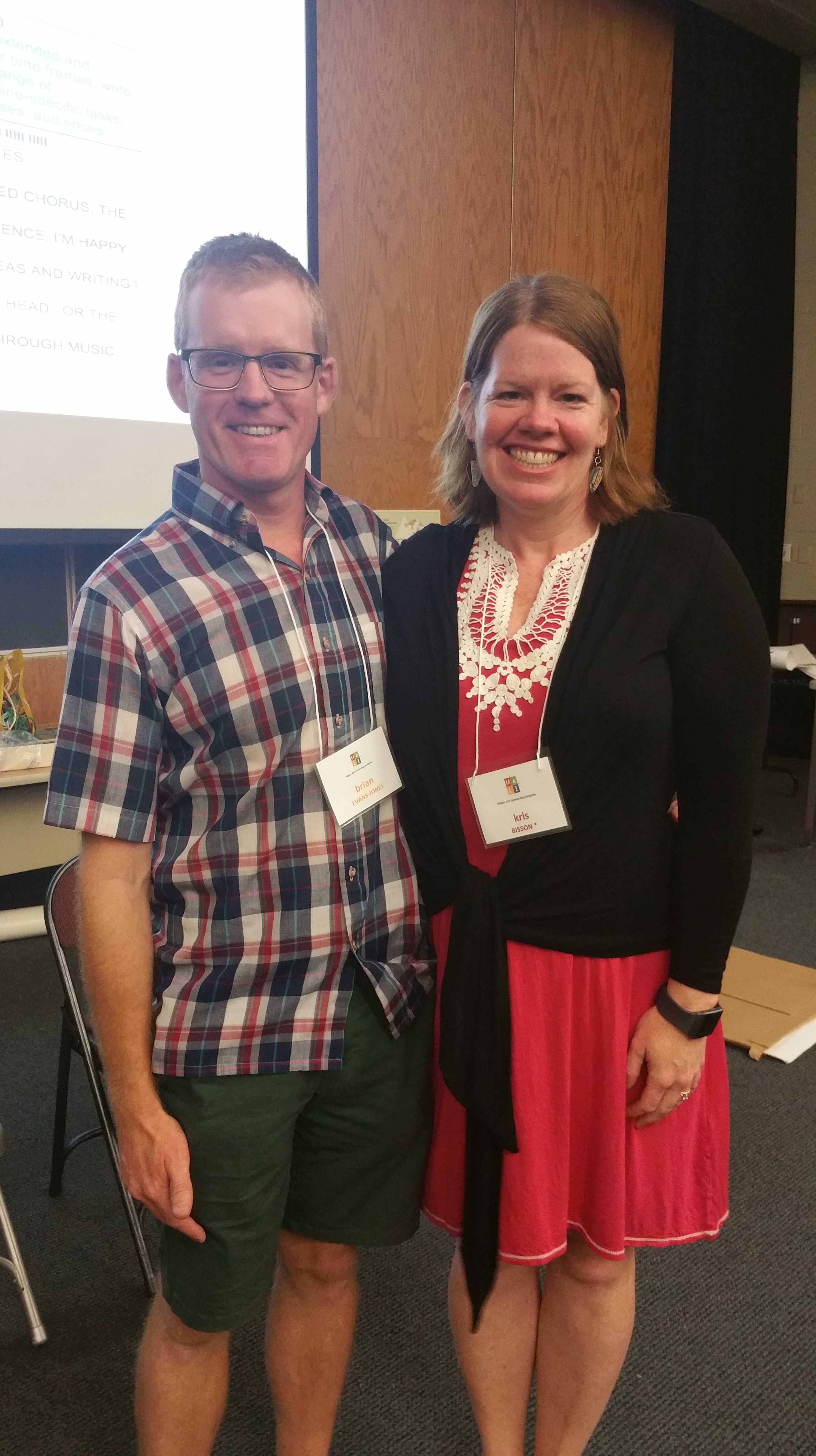
Brian Evans-Jones and Kris Bisson

MALI Teaching Artist Leader Brian Evans-Jones and Marshwood Middle School music educator and MALI Teacher Leader Kris Bisson shared their story of their incredible collaboration during the 2017-18 school year where they composed a song about an all but forgotten bridge in South Berwick.

Elementary visual art teacher and MALI Teacher Leader Elise Bothel shared her story and research on self-care tools and how they are enriching her life and positively impacting her teaching.

A panel on Leadership included stories from Catherine Ring, co-founder of MALI and art educator, teaching artist and MALI Design Team member John Morris, MALI Teacher Leaders: music from York Middle School Jen Etter, visual art from Brunswick High School Jenni Driscoll, and music from SeDoMoCha school and Maine’s 2018 Teacher of the Year Kaitlin Young. All unique!

Stories in the Leadership session

In a recent edition of the eSchoolNews from NAfME music educator Lori Schwartz Reichi reflects on her college wind ensemble rehearsal when her conductor would pause to tell a story. She wondered why he would take time out of rehearsal to share details of his personal life.

Years later when she started teaching it made perfect sense to her. The stories her professor told were intentional ‘pauses’ in the rehearsal. READ the entire article and learn more about the power of storytelling in the music classroom. (Storytelling has potential in any classroom)!

h1

MAC Dance Education Grant Recipient

August 22, 2018

East End Community School 

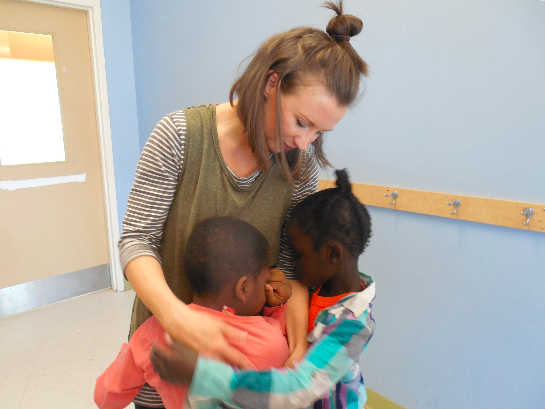
Teaching Artist and dancer Elly (Elisabeth) Lovin worked with the Kindergarten students at the East End Community School in Portland during the spring of 2018. They received one of the Maine Arts Commission dance education grants. I had the opportunity of visiting and I was so impressed with Elly’s ability to connect with every student on multiple levels. She doesn’t miss a beat and she is full of positive energy!

Elly’s Reflections… I am so grateful to have had the opportunity to work with the East End kindergarteners for ten weeks this past spring. Not only was it a joyful, memorable and necessary experience for the children, but it changed me as a dance educator and taught me so much about the power of of movement.

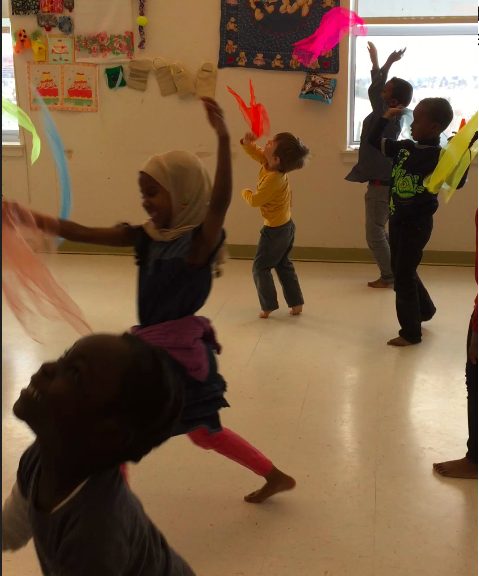
I was able to see each of East End’s four kindergarten classes once a week. We had a large community room to meet in, with a tile floor and big windows overlooking the Back Cove. The children would remove their shoes and socks and join me in a circle. Spending time barefoot is so important, and I wanted to make sure the kids could feel the floor and improve their proprioception by moving without the hindrance of shoes. We always started class in a circle, because I believe this shape is equalizing and empowering. We could all see each other’s faces, and were all equidistant from the center. In each class we started by reviewing our Agreements (my expectations for a successful class). These were: Keeping our bodies within our kinosphere (space bubbles), Using Movement as our language (voices off) and No Running (though we can dance really fast!). We often began with a sensorial warm-up using different types of touch from head to toe–brushing, tapping, squeezing, rubbing–to get into our bodies and prepare for movement.

In each session, I introduced a different element of movement, loosely based on Rudolf Von Laban’s movement themes. I explained that dance is like a recipe, and there are many different ingredients we can think of adding to our dances to make them more “flavorful.” In the ten weeks, we were able to study the following dance “ingredients:” space, an awareness of body parts & whole, time/tempo, locomotion, levels, weight, flow, shapes, and relationships.

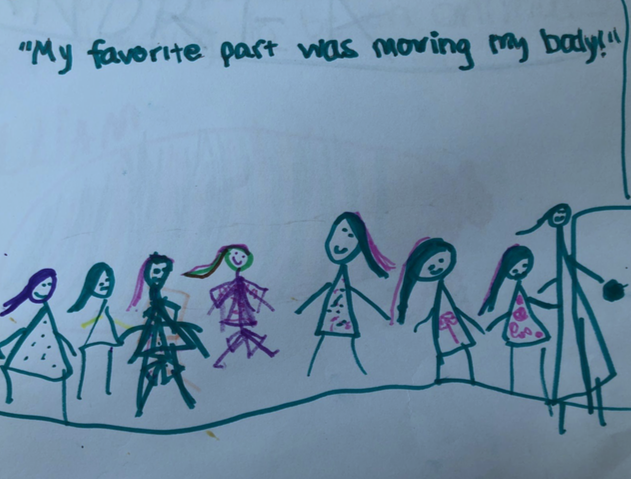
“My favorite part was moving my body.”

After introducing the day’s theme, we would move into a locomotive dance. Beginning with walking, we would pay close attention our pathways on the floor, moving in the general space without bumping into one another, and really seeingthe other dancers in the room. The walking dance would build into other forms of locomotive movement–marching, skipping, sliding, galloping, bear crawling, etc.

We practiced dance skills like leaps, hops and jumps, and then explored the movement theme of the day with dance games and explorations. At the end of each class I tried to allow a brief moment of “settling” back into stillness, for reflection and sharing standout moments from the class, and to honor our bodies for all they can do for us.

I saw so many little moments of change in the students. From week to week, confidence blossomed around both physical skills and creative expression. For those 45 minutes, children with little or no English were able to participate on a level equal to their peers, as everyone worked to communicate through movement, watching, mirroring, and generating physical responses to the movement messages around the room. I honestly couldn’t always predict which children could not understand a lot of English–until the classroom teachers told me.

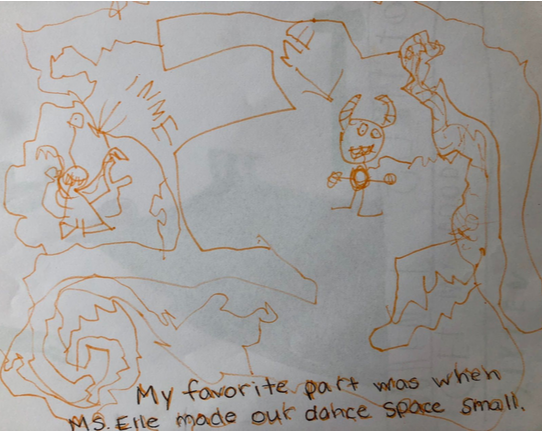
“My favorite part was when Miss Elly made our dance space small.”

A moment that really stood out to me happened during the sixth or seventh week of class. One student always came to class with a manipulative to work with. I assume he was experiencing difficulties with anxiety and attention. He would join us, but with his manipulative, and it seemed that for the first month or so of classes, he could not stay for the full class. At some point, he would become disinterested and leave the space with an aide. Gradually, he was able to stay for the full class, with a few breaks to use his manipulative. Then one day, I noticed that he had brought his manipulative into our opening circle but as we got up to begin locomotion, the object had been pushed to the side wall, where it remained for the rest of class. And then, the next week, he came to class without his object. He was able to stay engaged for the full class, and every time I looked at him, he was smiling and joyful in his moving body.

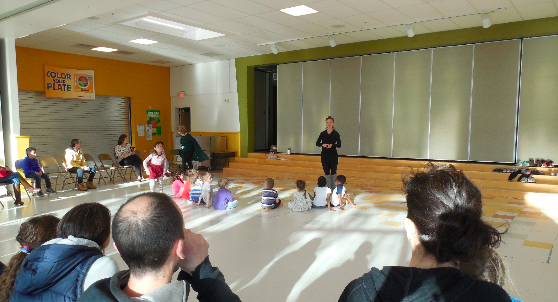
As a culmination to the project, we hosted an evening “open class” in East End’s beautiful cafeteria space, with floor to ceiling windows that overlooked the sun setting over the Back Cove. About 20 children came, and approximately 45 parents and grandparents. We demonstrated a full class, with several of the children’s favorite dance explorations from the past ten weeks. We finished with a game called “Art Museum,” but instead of dividing the children into groups to play, we invited the parents to be the museum-goers. The children spread out and made shapes with their bodies, staying still as statues or sculptures. As soft jazz played, the parents were invited to come to the museum, but in our museum, you don’t just look at the art. As the parents looked at each sculpture, they had to mimic the same shape with their bodies, from head to toes to facial expressions. The exploration lasted ten minutes or so, and it was really beautiful to watch. In children’s interactions with adults in their community, how often are they being talked at or guided or expected to follow the adults? What an opportunity to be truly seen by so many grownups–and be the one that all of the grownups must follow! I love this movement game because of the empathy sparked by the simple act of looking at another human being, studying the shape they are making, and mirroring what you see with your own body.

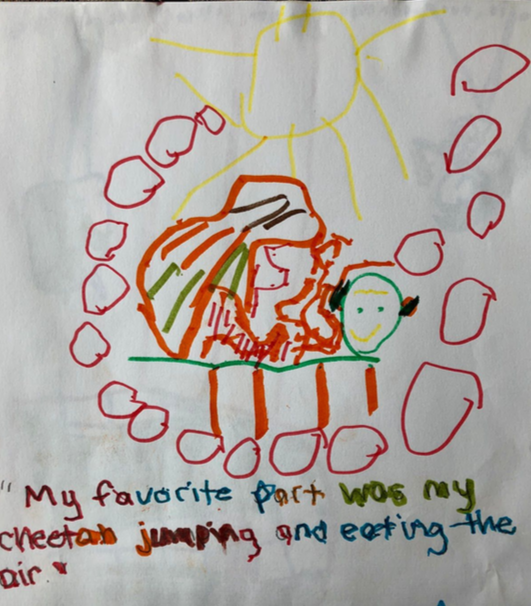
“My favorite part was jumping and eating the air.”

After the “performance,” many parents expressed their gratitude for the project. One little boy’s father came up to me excitedly and said “This has been so great… now we have dance parties at home!” Another dad asked “Who do we have to talk to? All kids should have this experience in school.” I wholeheartedly agree. Who do we talk to?

I don’t know what the future outcomes from this project will be. Will Maine schools begin to integrate dance into their educational philosophies–just as music and art hold a place in public education? Will my students continue to move through their lives with agency over their kinospheres and respect for others’ space boundaries, and enjoy creating dances to express themselves? All I can do is plant the seeds. This teaching experience has furthered my confidence in my philosophy: I believe movement is a human right, and as such am committed to furthering dance education for children in my community.

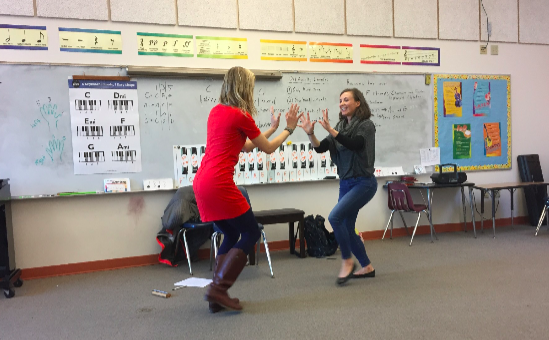
Teacher PD with Elly

Elly collaborated with kindergarten teacher Kathy Gray to plan, write and implement the Dance Education grant that they received from the Maine Arts Commission.

In Kathy’s words…

When I first responded to Elly’s invitation to work with her to apply for the Dance Education grant, I was excited about the possibilities, but really had no real background or knowledge of what that might look like! As we began the process of writing the grant, I began to learn about the many ways dance would support the youngest learners in our school not only to creatively express themselves, but to also listen in many ways, develop motorically, become aware of their body in space and develop many basic concepts through movement. All of these are basic Kindergarten foundational learning skills.

Parent night performance

Two thirds of the children in my class are English language learners and several have little or no ability to communicate in English. But oh how fluent they were in communicating through dance! They were all totally engaged and danced with smiling and joyful faces! I had especially hoped that dance would allow all the children, regardless of language or motor abilities, opportunities to be creative and competent
and it DID!

Dance classes supported core development and strength as well as balance. I had great concerns about one child’s development – fine motor as well as gross motor and
awareness of body in space. By the end of the dance education sessions, this child had made remarkable progress. He is no longer bumping into children or furniture.
He is no longer needing daily reminders about giving space to the peers sitting beside him. His focus and overall fine motor control has greatly improved.

Children saying good-bye to Elly

Another facet of this grant was on-going PD for our K staff. I have learned so much and have begun to use some of the dance strategies in our classroom. Creating our bubble of space, calming our body from toe to fingertips, traveling at different speeds and zones. District professional development was offered by Elly and staff came from 4 other schools and included pre-K and K teachers, an OT therapist and an OT intern and a grade 3-4 teacher.

This has been such a valuable element of our K students’ learning that I can’t imagine not having it as a permanent part of our curriculum! I think our administrative staff is looking to find ways to make this happen at least for our K students if not for others as well.

The MAC Dance Education grant funds are provided by a performance held each November at Thornton Academy by a collaborative group of school dance programs and community dance programs from southern Maine. The grant will be available again during the winter of 2019. If you’re interested in applying please read the guidelines posted on the MAC site from last year. 

h1

Ticket to Ride Funds Available

August 21, 2018

Online application

Unveiling of the Rob Shetterly portrait of Kelsey Juliana at the Samantha Smith Challenge called The Synergy of Change: Children and Adults Inspiring Each Other, participation by Leonard Middle School students. Ticket to Ride funds provided.

The Ticket to Ride program provides funding to defray the cost of travel for Maine schools wishing to visit Maine arts based venues and events as part of a well-rounded curriculum. The goals of the trip should support student learning and be aligned with the Maine Learning Results Visual and/or Performing Arts standards.

Any PK-12 school in Maine with a documented free and reduced lunch student population between 30 and 49 percent is eligible to receive support of up to $300 each school year. Any PK-12 school in Maine with a documented free and reduced lunch student population of 50 percent or greater is eligible to receive support of up to $500 each school year.

Follow up work from trip by Laura E. Richards Elementary School Kindergarteners to Public Theater in Lewiston to see Everybody Loves Pirates. Ticket to Ride funds provided.

Applications are accepted throughout the year and funding will be made available approximately one month after they are submitted. Schools may apply more than once a year as long as they are applying to attend a different event, bringing a different student population or have not expended their eligible amount.

This program is currently funded thanks to the generosity of the Betterment Fund and proceeds from The Art of Giving Gala sponsored by DownEast Magazine.

Submission Instructions

NOTE: The Ticket to Ride application is now located in the Grants Management System (GMS).

Please apply for the funds at least 3 weeks before the trip you are planning to take.

  1. Download the Ticket to Ride Application Help Sheet for helpful instructions on completing your application.
  2. To access the Ticket to Ride Application Form log into our Grants Management System. If you do not have an account click “New User?” to create one. The account is free and you can browse application requirements without applying.
  3. When you have logged in, locate the Ticket to Ride grant description.
  4. Read the guidelines, complete and submit the application. After your application has been submitted you will receive a confirmation email.
  5. Completed applications must be submitted at least 3 weeks before the scheduled trip in order for the application to be processed in time.

Parties interested in funding or partnering on the Ticket to Ride program are asked to contact Argy Nestor at argy.nestor@maine.gov or 207/287-2713.

h1

Arts Ed Conference and MICA

August 20, 2018

September 27, 28 – USM, Portland

The 2018 Maine State Teacher of the Year, Kaitlin Young, will provide an engaging keynote at the Arts Education Pre-Conference: At the HEART of Arts Education and provide seeds of inspiration to help you create action steps for your work at the school and/or community level. Attend as individuals or consider bringing a team from your school and/or community. The day will start and conclude with creative art and music making.

The Pre-MICA conference At the HEART of Arts Education will take place at the Abromson Center, USM, Portland on Thursday, September 27, 8:00 – 4:00. Registration is $50  and includes lunch and the opening session of the Maine International Conference on the Arts on Thursday evening in Hannaford Hall.

The Pre-MICA Arts Education conference participants will:

  •     learn skills to improve teaching and learning in the arts;
  •     collaborate among the arts disciplines: dance, media arts,  music, theater, visual arts and creative writing;
  •     network with other educators and reconnect with old friends;
  •     make connections between school and community, including arts organizations, artists, and other arts education supporters.

The conference will be a joyous occasion to learn together and celebrate who we are! We are educating the future, the next generation of artists, arts educators, and appreciators of the arts. To do that we need to:

  • Instill purpose/passion
  • Ensure High Quality Instruction
  • Provide relevant and real-world learning experiences
  • Empower our students to become the teachers of their generation.

THURSDAY AGENDA

OPENING – Welcome

Story of the South Berwick Lantern Festival

Carol Trimble Award Presentation

MORNING SESSIONS  

ART, MUSIC, and DANCE MAKING Attendees will select between Music/Dance session and Lantern making session.

If you choose the Music Making/Dance session participants will have the opportunity to learn:

  • Basic African drumming and singing

  • Simplified steps to an African dance

FOLI – The word used for rhythm by the Malinke tribe in West Africa. Foli is not only found in Malinke music, but in all parts of their daily lives.      FOLI: there is no movement without rhythm

If you choose the Visual Art – Lantern session participants will have the opportunity to learn:

  • How in some cultures light holds a symbolic meaning and is an integral part of traditions
  • Using your imagination and creativity to create a unique lantern.
  • Opportunities to learn from each other how to bring these experiences back to your  classroom and or community.

Bon Festival – In Japan this annual festival honors deceased relatives while people spend time with their living family members. At the culmination of the festival families place lanterns on the river to be carried away symbolizing the peaceful return to the afterlife.

Both sessions will culminate in a cross cultural experience and open MICA 2018 with a celebratory processional.

KEYNOTE – The 2018 Maine Teacher of the Year is Kaitlin Young who teaches music at SeDoMoCha School in Dover Foxcroft

LUNCH – Midcoast Music Academy performance

View 15 version of the Ashley Bryan film

AFTERNOON SESSION

Choose Your Own Adventure – participants will be guided through creating a plan to use when they return to their schools and communities. There will an opportunity to share so participants can learn from each other and go back to their individual schools and communities with new ideas.

CLOSING

Participants will lead MICA processional using music/dance and lanterns made earlier in the day to the opening of the Maine International Conference on the Arts reception in Hannford Hall. The opening keynote will follow.

The $50 registration includes the arts ed conference, the opening reception, keynote and performances.

MICA CONFERENCE – FRIDAY, SEPTEMBER 28, 8:00 – 5:15

Opening

Maine Artists Idea Lab: Five speakers using the fast-paced and engaging pecha kucha-style format will knock your socks off with their newest innovations. Speakers include:

Lucas Richman, Music Director, Bangor Symphony Orchestra
Rene Johnson, Executive Director, Theater Ensemble of Color
Erin McGee Ferrell, Visual Artist
Kaitlin Young, 2018 Maine Teacher of the Year
Jeremy Frey, Passamaquoddy basketweaver

20 Professional Development Sessions in 5 Tracks Running Concurrently:

LEVERAGING INVESTMENT. Learn to attract and leverage greater investment through corporate sponsorships, development planning, capitalization and more.

BUILDING CAPACITY. All you need to know on strategies for sustainability and increased impact, from an intensive on strategic planning with Julie Richard to a session on The Role of the Arts in Communities in Crisis.

VISIBILITY OF THE ARTS & CULTURAL SECTOR. Discuss ways to increase awareness of creative opportunities, as well as their value to communities and local economies. Participate in a new, two-part workshop by MICA 2016 superstar Matt Lehrman, Opportunity Everywhere, Parts I & II. Or attend a dynamic session hosted by DataArts/The Cultural Data Project on ways to connect your data to stories about your mission and impact, for more effective communications with key stakeholders.

ARTS EDUCATION & LIFELONG LEARNING. Participate in sessions on fostering PK-12 arts education and lifelong learning programs, including Creative Aging and Traditional Arts.

PROMOTING CULTURAL TOURISM. Gather the information you need to enhance experiences and leverage cultural tourism. Hear from organizations on their successes creating experiences outside of traditional venues, or attend a Rural Community Arts Development session facilitated by Maryo Gard Ewell.

Pop-up performances throughout the day.

ARTS EDUCATION SESSIONS

How do teaching, learning and assessment work together in a positive, productive standards-based Visual and Performing Arts classroom?

The use of “standards” and “assessments” in visual and performing arts (VPA) education have been discussed, planned for, and developed over many years. A panel of educators will share the work they have underway. Participants are invited to join the conversation – bring your thoughts, questions, and curiosity on why standards and assessments are used in the arts.

Facilitator – Jeff Beaudry – Associate Professor, Educational Leadership, USM – Overview of Summative and Formative Assessment and Moderator

  • Jen Etter – Music, York Middle School
  • Kelly Hrenko – Visual Art, USM
  • Michele Kaschub – Music, USM
  • Holly Leighton – Visual Art, K-12, RSU 67
  • John Morris – Dance, Teaching Artist   

Brian Evans-Jones and Kris Bisson

When Teaching Artists and Arts Teachers Connect, Students Win

During the past 4 years, teaching artists and arts educators in the Maine Arts Leadership Initiative have collaborated to provide meaningful, purposeful and authentic learning opportunities for students. Educator collaborations provide opportunities for learners that can surpass what a teacher, working alone, can offer. Hear the stories from these collaborators, bring your questions, share your experiences and imagine the possibilities in more Maine schools and communities.

Facilitator: Kate Smith, Central School, South Berwick Music Educator

  • Brian Evans-Jones, Writer Teaching Artist and Kris Bisson, Marshwood Middle School Music Educator 
  • Tim Christensen, Ceramic Teaching Artist and Lori Spruce, Brewer High School Visual Art Educator
  • John Morris, Dancer Teaching Artist and Carmel Collins, Lake Region High School Dance Educator  

Empowering Your Voice for Arts Education 

We often underestimate the power of our passion and voice for arts education.  Yet, we’ve seen students, educators, artists, arts organizations and community members find their voice, build their stories and messages, back them up with research and evidence, and become leaders and advocates for arts education in powerful ways. In this session, we will explore ways to empower our voices, use helpful resources that are just clicks away, and be on our way to making an impact with our hopes and dreams for the arts in education!

Presenter: Catherine Ring, Visual Art Educator, Arts Education Consultant, Co-Founder of the Maine Arts Leadership Initiative, Maine Art Education Association 2014 Maine Arts Advocate of the Year.

If you have any questions please email Argy Nestor, director of arts education, argy.nestor@maine.gov.

h1

MALI Summer Institute

August 7, 2018

Work is just beginning

Even though another Maine Arts Leadership Initiative Summer Institute (MAL) is history (number 8), the work for the MALI Teacher Leaders and Teaching Artist Leaders is just beginning.

I am so impressed with the topics that participants have taken on – each year the work is more comprehensive! I will include information about the research the leaders have underway in a future blog post.

The work is challenging and participants make a commitment to stretch themselves as they build on their knowledge and expertise as educators in the arts. MALI’s educators are committed to providing quality arts education for every Maine learner.

Often I am asked so what’s MALI all about and how can it impact me as a teacher? Below you will find some of the initial feedback received at the conclusion of the institute. The comments reflect the thoughtfulness of the participants and will provide a glimpse of the power of participating in MALI as a “leader”.

  • This institute may have changed my entire outlook. I feel like I have value and can help others through my work.
  • The energy was great.
  • Thank you for bringing us all together! The constant stimulating conversations are exhilarating! (joyfully exhausting). I LOVED the storytelling element.
  • Powerful presentations great stories
  • Gained a tremendous amount of insight into other teacher’s schools, jobs and lives. Always amazing experiences with MALI.
  • Thank you for the community connection of the Museum of Art and Ashley. Very inspiring.
  • Lots of great info. Introduced to new concepts. Networking and connections.
  • Amazing sharing! Inspired beyond belief by my peers.
  • Once again, I’m leaving excited about this year.
  • Leadership and creativity hit the spot for me personally. As always you can’t beat the connections made and renewed at MALI. I think I have benefitted a lot from a few key conversations.
  • OMG! I needed a 4thday now! Can you believe it? Great re-boot to my goals as an educator. Focused organization to start the year!
  • It was great! I have much to ponder over the coming months.
  • Lots of great information and inspiration. I liked the small workshops best.
  • I feel motivated and empowered by being around so many like-minded people. The positive energy that is found in this room is amazing.
  • This might be my favorite yet! I feel so fulfilled but not overwhelmed! So re-energized! Thank you and so much love for this organization!
  • I find it fascinating that as we add years on to our MALI gatherings our topics and ideas for our projects and presentations get bigger, better, deeper, more thoughtful, more global. I am so lucky to be part of this organization. Your hard pre-game work was truly appreciated!
  • Love the peeps – Love the sharing – especially the personal journeys. Leadership and artistic.
  • My overall reflection brings me to WOW! I have thoroughly been challenged, inquisitive, curious, exhausted, reignited, and REWARDED. Being surrounded by greatness has, again, been humbling.
  • This was an awesome opportunity to converse with people with similar professions and a wealth of experience to reflect on.
h1

MALI Summer Institute Day 3

August 3, 2018

Hard at work

Brian and Kris

The day started with Teaching Artist Leader Brian Evans Jones and Teacher Leader Kris Bisson sharing their story. For several years the Great Works Bridge in South Berwick, where Brian and Kris live, has been closed. Last year at the Maine Arts Leadership Initiative (MALI) summer institute Brian and Kris decided to collaborate and shed light on the bridge by composing a song. Brian is a poet and creative writing teacher and Kris is the music educator at Marshwood Middle School; they each brought their expertise to this year long project and the results are amazing. A true integrated unit that involves real life learning and students making a difference. Kris and Brian shared their inspirational story with the participants at the institute.

The day continued with teachers working independently and collaboratively on their Logic Model which outlines plans for the next year (and some longer). Intervowen in the day was the opportunity to watch the Ashley Bryan film “I Know a Man” and to slip into the home made story corps booth with one other person to share a story.

The end of the day included a gallery walk to take a close look at the participant’s plans and provide feedback to each one. Some expressed that a 4th day should have been included as participants left excited and feeling accomplished.

Speaking of storytellers, some educators extended the day by hearing the panel discussion on Ashley Bryant’s work and seeing his show at the Portland Museum of Art (PMA). Mr. Bryant is quite the storyteller and his children’s books are exemplary; marrying the words and images beautifully! Quotes from Ashley in the film were good reminders for all of us: “Don’t lose in us it’s the one thing we have in common.” “Be reminded of the child in you…you sometimes suppress it….” Thanks to the PMA for providing the opportunity that directly connected with our summer institute theme: Storytelling!


h1

MALI Summer Institute Day 1

July 31, 2018

Storytelling at its finest

Today marked the first day of the phase 8 Maine Arts Leadership Initiative Summer Institute and what an amazing day it was! Almost 40 educators are attending the three day professional development, exchanging ideas, collaborating, and building on their knowledge.

Participants comments

  • “Learning to lead the story to my “why” versus the “what” was a huge revelation today – and we’re only on day 1!” ~Shawna
  • “Love the social aspect of MALI and seeing old friends and making new ones.” ~Catherine Ring
  • “Exciting and inspiring safe space to share ideas with people who get it.” ~Dorie
  • “Such a beautiful and supportive group.” ~Nicole
  • “Always wonderful to have the “tribe” back together!” ~Pam
  • “Hair on fire.” ~Tom

The institute theme is “storytelling” which is integrated throughout the institute. The day started with the MALI story and ended with a story from Dorie Tripp who shared information about the drums created by the students of Dorie and art teacher Hope Lord. Making music together was amazing!

Throughout the day there were sessions on assessment, the Logic Model design, Express-a-Book (MALIs version of a book club), and making stories.

Tomorrow will be another day filled with new learning. If you have questions please be sure and email me at argy.nestor@maine.gov.


h1

Maine International Conference on the Arts

July 30, 2018

September 27 and 28

The Maine International Conference on the Arts (MICA) is taking place at USM, Portland campus on September 27 and 28, 2018. Learn about the details and registration by CLICKING HERE. Early bird discount is available until July 31. Watch the video below and see familiar arts education colleagues and their students from the last MICA that was held in Lewiston.

h1

Visual Thinking Strategies

July 27, 2018

Waterfall Arts

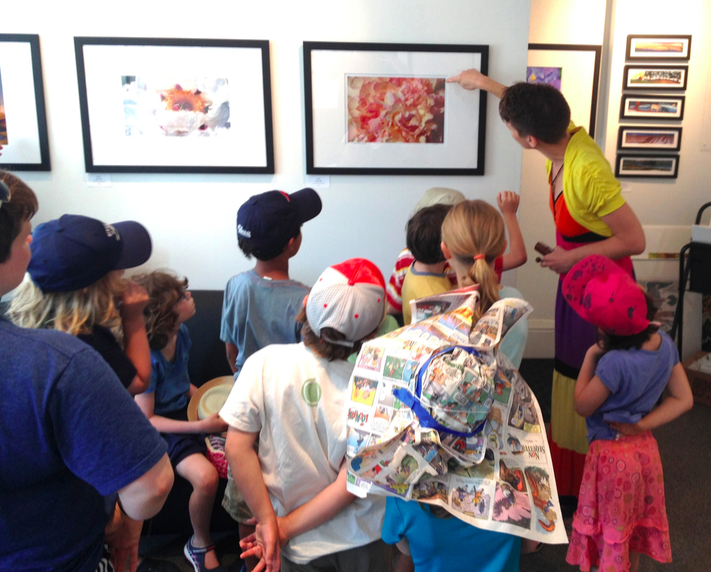
Every so often I meet educators who are not familiar with Visual Thinking Strategies or VTS as it is commonly called. Waterfall Arts, a community arts center in Belfast, provides a program using VTS. As part of their outreach efforts of the Youth and Family Outreach (YFO) program at Waterfall Arts, program coordinator Bridget Matros offers Visual Thinking Strategies training to teachers in area schools. These strategies are activity used in the YFO after school programs and are also utilized in field trips to Waterfall Arts. Teaching Artist Bridget Matros has put together the information below (taken from the VTS site). Thank you Bridget! She is also on the Maine Arts Commission Teaching Artist rosterWaterfall Arts programs are comprehensive and they provide multiple programs for learners of all ages.

Many teachers in Maine, visual arts and others, use VTS in their classrooms. Several years ago we provided an all day workshop on the topic. Once reading this blog post, if you’re interested in learning more please contact me at argy.nestor@maine.gov.

What is VTS?

Visual Thinking Strategies (VTS) is a method initiated by teacher-facilitated discussions of art images and documented to have a cascading positive effect on both teachers and students. It is perhaps the simplest way in which teachers and schools can provide students with key behaviors sought by Common Core Standards: thinking skills that become habitual and transfer from lesson to lesson, oral and written language literacy, visual literacy, and collaborative interactions among peers.

VTS provides a way to jumpstart a process of learning to think deeply applicable in most subjects from poetry to math, science and social studies. Art is the essential first discussion topic because it enables students to use existing visual and cognitive skills to develop confidence and experience, learning to use what they already know to figure out what they don’t; they are then prepared to explore other complex subject matter alone and with peers.

How does it work?

In VTS discussions teachers support student growth by facilitating discussions of carefully selected works of visual art.

          Teachers are asked to use three open-ended questions:

  • What’s going on in this picture?
  • What do you see that makes you say that?
  • What more can we find?3 Facilitation Techniques:
  • Paraphrase comments neutrally
  • Point at the area being discussed
  • Linking and framing student commentsStudents are asked to:
  • Look carefully at works of art
  • Talk about what they observe
  • Back up their ideas with evidence
  • Listen to and consider the views of others
  • Discuss multiple possible interpretations